August 24, 2023

Sunday afternoon, a cool and pleasant day before the cover of heat returned once again, I sat outside and finished reading Tom Lake by Ann Patchett. I wanted to finish it, but that doesn’t mean I wanted it to end. The NYT review by Alexandra Jacobs felt understated and even at times a bit snarky calling Patchett, “Aunt Patchett,” “as always slyly needlepointing her own pillowcase mottos,” but I LOVED THIS BOOK.
I waited to read Tom Lake until I had conquered a couple major deadlines. In fact, I didn’t dare have it in the house until the retreat I facilitated was completed, and the article I had been asked to write was sent off to the editor. My weekend was spacious, and the time belonged to Patchett.
Have I said how much I LOVED THIS BOOK?
Tom Lake, by the way, is not a person, but the name of a lake in Michigan.
The story has two narratives. One narrative begins when the main character, high school student Lara, is cast as Emily in Thornton Wilder’s Our Town and then follows her acting career, which includes a movie in Hollywood. More importantly, Lara plays Emily again in a summer stock production of Our Town. During that summer she has an affair with another actor, Peter Duke.
The other narrative is set during the pandemic. Lara is married with three grown daughters, Emily, Maisie, and Nell, who return to their parents’ cherry farm in Michigan, and as they pick cherries, the women ask Lara to share the stories of her earlier life. She has much to tell, but chooses not to tell everything.
Sometimes following two time periods is confusing, but anyone who has read Patchett knows how expert she is at bringing the reader along with her, wherever she decides to go.
In an interview on PBS News Hour (Thursday, August 17) Patchett said the idea for the book grew from the play, Our Town, not with a character, and in the opening pages she refers to the feelings people in New Hampshire, which is where Our Town is set, have about the play.
We felt about the play the way other Americans felt about the Constitution or the “Star-Spangled Banner.”
p. 1
Rumor had it certain women wanted to play Emily forever. They criss-crossed New Hampshire town to town, year after year, trying to land the part.
p. 11
Many have said that Our Town is America’s most important play ever written, and it is always being performed somewhere. This spring our granddaughter Maren was in a senior thesis abbreviated production of the play at Lewis and Clark College in Portland, OR.
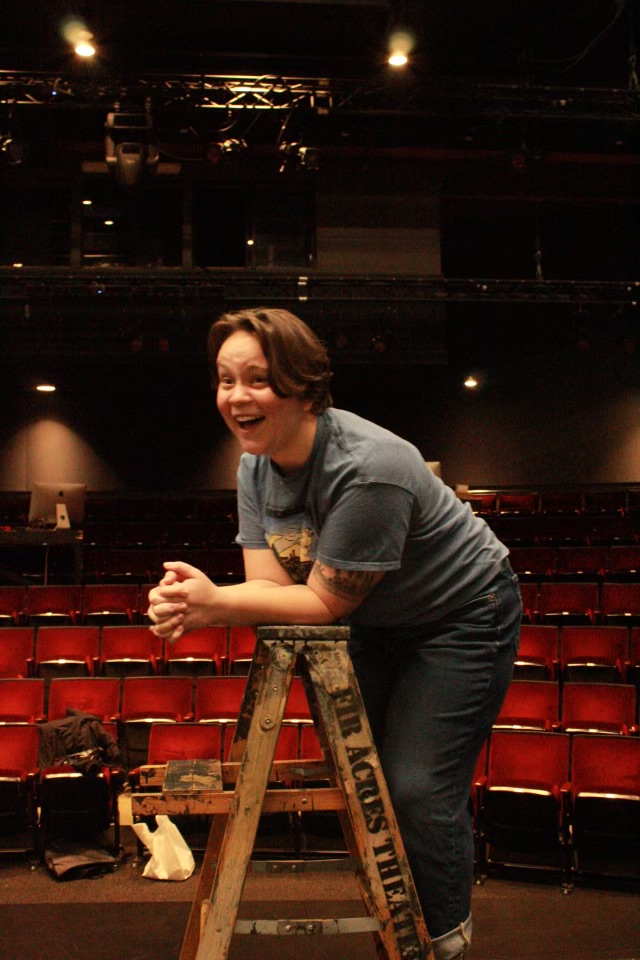
And this summer Bruce and I saw a production at the American Players Theater, Spring Green, WI.

Is there something about Our Town that we need right now? Wait a minute, am I reviewing Our Town or Tom Lake? Perhaps the two will always be linked in my heart and mind from now on.
Back to the book. Each character is so clear, so well-defined, but with their own obscurities. Each one of the daughters could become a book on their own, and yet they belong together–something the pandemic gave them another chance to experience.
They stack their dishes in the sink and head out the door together, Maisie holding the end of Emily’s braid the way one elephant will use its trunk to hold another elephant’s tail. Nell slips her finger through Maisie’s belt loop. Joe and I used to say that if lightning struck one of these girls all three would go up in flames.”
p. 91
This book would have been good, very good, without the context of the pandemic. No doubt Patchett would have found a way for her daughters to return to the farm for a chunk of time and no doubt there would have been reasons for such ongoing storytelling, but the pandemic becomes the open hands of the story.
I stay behind to make the lunch, which I should have been working on while I was talking all this time. The past need not be so all-encompassing that it renders us incapable of making egg salad. The past, were I to type it up, would look like a disaster, but regardless of how it ended we all had many good days. In that sense the past is much like the present because the present–this unparalleled disaster–is the happiest time of my life: Joe and I here on this farm, our three girls grown and gone and then returned, all of us working together to take the cherries off the trees. Ask that girl who left Tom Lake what she wanted out of life and she would never in a million years have said the Nelson farm in Traverse City, Michigan, but as it turned out, it was all she wanted.
p. 253.
The story continues to unfold to the last page, but it doesn’t feel like a great reveal–only the way life happens. Day by day. Year by year.
There is no explaining this simple truth about life: you will forget much of it. The painful things you were certain you’d never be able to let go. Now you’re not entirely sure when they happened, while the thrilling parts, the heart-stopping joys, splintered and scattered and became something else. Memories are then replaced by different joys and larger sorrows, and unbelievable, those things get knocked aside as well, until one morning you’re picking cherries with your three grown daughters and your husband goes by on the Gator and you are positive that this is all you’ve ever wanted in the world.
p. 116
One more thing: I made a crucial decision as I started reading the book. I decided not to underline sentences and paragraphs I loved, for I knew immediately, there would be so many. Instead I marked passages with a subtle light blue x in the margin, keeping the book a bit more pristine and fresh, like the daisies on the cover. (I didn’t understand the cover design choice, by the way until almost the end. Why weren’t there cherry trees on the cover I wondered. Trust me, there is a reason.)
May these days, as we move from late summer into fall, find you engrossed in just the right book.
An Invitation
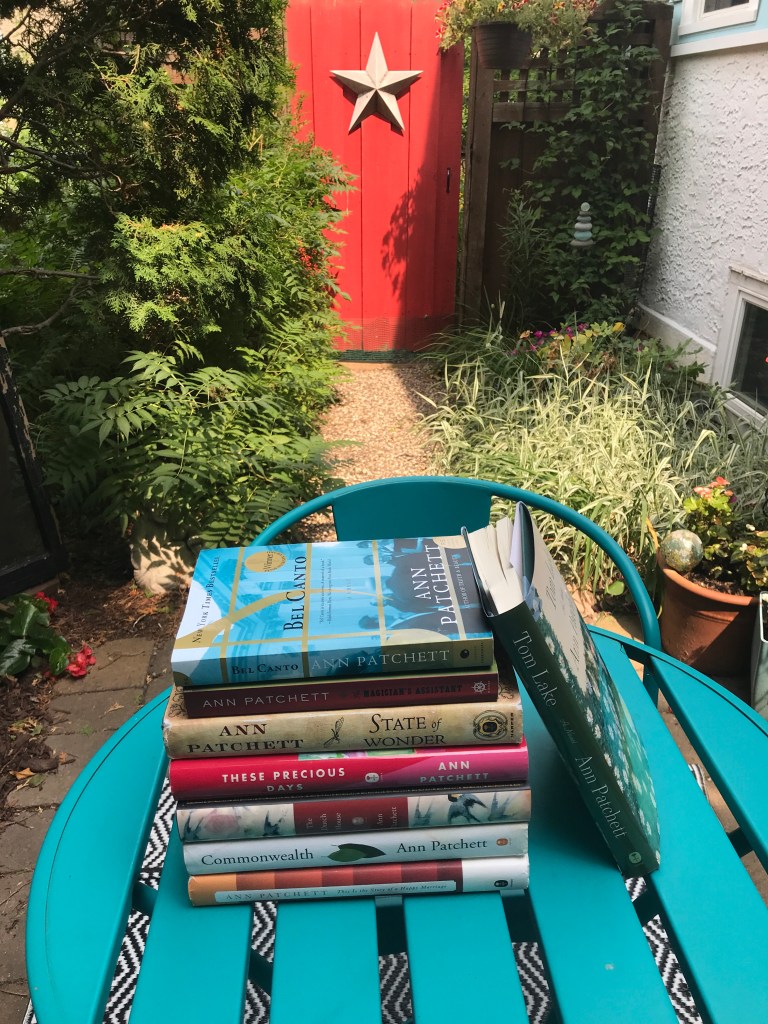
Are you an Ann Patchett reader? What’s your favorite?
NOTE:
I enjoyed reading this interview with Patchett. https://www.shondaland.com/inspire/books/a44654107/tom-lake-is-a-meditation-on-a-love-that-could-never-be-family-and-the-quiet-beauty-of-our-town/
 Living on Life's Labyrinth