Book Report: Summer Reading in the Garden

June 13, 2024

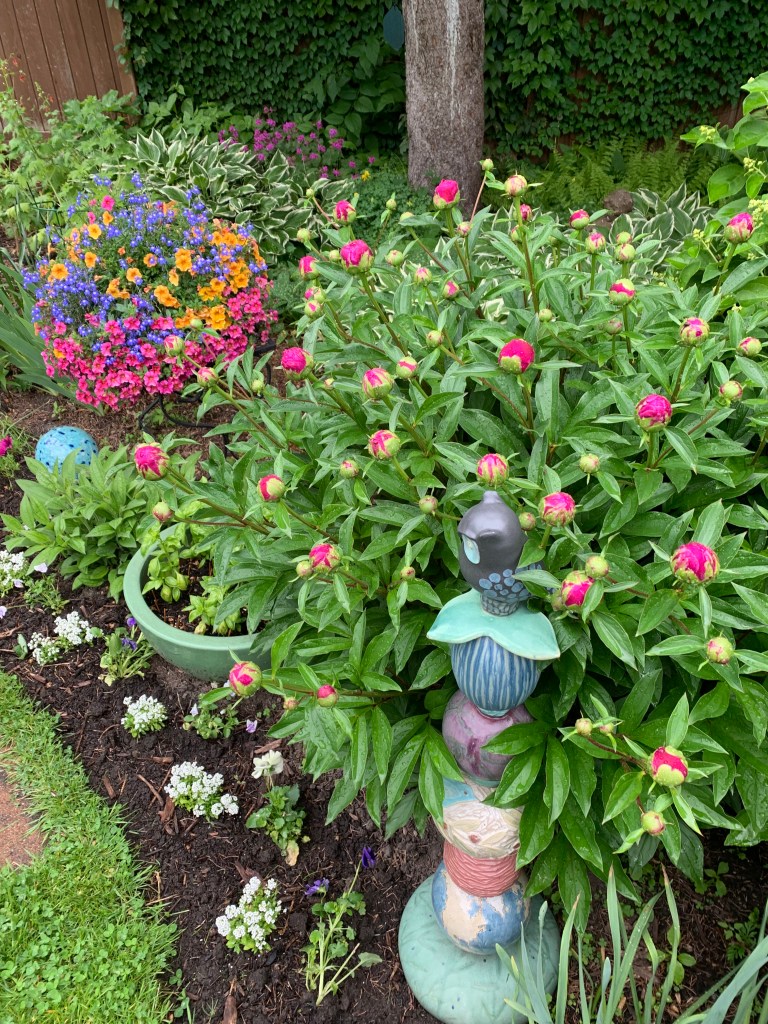
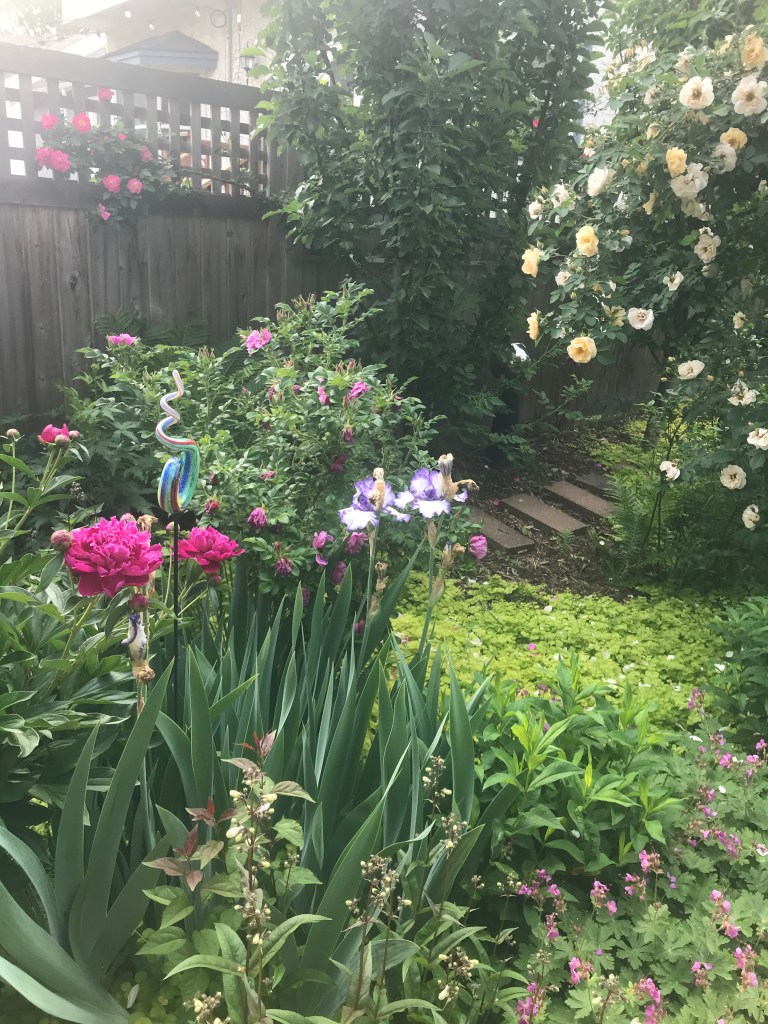
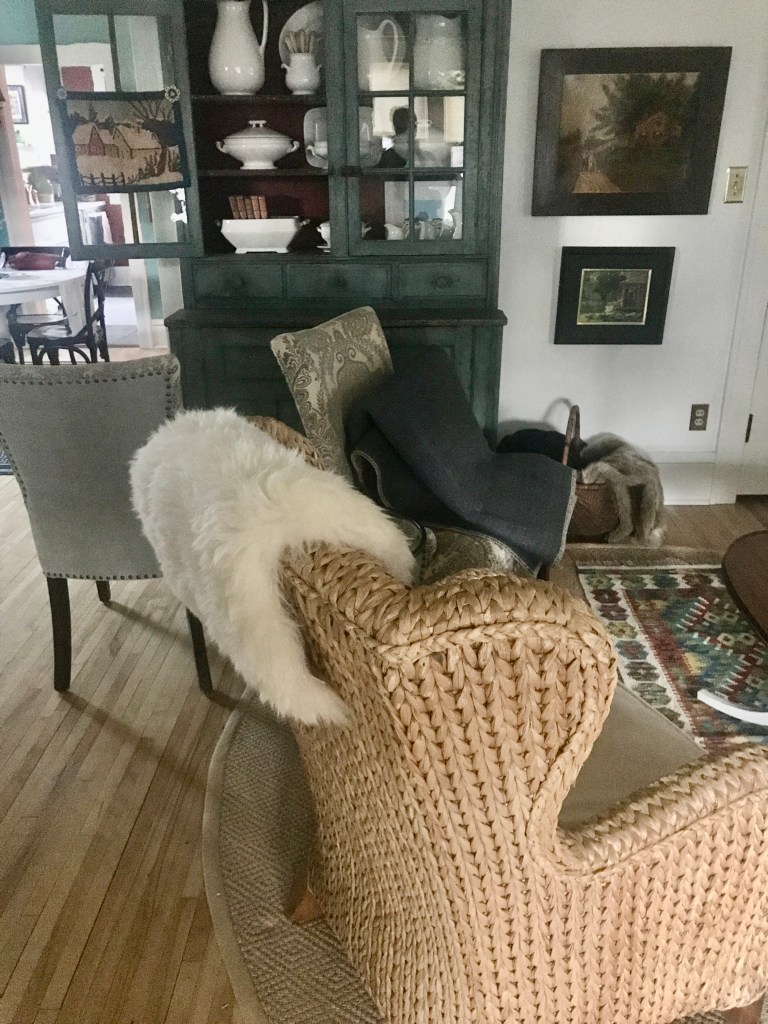
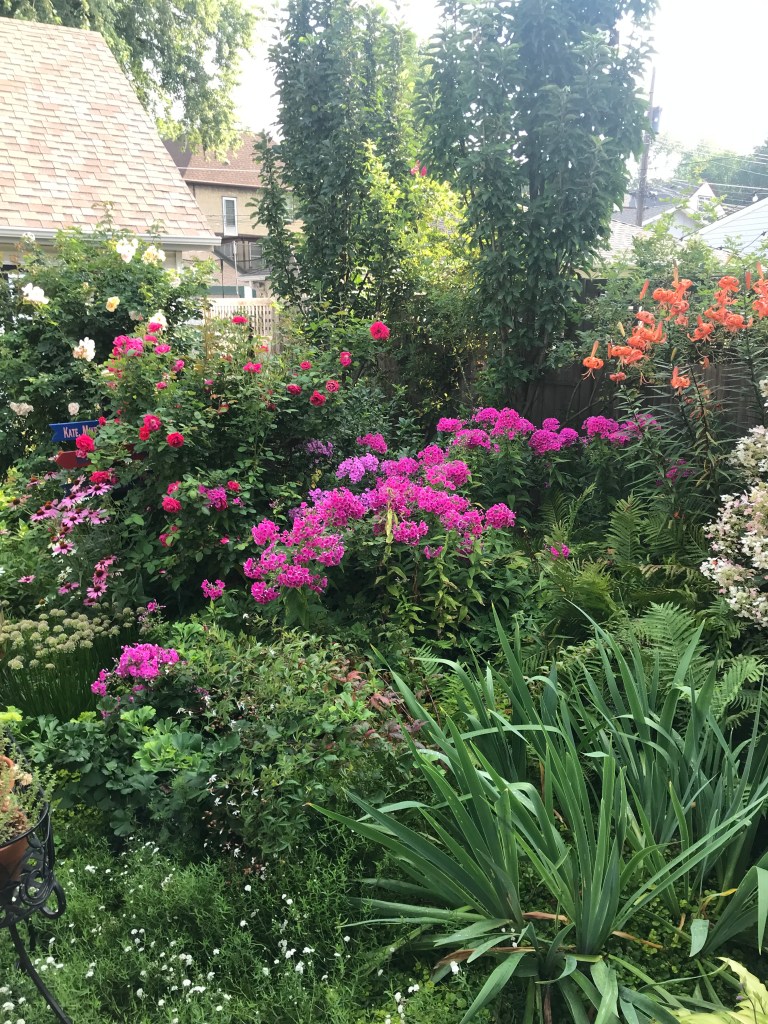
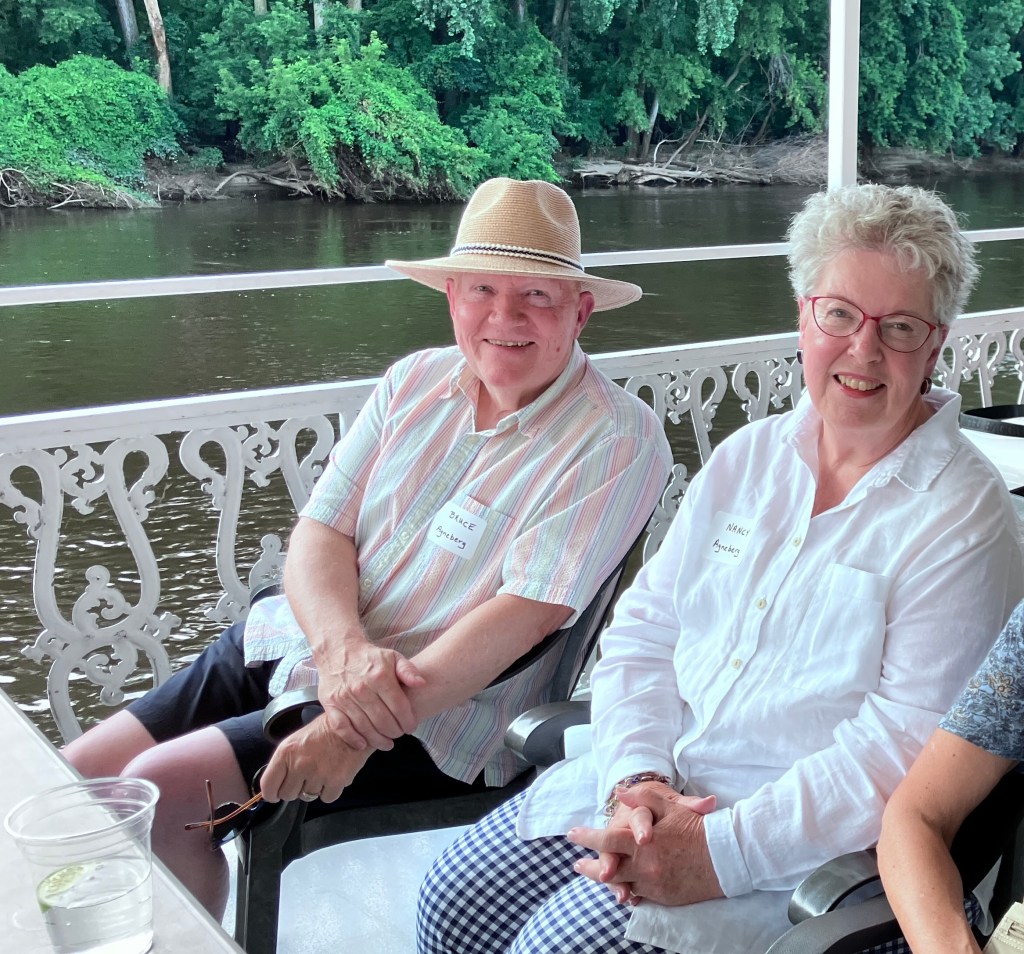
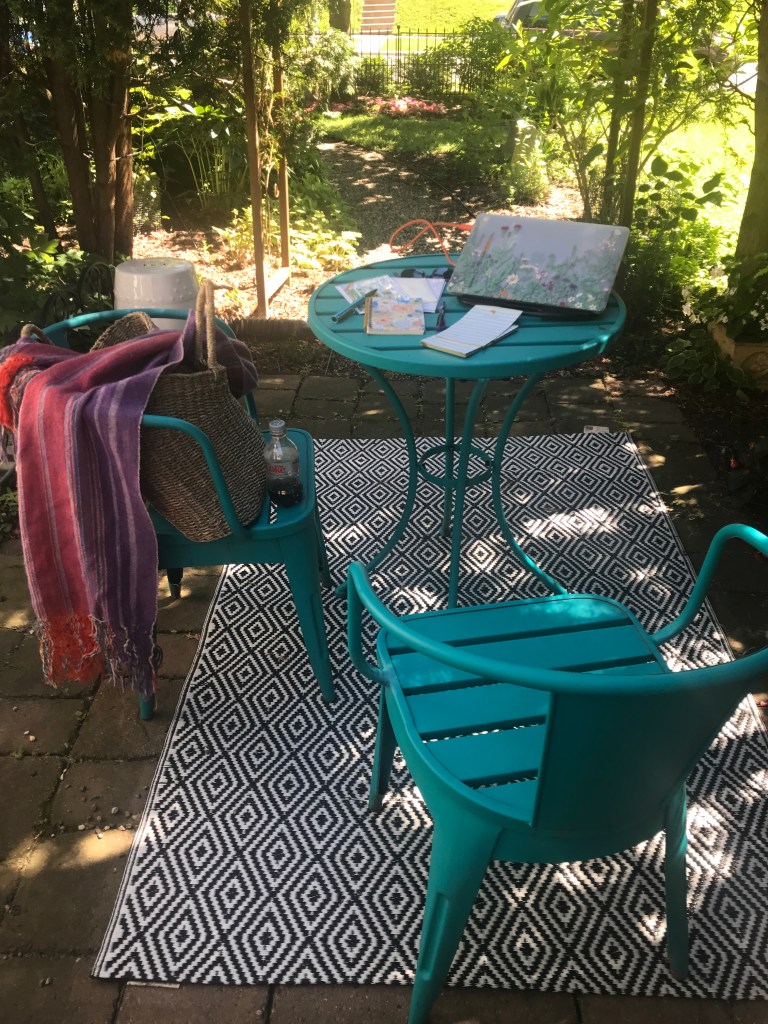
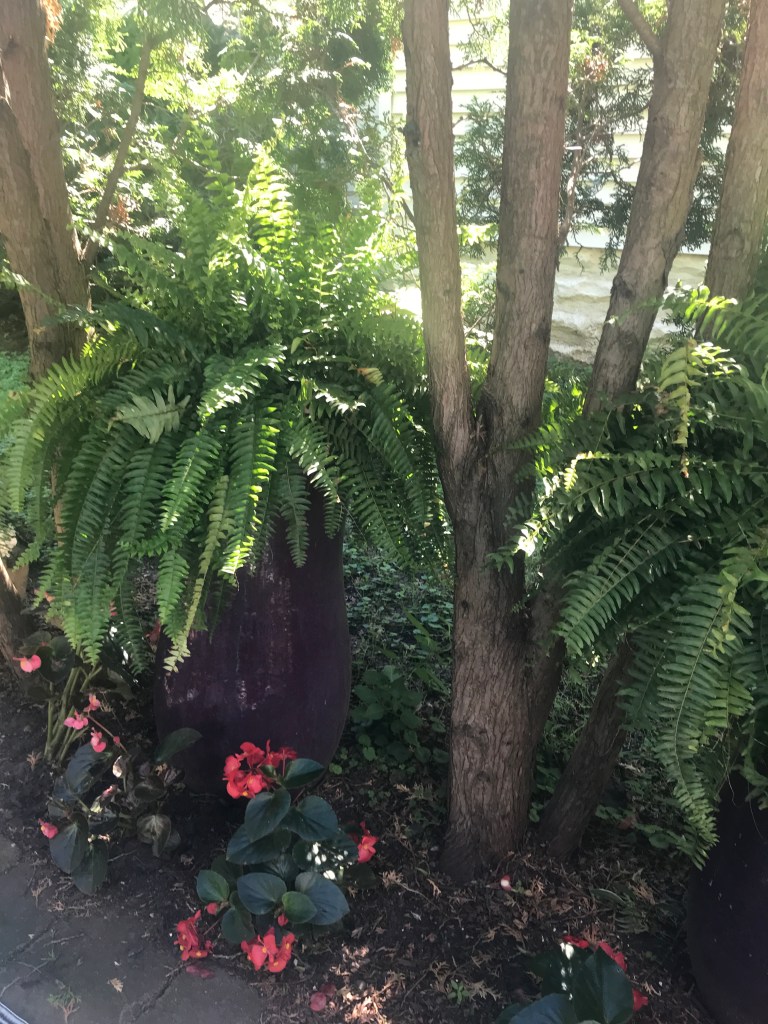
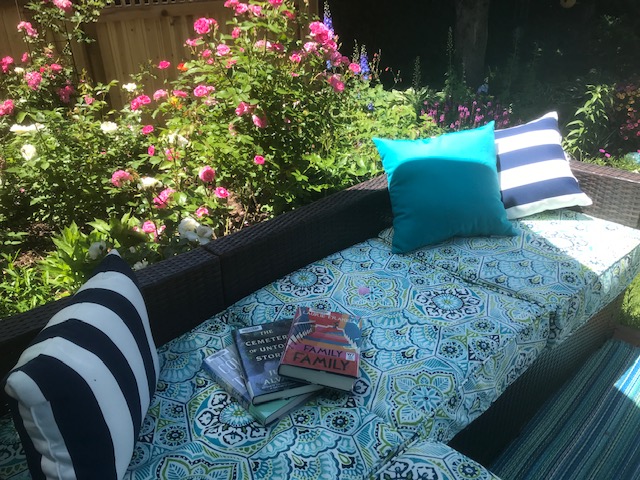
Summer reading deserves lovely summer settings, and on perfect summer days, this is where I like to read–our own patio and garden. Now I hasten to add, I have done nothing to make this space so perfect. All credit goes to my husband the genius and hardworking gardener. We have lived in this house for ten years, and he has created a private paradise.

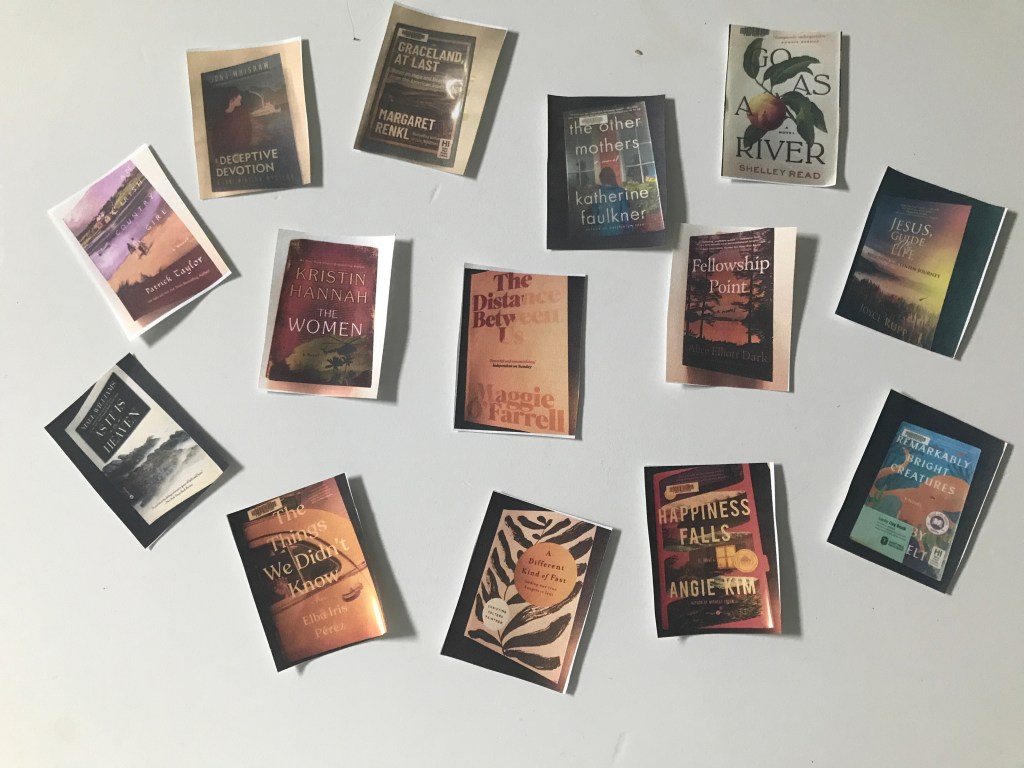
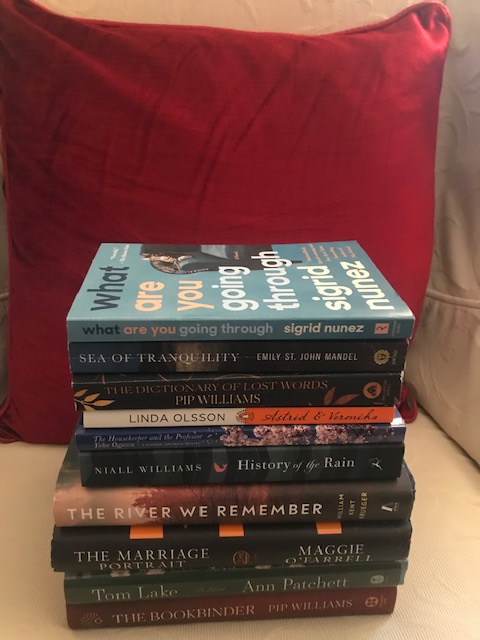
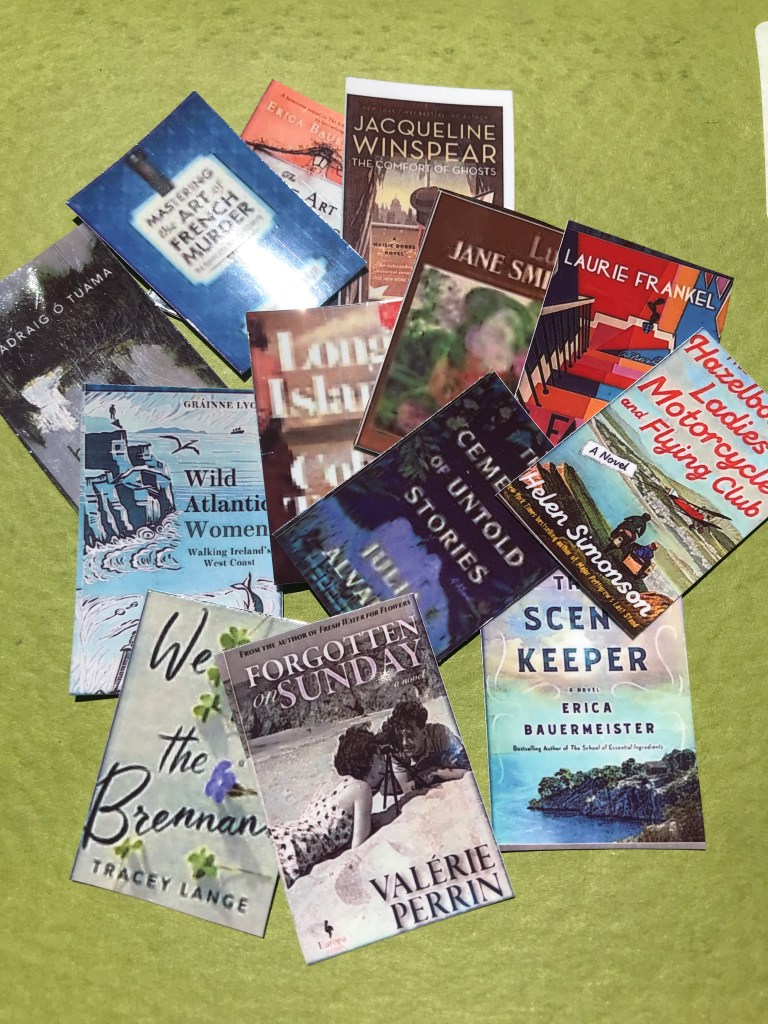
My self-proclaimed job in the garden is to read so I can recommend books to you. Here’s three to put on your TBR list.

  1. Long Island by Colm Toibin (2024), 294 pages. If you have read Brooklyn (2009), you will already be familiar with the main character, Eilis Lacey, an Irish immigrant. The plot of this book begins when a stranger shows up on her doorstep to inform her that his wife is pregnant by Eilis’s Italian-American husband Tony, and the minute that baby is born, he plans to leave it on her doorstep. She wants nothing to do with this baby, but doesn’t confront Tony with his infidelity. Her mother-in-law, who, trust me, is a piece of work, has a plan. Eilis comes up with her own plan: go to Ireland to visit her mother who is turning 80–and, again, trust me, she is another piece of work. Eilis reconnects with a man from her younger years who has never married, but he’s secretly engaged to Nancy. These are complicated characters, each one of them, richly drawn, even if they are at times frustrating. The ending makes me wonder if this book will be #2 of a trilogy. An excellent summer read.
  2. The Cemetery of Untold Stories by Julia Alvarez (2024), 237 pages. This book did not disappoint. Alma Cruz is a writer, a successful writer, born in the Dominican Republic and one of several sisters, who frankly, I couldn’t keep straight. It doesn’t matter. When their father dies, Alma inherits a piece of land in the Dominican Republic, and she decides that is where she wants to bury her untold/unfinished stories. She commissions an artist to make the monuments and hires a groundskeeper, Filomena. Of course, the stories are not content to be buried, and the characters in the stories talk to each other and to Filomena and to us, the readers. In many ways the stories and characters are connected and related and that is part of the fun, the intrigue, and the richness in this book by a masterful storyteller. I love that Alvarez quotes this piece of scripture from the Gospel of Thomas, “If you bring forth what is inside you, what is inside you will save you. If you do not bring forth what is inside you, what is inside you will destroy you.”
  3. Family Family by Laurie Frankel (2024), 380 pages. India is pregnant the last year of high school and decides to have the baby placed for adoption. She always insists on the word “place,” rather than “give up.” She goes on to attend a prestigious acting school, her dream, and has great success. But guess what? She gets pregnant again in her senior year and places that baby up for adoption. She becomes a famous actress on Broadway, but also in Hollywood where the work is more regular and allows her to maintain a more stable life with her two children –not the two children who were adopted as babies. After she makes a movie with adoption as a theme, she expresses what turns out to be controversial ideas about adoption–that it isn’t always a trauma for the birth mother or the children or the adoptive parents–and she becomes a social media target. The result? I’m not telling. I especially appreciated the author’s skill with dialogue. Each character has his/her own voice. My daughter listened to this book and thoroughly enjoyed it too. One favorite quote:
It seemed to her that women did this all the time, weathered things that were hard and heartbreaking, but also chosen and even strived for. It seemed to her they often made tough decisions to let go, to lay down, in order to pick up something else because they knew--maybe in their bones, maybe having learned it again and again--that having all the things you wanted all at the same time was rarely on the table. It seemed to her that the people who had decided all birth mothers were regretful and unhappy and had been forced to do something they didn't want to do were probably men. p. 238

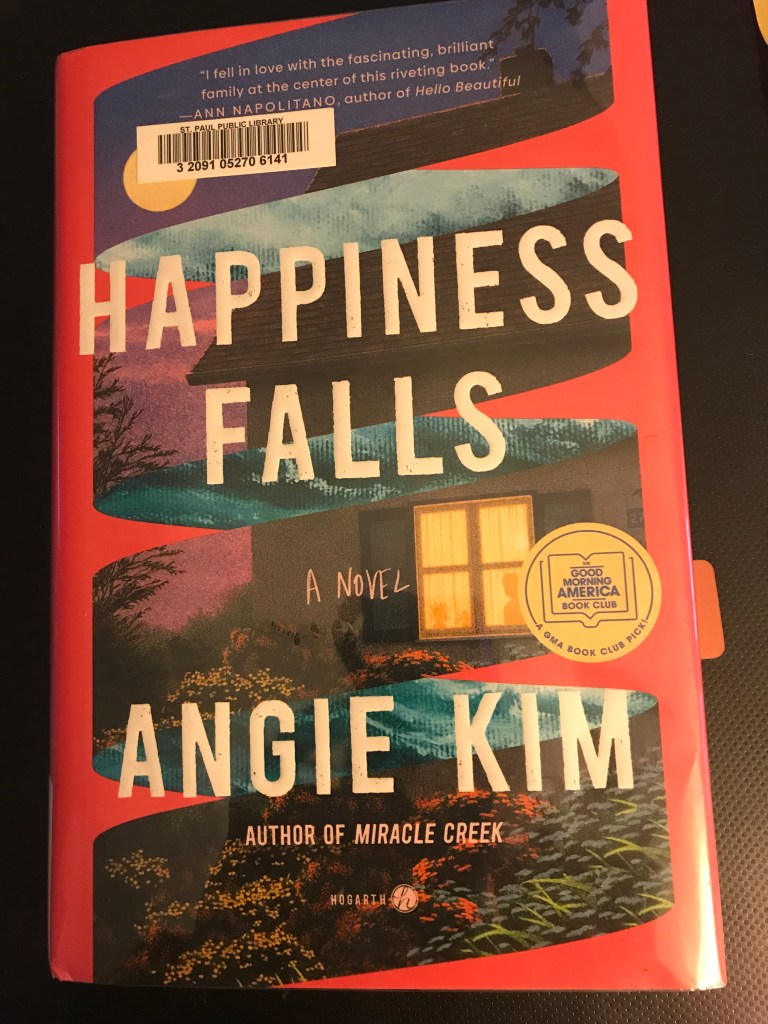
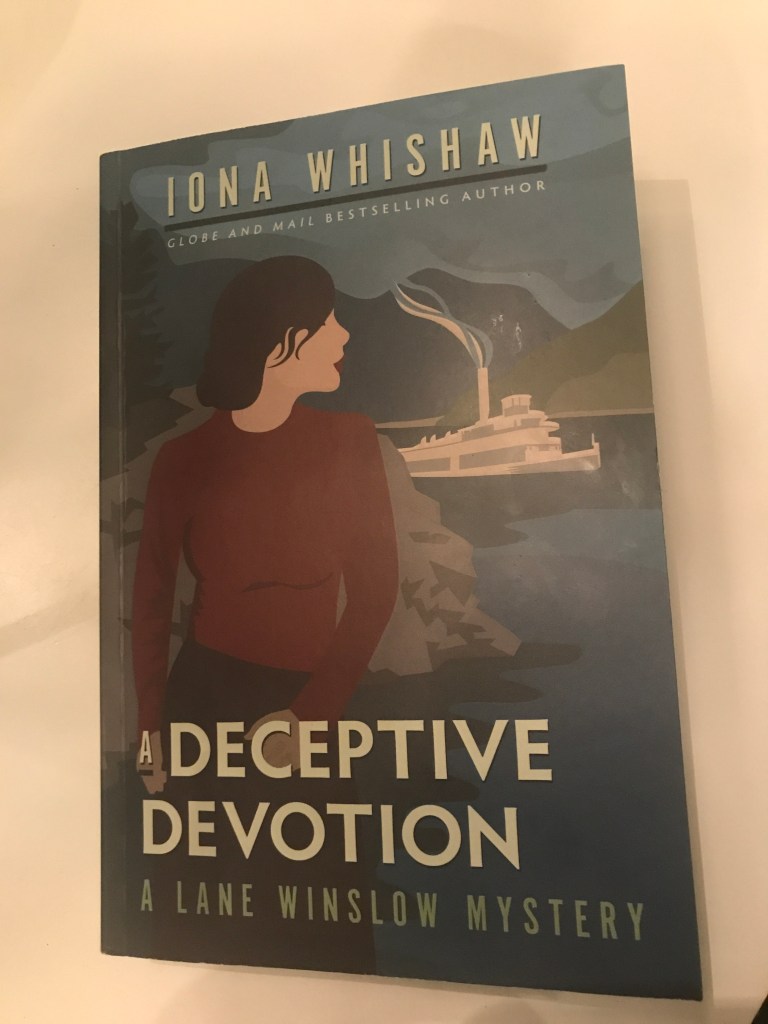
I am almost done with Lucky by Jane Smiley and like it very much. Stay tuned for a review. This book is the last of the books I had on my library hold list, and I’m forcing myself not to reserve others. Instead, I plan to read books on my personal hold list, including the newest (and last) Maisie Dobbs book by Jacqueline Winspear, The Comfort of Ghosts; Forgotten on Sunday by Valerie Perrin; The Hazelbourne Ladies Motorcycle and Flying Club by Helen Simonson; and two more books in the Lane Winslow mystery series by Iona Whishaw.

This doesn’t mean I haven’t been adding to my TBR list, however. Here are a few of those titles:

  • The Ministry of Time by Kaliane Bradley
  • Housemates by Emma Copley Eisenberg
  • Real Americans by Rachel Khong
  • Sandwich by Catherine Newman
  • You Are Here by David Nichols
  • This Strange Eventful History by Claire Messud
  • Sipsworth by Simon Van Booy
  • All the Colors of the Dark by Chris Whittaker
  • How to Read a Book by Monica Wood
  • Safekeep by Yale var der Wouden
  • This Is Where I Leave You by Jonathan Tropper

And even some nonfiction:

  • Life After Doom, Wisdom and Courage for a World Falling Apart by Brian McLaren
  • Shopkeeping: Stories, Advice and Observations by Peter Miller
  • Any Person is the Only Self (essays) by Elisa Gabbert
  • The Editor: How Publishing Legend Judith Jones Shaped Culture in America by Sara B. Franklin.

Where do you most enjoy reading in the summer? I would love to know.

A Postcard Primer

June 11, 2024

Stephen Carter in his book, Civility: Manners, Morals, and the Etiquette of Democracy offers a list of rules of civility. For example:

Civility has two parts: generosity, even when it is costly, and trust, even when there is risk.
Civility requires a commitment to live a common moral life.
Civility requires that we express ourselves in ways that demonstrate our respect for others.
Teaching civility by work and example is an obligation of the family.
Religions do their greatest service to civility when they preach not only love of neighbor but resistance to wrong.

As I prepare to work on another postcard campaign to encourage voting, I think about the simple ways we can promote civility–and how much that is needed. Making sure that every eligible voter is able to vote, feels comfortable voting, knows how and when to vote without impediment, and does not take this right for granted seems to me to be signs of a civil society.

In my April 9, 2024 post https://wordpress.com/post/livingonlifeslabyrinth.com/3340 I shared my practice of working on postcard campaigns. That is certainly not the only way to become involved during this crucial campaign year, but it is one thing I can do. Yes, it does take time, and there is a financial cost, for postcard stamps are not cheap (.53 each) and you need to buy postcards as well. I like to buy my postcards on Etsy, for not only are they attractive and colorful, but I also support working artists that way. A double win. https://www.etsy.com/search?q=etsy+postcards+for+voters&ref=search_bar

I have signed up to write postcards for the following organizations and invite you to check out their websites.

  1. Postcards to Voters: https://postcardstovoters.org
  2. Activate America: https://www.activateamerica.vote/postcard

You can choose campaigns that fit your time frame and also the campaigns that specifically interest you. And you can decide how many addresses you want to receive. I usually sign-up for 50 names/addresses, but sometimes a last-minute request comes to send a smaller amount, 5 or 10, and I try to do those, too. That means having supplies on hand–postcards and stamps; both can be ordered online, of course.

Both organizations give you specific instructions that include the deadline for mailing, the specific script to write on each postcard, along with the name and address of the recipient. You sign the postcard with only your first name.

I work on postcards while watching a movie or waiting for the pasta water to boil or sometimes after my morning meditation, which includes a prayer for our country, I write a few postcards. It all adds up.

I also recommend Jessica Craven’s website, Chop Wood, Carry Water, https://chopwoodcarrywaterdailyactions.substack.com/p/chop-wood-carry-water-67-eef and encourage you to subscribe to it, for at the end of each post she gives very specific actions, including scripts for phone calls and letter writing and postcard campaigns.

The newsletters written by Robert Hubbell and Heather Cox Richardson comment on current issues, along with judicial and historical references, giving you motivation as well as factual back-up for working to save our democracy.https://roberthubbell.substack.com/p/november-5th-will-be-our-d-day https://heathercoxrichardson.substack.com/p/june-7-2024-36d

Here’s a thought: gather friends for a postcard party. You can supply the postcards and stamps. Request the names and addresses ahead of time and give each guest a script and a certain number of names/addresses. Drinks and snacks are, of course, a must! Voila–you’ve got a stack of postcards to mail, and you’ve made a difference.

I am getting ready to work on two campaigns. One is for voters in Milwaukee, WI, encouraging them to vote. The other is for Sherrod Brown, running for re-election as senator from Ohio. This is a tight and critical race, but the words of Martin Luther King, Jr inspire me. “I have a dream…” and “Let Freedom ring.”

Feel free to share this post and/or the links included in the post with others who might be wondering what they can do during this scary and stressful time. We each can make a difference.

Tree Work

June 6, 2024

Turning to the day
and to each other
We open ourselves to the day
and each other.

This is the day that the Lord Has made
and a day we'll have to make our way through.
from Being Here, Prayers for Curiosity, Justice and Love by Padraig O Tuama

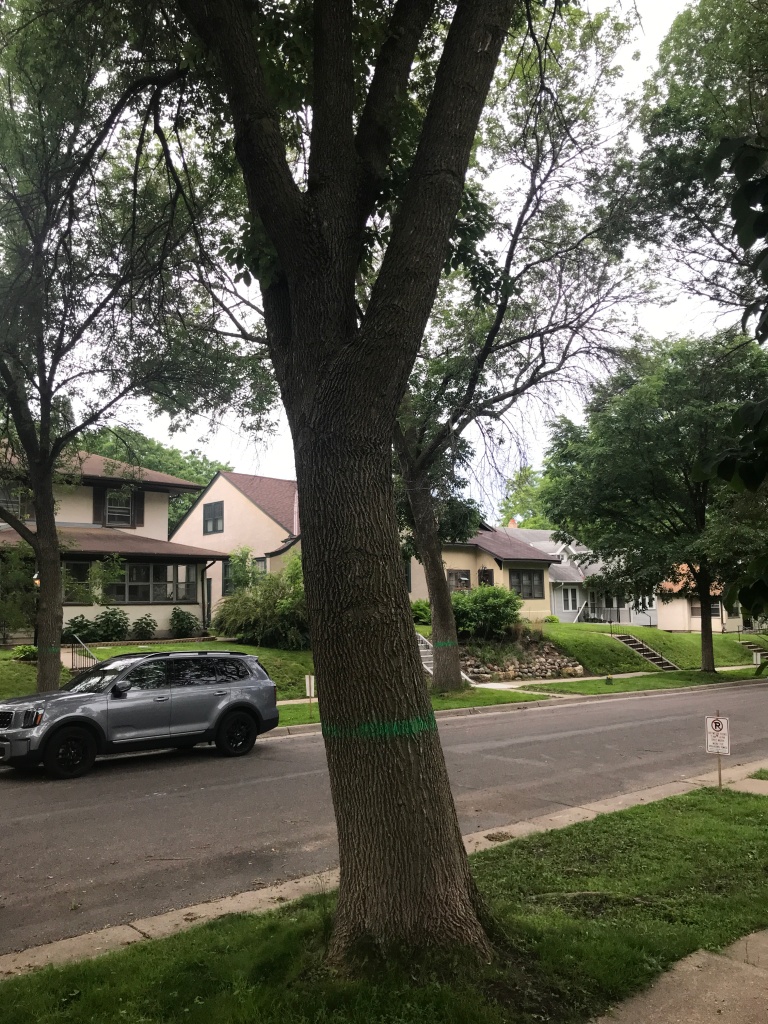
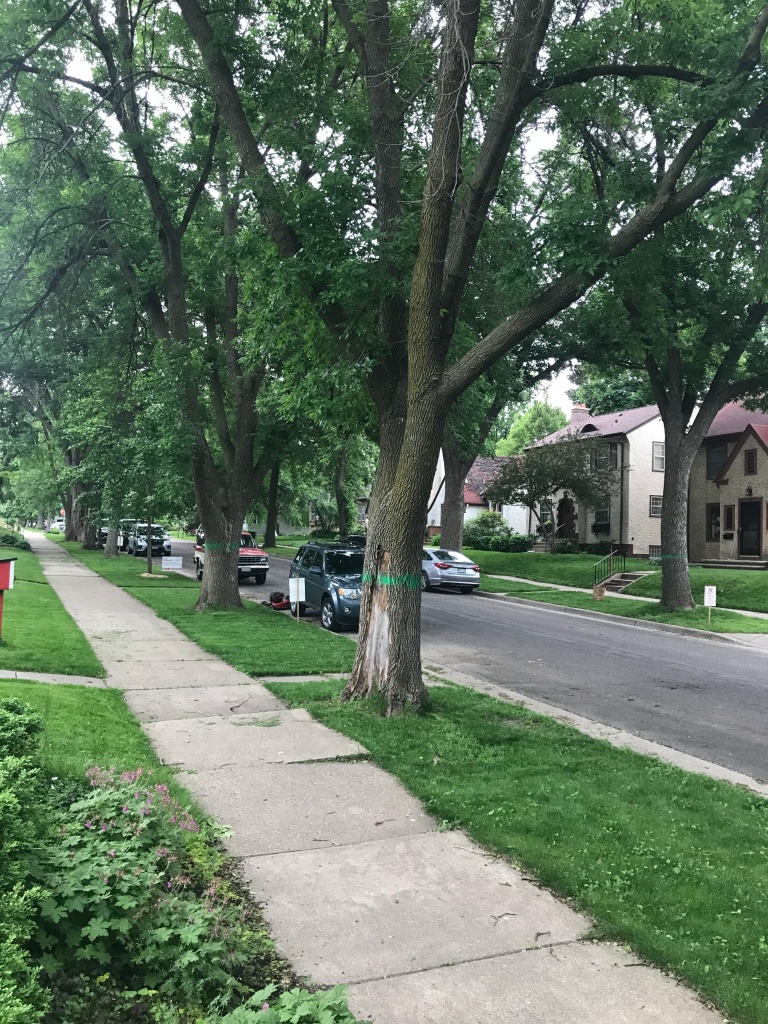
What a sad week for our block. We lost fourteen friends earlier this week. Diseased ash trees marked for destruction.

I took a memorial Monday morning, saying goodbye to the tress marked with a green end of life ring. I thanked them for their gifts of beauty and shade and shelter for birds and squirrels. To those allowed to live, I encouraged them to continue growing and to stay well. I thanked them for their ongoing presence.

We have been told that trees communicate with each other, and I wonder what their last conversations were. Did they say goodby to each other? How did they recognize and honor one another?

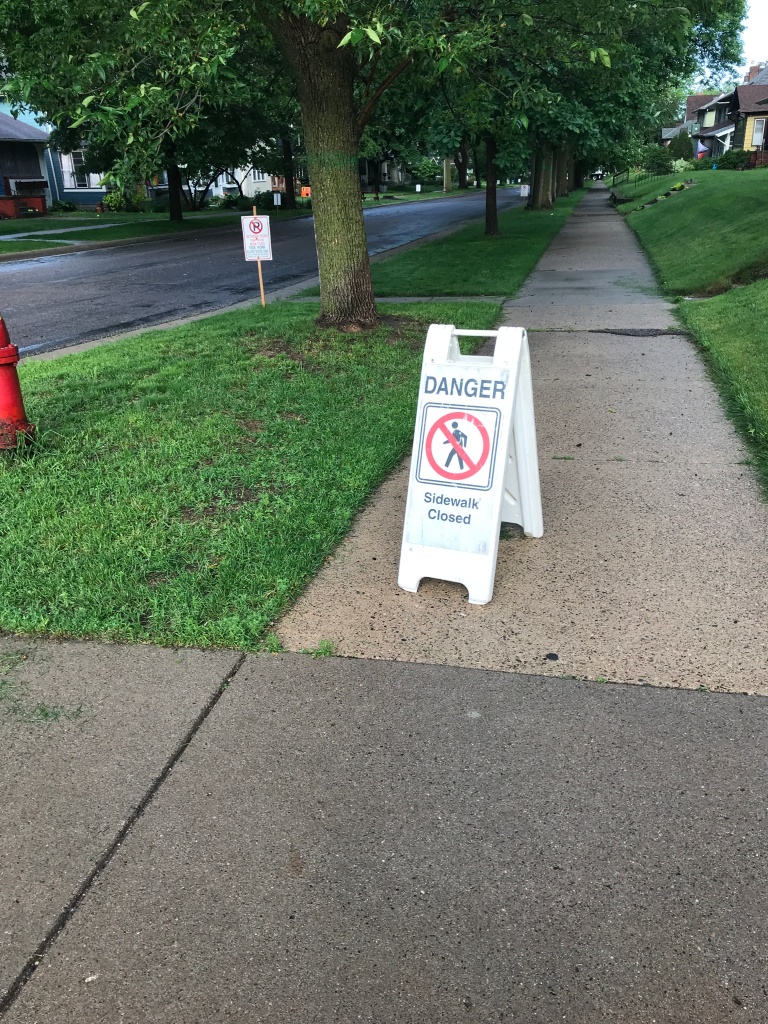
Before arriving home from my walk the trucks and workers had arrived, and the signs blocking sidewalks and streets were in place.

I defied the warning of danger and walked the last block home, instead of the alley. A couple neighbors stood on their steps as the action began, and I greeted them, “It’s a sad day.” “How different it will be,” one replied.

I was drawn to the snug, the room at the front of the house, feeling a need to be a witness to the lives that were ending. I moved my laptop from the garret to the desk in the snug, even though I knew the noise would be disruptive. That felt like the least I could do.

The noise began and as each tree lost its life, I heard a kind of death rattle. The men in their yellow vests did their jobs. Expertly, respectfully, but even though I know trees have life spans, too, and are subject to disease, this felt like a failure. And now those of us left will need to adjust to a new reality. That includes the birds and the squirrels. Some may lose their nests, even, but at the very least a playground, their perch and window on the world.

As Padraig O Tuoma says in his prayer, “This is the day that the Lord has made and a day we’ll have to make our way through.

In Being Here, O Tuoma’s new book of prayers, he includes a collect for each of the 31 days of meditations. A collect, pronounced with the emphasis on the first syllable, COLLect, is a form of “collecting something; namely your intention and desire, your reflection and attention, your gratitude, and your need for containment.” O Tuoma explains that the collect has five folds:

  1. Name the one you’re praying to
  2. Unfold the name of the one you’re praying to
  3. Name one desire
  4. Unfold the desire you’ve names
  5. Finish with a bird of praise

Bird of praise? Well, O Tuoma, doesn’t really know either, but says why not? Most collects I’ve read end simply with an Amen.

He simplifies the form even more:

  • Address
  • Say more
  • Ask one thing
  • Say more
  • End

Here is an example of a collect from Being Here:

Grandmothers of Jesus,
In your stories we hear of your
courage and creativity,
your tenacity,
and the things you faced down.
Here, today, we stand in the time after you
and look back,
with gratitude for stories like yours
that help us live today.
Help us live today
in all the stories of our lives
so that we can stand in your great
ache and wash.
Amen.

It occurs to me to write a collect, addressing the trees on our block, as a way to mark the day. Collects most often address God, by the way, but that is not always the case. In fact, Sunday I wrote a collect to my calendar and list for the week, giving thanks for the ways they remind me to be in the world, to use my gifts and energy, and to remember to pause. Here’s my collect for the trees:

Oh dear trees, sacred trees
Signs of God's love for all creation.
Reminders of the genius and beauty
of diversity, of transformation, of the need
for both grounding and stretching.
You have graced us with your presence,
given shelter and protection,
inspired us
as teachers, revealers, companions.
May our lives, even as we mourn your loss,
be signs of God's divinity on earth.
May we nurture new growth
both within our hearts
and along the avenues of our lives.
Amen.

Has there ever been a special tree in your life? I would love to know.

Book Report: May Summary

June 4, 2024

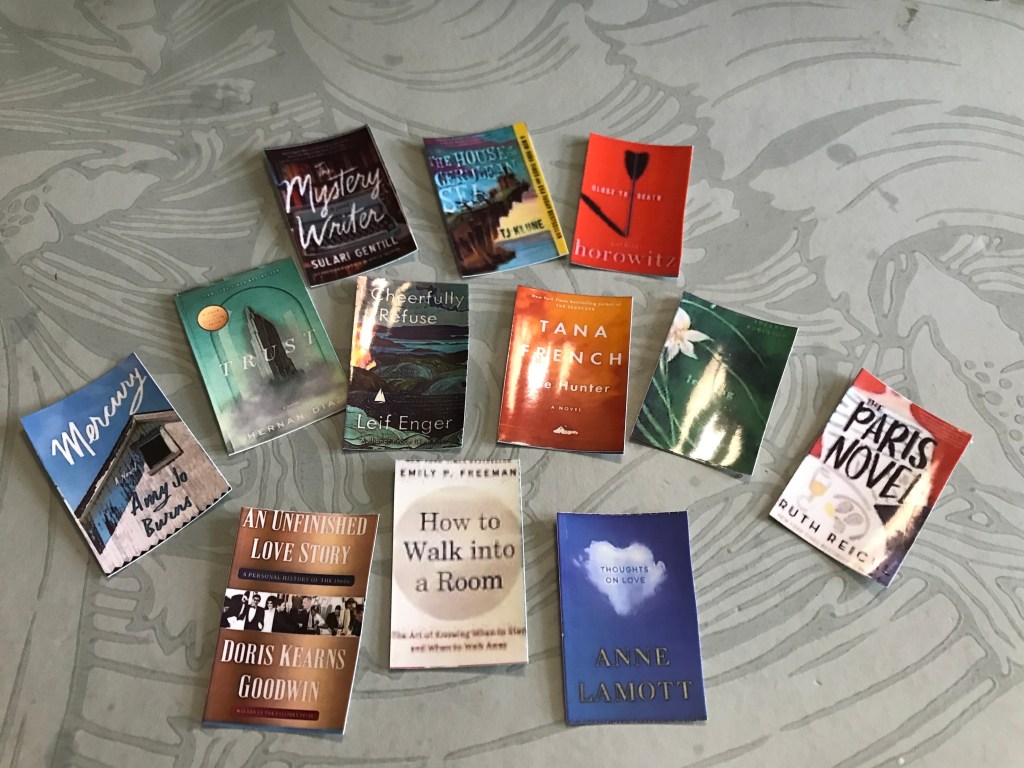
  1. Three Mysteries
  • The Hunter by Tana French (2024) 467 pages. I probably should have read her earlier book, The Searcher, to know some of the backstory set in Ireland, but I think I followed it ok. Cal is a retired policeman from Chicago who has no connection to the village but has found home there and has created a new avocation for himself as a woodworker. The story involves a scam–supposedly discovering gold in the mountains there. Lots of ins and outs, but I loved some of the Irish vernacular. “She’s ninety-two years of age, hasn’t left the house since God was a child…” p. 339.
    Don’t keep me hanging about, I’ve a mouth on me like Gandhi’s flip flops.” p. 347.
  • Close to Death by Anthony Horowitz (2024). I didn’t enjoy this book as much as Horowitz’s earlier books, but that may be because I read it in small chunks and didn’t feel the flow. A resident of Riverview Close is murdered with a crossbow; a man who was disliked by every one in that community of old homes.
  • The Mystery Writer by Solari Gentil (2024) 366 pages. Again, an ok mystery and I liked her earlier book, The Woman in the Library much better. Plus, the number of proofreading errors, more than I’ve ever noticed in a book, distracted me. A young writer meets an older writer, and they have an affair. His literary agents shows interest in the younger writer’s book. Get ready for conspiracy theories and survivalist groups.

2. Two Family Sagas

  • Mercury by Amy Jo Burns (2023) 315 pages. The story of the Joseph family: father Mick, Mother Elise and three grown sons, Baylor, Waylon, and Shay –all with complicated personalities. “In the Joseph family Mick aimed for the impossible, Waylon hoped for the best, Baylor planned for the worst. And Shay? Shay baby was all right, always. Like the mail coming every weekday at four, like Lake Erie freezing over in January.” (p. 136) Waylon is married to Marley and they all live in the same house. Marley tried to create order in the family’s roofing business and to assert her individuality. The story unravels. “At some point a marriage must become a junkyard of things, unfinished sentences and earring backs scattered across the floor.” (p. 274) Well worth reading.
  • Leaving by Rosanna Robinson (2024) 327 pages. See my review of this book in my May 30 post. I loved this book.https://wordpress.com/post/livingonlifeslabyrinth.com/3557

3. One Book Set in the Future: I Cheerfully Refuse by Leif Enter (2024) 329 pages. Ron Charles book reviewer for the Washington Post calls this book a “sweet apocalyptic novel,” and that feels about right. Set in the near future on Lake Superior, Rainy is a musician married to Lark who owns a bookstore–a dangerous occupation. He embarks unexpectedly on an odyssey after tragedy upends his life. Climate crisis, economic disparity and political decay are in the background of this book, along with references to 16 wealthy families called “astronauts” who control everything, book banning, closed libraries, and an illiterate president. I was not surprised to like this book by Enger, for I have loved his other books, Peace Like a River, So Brave, Young and Handsome, and Virgil Wander, but I was surprised by the dystopian quality.

4. One Book Where Structure is Almost a Character. Trust by Hernan Diaz (2022) 402 pages. See my review of this book in my May 30 post.https://wordpress.com/post/livingonlifeslabyrinth.com/3557

5. One Book Set In Paris. The Paris Novel by Ruth Reichl (2024) 265 pages. No surprise, this book is charming! No surprise because the author is food critic/writer, this book includes lots of references to food. Mouth-watering food. When Stella’s estranged mother Celia dies, she leaves her tickets to Paris; a trip that brings Stella home to herself. Along the way she meets wonderful people and offers her a mission–the search for paintings by a woman who had been a model for many famous male artists. That part of the story is true. I loved all the references to the famous bookstore, Shakespeare and Company, too.

6. One Fantasy. The House in the Cerulean Sea by T. J. Klune (2020) 396 pages. Many people have recommended this book to me, and I am so glad I finally read it. Linus Baker is a case worker for the DCOMY, the Department in Charge of Magical Youth, and he is sent to investigate an orphanage on an island. He sets off with his ever-present book of Rules and Regulations, but he didn’t count on being intrigued by the children he met there. For example, Talia is a female gnome who has a beard; Phee is a sprite; Lucy is short for Lucifer and you know what that means. The master is Parnassus and turns out to be a …..read the book and find out. This is a book about tolerance and believing in one’s self and standing up for what is right and also, true love.

  1. An Unfinished Love Story, A Personal History of the 60s by Doris Kearns Goodwin. (2024) See my review of this wonderful book in my May 25th post. https://wordpress.com/post/livingonlifeslabyrinth.com/3525
  2. Somehow, Thoughts on Love by Anne Lamott (2024) 191 pages. I reviewed this book, which I also really liked, in that same May 25th post. https://wordpress.com/post/livingonlifeslabyrinth.com/3525
  3. How To Walk into a Room, The Art of Knowing When to Stay and When to Walk Away by Emily P. Freeman. (2024) 218 pages. Ok, now that I have devoured this book and underlined almost everything, I intend to re-read it slowly, carefully. Freeman is the a spiritual director, author of The Next Right Thing and has a podcast of the same name, and she often focuses on questions of discernment, using the metaphor of rooms. Is it good to stay in a “room,” or is it time to leave? And what about the “hallways” of our life? I like her acronym, PRAY which stands for point and call, remember your path, acknowledge presence, and yield to the arrows. Freeman offers both practical guidelines and inspiration for deeper reflection. I have been recommending this book to everyone–and now to you!

Twelve Books in May–and now on to June!

Have you read any of the books I mention? I would love to know.

Book Report: Two Novels — One I Loved and One I Appreciated.

May 30, 2024

Love found. Love lost. Love found again. Love –well, that would be a spoiler wouldn’t it?

Sarah and Warren meet and fall in love in college and move towards getting married, but when Warren proposes embarking on what Sarah considers a dangerous and unwise trip, she has second thoughts about who he is. They go their separate ways and marry other people. Decades later they recognize each other at an opera and soon begin an affair. Sarah is divorced and Warren’s marriage, he realizes, is unfulfilling. As Warren begins divorce proceedings, he faces not only deep distress from his wife, but also the wrath of his daughter who threatens to cut him out of her life completely. Both Sarah and Warren confront the moral responsibilities of their love for and history with their families and each other.

This book is an example of much of what I love in a book: complex, but believable characters. Characters who struggle to learn about themselves and one another and grow. The ending doesn’t need to be happily ever after, but it must make sense. Along with being well-written–a must–I want to learn something about myself on the pages. In this case I thought about all the different lives possible within us with just a slight change of direction or a different decision.

And this book is not just well-written, but beautifully written. One example is early in the book as Sarah and Warren become reacquainted:

“I wanted to hear about your life,” she says. ” You go along from year to year and you think you’re part of the lives of everyone you’ve known. You sort of feel you own them, even if you don’t see them, because they live inside your mind. Then you’re sixty, and you realize the people you knew have been leading their lives apart from yours. Remember in To The Lighthouse, when someone tells Mrs. Ramsay about friends she hasn’t seen in years? They’ve built a conservatory. Mrs. Ramsay remembers the time they went on the river together, and she was so cold. She can’t believe that they’re the sort of people who would build a conservatory. She’s shocked to realize that they have been carrying on their lives without her.” She smiles at him. “I wanted to know what happened to you. If you’d built a conservatory.” p. 42

It doesn’t hurt that they are the kind of people who read and loved Virginia Woolf, but more than that I love the intelligent and sensitive and deep conversations and interactions. I must say, however, I found both Sarah’s and Warren’s adult children annoying and not as well drawn.

Robinson has written other novels and short stories and a biography of Georgia O’Keefe, which I think I may have read. More for the TBR?

What stands out for me in this book is the intriguing construction.

The book is divided into four sections, beginning with a novel within the novel: Bonds about 1930’s Wall Street tycoon Benjamin Rask and his wife Helen. The next section, My Life, is notes for another book, similar to Bonds. Andrew Bevel narrates his life in finance and his philanthropic wife Mildred. The reader wonders, “What is going on here?” The third section introduces Ida Partenza, the daughter of an Italian immigrant who is hired by Bevel as his secretary and ghostwriter. Bevel’s intention is to refute the version told of his life in Bonds. He wants to set the record straight. And the 4th section, well, it’s Bevel’s wife’s Mildred turn to share her version. Huh? Really?

I supposed I should not have been surprised that a book titled Trust invites the reader to question everything. What is fact? What is fiction? Whom and what should I trust?

Trust is a 2023 Pulitzer Prize winner, along with Demon Copperhead by Barbara Kingsolver–a book I loved. I admire Trust as a mastery of manipulation and I, like many reviewers thought about Edith Wharton and Henry James as I read this book. And also The Great Gatsby and even the song about money from the musical Cabaret. I am glad I read it and I encourage you to read it, too, but it felt more like an intellectual exercise than a companion.

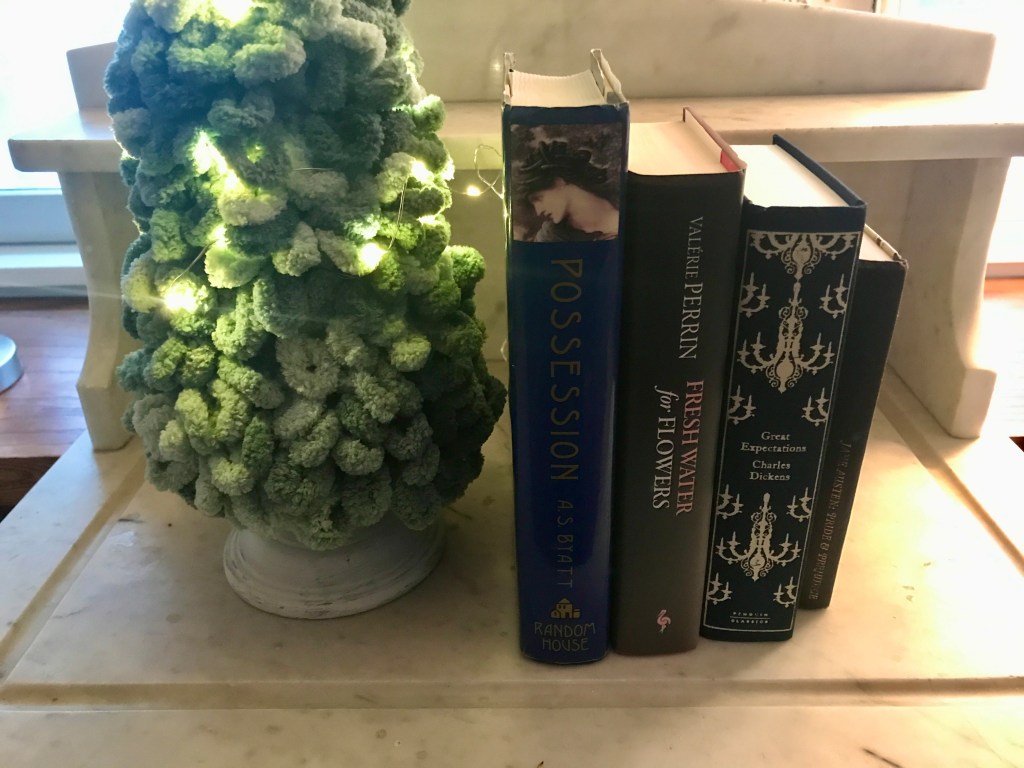
I just learned, thanks to Anne Bogel’s Summer Reading Guide https://members.modernmrsdarcy.com/product/2024-summer-reading-guide/ that French author Valerie Perrin’s first novel, Forgotten Sunday, will be released here in June. Her book Fresh Water for Flowers is one of my all-time favorite novels, and I will set aside anything I am reading for this work by her.

Thanks to Anne, I have added a number of other books to my TBR:

  • Real Americans by Rachel Khong
  • Sandwich by Catherine Newman
  • You Are Here by David Nicholls
  • All the Colors of the Dark by Chris Whitaker
  • How To Read A Book by Monica Wood
  • Shopkeeping: Stories, Advice and Observations by Peter Miller

Both Parnassus Books (Ann Patchett’s book store in Nashville) and Arcadia Books, Spring Green, WI have forced me to add these books to my TBR.

  • The Rachel Incident by Emma O” Donoghue (now in paperback)
  • Safekeep by Yale van den Wooden
  • Housemates by Emma Copley Eisenberg

Next Thursday, June 6, I will post the summary of my May reading and also my intentions for summer reading. Stay tuned and happy reading!

Have you added anything to your TBR recently? I would love to know.

Savoring Summer Spirituality

May 28, 2024

Summer days –and nights–stretch out in front of us. Many of us wait for these summer months throughout the long winter months and the sometimes indecisive days of spring. How often do we daydream in March about what we will do, where we will go, and whom we will see when Memorial Day finally leads us into summer?

Several years ago I led an adult forum about summer spirituality at our church. The following material is adapted from that forum and the guide book I wrote as part of that presentation. I invite you to consider how you might savor this summer season.

Before immersing yourself in summer activities, sit in a comfortable and favorite outdoor space where you won’t be disturbed. Close your eyes lightly, not tightly. Take a couple deep cleansing breaths and ask yourself, “How am I as I enter this summer season? What do I need now? Do I need rest? Change? Inspiration? Connection?

What have I learned during the winter months that will enhance these summer months? Is God directing me in a new or different way?

Consider the following themes. Which ones seem to shimmer for you? Which ones open your heart? Or challenge you?

  • Summer Spaciousness. In what ways does summer feel more spacious? How is summer different from other seasons? In what way is summer a time of rest and restoration? Is there anything that needs to be released, to be set aside?
  • Summer Senses. The senses are doorways into the holy and offer us opportunities to encounter God. Explore the senses–the tastes, touches, smells, sights, sounds of summer. What dazzles you? What sensual memories do you have of summers in your younger years?
  • Summer Simplicity. Summer invites us to discern what is essential. In what ways are summer days easier, simpler? If you travel this summer, can you pack lightly?
  • Summer Shifts. What signals the start of summer for you? What changes in your life during the summer? What do you notice about yourself in the summer that is different from other seasons? Where do you feel that shift in your body?
  • Summer Sacred Space. A sacred space is where you sense the presence of Spirit. Where are your summer sacred spaces–in the present and in the past? How do you create sacred space during the summer?
  • Summer Silliness. What role does play and silliness have in your life, especially in the summer? How does summer encourage you to “lighten up”? What memories do you have of fun and silly times?
  • Summer Stillness. In stillness you listen to yourself and to the voice of God within, clearing the space for new ideas, new connections, new deeper awareness. Where and when do you experience stillness in the summer? How does that feel?
  • Summer Stretching. Are there areas your life–body, mind, or spirit–that could benefit from stretching your perspectives, your ways of living and moving and being in the world? What physical activities engage you in the summer and how do they enliven and open you? Remember the summer activities of the past. How did they form who you are today?
  • Summer Celebrations. What do you celebrate during the summer? What are your summer rituals? In what ways do you celebrate the ordinary?
  • Summer Support. Where do you find community in the summer? Is it different from other times of the year? What support do you need this year? Who do you know who could use your support this summer?
  • Summer Sadness. As much as we look forward to summer, there can be disappointments–plans that don’t materialize, weather changes etc. How do you cope? How flexible are you? Do you have sad, difficult, or challenging memories of summers past? Is it time to let them go or allow them to transform into growth?

Is a new spiritual practice beckoning you or is summer a chance to adapt your ongoing spiritual practice? For example, move your prayer and meditation time outside. Practice yoga or T’ai Chi outside, instead of inside.

Here are some possible summer spiritual practices:

  • Keep a summer journal. Pilgrims carried a small book with them, a vade mecum, which means “go with me.” They wrote prayers, poems and insights in the journal. Write what you notice and learn on these summer days. Where do you notice the movement of God?
  • Practice visio divina (sacred seeing), which is similar to lectio divina (holy reading). See with the eyes of your heart. Pay attention to what shimmers, what invites you, what startles or amazes you. Perhaps commit to taking one photo a day and at the end of summer print your photos. Do you notice any patterns? Where did God appear to you?
  • Go on Meditation Walks. For 30 minutes walk slowly and silently. Stroll. Amble. Pay attention to your senses. Stop and linger when you are attracted to something–birdsong, the colors in a garden, the scent of freshly mowed grass. Be in the moment.

Other summer practices include extending hospitality to guests, gardening, walking outdoor labyrinths, spending time in nature, stargazing, cloud gazing, volunteering in a new way, learning something new, sketching or painting outdoors. Change your routine in some way and notice what opens for you.

Invite a loved one into a practice of daily sharing with each other a gift, an expression of God, noticed or experienced?

May the God of summer give us beauty.
May the God of summer give us rest.
May the God of summer give us joy.
May the God of summer give us inner light
May the God of summer give us what we need for healing.
May the God of summer give us a sense of satisfaction in the work of our hands.
May the God of summer lead us to amazing discoveries as we travel the inner roads of our souls.
Amen.
adapted from Joyce Rupp

What comes to mind when you think of summer spirituality? I would love to know.

Here is a post I wrote in 2023 about summer spirituality. https://wordpress.com/post/livingonlifeslabyrinth.com/2216

Also, the photos were taken in our glorious backyard. I happen to live with a master gardener!

Book Report: Nonfiction Stars–Anne Lamott and Doris Kearns Goodwin

May 25, 2024

I never think twice about buying the latest title by Anne Lamott. The only question is which independent bookstore will I be in when I first see it. This time I was in Excelsior Bay Books and quickly added Somehow, Thoughts on Love, Lamott’s twentieth book, to my pile.

I am an Anne Lamott fan.

I remember hearing her speak to a sold-out crowd in a chapel at Case Western Reserve University in Cleveland following the publication in 1999 of Traveling Mercies, Some Thoughts On Faith. I think I had read Bird by Bird, Some Instructions of Writing and Life (1994) by then, and was already hooked on her. Bird by Bird is one of those books I return to now and then, especially when I need a writing boost. Her words, realistic, encouraging, and down to earth basic, are better than caffeine and sugar, although, I hasten to add, Lamott does not discount the power of caffeine and sugar.

I have not read all of Lamott’s books. In fact, I am not sure I have read any of her fiction, but it is clear from the stack of books on my spirituality/theology bookshelves that Anne Lamott is one of my spiritual guides. That is the case, I think, because she brings humor and humility to the messiness of her own life. Never pretentious. Never hidden. She is generous in her ability to share her own struggles and her own ongoing learning and how others have played active roles in the twists and turns of her life on a labyrinth. I also love how even though she is a famous author who is beloved by so many, she continues to teach Sunday School in her small Presbyterian Church in Marin City, California. (She and President Carter have something in common.)

In this most recent book, Somehow, Lamott draws, as always, from her own experiences, the loves of her life and the ways she has been loved by others and feels the love of God. And sentence after sentence she opens herself in ways readers can understand.

  • P. 7. “God can never tell you not to love someone. God can only tell you to do a better job loving someone.”
  • P. 12 “We are all called to be the love that wears socks and shoes.”
  • p. 23. “We are the ones we’ve been waiting for.”
  • p. 28. “I’ve often been a kind of spiritual ATM for Tim when he has felt stuck and rattled by the powerlessness du jour. I listen and dispense pretty much the same advice every time: breathe, pray, seek wise counsel, be friendly with yourself, and so on. I bore myself blue sometimes, but that’s all I know.”
  • p. 101. “Life is such a mystery that you have to wonder if God drinks a little.”

In the chapter titled “Hinges” she describes hinges as something that fixes something in place, but also helps us open. She says “I don’t know” is a kind of portal, but it is also a hinge. Think about it. And while you are thinking you might keep in mind the acronym WAIT, “Why Am I Talking?” At some point in the book she seeks the advice of a friend about a challenging situation in her life. Lamott wonders if she should confront the person who is causing her pain and the friend says, “Not today.” Think about all the times in your life when that advice could have been beneficial. A pause.

I also appreciated her reference to these two quotes.

Another world is not only possible, she is on her way. On a quiet day I can hear her breathing. Arundhati Roy.

You can survive on your own. You can grow stronger on your own. You can even prevail on your own. But you cannot become human on your own. Frederick Buechner

Perhaps it is time to build your own Anne Lamott library. My collection sits near books by Elizabeth Johnson, Sue Monk Kidd, Buddhist Jack Kornfield, Brian McLaren, and others (Just think of the conversation they must have when I leave the garret!), and includes:

  • 1994. Bird By Bird, Some Instructions on Writing and Life
  • 1999. Traveling mercies, Some Thoughts on Faith
  • 2005. Plan B, Further Thoughts on Faith
  • 2007. Grace (Eventually), Thoughts of Faith
  • 2012. Help Thanks Wow, The Three Essential Prayers
  • 2013. Stitches, A Handbook on Meaning, Hope and Repair
  • 2014 Small Victories, Spotting Improbable Moments of Grace
  • 2017. Hallelujah Anyway, Rediscovering Mercy
  • 2018. Almost Everything, Notes on Hope
  • 2021. Dusk Night Dawn, On Revival and Courage
  • 2124. Somehow, Thoughts on Love

One more word from Lamott. She reminds us that “we all have an unknown expiration date.” p. 101.

Towards the end of Richard Goodwin’s life (died 2018), he and his wife Doris Kearns Goodwin, decide it is time to go through the many boxes of documents and other writing and memorabilia he had saved from his life serving as a speech writer and consultant for JFK, LBJ, Robert Kennedy, and Eugene McCarthy. He even wrote Al Gore’s concession speech. The boxes, which Goodwin called a “time capsule of the decade,” contained an inside view of the turbulent and pivotal 1960s and who better to write this memoir than Doris Kearns Goodwin? She, of course, is known as the author of many books about important figures in American history–Lincoln, LBJ, Eleanor and Franklin Roosevelt, the Fitzgeralds and the Kennedys, and others. The result is An Unfinished Love Story, A Personal History of the 60’s.

Yes, it is history, but it is also history from a personal vantage point, and I loved reading the interactions between the the couple, their different perspectives, her insightful questions, and his willingness to reflect. I was also fascinated by the insights into the process of being a speech writer–the collaborations, the ability to write in someone else’s voice and the restraint of the writer’s ego in favor of the person delivering the speech.

As a teenager in the 60’s I remember many of the events that are central to the book, such as the assassinations of JFK, MLK, Jr, and RFK. I remember the passage of the civil rights and voting rights acts and, of course, the Vietnam War. I graduated from college in 1970 and participated in a number of anti-war demonstrations–peaceful ones. Once again our country is facing scary turbulent times, and it helped me to read how brilliant and wise and caring individuals worked diligently to protect what this country wants to stand for.

Even if you aren’t a big history reader, put this one your list.

After reading both of these books, I had trouble settling into something new. That often happens after I have read something so compelling. During one evening I started and set aside several books. That doesn’t mean they aren’t worth reading or wouldn’t appeal to me at another time, but they just didn’t grab me. Eventually during my meditation time, I started reading How To Walk Into A Room: The Art of Knowing When to Stay and When to Walk Away by Emily Freeman and it is GOOD. More about this later, I am sure. For my fiction reading I am almost done with The Paris Novel by food critic/writer Ruth Reichl and am enjoying that.

Happy reading!

Do you ever have trouble finding the next book to read after finishing a book you loved? I would love to know.

What’s Blooming Now?

May 21, 2024

Monday morning. I slept well. We had a good weekend, spending time with extended family. The weather was springtime perfect, and we enjoyed easy, fresh evenings outside. Sunday was Pentecost Sunday, and our church invited fire dancers to perform, awakening us to the Spirit. So why do I feel as if my get up and go has gotten up and gone?

I push myself out the door, however, as part of my “befriend the body” initiative, but hoping along the way inspiration will well up within ,and I will discover what to write about in this post. Oh, and an unexpected source of energy would be welcome, too.

The first block I focus just on putting one foot in front of the other. I see nothing. Hear nothing. Smell nothing. I’m just putting in my time. I want to check off the Monday space under the “Walk” heading on my To Do list. Whatever works.

But then in front of me extending over a wall into the path of the sidewalk is an exuberant Bridal Wreath bush. White and fluffy. “Notice me. I am blooming and this is my time,” it seems to announce. Perhaps the next time I walk this same route its blooming time will be past. Over for another year. Or perhaps next year the conditions won’t be the same, and it won’t bloom in the same showy way. I have no idea of the life span of Bridal Wreath, but right now this is its moment.

Last week was the moment for the lilacs. Now, however, they have faded.

They are memory. At least the blossoms in their purple glory. Their fresh laundry scent continues to linger just a bit, but not for long, and the imagination is required to fully experience it. I remember the lilacs on my college campus at graduation time, but also the large, larger, largest ones lining the parkway I drove every morning to my father’s apartment the spring he was dying. I hope I will remember in the cold of winter how for a short period of time in the spring I was graced with the lusciousness of lilacs outside the kitchen window.

And now there is the blooming about to happen. The peonies.

On my walk I see a yard where the peonies have already blossomed. The stalks are heavy with their weight, and the blossoms are nearly touching the ground, but in our back yard they are becoming. Soon to be in their fullness. Be patient. A day or two more of sun will entice them to do what they are meant to do, to be. Their blooming, too, will be short-lived, but no less glorious.

And thus it is with each of us.

I am invited to pay attention to what is blooming right now. How am I showing and living who I am and how I am offering what is fully alive in me to others?

What has completed its blossoming? What needs to be acknowledged as having lived its usefulness, its beauty, its time?

What is on the verge of blossoming? And what might that mean?

What time is it now in the life of your garden?

What are you noticing about yourself as we move through these springtime days? I would love to know.

Book Report: So Many Choices

May, 16, 2024

EEEK! My bookshelf of current to be read books overfloweth. My challenge is to accept that as a good problem to have –and not a time-limited contest or a requirement for completion. However, the piles of seductive choices are hard to ignore, and I am greedy. Perhaps it is time to declare some cabin time for myself–stay here at home but pretend I have gone off grid for a few days with books as my only companion. I’ll let you know how that goes!

Here are the books that are currently enticing me.

  • The House of Doors by Tan Tan Eng. Set in 1921 in Penang, Malaysia with the writer Somerset Maugham as one of the main characters.
  • Finding Margaret Fuller by Allison Partake. A historical novel featuring not only Fuller, who becomes a role model to Louisa May Alcott, but Ralph Waldo Emerson, Nathaniel Hawthorne, Edgar Allan Poe, Frederick Douglas, Elizabeth Cady Stanton and so many more.
  • Anita De Monte Laughs Last by Xochitl Gonzalez. I so enjoyed Olga Dies Dreaming by this author and am eager for her second novel, which is the story of an artist who died in 1985, but in the late 1990s is rediscovered by a young art student.
  • Like Happiness by Ursula Villarreal-Maura. Waiting for me at the library. The author says, “I wanted to write the story of a woman who sometimes wasn’t even the main character of her own life.”
  • An Unfinished Love Story, A Personal History of the 1960s by Doris Kearns Goodwin. I am almost done reading this excellent book that documents Goodwin and her husband Richard Goodwin sorting through his archives. He was a speech writer and more for John F. Kennedy, Lyndon Johnson, Eugene McCarthy, and Robert Kennedy. Fascinating.

For Mother’s Day I received The Paris Novel by Ruth Reichl and The Hazelbourne Ladies Motorcycle and Flying Club by Helen Simonson. Both are so tempting I can hardly finish writing this sentence. In the Reichl book, Stella receives an unusual inheritance–a one-way plane ticket and a note saying, “Go to Paris.” Helen Simonson wrote Major Pettigrew’s Last Stand, which I remember loving. Did I miss her The Summer Before the War? I need to look up that book. This new novel focuses on the changes for women at the end of WWI in England–the freedoms women gained are being revoked as men return home.

I also received a bookstore gift card–that’s like gold in my hands, but I am restraining myself at the moment.

Also on the shelf are the books I received for my birthday, which I mentioned in an earlier post. but have yet to read: Vesper Flights by Helen MacDonald, Mastering the Art of French Murder by Colleen Cambridge, and Rogue Justice by Stacy Abrams. Perfect for cabin days!

  • Zero At the Bone, Fifty Entries Again Despair by Christian Wiman. I am not a person who often, if ever, feels despair, but I so respect Wiman’s insights and reflective voice, so I will read this, but maybe wait till winter.
  • How To Walk into a Room, The Art of Knowing When To Stay and When to Walk Away by Emily P. Freeman. Freeman is a podcaster and spiritual director who offers guidance during times of uncertainty. I have encountered this title in a variety of places—a sign!
  • Being Here, Prayers for Curiosity, Justice, and Love by Padraig O’ Team. Poet. Theologian. Host of Poetry Unbound. Obviously, I couldn’t resist.
  • Somehow, Thoughts on Love by Anne Lamott. I am almost done with Lamott’s latest book and am enjoying it more that her last couple books. Those felt repetitive to me–same books with different titles, but I love this one. I will write more about it in an upcoming post.
  • Books #8 and #9 in the Lane Winslow Mystery series by Iona Whishaw, Lethal Lesson and Framed in Fire are waiting for me. How restrained I am that I have not ordered #10, To Track a Traitor and #11, Lightning Strikes the Silence.
  • A Little Free Library find: Four mysteries by Marcia Muller. Has anyone read these? The copyright for the first in the Sharon McCone Mystery Series is 1977, Edwin of the Iron Shoes. McCone is a private eye In San Francisco. Oh for a rainy day!
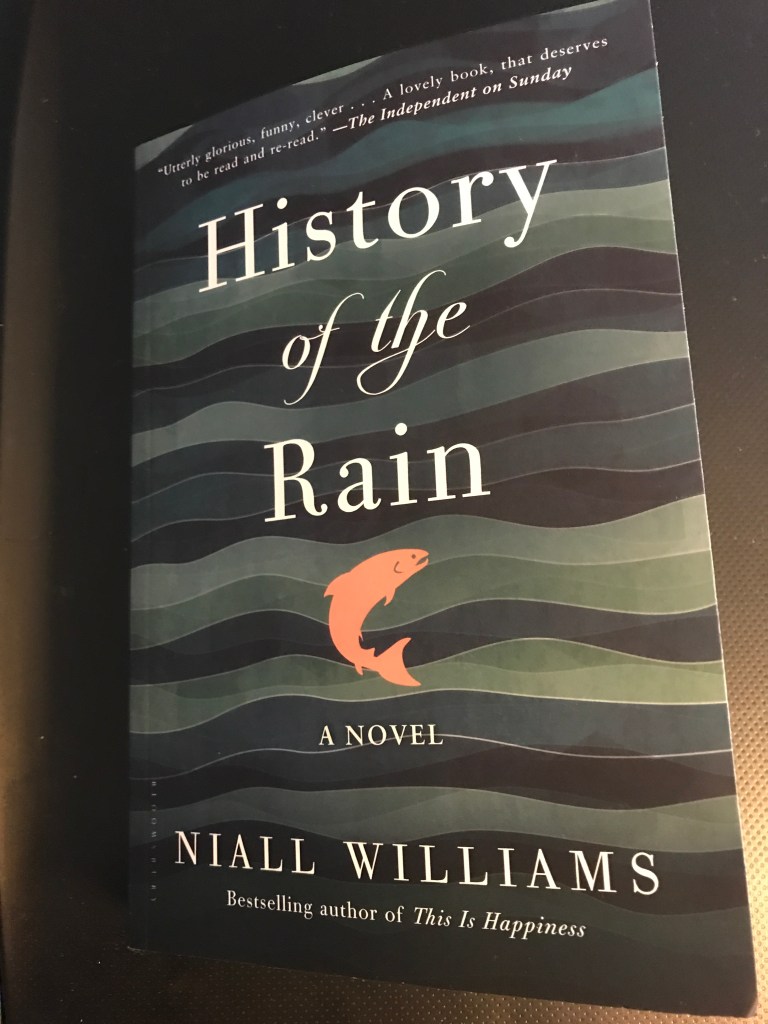
  • Still awaiting my attention are four other bookstore finds: Wild Atlantic Women, Walking Ireland’s West Coast by Grain Lyons. The Fall of Light by Niall Williams. I am slowly reading all of his books. The House in the Cerulean Sea by T.J. Klune, which has often been recommended to me, but somehow I have not yet read. It is time. The Mystery Writer by Solari Gentill because I enjoyed her earlier book, The Woman in the Library. These are stand-alone mysteries, but alas, I recently discovered she has written a series, The Rowland Sinclair Series set in Australia in the 1930s and there are ten of them.

And guess what? Anne Bogel of “Modern Mrs Darcy” and her podcast “What Should I Read Next?” is releasing her summer reading recommendations list this week, which is sure to add to my TBR and my bookshelf. Sigh!

I can’t close without paying homage to short story writer Alice Munro, who died this week. I remember at some point in my life immersing myself in her books of short stories. Such a fine writer.

A story is not like a road to follow…it’s more like a house. You go inside and stay there for awhile, wandering back and forth and settling where you like and discovering how the room and corridors relate to each other, how the world outside is altered by being viewed from those windows. Alice Munro, 1931-2024

Happy reading everyone!

What’s waiting on your shelf? I would love to know.

Homecoming

May 14, 2024

Wednesday evening we returned from a road trip visiting our son and daughter-in-love in Cleveland and then a few days roaming in Michigan. A good trip, for sure, but oh, how wonderful to open the front door of our home and proclaim to the House Gods, “We’re back.” That was at 6:00 pm and by 7:00 we had unpacked, bags put away and washing machine chugging with our dirty laundry.

We are good returnees. You see, for us being home is even better than returning home.

My husband and I are homebodies. No doubt about it.

My husband hometends–or should I say garden tends–and he has been communing in the garden most daylight hours since our return. He also hometends for others when he paints discarded furniture, giving each piece a new and even more creative life. In June he will have his annual garage sale, the fruits of his winter labors, and all proceeds go to support Lutheran Social Services programs for youth experiencing homelessness.

I’m the interior hometender —hometending as a kind of spiritual practice, which I have written about before in this blog. How glad I am that before we left on this recent road trip I pushed myself to leave the house “return ready.” I’m not quite the perfectionist, however, as a friend who vacuums herself out the backdoor into the garage when she leaves on a trip, but I do like knowing that a clean and welcoming home waits for me when I cross the threshold. Besides, there is always enough to do upon returning without needing to clean the bathroom.

I have also realized over the years that my work as a spiritual director is a kind of hometending, too. I help others know the home within; the home always available. That’s a subject for another post.

Being away from home opens space for new thoughts and clarifying realizations, which sometimes crystallize once the bags are unpacked. For example, on this trip we discovered that we enjoy roaming on the way to a destination–in this case, our kids’ home–but as we head back towards home we just want to get home. Be home. We will remember this the next trip.

I also realized that even though we lived In Cleveland for 14 years ourselves, going there now is no longer about returning to where we once lived, but visiting where our kids live. This is their home, and we are their guests, enjoying Cleveland through their eyes and hearts. That feels like a shift.

The morning after our return my husband worked in the garden, and I grocery shopped and did a variety of other errands. Our normal routine is for each of us to do our own thing during the day, sharing the day’s events and thoughts with one another at suppertime. That works for us, and we eased right back into that pattern.

At the same time we are not quite the same people we were before we left on this road trip. Road trips change us, even if those changes are not immediately recognizable. We now hold new memories. We are now more aware of who we are now and what we most need to live fully right now. We bring deeper gratitude to these days, whether they are ones on the road or ones at home.

It is good to be home.

What are your routines when you return home? I would love to know.

Book Report: April Summary

May 2, 2024

James by Percival Everett.

I didn’t think I wanted to read this novel, which is a re-telling of Mark Twain’s The Adventures of Huckleberry Finn, but a copy was on the Lucky Day shelf at the library, and I decided to say “yes.” Everett’s version turned out to be my favorite novel read during April.

Told from the perspective of Jim/James we meet the Jim white people expect him to be and James, the person he really is. We know this, but this novel is a striking reminder of how speech and language is a tool to clarify and reinforce who we are and/or to hide and reinforce the person someone else wants us to be or thinks we are.

At one point James shares with enslaved children the basic rules for interacting with white people.

Don’t make eye contact. Never speak first. Never address any subject directly. Mumble sometimes so they can have the satisfaction of telling you not to mumble. p. 22.

  • The Little Village of Book Lovers by Nina George. There is so much to love in this novel about love–the transforming power of love and how books can be an aid, a vehicle, a tool in the discovery of love. One of the characters, Marie-Jeanne can see the mark of love, a glowing, shimmering light, and she becomes a matchmaker, even as a young girl. She awaits that shimmer for herself. I loved all the wonderful words about the power and glory of books, as well. If you loved one of my favorite books, Fresh Water for Flowers by Valerie Perrin, you will love this.
  • Ana Turns by Lisa Gornick. As Ana turns 60, she reflects on her life now. A physician husband who medicates to cope with back pain; a lover who demands little from her; a child who has realized they are trans; a mother who can only criticize her, a rich brother who is the one favored by her mother, and two nieces she adores. Lots of side stories, all beautifully told.
  • The Underground Library by Jennifer Ryan. This book is based on a true story about the establishment of a library in the London underground during WWII and is a good example of “Blitz spirit.” Juliet, the deputy librarian of a library, starts a book club and nightly readings in the underground after the library is bombed. Along the way she is supported by a wonderful array of women, and, of course, there is a love story, too.
  • Lessons in Chemistry by Bonnie Garmus. Am I the last person to read this book that has been on bestseller lists since its publication in 2022? The book focuses on the treatment of women and women’s views of themselves in the 1960s. When her husband dies in an accident, chemist Elizabeth is left to raise their daughter Madeleine (MAD), the most unusual and precocious kindergartner ever, for her reading skills alone. Work at a research lab is intolerable, and she gets a job on TV, a show called Supper at Six, in which she explains the chemistry of cooking and food. Such interesting characters plus a spirit of resilience, courage and love, and I laughed outloud often. I did tire, however, of the total separation of religion and science, but I thought even that softened towards the end.

I read only three nonfiction books in April, but each one was so worthwhile. I mentioned House Lessons in my April 25th post. The other two are:

  • The Eloquence of Silence, Surprising Wisdom in Tales of Emptiness by Thomas Moore. I think a stronger and clearer title would have been The Eloquence of Emptiness, for the book focuses more on the gifts of emptiness. The tendency is to think of emptiness as something negative or to be feared, but Moore explores how when we are too full, too busy, nothing unexpected can happen. “You can’t make fresh discoveries, and you will have few surprises and revelations.” p. 66. I underlined so much in this book and copied many passages into my journal. I have loved several books by Moore, including Care of the Soul, The Soul’s Religion, The Re-Enchantment of Everyday Life, and Dark Nights of the Soul. His book just prior to this one, Ageless Soul, was not one of my favorites, but this one truly resonated with me.
  • Birding While Indian, A Mixed-Blood Memoir by Thomas Gannon. Gannon is a professor of Native American literature at University of Nebraska Lincoln and a birder, who says birding is a kind of addiction for him. As he encounters birds, he also explores his heritage and his life as a Native person. Often the book was too detailed for me, a casual enjoyer of birds, but I was moved by the ways he connected his passion with his own struggles and background. Plus, I learned so much about how white colonialism has attempted and often succeeded in destroying the lives and culture of Native peoples. I made copies of several passages in this book, like the section on the Crazy Horse monument in South Dakota, in which he writes “that gigantic carving up of our sacred mountain is just another form of racism.” p.115. My husband and I spent time at the monument a couple years ago, and I would never have interpreted it that way, but I am now grateful for this perspective. He also reflects on one of my favorite books and authors, My Antonia by Willa Cather in which the narrator Jim views the Plains “as if he were face-to-face with a geographical nothing.” Burden sees no road, no fences, no creeks or trees or hills or fields. Gannon reminds the reader that “the land was teeming with the ‘countries’ of other species–and the tribes of other humans…”p. 37. Oh, how much I have left to learn and understand.

April 11: Float Up Sing Down by Laird Hunt https://wordpress.com/post/livingonlifeslabyrinth.com/3372

April 18: A Council of Dolls by Mona Susan Power; Wandering Stars by Tommy Orange. https://wordpress.com/post/livingonlifeslabyrinth.com/3365

April 25: An Irish Country Courtship by Patrick Taylor; A Match Made for Murder by Iona Whishaw; One Woman Show by Christine Coulson; and the memoir House Lessons, Renovating a Life by Erica Bauermeister. https://wordpress.com/post/livingonlifeslabyrinth.com/3425

I’m currently reading The Hunter by Tana French, and I am sure I will report on it in May.

What was memorable in your April reading life? I would love to know.

Guiding Words

April 30, 2024

As always, the weekly writing group I facilitate, In Your Own Words, Contemplative Writing as Spiritual Practice, includes time for silent meditation. “Close your eyes lightly, not tightly. Take a deep cleansing breath. Breathe gently in and out, finding your own rhythm.” After six or seven minutes of sitting in silence with one another, I read the guiding words for the day. For example:

The word “orientation,” like “Orient,” comes from the Latin, orient, which refers to the “sunrise,” the “east.” If we know the point where the sun rises, we can determine all other points of the compass and find the direction we want to take. Some words can help us in a similar way. Words full of light, they beam, as it were, like the floodlights of a lighthouse and build a bridge over troubled water. Such luminous words can also become keywords that unlock new insights for us. We can learn “to think along language,” the way we walk along a path through meadows enjoying flower by flower, ever new discoveries as we go. You Are Here, Keywords for Life Explorers by David Steindl-Rast, p. 3

I then read the writing prompts for the day, which recently included the following:

“Begin by listing words on the accompanying table that have had meaning for you or seem to be occurring or appearing in your life right now….List the words (or brief phrases) without judgment.”

I end by saying, “The time is yours,” and we write for 20 minutes.

I filled in the first three blanks on the sheet divided into small sections easily. “Beloved,” my 2023 word of the year. My current words of the year, “enfold/unfold.” And a question I often ask myself and my spiritual direction clients, “What is possible now?” I was surprised, however, when on the next line I wrote, “Your day will come.”

I began to write.

My father said those four words often. “Your day will come.”

I confess I sometimes resented those words–and that he said them with such a knowing smile on his face. I heard judgment and privilege. I felt admonishment–that I wasn’t old enough or hadn’t paid my dues or didn’t deserve something. I can’t recall specific instances when his response was “Your day will come,” but I remember my impatience and my irritation. Why should I remain patient when I wanted something, to do something, to be something, but apparently MY DAY had not yet come.

But I also wondered if the day for __________ would actually ever come or would life pass me by? Would the day truly come when I would know a lasting and fulfilling love? Would the day come when I would know my purpose in life? And would the day come when I would know how to fulfill that purpose? How would I actually know my day had come?

Dad didn’t offer any answers, instead he repeated his pat answer without becoming engaged. His wisdom rolled over me, only lightly touching my skin. I vowed not to use that phrase with my own kids, if I was lucky enough to have any. I don’t think I’ve broken that intention, but you’ll have to ask them.

Now, of course, at this third chapter stage of my life, I realize my day has come–as so many days have gone, have left. So many days have been lived. Some more fully than others. Some days have passed me by. Some days have drifted away unnoticed by me.

And now this day has come.

My day here and now.

My day of becoming more of the person I was created to be.

Often when Dad was in his 80’s and even into his 90’s, he announced he was ready to die, “just not today.” Eventually, his day came. Our creator God announced to him, “Your day is here. The day of your death, your full transformation is here.”

I don’t know when that day will come for me, but now when I think of those words, “Your day will come,” I hear an invitation to use these days wisely, to live these days fully. Doing that, I prepare for the day of my own death, the day my day comes.

Thanks be to God.

What words or phrases have special meaning for you right now? I would love to know.

The writing group I facilitate meets Thursday mornings from 10:30 to noon at Gloria Dei Lutheran Church, St Paul, MN. There is no charge and all are welcome. If you have interest in participating in the group, let me know. If you are not able to participate in person, but would like to receive the guiding words and prompts, send me your email, and I will add you to the list.

Fear of Not Having Enough To Read (FONHETR)

April 25, 2024

Packing for a trip, even one that just means being away from home a couple days, is never easy for me. Deciding on what clothes to bring is only half the problem. The other half is deciding what books to bring.

What if I don’t like a book I have packed? Then what will I read?

What if I finish a book faster than anticipated? What will I read then?

What if I have more time to read than anticipated? (A good problem to have, as far as I’m concerned.) Will I have enough to read?

For me, these are bigger questions than deciding how many changes of clothes to bring with me. The good news is that generally we travel in our car, so I have room for a stockpile of reading material.

My most recent book decision dilemma was our weekend in Door County.

After hemming and hawing, I selected 4 books for this three day vacation (Two of the three days were mainly in the car.) I had just read two serious literary fiction books, Wandering Stars by Tommy Orange and A Council of Dolls by Mona Susan Power (see April 18 post.) and I knew I needed something lighter.

  • An Irish Country Courtship by Patrick Taylor. I have read others in this charming series and know I will read others in the future. This one focuses on the “love life” of physician Fingel O”Reilly, as he courts Kitty. He has mourned the death of his wife for a long time, and Kitty is sensitive to his hesitancy about a new relationship in his life. In the meantime his associate has been fluffed off by a woman he thought was “the one,” and now he wonders if life as a village GP is enough for him. He ponders a decision.

In these short months he’d certainly had a fair sampling of the medical side of general practice, but he hasn’t been prepared for the village. Gradually, he’s come to learn it wasn’t simply a collection of houses, shops, a pub, and a couple of churches. It was an entity, and as an animal was the whole of its parts, so too was the village a many faceted, living organism. p. 287.

I’m grateful the author includes a glossary of Irish words and terms in the book. This time my favorite word is “harpled,” walking awkwardly, favoring a sore leg or back.

  • A Match Made for Heaven #7 in the Lane Winslow series by Iona Whishaw. Much of this book is set in Tucson, AZ, rather than Canada and for a very good reason. I don’t want to say why for those you of you who have not gotten this far in the series yet. This was perfect vacation reading. I will soon start reading #8.
  • One Woman Show by Christine Coulson. This was my “just in case” book. Just in case I finished both of the other books. This is a short, new novel, meant to be read in one sitting. The book documents much of the life of Kitty (1911-1998), but it is the structure that is most interesting. Her life is described as a series of art works, with an entry on each page.
BRIDE, AGED 19, 1926
Mrs. William Wallingford III (known as Kitty)
Collection of William Wallingford III (known as Bucky)
Ex-Collection of Martha and Harrison Whitaker

Considered the apex of early twentieth-century production.
Kitty is thoroughly polished, bound in white silk, and decorated with a clutch of pristine lily of the valley. The rest of her garniture joins her, but with deliberately less polish and packaging. The great and the good gather to see the exhibition and rave about the elegant lines and immaculate condition. Kitty glistens in the light of her new pedestal and foolishly considers herself now unbreakable.

Clever and thought-provoking.

  • The Eloquence of Silence, Surprising Wisdom in Tales of Emptiness by Thomas Moore. This books is one of my current devotion companions. Good food for reflection.

I selected my vacation book companions well–finished the Patrick Taylor, which I had started at home, and read in its entirety the Iona Whishaw mystery and read a couple chapters each day in Thomas Moore’s book. I saved One Woman Show and read it when we got home.

So well-done, Nancy. But then we discovered a bookstore new to us in Sturgeon Bay, which is at the entrance of the main part of the Door County Peninsula, and the book bag bulged. What a lovely and well-curated bookstore with a knowledgeable storeowner/bookseller, and you can bet we will stop there each trip we make to Door County.

Here are my selections:

  • The Mystery Writer by Solari Gentil. I read and enjoyed her earlier book, The Woman in the Library and so am eager to read this one. I also discovered that she has written a mystery series set in WWII, the Rowland Sinclair series. When I have completed all 11 of the Iona Whishaw books, I am sure I will investigate these.
  • An Irish Country Welcome by Patrick Taylor. This follows the one I just read, An Irish Country Courtship. The covers of these books, by the way, are so lovely.
  • Wild Atlantic Women, Walking Ireland’s West Coast by Grainne Lyons. To continue the Irish theme!
  • House Lessons, Renovating a Life by Erica Bauermeister. Bauermeister is the author of several novels as well, which I have not yet read, but this memoir is so beautifully written that I may add her other titles to my TBR. When I go to an independent bookstore I like to buy a WILD CARD book, meaning a book I have not heard of before, but for whatever reason it appeals. This was true for this book and the Wild Atlantic Women book, as well. Both my husband and I have now read House Lessons and loved it. Bauermeister and her husband live in Seattle, but decide to buy a ramshackle house in Port Townsend, WA. This is the story of that renovation, but also the life lessons learned along the way–the ways one’s life is a kind of ongoing renovation.

This weekend away was to celebrate my birthday and, no surprise, my favorite present is a new book. My husband is always nervous about buying me a book, anticipating I may have already read what he selects, but he did well. Now on my TBR bookshelf are these three–two mysteries and a nonfiction title.

  • Rogue Justice by Stacey Abrams
  • Mastering the Art of French Murder by Colleen Cambridge (Notice a similarity in title and cover to Julia Child’s masterpiece?)
  • Vesper Flights by Helen MacDonald. I loved H is For Hawk, but have not yet read this one.

Soon we will go on a road trip to visit our son and daughter-in-love in Cleveland and then spend a few days in Michigan, so the dilemma of what books to bring will resurface once again. Such a problem!

Do you take books on vacation? How do you decide what to bring with you? I would love to know.

I will post my April Book Report Summary on May 2.

A Celebration of Faith

April 23, 2024

Laying on of Hands at Our Grandson’s Confirmation Service

I often receive email confirmations.

“Your reservation for dinner at 7:00 for 4 people is confirmed.”

This is to confirm your order for… “

Hotel reservations, tickets for a play or concert–all are confirmed.

Verified

Acknowledged.

Validated

I appreciate those emails–knowing for sure that what I ordered or planned is now a step closer to reality. In a way that is what happens in a religious rite of confirmation.

On Sunday our 16 year old grandson Peter was confirmed at Gloria Dei Lutheran Church, St Paul, MN, where my husband and I and our daughter and family belong. Our granddaughter Maren was confirmed there several years ago.

Trust me, it was a two-hanky day for this GrandNan.

Each of the 16 young people were asked individually to affirm their faith, responding “I ask God to help and guide me.” The congregation was asked to promise our support for these young people and to pray for them in their life in Christ. We responded “We do, and we ask God to help and guide us.

Each confirmand and their loved ones then came forward for laying on of hands and a blessing.

God of Love, for Jesus’ sake, stir up in Peter Agneberg Ostrem the gift of your Holy Sprit; confirm his faith, guide his life, empower him in his serving, give him patience in suffering, and bring him to everlasting life. Amen.

In this moment in time his faith was confirmed, affirmed.

Verified.

Acknowledged.

Validated.

And celebrated, too.

Here’s the deal, the reality. Participating in the rite of confirmation, like those email confirmations, is not enough. I have to show up at the restaurant or the hotel. Or when my online order arrives, I have to open the package and use it or gift it to someone or in my case, read it because what I most often order are books. Sometimes what I ordered isn’t the right thing or doesn’t fit or is no longer appropriate. Or perhaps the restaurant or hotel was fine, but next time, I’ll look further for a choice that fits better.

The metaphor is not perfect, but confirmation is not the end. True, it is the end of a period of formal study, but it is also a launching into the possibility of a deeper faith. It is an invitation to grow, to participate in an evolution of faith.

No one knows what that will mean for each of these young people–what will challenge their faith; what will reinforce it. No one knows how it will change. More than likely they will each experience times when their faith feels secondary to everything else in their lives; when their awareness of the presence of God is not foremost in their everyday lives. But, my prayer for Peter and the other young people confirmed on Sunday, is that the groundwork offered during the years beginning with their baptism and leading them to this day of celebration, this rite of passage, will sustain them and lead them to live as the people they were created to be.

Has there been a time in your life when you were asked to affirm your faith or a belief in front of a group of people? I would love to know.

Two Novels by Indigenous Authors: The Council of Dolls by Mona Susan Power and Wandering Stars by Tommy Orange.

April 18, 2024

Both books are powerful.

Both books are beautifully written.

Both books are stories of generational trauma and intergenerational healing.

Both books offer windows into a culture that is being rediscovered and treasured.

Both books reveal injustice and yes, evil.

Both books reference the Carlisle Indian Boarding School.

Both books follow the lives of multiple generations.

Both books are about institutional violence and oppression.

A Council of Dolls by Mona Susan Power

Mona Susan Power is an enrolled member of the Standing Rock Sioux Tribe and currently lives in St Paul. Perhaps someday I’ll see her in one of our coffee shops or the grocery store, and if I do I will tell her how important her book is, and how I hope she continues to tell the stories. Following the great success of her first novel, The Grass Dancer, Power experienced deep depression and learned she was suffering from P. T. S. D., as well. How grateful I am that she has found resilient reserves within herself to continue her writing

I’m sorry I didn’t buy this book, rather than read a library copy. Maybe I will buy it now, so I can read it again and underline favorite passages. Power says she is an “intuitive writer,” meaning the story and the characters come to her. Maybe that’s why the human and the doll characters seems so real.

The story follows the lives of three generations of Dakota girls/women: Sissy (b. 1961), Lillian (b. 1925) and Cora (b. 1880s) and their dolls. It is up to the reader to decide if the dolls are real, spirits with powers to heal and save the girls from further tragedy or are the products of the girls’ imaginations. I must admit, although my growing up couldn’t be more different from these women, I thought about the dolls in my life as a young girl and how they often brought me comfort and gave me a sense of purpose even.

Favorite Passages

Cora telling about her father says,

My father says that we should welcome all stories to see if they are worth remembering. “You can put ideas on and off just like moccasins. You can wear them and set them aside, hold onto those you find meaningful. Don’t be afraid of learning something beyond what we’re able to teach you. Even the wisest person doesn’t know everything, But it’s also important to preserve the ideas that make sense to you, even in the face of resistance–someone telling you that you’re wrong and only they know the truth. Such boasting is evidence of a fool, perhaps a dangerous one.”

p. 141

A last word from the dolls:

We’ve learned that healing the present doesn’t only clear waters flowing into the future, recovery also flows backward and alleviates the suffering of ancestors. So they can set down their tears and dark memories, their guilt and shame, their vengeance. And because Time is our relative, a flexible being that moves through every thought and memory, branching into a million rivers of possibility, healing even one of its streams will eventually heal the world.

p. 286

Wandering Stars by Tommy Orange

I admit it took me longer to read this book than Council of Dolls, and I’m sorry I didn’t wait longer after finishing “Dolls” to read it. By the end I just wanted the painful stories of addiction and loss to end, but perhaps that is the point.

Tommy Orange is an enrolled member of the Cheyenne and Arapaho Tribes of Oklahoma who was born and raised in Oakland, California, and this book often references the challenges of finding and knowing other Indian people in that part of the country. Wandering Stars is both prequel and sequel to his earlier much acclaimed novel There There. I suggest reading There There first, but it isn’t necessary. I am grateful for the family tree at the beginning of the book and referred to it often.

The book follows the descendants of the 1864 Sand Creek Massacre, moving through the generations to the present day. The references to Richard Henry Pratt, who became the founder of the Carlisle Indian Boarding School, both the cause and the result of so much evil, are harrowing.

“Stars” refers both to the family descendants in the Bear Shield and Red Feather families, but also to one of the characters who is shot at a Pow Wow.

One of the doctors, who wore a faded-ass baseball cap with a fish on it he didn’t think the guy should have been wearing on the job, told him the bullet shard in him was shaped like a star, like that was some cool shit. Then the doctor told him he should be grateful that it stopped moving, that an exit wound could be what kills you. The doctor said they would keep an eye on it, the star shard, because, he warned, they’ve been known to wander, parts of them getting into your bloodstream and poisoning you. And then the doctor, still apparently trying to comfort him about the bullet staying in, said it wasn’t bullets that killed but the path they took, This seemed to him like some dumb-ass bumper-sticker wisdom, like: Guns don’t kill people, people kill people, or, The journey is the destination.

p. 119

There were so many times in the book I wanted to shout, “Don’t do it.” An indication of how well-drawn these characters are. And so many times I cheered for these characters, as they rose above addictions.

I felt good talking to my son and eating the bread I made there in our kitchen, on our land, in our home. I had a family now and the drinking was behind me. I’d lived enough life, almost died enough times to know when a good thing came along, a thing you didn’t know could fill you right up, which only when it filled you let you know there’s been a hole in you before.

p. 34-35

I initially went to using as a way to feel the world, when I’d learned somewhere along the way to numb it. But I wanted to feel the world without having to use, and not simply become obedient to the cold demands of a cruel world, or to an equally cruel addiction.

p. 304

Such good books. Heavy and meaningful. And now I’m ready for something lighter, but still well-written. Stay tuned.

What emotionally hard to read books have you read? I would love to know.

The Gifts of A Happy Place

April 16, 2024

Paris and the Cotswolds may not be part of current plans.

We no longer live at our beloved Sweetwater Farm.

Living in Minnesota , instead of Ohio, means I can no longer decide on a whim to spend a day at Chautauqua.

Dear and as meaningful to me as those places are, however, they are not my only happy places.

I am happy most of the time wherever I am, but oh, how happy I was this last weekend to be in one of my happiest of happy places: Door County, WI, which is only 5 1/2 hours away from our St Paul home.

Over the years we have spent many happy times there, sometimes with family, sometimes with friends, sometimes just the two of us, which was the case this time–my birthday present planned by my husband. It is a place we gravitate to over and over again.

Do we gravitate there over and over again because being there makes us happy or because we are happy there do we want to go there again and again? Chicken and egg?

When I was growing up my family moved many times. My Dad worked for a large corporation and was transferred frequently as he climbed the company ladder. At the end of the school year, the moving van would appear at our house, but before we moved into our new home, we returned to the same summer vacation spot in northern Minnesota. Year after year. Summer after summer. That was a place of both grounding and transition. Of memories and memory-making. Of ease and taking a breath before the work of resettlement. Of surety and stability. Of time to process the loss of friends and to hope for the presence of new ones. Of comfort. We knew what to expect and how we would spend our days.

That place was our past, our present, and a path to the future.

Because we vacationed in Door County with our children when they were young and later, in their adult years with our grandchildren part of the scene, we have a history there. We reminisce about our son sketching on the sandy beach and about taking the ferry to Washington Island specifically to go to the book store there, and about playing miniature golf when the club was taller than our grandson and eating cherry coffee cake at the White Gull Inn. And more. So much more.

Going there now reminds us of some of the building blocks of our lives. The conversations we had while savoring the sunset or fruity daiquiris before a leisurely dinner. The dreams fulfilled and those that drifted away. When we laughed and what we treasured. Who we have been and how we lived.

And now in the present in this happy place, the past sits lightly, and we feel a simple, but rich gratitude for being here. For having this time to be together. The weather doesn’t dictate the gift of this time. We eat good meals. We browse in favorite shops, and we roam back roads, delighting when we spot sandhill cranes in an open field and a deer loping across a gravel road. We gaze at the water as the sky turns into evening pink. We read and doze in our room, no longer pulled to do something, go somewhere. Being here now is enough.

And the future? Well, who knows much about what the future holds, beyond our eventual deaths. But we envision more time in this happy place because we feel welcomed and at home there. But more than that it is a place that seems to support the people we are becoming, for that becoming continues until it doesn’t.

An Invitation

Where are the places that represent past, present, and future for you? I would love to know.

Action VS Indifference

April 9, 2024

We do not have the luxury of indifference.

Robert Hubbell

Since the beginning of this year I have participated in several postcard campaigns to encourage people to register to vote and to actually vote in a primary. I have sent postcards to support specific candidates, including Ohio’s Sherrod Brown, Ruben Gallego in Arizona, and Tom Suozzi in New York. My total postcards: 300. So far.

I say this not to elicit praise or to pat myself on the back. Instead, I urge you to do what you can to save democracy. Fundraisers often say, “No gift is too small,” and I hasten to add “No action is too small.”

I am a terrible phone person. I don’t enjoy talking on the phone. I even dislike making phone calls and am so grateful for the ability to do much of what I need to do via email or text. I am grateful for all the people who participate in phone-calling events in support of candidates and campaigns, but that is not something I will be doing in the next seven months. (EEEK–only seven months before election day in November.)

I also won’t be walking door to door, passing out leaflets, engaging people in conversations. I did that decades ago, but that method no longer fits who I am now and what I am able to do.

What I can do, however, is participate in postcard campaigns. I can order postcards with a voting theme from Etsy. I can buy rolls of postcard stamps. In fact, the last time I did so, the mail clerk subtly asked me why I needed so many postcard stamps. Our conversation was brief and careful, but I could tell he was intrigued and you never know…

I can watch a movie on Netflix as I address and handprint the message provided by the sponsoring organization or I can sit at the dining room table and work on a few more postcards while dinner is baking in the oven. Soon I will be able sit at the bistro table in my secret “Paris” garden or on the patio and write postcards while I enjoy fresh air and birdsong and the glories of my husband’s gardening efforts.

I can drop the postcards in the mailbox a couple blocks away when I go on an afternoon walk.

I must do something because this is not a time for indifference.

I receive several daily or weekly newsletters that keep me informed and motivated and help me focus. If I feel myself holding my breath as I read them, I know it is time to sign-up for another postcard campaign.

#1 From Robert Hubbell’s Today’s Edition Newsletter, April 2, 2024 https://roberthubbell.substack.com/p/we-dont-have-the-luxury-of-indifference

We live in a world where the only US president ever to attempt a coup has a too-close-for-comfort chance of being re-elected on a platform of overt fascism. That changes everything. We do not have the luxury of indifference.

We do not have the luxury of being “just” journalists, lawyers, elected officials, educators, students, co-workers, entertainers, parents, family members, or citizens. At this moment, we must be defenders of democracy in everything we do. If not, we betray and abandon the Constitution. There is no in-between. The question has been called.

Indifference is a choice. Cynicism is a choice. “Just doing my job” is a choice.

Democracy is a choice.

Defending democracy is a duty that appears unbidden when Americans least expect it. Every generation before ours has discharged that duty honorably. Ours cannot be the one to falter.

#2 From Diana Butler’s Newsletter, The Cottage, April 3, 2024. https://dianabutlerbass.substack.com/p/donald-trumps-political-idolatry

The media is not misrepresenting evangelical views. It comes from evangelicals themselves — they embrace the theology of Trump the Savior, a new political Jesus. They believe it. They believe that Trump is being sacrificed for them.

The most telling part in this video is the opening interview with two evangelical voters. They clearly understand the Bible and evangelical views of salvation — you could hear these verses quoted and this theology expressed on any given Sunday (or Wednesday night Bible study) in any evangelical church in the United States. They don’t get the theology wrong. 

And then they apply it to Trump:

Man: “THE BIBLE SAYS HE WAS WOUNDED FOR OUR TRANSGRESSIONS. HE DID IT FOR US. WHEN TRUMP IS FACING ALL THESE THINGS IS HE DOING IT FOR US IN OUR PLACE.”

Woman: “JESUS DIED FOR MY SINS. JESUS DIED FOR ME AND SO I — IT CONNECTS IN MY BRAIN THAT WAY. LIKE, HE IS DOING THIS FOR US AS A COUNTRY TO MAKE THE CHANGES WE NEED TO MAKE AND HE IS THE TARGET WHERE WE DON’T HAVE TO BE.”

I choose the amount of time I spend listening to, watching, or reading about current events and the resulting commentary. I choose to spend part of my morning devotion time praying for the existence and renewal of democracy in this country and all those who are attempting to save it. However, I still feel overwhelmed and discouraged at times.

Yup, that’s when it’s time to sign-up for another postcard campaign.

Karen Hering in her remarkable book, Trusting Change, Finding Our Way Through Personal and Global Transformation advises:

Describe a practice you use to calm or settle yourself when experiencing strong reflexive responses of fear or anger. What do you experience when you do this?

p. 155

Writing in my journal always calms me and clarifies what I am feeling and often reveals a next step. I’ve discovered writing postcards also calms me and is a step I can take.

Name one global threshold you are concerned about, whether or not you have been actively engaged in addressing it. Share some of your skills or knowledge that might be helpful in that issue…

p. 155

I have the time. I print legibly. I can afford to buy postcards and stamps.

Simple.

The human heart is the first home of democracy. It is where we embrace our questions. Can we be equitable? Can we be generous? Can we listen with our whole beings, not just our minds, and offer our attention rather than our opinions? And do we have enough resolve in our hearts to act courageously, relentlessly, without giving up–ever–trusting our fellow citizens to join with us in our determined pursuit of a living democracy?

One of the voices of wisdom who sits on my shelf is Parker J. Palmer. Right now I think I need to re-read his 2011 book, Healing the Heart of Democracy, The Courage to Create a Politics Worthy of the Human Spirit.

What is it you can do to resist indifference? I would love to know.

Americans of Conscience https://americansofconscience.com

Activate America https://www.activateamerica.vote

Postcards to Voters https://postcardstovoters.org

Chop Woods, Carry Water https://chopwoodcarrywaterdailyactions.substack.com

I buy postcards from various artists on Etsy. https://www.etsy.com

Book Report: March Summary

April 4, 2024

Some of the books I read this month were surprises, meaning I was surprised by how much I liked and appreciated them. Other books didn’t surprise me at all, for I was quite certain they would not disappoint, and I would love them.

I’ve already reviewed some of my “No Surprise” books:

  • A Deceptive Devotion, #6 in the Lane Winslow Mystery Series by Iona Whishaw (See March 14 post.)
  • As It Is In Heaven by Niall Williams (See March 14 post.)
  • Graceland, At Last. Notes on Hope and Heartache From the American South by Margaret Renkl (See March 7 post)

Two other novels I read in March were also “No Surprise” books:

  • The Distance Between Us by Maggie O’Farrell. I have now read all of O’Farrell’s books and can easily say she is one of my favorite contemporary novelists. This title, one of her early books, is not my favorite of hers. However, how two seemingly separate stories, the story of Jake who grew up in Hong Kong and the story of Stella and her sister Nina who grew up in the UK, eventually entwine kept me reading. Now I can re-read my favorite O’Farrell books, including Hamnet and The Marriage Portrait, but also earlier ones, such as The Hand That First Held Mine and After You’d Gone.
  • An Irish Country Girl by Patrick Taylor. I have read two previous books in this series, An Irish Country Doctor and An Irish Country Village. I own An Irish Country Courtship and intend to read that soon. These books, set in Northern Ireland, are fresh air, a palate cleanser, a gathering of old and dear friends, stories shared around a cozy fire, and a touch of nostalgia of a time you may yearn for.

The two books I read as part of my Lenten devotion time were also no surprise, for over the years I have come to trust both of these writers for their wisdom and insight.

  • A Different Kind of Fast, Feeding Our True Hungers in Lent by Christine Valters Paintner. Each week of Lent is further subdivided into a practice for each day: lectio divina, breath prayer, visio divina, meditation with the desert elders, contemplative walk, imaginative prayer, and a ritual for the senses. As always, Paintner is so adept at engaging the readers in spiritual practices.
  • Jesus, Guide of My Life, Reflections for the Lenten Journey by Joyce Rupp. Such a good Lenten companion this book was. I admire how in two pages for each day, Rupp is able to impart an insight that leads to deeper reflection.

Three of the “surprise” novels I reviewed in one of my Thursday posts already: Go As A River by Shelley Read, Happiness Falls by Angie Kim (both on March 21), and The Women by Kristin Hannah (March 28). Today’s Book Report Summary, however, allows me to recommend all three of these books again.

Three others were pleasant surprises, too.

  • The Things We Didn’t Know by Elba Iris Perez. A fast read. A good read about a Puerto Rican family in the 1950s-1970s. Parts of the book are set in Puerto Rico and parts in Woronoco, Massachusetts, an enclave for Puerto Ricans who move to the mainland. Much of the book focuses on the conflict between remaining true to Puerto Rican values and assimilating into and adopting “white” values and culture.
  • Fellowship Point by Alice Elliot Dark. I loved this book. I repeat, I loved this book, even though I had a hard time keeping straight in my head the title–too close to Happiness Falls, which I also read in March. The stories are in no way similar to each other, however. First of all, I loved the setting in Maine, but I loved the characters even more. Agnes Lee is a children’s book author, but also has written anonymously a series for adults. Her closest friend is Polly, whose husband,a retired philosophy professor, never gives her much credit for anything. Both women are in their 80s and have summer homes in Maine and want to make sure the area is saved as a land trust and not developed. Polly’s sons have other ideas–that’s just one of the subplots. Mainly, however, this book is rich in character development. And such good writing

Writing is waiting. That’s the whole of it. If you sit in your chair not doing anything else for long enough, the answer will come. You do have to be in your chair, though, ready to write it down.

p. 570

But there was a last time. An unforeseen and uncomforted last time. I don’t remember it. That more than anything describes aging to me–the letting go of one activity after the next, with no fanfare. Just realizing later that the last time has come and gone.

p. 117
  • Remarkably Bright Creatures by Shelby Van Pelt. I resisted this book for quite some time. A talking octopus did not appeal to me, but many whose taste I trust recommended it to me, and I was surprised by its charm. I liked the main character, Tova, an older woman who cleans the local aquarium facility every night. That’s how Marcellus the octopus becomes her friend. Her life becomes entwined with Cameron, a young man who is a lost soul, abandoned by his mother and his father, unknown. Let go of your need for plausibility, and just enjoy this tale of friendship and connection.

The main character in The Other Mothers by Katherine Faulkner is convinced a nanny’s death was a murder, not accidental death. I was with the unfolding of the mystery till almost the end, but the last 25 pages or so felt both rushed and meandering. Kind of a mess. And the ending was both disappointing and frustrating and even immoral. Sorry, but I can’t recommend this one.

That’s it for March: 14 books. 11 fiction. 3 nonfiction.

Now it’s on to April.

What books read in March can you recommend? I would love to know.

Signs of Resurrection

April 2, 2024

Easter Sunday, 2016, Granddaughter Maren, age 14, participating in procession

I am not a theologian. I have no degrees in religion. I am not ordained. I have no revolutionary insights into what happened on what we Christians now think of as Easter Sunday. I hold few, if any certainties in my personal creed. Some days, maybe most days, I move from one task to another without giving much thought to the great “truths” of life and death. In fact, more and more I consider the implications of “multiple truths,” a term Rabbi Adam Spilker of Mt Zion Temple used during a recent adult forum at my church.

Ok, given all I say I’m not, who do I say I am?

Well, on this day, two days after Easter Sunday, 2024, I say I am someone who believes in resurrection. As Joan Chittister says in her book, In Search of Belief, I am not specifically referring to the “revivification of an old life…It’s about experiencing a new kind of life entirely.”

I must admit I get hung-up on the word “entirely,” for I seem to experience resurrection in moments, in hints, in glimpses, in efforts, in unexpected gifts, in trial and error, in suggestions, in shimmers and glimmers.

In forgiveness. Or at least the desire to forgive. The movement toward forgiveness.

In grace, even when I don’t recognize it or acknowledge its presence.

Yes, I see resurrection in the loan daffodil that is almost ready to blossom in our backyard and in the song of a bird we can’t identify. And yes, I see resurrection in the pounds of rice and the cash collected for the local food shelf. I see resurrection in the overflowing crowds at all three of our Easter Sunday services –that pull towards hope and light. I hear it in the hymns and the inspiring sermon, and I receive it in the sharing of peace and the taste of the bread and wine.

I see it in the ways many are working for justice and peace and health and safety throughout the world. All the ways we are given to open our eyes and to respond to untruths and injustice and trauma and loss. All the ways we are invited to care.

I often think and write about discovering the person God created me to be. The movement towards wholeness. The unfolding and enfolding of my own essence. Lately, another word has entered my reflection time: alignment. When is what I do, how I live my life, what I choose, and how I respond most in alignment with God? Those moments of alignment, however brief or intangible, nearly invisible, are moments of resurrection.

Most often I don’t perceive those moments as they are occurring. Rather, I perceive them as a kind of retrospective resurrection moment, but I am seeking to be more and more aware of Presence in the moment. Right now as I write these words to you.

My moments of resurrection are different from yours, but they share certain characteristics, I think. They lift.

They open.

They touch.

They grow.

They lead.

They transform.

Over the years I have developed a purpose or, if you prefer, a mission statement for myself.

My purpose is to deepen awareness of the movement and presence of God in my own life and the lives of others:

By writing.

By facilitating groups.

By listening and asking questions.

By living a contemplative life.

More and more I realize that my purpose/mission statement is a reminder to myself to practice resurrection, to notice resurrection, and to seek resurrection for myself and for others.

What we believe by resurrection is that life has a purpose and a quality that does not end at the grave. We believe that the God who created us does not create us to abandon us but brings us finally, somehow, home to the fullness of life. Resurrection is simply another part of the process of growing into God. “Life” as we know it, “time” as we chart it, are simply temporary points to an eternal journey in a universe of unlimited mystery, endless possibility.

In Search of Belief by Joan Chittister, p. 195.

We have now entered the season of Easter. May these days open you, no matter your belief system, to moments of resurrection.

Where and when have you noticed resurrection? I would love to know.

Book Report: The Women by Kristin Hannah

March 28, 2024

Author of historical fiction, Beatriz Williams in her New York Times review said The Women by Kristin Hannah “gathers women into the experience with moving conviction.” The experience is the Vietnam War –as it was experienced by military nurses both in Vietnam itself, but also when they return to the United States. This is a novel that needed to be written, and Hannah has done it well, indeed.

Frances “Frankie” McGrath is inspired when a friend of her older brother about to leave for duty in Vietnam says to her, “Women can be heroes.” In spite of the lack of support from her family Frankie enlists and becomes an army nurse-fresh out of nursing school and totally unprepared for what she will face in Vietnam. But she learns fast and overcomes her fears. She saves lives. She honors those whose lives she cannot save. She plays hard, loves deeply, and creates a new perspective on who she is and is capable of being.

Once her tour of duty ends and she is back home she faces not only the protests against the war, but the disbelief of others, including vets, who insist there were no women in Vietnam. She struggles with how to live her life without her identity as an Army nurse, often making bad choices. She is sustained, however, by the friendships of other women with whom she served.

Hannah is a master both of research and an ability to translate that research into clear and evocative scenes. A friend who has read the book says it is a “flashback to our era, music, and clothing.” As a woman who was in her 20’s during those years, I recognize the name of every song and remember the bellbottoms once in my closet. I graduated from college in 1970 and so remember going on marches to protest the war and, of course, the references to Kent State, and Walter Cronkite and other people and events of the times.

I was overwhelmed and amazed by the graphic scenes of events in the evacuation hospital where Frankie worked. How could Hannah not have been an Army nurse herself! And all those powerful scenes were balanced equally effectively by down time in the O Club and other brief interludes when the wounded were not incoming. We see and feel all this through the eyes of a woman, just as we saw and felt the experiences of the soldiers in Tim O’Brien’s classic, The Things They Carried–one of my most memorable books of all time.

Now first let me say that I don’t demand perfection. To love and recommend a book doesn’t mean I have to love everything about a book.

I have not read all of Hannah’s books (and she has written many), but when I read The Great Alone (2017) I seem to remember feeling there were a few scenes too many of things going wrong or the character making bad decisions. I don’t recall that feeling when I read The Nightingale (2015), which I loved, and I have not read The Four Winds (2021), which is the book prior to The Women.

I didn’t feel there were too many illustrations of the ugliness of war and the heroics that took place over and over again, but I did feel once Frankie returns home that her struggles, which are all valid, could have been treated more concisely and still delivered the same point.

Oh, and the men in her life and how she responds to them….well, you read it and let me know what you think. And the ending… well, again, let me know what you think.

Yes. This novel is a well-written and vivid book of those Vietnam years. Even though I lived in those years, I confess I never thought about the powerful presence of nurses during the war, and for those who were not alive then, this book brings those years to life, a part of our history we must not forget. In recent years so many novels have been written about WWII, including The Nightingale, but Vietnam has been shoved into silence. The Women gives voice to those years, especially the women’s roles. Bravo.

What novels about a time in history have given you a new perspective or exposed you to something you did not know? I would love to know.

I just listened to episode 422 of the podcast What Should I Read Next? with Anne Bogel, and if you are someone who loves “quiet” books, I recommend listening to this episode. https://podcasts.apple.com/us/podcast/what-should-i-read-next/id1073499086?i=1000650473926

Leaning into Holy Week

March 26, 2024

Entombment (1603) by Caravaggio

Late in the afternoon, since it was the Day of Preparation (that is, Sabbath eve,) Joseph of Arimathea, a highly respected member of the Jewish Council, came. He was one who lived expectantly, on the lookout for the kingdom of God. Working up his courage, he went to Pilate and asked for Jesus’ body. Pilate questioned whether he could be dead that soon and called for the captain to verify that he was really dead. Assured by the captain, he gave Joseph the corpse.

Having already purchased a linen shroud, Joseph took him down, wrapped him in the shroud, placed him in a tomb that had been cut into the rock, and rolled a large stone across the opening. Mary Magdalene and Mary, mother of Joses, watched the burial.

Mark 15: 42-47 (paraphrased by Eugene Peterson in The Message: The Bible in Contemporary Language)

Many years ago the Cleveland Museum of Art hosted a traveling show of treasures from the Vatican. Entombment, a large painting by Caravaggio, was one of those treasures. We were living in Cleveland at the time and were among the crowds of people who attended this exhibit. Our son Geof, who is a graduate of the Milwaukee Institute of Art and Design, became our unofficial guide as we moved through the galleries. In his quiet voice, he pointed out aspects of the paintings I would surely have missed otherwise. Many people listened to an audio tour prepared by the museum, but even so I noticed a number of people paying attention to what Geof was saying and watching where he was pointing.

How true that was when we entered a room where the only painting was Entombment.

After spending time gazing at the painting, trying to take in the lifeless body of Jesus, the grief of those in attendance, and the strength and struggle of the men as they placed the body in the tomb, Geof suggested we move to the left side of the painting and kneel–not as an act of adoration and devotion, although I remember feeling that, but in order to experience the painting from a different perspective.

Joseph of Arimathea seemed to be looking right at me, asking for my help. I was in that tomb, too, positioned to receive and to ease the body onto that hard slab of rock. When we eventually left that room, that tomb, I noticed others taking the same posture as Geof had shown me.

During our Sunday morning worship service, Palm Sunday, the Passion Story according to the Gospel of Mark was read. How many times have I read the story in the quiet of my own space, heard the story, seen the story performed, even read aloud for others the story? I know this story, and yet, I am always stunned by the story. Sometimes I imagine myself as Peter, denying three times his relationship with Jesus. Or might I have been one of the Chief Priest’s servant girls who questioned Peter, “You were with the Nazarene, Jesus.” Sometimes I am the woman pouring the expensive perfume over Jesus’ head. Sometimes I am one of the disciples in the room preparing the Passover meal. Sometimes I wonder what it would have been like to carry the cross as Simon of Cyrene, did.

This story has room for each part of me. Each aspect of ourselves.

This time as Joseph of Arimathea’s actions were described, I remembered that Caravaggio painting and how my son had invited me to be in that scene, that moment.

I wondered about my openness, my willingness to receive.

When have I held someone else’s loss? How have I held my own losses?

How have I prepared the tomb for my own death?

Christine Valters Paintner in her new book, A Different Kind of Fast, Feeding Our True Hungers in Lent, invites us to enter the scene. “Help carry the weight of his body.” I see Joseph and his companion strain to hold that deadweight. How am I asked to lighten that load? To share that burden?

I don’t recall thinking much about the others depicted in the painting, but Paintner suggests:

Stand by the tomb as the mourners lay Jesus’s body to rest. Rest in the silence with them for a while. When the time feels right, consider engaging in conversation with one or more people there. Ask them what they have seen, how they feel, what they are going to do now. Have a dialogue with the garden, the plantlife, the tomb itself, Jesus’s body.

Sit inside the tomb for a period of time. Rest into the waiting. Recognize those places in your own life where you await new life.

p. 214.

This is what these Holy Week days are about–to see and to know ourselves in the story. To discover a new perspective and to lean into the new life awaiting us.

May these coming days deepen your awareness of the movement of God in your life.

When have you heard or experienced something familiar in a new way and gained a new perspective? I would love to know.

Two Notable Novels: Go As A River by Shelley Read and Happiness Falls by Angie Kim

March 21, 2024

Set on a Colorado peach farm, this book far exceeded my expectations. I enjoy family sagas, but often I don’t remember them beyond the last page. This one will stay with me–both for the excellent descriptive writing, but also because of the characters and their resilience and strength.

Victoria’s mother died in a car crash, and at age 17 she is left to run the household, which includes her hardworking and unsympathetic father, wild and mean and alcoholic brother, and a paralyzed war veteran uncle. She falls in love, almost at first sight, with Wilson Moon, a Native American, and this is not acceptable in racist 1948.

I am tempted to tell you more, but, instead, I hope you will read this debut novel.

There he stood and eyed me so long I thought I’d melt like chocolate in the last rays of sun reaching lost across the porch. He said nothing, but I felt as if he knew impossible things about me. He moved closer. I took my first deep smell of him, musky and sharp and strangely inviting, and stared for an instant into his bottomless dark eyes.

p. 15.

But it is often the small fateful twist that alters our lives most profoundly–the beckoning cry of a coal train whistle, a question from a stranger at an intersection, a brown bottle lying in the dirt. Try as we might to convince ourselves otherwise, the moments of our becoming cannot be carefully plucked like the ripest and most satisfying peach from the bough. In the endless stumble toward ourselves, we harvest the crop we are given.

p. 18.

I had chosen to meet on these shores because my rising wisdom understood that I must carry my whole past alongside the new space I had created in myself for hope.

p. 300.

I zoomed through this book. The basic story is unremarkable, a plot line that has been used many times: a father has gone missing. That’s where the similarities to other missing person stories ends. First, this is a biracial Korean American family. The father has become a stay at home Dad, which means his brilliant wife can pursue her career in linguistics. They have three children, 20 year old twins, John and Mia, and also Eugene, age 14, who is autistic and has a rare genetic condition, Angelman syndrome, and cannot speak.

Eugene returns to the house when only Mia is there. He is wild, out-of control, and bloody. The father does not return from their outing. As the investigation begins, the family wonders if the father has a secret life, and the police seem to think Eugene has harmed his father. LOTS of twists and turns, and the book begins to develop a true crime feel. In part that is because Mia, who is the story’s narrator, includes footnotes in the text, along with an occasional chart, as well as analyzing her father’s research into “happiness.”

The only thing that irritated me a bit about the book was frequent statements like, “If only I had known…” or “We would soon realize we should have…” or “it didn’t occur to me until later that…”

Even as the plot kept me intrigued, I was fascinated by the philosophical reference to the importance of language. For example, this footnote:

19 It’s a common mistake, saying verbal to refer to oral speech. It’s a pet peeve of mine when people say ‘verbal, not written,’ because written is verbal. So why do we call non speakers ‘nonverbal,” use the label ‘nonverbal autism’? It leads to the unwarranted assumption that those people are wholly without words. I’ve brought this matter up to people, and they dismiss it as ‘just semantics.’ But sometimes semantics matter. Words matter. They influence our thinking.

p. 229.

Kim has written another novel Miracle Creek, by the way, which received critical acclaim and a handful of awards. TBR anyone?

Is plot or character more important to you? I would love to know.

Lenten Practice: Organizing A Lifetime of Photos

March 19, 2023

Open the album of your life.

Kathleen Fischer

In my February 19, 2024 post, “Lenten Overload,” (https://wordpress.com/post/livingonlifeslabyrinth.com/3153), I noted my Lenten practices of recent years, when I focused on “letting go” and “decluttering.” I thinned out my shelves of spirituality and theology books–even though it doesn’t look that way–and incorporated that practice into my life as an ongoing project. I tossed multiple copies of published essays I have written and notebooks with writing ideas, plans, and the beginnings of other essays. How good that has felt and how necessary that is, especially at this stage of my life.

In that post I shared my decision to finally (FINALLY) deal with the bins of unorganized photos. A lifetime of photos. I had intended to also begin re-reading my journals, and I did read the first two (1977-1978), but quickly realized I could not adequately address both projects at the same time. I decided to focus on the photos and to enter into it with contemplation and reflection.

With my heart and soul. To pay attention to the movement of God in my life, as reflected in my inner voice. To approach these projects as more than physical decluttering and clearing of space. Instead, I hope to let go of what clutters my heart and mind.

No surprise, I am learning as I am doing.

I had vague ideas about how to approach the magnitude of organizing all our photos. Chronological seemed the most logical idea, but then I thought about certain themes. Maybe instead of organizing photos in albums, I should create some photo books a’ la Shutterfly. Our homes have been so important to us, and I have taken many photos to show the changes we made inside and outside over the years. Maybe I should select the best of those and do other photo books and should I integrate photos of family and friends into the settings? And what about trip photos? Do we really need the many photos of buildings and lakes and other scenery? And what about all the photos family and friends sent to us in Christmas cards? We have loved receiving them, but should I keep them all now?

I dug in–sorting into various categories. The grandkids. Our kids. Friends and other family. Homes. Trips. I subdivided big categories into smaller ones. I cursed myself for never writing helpful information on the back of each photo. Sometimes a date was stamped on the back and that helped, as did clothing and backgrounds, but what a mess.

I consider myself an organized person, so how did I let it get this way? And why do we have all these duplicates? How will I ever make sense of this all? Well, like Anne Lamott’s famous quote about writing, “Bird by Bird.” Photo by photo. One photo at a time.

  • Focus on one category or subject at a time. I decided to begin with all the photos of our first grandchild, Maren, who is now 21. Group all the pictures of her and of my husband and me with her. A sizable pile, to be sure, but it is a start, and it’s almost like getting to know her all over again.
  • Eliminate too similar or duplicate photos. Edit, edit, edit.
  • Set aside pictures to give to others. For instance, I now have a fun pile of photos to send to Maren.
  • Work in short spurts and work only as long as it is pleasurable and productive.
  • Print photos on my phone I intend to keep. Delete others.
  • Don’t even consider filling photo albums or other storage options until all photos have been sorted and categorized and organized.
  • Be flexible. Maybe I will decide to do things differently as I go along. Maybe other ideas or methods will present themselves.
  • Be patient. Remember to stretch, to breathe. Always a good thing.

How easy it is to think about this process as a project–as something that needs to be done because of all the space these bins are taking or because I can never find a picture I want or because I don’t want to leave this mess for my kids to handle. Or because this is the time of life to intentionally declutter and deal with the stuff of our lives. If not now, when?

Those are worthwhile reasons, but I have committed to this as a Lenten practice. What does that mean?

Once again Joan Chittister comes to the rescue:

The wonder of being able to see life as whole, at any time and all times, is the great gift of memory. It makes all of life a piece in progress. With one part of the soul in the past and another in the present, we are able to go on stitching together a life that has integrity and wholeness. Because of memory life is not simply one isolated act after another. It all fits into the image of the self and the goals of the heart. It makes them real. It makes them whole.

The Gift of Years, Growing Older Gracefully, p. 155.

This practice is about gratitude for the many gifts in my life.

This practice is about remembering how the years have formed me and my loved ones.

This practice is about finding the whole in the parts.

This practice is about noticing the gaps and what they mean.

This practice is about sharing stories.

This practice is about making connections.

This practice is about being present as I recall the past.

This practice is about transforming burden into gift.

This practice is about being more aware of God’s presence in my life. My whole life.

Today is day 24 in the 40 days of Lent, (Sundays are not counted in the 40 days.) and I am no where close to completing this project, but since it is a spiritual practice, that is ok. More than ok. This spiritual practice will companion me in the Easter season and into ordinary time and more than likely right up to and through Advent. And because I keep taking more photographs this project/practice will continue teaching and guiding me.

If you decided on a specific spiritual practice for this season of Lent, how is it going? I would love to know.

Book Report: Two Favorite Authors–Iona Whishaw and Niall Williams

March 14, 2024

Reading the next book in a series and another book by a favorite author feels like coming home. The refrigerator is stocked with my favorite foods and beverages, and the light is glowing by my favorite reading chair. This feels especially true if a recent read was less than satisfying, and I need “a sure thing.”

I can count on Iona Whishaw’s Lane Winslow Mystery series when I need a pleasing, not too heavy, but also not too predictable book. Set in post WWII Canada, former English spy Lane Winslow somehow becomes involved in intrigue and murders in picturesque Kings Cove. And Inspector Darling often needs her help, even when he doesn’t know it.

A Deceptive Devotion, the sixth book in the series, involves a mysterious older Russian woman looking for her missing brother. Lane, who speaks Russian becomes her host and her translator. Is this woman who she says she is? Complications build when a lone hunter is found murdered near by. Is there a connection between these two plot threads?

One of the things that is important to me when I read a series is that the characters continue to develop, and that is true in these books. Lane and Inspector Darling have evolved, grown since their first appearance in book #1. Plus, I love getting to know the other characters in the book, including Constable Ames, who often provides some comic relief, and Lane’s neighbors –the postmistress Eleanor and the Hughes ladies who are master gardeners, and a variety of others, who all care for Lane. And then there is the ongoing relationship between Lane and Darling.

This is not deep reading, but is perfect when I feel the need for distraction. While I wait for the next Louise Penny and the next Maisie Dobbs by Jacqueline Winspear how grateful I am to have four more in the Lane Winslow series available.

The first novel I read by Irish author Niall Williams was This Is Happiness published in 2019, and that led me to his first novel Four Letters of Love (1997), which I also loved. This past year I read History of Rain (2014). Again, another big love. Finally, I realized this writer never disappoints, and I need to read the rest of his back list.

I just finished As It Is In Heaven (1999). Yes, I loved it. Sorry to be so repetitive. The book grabbed me with its opening lines:

There are only three great puzzles in the world, the puzzle of love, the puzzle of death, and between each of these and part of both of them, the puzzle of God. God is the greatest puzzle of all”

p. 3

Stephen Griffin is a lackluster teacher who falls in love with an Italian violinist, Gabriella, the first time he hears her play. His father, Phillip, who continues to grieve the death of his wife and daughter in a car accident, realizes his son is in love as they play chess.

The magic begins. The miracles begin. And the writing takes my breath away over and over again.

I don’t want to say more, because I want you to discover this on your own.

How happy I am that I still have three more novels left to read: The Fall of Light (2001), Only Say the Word (2005), and John (2008). Plus, he has written several nonfiction books about his beloved Ireland.

Happy reading!

What book has inspired you to read all the books written by that author? What series of books do you love? I would love to know.

In Person: Heather Cox Richardson

March 12, 2024

My morning meditation time includes not only reflecting on a selection from a spiritual text, writing in my journal, and lifting the prayers of my heart, but I also read Heather Cox Richardson’s daily newsletter, Letters from an American, which has over 1.4m subscribers. https://heathercoxrichardson.substack.com Richardson is a Professor of History at Boston College and an expert on American political and economic history, and each day she manages to bring clarity to the chaos of the day’s news, adding the perspective of history into what swirls around us.

Heather Cox Richardson is a valuable and insightful and hopeful voice, and Sunday she spoke to an overflow crowd at House of Hope Presbyterian Church in St Paul, MN. Such a privilege to see and hear her.

I urge you, if you have not already done so, to subscribe to her newsletter. She also has a new book, New York Times bestseller Democracy Awakening: Notes on the State of America. Nope, I haven’t read it yet, but I own it, and I will read it, for sure.

Sitting in her presence with all the others who made the decision to spend their Sunday afternoon in this way, I thought about the gifts of physically sharing space with others and how different that is from sitting in the snug reading a book or at my desk reading newsletters on my phone or laptop. How different sharing the same space with a speaker is from listening to a podcast or radio interview while I fix dinner. Now don’t get me wrong–I am so grateful for all those ways I can access news, ideas, and events, but being there strengthens commitment, builds energy, and reinforces beliefs and intentions.

Even though I know, as I listen to, watch, or read something meaningful or interesting in the comfort of my home, I am expanding my awareness, sharing that experience with others is a different, more personal, more dynamic experience. How good it is to be with others who are eager to hear more, learn more, and who may support a certain perspective.

An example: I am a big Barbara Brown Taylor fan. I own and have read most of her books, and whenever a new one is published by her I rush to buy it. That is true about Anne Lamott and Elizabeth Gilbert, for example, as well. But after attending in person events in which these women were the speakers, even though I was one of hundreds in attendance, I have a kind of relationship with each of them. I saw them pause and smile and take a sip of water and adjust their glasses or the hair that fell into their eyes and shift the papers of their prepared talk. I sensed them listen, really listen, as an audience member asked a question. They are now no longer only words on a page or a voice in a studio. They are individuals. They are women who decided what to wear that morning and have long “to do” lists, which may include grocery shopping or taking the car in for an oil change. And yes, they are brilliant and wise and often funny and charming, but they are also real. Real.

I realize that as I age I am not as likely to make the effort to attend these kinds of events. I think more about the logistics and the energy such attendance takes. Instead of going to a book signing or talk by someone who interests me at a local independent bookstore, I am more apt to decide in favor of staying home and reading. I am not going to beat myself up here, for sometimes that is the right choice. But sometimes I am drawn to be present.

I also think about other ways and time we can be present and the benefits of doing that. I choose to attend Sunday worship. I choose to sit at tables with others during our adult forums between services. I choose to lead a weekly writing group, which includes time to meditate and write together, even though I write and meditate by myself at home.

Something different happens when we are sharing each other’s energy. Something different is felt when we share a space. Something different is created when we intentionally gather.

Now I realize that the day may come, more than likely will come, that my ability to physically be present will be limited, but that time is not yet.

For now I benefit from the coming together, and my sense is that each of us present benefit from the collective presence.

When have you experienced recently the value of being present? I would love to know.

Book Report: Graceland At Last, Notes on Hope and Heartache From the American South by Margaret Renkl

March 7, 2024

There is something so satisfying about reading all the books written by an author, but at the same time it can leave the reader yearning for another one and hoping there will, in fact, be another one.

The first book I read this year was Margaret Renkl’s most recent book, The Comfort of Crows, A Backyard Year, and I loved it. Wondrous, lovely prose and gorgeous illustrations by her artist brother. (See my review, https://wordpress.com/post/livingonlifeslabyrinth.com/3083) In 2022 I read her first book, Late Migrations, A Natural History of Love and Loss, which also is illustrated by Billy Renkl. In that book of essays, her preferred style, she moves back and forth between essays observing nature mainly in Alabama and Tennessee and essays about her family. Sometimes the essay is a list, such as “Things I Didn’t Know When I Was Six.”

Graceland At Last, Notes on Hope and Heartache From the American South is Renkl’s second book and is a collection of 60 essays published in the New York Times in the years 2017-2020, and yes, this brought forth many memories and realities from those years: Trump, COVID, climate change, and more. Issues that continue to plague us. Renkl lives in Nashville and grew up in Alabama.(I wonder what she would say about the recent Alabama Supreme Court ruling about embryos. I think I know, but I would value reading her words, for her writing is always clear.) and I appreciate the perspective she gives about an area of the country somewhat foreign to this Midwestern woman.

The book is divided into six sections: Flora and Fauna, Politics and Religion, Social Justice, Environment, Family and Community, Arts and Culture. The best way to explain the scope of her writing, as well as her writing style is to share some quotations:

Bald eagles typically mate for life, and each pair frequently uses the same nest again and again, adding a new layer of branches and sticks each year. A bald eagle nest can weigh more than two tons. From a distance, it looks as though someone has hauled a Ford Explorer into the sky and lodged it in the fork of a tree.

“The Eagles of Reelfoot Lake, (February 28, 2019), p. 22

Partly this divide comes down to scale: you can love a human being and still fear the group that person belongs to. A friend of mine recently joined a continuing-ed class made up about equally of native-born Americans and immigrants. The two groups integrate seamlessly, joking around like any co-workers, but the day after the election my friend said, “I think half my class might ‘ve just voted to deport the other half.”


“The Passion of Southern Christians,” (April 8, 2017), p.83

Changing our relationship to our yards is simple: just don’t spray. Let the wildflowers take root within the grass. Use an oscillating fan to keep the mosquitoes away. Tug the weeds out of the flower bed with your own hands and feel the benefit of a natural antidepressant at the same time. Trust the natural world to perform its own insect control, and watch the songbirds and the tree frogs and the box turtles and the friendly garter snakes return to their homes among us.

“America’s Killer Lawns,” (May 18, 2020), p. 157.

A condolence letter is a gift to the recipient, but it’s a gift to the writer, too. Remembering someone you loved is a way of remembering who you were, a way of linking your own past and present. Even when you love only the survivor–even if you hardly knew, or never met, the mourned beloved–you know something crucial: you know that person had a hand in creating someone you love. A condolence letter confirms the necessity of connection, one human heart to another. It’s a way of saying, “We belong to one another.”

“The Gift of Shared Grief,” (February 4, 2019), p. 211

One of the reasons this book resonated with me was that it recharged memories of the Civil Rights Tour my husband and I and other members of our congregation took the fall of 2018. Renkl writes eloquently about some of the places we visited on the tour. If you read only one essay in this collection, read “Middle Passage to Mass Incarceration,” pp. 129-132.

I checked Renkl’s website to see if another book is forthcoming, and nothing is mentioned. Nancy, give her a break, I tell myself, for Comfort of Crows was only released in 2023. I do not doubt she is observing and reflecting and gardening and writing, however, and when another new book is published, I will read it.

Do you ever read collections of essays? Any recommendations?

Eagle Spirit

March 5, 2024

Photo Credit: Thor Carlson

Sunday morning as we approached our church we spotted an eagle perched on top of our steeple. Perched doesn’t seem like the right word for a creature as large and as impressive as an eagle. In fact, “perched” sounds precarious, but, actually, the eagle looked quite comfortable. Balanced. Settled.

According to Medicine Cards, The Discovery of Power Through the Ways of Animals by Jamie Sams and David Carson:

Eagle medicine is the power of the Great Spirit, the connection to the Divine. It is the ability to live in the realm of spirit, and yet remain connected and balanced within the realm of Earth. Eagle soars, and is quick to observe expansiveness within the overall pattern of life. From the heights of the clouds, Eagle is close to the Heavens where the Great Spirit dwells.

p. 41

Seeing the eagle who appeared so at home against the backdrop of the clear blue sky, I thought about the importance of the eagle to Native American tribes. Again, Sams and Carson:

Eagle represents a state of grace achieved through hard work, understanding, and a completion of the tests of initiation which result in the taking of one’s personal power.

p. 41

Seeing eagle, I felt my heart lift. I felt beckoned by eagle to soar. I’m not sure what that means in my life right now, and more than likely, there are spiritual tests ahead as I live these elder days, but eagle reminds me to take heart and gather my courage.

So often I write about being grounded–in my faith, in my community, in the ongoing unfolding of my relationship with the Divine–but I also need to stretch, to soar, to expand. To open to the spaciousness of the skies. Again, I am not sure what that means in these elder years. How might I be called to become even more than how I currently think of my being? In what ways does eagle challenge me to become the person I was created to be?

Eagle teaches you to look higher and to touch Grandfather Sun with your heart, to love the shadow as well as the light. See the beauty in both, and you will take flight like the eagle.

Eagle medicine is the gift we give ourselves to remind us of the freedom of the skies.

p. 41

How grateful I am Eagle welcomed us to church Sunday morning.

Several years ago when our grandson Peter was only eight years old (He is now sixteen.) he joined us on a field trip to the National Eagle Center in Wabasha, MN. https://www.nationaleaglecenter.org Now here’s something you need to know about Peter: at a very young age he became a wolf expert. He became a member of the International Wolf Center in Ely, MN. https://wolf.org He read books about wolves, and we visited a wolf sanctuary where he asked knowledgeable questions. He knows all about wolves.

But he also knew a thing or two about eagles.

As we drove from St Paul to Wabasha, Papa started quizzing Peter about eagles. How many kinds of eagles are there? What’s the difference between a bald eagle and a golden eagle? What is the life expectancy of an eagle? What happened to make them almost extinct and now they are everywhere?

Peter tolerated the questions, answering with authority (and accuracy), but all of a sudden he had had it. “Papa, raptors are not my specialty.”

So there.

Oh, and by the way, once at the eagle center he stumped one of the docents with one of his questions. She responded, “I don’t know, but I will find out and let you know.” And she did.

I think Peter has both wolf and eagle spirit.

How do the birds of the air, the creatures of the earth inspire and teach you? I would love to know.

Jamie Sams is a Native American medicine teacher and a member of the Wolf Clan teaching lodge. She is of Iroquois and Cherokee descent and has been trained in Seneca, Mayan, Aztec, and Choctaw medicine. She is the author of Sacred Path Cards, The 13 Original Clan Mothers, and Earth Medicine.

David Carson is of Choctaw descent, grew up in Oklahoma and has lived on Cheyenne, Crow, and Sioux reservations in Montana and Manitoba. He is the author of Lament.

Book Report: February Summary

February 29, 2024

How is it possible to read eight novels in one month and not be disappointed by any of them? Well, that’s my story this month. I am willing to say, however, that my absolute favorite of the month was Apeirogon (2020) by Colum McCann, which I reviewed in my post on February 22nd. https://wordpress.com/view/livingonlifeslabyrinth.com This is an important book, but you know how sometimes “important books” can feel like a slog. This one DID NOT!

Coming in with a close, photo finish second was The Bell in the Lake (2022) by Norwegian author, Lars Mytting. This book was not on my radar at all, and I am grateful for a friend’s recommendation. Set in a remote area of Norway in the 1880’s, the new pastor, Kai Schweigaard, decides a new, larger and more modern church is needed. The current medieval stave style church — wooden, timber framed– is in bad repair and besides the carvings referencing pagan legends seem inappropriate on a Christian church. The church is sold to historians in Dresden, where the church will be reconstructed, in order to preserve the stave style.

A complicating factor are the bells in the church, which are said to ring on their own at the sign of danger. And danger is on the horizon, including a love triangle: the pastor, Astrid Hekne whose ancestors had the bells cast and donated to the church–and such a story that is– and Gerhard, the artist and architect sent from Dresden to oversee the dismantling of the church. Wonderful book, and I am eager to read The Reindeer Hunters, also by Mytting.

I ended the month on a reading high. More than once while reading The Berry Pickers (2023) by Amanda Peters I felt tears forming. During the annual work trip to Maine from Nova Scotia to pick blueberries, four-year-old Ruthie goes missing. Instead of being taken seriously, clearly because the family is Indian, they are ignored and eventually must return home. The rest of the book is about what happens to Ruthie and also the stories of her family of origin. Heart-wrenching and well-written.

Along with these three I read:

  • We All Want Impossible Things (2022) by Catherine Newman. A hospice novel with hospice humor, along with an exploration of grief and loss. Well-done and not depressing.
  • The Department of Rare Books and Special Collections (2022) by Eva Jurczyk. Even though at times this book felt like some additional editing would be helpful, I thoroughly enjoyed the premise of a missing rare manuscript and the academic setting, and I hope there will be more by this author in the future.
  • Lillian Boxfish Takes a Walk (2016) by Kathleen Rooney. I read this book years ago and so enjoyed reading it again. The walk in New York City on New Year’s Eve (1984) is really a life review for Lillian now in her 80’s and such a life she has had–much more than what is on the surface.
  • Wench (2010) by Dolan Perkins-Valdez. You may have read her more recent book, Take My Hand (2022) and I liked that book, although I thought there were some some gaps, some undeveloped pieces. I think Wench, which is the author’s first book, is the better book of the two. Set in pre-Civil War, the slave owners in this story take their slave mistresses to a summer resort in Ohio. The story focuses on these women –what they endure, how they develop, and their attempts to achieve freedom.
  • Banyan Moon (2023) by Thai Thai. A totally absorbing book. Banyan House in Florida is owned by Minh, a Vietnamese woman who immigrated to the Unites States with her daughter. We learn the story of their life in Vietnam, but the main plot line is set in the U.S. When Minh dies, her granddaughter Ann returns to Florida from Michigan where she is engaged to a wealthy white man and professor who says she is “exotic.” Secrets are discovered, and relationships must be healed. Stunning writing, especially for a debut novel.

First, the fun one, but there was wisdom there, too: Unraveling, What I Learned about Life While Shearing Sheep, Dyeing Wool, and Making the World’s Ugliest Sweater (2023) by Peggy Orenstein. I reviewed this in an earlier post, in which I also told my own sheep story.

I read three books by Esther de Waal.

  • The White Stone The Art of Letting Go (2021). I had read this before, but a spiritual direction client mentioned reading it, and I decided to read it again. A chapter about “diminishment” was especially helpful as I think about these elder years. “I hope that God is going to work within my limitations.” p. 89.
  • To Pause at the Threshold, Reflections on Living on the Border (2001). I read this right before the beginning of Lent, which is one of those border times, and I especially appreciated the chapters, “Connecting Inner and Outer” and “The Time Between Times.”
  • Lost in Wonder, Rediscovering the Spiritual Art of Attentiveness (2003). The book is written as a preparation for going on a retreat, but is applicable to our everyday lives as well. At times I got lost in all the quotes from other spiritual writers and would have preferred more Esther. That is true in each of her books. However, I loved what she says about creating and living in our own cloister space. “But it is vital to see the cloister space in my own self as the pivot around which daily life revolves, the rock or anchor which holds it firmly grounded. This is what Christ meant when he said ‘Go into your room'”. p. 14

Finally, Cacophony of Bones The Circle of a Year (2023) by Kerri ni Dochartaigh. This book is a sequel to Thin Places, A Natural History of Healing and Home (2021), which I read in January. She is pregnant and it is the pandemic. “I am telling you here of a year that was like no other. I am telling you here of a year that was just the same as every other that had gone before.” p.ix. She feels deeply, struggles with depression, doubts herself, but she is a keen observer and creates links missed by most of us, I imagine.

I have a stack of books from the library:

  • The Other Mothers by Katherine Faulkner
  • Graceland by Margaret Renkl
  • The View from Penthouse B by Elinor Lipman
  • The Hero of the Book by Elizabeth McCracken
  • Commitment by Mona Simpson

And I have a stack of recently acquired books:

  • The Women by Kristin Hannah
  • The Distance Between Us by Maggie O’Farrell
  • As It Is In Heaven by Niall Williams
  • A Deceptive Devotion by Iona Whishaw (#6 in her mystery series)
  • An Irish Country Girl by Patrick Taylor
  • An Irish Country Courtship by Patrick Taylor

And I continue to read during my morning meditation time:

  • Jesus, Guide of My Life by Joyce Rupp
  • A Different Kind of Fast by Christine Valters Paintner

Happy reading!

On one of our recent roaming days we discovered a wonderful bookstore new to us–in Buffalo, Minnesota. I was especially impressed with their backlist of books. We helped the Buffalo economy! https://buffalo-books.com

If you are new to my blog, you may be interested to know that every Thursday I write about books and every Tuesday I write on spiritual topics–the ordinary and the extraordinary. Thanks for reading and I hope you will decide to subscribe and/or share my posts with others.

What did you read in February? Any gems? I would love to know.

Guiding Words for My Spiritual Practice of Hometending

February 27, 2024

Driving along the Wisconsin side of the Mississippi River this past weekend we were entertained by eagles tumbling in the sky as part of their mating ritual. We lost count of the number of hawks perched on bare branches, enjoying the view of open water and dwindling patches of ice. A glorious day for roaming, and this is one of our favorite drives.

One of our favorite stops is Cultural Cloth, a shop that represents the work of artisans from around the world. We don’t always stop there because we know how dangerous and tempting it can be, but the landscape has been so brown and grey this winter, a shot of color would be welcome. (See what I did there!)

We laughed and wished each other “Happy Anniversary” (Our anniversary is in August!) as we carried our latest purchase, a gorgeous rug made in Guatemala, to the car.

We fell in love with the colors of this kilim style rug woven in the Mazir-Sharif regions of Afghanistan. Their rugs are woven from scraps of yarn left over from the production of their pile-woven rugs. And I knew exactly where it would go–in our entryway.

Once home I folded the rug already in the entryway, which we had purchased from Cultural Cloth the last time we were there, and I placed the new rug in front of the door. Lovely. Welcoming and happy.

But then I wondered what it would look like in the living room area on top of the sisal rug–a shot of color. Why not try that?

Perfect! I liked it there even better.

And that’s when my delight in change took over. My impulse to rearrange. And one thing led to another.

How would the more informal looking rattan chairs in the snug look in the living room? But then what would I do with the existing chairs, for they didn’t seem right for the snug? Ah, how about moving the chairs from the garret to the snug? Well, you get the idea. One thing leads to another.

The spiritual practice of hometending reminds me that nothing is static. Nothing stays the same, and being in the present moment leads to the next present moment. I allow myself to imagine how the present moment can look a bit different with just a bit of imagination and an openness to try something else.

One thing leads to another.

Fulfilling the vision takes work, and in this case it was moving around three sets of chairs and two tables and lamps and pillows and a desk and more. And as long as everything was in turmoil why not clean the ceiling fan in both the snug and the kitchen. Yes, why not? (Thanks, honey!)

That doesn’t happen in one fell swoop, and before the picture could be complete, things definitely looked worse before they got better. I had a vision, true, but I really didn’t know if it would all work in a pleasing way. The unknown remained unknown until most everything was in place.

Spiritual hometending reminds me that we may want to and, in fact, decide to cross a threshold, and we may know why we are doing that and have some idea of what is ahead, but not completely. We can’t see it all. There will be twists and turns on the path ahead, sometimes requiring trust and courage. When facing a decision, my husband and I often pose as part of the discernment process the question, “What’s the worst that can happen?” In this case, if we didn’t like how it turned out, we could move everything back the way it was. A loss of a day and some energy, yes, but nothing life threatening. We decided it was worth the effort.

I raided the pillow closet and opened up cupboards. I piled up books on tables and moved this here and that there. I thought I might need to buy new lamps, but then remembered the lamps in the guest bedroom, and sure enough, they added just the needed touch of color.

Spiritual hometending reminds me that so often, most often, I have what I need, if I am willing to open my eyes and my heart. At the same time I could not have accomplished the new look without the help and the support of my husband. Hometending–and all of life, often means knowing when to ask for help.

And, of course, what I most need to remember is that my inner house is grounded in the love of God, knowing, no matter what, I am beloved by God.

As I thought about words I often say, I remembered some of my parents’ guiding words. My father often said, “Your day will come.” How frustrating that was to hear sometimes, when whatever I wanted to do or have was denied, but I now hear the hope in that and even the joy in that.

My mother often said–just when conversation was becoming interesting–“Now we are just going to have happy talk.” She did not like disagreements or conflict, but now I also hear something else in her statement. Gratitude for what we have, including the love we have for one another. A desire to lift our lives with optimism.

Guiding Words are meant to lead, to open our hearts to possibilities, to offer direction without locking us into only one way of thinking or being. May it be so.

What words guide you? I would love to know.

NOTE: Cultural Cloth is in Maiden Rock, WI. https://culturalcloth.com

Book Report: Apeirogon by Calum McCann

February 22, 2024

Excuse me if I sound a bit breathless, but I just finished reading Apeirogon by Colum McCann, and it is stunning, superb. I had not heard of this book, which was published in 2020, but then in the last couple months a good friend, who is one of my most reliable book sources, and another someone, whom I can’t recall, mentioned this book. I added it to my TBR list and then during a recent bookstore indulgence, there it was.

First order of business: What is an “apeirogon”? Is it a person, place, or thing? A made-up word?

Apeirogon: a shape with a countably infinite number of sides.

Countably infinite being the simplest form of infinity. Beginning from zero, one can use natural numbers to count on and on, and even though the counting will take forever one can still get to any point in the universe in a finite amount of time.

p. 82

Make sense? No, I don’t really understand it either, except that this book challenged me to open to more possibilities, more sides, more understandings than I could imagine.

Set that aside for the moment.

The story, based on a true story: Bassam Aramin is Palestinian. Rami Elhanan is Israeli. They each lose a daughter to violence. Abir is killed in 2007 by a rubber bullet when she is ten, and Smadar is 13 when she becomes the victim of suicide bombers in 1997. These bereft fathers meet and decide to share their stories, which they do over and over again and all over the world. Their core message, which is repeated multiple times, is “It will not be over until we talk.”

The story is moving, as is the wisdom because of the story.

Rami says:

The first choice is obvious: revenge. When someone kills your daughter, you want to get even. You want to go out and kill an Arab, any Arab, all Arabs, and then you want to try and kill his family and anyone else around him, it’s expected, it’s demanded. Every Arab you see, you want him dead. Of course you don’t always do this in a real sense, but you do this by asking other people to kill this Arab for you, your politicians, your so-called leaders. You ask them to slam a missile into his house, to poison him, to take his land, to steal his water, to arrest his son, to beat him up at the checkpoints. If you kill one of mine, I will kill ten of yours. And the dead one, naturally, has an uncle or a brother or a cousin or a wife who wants to kill you back and then you want to kill them back again, another ten times over. Revenge. It’s the simplest way. And then you get monuments to that revenge, with mourners’ tents, songs, placards on the walls, another riot, another checkpoint, another piece of land stolen. A stone leads to a bullet. And another suicide bomber leads to another air strike. And it goes on and on. And on.

p. 220

Bassam says:

You see the Occupation exists in every aspect of your life, an exhaustion and a bitterness that nobody outside it really understands. It deprives you of tomorrow. It stops you from going to the market, to the hospital, to the beach, to the sea. You can’t walk, you can’t drive, you can’t pick up an olive from your own tree which is on the other side of the barbed wire. You can’t even look up in the sky. They have their planes up there. They own the air above and the ground below. You need a permit to sow your land. Your door is kicked in, your house is taken over, they put their feet on your chairs. Your seven-year-old is picked up and interrogated…Most Israelis don’t even know this happens. It’s not that they’re blind. They just don’t know what is being done in their name…They can’t travel in the West Bank. They have no idea how we are living. But it happens every day. Every single day…

It’s a tragedy that we need to continually prove that we are human beings. Not only to the Israelis, but also for other Arabs, our brothers and sisters, to the Americans, to the Chinese, the Europeans. Why is that? Do I not look human? Do I not bleed man? We are not special. We are a people, just like any other.

pp. 236-237

The structure in the book is almost a character itself. The whole of the book is made up of small numbered sections. Some are only a line long and others a page or two. The content of these sections is not only the basic story, but also references to nature and art and philosophy and history and literature and other peoples’ stories–all suggesting the interconnection of everything and everyone. And not once did I feel bored. Not once did I wonder when the “real” story would continue. Did I understand every reference? No, but I was always intrigued.

But here’s how the plot is even more unique. In the first half the book the sections build from #1 to #500. Then there is a section #1001. Only much later does the reader understand the significance of that number. Then the section numbers decrease from #500 to #1. And sometimes a section in one half of the book is related to the same number in the other half of the book. I kept wondering if the author had a huge dry erase board where he kept track of the content. This method did not feel contrived or created for its own sake. Instead, it added to the interconnection of everything and everyone.

This is a novel for our time and one that contributes in a deep and powerful way as a way to understand, if that is possible, the current chaos.

I feel a need to fast before opening another book. I probably won’t do that, for my reading addiction is always present, but I do know this book will preoccupy and even haunt me.

What books have haunted you long after you’ve read them? I would love to know.

Lenten Overload

February 19, 2024

“Ash Wednesday was almost a week ago and yet, I still don’t feel settled into Lent.”

That’s how my February 28, 2023 post began, and the sentiment expressed there fits me this year, too. https://wordpress.com/post/livingonlifeslabyrinth.com/1780,

I felt prepared for Lent this year. I really did. After all, I had consulted my list of Lenten meditation books in my personal library and gathered some key ones. In addition I ordered two new books (of course)–Jesus, Guide of My Life, Reflections for the Lenten Journey by Joyce Rupp and A Different Kind of Fast, Feeding Our True Hungers in Lent by Christine Valters Paintner.

I even thought about a specific Lenten practice to note daily in my journal people, places, and things as a way to increase my awareness and become more present. Have I done that yet? Nope. Not really.

Instead, I feel overwhelmed.

My email inbox is full of beautiful and meaningful Lenten reflections –Joan Chittister, Richard Rohr, Nadia Bolz Weber, Diana Butler Bass, Steve Garnaas, Rosemary McMahon, Oasis Ministries, and others. And I am tempted by other new books: Field Notes for the Wilderness by Sarah Bessey, You Are Here: Keywords for Life’s Explorers by David Steindl-Rast, The Eloquence of Silence by Thomas Moore, Beguiled By Beauty, Cultivating a Life of Contemplation and Compassion by Wendy Farley, and Being Here: Prayers for Curiosity, Justice and Love by Padraig O’Tuoma.

Even the New York Times’ Sunday opinion section had an essay about Lent, “What We Give Up Makes Us Who We Are by Molly Worthen.

So many thoughts. So many suggestions.

So much to read.

What to give up? What to add on? So many ways to think about this time of the church year and about this season of my life. So many more items for my To Do list.

Time to back up.

First, I thought about the meaningful Lenten practices of recent years — lightening my physical load. For two years I challenged myself to let go of books in my spirituality and theology library–at least one book each of the 40 days of Lent. How good that felt and how that has become part of my ongoing practice. I no longer need to keep every book that enters the house.

Last year I extended that ‘letting go” to a big stack of magazines I have kept. I paged through each issue, saving some articles or images to perhaps use with the writing group I facilitate. The only complete issues I kept were the ones in which an essay I had written had been published. Do I miss them –not at all?

So is there any other THING that needs decluttering? Ah yes. At the beginning of this year I decided to begin two projects.

  1. To finally go through all our photos–sort, organize, order and even compile some of them into thematic Shutterfly books.
  2. To reread all my journals, beginning with my first one from 1976, and decide what to do with them.

What have I done on those two projects? Well, the above picture is the extent of my work so far. I have gathered the bins of photographs and some of the earliest journals. They are partially hidden behind my comfortable chair in the garret where I can see them from my desk.

They are calling me, beckoning me.

I hunger to respond to them.

I yearn to let go of what is no longer needed.

Ah, my Lenten practice. To enter into these projects with contemplation and reflection. With my heart and soul. To pay attention to the movement of God in my life, as reflected in my inner voice. To approach these projects as more than physical decluttering and clearing of space. Instead, I hope to let go of what clutters my heart and mind.

I recognize these projects will take much longer than the 40 days of Lent, but this is a set-aside time to begin that journey.

To do that, however, I do need to let go of the need to read everything that comes into my inbox or to order all the titles that entice me or even to respond to all the worthy ideas and suggestions about approaches to Lent that come my way. I need to leave my meditation space a little sooner and take that contemplative attitude back into the garret where my projects await.

Finally, I need to be gentle with myself. I am aware that moving into the new year now takes a bit longer, and movement from winter to spring is always challenging for me. Perhaps this slower pace is my new normal.

And I need to remember that my word for the year is enfold/unfold. Lent will enfold me and Lent will unfold.

Stay tuned.

What spiritual practice is calling you? What yearning is beckoning you? I would love to know.

Book Report: Unraveling, What I Learned about Life While Shearing Sheep, Dyeing Wool, and Making the World’s Ugliest Sweater by Peggy Orenstein

February 15, 2024

Some in my family may argue that I read this book only to have an excuse to share my story about wrestling a sheep. (Do I have your attention?) Well, that may be at least partially true, but I also recognized the author who has written important books about young people in today’s culture, such as Girls & Sex, Boys & Sex, and Don’t Call Me Princess, and I knew I would learn something new and more than likely would appreciate the ride.

We are beginning to see books appear about the pandemic and/or written during the pandemic, and Unraveling by Peggy Orenstein is one of these books. Orenstein is a SLFHM (She learned from her mom.) knitter and during the pandemic she decided to experience the whole process from sheep to sweater. While there were too many details along the way for me, I did enjoy her reactions to each phase of the process. In addition, Orenstein shares her own life with the reader–feelings about a daughter ready to head to college, the ongoing grieving of her mother’s death, and the decline of her father. “I realize I am beginning a shift in my perspective from thinking about old age as a daughter…to reckoning with it for myself.”

As I said, at times all the details, especially since I am not a knitter and in fact, am not a craft kind of person at all, led me to skimming the text, rather than reading carefully. However, I will share one detail. About the color blue. Over the years both Republicans and Democrats tried to claim the color blue probably because “red” seemed related to communism, but in 2000 both USA Today and the New York Times used red for the Republicans (both words–red and Republican start with “r”) and blue for Democrats on the election coverage maps. Voila!

Ok, I promised you my story about wrestling a sheep.

Meet Wynken, Blynken, and Nod.

Once upon a time my husband and I lived at quite a magical place in the countryside outside of Cleveland. The original owner, Asa, was given the land for his service in the Revolutionary War, and in 1997 we became stewards of Sweetwater Farm, following a long line of previous owners. My husband, who worked full-time as a hospice physician and medical director decided having a hobby farm was just what he needed as an antidote to his days of death and dying.

I had always been a city girl, but I admit I fell prey to the charms of our country life. However, as Bruce added animals to the menagerie (llamas, goats, chickens, dog, cats, potbellied pig, donkey, geese named Cyd, Charise, and the sister Clarise, and of course, sheep) I was clear that the care and feeding of such animals was HIS responsibility.

Why was it then that the animals always seemed to escape when he wasn’t around?

One morning, as was my usual routine, I was sitting in my office in the front of the house, which faced the road, reading my devotions and meditating. I was disturbed by cars honking. Unusual. I looked out the window and saw a sheep on the road. One of our sheep.

I knew it had to be Blynken, for she had been sick, and Bruce had isolated her, confining her to the barn where he had piled up bales of hay to create her own healing space. Well, she apparently had recovered, and Bruce apparently had not closed the barn door all the way after feeding her before leaving for work. “Freedom,” thought Blynken.

Fortunately, I was dressed and not still in my pajamas, and I charged out the front door. By that time Blynken was running in the ditch. I headed after her. Now what you need to know about me is that I am not a runner, a sprinter, a pole vaulter. In fact, exercise is never my first or even second choice. I am a reader. But I booked after Blynken and somehow managed to catch up to her. Perhaps I was channeling our son who had played football in high school, but my adrenalin racing, I tackled that bundle of chocolate.

Now what? There I was — in the ditch flat on top of a bleating sheep.

Here’s the God-thing: A woman driving home after working the night shift at the hospital not far from us saw my plight. Blynken and I were hard to miss. She stopped and amazingly, she was driving a stationwagon and even more amazingly, she didn’t just laugh at me, but she jumped into action. She opened up the back of her car and between the two of us we managed to lift that blankety, blank sheep into the car.

I have no memory of our conversation–we were probably too out of breath — as we drove the short distance to our garage where there was an indoor dog pen. A new home for Blynken!

I know I thanked her profusely (and later found out from the hospital who she was–and sent her flowers), but she acted as if the Sheep Olympics were an every day occurrence in her life. I think we won a Gold Medal.

Oh, and best not to repeat the words I had with my beloved husband when he got home.

What have you read lately that reminded you of something that happened in your life? I would love to know.

Approaching Lent With Our Hearts

February 13, 2024

Tomorrow is Valentine’s Day.

Tomorrow is Ash Wednesday, the beginning of Lent.

As a friend pointed out, Lent is integrated into VaLENTine’s Day. Don’t you love it when someone gifts you with a new realization?

On Valentine’s Day we honor the love we have for one another. The special ones in our lives, for sure, but the day can also remind us of the loved ones no longer physically present in our lives. And the legacy of love we can leave beyond our own deaths.

And that brings us to Ash Wednesday when, using ashes, the sign of the cross is made on our foreheads. Ashes to ashes. Dust to dust. One of my pastors teasingly suggested, instead of a cross, how about a heart? I chuckled, but the connection between the cross and love felt real.

Think about all the scripture passages that include the word “love.” For example, how many weddings have you attended in which the following passage is quoted?

Love is patient; love is kind; love is not envious or boastful or arrogant or rude. It does not insist on its own way; it is not irritable or resentful; it does not rejoice in wrongdoing, but rejoices in the truth. It bears all things, believes all things, hopes all things, endures all things.

Love never ends.

I Corinthians 13: 4-8

The cross of ashes on my forehead can be a reminder of all those characteristics. Lent can be a time to become even more aware of the role of love in my life and how I might live that life every day. Lent as a time of contemplation invites me to become more aware of the presence of love, God’s love, and when I can be an instrument of love.

No surprise–I have chosen a book to companion me during Lent. This year Joyce Rupp’s Jesus , Guide of My Life, Reflections for the Lenten Journey is on the top of my devotional basket. I selected this book, because, well, because the author is Joyce Rupp whom I can trust to stretch me, but always with a sense of lovingkindness. I will also dip into a new book–so new it hasn’t arrived yet–by Christine Valters Paintner, A Different Kind of Fast, Feeding Our True Hungers in Lent.

And I have been preparing for Lent by reading Lost in Wonder, Rediscovering the Spiritual Art of Attentiveness by Esther de Waal. This book reinforces my thoughts about a Lenten daily practice I’ve been considering in which I will note in my journal People, Places, Things as a way of increasing my awareness and becoming more present. De Waal states the purpose of the book is to “awaken us from drift and drowsiness into a fuller and deeper sense of attentiveness to the world around and to the presence of God in that world.” (p. 1) I need that right now. She also stresses the need to balance looking inward and “looking outward beyond the self to the world around.” (p. 2)

One tool she suggests is a magnifying glass as a way to “take time and notice what you see.” I happen to have two small magnifying glasses–where they came from and why I have them, I have no idea–but I think I will carry one in my coat pocket to use when I go for walks. And the other one I will keep at home, not only to examine more closely familiar objects in my everyday life, but also as a tangible reminder to focus, to pay attention, to live with gratitude for the many gifts in my life. Not just what I see, but what enters each of my senses.

I feel ready to begin this Lenten journey, but first I will eat some Valentine chocolate.

Lent, of course, is a season in the Christian life, but a practice of paying attention is an invitation for all. What are you noticing these days? I would love to know.

Book Report: Lillian Boxfish Takes A Walk by Kathleen Rooney

February 8, 2024

I’m not sure what inspired me to re-read this 2016 book, Lillian Boxfish Takes a Walk by Kathleen Rooney, but there it was on my TBR list, and when, during a recent visit to a favorite bookstore, Excelsior Bay Books, Excelsior, MN, I spotted it on the shelves, I couldn’t resist the stunning cover. True, 85 years-old Lillian is described as wearing a mink coat on her New Year’s Eve walk in New York, but still, the artist captured Lillian’s essence.

What didn’t capture the essence of the book, at least for me, were some of the back cover snippets of reviews written when the book was first published. I thought it was amusing, rather than “hilarious” or even “funny.” That is not a bad thing, however. Nor did I resonate with the focus and emphasis in some reviews on New York City presented over time. The view is of Lillian Boxfish’s life with the city as a backdrop. In some books place is clearly one of the main characters, but that didn’t feel true for me in this book, except perhaps for the ongoing reference to her work as an advertising writer for R.H. Macy’s.

I do agree, however, with the reviews describing the book as “elegantly written,” and “touching.” And “witty.”

It is 1984 and Lillian has reservations for herself on New Year’s Eve at a favorite restaurant not far from her apartment. That walk turns into over 10 miles of walking and not always in the best parts of the city. Along the way she meets a variety of people, including Skip who drives a limo and is concerned for her safety (In fact, everyone she meets is worried about an elderly woman walking alone at night.) She dismisses their concern and continues on her way, charming everyone she encounters, including a family who invites her to join them for dinner and three young thugs whose intention is to rob her.

Her story unfolds as she walks–her stellar career, which began in the 1930s, in advertising, eventually becoming the highest paid advertising woman in the country, a published and popular poet, but also the darker sides of her life. I remember the first time I read this book not being prepared for that aspect of her life, but this time I picked up on the clues along the way. And while I am not yet 85, I am more aware as I continue to age that there are dark sides in each of our lives.

The reviews also, rightly so, honor the book for its illumination of the power of human connections.

There is always a danger in re-reading a book that you have enjoyed the first time. Will it live up to those earlier impressions? This one did, and I am glad I spent more time with Lillian.

What have you re-read recently? How did the second time around measure up for you? I would love to know.

I enjoyed this article on reading lists. https://www.washingtonpost.com/books/2024/01/26/keeping-yearly-reading-lists/?utm_campaign=wp_book_club&utm_medium=email&utm_source=newsletter&wpisrc=nl_books

Ask for What You Need and Offer What You Can

February 6, 2024

Several times in the past week I have quoted Christina Baldwin‘s simple, but oh so wise words:

Ask for what you need and offer what you can.

from The Seven Whispers, Listening to the Voice of Spirit.

I don’t recall the specific circumstances when I shared those words, but I know when a piece of wisdom is on my lips that it is meant not only for the person receiving it, but it is for me, too! Probably most strikingly for me.

Recently, I received two emails about ways I have volunteered in the past at my church. One was fixing and bringing a meal to individuals and families during times of stress or need, and the other was about being part of the hospitality team, serving at receptions etc. Did I want to continue participating in those ways?

I didn’t respond immediately, but instead I considered both of those ongoing opportunities during the next couple morning meditation times. In the meantime a request addressed to the whole congregation came, asking for helpers during the potluck before the annual meeting. Also, the weekly newsletter, as always, listed a wide variety of ways volunteers are needed in the church and in the larger community.

Oh, how tempting it is to spontaneously say, “I can do that.” And sometimes that is exactly the right thing to do. Sometimes that is the most genuine of responses. An expression of being in the present moment.

But as I age I am more aware of what makes most sense for who I am now. What are the ways I am called to use my energy, my time, my gifts? How does saying “yes,” affect other “yeses” in my life? The answer isn’t always clear, but what I am learning is that I need to honor the main ways I have committed to serve; the ways I feel I can best serve right now. Writing posts for this blog twice a week is one way, but also meeting with my spiritual direction clients and preparing for and facilitating the writing group I lead at church.

I don’t list these activities in a “look at me” way, but rather to remind myself of the importance of knowing what I can offer, how I can live my essence and in what ways I continue to discover the person God created me to be. These ways may change, probably will change, as I grow older, which reminds me of what Esther De Waal says in the chapter, “Diminishment” in her book The White Stone, The Art of Letting Go, “I hope that God is going to work within my limitations.” p. 89.

How did I respond to the various requests? I decided to step away from the two specific queries, thanking the people who lead those efforts. I didn’t I step up to help with the potluck either, but perhaps my “not this time,” left space open for someone else to say, “Yes I can do that.” Just a thought. 

My plan and hope is to continue to exercise “sacred yes, sacred no;” to practice discernment as opportunities arise.

And finally, this must be said. I am aware more and more every day of the need to create spaciousness for time with family and friends.

Well, I don’t know about you, but this is harder for me. Asking for what I need feels riskier. The notion of asking for what I need feels like I am declaring my inadequacy and vulnerability. EEEK! Baldwin says that asking for what we need is as much a spiritual practice as offering what you can. Asking for what we need is a way to pay attention, to be aware of the changes in our lives, and, in fact, it is part of becoming the person we were created to be. I often ask myself, “What is possible right now?” and sometimes the answer means asking for someone else and their gifts and time and energy to enter my life.

Baldwin says asking for what we need and offering what we can is a form of “spiritual trading” and that spiritual trading “creates flow.”

As long as the energy is flowing and cyclical, there is enough to go around. If any one of us stops asking or stops offering, the flow is disrupted and the balance destroyed.

p. 71

Be brave enough to ask fir help when you need it. There is no merit badge for Doing All the Hard Things Alone. Reach out.

Maggie Smith

How are Christina Baldwin’s words, “ask for what you need and offer what you can” showing up in your life right now? I would love to know.

Thanks for all your kind words about my recent guest essay, “Living with a Sacred Object, The Humble Harvest Table,” in Christine Valters Paintner’s Abbey of the Arts. If you haven’t yet read it or would like to share it, here is the link. https://abbeyofthearts.com/blog/2024/01/24/monk-in-the-world-guest-post-nancy-l-agneberg-4/

BooK Report: January Summary

February 1, 2024

15 Books: 11 Fiction and 4 Nonfiction

  • Absolution by Alice McDermott. (See January 11th post) I keep thinking about this book–the story, the characters, the exquisite writing.
  • The Heaven and Earth Grocery Store by James McBride. Another memorable book. The time is the 1950s and is mainly set in small town Pennsylvania where immigrant Jews and African Americans live side-by-side, but often not easily or comfortably. So many strong characters and making them come alive on the page is one of McBride’s strong suits. He describes one of the characters this way, “Chona had never been one to play by the rules of American society. She did not experience the world as most people did. To her the world was not a china closet where you admire this and don’t touch that. Rather, she saw it as a place where every act of living was a chance for tikkun olam, to improve the world.” p, 275.

I was surprised I enjoyed both of these books so much because in both cases the language was often off-putting and the amount of references to sex could have become tiresome, but in both cases the characters interested me, sometimes intrigued me, and I entered cultures not familiar to me.

  • Olga Dies Dreaming by Xachitl Gonzalez. Olga is a successful wedding planner and her brother is a progressive New York Congressman. Their mother left them at an early age to return to Puerto Rica where she led a revolutionary movement. The brother and sister both pursue the American dream in their own ways and are distracted from their values and ideals along the way. I learned so much about Puerto Rican history and economics, especially since much of the book is set at the time of Hurricane Maria.
  • Girl, Woman, Other by Bernardine Evaristo. One of the things that intrigued me about this 2019 Booker Prize novel was its style. Each chapter, which focused on one woman at a time, was written almost as a poem. Sometimes I found myself reading sections aloud, for the rhythm and the flow seemed to demand that. I wonder what the audio version is like. And in each chapter there was only one period–at the end of the last sentence. I know some reviewers found that technique to be too much, but I loved it. I felt as if I was in an unending conversation, especially as connections between the women were developed. Not one woman was perfect, not even close, but I appreciated their complexity, as they somehow surmounted deep loss, sexism, and racism in their lives. And the insights into gender and language were revealing as well. A favorite line comes at the end of the book, “White people are only required to represent themselves, not an entire race.”
  • Murder Most Royal by S. J. Bennett. I gave this book to my husband for Christmas, knowing full well I wanted to read it myself. I had enjoyed other books in the series, The Windsor Knot and All the Queen’s Men. Who can resist a mystery where Queen Elizabeth II is one of the main characters? It is not necessary to read these books in order, by the way, and the next one, A Death in Diamonds, will be published soon.
  • A Sorrowful Sanctuary, #5 in the Lane Winslow Series by Iona Whishaw. This series is set in Canada soon after the end of WWII. Lane is a young woman who immigrates to Canada from the UK after her service in the war. She seems to always be on the scene after a murder and therefore, develops a relationship with police detective, Inspector Darling. Easy and charming, and each one seems to get better and better. I do recommend reading these in order. The first one is A Killer in King’s Cove.
  • The Caretaker by Ron Rash. This author has written many books, but he was new to me. I don’t have his other titles on my TBR, but I don’t discount the idea of reading more. Jacob returns from the Korean War badly injured. His controlling parents have told him that his wife and baby have died in childbirth, and they have told her that he died in the war. Suffering ahead! The caretaker is Blackburn Gant, Jacob’s close friend, and his story of love and loss is just as important in the book.
  • The English Experience by Julie Schumacher. (See my January 25 post) How grateful I am to have read a book with humor this month. At the same time there was warmth and insight. This is Schumacher’s third book with an academic setting, but you don’t need to be an academic to enjoy them. The other titles are Dear Committee Members and The Shakespeare Requirement.
  • My Lover’s Lover by Maggie O’Farrell. You may have read Hamnet and/or The Marriage Portrait, more recent books by O’Farrell –each of them so good. Well, she has quite the backlist, and I have been reading and enjoying them. My Lover’s Lover was her second novel, published in 2002. One review says this book “brilliantly describes how old relationships can haunt new ones.” A Key word: haunt. Lily feels haunted by her boyfriend’s former lover Sinead and is determined to learn the truth about their relationship. While this book is not as good as O’Farrell’s more recent books, one can see the powerful writer she is becoming. I only have one more of O’Farrell’s books to read, The Distance Between Us.
  • A Song Over Miskwaa Rapids by Linda LeGarde Grover. I wish I had listened to this book, for I would love to hear the Ojibwe words. The story wasn’t always easy to follow, for the ancestry, so important to the story, was sometimes confusing to my white context. It was worth the effort, however, and I loved the chorus of spirit women who observed and commented as the story progressed. A body is found buried in a state park 50 years after the fact. How and why that happens has many threads–all beautifully and sensitively written.
  • The Wildest Sun by Asha Lenmie. I never grew to care for the main character Delphine because she was whiney to the end. I grew weary of her saying “I am sorry” and feeling sorry for herself because she had a terrible childhood. Her mother always told her that Ernest Hemingway was her father and she goes to Cuba to meet him. Enough said.
  • The Comfort of Crows, A Backyard Year by Margaret Renkl. I LOVED this book, not only for its wondrous,lovely prose, but it is beautifully illustrated with collages by her brother Billy, also. Gorgeous! Renkl, who lives in Nashville is a journalist and an amateur biologist, passionate about the natural world and what we are doing to it. She weaves glimpses into her backyard with other places she knows, and we also meet her family and her life as a writer. Unlike me, she does not love winter, but I forgive her for that. I noted so many quotations in my book journal. Here’s just one: “Turn your face up to the sky. Listen. The world is trembling into possibility. The world is reminding us that this is what the world does best. New life. Rebirth. The greenness that rises out of ashes.” p. 57. And another, which truly endears her to me: “Rain was in the forecast for the weekend away, so I packed ten or twelve books to give myself options. I like to see books spread out on a table like a banquet. Every time I pass by I’m tempted to sit down and begin something delicious or to pick up where I left off the last time I played hooky from work…” p. 233.
  • Haphazard by Starlight, A Poem a Day from Advent to Epiphany by Janet Morley and Lighted Windows, An Advent Calendar for a World in Waiting by Margaret Silf. I started both of these books during Advent in December, and they carried me into the new year. Such good companions.
  • Thin Places, A Natural History of Healing and Home by Kerri ni Dochartaigh. This book can be appreciated on so many levels. Set in Ireland, the nature writing is stunning, especially about birds, but also because the author grew up in Derry, a major site of “the troubles.” I learned so much about that traumatic time. She writes beautifully about trauma and loss and the inability to face history, the clashes between religions and cultures and even the loss of language. At the same time she is honest about her personal struggles, including alcoholism, and all the work she has done, continues to do, to heal.

A good reading month indeed!

What books started your year of reading? I would love to know.

Senior Moments

January 30, 2024

People my age often use the words “senior moments” to describe a lapse of memory or moment of confusion. Who hasn’t walked into a room and then wondered about the intention? Sometimes the most familiar of names escape me. More and more my husband and I supply missing pieces for one another. I know the first name of someone in our history, and he remembers the last name. He can describe a movie or a book, but I know the title. Senior Moments! We laugh and are grateful once again for each other’s presence.

It’s important to acknowledge and be aware of those moments, for sometimes these moments are a sign of something more serious. Knowing the difference is not always easy, and we need to stay alert. When I make a mistake, substituting an incorrect name or word or phrase, it seems important to say, “Whoops, I should have said…,” or at the very least “Where did that come from?” or “I’ll call you at 2 in the morning when the word comes to me.” Some people have a hard time, however, saying, “I’m sorry.” Period. Some people have not practiced that skill or nicety over the years, but that is a whole other topic. And some people are not even aware that they have used words incorrectly or aren’t making sense. I digress. Another senior moment?

Allow me to suggest other kinds of senior moments. The gift of senior moments.

  • Pausing to notice another new blossom on the mini-daffodil plant on the dining room table.
  • Focusing on doing one thing at a time, instead of trying to multi-task.
  • Letting go of past hurts and past expectations.
  • Honoring my being as much as and maybe even more than my doing.
  • Giving thanks for the many gifts in my life. And oh, there are so many!
  • Asking myself “What is possible now?” and “How do I want and need to use my energy and time right now?
  • Choosing to read another chapter in the mystery I’m currently reading, instead of cleaning the bathroom. (I hasten to add I did clean the bathroom later that morning.)
  • Allowing a memory to nurture my day. I just had this flash of seeing our grandkids walking down the block towards our house at the end of the school day when they were in elementary school. Pete is now a sophomore in high school and Maren is a junior in college. How glad I am we moved here when we did!
  • Diverting myself from my “plan for the day” and responding to a pleasing invitation.
  • Opening my heart to the losses I feel, instead of denying them.
  • Nurturing my contemplative side, spending more time in reflection and prayer.
  • Appreciating this time of my life for the growth it offers me.

How sad I am when I hear someone say, “I hate getting old.” First of all, I try to be very careful about using the word “hate.” and don’t use it nonchalantly. I realize that so far my aging has been easy, compared to many others in my life. I have a privileged life. I repeat, I have a privileged life.

I know there will be harder days ahead, but hating old age negates all the gifts of the previous days and years. Isn’t there a difference between accepting and hating? Between honoring what has led me to this time and hating? Between holding tenderly these present days and the days to come and hating? Between feeling and saying something is hard and hating it?

I appreciate what Maggie Smith says in her book, Keep Moving: Notes on Loss, Creativity and Change.

I thought that what I was living was the whole story, but it was only a chapter.

p. 2

I’m in my senior moment chapter, and I intend to live it in the best way possible. May it be so.

What “senior moments” are you noticing? I would love to know.

On Sunday, January 24, an essay I wrote, “Living with a Sacred Object, The Humble Harvest Table,” was published in Christine Valters Paintner’s Abbey of the Arts. I hope you will read it and let me know what you think. Here’s the link: https://abbeyofthearts.com/blog/2024/01/24/monk-in-the-world-guest-post-nancy-l-agneberg-4/

Book Report: The English Experience by Julie Schumacher

January 25, 2024

We deserve some lightness, some humor. Right?

I finished reading each of the books I received for Christmas.

  • The Comfort of Crows, A Backyard Year by Margaret Renkl
  • Absolution by Alice McDermott
  • The Heaven and Earth Grocery Store by James McBride
  • A Song Over Miskwaa Rapids by Linda Legarde Grover
  • The Wildest Sun, A Novel by Asha Lemmie

I read the last Maggie O’Farrell book, one of her first, I had on my shelves, My Lover’s Lover, and I even read one of the books I gave my husband, Murder Most Royal by S. J. Bennett. It was time to head to the library.

Anticipating the need to restock my shelves, I had requested a number of books and three of them were waiting for me.

  • Olga Dies Dreaming by Yacht Gonzales
  • Fault Lines by Emily Itami
  • Girl, Woman, Other by Bernadine Evisto

Plus, I noticed that one of the books I planned to request, Apeirogan by Colum McCann was on the shelves of my preferred library. I would nab that one, too, but first a stop at the Lucky Day shelf. Does your library have one of those?

Lucky Day books are new releases often with lots of holds on them. You never know what will be on that shelf, and you may just get lucky. I did, for The English Experience by Julie Schumacher (2023) was on my TBR list. Hurrah! The only catch with Lucky Day Books is that they can’t be renewed and one can only check out two Lucky Day items at a time.

No problem.

Schumacher is a faculty member in the Creative Writing Program and the Department of English at the University of Minnesota, and her novels are written with humor and warmth about life in academia. I thoroughly enjoyed two of her previous novels, Dear Committee Members (Winner of the Thurber Prize), 2014 and The Shakespeare Requirement, 2018.

This most recent book is set in England during a month-long study abroad program. Professor Fitger, who was strong-armed into leading the group at the last minute, accompanies eleven undergraduate students. One thinks he is actually going on a program in the Caribbean; another has never been away from her cat, and another disappears from the group immediately, heading to Paris. They all complain about Fitger’s requirement for weekly papers about their experiences, and we, the readers, can shake our heads at their meanderings and loose attempts to fulfill the homework. Fitger has his own problems to contend with, including his ex-wife who intends to move away, taking the dog they share. He is counting the days till he can return to his midwestern life.

A lovely change of pace book. Humorous, light-hearted, but also warm and insightful.

Has a book made you laugh outloud recently? I would love to know.

My Saturday Sabbath

January 23, 2024

I begin most days in the area of the house I call the snug. An enclosed front porch is how it would be described in a real estate listing, I suppose. Not very big, but spacious enough for two comfortable reading chairs and two sets of bookshelves against the inside wall. A few months ago I rearranged the space to make room for a small desk.

Cozy. Full of light on sunny days. A welcoming space for beginning the day.

Before making the bed and getting dressed, I settle into the snug for my morning meditation and devotion time. Most days I am there an hour or so before moving forward into the rest of the day.

That was not the case this past Saturday.

My time in the snug began in its usual way by reading the day’s reflections in the two books I have selected to accompany me through the year. Joyce Rupp’s Fragments of Your Ancient Name, 365 Glimpses of the Divine for Daily Meditation and Margaret Silf’s Daily Readings with Margaret Silf. I have used the Rupp book before, and It is interesting to me to see what I underlined before and what resonates with me now. The Silf book is new to me, but I have loved other books by her and in 2023 I re-read one of her other books, Wayfaring, A Gospel Journey into Life.

Each reflection in the Rupp book is a “name” for God, a way to describe God, and on January 20 the name of God is “Joyful Journeyer.”

...
When love accepts both ease and struggle,
When prayer includes a heart of acceptance,
...
When silence serves as a source of listening,
When dying no longer frightens or dismays,
...
Then we know how it is to engage with you
As the Joyful Journeyer on our road of life.

Each line moved me deeper into stillness, pondering those hopes within me, but also how I yearn for the hope to become truthful reality in my life.

Silf quoted Mark 3:20-21. “Jesus went home, and such a crowd collected that they could not even have a meal. When his relatives heard of this they set out to take charge of him, convinced he was out of his mind.” Silf reflected on how “the ordinary cannot tolerate for long the presence of the extraordinary,” but that isn’t what struck me about these verses. Not this time.

Instead, I focused on “Jesus went home.” First of all, how glad I was that Jesus had a home and could return there. I thought about him being welcomed. I imagined him finding comfort; the kind of comfort that comes from knowing where everything is and not having to introduce yourself or even be on your best behavior, because you know you are loved.

I thought about all the times I returned home –my parents’ home and my own homes. When we lived in our country home in Ohio, I often drove or flew home to be with my parents or our daughter and her family. How fortunate I felt to be able to do that and to know they waited for me and wanted, even needed my presence. At the same time, oh, how my heart lifted as I approached once again the driveway to our beloved Sweetwater Farm. Home.

(I arrived home, but in my case the crowd that collected were all our animals always eager to be fed!)

I opened my Bible to see if I had ever underlined these verses, and I had not, but I noticed a difference in the word choice and translation. In the version Silf quotes, the word “relatives” is used, but in the New Revised Standard Version, which I read, the word is “family.” That feels so different to me. A change in intimacy and even acceptance. A difference perhaps in the way we know and see one another. I will think about that more.

I spent some time musing on these thoughts in my journal, and by that time the streetlight was off and dawn had become day. The young mom across the street had headed off to her exercise class–at least that is my guess–and several dog walkers had strolled past our house. Most days I would blow out the candle, my first companion of the day, and move into the rest of the day.

Instead, feeling chilled, I wrapped my shawl around me and read the last chapter of another book in my meditation basket, Thin Places, A Natural History of Healing and Home by Kerri ni´Dochartaigh, a memoir by an Irish woman born in Derry, on the border of North and South of Ireland at the height of the Troubles. One parent was Catholic and the other Protestant, and terror reigned around her. Not only did I learn about how it was to live during those harrowing (a word she uses frequently) times, but I thought how what she experienced is an aspect of what I imagine those in Gaza are experiencing now.

Much of the book, however, is about place and time — all places and all times.

There is a time for everything–for sowing, planting, harvesting. A time for holding on, and a time to let go. A time for sorrow, and a time for healing. More so, there is, simply, time. There is time for it all. We still have time to step in or out –of places, of relationships, of thought processes, or our own selves. Sometimes the snow will still be here on St Brigid’s Day, and sometimes we will have a year without it coming at all. There will be years when the autumn trees seem more vibrant, more sublime, than we ever remember them being before. There will be years when we have suffered so much that we can’t pick out one season from the other, never mind one day. Days when we cannot imagine ever feeling okay again, thinking that we have taken enough of it all, enough already, enough. Then, a change in the wind, the first bluebell, the smell of snow in the sky, the moment courses on, and everything has shape-shifted–everything is okay again, more than okay, maybe, even.

p. 247

Today was my time to move slowly, deliberately. Today was my time to soak myself in stillness.

My only goal was to make the bed and get dressed by noon.

I just barely accomplished that.

What does your Sabbath time look like? I would love to know.

Book Report: Banned Books

January 28, 2024

BANNED! One of my favorite books is on the banned book list in Orange County, Florida, along with another favorite Ann Patchett book, Patron Saint of Liars. You can see Ann Patchett’s response here. https://www.instagram.com/reel/C1ryx_DLK7C/?utm_campaign=wp_book_club&utm_medium=email&utm_source=ig_web_button_share_sheet&wpisrc=nl_books

Escombia County, Florida, went even further. Their new list of BANNED books includes:

  • Wuthering Heights by Emily Bronte. BANNED!
  • Death on the Nile by Agatha Christie. BANNED!
  • A Tale of Two Cities by Charles Dickens. BANNED!
  • For Whom the Bell Tolls by Ernest Hemingway. BANNED!
  • The Adventures of Tom Sawyer by Mark Twain. BANNED!
  • Dr. Zhivago by Boris Pasternak. BANNED!

You might as well ban English teachers and classes.

Oh, also on the BANNED list is Middlesex by Jeffrey Eugenides, but that’s obvious, isn’t it? With SEX in the title. And there are the usual suspects, books by Toni Morrison, May Angelou, and Margaret Atwood. But the list also includes National Geographic Society’s Human Body Systems. Heaven forbid that young people learn about their own bodies. And five dictionaries and The Guiness Book of World Records. Huh?

These campaigns, of course, are not about books. They are about control and fear. What to do? Well, one thing is to encourage the young people in your life to read, to be curious and explore the wonders of books, and to talk with them about what they are learning and discovering. And to share your thoughts about banning books.

The New York Times Book Review, Sunday, January 14, published an essay about a new phenomenon called “Reading Rhythms.” Not a book club, but “a reading party.” People gather to read –whatever they are reading at the moment–and then after an hour or so they talk about what they are reading.

I’ve long believed that gathering in groups to meditate together or to write together opens a different kind of energy from doing those activities alone. But I had not considered the power of reading in groups, although I love the calm and pleasure of sitting in the same room with loved ones when we are each reading, but what an interesting idea to do that intentionally with a group of strangers or to invite friends over to read and then talk. A cozy winter activity, but I also imagine doing this outside in the summer sitting on the shore of a favorite lake.

Stay tuned–an invitation may be forthcoming.

What’s your favorite BANNED book? I would love to know.

Read the full article about this new list of BANNED books in the Washington Post Book Club newsletter by Ron Charles. https://s2.washingtonpost.com/camp-rw/?trackId=596b1081ade4e24119acf1e6&s=65a1547e22c7b80f14d01ca7&linknum=2&linktot=90&linknum=2&linktot=90

Intention for 2024: Responding to “What Can I Do?”

January 16, 2024

More than likely, when you gather with friends or family, politics is part of the conversation. Our fears. maybe our hopes, but more than ever, our fears. Many in my circle go through periods of abstinence from the news or at least limiting time spent reading, watching, listening to commentary about recent polls, speeches, or outrageous statements made by he “who shall not be named.”

Wait a minute, he needs to be named. Loud and clear. Our fear is that Trump will be elected again. Our fear is for the survival of democracy.

This is not time for abstinence, but it is a time to be smart about what we ingest into our hearts and minds. And it is a time TO DO.

I am writing this post the day of the Iowa cacuses. I started my day, as I generally do, in the snug, reading my daily devotions, writing in my journal, meditating and praying. I have listened to NPR while getting dressed and scrolled through my inbox, which includes articles from the Washington Post and the New York Times, along with daily newsletters from Robert Hubbell, Heather Cox Richardson, and Jessica Craven, whose opinions, expertise, and knowledge I so respect. Now here I am at my desk, planning to carry on with my regularly scheduled activities.

However, this is not a time to carry on as if nothing is happening or as if “all be well.” Sorry, Julian of Norwich. Not only is today Iowa caucus day, but it is also Martin Luther King, Jr. Day. This is a time To Do.

In a recent post (January 2, 2024) in Jessica Craven’s Chop Wood, Carry Water blog, she posted her resolutions for 2024. They include:

  • I will do everything that I am able to do to help save democracy.
  • I will spread good news relentlessly.
  • I will ask everyone I talk to if they are registered to vote, and help them register, if they aren’t.
  • I will repeat the words “A vote for a third-party candidate is a vote for Trump” everywhere I can, as loudly as I can, as often as I can.
  • I will ignore polls.
  • I will stay in the day and do what I can.

I will do what I can. That means different things for different people, but for me that means participating in letter writing and postcard campaigns. Jessica Craven’s newsletter is an excellent resource for learning about those opportunities.

This weekend I spent a couple hours preparing letters and addressing envelopes to send to 50 parents of voting-age teenagers in Arizona who may not yet be registered. I copied the basic letter and added my handwritten note, following the directions. I supplied the envelopes and postage and the time. Not a big deal from my end of things, but a potential big deal when it comes to getting out the vote. (A project of The Civics Center, https://www.thecivicscenter.org/blog/tag/Arizona)

My intention is to participate in similar campaigns. This is something I can do. And I bet you can, too. Perhaps you can participate in phonebanks or can contribute money to key campaigns, too. Do what you can.

Robert Hubbell in his January 3, 2024 post responds to a reader who says “reasonable” Republicans (or independents) can support Trump. His words reinforced for me the need “to do.”

Supporting Trump means supporting someone who attempted a coup, incited an insurrection, denied women their reproductive liberty, instituted a policy of state-sanctioned discrimination against Muslims, promised to use the presidency for political ‘retribution,’ has been found by a federal judge to have committed rape, bragged about grabbing women by the genitals, mocked a reporter with a disability, threatened to pull out of NATO, retained national security documents after he left office, associates with white supremacists–and more…

It is time to declare where we stand-for or against democracy. There is no room for hesitation, doubt, false equivalencies, whataboutism, lack of enthusiasm, disagreement, disappointment, anger, or wishful thinking. And once we declare where we stand, our task is clear. We must work tirelessly to elect Joe Biden.

I must work to elect Joe Biden, and I hope you will, too.

Jessica Cravens, Chop Wood, Carry Water https://chopwoodcarrywaterdailyactions.substack.com

Robert Hubbell’s Today’s Edi https://roberthubbell.substack.com

Heather Cox Richardson’s Letters from An American https://heathercoxrichardson.substack.com

I am grateful to Steve Garnaas-Holmes for these words of inspiration.

May my love be a guiding star for others. 
May my words and deeds show forth
the reign of your mercy and justice.
With humility and generosity
may I offer the gifts you have given me.
The treasure chest of my soul I open
to you and the world.
    http://unfolding light.net

It is good to stay informed. It is good to lift our fears and concerns up in prayer and to pray for those who are actively engaged in saving democracy, but it is good and necessary “to do.” What will you do? I would love to know.

Book Report: Absolution by Alice McDermott

January 11, 2024

   There were so many cocktail parties in those days. And when they were held in the afternoon we called them garden parties, but they were cocktail parties nonetheless.

   You have no idea what it was like. For us. The women I mean. The wives.

p. 3

Alice McDermott‘s exquisitely, delicately written novel Absolution opens with those two spare paragraphs. It is 1963 in Vietnam, a time in history when women were apt to think of themselves as “helpmeets.” (As I type this I wonder why the word “helpmate” is not the preferred term.) It is also a time and place in history when the men are advisors, consultants to what becomes an untenable war.

But this novel is not about the men. When I was describing this novel to a group of women my age, the discussion immediately turned to the role of men, American men, in Vietnam. Interesting. When I think about novels about Vietnam, I immediately reference The Things They Carried by Tim O’Brien, who, by the way, gives a glowing endorsement on the back cover of Absolution. I don’t recall one woman in that stellar and memorable novel.

Yes, there were women in Saigon, American women, and there are stories to be told.

In this case the main characters are Charlene and Patricia, whom Charlene immediately re-christens Tricia, which is an early clue into her character. Charlene is on one hand a bully, but on the other a woman who desires to “do good.” At another time in history Charlene might have become the founder of a world-class corporation, but instead she devises a scheme to raise money to distribute baskets of treats to children in hospitals and orphanages by selling “Saigon Barbies.” She enlists Tricia to help her, and newlywed Tricia, new to life in Saigon, blends passively into Charlene’s realm.

The story is told retrospectively by a much older Tricia in correspondence with Charlene’s daughter Rainey. Absolution is the act of forgiving someone for having done something wrong or sinful, and one feels that in the telling of the story so many years later. McDermott reminds us in this story that we are each more than one thing. We are a collection of complexities. Even our urges to “do good,” on wartime or personal scales, are knotty and often grow out of lack of understanding a culture or context.

Over the years I’ve enjoyed other books by McDermott, such as Charming Billy, At Weddings and Wakes, and A Bigamist’s Daughter, but this book demanded more from me. More attention. More honor. More presence. More reflection. I loved this book.

Can you think of a book that enlarged your perspective? I would love to know.

Crossing the Threshold from 2023 to 2024

January 9, 2024

Wouldn’t it be nice if we had a 13th month in the year? One between December and January. A transition month in which to bring a close to tasks related to the previous year along with time to move into the new year. A month that is not attached to either year. A threshold month.

This past weekend I accomplished one of those threshold tasks. I defrocked the house of its Christmas glow, cleaned, and renewed it for these winter months. Major!

Earlier in the week I re-read my 2023 journals, which is always a beginning of the year ritual. I wrote thank you notes, but have yet to go through the Christmas cards to change addresses, where necessary, and I am sure there are follow-up notes I will want to send after re-reading the letters.

I moved into my new weekly planner and also a new book journal and cleared off my bulletin board, but I haven’t cleaned out any drawers yet, even though my sock drawer is a mess and the kitchen drawers feel cluttered and unorganized. How many jars of outdated spices need to be tossed?

January

I have had my first 2024 appointment with my spiritual director and have met with some of my directees, but I have not yet prepared the content for all of the January sessions of the writing group I facilitate. I prefer to be prepared at least a month in advance. Oh well.

I’ve made a list of people I would like to see soon, but have not yet made any dates. Nor have I made a necessary dermatology appointment, but I did have my annual physical in December. Check that off the list!

Well, you get the idea, and you probably have your own tasks that signal the end of one year and the beginning of the next.

I understand how rare it is to have complete closure before a new stage begins. The journey is continuous. Even as we grieve the loss of someone or something in our lives, we peek around the corner to an opening, a beginning, a suggestion, an idea, an entry, a new place on the labyrinth.

December
January
Wise one,
  you who have come far, ...

Do not cease following that star,
  whose light you have seen at his rising. ...

You will kneel in unfamiliar places,
   you will uncover gifts.

And you will continue to journey, to search,
   to look with love-lit vision.

Under that star
   there will always be home,

always another road,
   and you will never travel alone.
       Steve Garnaas-Holmes, www.unfoldinglight.net


And so I continue to move from 2023 to 2024. One step, one task at a time. One day at a time, and I know I do not travel alone.

Last year my word of the year was “beloved,” and oh, how that nurtured me, and I hope enabled me to nurture others. For awhile I thought my word for 2024 would be “dwell,” but I now think it is a pair of words.

Stay tuned to read how that knowing unfolds.

To learn more about discovering a word for the year, read https://wordpress.com/post/livingonlifeslabyrinth.com/1593

What has your entry into 2024 been like? I would love to know.

Book Report: Christmas Gift Books and Last Books of 2023

January 4, 2024

Between Christmas and New Year’s I moved into my 2024 Book Journal, and I am ready to record each book I read in the coming year plus begin new TBR lists. Actually, in the last couple days I have recorded the first two books read this year (to be shared later this month) and have added four TBR titles: The Department of Rare Books and Special Collections by Eva Jurezyk, suggested by a friend; and three titles recommended by Ann Patchett, Girl Woman, Other by Bernardine Evaristo, Her First American by Lore Segal, and The Wife by Meg Wolitzer. The titles recommended by Ann Patchett were all published several years ago–part of her weekly “new to me” initiative.

On the first pages of my new book journal I list all the books I read in 2023: 107 novels and 38 nonfiction books. In 2022 I read 150 books, so this year’s 145 falls a bit short of that, but who’s counting. Truly, it was another year of great reading.

I also included in my new book journal the compiled list of books I have not yet read from my 2023 TBR. I hope to read them this year. There are 32 fiction and nine nonfiction books on that list. And finally, I included a list of books I acquired during the past year and have not yet read. (Nine books) I am not going to tell you how many books I acquired during the year. Some of those books were gifts and others I found in Little Free Libraries, but let’s say I helped the financial status of a number of independent bookstores.

Friends and family are often reluctant to give me a book, because I read so much and may have already read what they give me. This Christmas my husband asked for a list of books I would like to read, and off he went to Next Chapter Books where he bought me A Song Over Miskwaa Rapids by Linda LeGarde Grover, The Wildest Sun by Asha Lemmie, The Heaven and Earth Grocery Store by James McBride, and The Comfort of Crows by Margaret Renkl. Plus, a friend took a risk and sent me Absolution by Alice McDermott, which I am reading and loving now. Stay tuned in the coming weeks for my reviews.

Early in December I lamented that I had only read three books so far, but my pace did pick up. I ended up reading four more books in December, plus finishing my year-long devotional reading. You Are the Beloved by Henri Bowen, compiled and edited by Gabrielle Earnshaw. That book was a gift from a friend and has been a treasured companion this past year.

I also read two mysteries by Anthony Horowitz, which I thoroughly enjoyed, The Sentence is Death and Moonflower Murders. Perhaps you’ve read Magpie Murders or watched the tv series on PBS. Finally, I read two earlier books by Maggie O’Farrell–her debut novel published in 2000, After You’d Gone and The Vanishing Act of Esme Lennox, published in 2006. At first the debut novel felt overwritten, but I am glad I continued reading it and actually liked it better than the later book, which, although the story was compelling, there were missing pieces, I thought. Still O’Farrell is an amazing writer, whose Hamnet and The Marriage Portrait I hope to re-read. She has written ten books (one of the 10 is nonfiction, I Am, I Am, I Am) and I have now read eight of them. I own one of the remaining, My Lover’s Lover and will also read The Distance Between Us–soon, I hope.

I certainly don’t have an intentions about number of books to read or about spending more time reading, but I would like to hold my TBR lists a bit more lightly–to think of them as suggestions, rather than To Do lists. Also, I would like to balance my reading more between new releases (I am attracted to the glittering new books!) and older books, including the backlists of favorite or new to me authors.

My last year’s intentions, which I plan to continue, include:

  • Read more carefully.
  • Continue to use the library.
  • Re-read favorite books. Out of the 145 books read in 2023, only 12 of those were ones I had read before.
  • Keep closer track of where and from whom I get recommendations.
  • Continue the process of letting go of books.

Any book and reading intentions for 2024? I would love to know.

New Year’s Reflections

January 2, 2024

At the beginning of each new year, I read my journals from the year just past. What were the highlights? The gifts? How well were intentions met or were they discarded? What themes evolved during the year? And what losses were encountered along the way?

At the beginning of 2023, I was trying to shed a lingering cold, not COVID, but a cold that zapped energy and enthusiasm. I was also feeling deeply the loss of a dear friend who had died at the beginning of December. On that first day in January, 2023, I remembered how we entered 2020 totally oblivious to the pandemic about to strike our lives, and I wrote, “What losses will this year bring, for there will be some. How close to my heart will they be? How major will they be in the way I live my life? Or will I be the loss?”

Typically, I’ve entered the new year with energy for new beginnings, new projects, and eagerness to meet new or continued goals, but in recent years I’ve learned to hold expectations more lightly. Perhaps I am learning how to hold life more lightly, too. And more gratefully.

What does this have to do with the photograph of the tree on our boulevard? Well, one morning right after Christmas, I settled into the snug for morning devotions and when daylight appeared I was stunned to see the trunk of this tree and 13 others on our block wrapped in bright green rings. Soon these diseased trees will be removed. The grief has begun.

I think I am grateful, or at least I am trying to be, that we will lose these trees during the bareness of winter. Perhaps the absence of these trees during the non-leafy, non-green months will help us accept the starkness, the lack of branches arching over the street and the sidewalk. I don’t know when the tree removal people will set to work on our block, but I’m trying to use this time to prepare my heart and soul for this loss–as well as other losses, known and unknown, to come.

How do I prepare?

My day begins in stillness, in silence. These winter days it begins in the dark, as I watch the light begin to make its appearance. I whisper my first prayers of the day. “Thank you for the rest of the night. Thank you for the promise of a new day. Thank you for your presence. May I be aware of your presence in all I do and all I am. May my loved ones be aware of your presence. May all who know the losses that life brings know your presence.”

I read the day’s selection from books I have chosen to accompany the year’s pilgrimage. This year I have chosen Daily Readings with Margaret Silf, along with a book I have read before, Fragments of Your Ancient Name, 365 Glimpses of the Divine for Daily Meditation by Joyce Rupp.

A new year and another mile of the journey. Three hundred and sixty-five new chances to watch the sun rise on God’s surprises along the way. Three hundred and sixty-five windows of opportunity through which to glimpse the face of God in the rock face of everyday life.

Margaret Silf, p. 3

Your intimate presence startles my soul…

I ask for the simplest of gifts from you…

The blessing of communicating with you.

Joyce Rupp, January 1

Even as I grieve losses of the past, as well as losses tender and new, and feel the flicker of losses yet to be, the amaryllis in the snug reminds me we are each living and dying at the same time. And we are each beloved.

May this new year bring you many blessings. Happy New Year!

What are you bringing into the new year? I would love to know.

Book Report: December Reading? Not So Much

December 21, 2023

Last December I read at my usual rate of 10+ books. In fact, I read 13 books, including Demon Copperhead by Barbara Kingsolver and Lucy By The Sea by Elizabeth Strout, and a memoir by Frances Mayes, A Place in the World, The Meaning of Home.

This year I have read 3 books. THREE BOOKS! Granted those three, which are each books I have read and loved before, are hefty tomes, but THREE!!!! I intended to re-read another favorite, but after 100 pages I put it back on the shelf.

Before I reflect on possible reasons for this change in my reading, here are the three I did read –re-read.

  • Pride and Prejudice by Jane Austen. I am not sure how many times I have read this book, but what I do know is that I will read it again and again. Maybe it will be my new Advent tradition and treat for myself.
  • Fresh Water for Flowers by Valerie Perrin. This is one of my favorite books, too. The main character, Violette, is a cemetery keeper in France. Love and death. Misguided love. Misunderstood love. Beautifully written.
  • Great Expectations by Charles Dickens. I remember reading this in 8th grade, and I think it influenced me to become an English teacher. I have not read this book since that time and now realize what I read must have been an abridgment, for at almost 500 pages this book was at times quite the slog. (Saying that feels so sacrilegious.) At other times I reveled in the language and the descriptions. I cheered Pip, the main character, but also pointed my finger at him in frustration. Dickens didn’t miss a human emotion in this book! One of the movies I have re-watched this month–while wrapping presents–was The Man Who Invented Christmas about Dickens writing A Christmas Carol. Delightful.

I started, but did not finish re-reading Possession by A. S. Byatt. I will at some point, but it felt too dense, too slow, and it demands more focus that I am able to give it at the moment. Instead, I am reading one of the mysteries by Anthony Horowitz, The Sentence Is Death, and that seems to be just what I need.

So what’s the deal with my reading this month? The usual Christmas activities and tasks have taken up the space of my usual reading time this year, I think. As I age I have less energy and in December I needed that energy in ways not normally necessary. When I haven’t been engaged with my Christmas list, I have been more inclined to watch a movie or stream a series than read a book.

Also, instead of devoting or immersing myself to a book, I am grazing.

A friend sent me a wonderful anthology, Christmas In Minnesota, edited by Marilyn Ziebarth and Brian Horrigan, and it is a seasonal treasure. Stories and essays and memoir, along with nostalgic drawings and photographs. I can dip into Christmas moments, as shared by Minnesota writers–Garrison Keillor, Susan Allen Toth, F. Scott Fitzgerald, Sinclair Lewis, Jon Hassler, Faith Sullivan and so many more. Sometimes I read an offering from beginning to end, but other times I just open the book and read a paragraph or two wherever I land. I have no intention of reading this book from cover to cover, at least not this year, but instead this book is like an unexpected encounter with a friend in the grocery store or receiving a Christmas card from someone who has not been present in my life for quite some time.

Am I concerned that the number of books read this month has plummeted from my usual number? No, not at all. I can already feel myself looking forward to wintry days devoted just to reading. But I can also feel myself loosening my grip on the number of books I read and how much time I devote to reading. At this stage of my life, I have more freedom to make those decisions in the moment.

Have you taken time to read this month? Is there a book you are eager to read in the new year? I would love to know.
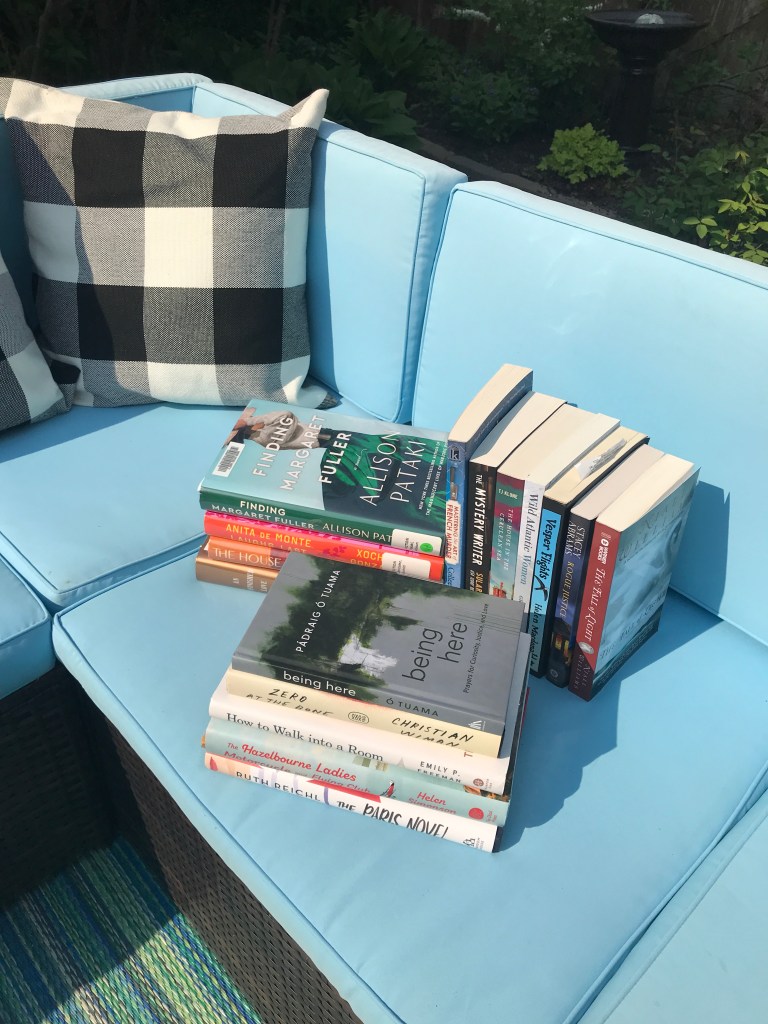
I am going to take a brief holiday break, but will begin posting again on January 2.

Advent 3: Three Lit Candles

December 19, 2023

Silence.

When I was in spiritual direction training, each of our monthly sessions began in silence.

Each of us enrolled in the program entered the gathering space quietly. We greeted each other with hugs or smiles or nods of our heads and then, sitting in a circle, we sat in silence. Not just for 30 seconds, but for minutes. Ten minutes. Fifteen minutes. Never quite long enough for me.

I loved that time. Needed that time, and how surprising that was, for I had driven the six hours, often alone, from Cleveland to Lebanon, PA the night before and then retired to my small, dorm-like room in the retreat center. A night of silence.

How could I desire yet more silence?

I recall our program director saying, “Let’s move into silence.” (That was over 25 years ago, so I can’t vouch for the complete accuracy of my memory.)

MOVE into silence. Such an interesting concept, that is. The idea that we are called to MOVE into silence. To enter silence deliberately, intentionally.

Is that what the Wise Ones did as they followed the star? Did they hold on to the reins of their camels and lumber along in silence, only nodding to one another at a moment of decision? And somehow they got just where they needed to be.

I remember another journey taken mostly in silence. It was December of 2002, almost Christmas, and I was driving by myself, as I often did, from Cleveland to Minnesota. My mother was dying of colon cancer, and it was clear this would be her last Christmas. She seemed to be doing well at the moment, but I knew how quickly that could change.

Normally, I listened to the radio in the car, following the NPR stations as I drove that 14 hour journey. Sometimes I listened to an audio book. On that trip, however, I drove in silence much of the time. I thought about what I would say at my mother’s funeral. I conversed with God about all that had occurred in recent months, but most of the time I just drove. I moved forward in silence, into silence.

The silence helped prepare me for whatever was ahead.

Each Wednesday evening during Advent our congregation gathers for evening prayer, and during the service we sit in silence two different times. A gong is struck, an invitation to move into silence, and other than a child’s squeaks or the brief rustling as we settle into the quiet, the sanctuary is silent.

We are silent together.

Perhaps the time until the gentle tinkling of the bells signals the transition from silence to the next stage of the service feels long for some of those present. It is never long enough for me, even though much of my days are spent in silence, working at my desk, reading in the snug, meditating at the beginning of the day. There is something different about sitting in silence with others, however.

When we are silent together, we create silence and respond to silence, enlarging and deepening it. We rest in it, but also awaken to its gifts. I am aware of the breathing around me and feel supported by that life. I sense the Presence among us.

I felt that when I sat in silence with my spiritual direction colleagues all those years ago. I feel that at the beginning of a spiritual direction session when my directee and I sit in silence. And I feel that way Wednesday evenings when we sit in silence in the barely lit sanctuary.

I suspect the Wise Ones felt that as they followed the star in silence. Perhaps the camels were even silent.

May you create space in your life for the gift of silence.

What role does silence play in your life? I would love to know.

I will post on Thursday, December 21, but then will take a week off to honor the Christmas holiday. I will return the week of January 1.

Book Report: Favorite Nonfiction Books Read in 2023

I am always more inclined to read fiction, rather than nonfiction, but oh my, there are memorable books on this list of favorites. I am aware that most of the books I list have not shown up on various media “Best of 2023” lists, and, in fact, many, if not most, of the books were not published in 2023, but this list reflects my personal taste plus the direction of my heart and my interests. I imagine your list is as individual as mine.

I have listed books in the order in which I read them–within the created categories. Browse at your leisure!

Part of my meditation time each morning is to read a book classified as spirituality or theology. All of these books, by the way, are housed in my garret where I write and meet with spiritual directees.

  • Liturgy of the Ordinary, Sacred Practices in Everyday Life by Tish Harrison Warren
  • Faith After Doubt, Why Your Beliefs Stopped Working and What To Do About It by Brian D. McLaren
  • Do I Stay Christian, A Guide for the Doubters, the Disappointed, and the Disillusioned by Brian D. McLaren
  • A Prayer in the Night, For Those Who Work or Watch or Weep by Tish Harrison Warren
  • Embers, One Ojibway’s Meditations by Richard Wagamese
  • Alive Until You’re Dead, Notes on the Home Stretch by Susan Moon
  • Enchantment, Awakening Wonder in an Anxious Age by Katherine May
  • Sacred Nature, Restoring our Ancient Bond with the Natural World by Karen Armstrong
  • Lost and Found, Reflections on Grief, Gratitude and Happiness by Kathryn Schulz
  • Why Did Jesus , Moses, The Buddha and Mohammed Cross the Road? Christian Identity in a Multi-Faith World by Brian D. McLaren
  • Things Seen and Unseen, A Year Lived in Faith by Nora Gallagher (Re-read)
  • Practicing Resurrection, A Memoir of Work, Doubt, Discernment, and Moments of Grace by Nora Gallagher. (Re-read)
  • Winter Grace, Spirituality and Aging by Kathleen Fischer (Re-read)
  • The Summer of the Great-Grandmother by Madeleine L’Engle (Re-read)
  • Wintering, The Power of Rest and Retreat in Difficult Times by Katherine May (Re-read)
  • Memoir as Medicine, The Healing Power of Writing Your Messy, Imperfect, Unruly (but Gorgeously Yours) Life Story by Nancy Slonin Aronie
  • Writing Begins with the Breath, Embodying Your Authentic Voice by Laraine Herring
  • The Hawk’s Way, Encounters with Fierce Beauty by Sy Montgomery (nature)
  • A Friend Sails in on a Poem by Molly Peacock
  • Bomb Shelter, Love, Time, and Other Explosives by Mary Laura Philpott (essays)
  • Leaving the Pink House by Ladette Randolph (memoir)
  • The Heartbeat of Wounded Knee, Native America From 1890 to the Present By David Treuer
  • South to America, A Journey Below the Mason-Dixon to Understand the Soul of a Nation by Imani Perry
  • One Hundred Saturdays, Stella Levi and the Search for a Lost World by Michael Frank
  • Catching the Light by Joy Harjo (memoir, poetry)
  • Fox and I, An Uncommon Friendship by Catherine Raven (memoir, nature)
  • You Could Make This Place Beautiful, A Memoir by Maggie Smith

What nonfiction books read in 2023 do you recommend? I would love to know.

Advent #2: Two Lit Candles

December 12, 2023

My Advent companion this year is one of the Wise Men. Each of the other two companions have been my companions in recent years, thanks to the deck of cards, “Advent Perspectives, Companions for the Journey.” (See my December 5 post,https://livingonlifeslabyrinth.com/2023/12/05/advent-1-one-lit-candle/

This particular Wise Man (Woman, please) is having a hard time getting ready for the journey.

I keep thinking about the conversation these three wise people must be having.

Wise Person #1: “There’s this star, and I think we must follow it.”

Wise Person #2: “I’ve seen it, too, and it is so much brighter than all the other stars. That must be a sign.’

Wise Person #3 remains quiet.

#1: “I think we need to leave right away. Tomorrow, in fact.”

#2 “Sounds good to me. Let’s do it.”

#3 remains quiet, but as #1 and #2 get up from the breakfast table, #3 says, “I don’t think I can be ready that quickly. There’s a lot to do before we leave on a trip. And besides, where are we going and how long will we be gone and what about all the meetings and appointments we have–I have–in the coming weeks? Where will we be staying and what do we need to take with us? Are the camels ready for a long journey”

Both #1 and #2 assure #3 that all will be well and somehow everything gets done.

#3 under her breath says, “That’s because I do what needs to be done.” #1 and #2 pretend not to hear her, as they leave the room, and #3 begins creating a master TO DO List.

  • Cancel mail delivery.
  • Get out passports.
  • Hire neighbor to shovel snow.
  • Do laundry.
  • Empty refrigerator.
  • Cancel upcoming appointments.
  • Pay bills

#3 continues the ongoing dialogue in her head. “Why can’t I be as spontaneous and as trusting as my colleagues? I’ve seen the star, too, and I’ve had the same dreams about the need to follow that star, but I get so bogged down in my routines and wrapped up in my lists. How exhausting that is sometimes!”

#3 takes a deep breath, reminding herself to breathe in the love of God and breathe out her anxieties and fears. Her need to be organized and in control. She closes her eyes, lightly, not tightly, and breathes in and out gently, finding her own rhythm. This is what she must do now, even before getting out the suitcases or making a list of what to take with her on this journey.

Breathe.

Be still.

Open to the Presence.

Trust. Surrender.

See the beauty of that star.

#3 could feel an eagerness arise within her. A yearning to follow, to discover where the star takes us.

And when she opened her eyes, she saw #1 and #2 standing beside her.

#1 said, “We are on this journey together.

#2 said, “Let’s help one another prepare.”

And #3 said, “May it be so.”


I look as far as I can into future days, weeks, months,
Desiring to see what is ahead and waiting for me.
But my vision is limited and clouded with desire.
I return to seeing only what is in this present moment.
I do not need to know that which is far beyond.
I have only to trust you to direct me, All-Seeing One....
from Fragments of Your Ancient Name, 365 Glimpses of the Divine for Daily Meditation
Joyce Rupp

What is getting in the way of your seeing and following the star? I would love to know.

I will publish my list of favorite nonfiction books read in 2023 on my Thursday, December 14 post.

Book Report: Favorite Novels of 2023—And More.

December 7, 2023

I was thrilled to find this earlier book (published in 2014) by Niall Williams at Northwind Books in Spooner, WI. I loved his most recent book, This Is Happiness (2019), and also an earlier book (1997) Four Letters of Love. And, no surprise, I loved this book, too.

As in his other books, The History of Rain is set in rural Ireland. I have never been there, unfortunately, but this book transported me there without a passport. Nineteen-year-old Ruth Swain relates her strange family history, even as her own story of being confined to bed with an unidentified and debilitating blood disorder is strange as well. What is not strange is the writing–always lyrical and poetic, sometimes comedic –I laughed outloud at times–but always warm, even as it teases. I shed a few tears along the way, too.

Ruth’s father was a poet, and she inherited all 3,958 of his books crammed into her bedroom where she sleeps in a bed shaped like a boat. I loved the bookishness of the narration, noting when a book is mentioned its specifics in the collection. “The Brothers Karamazov (Book 1,777, Penguin Classics, London)” or “The Prime of Miss Jean Brodie (Book 1,980, Penguin Classics, London). Books by Dickens are mentioned so often that I have decided to re-read this month one of my all-time favorites, Great Expectations.

A review in The Guardian says the book is “pure eccentric entertainment,” and that feels right. Some may get irritated by the wanderings, but I loved the quirkiness of it all. Yes, it is about life in County Clare and about her family. (Her mother doesn’t fall in love when she first meets the man she will marry, but she “falls in Curiosity, which is less deep but more common.” p. 176.) But it is also about fishing for salmon and about the rain that falls without end. And about stories.

We tell stories. We tell stories to pass the time, to leave the world for a while, or go more deeply into it. We tell stories to heal the pain of living.

p. 176

I underlined so many passages in this book. Don’t get me started. Instead, read the book and decide for yourself what to underline.

My plan this month is to re-read some favorites. The only exceptions will be if a book I have requested from the library becomes available. After all, let’s not be rigid when it comes to our reading!

I started the month re-reading Jane Austen’s Pride and Prejudice for the ____ time. I have lost count, but never lose interest or delight. Now I want to re-watch the various film versions of this classic. Re-reading P&P may become my new Advent tradition.

Now I am re-reading Fresh Water for Flowers by French novelist Valerie Perrin. How could a book set in a cemetery be so charming? Well, take my word for it, it is! And it is moving and revealing about the many ways we love.

I intend to re-read Great Expectations by Charles Dickens and also Possession by A.S. Byatt this month, but who knows what book distractions I will encounter as the month progresses.

I read a lot of fiction. Out of the 99 novels I read in 2023, here are my top 25. However, if I sat down and listed my top favorites on another day, the list might look different, for I read very few books I didn’t like. I think I have mentioned this before, but I quickly discard a book if it doesn’t hold my attention in the first few pages or if I don’t think it is written well–or if I am not in the mood. Therefore, what I read I generally like.

For descriptions/summaries/evaluations of my favorites, I’m afraid you, dear reader, will need to do some of your own work. I have listed my favorites in the order in which I read them and I have written about them in my Thursday Book Report posts.

Now for the list. May I have a drumroll, please?

  • The Marriage Portrait by Maggie O’Farrell
  • Our Missing Hearts by Celeste NG
  • Gone Like Yesterday by Janelle Williams
  • The Woman in the Library by Susan Gentill
  • The Island of Missing Trees by Elif Shafak
  • What Are You Going Through by Sigrid Nunez
  • The White Lady by Jacqueline Winspear
  • Still True by Maggie Ginsberg
  • I Have Some Questions for You by Rebecca Makai
  • Hello Beautiful by Ann Napolitano
  • Astrid and Veronica by Linda Olsson
  • My Antonia by Willa Cather (for the 3rd time)
  • The Whalebone Theatre by Joanna Quinn
  • Homecoming by Kate Morton
  • Horse by Geraldine Brooks
  • The Postcard by Anne Berest
  • The Half-Moon by Mary Beth Keane
  • The Housekeeper and the Professorbby Yoko Ogawa
  • Sea of Tranquility by Emily St John Mandel
  • The Dictionary of Lost Words by Pip WIlliams
  • The Bookbinder by Pip Williams
  • Tom Lake by Ann Patchett (Perhaps my TOP FAVORITE)
  • The River We Remember by William Kent Krueger
  • So Late in the Day by Claire Keegan
  • History of the Rain by Niall Williams

What’s missing? Well, there aren’t many books by men. Also The Covenant of Water by Abraham Verghese, even though it is a major favorite of many, is a book I liked, but didn’t love. Lessons in Chemistry is not on the list because I haven’t read it yet, but at some point, I will. There is no new Louise Penny listed because there was not a new LP in 2023! Boo! And I am embarrassed to say there aren’t many books written by people of color on the list–I read more than the list indicates, but, alas, they aren’t among my very favorites.

So that’s it!

What were your favorite books of 2023? I would love to know.
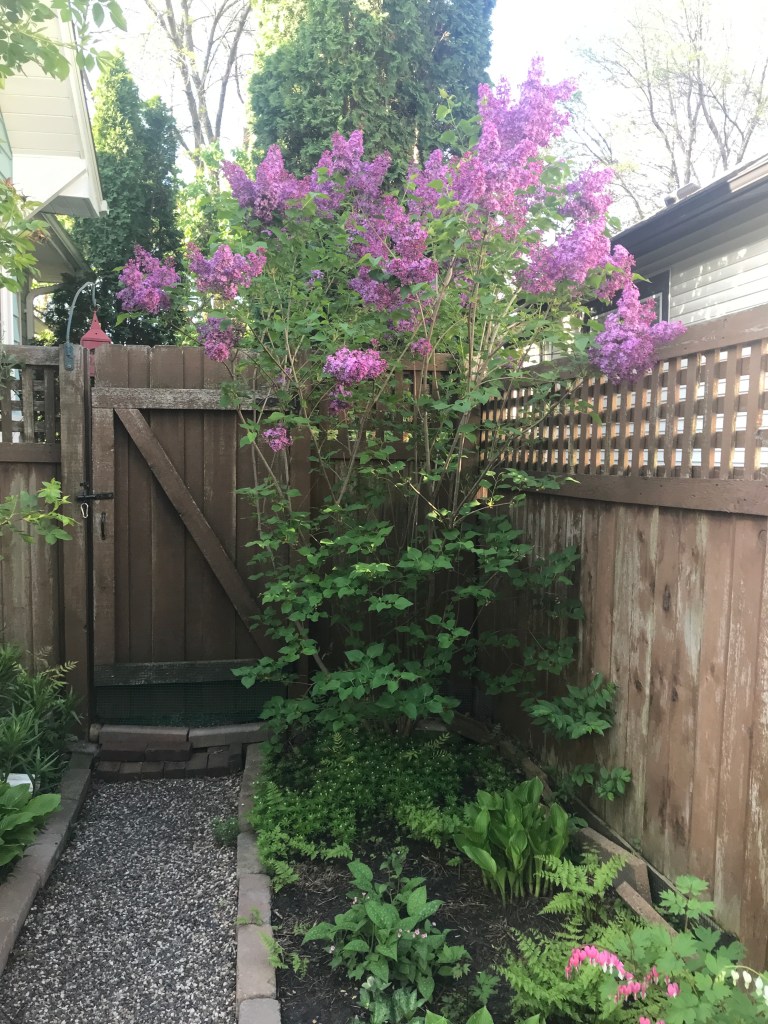
I will list my favorite 2023 nonfiction books in my Book Report post on Thursday, December 14.

Dear Subscriber…

September 18, 2024

For several years my Monday routine has included writing my Tuesday post and often the one for Thursday as well, but this summer I discovered technical issues. You, as a subscriber or someone on my email lists, received my posts as usual, but the posts did not appear on the blog website. That meant others, who were not subscribers, did not have access to a new post.

After initially trying to figure out the problem myself, contacting WordPress and also researching YouTube for possible solutions, I decided it was time for a Summer Sabbatical. I adopted Scarlet O’Hara’s philosophy of “I’ll think about it tomorrow.”

Eventually, however, I got serious and hired professional help, but, even with the best efforts, the problem remained.

Now what?

I moved into a time of discernment, and I discovered a number of things about myself and this stage of my life.

  • I enjoyed the new spaciousness of my days. Writing the posts takes a good chunk of time. I have enjoyed over the years using my time in this way, but now I was aware of how much space the blog has been taking in my head and at the keyboard. I realized how I was always on the alert: what to write about; what images could accompany my words; and even as I took my morning walk I rehearsed how to write about an idea.
  • I missed being visible. One of the things that happens as one ages in our culture is that we tend to become invisible to others. The blog at least gave me the illusion that I had not disappeared, and my ego loved that (loves that!). I wonder what the invitation is here.
  • I have become aware of the need to pace myself more. Quite simply, I am not able to do as much in a day as I once did and that means paying more attention to my energy and my priorities. What exactly are those priorities? I asked myself.
  • I realized my reading life had become an obsession. My Thursday posts were devoted to books –my recommendations and news about books. Was I reading in order to write an interesting post? Well, not entirely, but maybe, just a bit. And being known as someone who reads A LOT and is in the know fed that ego of mine!

Someone asked me recently “What are you up to these days?” and I sort of stumbled an answer, just like I am vague when someone asks me if I have any travel plans. With further reflection, however, I realized that what I am up to these days is aging, being an elder, inhabiting this stage of my life.

And what does that look like? What do I hope that looks like? What does it include? And how do I live that, practice that?

I think it involves a certain degree of surrender. Real surrender, it seems to me, involves letting go before one is really prepared to do so, before one is ready. And the issues with my blog seems to be one of those times. Would I choose to stop writing a blog if I didn’t have these technical problems? Probably not, but perhaps, just perhaps, this is one of those God moments. Renita Weems in her book Listening for God calls it “Gotta be God,” as in this must be God whispering in my ear.

My life is deliciously full, and I am so grateful for the ways I am able to use what I think are my gifts. Planning and facilitating the weekly writing group at church brings me such joy. Sitting with my directees in spiritual direction is an ongoing privilege. Being able to respond to other invitations, including writing opportunities, introduces surprise into my life and often challenges me to stretch and to deepen.

At the same time I want and need to be more available to friends and family, especially as many are facing the challenges of aging.

I apologize. I have taken too long to say that it is time for me to let go of my blog, Living on Life’s Labyrinth. The site will stay available for past posts and who knows maybe someday a solution to the technical issue will magically be solved or perhaps I will decide to start a new blog. But this is my decision for right now. This is what feels right and possible at this moment.

I am so grateful to all of you have read me faithfully, have made comments along the way, offered kind words, and shared my posts with others. Thank you, thank you, thank you.

Much of my summer reading has been for an article I am writing for BookWomen, A Readers Community for Those Who Love Women’s Words www.bookwomen.net about spiritual memoirs written by women, but, of course, I read some wonderful fiction, too. Here’s my list of favorites from June, July, and August.

  • Long Island by Colm Toibin (2024)
  • The Cemetery of Untold Stories by Julia Alvarez (2024)
  • Family, Family by Laurie Frankel (2024)
  • Lucky by Jane Smiley (2024)
  • The Hazelbourne Ladies Motorcycle and Flying Club by Helen Simonson (2024)
  • The Lost Art of Mixing by Erica Bauermeister (2013)
  • Forgotten on Sunday by Valerie Perrin (2015 in France, translated, 2023)
  • We Are the Brennans by Tracey Lange (2021)
  • Sandwich by Catherine Newman (2024)
  • How to Read a Book by Monica Wood (2024)
  • You Are Here by David Nicholls (2024)
  • Found in a Bookshop by Stephanie Butland (2023)
  • In My Father’s House by Joseph O’Connor (2023)
  • The First Ladies by Marie Benedict and Victoria Christopher Murray (2023)
  • Loved and Missed by Susan Boyt (2021)
  • Family Happiness by Laurie Colwin (1982)
  • The Wife by Meg Wolitzer (2003)
  • The Measure by Nikki Erlick (2022)

This is normally the spot where I pose a question for your reflection and invite your comments. Today I invite you to consider how you might adopt the spiritual practice of aging. I can still read any comments, if you care to send them, but the question–a big one–is more for your own contemplation.

Again, thank you for reading. I have loved having you along on this adventure. May your days living on life’s labyrinth be blessed.

A Technical Trial

July 16, 2024

A couple readers have offered suggestions about how to solve the technical issue I currently have–new posts are not published on the website. So… this is a trial run to see if I have corrected the problem. My apologies to those who subscribe to the post and will receive this practice post.

Bruce and I were recently on a two hour cruise on the Mississippi River with a group from our church. A perfectly delightful evening.

Now I am going to hit “publish” and see what happens! Thanks for your patience.

Preparing for Morning Meditation Time

July 16, 2024

Some mornings need no preparation.

I make the bed and brush my teeth and head into the snug for my morning meditation time. I read a devotion or two, write in my journal, and sit in the silence, praying with words or simply an open heart. Closing my eyes, I breathe in and out, gently, finding my own rhythm.

Some days I sit there longer than others, but no matter the length of time, I feel more prepared for the day. More open to whatever is planned. And whatever is unplanned. I have learned over the years that if this morning time is absent from my day for more than two or three days, I am not as present to the movement of God in my life or even my own movements. I tend to trip or slip or become fuzzy or light-headed–metaphorically, but sometimes even actually. This morning time is key to my functioning, to my balance, to finding my own rhythm and being able to respond to the rhythms swirling around me.

But some days I need to prepare myself for the ritual preparation for the day. Yesterday was one of those days perhaps because of the upsetting weekend events and the ensuing commentary and knowing that the Republican convention was about to begin.

I knew I needed to calm myself before I could calm myself!

Shouldn’t making my bed and going for a walk be enough? Well, no, for frankly those feel like “shoulds” in my life. I wish I didn’t think about my morning walk in that way, but as long as this heat smolders me, I’m afraid the walk is something to check off my list more than a pleasure. I plod forward and try to remind myself to notice the gardens and wish summer blessings to dog walkers and those dashing to their cars with kids destined for daycare, but I just feel sweaty.

Sometimes I admit there is an unexpected delight. One morning last week I was trudging along, wishing I was on the return route, and I heard a sweet, slightly off tune voice singing “Old MacDonald Had a Farm.” A little girl, maybe age 4, and her Daddy were walking behind me to the daycare center across from the Catholic church in our neighborhood. She repeated the verse about the cow several times and didn’t always include “E-I-E-I-O,” but no matter, I was honored to be her audience. I felt blessed.

Unfortunately, I experienced no such treat Monday morning and felt only self-righteous about exercising in spite of the heat and the on-again, off-again sprinkles. I was not ready to enter meditation and I knew it. What to do?

I cut daisies for a new bouquet on the dining room table.

I swept the walk and the steps leading to our front door.

I took a shower.

And then I was ready, and I entered the snug and my morning meditation time.

Now I realize that morning meditation time does not require preparation. It is normally a “come as you are” activity, but sometimes I know I will benefit even more from that time if I can bring some small slice of serenity into the space. These brief clearing the space moments are not distractions. They are not ways of putting off what I know I must do, but, instead they are part of a progression, a procession into the meditation time.

Turning to the light
the light turns to us.
Moving toward the source
the source moves us.
Holding on to hope
hope holds on to us.
Padraig O'Tuoma in Being Here, Prayers for Curiosity, Justice, and Love

Prayer of the Day, Sunday, July 15, 2024
O, God, from you come all holy desires, all good counsels, and all just works.
Give to us, your servants, that peace which the world cannot give, that our hearts may be set to obey your commandments; and also that we, being defended from the fear of our enemies, may live in peace and quietness, through Jesus Christ , our Savior and Lord. Amen.

I learned last week, thanks to a reader, that my posts are not appearing on my website. Those who subscribe or find me on Facebook or are on my email list receive the posts, but if anyone goes to my website https://livingonlifeslabyrinth, the last post published was on June 13, 2024. I have requested help from WordPress, but that was not helpful, and I have watched some YouTube videos, which also did not solve the problem. I may end up using the Geek Squad at Best Buy, but that involves leaving my laptop with them, and that just isn’t convenient right now.

So here’s my plan: a time-out. I always wonder when these kinds of interruptions and/or technical issues arise if I am getting a message to do something else or not do anything at all. I have been a blogger for 15 years or so and perhaps it is time to end that chapter of my life. I don’t think so, but I need to sit with that question. Summer seems like a good time to do that.

So I am taking a break.

At the same time if anyone in the St Paul area has a suggestion about someone who is in the business of solving all things technical and will make a house call, I am open to recommendations.

May all be well with you and I wish you summer blessings.

What activities prepare you or lead you to times of focused meditation? I would love to know.


Book Report: Two New Novels For Your Summer Reading

July 11, 2024

The 4th of July holiday week was quiet at our house, and you can guess what I did! I enjoyed the spaciousness of the days with a book on my lap. I moved from the snug to the patio to the comfortable chair with an ottoman in the entryway to the side garden we call “Paris,” and I read. My kind of holiday.

I LOVED this book, and so did Ann Patchett. I will read almost anything she recommends.

Sandwich is joy in book form. I laughed continuously, except for the parts that made me cry. Catherine Newman does a miraculous job reminding us of all the wonder there is to be found in life.

Every year for the past two decades Rocky and her family spend a week at a modest beach rental in Cape Cod. This year is no exception, but this year Rocky’s husband Nick and their two adult children, Willa and Jamie are joined by Jamie’s girlfriend Maya and also for a couple days by her aging parents. (Why is it parents of middle aged children are always referred to as “aging parents.” Aren’t we all aging? Sigh.)

At one point when both my husband and I were reading on the patio, he actually had to go inside the house because I was laughing out loud so frequently while reading this funny, yet poignant book of family life, past and present.

p. 24. Forty minutes later, we are walking back to the cottage with two lattes, four chocolate croissants, one scone, three baguettes, and a receipt for sixty-five dollars.

p. 45. ("Dad and I defrosted the chest freezer" is an actual text I once sent in response to a question about our weekend and how it was going.)

p. 97. Menopause feels like a slow leak: thoughts leaking out of your head; flesh leaking out of your skin; fluid leaking out of your joints. You need a lube job, is how you feel. Body work. Whatever you need, it sounds like a mechanic might be required, since something is seriously amiss with your head gasket.
You finally understand the word crepey as it applies to skin--although you could actually apply this word to to your ass as well, less in the crepe-paper sense than the flat-pancake one. Activities that might injure you include ping-pong, napping, and opening a tub of yogurt...


So many novels I read about family life, domestic fiction, focus on the dysfunction, but I loved this one for it focuses on the love. This family is not perfect, nor are any of these characters perfect, but they love one another, and they love that they are a family. And yes, there are secrets held from one another–some of which are revealed during this week at the Cape, but once again you sense as a reader that the bond with one another is soul-deep.

p. 121.         Rocky's father says, "It is a privilege to grow old. We are lucky to be here."
"We really are," my mother says. I cry a little then, because of the conversation and the wine and this absolute devastation and blessedness, rolled up into a lump in my own throat that I have been trying to swallow for my whole life.
Life is a seesaw, and I am standing dead center, still and balanced: living kids on one side, living parents on the other. Nicky here with me at the fulcrum. Don't move a muscle, I think. But I will, of course. You have to.

I repeat: I loved this book and so did Ann Patchett.

One more thing: I think Catherine Newman and I share the same taste in clothes. I am quite sure in her photo on the back flap that she is wearing the same blouse I am wearing right now.

Sorry–one more thing: I also really liked her earlier novel, We All Want Impossible Things. She has written memoirs, too, Waiting for Birdy, and Catastrophic Happiness and you can bet they are now on my TBR.

So often the blurb on the inside cover of a book is overblown, but this time the book lives up to the description.

In immersive, moving prose, Rachel Chong weaves a profound tale of class and striving, race and visibility, and family and inheritance, a story of trust, forgiveness, and finally coming home. Exuberant and explosive grand and entertaining, Real Americans is an inquiry into the forces that roil our new century: Are we destined or made? And, if the latter, who gets to do the making?"

This novel is divided into three parts. In part one Lily Chen is an unpaid intern for a large media company and she meets wealthy Matthew, heir to a pharmaceutical company. Lily’s parents are scientists who fled Mao’s China. Matthew and Lily fall in love and marry. Their son Nick is the focus of part two. Lily and Matthew have divorced and teenager Nick knows nothing about his father–until he takes a DNA test. In part three we learn about Lily’s mother May, beginning with her life in China, eventually fleeing to Hong Kong and then the US. Lily and May are estranged from one another.

The story certainly kept me engaged, although at times, especially in part two when I got tired of the college angst and behavior, I hoped for more answers to unanswered questions. I felt there were gaps along the way, such as why is it that Lily and Matthew got divorced anyway? However, that being said, this book would be an excellent book group selection–lots to talk about.

A favorite quote:

p. 363. Once she had believed that connection meant sameness, consensus, harmony. having everything in common. And now she understood that the opposite was true: that connection was more valuable--more remarkable--for the fact of differences. Friendship didn't require blunting the richness of yourself to find common ground. Sometimes it was that, but it was also appreciating another person, in all their particularity.

My daughter has read this book (actually, she read Sandwich, too, and loved it, as did Ann Patchett), and enjoyed it, too, and also highly recommends the author’s earlier novel, Goodbye, Vitamin.

Did your 4th of July week include any reading time? I would love to know.
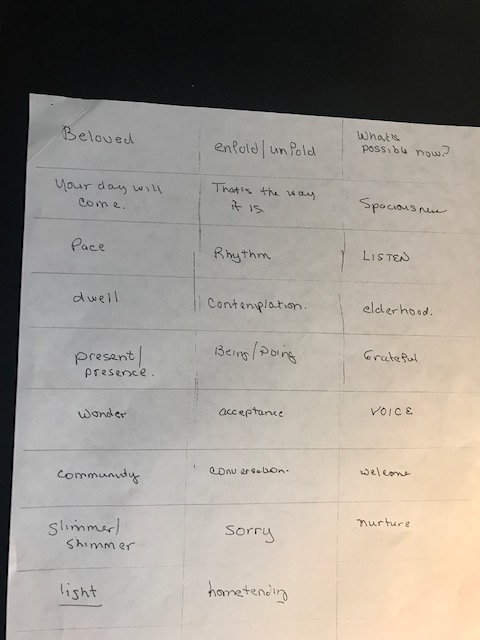
Book Report: Two New Novels For Your Summer Reading

July 11, 2024

The 4th of July holiday week was quiet at our house, and you can guess what I did! I enjoyed the spaciousness of the days with a book on my lap. I moved from the snug to the patio to the comfortable chair with an ottoman in the entryway to the side garden we call “Paris,” and I read. My kind of holiday.

I LOVED this book, and so did Ann Patchett. I will read almost anything she recommends.

Sandwich is joy in book form. I laughed continuously, except for the parts that made me cry. Catherine Newman does a miraculous job reminding us of all the wonder there is to be found in life.

Every year for the past two decades Rocky and her family spend a week at a modest beach rental in Cape Cod. This year is no exception, but this year Rocky’s husband Nick and their two adult children, Willa and Jamie are joined by Jamie’s girlfriend Maya and also for a couple days by her aging parents. (Why is it parents of middle aged children are always referred to as “aging parents.” Aren’t we all aging? Sigh.)

At one point when both my husband and I were reading on the patio, he actually had to go inside the house because I was laughing out loud so frequently while reading this funny, yet poignant book of family life, past and present.

p. 24. Forty minutes later, we are walking back to the cottage with two lattes, four chocolate croissants, one scone, three baguettes, and a receipt for sixty-five dollars.

p. 45. ("Dad and I defrosted the chest freezer" is an actual text I once sent in response to a question about our weekend and how it was going.)

p. 97. Menopause feels like a slow leak: thoughts leaking out of your head; flesh leaking out of your skin; fluid leaking out of your joints. You need a lube job, is how you feel. Body work. Whatever you need, it sounds like a mechanic might be required, since something is seriously amiss with your head gasket.
You finally understand the word crepey as it applies to skin--although you could actually apply this word to to your ass as well, less in the crepe-paper sense than the flat-pancake one. Activities that might injure you include ping-pong, napping, and opening a tub of yogurt...


So many novels I read about family life, domestic fiction, focus on the dysfunction, but I loved this one for it focuses on the love. This family is not perfect, nor are any of these characters perfect, but they love one another, and they love that they are a family. And yes, there are secrets held from one another–some of which are revealed during this week at the Cape, but once again you sense as a reader that the bond with one another is soul-deep.

p. 121.         Rocky's father says, "It is a privilege to grow old. We are lucky to be here."
"We really are," my mother says. I cry a little then, because of the conversation and the wine and this absolute devastation and blessedness, rolled up into a lump in my own throat that I have been trying to swallow for my whole life.
Life is a seesaw, and I am standing dead center, still and balanced: living kids on one side, living parents on the other. Nicky here with me at the fulcrum. Don't move a muscle, I think. But I will, of course. You have to.

I repeat: I loved this book and so did Ann Patchett.

One more thing: I think Catherine Newman and I share the same taste in clothes. I am quite sure in her photo on the back flap that she is wearing the same blouse I am wearing right now.

Sorry–one more thing: I also really liked her earlier novel, We All Want Impossible Things. She has written memoirs, too, Waiting for Birdy, and Catastrophic Happiness and you can bet they are now on my TBR.

So often the blurb on the inside cover of a book is overblown, but this time the book lives up to the description.

In immersive, moving prose, Rachel Chong weaves a profound tale of class and striving, race and visibility, and family and inheritance, a story of trust, forgiveness, and finally coming home. Exuberant and explosive grand and entertaining, Real Americans is an inquiry into the forces that roil our new century: Are we destined or made? And, if the latter, who gets to do the making?"

This novel is divided into three parts. In part one Lily Chen is an unpaid intern for a large media company and she meets wealthy Matthew, heir to a pharmaceutical company. Lily’s parents are scientists who fled Mao’s China. Matthew and Lily fall in love and marry. Their son Nick is the focus of part two. Lily and Matthew have divorced and teenager Nick knows nothing about his father–until he takes a DNA test. In part three we learn about Lily’s mother May, beginning with her life in China, eventually fleeing to Hong Kong and then the US. Lily and May are estranged from one another.

The story certainly kept me engaged, although at times, especially in part two when I got tired of the college angst and behavior, I hoped for more answers to unanswered questions. I felt there were gaps along the way, such as why is it that Lily and Matthew got divorced anyway? However, that being said, this book would be an excellent book group selection–lots to talk about.

A favorite quote:

p. 363. Once she had believed that connection meant sameness, consensus, harmony. having everything in common. And now she understood that the opposite was true: that connection was more valuable--more remarkable--for the fact of differences. Friendship didn't require blunting the richness of yourself to find common ground. Sometimes it was that, but it was also appreciating another person, in all their particularity.

My daughter has read this book (actually, she read Sandwich, too, and loved it, as did Ann Patchett), and enjoyed it, too, and also highly recommends the author’s earlier novel, Goodbye, Vitamin.

Did your 4th of July week include any reading time? I would love to know.

Book Report: Two New Novels For Your Summer Reading

July 11, 2024

The 4th of July holiday week was quiet at our house, and you can guess what I did! I enjoyed the spaciousness of the days with a book on my lap. I moved from the snug to the patio to the comfortable chair with an ottoman in the entryway to the side garden we call “Paris,” and I read. My kind of holiday.

I LOVED this book, and so did Ann Patchett. I will read almost anything she recommends.

Sandwich is joy in book form. I laughed continuously, except for the parts that made me cry. Catherine Newman does a miraculous job reminding us of all the wonder there is to be found in life.

Every year for the past two decades Rocky and her family spend a week at a modest beach rental in Cape Cod. This year is no exception, but this year Rocky’s husband Nick and their two adult children, Willa and Jamie are joined by Jamie’s girlfriend Maya and also for a couple days by her aging parents. (Why is it parents of middle aged children are always referred to as “aging parents.” Aren’t we all aging? Sigh.)

At one point when both my husband and I were reading on the patio, he actually had to go inside the house because I was laughing out loud so frequently while reading this funny, yet poignant book of family life, past and present.

p. 24. Forty minutes later, we are walking back to the cottage with two lattes, four chocolate croissants, one scone, three baguettes, and a receipt for sixty-five dollars.

p. 45. ("Dad and I defrosted the chest freezer" is an actual text I once sent in response to a question about our weekend and how it was going.)

p. 97. Menopause feels like a slow leak: thoughts leaking out of your head; flesh leaking out of your skin; fluid leaking out of your joints. You need a lube job, is how you feel. Body work. Whatever you need, it sounds like a mechanic might be required, since something is seriously amiss with your head gasket.
You finally understand the word crepey as it applies to skin--although you could actually apply this word to to your ass as well, less in the crepe-paper sense than the flat-pancake one. Activities that might injure you include ping-pong, napping, and opening a tub of yogurt...


So many novels I read about family life, domestic fiction, focus on the dysfunction, but I loved this one for it focuses on the love. This family is not perfect, nor are any of these characters perfect, but they love one another, and they love that they are a family. And yes, there are secrets held from one another–some of which are revealed during this week at the Cape, but once again you sense as a reader that the bond with one another is soul-deep.

p. 121.         Rocky's father says, "It is a privilege to grow old. We are lucky to be here."
"We really are," my mother says. I cry a little then, because of the conversation and the wine and this absolute devastation and blessedness, rolled up into a lump in my own throat that I have been trying to swallow for my whole life.
Life is a seesaw, and I am standing dead center, still and balanced: living kids on one side, living parents on the other. Nicky here with me at the fulcrum. Don't move a muscle, I think. But I will, of course. You have to.

I repeat: I loved this book and so did Ann Patchett.

One more thing: I think Catherine Newman and I share the same taste in clothes. I am quite sure in her photo on the back flap that she is wearing the same blouse I am wearing right now.

Sorry–one more thing: I also really liked her earlier novel, We All Want Impossible Things. She has written memoirs, too, Waiting for Birdy, and Catastrophic Happiness and you can bet they are now on my TBR.

So often the blurb on the inside cover of a book is overblown, but this time the book lives up to the description.

In immersive, moving prose, Rachel Chong weaves a profound tale of class and striving, race and visibility, and family and inheritance, a story of trust, forgiveness, and finally coming home. Exuberant and explosive grand and entertaining, Real Americans is an inquiry into the forces that roil our new century: Are we destined or made? And, if the latter, who gets to do the making?"

This novel is divided into three parts. In part one Lily Chen is an unpaid intern for a large media company and she meets wealthy Matthew, heir to a pharmaceutical company. Lily’s parents are scientists who fled Mao’s China. Matthew and Lily fall in love and marry. Their son Nick is the focus of part two. Lily and Matthew have divorced and teenager Nick knows nothing about his father–until he takes a DNA test. In part three we learn about Lily’s mother May, beginning with her life in China, eventually fleeing to Hong Kong and then the US. Lily and May are estranged from one another.

The story certainly kept me engaged, although at times, especially in part two when I got tired of the college angst and behavior, I hoped for more answers to unanswered questions. I felt there were gaps along the way, such as why is it that Lily and Matthew got divorced anyway? However, that being said, this book would be an excellent book group selection–lots to talk about.

A favorite quote:

p. 363. Once she had believed that connection meant sameness, consensus, harmony. having everything in common. And now she understood that the opposite was true: that connection was more valuable--more remarkable--for the fact of differences. Friendship didn't require blunting the richness of yourself to find common ground. Sometimes it was that, but it was also appreciating another person, in all their particularity.

My daughter has read this book (actually, she read Sandwich, too, and loved it, as did Ann Patchett), and enjoyed it, too, and also highly recommends the author’s earlier novel, Goodbye, Vitamin.

Did your 4th of July week include any reading time? I would love to know.

Following Foolproof Directions

July 9, 2024

Monday morning. “Really?” I moaned when I looked at the clock. 5:30. I wasn’t ready to fully enter the day, but on the other hand, I knew if I went back to sleep, I would sleep later than I wanted to. After all the Monday list was long.

What did I do? I closed my eyes and went back to sleep. For another hour and 15 minutes. I’m usually getting ready for my morning walk by then. Oh well.

I made the bed. At least I had accomplished one thing, I reassured myself. Little by little I did what needed to be done in order to go for a walk. I admit I don’t’ head out on a walk eagerly. I really prefer sitting in the snug, reading my current book. But going for a morning walk is on the list, and it is good for me. Some writers say they love having written, more than actually writing. Well, I am happier when I’ve completed my walk more than when I am actually walking. I must say, however, that right now what a pleasure it is to see the exuberant gardens in so many homes.

Once home, dripping in sweat, because that’s what my body does, even when it is only warm and not hot, the next step was to take a shower. The bathroom with the shower is on the lower level of the house, which is not where my clothes closet and dresser are located. Normally, that is not an issue, but yesterday I needed to return to the first floor not once, but twice to get what I needed to be fully clothed.

Ok, I was finally ready to enter the day.

On my list was to make egg salad, and I was proud of myself for cutting the chives before taking my shower and washing off the insect repellant needed when I walk. You see getting to the chives, once visible, but now hidden among other fully grown plants, is no small task, and I had jungled my way to them. (Yes, I know “jungle” is not a verb.)

I have foolproof directions for hard boiled eggs.

  • Place eggs in large pot and cover with cool tap water.
  • Bring water to boil, lower heat and simmer for five minutes.
  • Turn off heat and let eggs sit in water for five minutes.
  • Drain. Fill pot with cold water.
  • To peel, tap each end on a board, roll egg between hand and board to crackle the shell.
  • Peel under running tap water and let cool to room temperature.

The directions are only foolproof, however, when they are followed.

First mistake: when the water boiled, I set the timer on my phone to five minutes, but I forgot to press “start.”

Second mistake: After wondering how long the eggs had been simmering, I set the timer again for five minutes and AGAIN–I kid you not–forgot to press “start.”

I have no idea if I estimated the time as too long or not enough, but when I tried peeling the eggs…well, let’s just say, I needed to start all over. And I did, and this time, I focused on the directions, and guess what? They worked, and I made delicious egg salad for sandwiches.

By this time it was already midmorning, and normally, I would have written my Tuesday post and would be ready to work on Thursday’s post or another item on my list–a list this week that is longer than any previous week this summer. Yesterday, however, I had no idea what to write.

Here’s where the day shifted.

What I most needed was to follow my own foolproof directions.

  • Close my eyes, lightly, not tightly, and take a deep cleansing breath
  • Continue breathing gently, in and out, finding my own rhythm.
  • As thoughts and ideas, worries and concerns enter my head, invite them to step aside. They will be there later, if I need them.
  • Remain in the stillness, the silence, the spaciousness and allow the presence of God to enfold me.
  • When it is time, and I will know when it is time, I take another deep cleansing breath and open my eyes.

I know these directions are foolproof, so why is it I forget to follow them? Why do I resist? Why do I forget that in order to be the movement of God, I must welcome and notice the movement of God.

I am not suggesting that the rest of the day proceeded smoothly and that I accomplished everything on my too long list, but I did write this post. I enjoyed an egg salad sandwich for lunch. I met with a client whom I love, and I was able to be present to her. I checked off a few small items on my list. I had time to read in the snug. And most of all, I moved through the day in a more grace-filled way.

Sometimes it just takes following directions.

What are your “foolproof directions”? I would love to know.

Book Report: June Summary

July 4, 2024

June was a month of mainly reading new novels.

  • Long Island by Colm Toibin
  • The Cemetery of Untold Stories by Julia Alvarez
  • Family Family by Laurie Frankl
  • Lucky by Jane Smiley
  • The Hazelbourne Ladies Motorcycle and Flying Club by Helen Simonson
  • The Comfort of Ghosts by Jacqueline WInspear
  • Forgotten Sunday by Valerie Perrin

I wrote about each of these books in my June posts. https://wordpress.com/post/livingonlifeslabyrinth.com/3698 https://wordpress.com/post/livingonlifeslabyrinth.com/3666 https://wordpress.com/post/livingonlifeslabyrinth.com/3634

It was also a month to begin my summer reading plan. My intention was to choose one shelf in the library and read whatever appealed to me on that shelf. I chose shelf #14, Barry to Bausch. Often when I go to a bookstore I add at least one Wild Card book to my purchases–books not on my TBR list and even books I may never have heard of. Well, Shelf #14 was my Wild Card Shelf.

Notice I said “was.” This past month I did read two books from that shelf, both by Erica Bauermeister. One was The Lost Art of Mixing (2013) https://wordpress.com/post/livingonlifeslabyrinth.com/3666 and the other was The Scent Keeper (2019). I probably would not have read this book based on a review, for the story of a young girl who lives on an island with her eccentric father who “saves” scents seemed too quirky, too fairy tale-ish for my taste. But Bauermeister is such a good storyteller, often so insightful, and I allowed myself to live in that world.

Grief makes a tunnel of our lives, and it is all too easy to lose sight of the other people in the darkness with us--to wish they weren't there, so their loss would stop rubbing up against ours. My father and I desperately needed open space, clean air for our pain to move into. But all we could do was wait." p. 45


There was one other Bauermeister book on my Wild Card Shelf, No Two Persons, but I had read that already, so my next step was to choose the next Wild Card Book. One by one I read the inside flap of each book, along with the first few pages. And none of them appealed to me. I almost checked out another one, urging myself to take a chance, and then I remembered that I made the rules (guidelines) for my Summer Reading Plan, and if I wanted to change them, ignore them, or even pretend they never existed, I can do that. I have agency in my reading life!

My next step was to see if there were any of my TBR list books on one of the shelves in my library of choice–books I would not have to request–and I found We Are the Brennans by Tracey Lange (2021). One of my favorite genres is domestic novels, which always seem to involve family secrets. There were more than one in this book to keep the plot moving. Sunday, the daughter in the Brennan family is in a car accident and charged with drunk driving, and her brother Denny brings her back home to NY from California to recover and because he needs her help. He has gotten himself into a tangled financial mess. Why she moved away from the family has always been a mystery. I must say I was right with the author until the last page or two. I won’t say more, because you might feel differently about the ending.

The other fiction book I read in June was on my own shelf; one of the books my husband gave me for my spring birthday. Mastering the Art of French Murder by Colleen Cambridge (2023) is a fun, light read set in Paris. Tabitha, an American, lives with her French grandfather and becomes good friends with Julia Child, who just happens to live across the road. After a late night party in the Child residence a woman is found dead, and the murder weapon is one of Julia’s chef knives, and there is a note in the woman’s pocket written in Tabitha’s handwriting. Oh dear!

This was not a month of reading much nonfiction. Truth told, I don’t read much nonfiction, but I do always have a meditation, spiritual book as a companion during my prayer time. In June I read Padraig O’ Tuama’s Being Here, Prayers for Curiosity, Justice, and Love (2024. Along with devotions for each day, additional prayers and short reflections were included. A gem of a book, which I have referred to in some of my June posts, and I know I will turn to it again.

Turning to the day
and to each other
We open ourselves to the day
and each other.
This is the day that the Lord has made ,
and a day we'll have to make our way through...


I also read Wild Atlantic Women, Walking Ireland’s West Coast by Grainne Lyons (2023). I bought this book at an excellent independent book store in Door County when we were there in April. It was a Wild Card selection. The author who has an Irish heritage, but lives in London decided to undertake a kind of pilgrimage–to walk in the steps of eleven pioneering Irish women and in the process reflect on her own identity. The only woman somewhat familiar to me is the writer Edna O’Brien who is perhaps best known for her novel The Country Girls, which I have not read, but own. (Is it time to read it?) The other women include a scientist, a storyteller, an activist, a lacemaker, a knitter, a “pirate queen,” and a figure of Irish legends, Queen Maeve, and along the way the reader is immersed in the coastal landscape.

It is only July 4th, but I have read one novel this month and am almost done with another, but you will have to read my post next week to learn the titles. (See what I did there?)

I don’t know if I will select another Wild Card shelf at the library. Maybe I will do some random browsing, but at this point I think I will focus on what’s on my own shelf. My husband and I recently visited a bookstore new to us, only a year old, Big Hill Books in the Bryn Mawr neighborhood of Minneapolis, and we came home with a nice pile. Stay tuned to learn more. https://www.bighillbooks.com

Also, I have accepted a writing assignment from the publication BookWomen to write an article about spirituality books written by and for young women of diverse traditions. That means I will be researching and reading books that aren’t even known to me yet. I have a list of possibilities for books with a progressive Christian perspective, but I welcome your suggestions for books in the Jewish, Muslim, Buddhist, Indigenous etc. traditions.

As always, happy reading!

Did your reading this past month include a Wild Card? I would love to know.

Life in the Elder Hallway

July 2, 2024

Come join me in “Paris.” On gorgeous summer days this is where you might find me–writing letters and emails, dipping into my basket of miscellaneous meditation books and saved articles, jotting notes to myself, adding to my To DO and TBR lists, and often taking a deep cleansing breath, as I open my journal for more reflection time.

These are rich, but quiet days. Days I need right now.

I am reading for the second time How To Walk into a Room, The Art of Knowing When to Stay and When to Walk Away by Emily P. Freeman. Freeman uses the metaphor of a “room,” to reflect on decision-making and changes in our lives. Freeman emphasizes the importance of naming the room we inhabit now, and I am more and more aware that my current room is a room of elderhood, of old age.

This room is spacious with several corners and areas designated for different aspects of my life: my work as a spiritual director, as the facilitator of a writing group, as writer of this blog, along with my identities including wife, mother, grandmother, friend, sister, and active church member. The room has a number of doors often open to welcome others and windows, reminding me to pay attention to the diverse movement around me. There are places to sit for solitary reflection and for attentive conversations.

In my 60’s I often said I hoped my elder years would be a time of expansiveness–a time to grow bigger–and I needed a BIG room. Now, however, in my 70’s I have revised that thought. Instead, this is a time of deepening. And I think my room encourages that intention to deepen, to grow deeper into who I was created to be. That fits right now, but at some point, perhaps my room will be smaller, and I won’t need as many designated areas. My room will modify into a room of contentment. Not passiveness, but a contemplative contentment.

My father seemed to live in that room in his last years–his 80’s into his 90’s. He spent much of his day in prayer and meditation without realizing that he was living as a contemplative in his last room. That was not a word familiar to him, but when I offered it to him, I could see that it resonated, and he accepted, even welcomed it.

This summer, however, I think I am in a hallway. Wandering beyond my room, but not far from it. I am just a bit antsy, for I have had more open time than what has been normal for me. Most of the time that feels good, for it means I have more time to read and more time to respond to whims, and more awareness of how I want to use my energy and the pacing needed along the way.

Freeman describes hallways in this way:

A hallway is a place of permission. It's a space where you're allowed, compelled even, to ask your questions, perhaps the kinds of questions that your rooms haven't allowed. It's a space to try on possibilities and to reimagine what could be.

The hallway may be the space between two rooms,...but it could also be a pause, a space where you enter just for a time, to clear your head, to take a beat, to weigh your options, to remember who you are...it's a waiting room, a bridge, and a deep breath. pp. 94-95.

In this hallway I have encountered some words to ponder.

  • Job died, an old man and full of days. (Job 42:16) Margaret Silf in her Daily Readings says, “To die an old man is one thing; but to have lived a life in which every day was really lived, that is quite another. ” p.201
  • From a laugh-out loud novel I am currently reading, Sandwich by Catherine Newman: “(‘Dad and I defrosted the chest freezer’ is an actual text I once sent in response to a question about our weekend and how it was going.)” p. 45
  • Sara B. Franklin describes Judith Jones in her new book The Editor, How Publishing Legend Judith Jones Shaped Culture in America in this way, “she wore her age like a fact.” (quoted in the NYT Book Review by Alexandra Jacobs, Sunday, June 30, 2024)
  • “I’m making space for the unknown future to fill up my life with yet to come surprises.” Elizabeth Gilbert

Each of these quotations feels true to me, to whom I am now and the person I am becoming and the person I was created to be. The trick is finding the rhythm, the space in my room, for each of these truths. And that’s where the hallway comes in –or in my case “Paris.”

You are welcome to join me there.

How would you describe the room you are inhabiting now? I would love to know.
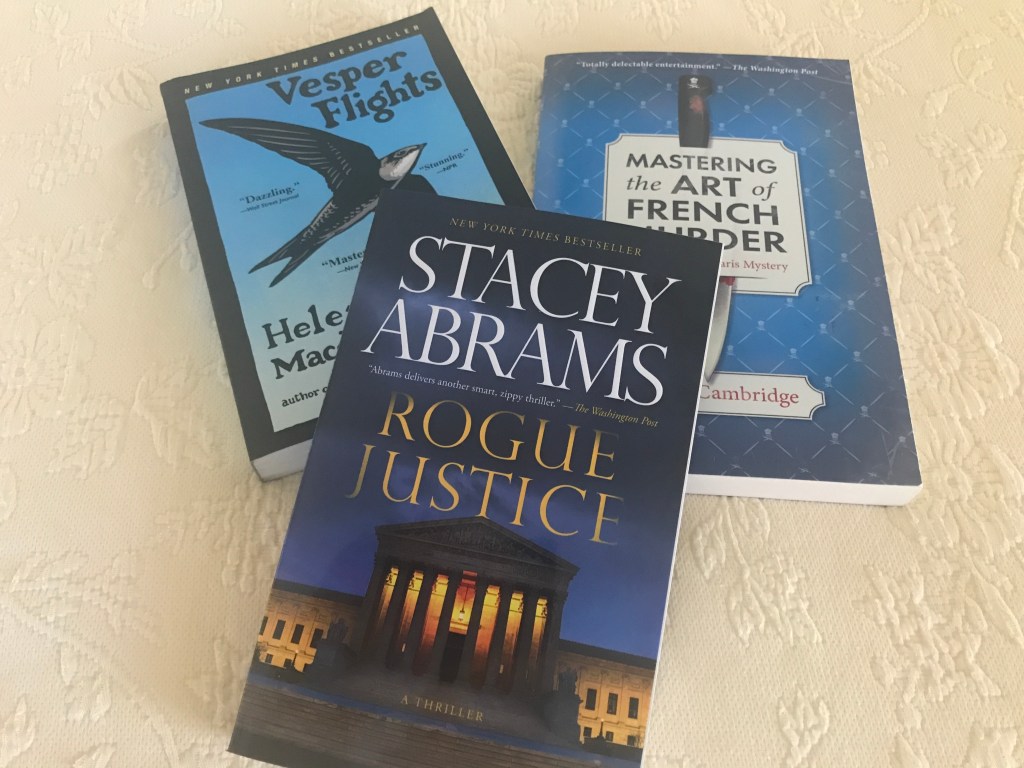
What will you do today to save democracy? I plan to write more “get out the vote” postcards. Check out my recent post, “A Postcard Primer” https://wordpress.com/post/livingonlifeslabyrinth.com/3619 for links to participate in postcard campaigns. And I highly recommend reading today’s newsletters by Robert Hubbell and Heather Cox Richardson about the Supreme Court’s attack on democracy. https://heathercoxrichardson.substack.com https://roberthubbell.substack.com