Dear Subscriber…

September 18, 2024

For several years my Monday routine has included writing my Tuesday post and often the one for Thursday as well, but this summer I discovered technical issues. You, as a subscriber or someone on my email lists, received my posts as usual, but the posts did not appear on the blog website. That meant others, who were not subscribers, did not have access to a new post.

After initially trying to figure out the problem myself, contacting WordPress and also researching YouTube for possible solutions, I decided it was time for a Summer Sabbatical. I adopted Scarlet O’Hara’s philosophy of “I’ll think about it tomorrow.”

Eventually, however, I got serious and hired professional help, but, even with the best efforts, the problem remained.

Now what?

I moved into a time of discernment, and I discovered a number of things about myself and this stage of my life.

  • I enjoyed the new spaciousness of my days. Writing the posts takes a good chunk of time. I have enjoyed over the years using my time in this way, but now I was aware of how much space the blog has been taking in my head and at the keyboard. I realized how I was always on the alert: what to write about; what images could accompany my words; and even as I took my morning walk I rehearsed how to write about an idea.
  • I missed being visible. One of the things that happens as one ages in our culture is that we tend to become invisible to others. The blog at least gave me the illusion that I had not disappeared, and my ego loved that (loves that!). I wonder what the invitation is here.
  • I have become aware of the need to pace myself more. Quite simply, I am not able to do as much in a day as I once did and that means paying more attention to my energy and my priorities. What exactly are those priorities? I asked myself.
  • I realized my reading life had become an obsession. My Thursday posts were devoted to books –my recommendations and news about books. Was I reading in order to write an interesting post? Well, not entirely, but maybe, just a bit. And being known as someone who reads A LOT and is in the know fed that ego of mine!

Someone asked me recently “What are you up to these days?” and I sort of stumbled an answer, just like I am vague when someone asks me if I have any travel plans. With further reflection, however, I realized that what I am up to these days is aging, being an elder, inhabiting this stage of my life.

And what does that look like? What do I hope that looks like? What does it include? And how do I live that, practice that?

I think it involves a certain degree of surrender. Real surrender, it seems to me, involves letting go before one is really prepared to do so, before one is ready. And the issues with my blog seems to be one of those times. Would I choose to stop writing a blog if I didn’t have these technical problems? Probably not, but perhaps, just perhaps, this is one of those God moments. Renita Weems in her book Listening for God calls it “Gotta be God,” as in this must be God whispering in my ear.

My life is deliciously full, and I am so grateful for the ways I am able to use what I think are my gifts. Planning and facilitating the weekly writing group at church brings me such joy. Sitting with my directees in spiritual direction is an ongoing privilege. Being able to respond to other invitations, including writing opportunities, introduces surprise into my life and often challenges me to stretch and to deepen.

At the same time I want and need to be more available to friends and family, especially as many are facing the challenges of aging.

I apologize. I have taken too long to say that it is time for me to let go of my blog, Living on Life’s Labyrinth. The site will stay available for past posts and who knows maybe someday a solution to the technical issue will magically be solved or perhaps I will decide to start a new blog. But this is my decision for right now. This is what feels right and possible at this moment.

I am so grateful to all of you have read me faithfully, have made comments along the way, offered kind words, and shared my posts with others. Thank you, thank you, thank you.

Much of my summer reading has been for an article I am writing for BookWomen, A Readers Community for Those Who Love Women’s Words www.bookwomen.net about spiritual memoirs written by women, but, of course, I read some wonderful fiction, too. Here’s my list of favorites from June, July, and August.

  • Long Island by Colm Toibin (2024)
  • The Cemetery of Untold Stories by Julia Alvarez (2024)
  • Family, Family by Laurie Frankel (2024)
  • Lucky by Jane Smiley (2024)
  • The Hazelbourne Ladies Motorcycle and Flying Club by Helen Simonson (2024)
  • The Lost Art of Mixing by Erica Bauermeister (2013)
  • Forgotten on Sunday by Valerie Perrin (2015 in France, translated, 2023)
  • We Are the Brennans by Tracey Lange (2021)
  • Sandwich by Catherine Newman (2024)
  • How to Read a Book by Monica Wood (2024)
  • You Are Here by David Nicholls (2024)
  • Found in a Bookshop by Stephanie Butland (2023)
  • In My Father’s House by Joseph O’Connor (2023)
  • The First Ladies by Marie Benedict and Victoria Christopher Murray (2023)
  • Loved and Missed by Susan Boyt (2021)
  • Family Happiness by Laurie Colwin (1982)
  • The Wife by Meg Wolitzer (2003)
  • The Measure by Nikki Erlick (2022)

This is normally the spot where I pose a question for your reflection and invite your comments. Today I invite you to consider how you might adopt the spiritual practice of aging. I can still read any comments, if you care to send them, but the question–a big one–is more for your own contemplation.

Again, thank you for reading. I have loved having you along on this adventure. May your days living on life’s labyrinth be blessed.

Following Foolproof Directions

July 9, 2024

Monday morning. “Really?” I moaned when I looked at the clock. 5:30. I wasn’t ready to fully enter the day, but on the other hand, I knew if I went back to sleep, I would sleep later than I wanted to. After all the Monday list was long.

What did I do? I closed my eyes and went back to sleep. For another hour and 15 minutes. I’m usually getting ready for my morning walk by then. Oh well.

I made the bed. At least I had accomplished one thing, I reassured myself. Little by little I did what needed to be done in order to go for a walk. I admit I don’t’ head out on a walk eagerly. I really prefer sitting in the snug, reading my current book. But going for a morning walk is on the list, and it is good for me. Some writers say they love having written, more than actually writing. Well, I am happier when I’ve completed my walk more than when I am actually walking. I must say, however, that right now what a pleasure it is to see the exuberant gardens in so many homes.

Once home, dripping in sweat, because that’s what my body does, even when it is only warm and not hot, the next step was to take a shower. The bathroom with the shower is on the lower level of the house, which is not where my clothes closet and dresser are located. Normally, that is not an issue, but yesterday I needed to return to the first floor not once, but twice to get what I needed to be fully clothed.

Ok, I was finally ready to enter the day.

On my list was to make egg salad, and I was proud of myself for cutting the chives before taking my shower and washing off the insect repellant needed when I walk. You see getting to the chives, once visible, but now hidden among other fully grown plants, is no small task, and I had jungled my way to them. (Yes, I know “jungle” is not a verb.)

I have foolproof directions for hard boiled eggs.

  • Place eggs in large pot and cover with cool tap water.
  • Bring water to boil, lower heat and simmer for five minutes.
  • Turn off heat and let eggs sit in water for five minutes.
  • Drain. Fill pot with cold water.
  • To peel, tap each end on a board, roll egg between hand and board to crackle the shell.
  • Peel under running tap water and let cool to room temperature.

The directions are only foolproof, however, when they are followed.

First mistake: when the water boiled, I set the timer on my phone to five minutes, but I forgot to press “start.”

Second mistake: After wondering how long the eggs had been simmering, I set the timer again for five minutes and AGAIN–I kid you not–forgot to press “start.”

I have no idea if I estimated the time as too long or not enough, but when I tried peeling the eggs…well, let’s just say, I needed to start all over. And I did, and this time, I focused on the directions, and guess what? They worked, and I made delicious egg salad for sandwiches.

By this time it was already midmorning, and normally, I would have written my Tuesday post and would be ready to work on Thursday’s post or another item on my list–a list this week that is longer than any previous week this summer. Yesterday, however, I had no idea what to write.

Here’s where the day shifted.

What I most needed was to follow my own foolproof directions.

  • Close my eyes, lightly, not tightly, and take a deep cleansing breath
  • Continue breathing gently, in and out, finding my own rhythm.
  • As thoughts and ideas, worries and concerns enter my head, invite them to step aside. They will be there later, if I need them.
  • Remain in the stillness, the silence, the spaciousness and allow the presence of God to enfold me.
  • When it is time, and I will know when it is time, I take another deep cleansing breath and open my eyes.

I know these directions are foolproof, so why is it I forget to follow them? Why do I resist? Why do I forget that in order to be the movement of God, I must welcome and notice the movement of God.

I am not suggesting that the rest of the day proceeded smoothly and that I accomplished everything on my too long list, but I did write this post. I enjoyed an egg salad sandwich for lunch. I met with a client whom I love, and I was able to be present to her. I checked off a few small items on my list. I had time to read in the snug. And most of all, I moved through the day in a more grace-filled way.

Sometimes it just takes following directions.

What are your “foolproof directions”? I would love to know.

Savoring Summer Spirituality

May 28, 2024

Summer days –and nights–stretch out in front of us. Many of us wait for these summer months throughout the long winter months and the sometimes indecisive days of spring. How often do we daydream in March about what we will do, where we will go, and whom we will see when Memorial Day finally leads us into summer?

Several years ago I led an adult forum about summer spirituality at our church. The following material is adapted from that forum and the guide book I wrote as part of that presentation. I invite you to consider how you might savor this summer season.

Before immersing yourself in summer activities, sit in a comfortable and favorite outdoor space where you won’t be disturbed. Close your eyes lightly, not tightly. Take a couple deep cleansing breaths and ask yourself, “How am I as I enter this summer season? What do I need now? Do I need rest? Change? Inspiration? Connection?

What have I learned during the winter months that will enhance these summer months? Is God directing me in a new or different way?

Consider the following themes. Which ones seem to shimmer for you? Which ones open your heart? Or challenge you?

  • Summer Spaciousness. In what ways does summer feel more spacious? How is summer different from other seasons? In what way is summer a time of rest and restoration? Is there anything that needs to be released, to be set aside?
  • Summer Senses. The senses are doorways into the holy and offer us opportunities to encounter God. Explore the senses–the tastes, touches, smells, sights, sounds of summer. What dazzles you? What sensual memories do you have of summers in your younger years?
  • Summer Simplicity. Summer invites us to discern what is essential. In what ways are summer days easier, simpler? If you travel this summer, can you pack lightly?
  • Summer Shifts. What signals the start of summer for you? What changes in your life during the summer? What do you notice about yourself in the summer that is different from other seasons? Where do you feel that shift in your body?
  • Summer Sacred Space. A sacred space is where you sense the presence of Spirit. Where are your summer sacred spaces–in the present and in the past? How do you create sacred space during the summer?
  • Summer Silliness. What role does play and silliness have in your life, especially in the summer? How does summer encourage you to “lighten up”? What memories do you have of fun and silly times?
  • Summer Stillness. In stillness you listen to yourself and to the voice of God within, clearing the space for new ideas, new connections, new deeper awareness. Where and when do you experience stillness in the summer? How does that feel?
  • Summer Stretching. Are there areas your life–body, mind, or spirit–that could benefit from stretching your perspectives, your ways of living and moving and being in the world? What physical activities engage you in the summer and how do they enliven and open you? Remember the summer activities of the past. How did they form who you are today?
  • Summer Celebrations. What do you celebrate during the summer? What are your summer rituals? In what ways do you celebrate the ordinary?
  • Summer Support. Where do you find community in the summer? Is it different from other times of the year? What support do you need this year? Who do you know who could use your support this summer?
  • Summer Sadness. As much as we look forward to summer, there can be disappointments–plans that don’t materialize, weather changes etc. How do you cope? How flexible are you? Do you have sad, difficult, or challenging memories of summers past? Is it time to let them go or allow them to transform into growth?

Is a new spiritual practice beckoning you or is summer a chance to adapt your ongoing spiritual practice? For example, move your prayer and meditation time outside. Practice yoga or T’ai Chi outside, instead of inside.

Here are some possible summer spiritual practices:

  • Keep a summer journal. Pilgrims carried a small book with them, a vade mecum, which means “go with me.” They wrote prayers, poems and insights in the journal. Write what you notice and learn on these summer days. Where do you notice the movement of God?
  • Practice visio divina (sacred seeing), which is similar to lectio divina (holy reading). See with the eyes of your heart. Pay attention to what shimmers, what invites you, what startles or amazes you. Perhaps commit to taking one photo a day and at the end of summer print your photos. Do you notice any patterns? Where did God appear to you?
  • Go on Meditation Walks. For 30 minutes walk slowly and silently. Stroll. Amble. Pay attention to your senses. Stop and linger when you are attracted to something–birdsong, the colors in a garden, the scent of freshly mowed grass. Be in the moment.

Other summer practices include extending hospitality to guests, gardening, walking outdoor labyrinths, spending time in nature, stargazing, cloud gazing, volunteering in a new way, learning something new, sketching or painting outdoors. Change your routine in some way and notice what opens for you.

Invite a loved one into a practice of daily sharing with each other a gift, an expression of God, noticed or experienced?

May the God of summer give us beauty.
May the God of summer give us rest.
May the God of summer give us joy.
May the God of summer give us inner light
May the God of summer give us what we need for healing.
May the God of summer give us a sense of satisfaction in the work of our hands.
May the God of summer lead us to amazing discoveries as we travel the inner roads of our souls.
Amen.
adapted from Joyce Rupp

What comes to mind when you think of summer spirituality? I would love to know.

Here is a post I wrote in 2023 about summer spirituality. https://wordpress.com/post/livingonlifeslabyrinth.com/2216

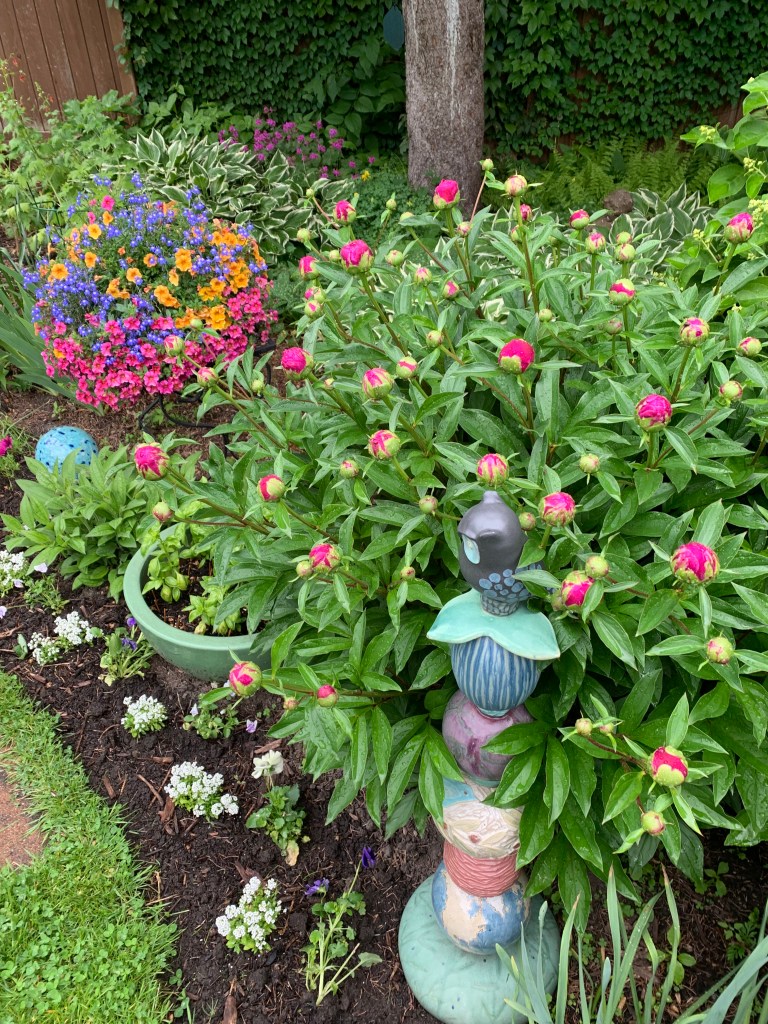
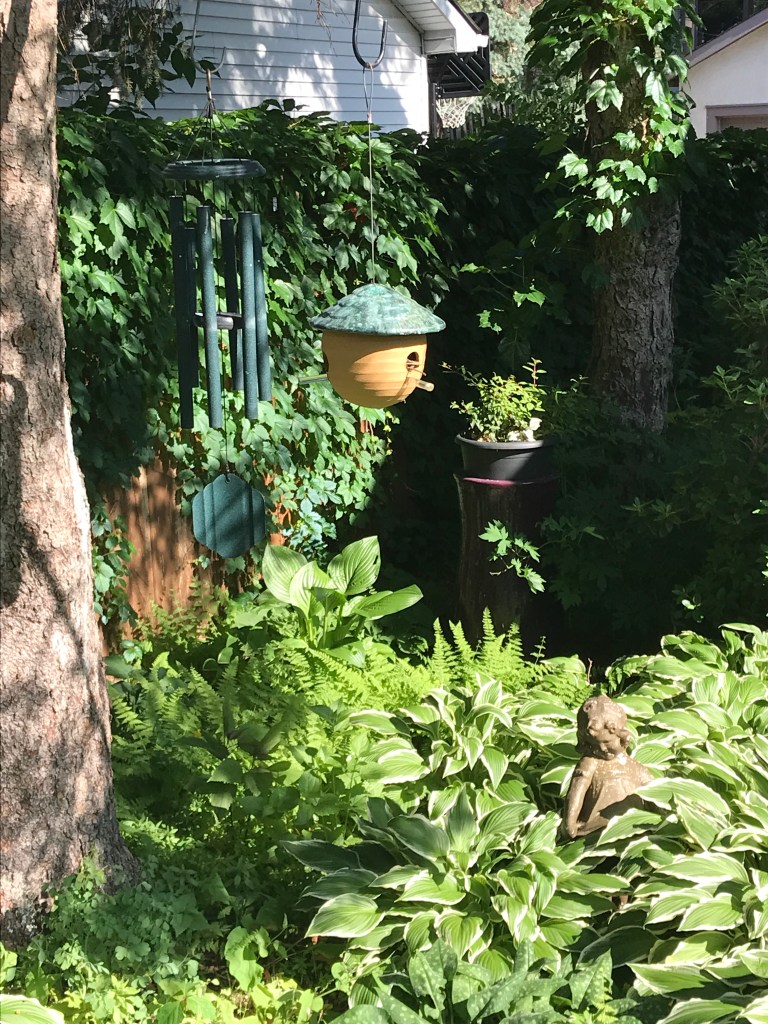
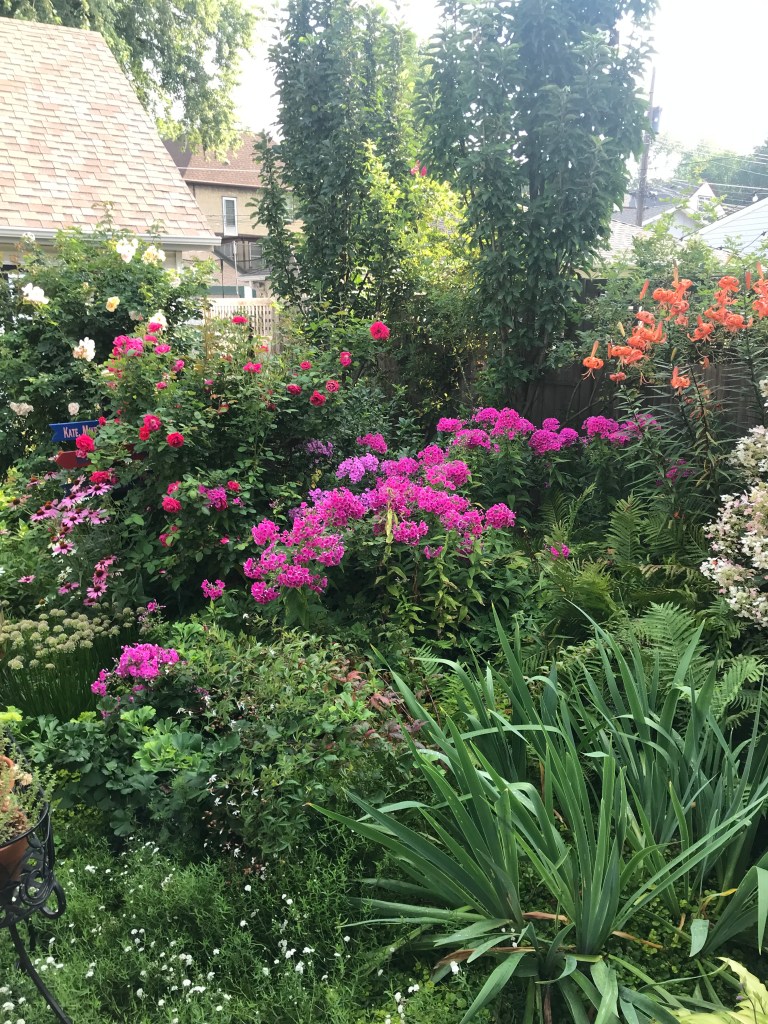
Also, the photos were taken in our glorious backyard. I happen to live with a master gardener!

Lenten Practice: Organizing A Lifetime of Photos

March 19, 2023

Open the album of your life.

Kathleen Fischer

In my February 19, 2024 post, “Lenten Overload,” (https://wordpress.com/post/livingonlifeslabyrinth.com/3153), I noted my Lenten practices of recent years, when I focused on “letting go” and “decluttering.” I thinned out my shelves of spirituality and theology books–even though it doesn’t look that way–and incorporated that practice into my life as an ongoing project. I tossed multiple copies of published essays I have written and notebooks with writing ideas, plans, and the beginnings of other essays. How good that has felt and how necessary that is, especially at this stage of my life.

In that post I shared my decision to finally (FINALLY) deal with the bins of unorganized photos. A lifetime of photos. I had intended to also begin re-reading my journals, and I did read the first two (1977-1978), but quickly realized I could not adequately address both projects at the same time. I decided to focus on the photos and to enter into it with contemplation and reflection.

With my heart and soul. To pay attention to the movement of God in my life, as reflected in my inner voice. To approach these projects as more than physical decluttering and clearing of space. Instead, I hope to let go of what clutters my heart and mind.

No surprise, I am learning as I am doing.

I had vague ideas about how to approach the magnitude of organizing all our photos. Chronological seemed the most logical idea, but then I thought about certain themes. Maybe instead of organizing photos in albums, I should create some photo books a’ la Shutterfly. Our homes have been so important to us, and I have taken many photos to show the changes we made inside and outside over the years. Maybe I should select the best of those and do other photo books and should I integrate photos of family and friends into the settings? And what about trip photos? Do we really need the many photos of buildings and lakes and other scenery? And what about all the photos family and friends sent to us in Christmas cards? We have loved receiving them, but should I keep them all now?

I dug in–sorting into various categories. The grandkids. Our kids. Friends and other family. Homes. Trips. I subdivided big categories into smaller ones. I cursed myself for never writing helpful information on the back of each photo. Sometimes a date was stamped on the back and that helped, as did clothing and backgrounds, but what a mess.

I consider myself an organized person, so how did I let it get this way? And why do we have all these duplicates? How will I ever make sense of this all? Well, like Anne Lamott’s famous quote about writing, “Bird by Bird.” Photo by photo. One photo at a time.

  • Focus on one category or subject at a time. I decided to begin with all the photos of our first grandchild, Maren, who is now 21. Group all the pictures of her and of my husband and me with her. A sizable pile, to be sure, but it is a start, and it’s almost like getting to know her all over again.
  • Eliminate too similar or duplicate photos. Edit, edit, edit.
  • Set aside pictures to give to others. For instance, I now have a fun pile of photos to send to Maren.
  • Work in short spurts and work only as long as it is pleasurable and productive.
  • Print photos on my phone I intend to keep. Delete others.
  • Don’t even consider filling photo albums or other storage options until all photos have been sorted and categorized and organized.
  • Be flexible. Maybe I will decide to do things differently as I go along. Maybe other ideas or methods will present themselves.
  • Be patient. Remember to stretch, to breathe. Always a good thing.

How easy it is to think about this process as a project–as something that needs to be done because of all the space these bins are taking or because I can never find a picture I want or because I don’t want to leave this mess for my kids to handle. Or because this is the time of life to intentionally declutter and deal with the stuff of our lives. If not now, when?

Those are worthwhile reasons, but I have committed to this as a Lenten practice. What does that mean?

Once again Joan Chittister comes to the rescue:

The wonder of being able to see life as whole, at any time and all times, is the great gift of memory. It makes all of life a piece in progress. With one part of the soul in the past and another in the present, we are able to go on stitching together a life that has integrity and wholeness. Because of memory life is not simply one isolated act after another. It all fits into the image of the self and the goals of the heart. It makes them real. It makes them whole.

The Gift of Years, Growing Older Gracefully, p. 155.

This practice is about gratitude for the many gifts in my life.

This practice is about remembering how the years have formed me and my loved ones.

This practice is about finding the whole in the parts.

This practice is about noticing the gaps and what they mean.

This practice is about sharing stories.

This practice is about making connections.

This practice is about being present as I recall the past.

This practice is about transforming burden into gift.

This practice is about being more aware of God’s presence in my life. My whole life.

Today is day 24 in the 40 days of Lent, (Sundays are not counted in the 40 days.) and I am no where close to completing this project, but since it is a spiritual practice, that is ok. More than ok. This spiritual practice will companion me in the Easter season and into ordinary time and more than likely right up to and through Advent. And because I keep taking more photographs this project/practice will continue teaching and guiding me.

If you decided on a specific spiritual practice for this season of Lent, how is it going? I would love to know.

Eagle Spirit

March 5, 2024

Photo Credit: Thor Carlson

Sunday morning as we approached our church we spotted an eagle perched on top of our steeple. Perched doesn’t seem like the right word for a creature as large and as impressive as an eagle. In fact, “perched” sounds precarious, but, actually, the eagle looked quite comfortable. Balanced. Settled.

According to Medicine Cards, The Discovery of Power Through the Ways of Animals by Jamie Sams and David Carson:

Eagle medicine is the power of the Great Spirit, the connection to the Divine. It is the ability to live in the realm of spirit, and yet remain connected and balanced within the realm of Earth. Eagle soars, and is quick to observe expansiveness within the overall pattern of life. From the heights of the clouds, Eagle is close to the Heavens where the Great Spirit dwells.

p. 41

Seeing the eagle who appeared so at home against the backdrop of the clear blue sky, I thought about the importance of the eagle to Native American tribes. Again, Sams and Carson:

Eagle represents a state of grace achieved through hard work, understanding, and a completion of the tests of initiation which result in the taking of one’s personal power.

p. 41

Seeing eagle, I felt my heart lift. I felt beckoned by eagle to soar. I’m not sure what that means in my life right now, and more than likely, there are spiritual tests ahead as I live these elder days, but eagle reminds me to take heart and gather my courage.

So often I write about being grounded–in my faith, in my community, in the ongoing unfolding of my relationship with the Divine–but I also need to stretch, to soar, to expand. To open to the spaciousness of the skies. Again, I am not sure what that means in these elder years. How might I be called to become even more than how I currently think of my being? In what ways does eagle challenge me to become the person I was created to be?

Eagle teaches you to look higher and to touch Grandfather Sun with your heart, to love the shadow as well as the light. See the beauty in both, and you will take flight like the eagle.

Eagle medicine is the gift we give ourselves to remind us of the freedom of the skies.

p. 41

How grateful I am Eagle welcomed us to church Sunday morning.

Several years ago when our grandson Peter was only eight years old (He is now sixteen.) he joined us on a field trip to the National Eagle Center in Wabasha, MN. https://www.nationaleaglecenter.org Now here’s something you need to know about Peter: at a very young age he became a wolf expert. He became a member of the International Wolf Center in Ely, MN. https://wolf.org He read books about wolves, and we visited a wolf sanctuary where he asked knowledgeable questions. He knows all about wolves.

But he also knew a thing or two about eagles.

As we drove from St Paul to Wabasha, Papa started quizzing Peter about eagles. How many kinds of eagles are there? What’s the difference between a bald eagle and a golden eagle? What is the life expectancy of an eagle? What happened to make them almost extinct and now they are everywhere?

Peter tolerated the questions, answering with authority (and accuracy), but all of a sudden he had had it. “Papa, raptors are not my specialty.”

So there.

Oh, and by the way, once at the eagle center he stumped one of the docents with one of his questions. She responded, “I don’t know, but I will find out and let you know.” And she did.

I think Peter has both wolf and eagle spirit.

How do the birds of the air, the creatures of the earth inspire and teach you? I would love to know.

Jamie Sams is a Native American medicine teacher and a member of the Wolf Clan teaching lodge. She is of Iroquois and Cherokee descent and has been trained in Seneca, Mayan, Aztec, and Choctaw medicine. She is the author of Sacred Path Cards, The 13 Original Clan Mothers, and Earth Medicine.

David Carson is of Choctaw descent, grew up in Oklahoma and has lived on Cheyenne, Crow, and Sioux reservations in Montana and Manitoba. He is the author of Lament.

Guiding Words for My Spiritual Practice of Hometending

February 27, 2024

Driving along the Wisconsin side of the Mississippi River this past weekend we were entertained by eagles tumbling in the sky as part of their mating ritual. We lost count of the number of hawks perched on bare branches, enjoying the view of open water and dwindling patches of ice. A glorious day for roaming, and this is one of our favorite drives.

One of our favorite stops is Cultural Cloth, a shop that represents the work of artisans from around the world. We don’t always stop there because we know how dangerous and tempting it can be, but the landscape has been so brown and grey this winter, a shot of color would be welcome. (See what I did there!)

We laughed and wished each other “Happy Anniversary” (Our anniversary is in August!) as we carried our latest purchase, a gorgeous rug made in Guatemala, to the car.

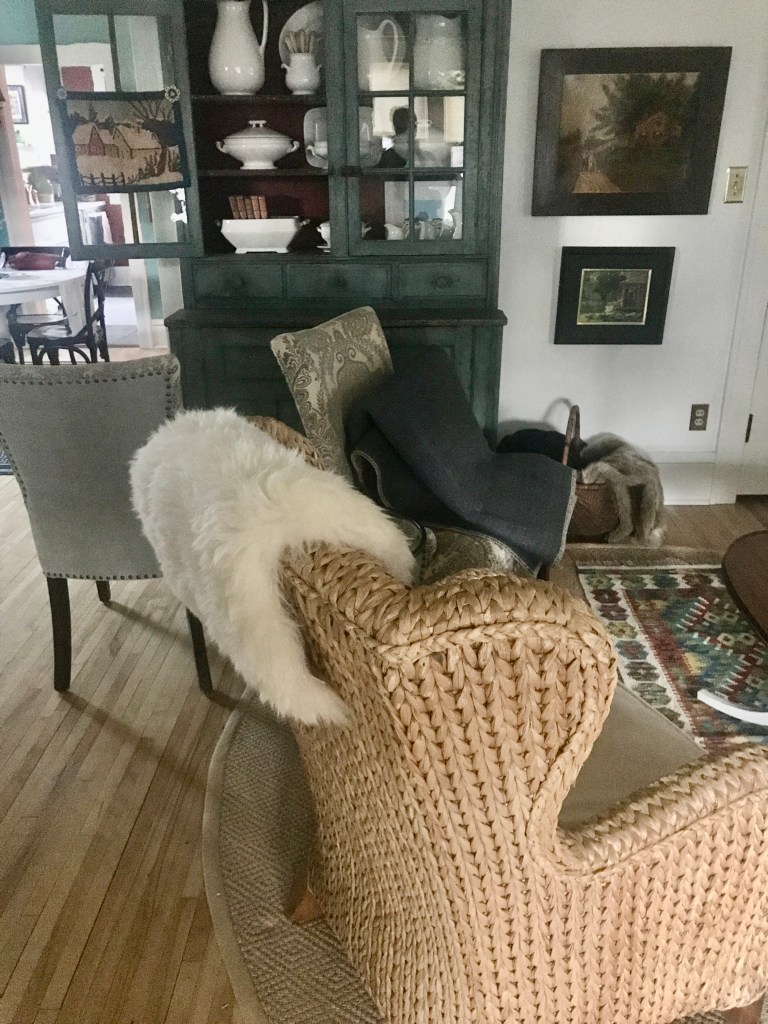
We fell in love with the colors of this kilim style rug woven in the Mazir-Sharif regions of Afghanistan. Their rugs are woven from scraps of yarn left over from the production of their pile-woven rugs. And I knew exactly where it would go–in our entryway.

Once home I folded the rug already in the entryway, which we had purchased from Cultural Cloth the last time we were there, and I placed the new rug in front of the door. Lovely. Welcoming and happy.

But then I wondered what it would look like in the living room area on top of the sisal rug–a shot of color. Why not try that?

Perfect! I liked it there even better.

And that’s when my delight in change took over. My impulse to rearrange. And one thing led to another.

How would the more informal looking rattan chairs in the snug look in the living room? But then what would I do with the existing chairs, for they didn’t seem right for the snug? Ah, how about moving the chairs from the garret to the snug? Well, you get the idea. One thing leads to another.

The spiritual practice of hometending reminds me that nothing is static. Nothing stays the same, and being in the present moment leads to the next present moment. I allow myself to imagine how the present moment can look a bit different with just a bit of imagination and an openness to try something else.

One thing leads to another.

Fulfilling the vision takes work, and in this case it was moving around three sets of chairs and two tables and lamps and pillows and a desk and more. And as long as everything was in turmoil why not clean the ceiling fan in both the snug and the kitchen. Yes, why not? (Thanks, honey!)

That doesn’t happen in one fell swoop, and before the picture could be complete, things definitely looked worse before they got better. I had a vision, true, but I really didn’t know if it would all work in a pleasing way. The unknown remained unknown until most everything was in place.

Spiritual hometending reminds me that we may want to and, in fact, decide to cross a threshold, and we may know why we are doing that and have some idea of what is ahead, but not completely. We can’t see it all. There will be twists and turns on the path ahead, sometimes requiring trust and courage. When facing a decision, my husband and I often pose as part of the discernment process the question, “What’s the worst that can happen?” In this case, if we didn’t like how it turned out, we could move everything back the way it was. A loss of a day and some energy, yes, but nothing life threatening. We decided it was worth the effort.

I raided the pillow closet and opened up cupboards. I piled up books on tables and moved this here and that there. I thought I might need to buy new lamps, but then remembered the lamps in the guest bedroom, and sure enough, they added just the needed touch of color.

Spiritual hometending reminds me that so often, most often, I have what I need, if I am willing to open my eyes and my heart. At the same time I could not have accomplished the new look without the help and the support of my husband. Hometending–and all of life, often means knowing when to ask for help.

And, of course, what I most need to remember is that my inner house is grounded in the love of God, knowing, no matter what, I am beloved by God.

As I thought about words I often say, I remembered some of my parents’ guiding words. My father often said, “Your day will come.” How frustrating that was to hear sometimes, when whatever I wanted to do or have was denied, but I now hear the hope in that and even the joy in that.

My mother often said–just when conversation was becoming interesting–“Now we are just going to have happy talk.” She did not like disagreements or conflict, but now I also hear something else in her statement. Gratitude for what we have, including the love we have for one another. A desire to lift our lives with optimism.

Guiding Words are meant to lead, to open our hearts to possibilities, to offer direction without locking us into only one way of thinking or being. May it be so.

What words guide you? I would love to know.

NOTE: Cultural Cloth is in Maiden Rock, WI. https://culturalcloth.com

Lenten Overload

February 19, 2024

“Ash Wednesday was almost a week ago and yet, I still don’t feel settled into Lent.”

That’s how my February 28, 2023 post began, and the sentiment expressed there fits me this year, too. https://wordpress.com/post/livingonlifeslabyrinth.com/1780,

I felt prepared for Lent this year. I really did. After all, I had consulted my list of Lenten meditation books in my personal library and gathered some key ones. In addition I ordered two new books (of course)–Jesus, Guide of My Life, Reflections for the Lenten Journey by Joyce Rupp and A Different Kind of Fast, Feeding Our True Hungers in Lent by Christine Valters Paintner.

I even thought about a specific Lenten practice to note daily in my journal people, places, and things as a way to increase my awareness and become more present. Have I done that yet? Nope. Not really.

Instead, I feel overwhelmed.

My email inbox is full of beautiful and meaningful Lenten reflections –Joan Chittister, Richard Rohr, Nadia Bolz Weber, Diana Butler Bass, Steve Garnaas, Rosemary McMahon, Oasis Ministries, and others. And I am tempted by other new books: Field Notes for the Wilderness by Sarah Bessey, You Are Here: Keywords for Life’s Explorers by David Steindl-Rast, The Eloquence of Silence by Thomas Moore, Beguiled By Beauty, Cultivating a Life of Contemplation and Compassion by Wendy Farley, and Being Here: Prayers for Curiosity, Justice and Love by Padraig O’Tuoma.

Even the New York Times’ Sunday opinion section had an essay about Lent, “What We Give Up Makes Us Who We Are by Molly Worthen.

So many thoughts. So many suggestions.

So much to read.

What to give up? What to add on? So many ways to think about this time of the church year and about this season of my life. So many more items for my To Do list.

Time to back up.

First, I thought about the meaningful Lenten practices of recent years — lightening my physical load. For two years I challenged myself to let go of books in my spirituality and theology library–at least one book each of the 40 days of Lent. How good that felt and how that has become part of my ongoing practice. I no longer need to keep every book that enters the house.

Last year I extended that ‘letting go” to a big stack of magazines I have kept. I paged through each issue, saving some articles or images to perhaps use with the writing group I facilitate. The only complete issues I kept were the ones in which an essay I had written had been published. Do I miss them –not at all?

So is there any other THING that needs decluttering? Ah yes. At the beginning of this year I decided to begin two projects.

  1. To finally go through all our photos–sort, organize, order and even compile some of them into thematic Shutterfly books.
  2. To reread all my journals, beginning with my first one from 1976, and decide what to do with them.

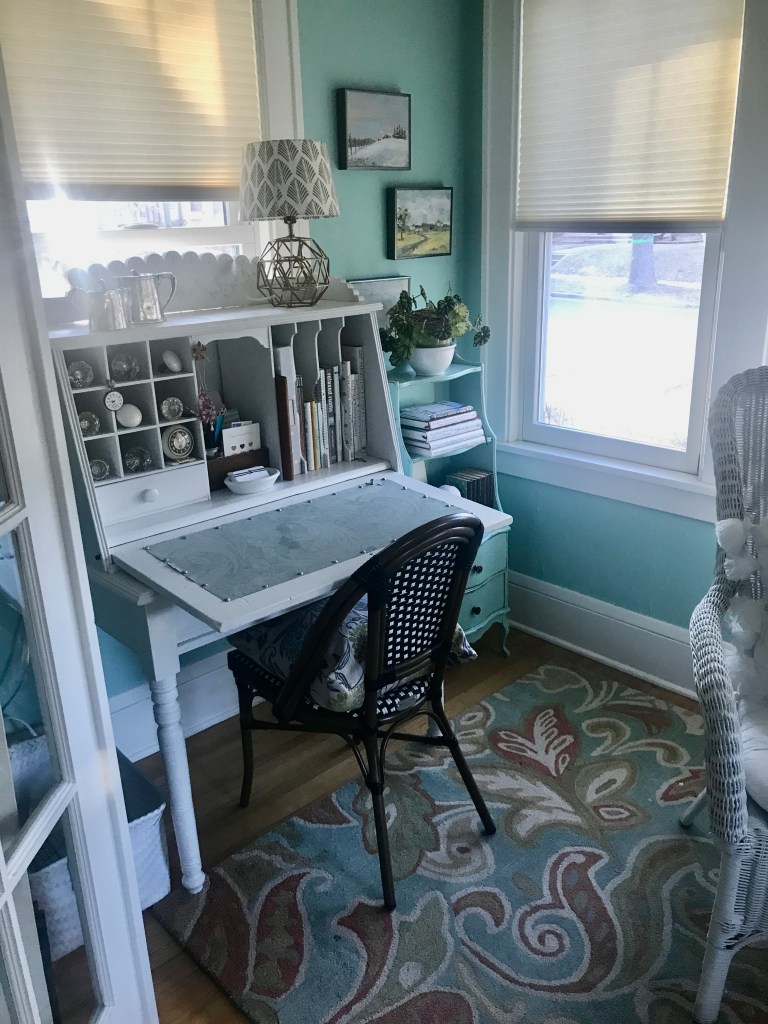
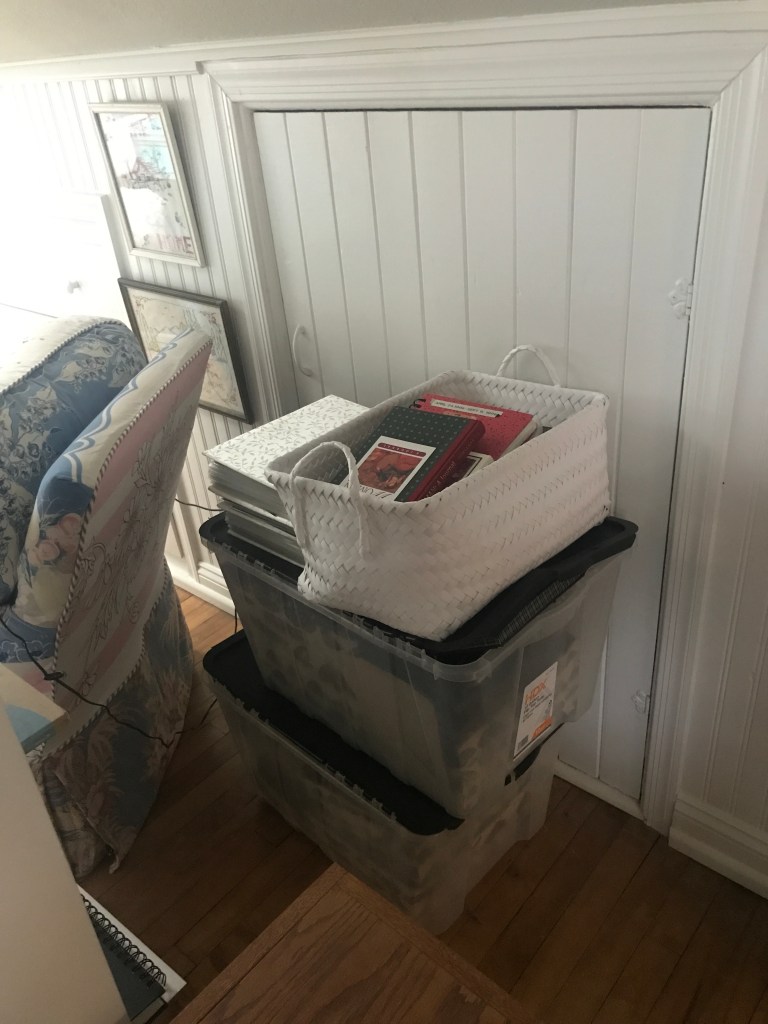
What have I done on those two projects? Well, the above picture is the extent of my work so far. I have gathered the bins of photographs and some of the earliest journals. They are partially hidden behind my comfortable chair in the garret where I can see them from my desk.

They are calling me, beckoning me.

I hunger to respond to them.

I yearn to let go of what is no longer needed.

Ah, my Lenten practice. To enter into these projects with contemplation and reflection. With my heart and soul. To pay attention to the movement of God in my life, as reflected in my inner voice. To approach these projects as more than physical decluttering and clearing of space. Instead, I hope to let go of what clutters my heart and mind.

I recognize these projects will take much longer than the 40 days of Lent, but this is a set-aside time to begin that journey.

To do that, however, I do need to let go of the need to read everything that comes into my inbox or to order all the titles that entice me or even to respond to all the worthy ideas and suggestions about approaches to Lent that come my way. I need to leave my meditation space a little sooner and take that contemplative attitude back into the garret where my projects await.

Finally, I need to be gentle with myself. I am aware that moving into the new year now takes a bit longer, and movement from winter to spring is always challenging for me. Perhaps this slower pace is my new normal.

And I need to remember that my word for the year is enfold/unfold. Lent will enfold me and Lent will unfold.

Stay tuned.

What spiritual practice is calling you? What yearning is beckoning you? I would love to know.

Ask for What You Need and Offer What You Can

February 6, 2024

Several times in the past week I have quoted Christina Baldwin‘s simple, but oh so wise words:

Ask for what you need and offer what you can.

from The Seven Whispers, Listening to the Voice of Spirit.

I don’t recall the specific circumstances when I shared those words, but I know when a piece of wisdom is on my lips that it is meant not only for the person receiving it, but it is for me, too! Probably most strikingly for me.

Recently, I received two emails about ways I have volunteered in the past at my church. One was fixing and bringing a meal to individuals and families during times of stress or need, and the other was about being part of the hospitality team, serving at receptions etc. Did I want to continue participating in those ways?

I didn’t respond immediately, but instead I considered both of those ongoing opportunities during the next couple morning meditation times. In the meantime a request addressed to the whole congregation came, asking for helpers during the potluck before the annual meeting. Also, the weekly newsletter, as always, listed a wide variety of ways volunteers are needed in the church and in the larger community.

Oh, how tempting it is to spontaneously say, “I can do that.” And sometimes that is exactly the right thing to do. Sometimes that is the most genuine of responses. An expression of being in the present moment.

But as I age I am more aware of what makes most sense for who I am now. What are the ways I am called to use my energy, my time, my gifts? How does saying “yes,” affect other “yeses” in my life? The answer isn’t always clear, but what I am learning is that I need to honor the main ways I have committed to serve; the ways I feel I can best serve right now. Writing posts for this blog twice a week is one way, but also meeting with my spiritual direction clients and preparing for and facilitating the writing group I lead at church.

I don’t list these activities in a “look at me” way, but rather to remind myself of the importance of knowing what I can offer, how I can live my essence and in what ways I continue to discover the person God created me to be. These ways may change, probably will change, as I grow older, which reminds me of what Esther De Waal says in the chapter, “Diminishment” in her book The White Stone, The Art of Letting Go, “I hope that God is going to work within my limitations.” p. 89.

How did I respond to the various requests? I decided to step away from the two specific queries, thanking the people who lead those efforts. I didn’t I step up to help with the potluck either, but perhaps my “not this time,” left space open for someone else to say, “Yes I can do that.” Just a thought. 

My plan and hope is to continue to exercise “sacred yes, sacred no;” to practice discernment as opportunities arise.

And finally, this must be said. I am aware more and more every day of the need to create spaciousness for time with family and friends.

Well, I don’t know about you, but this is harder for me. Asking for what I need feels riskier. The notion of asking for what I need feels like I am declaring my inadequacy and vulnerability. EEEK! Baldwin says that asking for what we need is as much a spiritual practice as offering what you can. Asking for what we need is a way to pay attention, to be aware of the changes in our lives, and, in fact, it is part of becoming the person we were created to be. I often ask myself, “What is possible right now?” and sometimes the answer means asking for someone else and their gifts and time and energy to enter my life.

Baldwin says asking for what we need and offering what we can is a form of “spiritual trading” and that spiritual trading “creates flow.”

As long as the energy is flowing and cyclical, there is enough to go around. If any one of us stops asking or stops offering, the flow is disrupted and the balance destroyed.

p. 71

Be brave enough to ask fir help when you need it. There is no merit badge for Doing All the Hard Things Alone. Reach out.

Maggie Smith

How are Christina Baldwin’s words, “ask for what you need and offer what you can” showing up in your life right now? I would love to know.

Thanks for all your kind words about my recent guest essay, “Living with a Sacred Object, The Humble Harvest Table,” in Christine Valters Paintner’s Abbey of the Arts. If you haven’t yet read it or would like to share it, here is the link. https://abbeyofthearts.com/blog/2024/01/24/monk-in-the-world-guest-post-nancy-l-agneberg-4/

A Ritual for 75

June 27, 2023

Wednesdays are my designated writing days; one day each week to write for venues other than my blog. After recently submitting essays to two online publications, I felt unfocused. I had no shortage of ideas, topics, and themes to explore, but I felt unsettled. As someone who likes to be productive and certainly doesn’t want to waste my precious Writing Wednesdays, I was irritated with myself.

The majority of my essay ideas relate to aging as a spiritual practice. I jotted down possible topics, including clearing the space, sacred yes and sacred no, and opening to a more contemplative life. These topics all appeal to me, and I think are important ones to share with others, but I just couldn’t move my fingers on the keyboard. Sigh.

Then I remembered the collage I made when I turned 70 in 2018. I made that collage both to honor that milestone birthday, but also to envision how I hope to live as I age. For the past five years that collage has been a touchstone as I made decisions about ways to spend my time and use my gifts.

Perhaps it was time to make a new collage. I turned 75 this past April, and frankly, that new number felt daunting to me. Scary is too strong of a word, but I confess I didn’t feel as lighthearted or as blasé about this birthday as I have in other years. Don’t get me wrong, I am grateful to be 75 and beyond grateful for the privileged, lovely, and loving life I have, but still, I can feel myself holding my breath as I think about this time in my life.

Making the Collage

I quickly sifted through the stash of pictures I keep in a pretty flowered box; pictures torn out of magazines, outdated calendars, and greeting cards too appealing to toss. I quickly sorted them into two piles: the “maybe” pile and the “nope, not today” pile. Selecting some of the images from the “maybe” pile, I arranged and pasted pictures on two pages of a large sketchbook. I did this quickly, not reflectively.

Almost every collage I have made over the years has included at least one open door, and this one is no exception, but beyond the doorway is darkness.

I also see a hazy picture of a person holding an open book, along with shelves of books in a light comfortable setting that reminds me of my beloved garret. And a sleek fountain pen similar to the one I use when I write in my journal; a long-ago gift from my husband.

Fall scenes and winter scenes. A branch of bittersweet, and an empty porch swing covered with snow. A lit lantern, a feather, a view through the windshield of a car. Two people at sunset.

And words.

Light

Breath

View from here

Prayer

Pause

Content

I selected two quotations, as well.

You don’t always have to try so hard to live each day to the fullest. Each day is full all on its own. All you have to do is notice.

Hold company with yourself so sacred that even when you are alone you are whole.

First Responses

The first thing I noticed was how I felt after completing the collage. I felt calm, quiet. I felt more peaceful about this stage of my life.

My second response was that I didn’t need to understand or uncover the deeper meaning of the collage at that very moment. I am willing to let the collage’s guidance unfold over time, but I am not blind to the fact that this collage reflects my own season of life–fall into winter. And in many ways it is a bittersweet time. And a time of ongoing losses, but still there is light. There is companionship. There is time to read and write and be.

And I chuckled about the word “content.” Do I mean content as in subject matter or materials? Or am I referring to the adjective meaning “satisfied”? Or both?

Ah, there is much more to mine here.

Revisiting My 70 Collage

This collage is busier, full of activity and lighter, greener, lusher. More than one allusion to openness–open gates, open door, open window and a path stretching in front of me. Along with a labyrinth. I think to myself, “There must not have been any pictures of a labyrinth in my box of pictures or surely, I would have included it on my 75th collage.”

Of course there are books, but also a feather in this collage, too. A house that looks very much like our garage and a smiling older woman. I also take note of the prickly plant in the corner of the page and a pile of rocks that seem to taunt, “Beware. Obstacles ahead.”

Scattered on the collage are the following phrases: Choose simplicity, keep growing, learn something new, make room for what matters, and breathe deeply. It occurs to me how much those words describe my life in the last five years and how much those words still appeal to me–and give me direction.

Next Steps

I know over time I will reflect on the similarities and the differences between the two collages and what this new collage offers me in this stage of life. I will ask myself what surprised me and what is missing.

Over the years I have created collages as part of receiving or clarifying my word for the year. I also create a new collage when I clear my bulletin board and just can’t part with each image. In other words the ritual of creating a collage is a nurturing spiritual practice and an aid to ongoing discernment.

An Invitation

Do you have any rituals to mark a significant birthday or occasion in your life? I would love to know.

Middle of the Night Musings

June 13, 2023

Late in the day the rains came, along with fresh breezes. How good it was to sleep snuggled under a quilt, windows open, the curtains gently fluttering, and the sound of the chimes playing a newly composed melody.

I woke several times during the night, not unusual for this elder, and each time I heard the light sprinkle of the chimes–less an intrusion and more of an invitation to hold lightly the thoughts of the day and the hopes for the ones to come.

The previous days had been dominated by my husband’s garage sale of the discarded furniture he had transformed with paint, stencils, and transfers. As I have mentioned before in this blog, all the proceeds go to support Rezek House for youth experiencing homelessness. Not only did he receive high compliments for his creative skills, but many who stopped by were interested to learn about the work Lutheran Social Services does for youth. And, of course, the sale meant he is able to hand over a nice chunk of cash!

The garage sale is his thing, not mine, and I thought about how easy and outgoing he is with all those who stop by. He is always pleasant no matter how often he hears someone say, “I don’t need a thing.” My inclination would be to say, “Then why are you spending your time going to garage sales?” He reminds me that garage sales are social events, and he enjoys chatting and hearing people’s stories. I just want to leave the lunch I fixed for him and return to the garret.

Instead of being too hard on myself, which would have led to much tossing and turning, I reminded myself that I am an introvert. I know when and how to use the skills of extroversion, but I am always aware of the rhythm that works best for me. I am definitely not a hermit. I am grateful for the friendships in my life, for my beloved community, and all the other ways of connecting with others, but over the years I have learned when it is time for me to retreat.

As the chimes continued to sing in the branches, I recalled words in one of Glenn Mitchell’s daily “Prayer Notes.” He said writing has been “a way to extrovert my introversion.” Yes, that’s it. That’s what I do. Writing, as a spiritual practice, is a form of communion, not only with God, but with others. I took a deep breath and fell asleep.

The next time I woke, the breezes still lifting the chimes, I felt more awake and decided to move into the living room and read for awhile. I put on my robe, enjoying the coolness, and sat in the dark for a moment before turning on a reading light. Ah, the silence, the emptiness of the hour. I’ve learned I am unable to force myself to fall back asleep, and besides, the unplanned extra reading time is never a waste, especially when the book is so delightful. (Stay tuned–the Thursday Book Report will reveal the title and author.)

The next time I woke I heard a siren in the distance, along with the backyard chimes. I whispered, “May all be well,” and also sighed in gratitude for all those who respond to emergencies. I lifted each name on my prayer list–the chimes tolling for healing and hope and love and compassion for each one.

And finally, in the morning the chimes accompanied my waking and moving into the day. Even now I hear them. Companions as I open myself to the possibilities, the gifts of this day.

Perhaps tomorrow the air will be still, and the chimes will need to wait patiently for another time to be an active presence. In the meantime, I will do my best to stay awake to the other ways to know and feel the Presence.

The breezes at dawn have secrets to tell you. Don’t go back to sleep.

Jalaluddin Rumi

An Invitation

In what ways have you experienced Presence recently? I would love to know.