November 21, 2023
THEN


AND NOW


Full Circle
Thanksgiving weekend, 2013, we moved back to St Paul, the same neighborhood where we bought our first house in 1974, when Bruce graduated from medical school and started his family practice residency, and I was pregnant with our daughter Kate. Now we have two grandchildren, Peter, almost 16 and Maren, 21.
The decision to return to where our family life had begun was not difficult. We yearned to be with our grandchildren more, as well as my aging father. Our life in Madison, WI, was good, very good, but it was time to return home.
Meeting This House
“I can’t do this,” I thought as I stood in the dull and dingy-looking and oh, so small kitchen. “Where’s the refrigerator?” I asked our realtor. Between the two of us we took up all the floor space in this teeny, tiny mini-kitchen. With a big smile she pointed out two refrigerator drawers underneath a counter.
“Isn’t this a clever idea?” She beamed, obviously hoping for a positive reaction from me. “Not having a full-sized refrigerator gives you more counter space,” she added.
I was not enamored.
The cabinets were painted a sickroom white, not the shiny white of nurses’s uniforms of the past, and the countertops were mottled grey and tan, like age spots on ancient hands.
Bruce pointed out the pluses. Excellent condition, good storage, and the price was right, to say nothing of the perfect location–five blocks from where our daughter and her family live, and three blocks from the kids’ elementary school. Yes, location, location, location.
I pointed out what it didn’t have: a fireplace or front porch or central air. All things on our wish list. And that garage, a cramped one-car garage, so small I wondered if I could master the necessary parking maneuvers for my Jeep.
Lectio Divina for a House
Our offer on the house was accepted, and my head agreed with the decision, but my heart was not in agreement. I knew I needed some time with the house. Without my husband. That opportunity came during the house inspection.
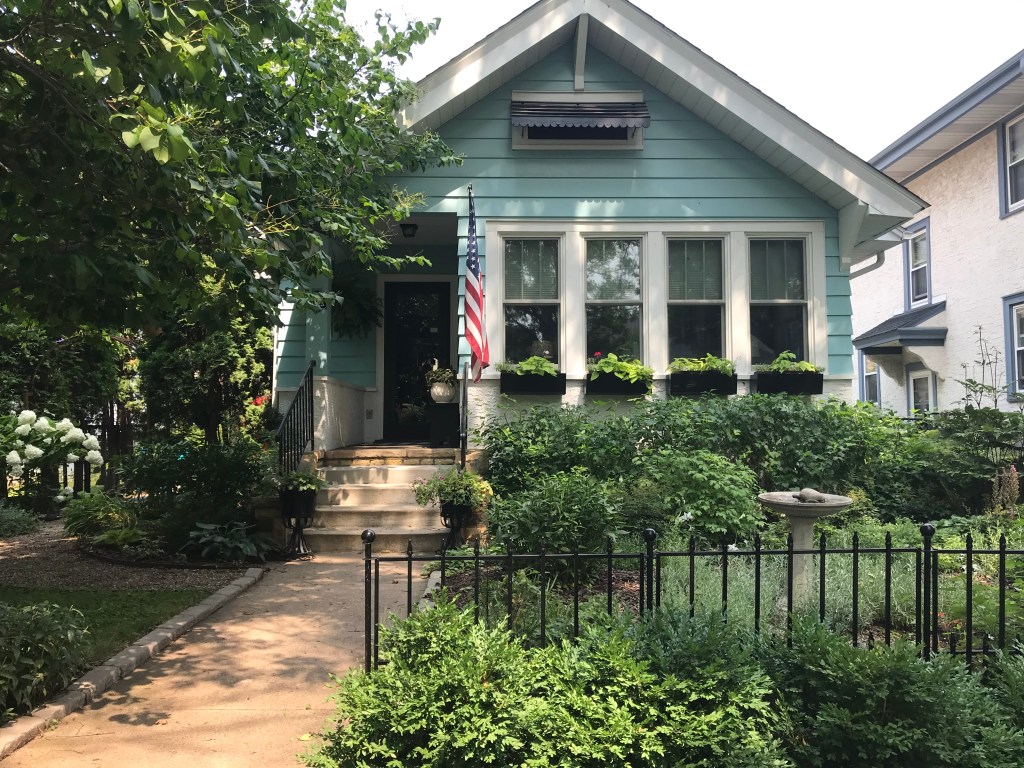
Sitting in my car before entering the house, I scanned the block of well-tended homes sheltered by mature trees. My eyes rested on our future home. Not too small, not too big. A pleasant-looking house. I liked the window boxes on the four front windows of the sunroom and the mums on the steps with one small pumpkin obviously placed there by little kid hands. I did not care for the yellow-gold exterior and wondered what color would bring it more to life.
Once inside, I wandered room by room, “reading” the house, gazing with soft eyes, as if encountering a piece of scripture for the first time. Lectio or “reading” is the first step in lectio divina, a spiritual practice that opens the reader to a more intimate relationship with the Word and often leads to clarification, even transformation.
I stood in the narrow, window-lined front room only big enough for a couple comfortable chairs and thought how lovely it would be to sit there and read. I noted the two windows in the kitchen, a gift in such a small space. I paused on the landing going up to the second floor, a refinished attic space and looked out the windows to the backyard. “I could have my office up here and call it ‘the garret.'”
I returned to the front door and took a deep breath, moving into deeper meditation, meditatio, the second step of lectio divina. Could I begin to let go of my space requirements, my vision of what I thought I needed? Could I imagine myself in this space?
There was no room for our large formal couch in the loving room, but how about forming a circle with four comfortable chairs? I began to picture certain loved pieces of furniture in this space. What about placing my lady’s writing desk next to the front door? What a pleasant place to sit and write a letter. My heart softened.
A fountain of ideas began to flow, overflow about ways to modify the house to our taste and lifestyle. A new palette. White wood work and white living room walls. Light beach aqua in the front room, which eventually I called “the snug,” and turquoise in the dining room. Clearly I had engaged with lectio divina’s third step, oratio, or “being active, but it was in the kitchen where I fully embraced that step.
Kitchen Transformation
During our first years of marriage, I cooked and baked and prepared dinner parties in a tiny windowless kitchen where initially I had waged combat with cockroaches. That’s where my Christmas tradition of baking loaf after loaf of cherry walnut bread began. Our kitchen at Sweetwater Farm was small, too, with almost no counter space, but oh, the Thanksgiving feasts created there.
Instead of seeing the space as limited, I reframed it in my mind as efficient. What it needs, I told myself, was crisp marshmallow white cupboards, a white subway tile backsplash and white solid surface countertop. And how about red walls? Santa Claus suit red.
The Fourth Stage: Contemplatio (Resting)
No, I wouldn’t have everything I wanted. A friend suggested we build a front porch. Of course, with enough money and patience and vision, one can do almost anything, but just because we once had something doesn’t means we must have it again. Instead, I rested in contemplation, assured I would discover a new gift.
One day on my morning walk soon after moving in, I noticed a neighbor’s inviting side courtyard, and then I saw other gardens and patios located in narrow side yards, creating private space. Could we do that? We had skinny space on one side of the house leading to the gate into the back yard. Tall arborvitaes lined the boundary between our house and the neighbor’s, leaving space just big enough for a couple chairs and a small table. My husband the gardener enthusiastically approved the plan.
As I settled into our new home, I continued practicing, although unconsciously, lectio divina, opening to its invitation for transformation. Our new secret garden space, which I call “Paris,” symbolized my willingness to let go and discover something new, vibrant, and pleasing; to be transformed.
The Next Decade
We were 65 when we moved into this house, and now we are 75. Our hope and intention is to spend the next decade here as well, but, who knows. Bruce has said he would like to stay in the house on his own, if I died first, but If I were a widow, I would move into an apartment, not wanting to take care of the gardens. In the meantime we live fully, happily, gratefully in this space.
An Invitation
Is there some aspect of your life in which the spiritual practice of lectio divina could be helpful? Something calling for transformation or reframing? I would love to know.
 Living on Life's Labyrinth