Signs of Resurrection

April 2, 2024

Easter Sunday, 2016, Granddaughter Maren, age 14, participating in procession

I am not a theologian. I have no degrees in religion. I am not ordained. I have no revolutionary insights into what happened on what we Christians now think of as Easter Sunday. I hold few, if any certainties in my personal creed. Some days, maybe most days, I move from one task to another without giving much thought to the great “truths” of life and death. In fact, more and more I consider the implications of “multiple truths,” a term Rabbi Adam Spilker of Mt Zion Temple used during a recent adult forum at my church.

Ok, given all I say I’m not, who do I say I am?

Well, on this day, two days after Easter Sunday, 2024, I say I am someone who believes in resurrection. As Joan Chittister says in her book, In Search of Belief, I am not specifically referring to the “revivification of an old life…It’s about experiencing a new kind of life entirely.”

I must admit I get hung-up on the word “entirely,” for I seem to experience resurrection in moments, in hints, in glimpses, in efforts, in unexpected gifts, in trial and error, in suggestions, in shimmers and glimmers.

In forgiveness. Or at least the desire to forgive. The movement toward forgiveness.

In grace, even when I don’t recognize it or acknowledge its presence.

Yes, I see resurrection in the loan daffodil that is almost ready to blossom in our backyard and in the song of a bird we can’t identify. And yes, I see resurrection in the pounds of rice and the cash collected for the local food shelf. I see resurrection in the overflowing crowds at all three of our Easter Sunday services –that pull towards hope and light. I hear it in the hymns and the inspiring sermon, and I receive it in the sharing of peace and the taste of the bread and wine.

I see it in the ways many are working for justice and peace and health and safety throughout the world. All the ways we are given to open our eyes and to respond to untruths and injustice and trauma and loss. All the ways we are invited to care.

I often think and write about discovering the person God created me to be. The movement towards wholeness. The unfolding and enfolding of my own essence. Lately, another word has entered my reflection time: alignment. When is what I do, how I live my life, what I choose, and how I respond most in alignment with God? Those moments of alignment, however brief or intangible, nearly invisible, are moments of resurrection.

Most often I don’t perceive those moments as they are occurring. Rather, I perceive them as a kind of retrospective resurrection moment, but I am seeking to be more and more aware of Presence in the moment. Right now as I write these words to you.

My moments of resurrection are different from yours, but they share certain characteristics, I think. They lift.

They open.

They touch.

They grow.

They lead.

They transform.

Over the years I have developed a purpose or, if you prefer, a mission statement for myself.

My purpose is to deepen awareness of the movement and presence of God in my own life and the lives of others:

By writing.

By facilitating groups.

By listening and asking questions.

By living a contemplative life.

More and more I realize that my purpose/mission statement is a reminder to myself to practice resurrection, to notice resurrection, and to seek resurrection for myself and for others.

What we believe by resurrection is that life has a purpose and a quality that does not end at the grave. We believe that the God who created us does not create us to abandon us but brings us finally, somehow, home to the fullness of life. Resurrection is simply another part of the process of growing into God. “Life” as we know it, “time” as we chart it, are simply temporary points to an eternal journey in a universe of unlimited mystery, endless possibility.

In Search of Belief by Joan Chittister, p. 195.

We have now entered the season of Easter. May these days open you, no matter your belief system, to moments of resurrection.

Where and when have you noticed resurrection? I would love to know.

Lenten Practice: Organizing A Lifetime of Photos

March 19, 2023

Open the album of your life.

Kathleen Fischer

In my February 19, 2024 post, “Lenten Overload,” (https://wordpress.com/post/livingonlifeslabyrinth.com/3153), I noted my Lenten practices of recent years, when I focused on “letting go” and “decluttering.” I thinned out my shelves of spirituality and theology books–even though it doesn’t look that way–and incorporated that practice into my life as an ongoing project. I tossed multiple copies of published essays I have written and notebooks with writing ideas, plans, and the beginnings of other essays. How good that has felt and how necessary that is, especially at this stage of my life.

In that post I shared my decision to finally (FINALLY) deal with the bins of unorganized photos. A lifetime of photos. I had intended to also begin re-reading my journals, and I did read the first two (1977-1978), but quickly realized I could not adequately address both projects at the same time. I decided to focus on the photos and to enter into it with contemplation and reflection.

With my heart and soul. To pay attention to the movement of God in my life, as reflected in my inner voice. To approach these projects as more than physical decluttering and clearing of space. Instead, I hope to let go of what clutters my heart and mind.

No surprise, I am learning as I am doing.

I had vague ideas about how to approach the magnitude of organizing all our photos. Chronological seemed the most logical idea, but then I thought about certain themes. Maybe instead of organizing photos in albums, I should create some photo books a’ la Shutterfly. Our homes have been so important to us, and I have taken many photos to show the changes we made inside and outside over the years. Maybe I should select the best of those and do other photo books and should I integrate photos of family and friends into the settings? And what about trip photos? Do we really need the many photos of buildings and lakes and other scenery? And what about all the photos family and friends sent to us in Christmas cards? We have loved receiving them, but should I keep them all now?

I dug in–sorting into various categories. The grandkids. Our kids. Friends and other family. Homes. Trips. I subdivided big categories into smaller ones. I cursed myself for never writing helpful information on the back of each photo. Sometimes a date was stamped on the back and that helped, as did clothing and backgrounds, but what a mess.

I consider myself an organized person, so how did I let it get this way? And why do we have all these duplicates? How will I ever make sense of this all? Well, like Anne Lamott’s famous quote about writing, “Bird by Bird.” Photo by photo. One photo at a time.

  • Focus on one category or subject at a time. I decided to begin with all the photos of our first grandchild, Maren, who is now 21. Group all the pictures of her and of my husband and me with her. A sizable pile, to be sure, but it is a start, and it’s almost like getting to know her all over again.
  • Eliminate too similar or duplicate photos. Edit, edit, edit.
  • Set aside pictures to give to others. For instance, I now have a fun pile of photos to send to Maren.
  • Work in short spurts and work only as long as it is pleasurable and productive.
  • Print photos on my phone I intend to keep. Delete others.
  • Don’t even consider filling photo albums or other storage options until all photos have been sorted and categorized and organized.
  • Be flexible. Maybe I will decide to do things differently as I go along. Maybe other ideas or methods will present themselves.
  • Be patient. Remember to stretch, to breathe. Always a good thing.

How easy it is to think about this process as a project–as something that needs to be done because of all the space these bins are taking or because I can never find a picture I want or because I don’t want to leave this mess for my kids to handle. Or because this is the time of life to intentionally declutter and deal with the stuff of our lives. If not now, when?

Those are worthwhile reasons, but I have committed to this as a Lenten practice. What does that mean?

Once again Joan Chittister comes to the rescue:

The wonder of being able to see life as whole, at any time and all times, is the great gift of memory. It makes all of life a piece in progress. With one part of the soul in the past and another in the present, we are able to go on stitching together a life that has integrity and wholeness. Because of memory life is not simply one isolated act after another. It all fits into the image of the self and the goals of the heart. It makes them real. It makes them whole.

The Gift of Years, Growing Older Gracefully, p. 155.

This practice is about gratitude for the many gifts in my life.

This practice is about remembering how the years have formed me and my loved ones.

This practice is about finding the whole in the parts.

This practice is about noticing the gaps and what they mean.

This practice is about sharing stories.

This practice is about making connections.

This practice is about being present as I recall the past.

This practice is about transforming burden into gift.

This practice is about being more aware of God’s presence in my life. My whole life.

Today is day 24 in the 40 days of Lent, (Sundays are not counted in the 40 days.) and I am no where close to completing this project, but since it is a spiritual practice, that is ok. More than ok. This spiritual practice will companion me in the Easter season and into ordinary time and more than likely right up to and through Advent. And because I keep taking more photographs this project/practice will continue teaching and guiding me.

If you decided on a specific spiritual practice for this season of Lent, how is it going? I would love to know.

Finding Purpose as We Age

April 4, 2023

“I have time now to try new things, but also the need to use this time well.”

” I feel called to do something, to create community.”

“How important it is to be intentional.”

“This time keeps evolving and one thing seems to lead to another.”

“How can I best use my energy?”

“I sometimes say to myself, ‘I get to do this,’ and that brings me joy.”

Last week I facilitated a Third Chapter conversation called “What Now? An Informal Conversation about Purpose and Meaning in the Elder Years.” Third Chapter activities and opportunities are designed for those 55+ and focus on ways to grow spiritually and to explore both the gifts and the challenges of these years. In recent months many have gathered to share insights and thoughts, as well as questions and concerns about a variety of topics, including downsizing and decluttering, choosing the next place to live, making plans about funerals and memorials, and nurturing intergenerational relationships. In preparation for this conversation, I realized I needed to create a purpose statement for myself; some guiding words as a way to sort and focus how I choose to use my energy and time and gifts. First, I browsed a number of books in my personal library about aging to see what resonated with me:

  • Pay attention to your inner compass.
  • What is asking for more attention?
  • This is a time to come home to the self, the person I was created to be.
  • Know yourself. Know your boundaries. Know your gifts. And then be generous.
  • Aging is the gift of continuing on.
  • Cultivate your power to inspire. Be a muse and a guiding spirit.

My next step was to think about what I love to do, what I am currently doing, and what I feel I do well. And I thought about how those things relate to my spirituality, my relationship to the Divine, and to my ongoing quest to understand who I am created to be. And then I thought about what is possible, given my age, my energy, my relationships and my community.

David Steindl-Rast’s words, “When you can’t go far, go deep,” have become a guiding mantra for me in recent years. In my case, what I choose is to go deep. And, to help others go deep as well. Ah, I could feel myself growing closer to defining my purpose, or if you prefer, “call,” or even “vocation,” although that word sounds more applicable to an earlier time of life.

No surprise, I then sat with my journal and tried on some words and phrases to see how they fit. I realized, as the words came together quickly and easily, that thoughts about this stage of my life have been percolating and evolving and emerging.

My purpose is to deepen awareness of the movement and presence of God in my own life and the lives of others.

I took a deep breath after writing those words, letting them flow through me, inviting them to float around me. Do they sound pompous? Pious? “Holier-that-Thou?” I thought about questions I ask my spiritual direction clients frequently. How are you noticing the movement of God in your life now? When have you experienced the presence of God? I ask myself these questions, too, all the time, whispering to myself, “May I feel the presence and be the presence.”

Yes, this is my purpose statement, I told myself, but how is it I intend to live this statement right now, right here.

  • By writing.
  • By facilitating groups.
  • By listening and asking questions.
  • By living a contemplative life.

Over time these specific ways to live my purpose may change, may evolve, and I imagine if I live many more years, my focus will be on the gifts of a contemplative life, but my overriding purpose statement feels as if it can live within me for the rest of my days.

I wrote my purpose statement and intentions on a small card that sits in front of me on my desk, and I practice saying it aloud, sharing it with others. My hope is to fully integrate the words into both actions and contemplation.

How grateful I am for the wisdom and insights shared during our Third Chapter conversations, and for the opportunity those times offer to learn from and to support one another during this time of our lives, for as Joan Chittister says, “The gift of these years is not merely being alive–it is the gift of becoming more fully alive than ever.”

An Invitation

What is the purpose and meaning of your life at this stage of life? Have you written a purpose statement? I would love to know.

NOTE:

An essay I wrote, “Actually, Your Children May Want (Some of) Your Stuff” recently appeared in Next Avenue, a digital publication produced by Twin Cities PBS(TPT), which is dedicated to covering issues that matter most as we age. Here’s the link: https://www.nextavenue.org/your-children-may-want-your-stuff/ I hope you will read and share with others.

Book Report: Joan Chittister’s Books

I am a Joan Chittister fan. One of her groupies.

Joan Chittister, O.S.B., is a Benedictine nun, theologian, speaker, and prolific author. As a visionary voice in church and society, she has served in a variety of leadership roles, including co-chair of the UN sponsored Global Peace Initiative of Women.

Occasionally, actually more than occasionally, Chittister is the object of controversy and criticism–for her stances on contraception, abortion, women’s ordination as contradicting Roman Catholic teaching. Several years ago she was prohibited by the Catholic patriarchy from attending the first Women’s Ordination Worldwide Conference, and –no surprise–she not only attended, but gave the opening address.

Even though I have never met her I consider her one of my spiritual directors. I have heard her speak many times, most often at the Chautauqua Institution in New York, where she is a frequent and popular speaker at the afternoon theology forums, and, of course, I have read many of her books.

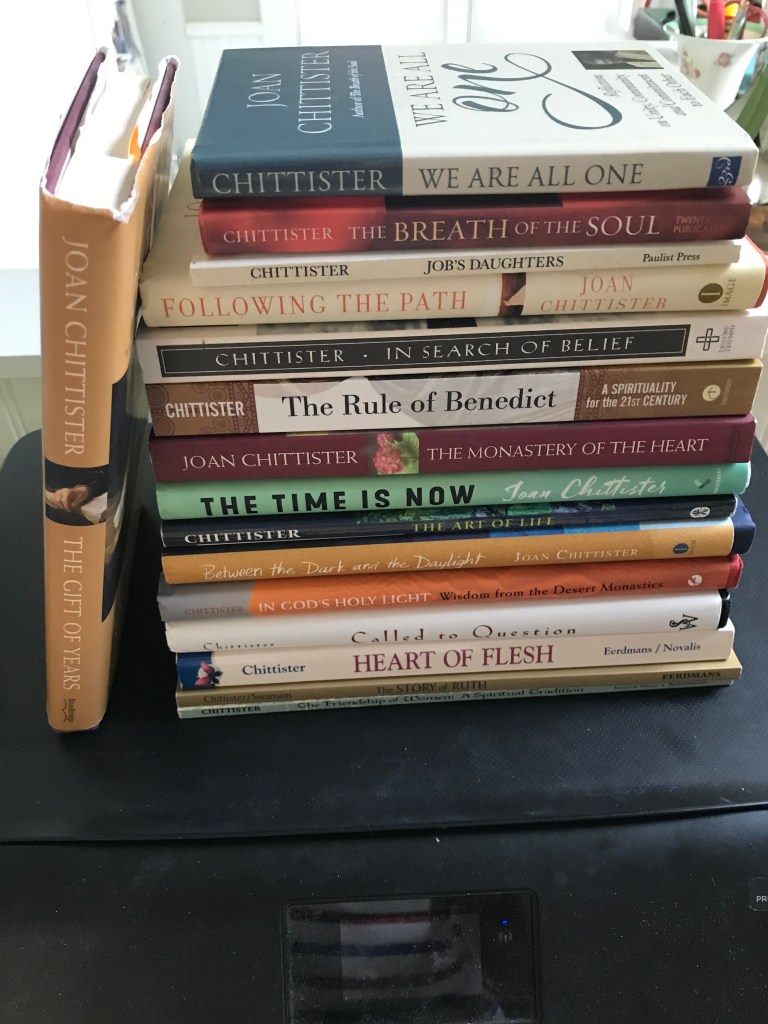
We Are All One, Reflections on Unity, Community, and Commitment to Each Other (2018)

This small book is my current “before I make the bed” book.

One of the chapters, “Holy Accountability” begins with this quote:

It is not God’s fault that things are as they are at present, but our own.

Etty Hillesum

Not the Republicans’ fault. Not the former President’s fault (or the current one). Not the superintendent of schools or the mayor or police department or the neighbor who doesn’t mow his lawn or the parent who doesn’t discipline his child or…..

No, the fault is our own. My own.

As if that weren’t enough, Chittister asks,

Here’s a quiz: What do the Adam and Eve story and the presidential election of 2016 in the United States have in common? Give up? It’s easy: free will, accountability–and oh, yes, a snake in the tree.

p. 41

Does that grab you? Chittister goes on to remind us that Adam and Eve lost “paradise” because they ignored their responsibilities. Ouch.

One of her attributes as a writer and a speaker is her ability to target the heart of a matter in a few words and to challenge the reader/listener to examine beliefs and perspectives and then to respond.

The great human task is to make life better for everyone. To be satisfied with anything less marks us as less than fully developed human beings.

p. 45

The Gift of Years, Growing Older Gracefully (2008)

I own sixteen Joan Chittister books; many I have read more than once. The Gift of Years has become sacred text for me, and I consult it frequently, trusting its wisdom and its ability to challenge my fears and enlarge my vision.

Again, in a few words, Chittister tackles big topics, such as regret, letting go, loneliness, transformation, forgiveness, faith. With each topic she opens me to both burden and the blessing. For example:

The burden of regret is that, unless we come to understand the value of the choices we made in the past, we may fail to see the gifts they have brought us.

The blessing of regret is clear–it brings us, if we are willing to face it head on, to the point of being present to this new time of life in an entirely new way. It urges us on to continue becoming.

p. 5

Chittister does not have her head in the sand about the challenges of becoming older, of being old, (She wrote this at age 72 and is now 86 and still writing and speaking and influencing.) but, instead, she reminds us that even in this stage of life there is life to live. I am still becoming.

Other Chittister Books

I think it may be time to re-read The Time is Now, A Call to Uncommon Courage (2019) and Between the Dark and the Daylight, Embracing the Contradictions of Life (2015). I am also tempted to add The Monastic Heart: 50 Simple Practices for a Contemplative and Fulfilling Life to my library.

As I said, Joan Chittister is one of my spiritual guides, and I need more time with her.

NOTE:

You can subscribe to weekly and monthly Joan Chittister newsletters. https://www.joanchittister.org

You can also listen to and see Chittister on You Tube.

An Invitation

Who are your spiritual guides? I would love to know.

Age and My Relationship to Time

Tuesday, March 8, 2022

My relationship with time is changing.

For most of my life I’ve plotted how much I can accomplish in a day. I’ve been determined not to waste time, but instead, making lists for each day, I have carefully planned my time. I have been ever conscious of how to use my time efficiently and thereby, gain more time or so I thought. Often I have treated time like an enemy. “I don’t have enough time.” “Where has the time gone?” I will ________ when I have enough time.

I’ve been a time vigilante. Watching time. Timing my time. Seeking ways to improve my use of time. Congratulating myself when I use my time well–according to my self-imposed standards, of course.

How is my relationship with time changing?

The watch I wore for years died. The watch was a gift from my husband–dressy, but simple. A good watch, and I loved it and wore it every day, all day. After having it repaired once, twice, it was clear the life of the watch was over, and my husband offered to get me a new watch. I picked one out, brought it home, but didn’t wear it and finally returned it. I no longer felt a need for time to be wrapped around my wrist.

True, my iPhone is a constant companion, and the current time is visible on my laptop, but somehow that feels different to me. I like seeing my naked wrist, free from the constant reminder of time.

Not only do I not wear a watch, but I also don’t set an alarm when I go to bed. I wake up when the sun’s brightness alerts me to the day or the rumbling of the garbage truck in the alley can’t be ignored. I wake up when I wake up. This winter I have slept later in the morning than I used to and in the past I would have chastised myself for the “loss” of a half hour when I could have been writing in my journal or going on a walk. Now I am more open to saying to myself, “Well, you must have needed the extra rest.”

I still make a list for the day, but my lists are shorter. I am more gentle with myself, more realistic, perhaps, about what I can accomplish in a day. Even what I want to accomplish in a day. And I am more open to disregarding the agenda I’ve created for myself, in favor of whatever appears or opens. Instead of restricting myself to an hour of meditation/devotion time in the morning, I sit in the Girlfriend Chair as long as my heart tells me that’s where I need to be.

I pay more attention to my energy. I know I need some time between working at my desk and fixing our evening meal. I know I need more open and unscheduled time, more time for refreshment. In the recent past the ratio of work days to play days was 6:1 and then it became 5:2, but more and more the rhythm seems to be 4:3. Not that long ago I spent part of Sunday writing my Tuesday posts and also preparing the material for the Thursday writing group I facilitate. Even before going to 8:15 a.m. Sunday church I looked ahead to the coming week, noting my appointments and making my To Do lists. Lately, however, I delay the planning till later in the day. I may answer some emails, as well, but leave everything else till Monday.

Some of the change, no doubt, is due to the pandemic and the necessity to be home, but much of the change is because of my age. Joan Chittister in The Gift of Years, Growing Older Gracefully points out both the blessings and the burdens of time in this stage of life. “Time ages things…Time deepens things…Time ripens things…Time is a wondrous thing.” (120-121)

I realize more and more what a privilege it is to have this time of my life; to have the kinds of choices I have; to still feel a sense of purpose. I am in ongoing discernment about how to live with purpose and do that in a way that “opens to the divine timing which best serves my soul,” as Julia Cameron says. (Blessings, Prayers and Declarations for a Heartfelt Life, 59) And when I am aware of how to best serve my soul, I am more aware of how to serve.

An affirmation:

It is my choice to use time festively and expansively. I have plenty of time, more than enough time. I fill my time with love, expansion, enthusiasm, exuberance, and commitment. I both act and rest at perfect intervals. Proper use of time comes easily to me. I set the rhythm of my days and years, alert to inner and outer cues which keep me in gentle harmony. Time is my friend and my partner. I let it work for me. I breathe out anxiety and breathe in renewal. I neither fight time nor surrender to time. We are allies as I move through life.

Heart Steps, Prayers and Declarations for a Creative LIfe by Julia Cameron, pp. 70-71

I love the steady, strong sound of the clock in the garret. Like a steady, strong heartbeat, a reminder to live my time.

An Invitation:

What is your relationship to time? I would love to know.

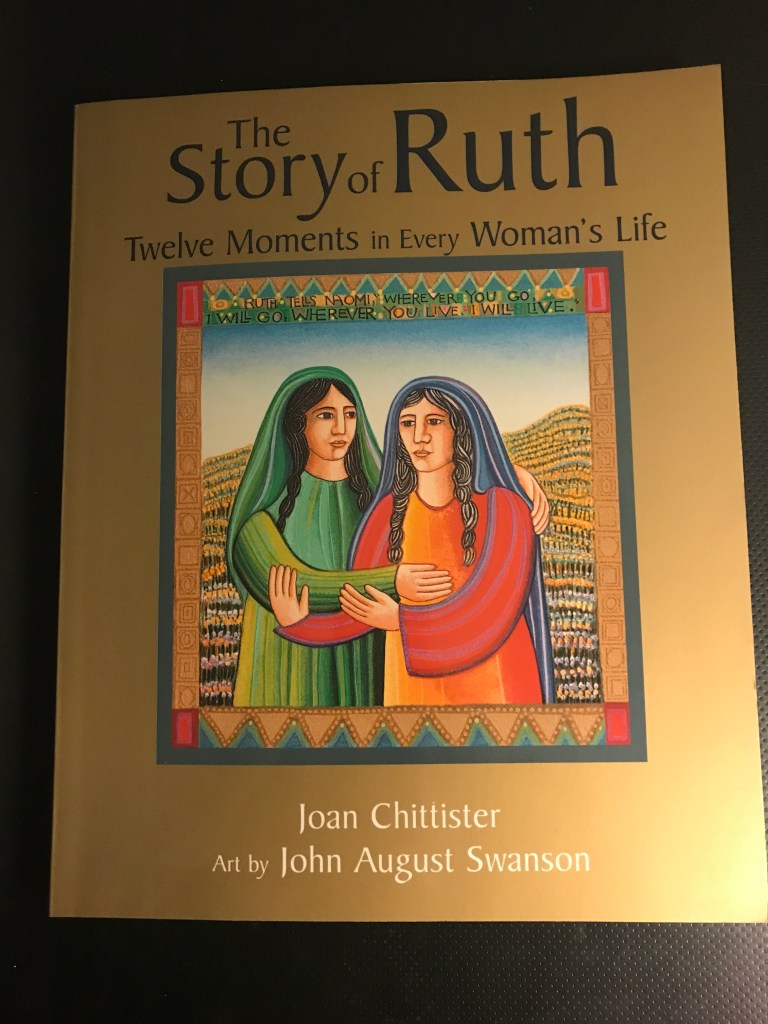
Book Report: The Story of Ruth by Joan Chittister

I’m always happy to spend time with Benedictine nun and theologian, Joan Chittister. I have heard her speak many times, often at the Chuautauqua Institution in New York, but other places as well, and, of course, I own and have read many of her books. I return to her The Gift of Years, Growing Older Gracefully (2008) frequently, but value many of her other titles, also, including Following the Path, The Search for a Life of Passion, Purpose, and Joy (2012); The Time is Now, A Call to Uncommon Courage (2019); The Art of Life, Monastic Wisdom for Every Day (2012); and Between the Dark and the Daylight, Embracing the Contradictions of Life (2015). Many years ago when I was preparing lectures for a weeklong retreat on spiritual friendship her book The Friendship of Women, A Spiritual Tradition (2000) was a guiding star.

The Story of Ruth, Twelve Moments in Every Woman’s Life is a gentle and wise, but compelling reflection of the Biblical story of Ruth and Naomi. Who isn’t familiar with the verses:

Where you go, I will go; where you lodge, I will lodge; your people will be my people, and your God my God. Where you die, I will die–there will I be buried. (Ruth 1: 16-17)

I’m not sure what drew me to this book at this stage of my life. I probably read some reference to it in someone’s blog, but what a welcome companion it has been recently. How good it is to be in the company of women as they meet the challenges, or as Chittister calls them, “moments” of their lives and how God calls us to become who we were created to be.

The book leads us through the Biblical story, highlighting the ways Naomi and Ruth, mother-in-law and daughter-in-law, meet the challenges following the deaths of their husbands. Chittister relates those challenges to the challenges all women face, especially as women continue to struggle with inequality and stereotypical limitations. Each chapter examines one of those challenges, including respect, recognition, invisibility, and empowerment.

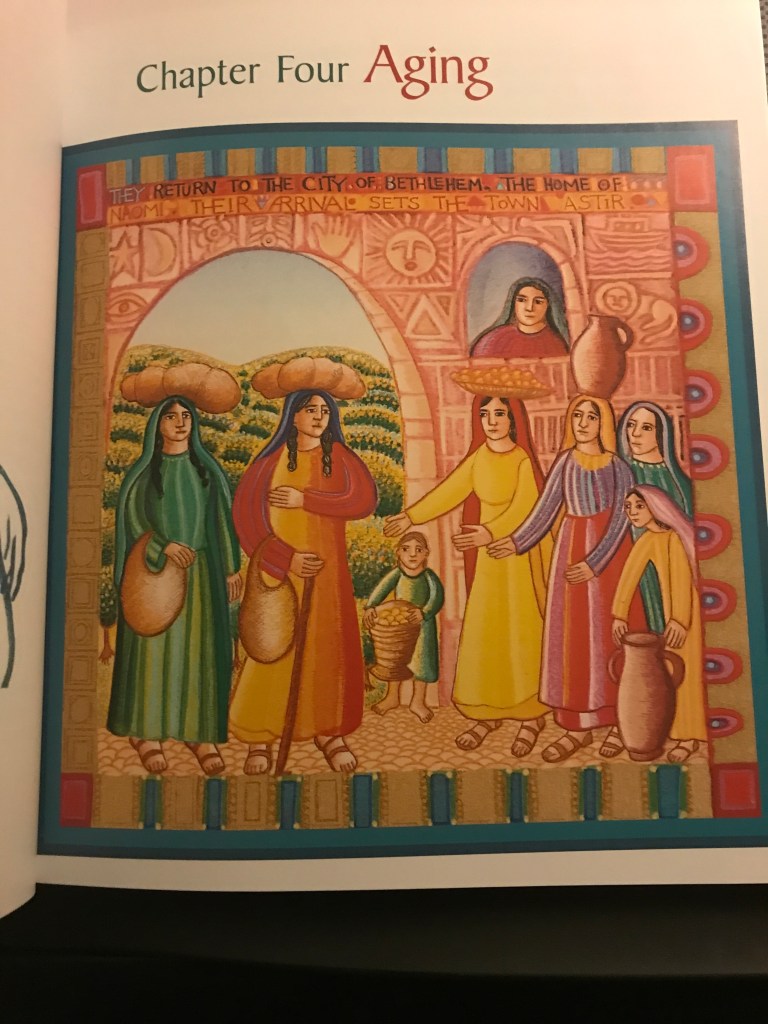
I suspect if I had read this book earlier in my life I would have been drawn to different chapters, but as a woman in her 70’s, I was most drawn to the chapters on loss, aging, and the last chapter, fulfillment. In the chapter on aging, Chittister writes:

There are lessons that come with age that come no other way. Age is a mirror of the knowledge of God. Age teaches that time is precious, that companionship is better than wealth, that sitting can be as much a spiritual discipline as running marathons, that thinking is superior doing, that learning is eternal, the things go to dust, that adult toys wear thin with time, that only what is within us–good music, fine reading, great art, thoughtful conversation, faith, and God–remains. When our mountain climbing days are over, the elderly know, these are the things that will chart the setting of our suns and walk us to our graves. All the doings will wash away; all the being will emerge. (p. 33)

And in the chapter on fulfillment:

What we do as women to bring ourselves to fullness makes the world around us a fuller place as well. (p. 87)

A wonderful bonus in the book is the art by John August Swanson.

An Invitation: What Biblical stories have new meaning for you as you age? I would love to know.

Books Added This Week to My TBR (To Be Read) List

  • The Heartbeat of Wounded Knee by David Treuer (2019). This actually is already on my list, but needs to move higher. Nonfiction
  • The Love Songs of W.E.B. DuBois by Honoree Fannone Jeffers (2021) Fiction
  • Cabin by the Lake Mystery Series by Linda Norlander: Death of an Editor; Death of a Starling; and Death of a Snow Ghost (May, 2022)

Bittersweet

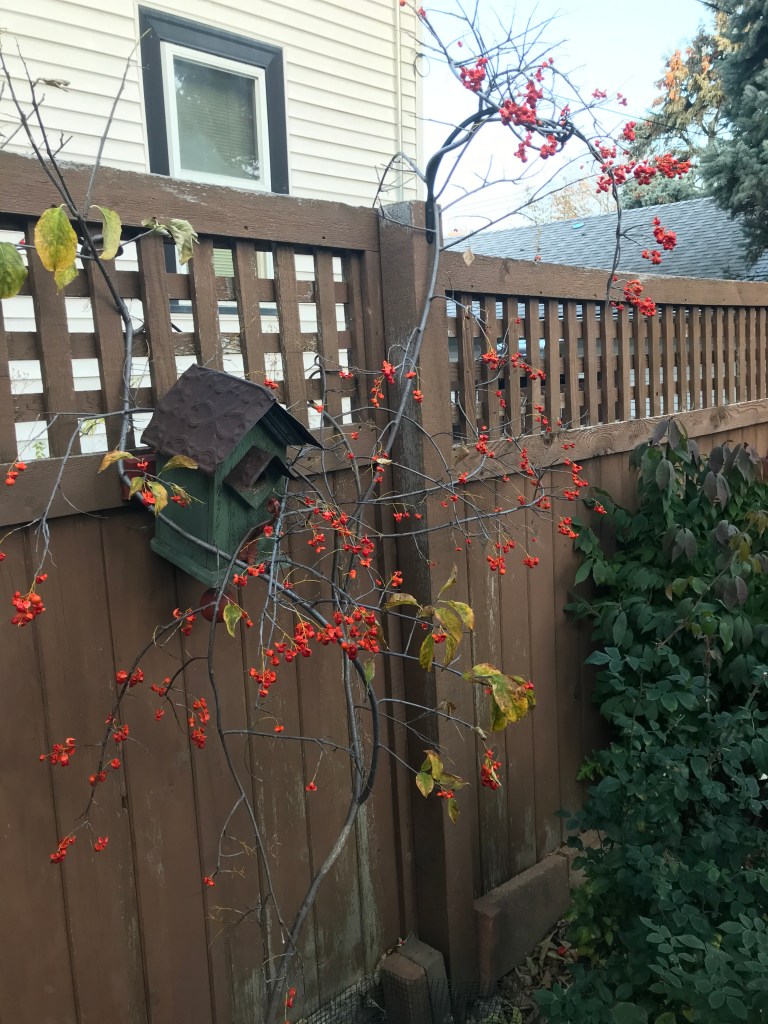
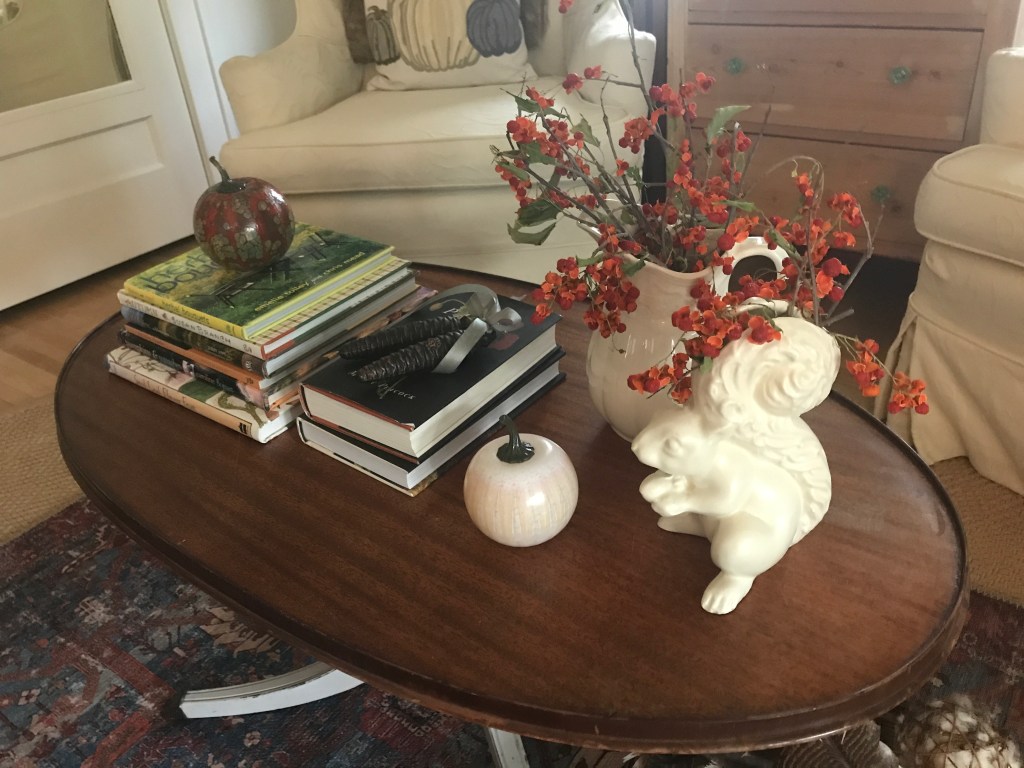
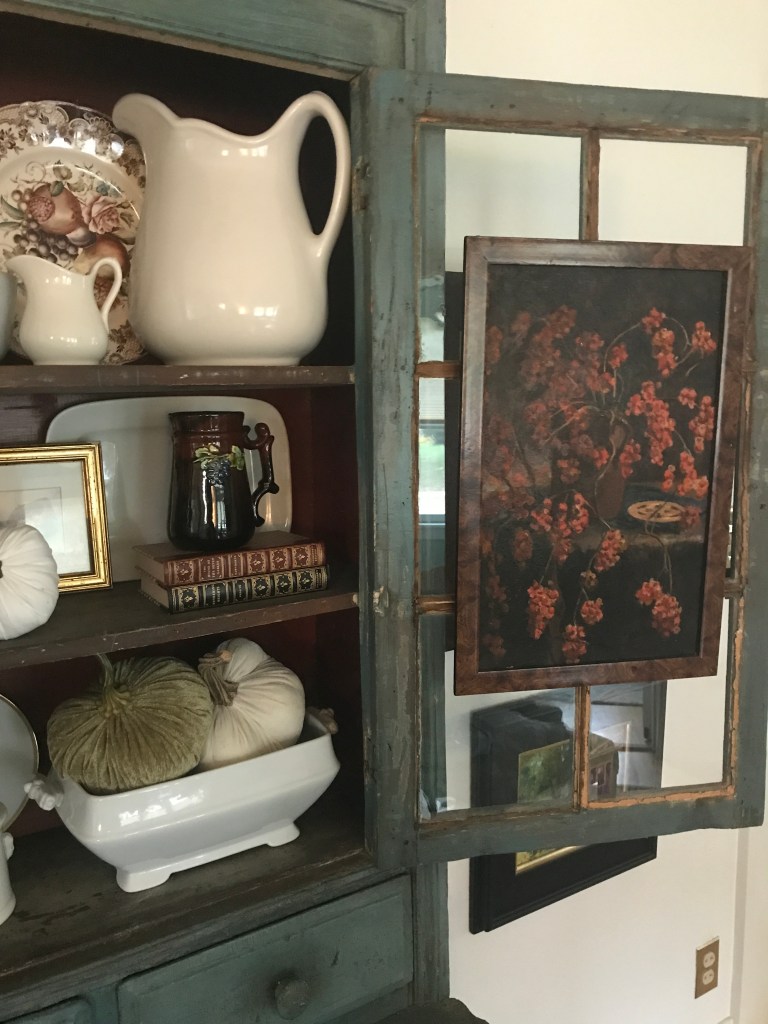
One of the treasures of the fall is the bittersweet plant with its clusters of bright orange pods. 
In the past when we roamed country roads at this time of the year, we have been on the look-out for bittersweet vines entwined around roadside vegetation. How triumphant we felt if we found some.

One year when we were still living at Sweetwater Farm a friend who lived at the base of a mountain in Pennsylvania sent me a large box full of bittersweet she had harvested on her property, and I swagged it along the white picket fence from the driveway to the backdoor. Such lavishness! Such luxury, especially since bittersweet is quite expensive to buy in nurseries or other stores.

Another year neighbors invited us to go with them to an area where bittersweet grew in abundance. The owner of the property had given permission to cut as much as we wanted. I suspect he thought we were all a bit crazy as we filled the back of the Jeep.

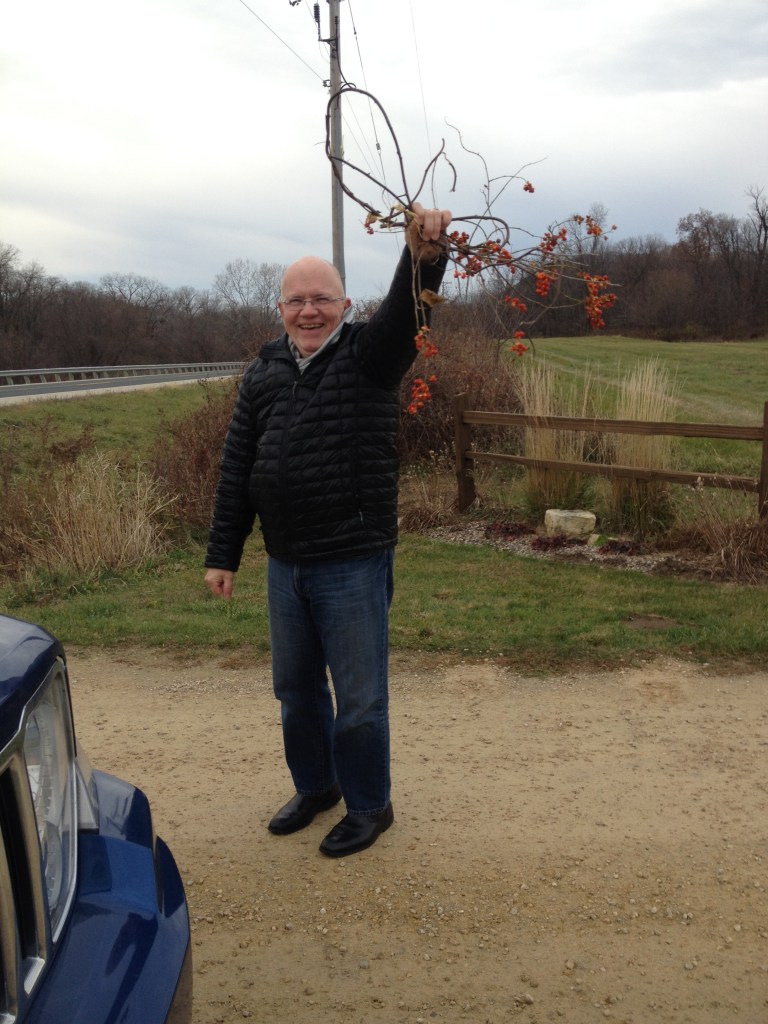
I no longer have to scrounge country roads hoping to find this fall treat, however, for a couple years ago my husband planted bittersweet in our backyard, and how delighted I was this year to cut the scraggly branches and fill containers with clusters of the orange berries.

I welcomed their beauty as one more signal of the transition from one season to another, but on the other hand how could I ignore the implication of the name itself? Bittersweet.

Bittersweet

Bitter Sweet

The mix of bitter and sweet.

Sometimes this stage of my life –elderhood– feels like a mix of bitter and sweet.

On the one hand I relish the freedom and flexibility of this age. For the most part I decide how to use my time and energy. But on the other hand I look back and see how time has passed so quickly. How is it possible that I am in my 70’s and our kids in their 40’s! And as for my energy–well, I still am able to do a lot in one day, but more and more I need to pay attention to how I use my energy.

I treasure all the gifts of my life, but at the same time I wonder how well I have lived those gifts–shared them, developed them, honored them. Some days I delight in the memories and stories of earlier years and other days I feel the gloom of regret. The echoes of what I should have done, could have done.

How grateful I am for the love woven throughout my life. So many cherished relationships, but now is also the time of loss. In this last year how many times have I tucked a vintage handkerchief into a sympathy card and written words I hope bring some comfort and connection?

Bitter. Sweet.

Joan Chittister refers to the bitter and the sweet of this stage of life as blessings and burdens. Both are present. Both are real. Both need to be acknowledged. Here’s what she has to say about the blessings and burdens of regret, for example, in her book The Gift of Years, Growing Older Gracefully.

The burden of regret is that, unless we come to understand the value of the choices we made in the past, we may fail to see the gifts they have brought us.

The blessing of regret is clear–it brings us, if we are willing to face it head on, to the point of being present to this new time of life in an entirely new way. It urges us on to continue becoming. (p. 5)

Bitter. Sweet.

Shadow and Light.

Or as our thirteen year old grandson Peter said when I asked him after his sister left for freshman year of college what it was like to be the only kid in the house, “The good news is I am the only kid. The bad news is I am the only kid.”

Bitter. Sweet.

Shadow and Light.

Blessing and Burden.

Yes.

An Invitation: How do you experience the presence of the bitter and the sweet in your life? I would love to know.