Book Report: May Round-Up

June 2, 2022

Fiction Dominated!

Out of the twelve books I read in May, only two were nonfiction, and both of those were memoir: The Pleasure of Their Company (2006) by Doris Grumbach, written as she contemplated her 80th birthday celebration, and A Ghost in the Throat (2020) by Irish poet Doireann Ni Ghriofa. I heard an interview with Ghriofa on NPR and was intrigued, but wasn’t sure if it was a novel or a memoir or a piece of literary criticism about an 18th century Irish poet Eibhin Dubh Ni Chonaill. I conclude it is all three. (The bookseller who sold me the book was quite sure it is a novel, by the way.) Did I love it? No, but I am not sorry I read it, and I appreciate the author’s reflection on the text of women’s lives.

Out of the ten fiction books I read, five were books in the mystery series by Nicci French (a pseudonym for a husband-wife team) featuring the psychoanalyst Frieda Klein as the main character. We also listened to the audio book of one of the titles on our road trip to Montana. I have finished the series and am glad I read them one after another for there is an ongoing thread in each of the books that might be hard to follow if read out of order or one without the rest. I won’t say more.

I read five other novels in May. The most memorable is Beneficence by Meredith Hall. You can read my review in an earlier post. livingonlifeslabyrinth.com/2022/05/19/book-report-beneficence-by-meredith-hall-2020/ This is a stunning book, and I keep thinking about its gifts.

The other four novels read in May are:

  • Take My Hand by Dolan Perkins-Valdez, a new novel (2022), which is getting quite a bit of attention. The topic, which is sterilization of black women/girls without informed consent, is an important one, and the story told is chilling and appalling. The main character is a young Black woman, a nurse from a well-to-do family. Set in the 1970’s in Montgomery, Alabama, She works at a family planning clinic and becomes involved with a family in which two young girls are sterilized. That eventually leads to a major law case. One of the themes especially well-developed was the assumptions made about how, when, and what kinds of care and involvement to give.
  • Matrix by Lauren Groff (2021). What a good book group selection this would be, but don’t judge it by the book flap summary, which says nothing!!!! The book has been reviewed widely because of the author’s previous successes, including Fates and Furies (2015) and Florida (2018), or I would have had no idea what to expect. Also, a male friend informed me there are no men in the book. NO MEN! I didn’t miss them. The book is set in the 1100s in what became England and is based on a real person. Marie was sent to an abbey where she has visions of the Virgin Mary and transforms the abbey from poverty to riches and power.
  • The Gown by Jennifer Robson (2019). A good vacation read. The story is based on the designing and creating of Queen Elizabeth’s wedding dress, and the main characters are two of the gown’s embroiderers. One of them is a Jewish refugee from France. Part of the story is set later in Canada when a granddaughter wants to learn more about her family history.
  • Jubilee by Margaret Walker (1966). Based on her great-grandmother’s life, the novel, written over 30 years, was in response to “Nostalgia” fiction about antebellum and Reconstruction South. The main character, Vygry, who looks and is often mistaken as white, works in the Big House of her father, the master of the plantation. The plot moves from preCivil War through the war and to the years after the war. At times the book reads like a well-written text book, and I learned a great deal, but mainly the rich writing and the wrenching story of the characters’ desire for freedom kept me reading.

An Invitation

As always, I am interested in what you have been reading. What do you recommend? I would love to know.

BONUS NOTE:

My husband has been painting and decorating discarded furniture all winter, and the garage is full to the brim. Come view and buy examples of creative talents at his garage sale, Thursday through Saturday, June 2-4 from 8:00 am – 4:00 pm. 2025 Wellesley Ave, St Paul. Access the garage through the alley ONLY. Proceeds support Lutheran Social Services for homeless youth. Wear a mask, please.

Book Report: Beneficence by Meredith Hall (2020)

May 19, 2022

Goodness. The state of goodness. That’s what “beneficence” means, and this is what this book explores. “Love and all its costs.” (p. 251)

Doris, the mother of the family, opens the story, which is set on a farm in 1947, with these words:

Every morning, early, when Tup and I get up to start our chores, the whole house still quiet and the children asleep I turn and pull the bed together, tugging at the sheets to make them tight and smooth. They are warm with our heat. I slide my hand across the place my husband slept, drawing the blankets up and closing in the warmth, like a memory of us, until night comes when we will lie down together again.

p. 5

A simple scene, but so evocative and so full. Of love and promise and commitment. Making the bed is a spiritual practice for Doris and also an expression of the dailiness and the goodness of her life.

Only a couple paragraphs later, however, Doris says, “You cannot know what will come.” She alerts the reader that this is no simple pastoral account of life on a farm, but this is a tale of what any family encounters one way or another. The love and the loss and the complicated responses to that loss.

It has been a long time since I have read a book that made me cry. This one did. More than once, and more than once I re-read paragraphs and even entire chapters, relishing the writing, but I also wanted to stay with these good, but imperfect people and to support them and honor them. They became real to me. In part that happens because the narration of the story changes in each chapter. Sometimes the father, Tup, is the narrator and sometimes the daughter, Dodie. There are two sons in the family, also, Sonny and Beston.

Almost at the end of the book, now 1965, Doris’s words echo the book’s beginnings.

The cows slept with their calves in the safety of the barn. The night offered all its promise. Tup and I moved to each other, our heat and our weight and our devotion. We slept without guard. There is never a going back. What we say and what we do stays, always. The great price of love and attachment is loss, with us every day. But here, too, each day, are their great easings.

p. 257

I do hope Meredith Hall has another novel in progress. In the meantime I plan to read her memoir, Without a Map. And, I suspect, I will re-read Beneficence again for this book is good. Very good.

An Invitation

Have you read anything recently that made you cry? Or what about a book that you know you will want to read again? I would love to know.

Book Report: April Round-Up and Powell’s Book Store Purchases

May 12, 2022

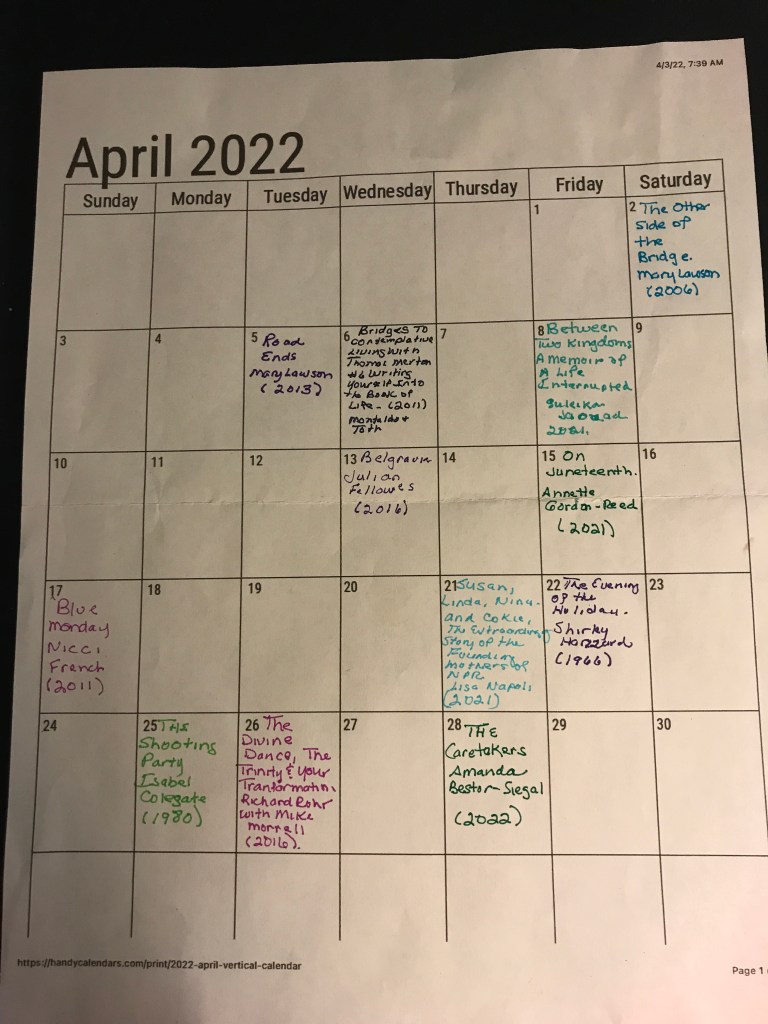
I have now read all four of Mary Lawson’s wonderful novels, and I hope she is writing, writing, writing! The Other Side of the Bridge (2006) is her second novel (Crow Lake is her first) and is set in a small Canadian town, shifting between two time periods, WWII and the 1960’s. The main character Ian, the son of the town’s physician, is often called upon to help his father, but as a teenager he prefers working on the farm owned by Arthur and his wife Laura. The story of Arthur and his brother Jake is a major part of the story, as is the story of Pete, a Native American friend of Ian’s. Many subplots, but they weave together beautifully.

Lawson’s 3rd book is Road Ends (2013). Warning: Dysfunctional family alert! The mother just wants to have babies and then ignores them when they have grown out of babyhood. Tom is the oldest of seven boys and Megan is the only daughter. She escapes to London and the father, who is a banker, escapes to his study. A heart-breaking story, but oh, Lawson can write. I reviewed her most recent book, A Town Called Solace in my March Round-Up. https://wordpress.com/post/livingonlifeslabyrinth.com/650

I am now fully immersed in a mystery series by a husband-wife duo whose pseudonym is Nicci French. I read the first in the series, Blue Monday (2011) in April, and we listened to the second, Tuesday’s Gone (2012) on our road trip to Portland, OR, and this week I read the third, Waiting for Wednesday. I guarantee I will complete the remaining days of the week this month. Set in London, the main character is the highly intuitive psychotherapist, Frieda Klein, who could use some therapy herself. She develops an informal, but key relationship with the police department. A small boy is kidnapped and this re-opens a case from years before. Get ready for a major twist at the end. I recommend reading these books in order, by the way, for some of the characters and plots continue from book to book.

I have already reviewed two favorite nonfiction books read in April, Between Two Kingdoms by Suleika Jauoud https://wordpress.com/post/livingonlifeslabyrinth.com/673 and On Juneteenth by Annette Gordon-Reed, https://wordpress.com/post/livingonlifeslabyrinth.com/695 but I will mention two others. First, Susan, Linda, Nina and Cokie, The Extraordinary Story of the Founding Mothers of NPR by Lisa Napoli. (2021) As an NPR junkie, I throughly enjoyed reading about their key roles in the early years of NPR, and as I write this, I can hear each of their distinctive voices. My only complaint about the book is that it lacks pictures, but it is radio after all!

I have not yet moved the other book, The Divine Dance, The Trinity and Your Transformation (2016) by Richard Rohr and Mike Morrell from my basket of morning meditation materials to my bookshelf, for I keep re-reading sections, in order to reflect and absorb the words even more. Despite the deep topic, the writing style is conversational, and invites inner conversation. The words “flow and “relationship” are key to the discussion. No doubt I will refer to this book again in future blog posts.

The Powell’s Report

First, I should mention that one night of our road trip to Portland, OR, we stayed in Missoula, MT, which has a charming downtown and a good independent bookstore, Fact and Fiction. Even though I knew I would make a big haul at Powell’s, I can’t pass up supporting independent bookstores wherever I find them. I bought two novels on my TBR list: Beneficence (2020) by Meredith Hall, which I read on the trip and loved and will write about in more detail in a later post, and A Ghost in the Throat (2020) by Doireann Ni Ghriofa. I listened to an interview with the Irish author on NPR recently and am intrigued.

I also bought a book at the Crazy Horse Memorial; a book I have been meaning to read for a long time, and I am so happy to have bought it at the memorial location: Black Elk Speaks, The Complete Edition by John G. Neihardt.

Then Powell’s. Armed with my TBR list on my phone and a store map, which is definitely needed, I took a deep breath and realized I needed a plan. I decided to focus on two sections–mystery and literature, both on the same floor and close to the coffee shop. At Powell’s used and new books are shelved together, and I decided to only buy books that had not been published recently, instead of current books easy to find in most bookstores. I made one exception, Great Circle (2021) by Maggie Shipstead. By the time I made the decision to narrow my purchases, I already had this in my basket and couldn’t force myself to eliminate it.

These are the used books I found that are on my TBR list:

  • Solar Storms by Linda Hogan (1995)
  • The Gown by Jennifer Robson (2019)
  • Jubilee by Margaret Walker (1966)
  • The Expats (2012) and The Paris Diversion (2019) by Chris Pavone

I also decided to get a couple books I loved and want to re-read: The Stone Diaries (1994) by Carol Shields and The Shell Seekers (1987) by Rosamunde Pilcher.

Finally, a surprise find, a book I had not heard about, The Pleasure of Their Company (2000) by Doris Grumbach. This slim hardcover memoir written near her 80th birthday was on the shelf next to her novels. It caught my eye and for $6.95 used I could not resist.

I’m thrilled with my pile and the whole Powell’s experience. Now I know what our granddaughter meant when she said we would need to set a timer for ourselves or we would still be wandering the aisles when the store closed for the day.

An Invitation

What were your favorite April books and what is waiting on your shelves for the right time? I would love to know.

Book Report: On Juneteenth by Annette Gordon-Reed and My Thoughts About Retirement Reading

NOTE: I am going to take a brief break from the blog. My plan is to begin posting again the week of May 9.

First, the weekly book report: On Juneteenth by Annette Gordon-Reed.

Part memoir, part history, part psychoanalysis of Texas, this slim volume enlightens the movement to make June 19, Juneteenth, a national holiday. On June 19th, 1865, in Galveston, Texas, the end of legalized slavery was announced–two years after The Emancipation Proclamation and two months after Robert E. Lee surrendered to Ulysses S. Grant.

Gordon-Reed grew up in Texas and in fact, she was the first Black child to attend an all- white school in her hometown, Conroe, Texas. Her story is compelling and offered me several new perspectives. For example, the Black high school near her home was Booker T. Washington High School, usually referred to in the community as “Booker T,” but when people outside the community called it Washington High School and assumed it was named for “George”

Another new thought: Gordon-Reed writes about the effect of integration on Black teachers. “The children were to be integrated, not the teaching staff…People who had been figures of authority were put in charge of dispensing books and doing other administrative tasks that took them away from contact with Black students, depriving those students of daily role models.” p. 51. Think of the longterm effects of that practice.

My family lived in Texas for two years, when I was in junior high school. My father was transferred there from New York and then transferred back to New York. During our brief time there I acquired a Texas accent and learned to address my teachers as “Sir” and “Ma’am”–both habits I lost quickly when we returned to Long Island. What I didn’t acquire was much real knowledge about Texas. I learned about the six flags that flew over Texas and about the Alamo and all the reasons Texas was great. I didn’t learn anything about the history of slavery in Texas.

When slavery in Texas was mentioned, it was presented as an unfortunate event that was to be acknowledged but quickly passed over. There was no sense of the institution’s centrality. Slavery was done. There was no point in dwelling on the past. Texas was all about the future, about what came next–the next cattle drive, the next oil well. the next space flight directed by NASA’s Mission Control in Houston.

pp. 27-28

In steps the historian. And we continue to learn and to gain insight about the implications of the past and what needs to happen now.

Now for Thoughts about Reading and Retirement.

After reading On Juneteenth, which I got at the library, I realized I have yet to read Gordon-Reed’s Pulitzer Prize and National Book Award winning book The Hemingses of Monticello, An American Family (2008). Don’t scold me. Periodically, I take the book from the shelf of other miscellaneous, yet to be read nonfiction books and ask myself if this is the time. It’s a BIG BOOK, and I know when I read it, I will want to focus and fully immerse myself in it.

It’s the kind of book I think I will want to read when I retire, but I’m not planning to retire anytime soon.

Now here’s a confession. Sometimes when many around me tell me I must read a certain book OR when I hear or read too many reviews about a book, I lose interest in reading the book myself. Because of that, I know I have missed reading many books I would have loved. But it is not too late. There is always retirement whenever that happens or whenever the time is right for that specific book.

In the meantime I daydream about other books on my shelves I want to re-read or read for the first time.

An Invitation:

What books do you daydream about reading? What books did you miss when they were first published but interest you now? I would love to know.

Book Report: Between Two Kingdoms, A Memoir of a Life Interrupted by Suleika Jaouad

At age 22 Suleika Jaouad learned she had leukemia and a 35 percent chance of survival.

Devastating. Obviously.

Much of the book details the four years of round after round of chemo, a clinical trial, and a bone marrow transplant, and near-death reckonings –written clearly and beautifully. This is all important, but what really moved me in this book was the honest revelations about herself, a young woman going through such crushing pain and uncertainty, and about her needs and desires, met and unmet.

I bent over the sink and splashed my face with cold water and looked in the mirror. I looked terrible–because I was horrible, I thought, with a nauseating swell of shame. Along with the chemo, an ugliness was coursing through my veins. Small violences. Swallowed resentment. Buried humiliations. Displaced fury. And a marrow-deep weariness at a situation that dragged on…

p. 162

When her medical team declares her cured, she learns the healing needs to begin. Jaouad quotes Susan Sontag in her book Illness as Metaphor, “Everyone who is born holds dual citizenship, in the kingdom of the well and in the kingdom of the sick.” In part healing means navigating from the kingdom of the sick to the kingdom of the well and to honor that she embarks on a pilgrimage, a 100 day road trip. In response to the column she wrote for the New York Times about being so young and having cancer, many people wrote to her about their own stories, and she decides to visit some of them, including a man on Death Row in Texas.

He understands what it feels like to feel stuck in purgatory, awaiting the news of your fate; the loneliness and claustrophobia of being confined to a small room for endless stretches of time; how it’s necessary to get inventive in order to keep yourself sane. These unexpected parallels are what initially compelled him to write to me, “You’ve fled death in your own personal prison just like I continue to face death in mine…At the end of the day death is death, doesn’t matter the form it takes.”

p. 338

Throughout those long years her family was there for her completely. As was her boyfriend–until he wasn’t. Caretaking is not easy, especially when you are just starting out in your own life. Jaouad shares all the ways he sacrificed for her and expressed his love, and she is deeply grateful, but ultimately, the reality of her needs was too much. A certain bitterness remains and more healing needs to occur beyond the last page of the book.

Healing is figuring out how to coexist with the pain that will always live inside of you, without pretending it isn’t there or allowing it to hijack your day. It is learning to confront ghosts and to carry what lingers.

p. 312

Fun Fact: Jaouad recently married the gifted musician, Jon Batiste.

My copy of the book is feathered with tabs, and I could have marked many more memorable passages. I am grateful for the wisdom and openness found on these pages, and offer a prayer that her cancer days are over forever and that healing continues in her life.

An Invitation:

What have you read recently that encouraged your own healing? I would love to know.

Book Report: March Round-Up

This was a 12 book month–maybe because March was more like a lion than a lamb. Reading was definitely the cozy thing to do on snowy and cold days.

Fiction: Seven Books

  • My favorite this month was A Town Called Solace (2021) by Mary Lawson. One of my favorite books of 2021 was her first book Crow Lake, and this month I have already read another in her backlist. In my book journal notes I wrote, “If I wrote fiction, I would like to write a book like this.” The characters in her books, which are set in northern Canada, are real, flawed, vulnerable, and likable, sometimes lovable. Clara is eight years old and worried about her older sister who has run away. She is also worried about her neighbor Mrs Orchard who is in the hospital. At least that is what she is told. Clara takes care of Moses, her neighbor’s cat, but how to do that when she realizes someone else is living in the house?
  • I also loved The Floor of the Sky (2006) by Pamela Carter Joern. Lila, age 16, is pregnant and comes to live on her grandmother Toby’s ranch in the Sandhills of Nebraska. Toby is in danger of losing the ranch to back taxes –her backstory is revealed slowly, gently, and lovingly. Like the characters in the Lawson book, these characters entered my heart.
  • Another one of my favorite books in 2021 was This Is Happiness by Niall Williams, and now I am exploring his backlist. This past month I read Four Letters of Love (1997). Also set in Ireland, this is a story of two families. The father in one wants to devote his life to painting and the father in the other writes poetry and as a prize in a writing contest is given a painting by the other man. This is the story, as many novels are, of love and loss and discernment, but also miracles. Here is an example of one beautifully written passage (p.209):

The priest shushed them, and waved them hopelessly back towards the gate. He was a quiet man who sought quietness, and was suddenly alarmed at what landed in his parish. Panic prickled in his lower stomach like a bag of needles. It was the kind of thing you wished on your worst enemy this: miracles. Let the bishop have them, give them to Galway, but not here. Why were they always happening in out-of-the-way rural places? God! His shaven jaw stung in the salt wind and he rued the new blades he had bought at O’Gormans.

  • Jacqueline Winspear’s newest in her Maisie Dobbs series was published in March, and I didn’t hesitate to get my copy of A Sunlit Weapon. Maisie Dobbs is a psychologist and private investigator in post WWI London. This latest book is set during WWII and we get fuller views of Maisie with her American husband and their adopted daughter. While I don’t anticipate re-reading these books as I have done with the Louise Penney books, each one is a good read. I recommend reading them in order. The first book in the series is Maisie Dobbs (2003).
  • I enjoyed both Marjorie Morningstar (1955) by Herman Wouk, which I found in a Little Free Library, and The Bastard of Istanbul (2007) by Elif Shafak. (I will probably read Shafak’s The Forty Rules of Love at some point.) I did not particularly enjoy The Camomile Lawn (1984) by Mary Wesley and am not sure why I didn’t set it aside without finishing. It is set in the early years of WWII in England and focuses on a decadent and sometimes abusive family. Some nice writing, but I won’t be reading more by this author.

Nonfiction: Five Books

  • I have already written a review of Spirit Car, Journey to a Dakota Past (2006) by Diane Wilson https://livingonlifeslabyrinth.com/2022/03/24/book-report-spirit-car-journey-to-a-dakota-past-by-diane-wilson-2006/ and highly recommend it.
  • If you are in a discernment process of any kind, I also highly recommend Decision Making and Spiritual Discernment, The Sacred Art of Finding Your Way (2010) by Nancy Bieber. I have used this book more than once and am so glad it is still on my shelf and once again, it was just the help I needed.
  • The Making of an Old Soul, Aging as the Fulfillment of Life’s Promise (2021) by Carol Orsborn is a slim book, but packed with wisdom. She maintains the “purpose of life may be to clarify our essence,” and the book illuminates how awakening to that essence is possible to our final page. Previously, I appreciated a book she co-authored with Robert L. Weber, The Spirituality of Age, A Seeker’s Guide to Growing Older (2015).
  • Not as high on my recommended list are two other books read in March. The Salt Path (2018) by Raynor Winn and Soul Therapy, The Art and Craft of Caring Conversation (2021) by Thomas Moore. The Salt Path is the true story of Winn and her husband Moth who undertake a 630 mile walk in the UK. They are homeless and broke, and this is a brave, but not always wise decision, especially since husband Moth has serious health issues. The story is important, but the writing was not always strong. I have loved earlier books by Moore, including The Re-Enchantment of Everyday Life and Care of the Soul, but this most recent book is not his strongest. I like the notion, however, that therapy is really care of the soul, and I like this quote:

…you are the servant and secretary, not the one who heals and saves. You are the priest and minister, but not the cause of success. Your job is to assist at the healing but not do the work first hand. Sometimes I think of my job as that of sacristan. I keep the temple clean and well-supplied.

An Invitation:

What did you read in March and what do you recommend? I would love to know.

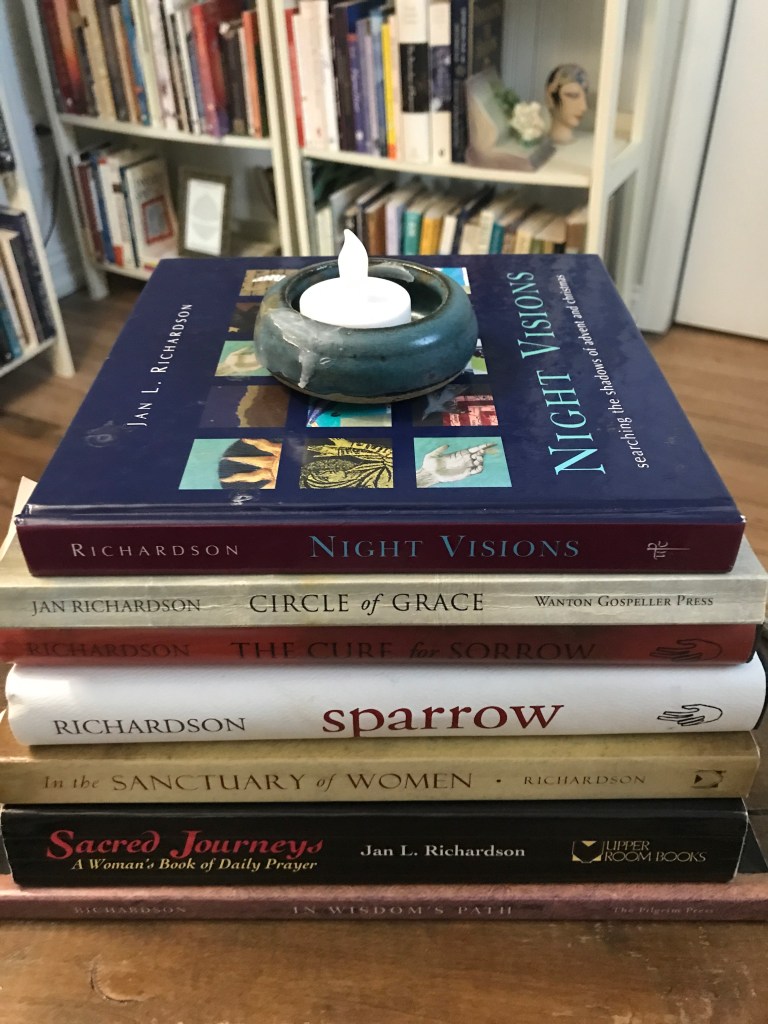
Book Report: Books by Jan Richardson

Jan Richardson is one of my “go-to” writers. Her books of prayers and blessings and reflections sustain and enrich me. Enlighten and open me.

On these Lenten mornings I read and re-read and sit with the blessings for the Lenten season in Circle of Grace, A Book of Blessings for the Season (2015), as I have for many previous Lenten times. This year the book falls open almost automatically to page 117:

Next you must trust
that this blessing knows 
where it is going,
that it understands
the ways of the dark
that it is wise
to seasons
and to times.

As I move through a period of discernment, these words reassure me and lift me and lead me towards whatever is next. Easter is coming--beyond what seems dark. 

Two other books accompany me during the seasons of the church year: In Wisdom's Path, Discovering the Sacred in Every Season (2000) and Night Visions, Searching the Shadows of Advent and Christmas (1998). 

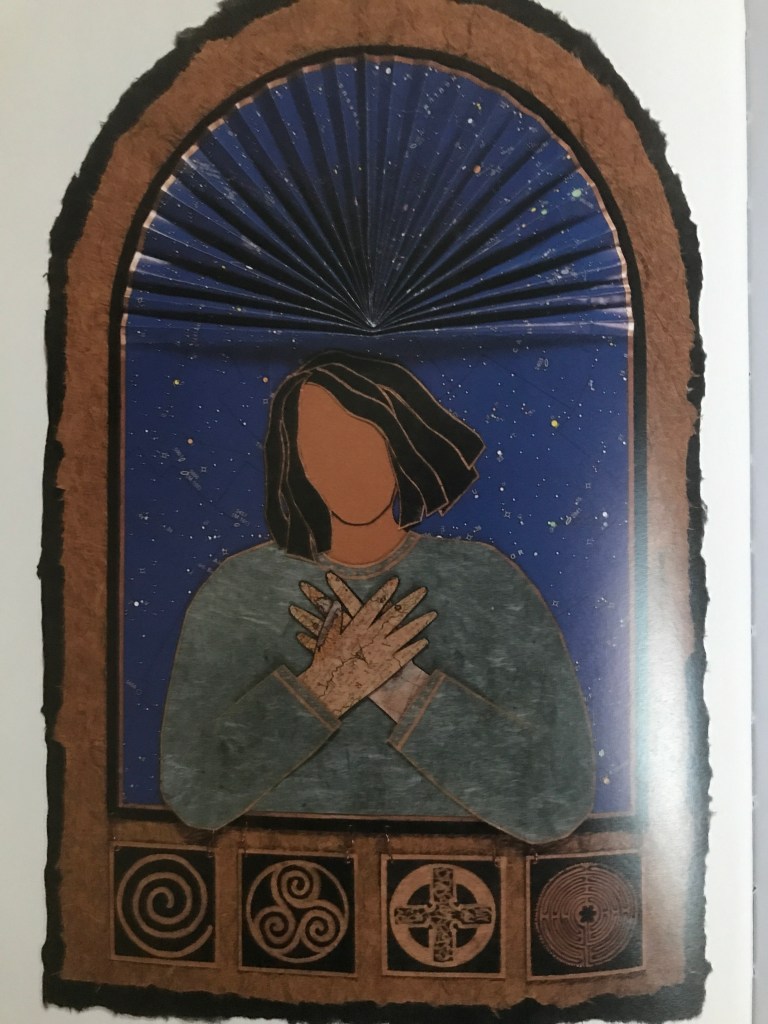
Both of these books are beautifully illustrated by Richardson as well.

On the first page in the section on Lent in the book In Wisdom’s Path Richardson writes:

The season begins with ashes and invites us into a time of stripping away all that distracts us from recognizing the God who dwells at our core. Reminding us that we are ashes and dust, God beckons us during Lent to consider what is elemental and essential in our lives…we find the building blocks for creating anew.

p. 53.

Each year when I read those words it is as if for the first time, as if I have never considered those thoughts, and at the same time, they feel so familiar and touch what I have always knows. Richardson has that ability in both her writing and her art work. That is also true as she guides the reader through each week of Advent in Night Vision with themes of “Darkness,” “Desire,” “Preparing a Space,” “Hope,” and then on to themes of “Birthing,” “Welcoming,” and “Thresholds” for Christmas and Epiphany. I know that season seems far off as we continue the rounds of Lent, but I suggest you add this book to your devotion plans for later in the year.

Two other books highlight the spiritual journeys of women.

Sacred Journeys, A Woman’s Book of Daily Prayer (1996) also follows the liturgical year, and each week includes an invocation, biblical text, context of the scripture, daily readings, questions for reflection, a meditation, and a blessing. Along with her own words, Richards quotes women from across the ages, a rich diversity of voices. One Lent many years ago a friend and I each read the daily devotions in this book and then emailed our comments to one another–what a meaningful Lenten journey that was.

The other book specifically focuses on women, In the Sanctuary of Women, A Companion for Reflection and Prayer (2010. Each chapter highlights a wise woman of the past, including Eve, Brigid, the Desert Mothers, and Hildegard of Bingen. I knew something about each of those women, but not about Harriet Powers, the subject of a chapter called “The Mysteries of Making.”

Powers grew up in slavery and when she become emancipated, she and her husband purchased a farm in Georgia. She worked as a seamstress and created quilts. Two of her quilts, known as Bible quilts created using appliqué techniques, have survived and speak to her creative gifts and her love of God.

A dear friend gave me this treasured book and inscribed it to me:

May you always keep the vision to recognize the door that is yours, courage to walk through it, and when you’ve gathered the wisdom that is yours in that room, move on and find another door.

I think Richardson would applaud this sentiment.

Finally, two books are the result of deep grief in Richardson’s life: The Cure for Sorrow, A Book of Blessings for Times of Grief (2016) and Sparrow, A Book of Life and Death and Life (2020). Richardson’s husband and creative partner, the singer/songwriter Garrison Doles died unexpectedly after a routine surgery, and she did what she knew how to do: she wrote blessings; blessings not always easy to read, such as “Blessing for My First Day as a Widow.” But she also wrote blessings of solace and hope.

When I was asked to speak at a friend’s memoir gathering, I read the blessing, “Where Your Song Begins Again,” which includes these words:

Let it be
that you will make your home
in the chamber 
of our heart

where your story
does not cease,
where your words
take flesh anew, 
where your song
begins again.

Sparrow, which explores the first few years after Gary’s death, is written in more of a narrative style and includes journal entries. The title is based on the sparrow imagery in Psalm 84, “Even the sparrow finds a home…” This line inspired one of Gary’s songs, “I Will Be a Sparrow.” The book is the honest, compelling and often raw exploration of the key question in her life without her loved one, “Who am I, when the person who saw and knew me best in all the world is gone from this world?” I am grateful I have not lost that person, but I have had my own losses and with each one I am aware of the need to address anew, “Who am I now?”

How grateful I am for Richardson’s grace and wisdom and her companionship on my own journey.

Richardson’s website is https://www.janrichardson.com/books. You can buy her books and art prints, as well as access her blog and occasional retreats on this site.

An Invitation:

What books accompany you on your spiritual journey? I would love to know.

Book Report: Spirit Car, Journey to a Dakota Past by Diane Wilson (2006)

On November 7, 1862, a four-mile train of mostly women and children was forced to march to the concentration camps at Fort Snelling. Many of our people died on this trip. The townspeople from Henderson, New Ulm, and Sleepy Eye threw bricks as they passed by, they threw stones, one woman even threw boiling water.

Some people ask why we need to remember this, why we can’t just let it go. The march has never been acknowledged for the tragic event that it was. It’s been covered up and forgotten. It’s time for the Dakota people to remember their ancestors, to grieve for their families who were part of this march. This used to be Dakota land. It was all taken away from us. When you allow these things to be covered up, that’s part of colonization.

p. 186, Wilson quoting Chris Mato Nunpa, professor of Indigenous Nations and Dakota Studies at Southwest Minnesota State University, Marshall, MN

Sometimes you don’t know what you don’t know.

We live just a few miles from Fort Snelling in St Paul, and I had no idea until a few years ago about this horrific forced march and how so many native peoples had been imprisoned there. Our congregation participated in a Sacred Sites tour and visited not only this area, but other nearby places sacred to the Dakota people. It was a sobering day, to say the least.

Spirit Car, Journey to a Dakota Past by Diane Wilson, who wrote one of my favorite novels of 2021, The Seed Keepers, is the record of Wilson’s journey to discover her own history and the story of her ancestors. It is a complicated story, although the writing is clear and beautiful. The story is complicated because so much has been hidden and distorted, and repressed. Wilson’s father was Swedish-American and her mother of Dakota heritage. Her mother and sisters had been sent to a boarding school on the Pine Ridge Reservation in South Dakota and were rarely able to return home. Imagine the trauma involved in that? Wilson’s great-great grandmother, Rosalie Marpiya Mase or Iron Cloud, was married to a French fur trader, and Wilson explores how mixed marriages were part of the strategy to take over native culture and lands.

In December, 1862, 38 Dakota men were hanged in Mankato, MN, in view of an estimated 4,000 spectators. Just imagine. Here’s where I am in the ongoing process of learning what I don’t know. When I was in the sixth grade, I lived in Mankato. At that time the social studies focus during the sixth grade was Minnesota history. Did we learn about the hanging? Did we learn about the forced march or why that happened? Did we learn anything about the land our school was built on? Nothing. Not one thing.

This book is part of my ongoing education, and I hope it will be part of yours.

Eventually, ambitious dairy farmers chopped down the forests, sold the timber to build houses for settlers, and paved the old trails. But was the past so very far away? Beneath the pavement, there remained the imprint of moccasins and the tracks of wagon wheels. They never really disappear, they simply became invisible to our eyes.

p. 203

An Invitation

Are you reading anything to fill in the blanks of your own education? I would love to know.

Book Report: February Round-Up

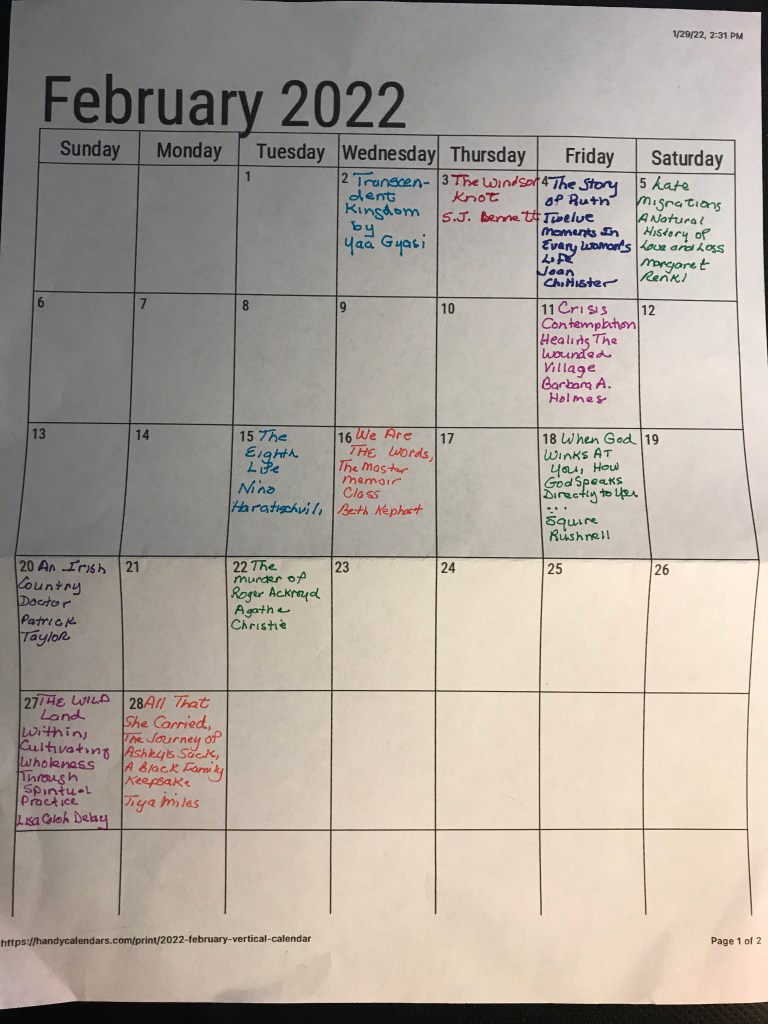
I tend to read more fiction than nonfiction, but month seven of the twelve I read were nonfiction. I read more than one book at a time–generally one that is nonfiction and the other, fiction. This month I read a long, 900+ page novel, and by the time I finished that I had several nonfiction books finished or underway.

Nonfiction

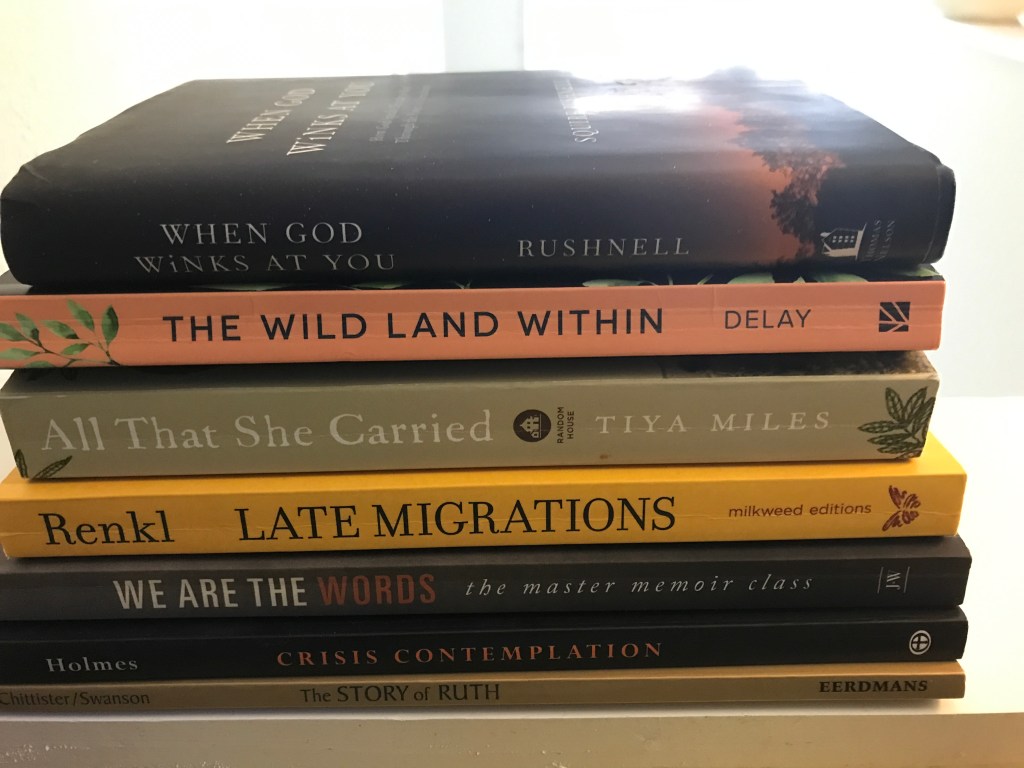
In earlier Thursday Book Report posts this month, I have written about three of the books I read this month: The Wild Land Within, Cultivating Wholeness Through Spiritual Practice by Lisa Colon Delay (2021), Crisis Contemplation, Healing the Wounded Village by Barbara Holmes (2021), and The Story of Ruth, Twelve Moments in Every Woman’s Life by Joan Chittister (2000). I benefited from reading each one.

Here are two more to add to your own TBR (To Be Read) list.

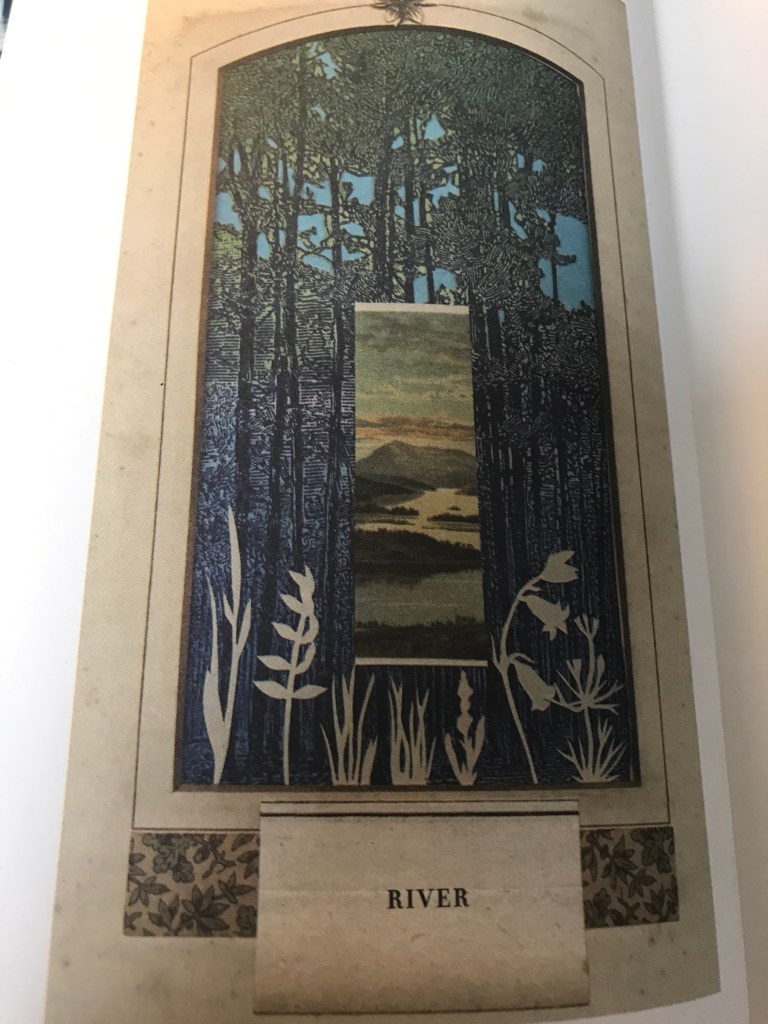
  1. Late Migrations, A Natural History of Love and Loss by Margaret Renkl (2019). This collection of brief essays goes back and forth between reflections on the nature and portraits of her parents and her own personal history. The two threads enhance each other. At times I felt I was peeking into her own journal, although the writing was far more accomplished than what is normally found in a journal. One example might be a list, “Things I Didn’t Know When I Was Six,” which may have grown from one or more journal entries.

The God you believe in acts nothing like the God other people believe in…

No black people live in your neighborhood even though black people work in every house in your neighborhood…

Your mother wants to work too, but there are rules that don’t let mothers work…

Your mother’s tears are not your fault.

pp.36-37

I have so many favorite lines–too many to note here–but I can’t resist one more:”Everyday the world is teaching me what I need to be in the world.” p, 126.

The book moves chronologically in time, beginning with her mother’s birth to her mother’s death and also the author’s life from childhood to adulthood with the loves and losses along the way. A bonus in this book is the gorgeous artwork by the author’s brother Billy.

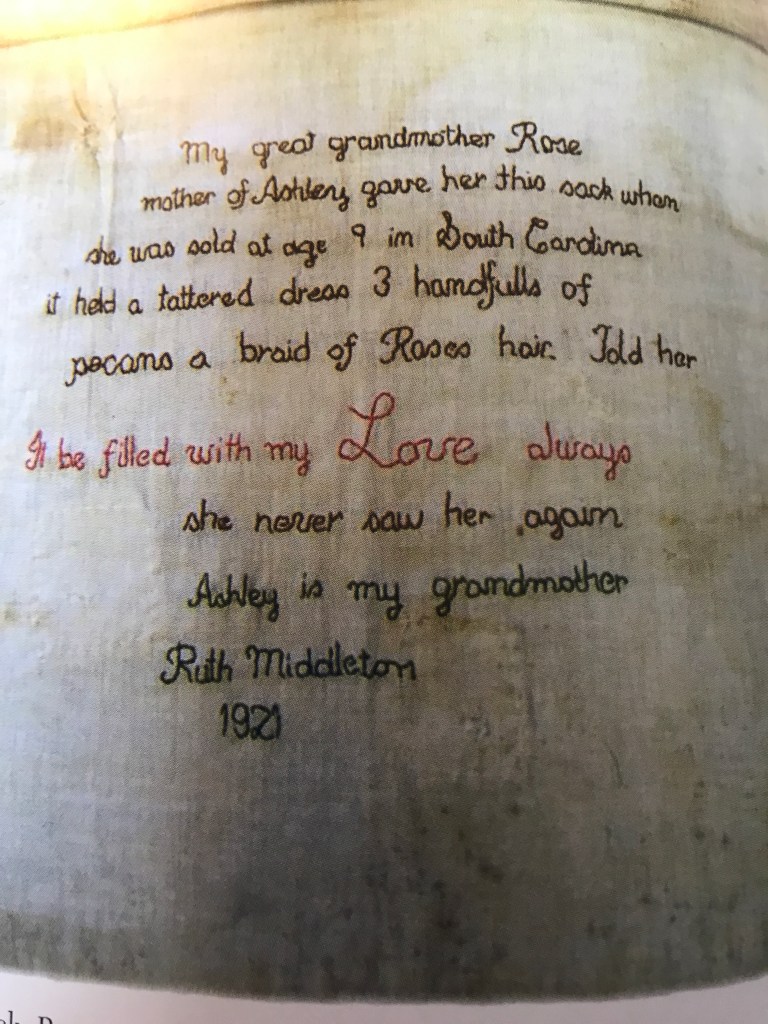
2. All That She Carried, The Journey of Ashley’s Sack, A Black Family Keepsake by Tiya Miles (2021). Rose was a slave in 1850s South Carolina and when her daughter Ashley was going to be sold, she packed a cotton bag for her with a few items, a tattered dress, three handfuls of pecans, a braid of her own hair. The sack was also filled with love. Decades later, Ashley’s grandmother Ruth in 1921 embroidered the contents and the briefest of family history on the sack itself. Sounds simple and charming, doesn’t it?

But first, consider how Ruth even came to have the sack in her possession.

When I first heard about this book, I was reminded of one of my favorite books of all time, Tim O’Brien’s The Things They Carried (1990), a novel, about the possessions soldiers carried during the Vietnam War and about what is important to hold and cherish.

But remember, slaves weren’t allowed to have many possessions nor did they have the ability to maintain family ties.

Yes, this is a book of remarkable scholarship and a book of enlightened history (Did you know that many slaves were required to wear a badge made of copper or tin that said “Servant” or “House Servant” to indicate which slaves had permission from their owners to do errands in town, for example? p. 82, or did you know that South Carolina was the only state in the union that didn’t have a two-party system or popular elections for the presidency, the governor, or other state and local positions, p. 174?), but it is also a book of heart-wrenching emotion.

Consider how the battle continues for how history is presented and learned in this country.

Fiction

I’ll just mention two.

  1. Transcendent Kingdom by Yea Gyasi (2020). The main character Gifty is a Phd candidate in neuroscience at Stanford. She has been drawn to the field because her brother who was a star athlete died of a drug overdose, and she wants to understand how that happens. Her mother, who immigrated from Ghana, is suicidal and moves in with Gifty. Her father returned to Ghana. The story moves back and forth between past and current storylines and includes many reflections about science vs religion and the role of the church in the lives of these characters. Excellent book.
  2. The Eighth Life (for Brilka)by Nino Haratischvili (2019) This book at 900+ pages took commitment, but I am glad I read it. As often is the case in a book this size, it is a family saga. Beginning with the Russian Revolution the story extends across a century. One Georgian family is highlighted–a family who owes its success to a delicious chocolate recipe passed down through the generations. Love, loss, war, ghosts, joy, massacres, tragedy, hopes, dreams. It is all here, and I can’t quite believe I read this as once again we are witnessing Russian imperial ambitions.

An Invitation:

What did you read in February? I would love to know.

Book Report: Morning Meditation Basket

As promised in my recent post (Tuesday, February 21, 2022, “Morning Meditation”), today’s Book Report shares my current morning meditation and devotion materials.

My collection of materials change as I finish reading a specific book, but also as the seasons in the church year change and as my personal needs change. However, two books always remain: the Bible and a journal. I only have a few pages left in my current journal and need to choose a replacement soon. That is on this week’s list.

Here are the other books in the basket:

  • Celtic Treasure, Daily Scriptures and Prayer by J. Philip Newell. (2005). This may be the third time I have returned to daily use of this book. Right now I am focusing on chapter five, “Songs of the Soul,” but other chapters include “Stories of Creation,” “Power and Justice,” and “Letters of Love.” Each day in the seven week cycle, begins with the same words, “We light a light in the name of the God who creates life, in the name of the Saviour who loves life, and in the name of the Spirit who is the fire of life.” After encouragement to “Be still and aware of God’s presence within and all around,” Newell retells a piece of scripture and offers a prayer. The brief and simple, but oh, so lovely daily meditation always ends in the same way.

The blessings of heaven,

the blessings of earth,

the blessings of sea and of sky.

On those we love this day

and on every human family

the gifts of heaven,

the gifts of earth,

the gifts of sea and of sky.

The illustrations from the Book of Kells plus children’s drawings are lovely, too.

This book provides a framework for my meditation practice right now. I begin with the opening prayer and readings and end with the closing words.

  • The Wild Land Within, Cultivating Wholeness through Spiritual Practice by Lisa Colon Delay (2021). I first learned about this book on Christine Valters Paintner’s website, Abbey of the Arts. https://abbeyofthearts.com The author describes the book as

an invitation to explore your own flyover country. This book serves as a companion to search the inner and unseen but very real territory of yourself. As we attend to this land within, our journey will involve some issues you may know little or nothing about. There are places of rough and even terrifying terrain. We will learn what makes spiritual growth unnecessarily difficult or extra confusing. To explore this land within means encountering climate and storms, negotiating treacherous topography, and finding creatures both wounded and wild. p. 2

Delay, who is a writer, teacher, and spiritual director and originally from Puerto Rico, broadens my white cultural context with references to Native American, Black, Latinx, and others and asks me to define what have been my main influences and how those influences have affected my spiritual growth.

In an early section Delay spends time reflecting on the four soils parable recorded in Matthew 13:1-23, Mark 4:1-20, and Luke 8:4-15. I have been re-reading those pieces of scripture now myself, and using the practice of lectio divina, I ask what meaning they have for me after walking on the earth for almost 74 years. Ongoing exploration.

I am moving slowly, deliberately through this book. My plan is to read a chapter every day, but I keep returning to what I read previous days, finding more openings for learning and reflection. Chapter Five, by the way, is called “Weather Fronts,” and that seems perfect for the winter storm watch we experienced as I wrote this.

One more thing: Delay has a podcast, Spark My Muse. I have not yet listened to it, but I will.

  • The Divine Dance, The Trinity and Your Transformation by Richard Rohr with Mike Morrell (2016) It seems I always have a Richard Rohr book in my meditation basket. If I think I am reading Delay’s book slowly, I am reading this one at an slower pace. I dip into this book, reading two or three pages, when I am willing to set aside the next task.

I was first attracted to this particular book because of the cover art, the famous icon of The Trinity created by Russian iconographer Andrei Rublev in the fifteenth century. I love that icon and the mystery it draws me towards. I was also attracted to the title of the book itself.

Whatever is going on in God is a flow, a radical relatedness, a perfect communion between Three–a circle dance of love.

And God is not just a dancer; God is the dance itself. p. 27

This book will be in my basket for a long time. Oh, I also have a publication from Richard Rohr’s Center for Action and Contemplation: Oneing, An Alternative Orthodoxy. Volume 9, No. 2 focuses on The Cosmic Egg.

  • Soul Therapy, The Art and Craft of Caring Conversations by Thomas Moore (2021) This is another book I dip into when the spirit moves me. Moore’s books, especially Care of the Soul, have been important landmarks in my spiritual growth. Directed towards “helpers,” including psychologists, social workers, ministers, spiritual directors and others, the book reminds me to continue my own soul work as I sit with others doing their own soul work.
  • The Making of an Old Soul, Aging as the Fulfillment of Life’s Promise by Carol Orsborn, Ph. D (2021) I have not yet cracked open the cover of this book, but I enjoy Orsborn’s blog https://carolorsborn.com and I really liked her earlier book The Spirituality of Age. More than likely, I will report on this book later.

My basket runneth over!!

An Invitation: What books or other materials do you turn to for reflection and soul work? I would love to know.