Following Foolproof Directions

July 9, 2024

Monday morning. “Really?” I moaned when I looked at the clock. 5:30. I wasn’t ready to fully enter the day, but on the other hand, I knew if I went back to sleep, I would sleep later than I wanted to. After all the Monday list was long.

What did I do? I closed my eyes and went back to sleep. For another hour and 15 minutes. I’m usually getting ready for my morning walk by then. Oh well.

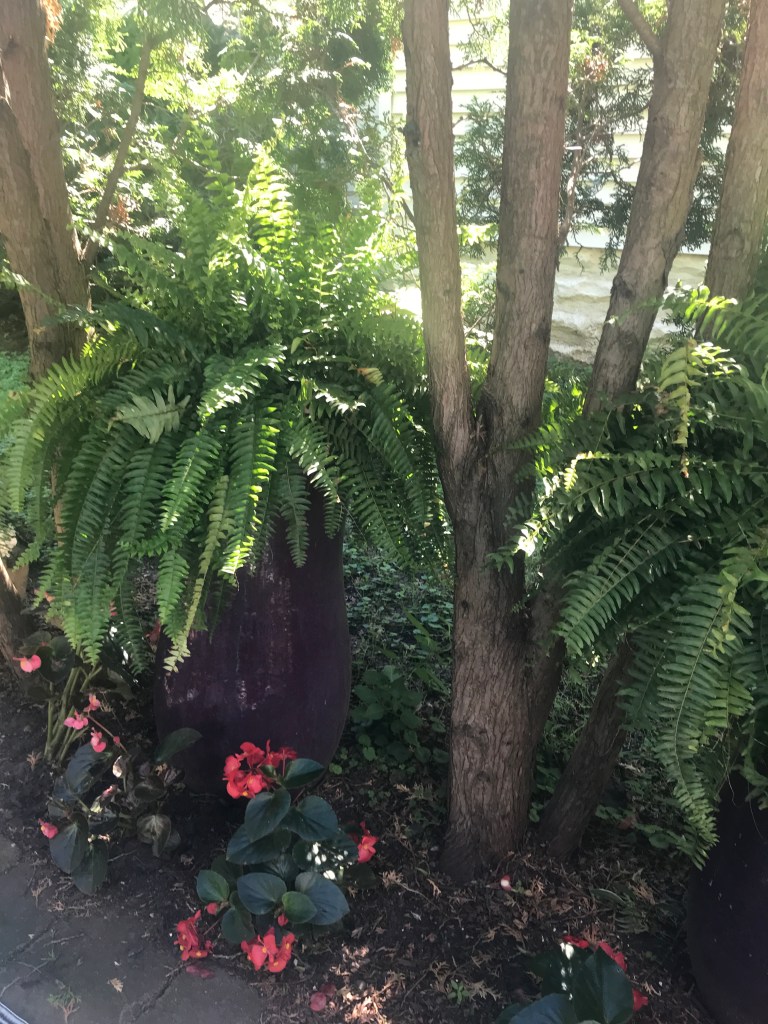
I made the bed. At least I had accomplished one thing, I reassured myself. Little by little I did what needed to be done in order to go for a walk. I admit I don’t’ head out on a walk eagerly. I really prefer sitting in the snug, reading my current book. But going for a morning walk is on the list, and it is good for me. Some writers say they love having written, more than actually writing. Well, I am happier when I’ve completed my walk more than when I am actually walking. I must say, however, that right now what a pleasure it is to see the exuberant gardens in so many homes.

Once home, dripping in sweat, because that’s what my body does, even when it is only warm and not hot, the next step was to take a shower. The bathroom with the shower is on the lower level of the house, which is not where my clothes closet and dresser are located. Normally, that is not an issue, but yesterday I needed to return to the first floor not once, but twice to get what I needed to be fully clothed.

Ok, I was finally ready to enter the day.

On my list was to make egg salad, and I was proud of myself for cutting the chives before taking my shower and washing off the insect repellant needed when I walk. You see getting to the chives, once visible, but now hidden among other fully grown plants, is no small task, and I had jungled my way to them. (Yes, I know “jungle” is not a verb.)

I have foolproof directions for hard boiled eggs.

  • Place eggs in large pot and cover with cool tap water.
  • Bring water to boil, lower heat and simmer for five minutes.
  • Turn off heat and let eggs sit in water for five minutes.
  • Drain. Fill pot with cold water.
  • To peel, tap each end on a board, roll egg between hand and board to crackle the shell.
  • Peel under running tap water and let cool to room temperature.

The directions are only foolproof, however, when they are followed.

First mistake: when the water boiled, I set the timer on my phone to five minutes, but I forgot to press “start.”

Second mistake: After wondering how long the eggs had been simmering, I set the timer again for five minutes and AGAIN–I kid you not–forgot to press “start.”

I have no idea if I estimated the time as too long or not enough, but when I tried peeling the eggs…well, let’s just say, I needed to start all over. And I did, and this time, I focused on the directions, and guess what? They worked, and I made delicious egg salad for sandwiches.

By this time it was already midmorning, and normally, I would have written my Tuesday post and would be ready to work on Thursday’s post or another item on my list–a list this week that is longer than any previous week this summer. Yesterday, however, I had no idea what to write.

Here’s where the day shifted.

What I most needed was to follow my own foolproof directions.

  • Close my eyes, lightly, not tightly, and take a deep cleansing breath
  • Continue breathing gently, in and out, finding my own rhythm.
  • As thoughts and ideas, worries and concerns enter my head, invite them to step aside. They will be there later, if I need them.
  • Remain in the stillness, the silence, the spaciousness and allow the presence of God to enfold me.
  • When it is time, and I will know when it is time, I take another deep cleansing breath and open my eyes.

I know these directions are foolproof, so why is it I forget to follow them? Why do I resist? Why do I forget that in order to be the movement of God, I must welcome and notice the movement of God.

I am not suggesting that the rest of the day proceeded smoothly and that I accomplished everything on my too long list, but I did write this post. I enjoyed an egg salad sandwich for lunch. I met with a client whom I love, and I was able to be present to her. I checked off a few small items on my list. I had time to read in the snug. And most of all, I moved through the day in a more grace-filled way.

Sometimes it just takes following directions.

What are your “foolproof directions”? I would love to know.
Life in the Elder Hallway

July 2, 2024

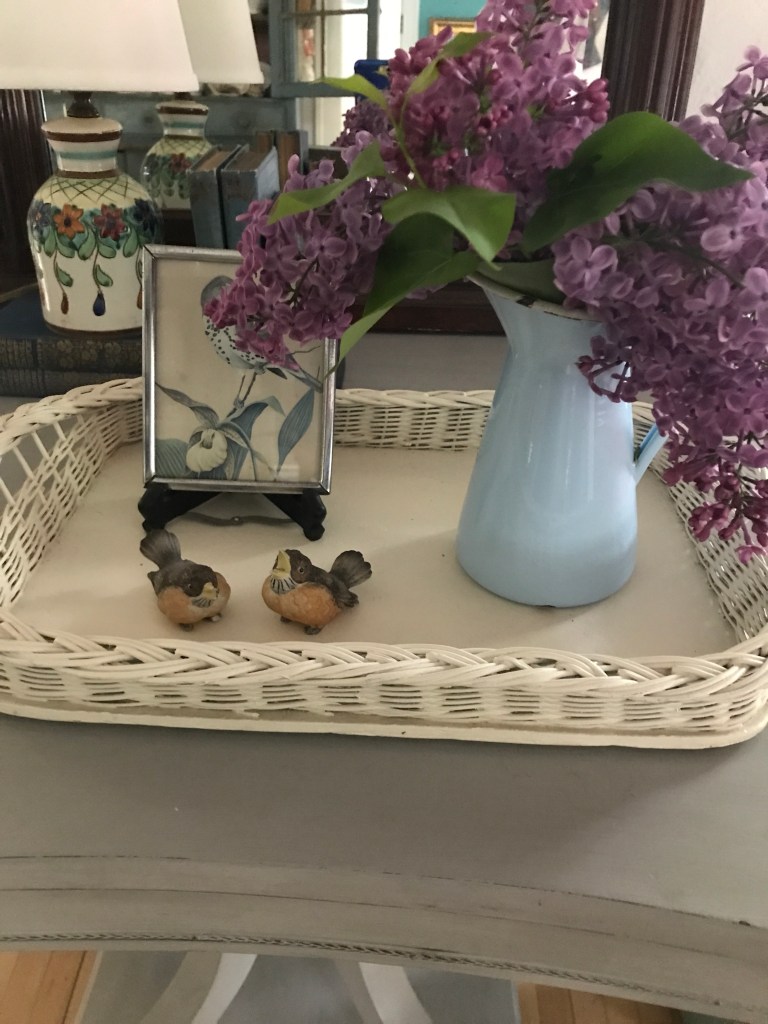
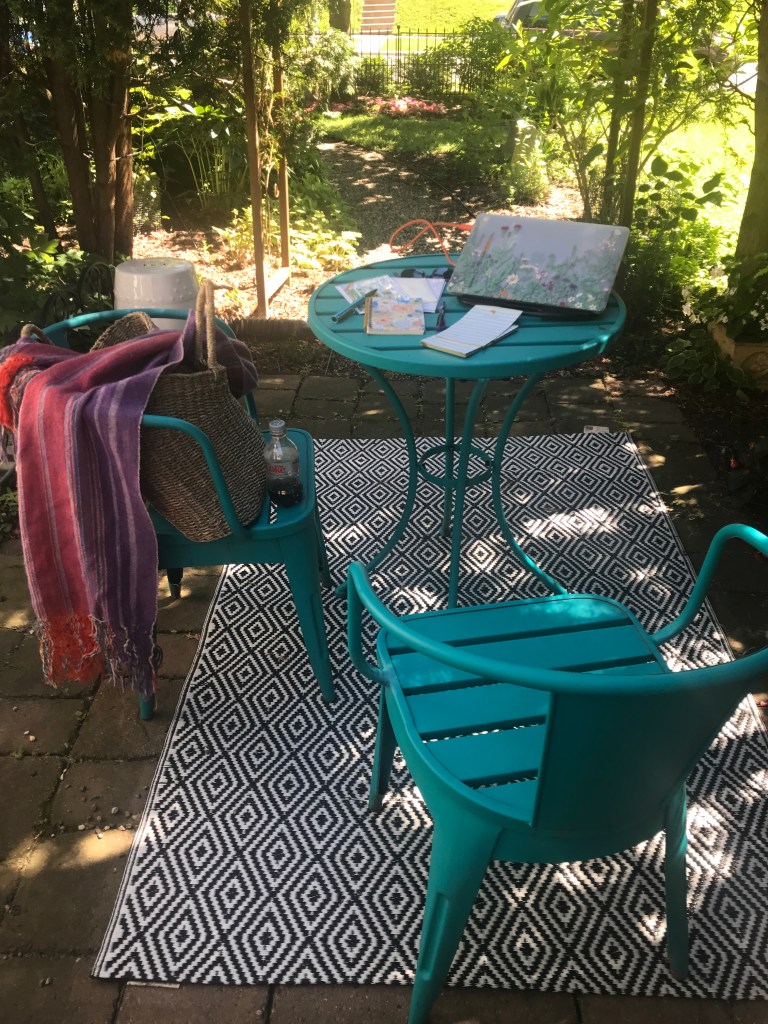
Come join me in “Paris.” On gorgeous summer days this is where you might find me–writing letters and emails, dipping into my basket of miscellaneous meditation books and saved articles, jotting notes to myself, adding to my To DO and TBR lists, and often taking a deep cleansing breath, as I open my journal for more reflection time.

These are rich, but quiet days. Days I need right now.

I am reading for the second time How To Walk into a Room, The Art of Knowing When to Stay and When to Walk Away by Emily P. Freeman. Freeman uses the metaphor of a “room,” to reflect on decision-making and changes in our lives. Freeman emphasizes the importance of naming the room we inhabit now, and I am more and more aware that my current room is a room of elderhood, of old age.

This room is spacious with several corners and areas designated for different aspects of my life: my work as a spiritual director, as the facilitator of a writing group, as writer of this blog, along with my identities including wife, mother, grandmother, friend, sister, and active church member. The room has a number of doors often open to welcome others and windows, reminding me to pay attention to the diverse movement around me. There are places to sit for solitary reflection and for attentive conversations.

In my 60’s I often said I hoped my elder years would be a time of expansiveness–a time to grow bigger–and I needed a BIG room. Now, however, in my 70’s I have revised that thought. Instead, this is a time of deepening. And I think my room encourages that intention to deepen, to grow deeper into who I was created to be. That fits right now, but at some point, perhaps my room will be smaller, and I won’t need as many designated areas. My room will modify into a room of contentment. Not passiveness, but a contemplative contentment.

My father seemed to live in that room in his last years–his 80’s into his 90’s. He spent much of his day in prayer and meditation without realizing that he was living as a contemplative in his last room. That was not a word familiar to him, but when I offered it to him, I could see that it resonated, and he accepted, even welcomed it.

This summer, however, I think I am in a hallway. Wandering beyond my room, but not far from it. I am just a bit antsy, for I have had more open time than what has been normal for me. Most of the time that feels good, for it means I have more time to read and more time to respond to whims, and more awareness of how I want to use my energy and the pacing needed along the way.

Freeman describes hallways in this way:

A hallway is a place of permission. It's a space where you're allowed, compelled even, to ask your questions, perhaps the kinds of questions that your rooms haven't allowed. It's a space to try on possibilities and to reimagine what could be.

The hallway may be the space between two rooms,...but it could also be a pause, a space where you enter just for a time, to clear your head, to take a beat, to weigh your options, to remember who you are...it's a waiting room, a bridge, and a deep breath. pp. 94-95.

In this hallway I have encountered some words to ponder.

  • Job died, an old man and full of days. (Job 42:16) Margaret Silf in her Daily Readings says, “To die an old man is one thing; but to have lived a life in which every day was really lived, that is quite another. ” p.201
  • From a laugh-out loud novel I am currently reading, Sandwich by Catherine Newman: “(‘Dad and I defrosted the chest freezer’ is an actual text I once sent in response to a question about our weekend and how it was going.)” p. 45
  • Sara B. Franklin describes Judith Jones in her new book The Editor, How Publishing Legend Judith Jones Shaped Culture in America in this way, “she wore her age like a fact.” (quoted in the NYT Book Review by Alexandra Jacobs, Sunday, June 30, 2024)
  • “I’m making space for the unknown future to fill up my life with yet to come surprises.” Elizabeth Gilbert

Each of these quotations feels true to me, to whom I am now and the person I am becoming and the person I was created to be. The trick is finding the rhythm, the space in my room, for each of these truths. And that’s where the hallway comes in –or in my case “Paris.”

You are welcome to join me there.

How would you describe the room you are inhabiting now? I would love to know.
What will you do today to save democracy? I plan to write more “get out the vote” postcards. Check out my recent post, “A Postcard Primer” https://wordpress.com/post/livingonlifeslabyrinth.com/3619 for links to participate in postcard campaigns. And I highly recommend reading today’s newsletters by Robert Hubbell and Heather Cox Richardson about the Supreme Court’s attack on democracy. https://heathercoxrichardson.substack.com https://roberthubbell.substack.com

Book Report: Lillian Boxfish Takes A Walk by Kathleen Rooney

February 8, 2024

I’m not sure what inspired me to re-read this 2016 book, Lillian Boxfish Takes a Walk by Kathleen Rooney, but there it was on my TBR list, and when, during a recent visit to a favorite bookstore, Excelsior Bay Books, Excelsior, MN, I spotted it on the shelves, I couldn’t resist the stunning cover. True, 85 years-old Lillian is described as wearing a mink coat on her New Year’s Eve walk in New York, but still, the artist captured Lillian’s essence.

What didn’t capture the essence of the book, at least for me, were some of the back cover snippets of reviews written when the book was first published. I thought it was amusing, rather than “hilarious” or even “funny.” That is not a bad thing, however. Nor did I resonate with the focus and emphasis in some reviews on New York City presented over time. The view is of Lillian Boxfish’s life with the city as a backdrop. In some books place is clearly one of the main characters, but that didn’t feel true for me in this book, except perhaps for the ongoing reference to her work as an advertising writer for R.H. Macy’s.

I do agree, however, with the reviews describing the book as “elegantly written,” and “touching.” And “witty.”

It is 1984 and Lillian has reservations for herself on New Year’s Eve at a favorite restaurant not far from her apartment. That walk turns into over 10 miles of walking and not always in the best parts of the city. Along the way she meets a variety of people, including Skip who drives a limo and is concerned for her safety (In fact, everyone she meets is worried about an elderly woman walking alone at night.) She dismisses their concern and continues on her way, charming everyone she encounters, including a family who invites her to join them for dinner and three young thugs whose intention is to rob her.

Her story unfolds as she walks–her stellar career, which began in the 1930s, in advertising, eventually becoming the highest paid advertising woman in the country, a published and popular poet, but also the darker sides of her life. I remember the first time I read this book not being prepared for that aspect of her life, but this time I picked up on the clues along the way. And while I am not yet 85, I am more aware as I continue to age that there are dark sides in each of our lives.

The reviews also, rightly so, honor the book for its illumination of the power of human connections.

There is always a danger in re-reading a book that you have enjoyed the first time. Will it live up to those earlier impressions? This one did, and I am glad I spent more time with Lillian.

What have you re-read recently? How did the second time around measure up for you? I would love to know.
I enjoyed this article on reading lists. https://www.washingtonpost.com/books/2024/01/26/keeping-yearly-reading-lists/?utm_campaign=wp_book_club&utm_medium=email&utm_source=newsletter&wpisrc=nl_books

A Week in Review

May 23, 2023

Have you noticed how some weeks just glow? The days flow with a kind of ease. Perhaps there are more than your usual share of special moments or perhaps the ordinary becomes extraordinary. This past week was one of those weeks, beginning with Mother’s Day and rich family time and ending on Saturday with a top-down drive in my husband’s Miata to a favorite nursery and an outdoor lunch in small town on the St Croix River.

In between I enjoyed productive writing time–writing my posts for the week, as well as working on an essay to submit to a publication. Oh how good it was to write in “Paris.”

I met with my spiritual director and we explored the ways I am lightening my life as I age, including a shorter haircut –silly or trivial as that may sound. I met with spiritual direction clients and the writing group I facilitate. The moments of silence, of sitting with one another open my heart and clear the space for what most needs tending. Such a privilege those times are.

The grandkids delivered homemade cookies one evening (delicious) and another evening we had dinner at one of our favorite restaurants, Sea Salt overlooking Minnehaha Falls. I walked every morning and read on the patio. Finished a book and started another.

We attended a gala for Theater Latte Da, a local theater that specializes in musicals, often new and never before produced, and enjoyed time with friends but also the wonderful musical entertainment. Once I figured out what I was going to wear, all was well!

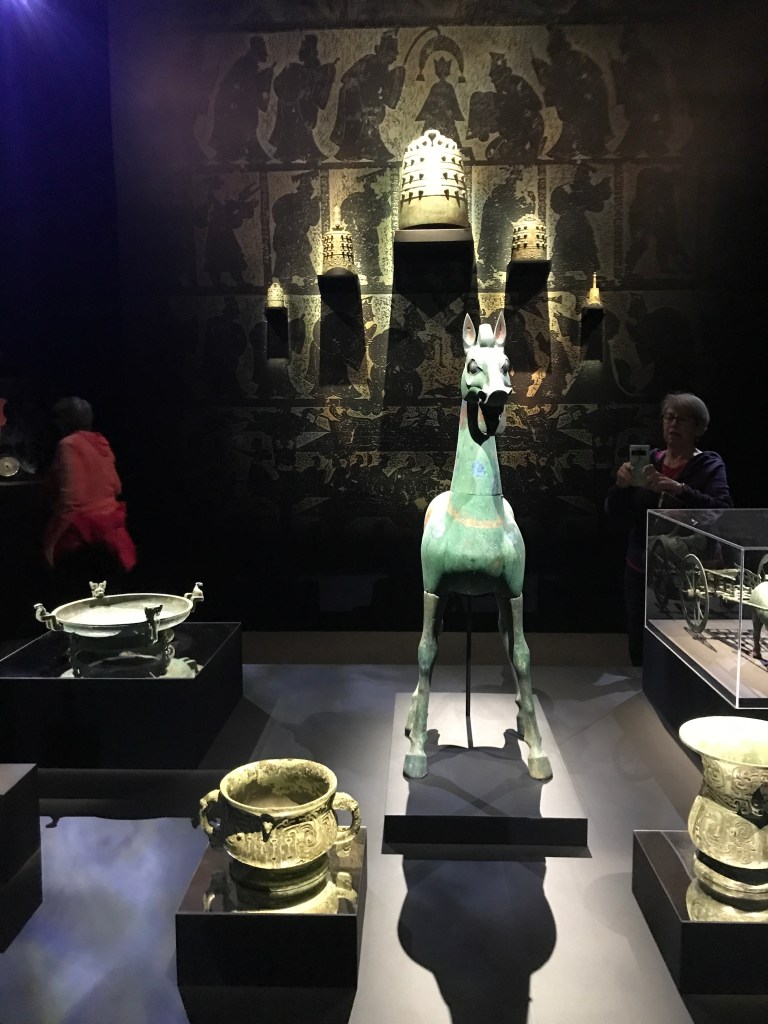
One morning I went to the Minneapolis Institute of Arts (MIA) to see an exhibit called “Eternal Offerings, Chinese Ritual Bronzes.” Yes, the objects created to honor ancestors or to communicate with the spiritual world were beautiful, but the atmosphere created —sound, murals on the walls, lighting— all added to the appreciation of the objects. I took my time moving through the rooms–allowed myself to relax into the beauty and the history, as well as the spiritual life of a culture not my own. I had not been to MIA for a long time and made a mental note to return soon.

The Foundation of Each Day

I began each day reading a meditation from You are the Beloved, Daily Meditations for Spiritual Living by Henri J. M. Nouwen, compiled and edited by Gabrielle Earnshaw. Perhaps this past week shimmered for me because each of those readings so resonated with me, beginning on Sunday, May 14 when Nouwen writes about prayer as a “careful attentiveness to the Presence of Love personified inviting us to an encounter.”

I felt as if I encountered God each day, wherever I was, whatever I was doing, and whomever I was with.

Contemplative prayer can be described as an imagining of God’s Son, Jesus, letting him enter fully into our consciousness so that he becomes the icon always present in the inner room of our heart.

May 15

…many words from the Scriptures can reshape the inner self. When I take the words that strike me during a service into the day and slowly repeat them while reading or working, more or less chewing on them, they create new life.

May 16

But when we believe that we are created in the image of God himself and come to realize that Christ came to let us reimagine this, then meditation and prayer can lead us to our true identity.

May 17

Listen to your heart…Praying is first and foremost listening to Jesus who dwells in the very depths of your heart.

May 18

Prayer allows us to lead into the center of our hearts not only those who love us but also those who hate us. This is possible only when we are willing to make our enemies part of ourselves and thus convert them first of all in our own hearts.

May 19

Just because prayer is the most precious expression of being human, it needs the constant support and protection of the community to grow and flower.

May 20

Here it is day three of the current week, and my days continue to flow, to glow, to shimmer, to open me to the movement and presence of God. Ah, how grateful I am.

An Invitation

What do you notice as you review your days? I would love to know.
Book Report: Reading Dilemmas

April 27, 2023

Recently, I received an email from the Willa Cather Foundation about a virtual study course for four of Cather’s books, My Antonia, A Lost Lady, The Professor’s House, and Death Comes to the Archbishop. Benjamin Taylor, whose biography of Cather will be published in November, 2023, will host the series. I love each of those books, and I am tempted to sign-up for the series and, of course, reread the books.

Here’s the dilemma: each book I re-read means I don’t read something on my TBR list. Each time I sink into a much loved book, I am not reading a new release that sounds really good. And in the meantime the attraction to books, new and old, and the ongoing growth of my TBR list continues.

This week I got an email from the New York Times with the headline, “12 Books You Should Be Reading Right Now.” RIGHT NOW! EEEK! I probably should not have read further, but I did and was pleased to see I have read one of the titles, Hello Beautiful by Ann Napolitano, and I am even more pleased to report I did not add any other titles to my TBR list. But how long will that restraint continue? Anne Bogel of Modern Mrs Darcy and the podcast “What Should I Read Next” will soon release her acclaimed Summer Reading Guide, and a plethora of other summer reading lists are just on the horizon.

If I ignore them, I may miss a book that would be a truly good match for me. Plus, I confess I like to be in the know about new books, an interest nurtured by working in an independent bookstore decades ago. I read a variety of book review sources, and bookstores are truly my happy place.

Perhaps I should think of this passion as a hobby, like knitting or bird-watching.

My TBR Lists

I keep elaborate book lists in my book journal. At the beginning of 2023, I transferred 57 unread titles from 2022. I have been working on that list steadily since then and am happy to report I have only 16 left on the list. I hasten to add I have not read, beginning to end, the remaining 41. I have at least started each of them, but only decided to complete a handful of them. If a book doesn’t appeal when I start reading it, I quickly discard it, usually returning it to the library or if I own it, adding it to the Little Free Library pile.

Of course, I have a 2023 TBR list, but I am trying to be more selective about what I add to that list. As of today, I have 59 titles on that list and have read or discarded 21 of those titles. Then there is my lists of acquired books and mystery series and the British Library Women Writer Series and books I want to re-read.

So far this year, by the way, I have read 45 books.

Current Thoughts About My Reading

I just finished reading Enchantment, Awakening Wonder in an Anxious Age by Katherine May, who wrote Wintering, The Power of Rest and Retreat in Difficult Times. In this new book, which I am so glad I read, she decides it is time to

reset my terrifying “to be read” pile to zero and allow myself the possibility of choosing new books for this age I’ve landed in.

p. 150

Is that what I need to do? Close my book journal, except, course, to record what I’ve read. Forget the TBR list entirely–not an easy prospect for someone who loves to make lists almost as much as she loves to read. Perhaps I need to just read what is on my shelves already—the great majority are books I have already read and can imagine re-reading.

Obviously, as problems go, this is not major, but as a devoted and voracious reader what to read next is an issue, as is how to approach reading time. At age 75 there is more sand in the bottom of the hour glass than in the top.

I am aware that I am more and more attracted to re-reading old favorites, and at the same time reading older books I missed along the way or reading the backlist of an author when I read a current title.

What I suspect is that I will continue to muddle along –reading as much as I can, picking and choosing based on unscientific criteria, breaking my own rules, and quite simply loving the journey.

An Invitation

As you age, are you noticing anything different about your reading routine or rules, reading desires or interests? I would love to know.
NOTES:

Willa Cather Foundation https://www.willacather.org

Anne Bogel blog and podcast https://modernmrsdarcy.com https://modernmrsdarcy.com/what-should-i-read-next/

Finding Purpose as We Age

April 4, 2023

“I have time now to try new things, but also the need to use this time well.”

” I feel called to do something, to create community.”

“How important it is to be intentional.”

“This time keeps evolving and one thing seems to lead to another.”

“How can I best use my energy?”

“I sometimes say to myself, ‘I get to do this,’ and that brings me joy.”

Last week I facilitated a Third Chapter conversation called “What Now? An Informal Conversation about Purpose and Meaning in the Elder Years.” Third Chapter activities and opportunities are designed for those 55+ and focus on ways to grow spiritually and to explore both the gifts and the challenges of these years. In recent months many have gathered to share insights and thoughts, as well as questions and concerns about a variety of topics, including downsizing and decluttering, choosing the next place to live, making plans about funerals and memorials, and nurturing intergenerational relationships. In preparation for this conversation, I realized I needed to create a purpose statement for myself; some guiding words as a way to sort and focus how I choose to use my energy and time and gifts. First, I browsed a number of books in my personal library about aging to see what resonated with me:

  • Pay attention to your inner compass.
  • What is asking for more attention?
  • This is a time to come home to the self, the person I was created to be.
  • Know yourself. Know your boundaries. Know your gifts. And then be generous.
  • Aging is the gift of continuing on.
  • Cultivate your power to inspire. Be a muse and a guiding spirit.

My next step was to think about what I love to do, what I am currently doing, and what I feel I do well. And I thought about how those things relate to my spirituality, my relationship to the Divine, and to my ongoing quest to understand who I am created to be. And then I thought about what is possible, given my age, my energy, my relationships and my community.

David Steindl-Rast’s words, “When you can’t go far, go deep,” have become a guiding mantra for me in recent years. In my case, what I choose is to go deep. And, to help others go deep as well. Ah, I could feel myself growing closer to defining my purpose, or if you prefer, “call,” or even “vocation,” although that word sounds more applicable to an earlier time of life.

No surprise, I then sat with my journal and tried on some words and phrases to see how they fit. I realized, as the words came together quickly and easily, that thoughts about this stage of my life have been percolating and evolving and emerging.

My purpose is to deepen awareness of the movement and presence of God in my own life and the lives of others.

I took a deep breath after writing those words, letting them flow through me, inviting them to float around me. Do they sound pompous? Pious? “Holier-that-Thou?” I thought about questions I ask my spiritual direction clients frequently. How are you noticing the movement of God in your life now? When have you experienced the presence of God? I ask myself these questions, too, all the time, whispering to myself, “May I feel the presence and be the presence.”

Yes, this is my purpose statement, I told myself, but how is it I intend to live this statement right now, right here.

  • By writing.
  • By facilitating groups.
  • By listening and asking questions.
  • By living a contemplative life.

Over time these specific ways to live my purpose may change, may evolve, and I imagine if I live many more years, my focus will be on the gifts of a contemplative life, but my overriding purpose statement feels as if it can live within me for the rest of my days.

I wrote my purpose statement and intentions on a small card that sits in front of me on my desk, and I practice saying it aloud, sharing it with others. My hope is to fully integrate the words into both actions and contemplation.

How grateful I am for the wisdom and insights shared during our Third Chapter conversations, and for the opportunity those times offer to learn from and to support one another during this time of our lives, for as Joan Chittister says, “The gift of these years is not merely being alive–it is the gift of becoming more fully alive than ever.”

An Invitation

What is the purpose and meaning of your life at this stage of life? Have you written a purpose statement? I would love to know.
NOTE:

An essay I wrote, “Actually, Your Children May Want (Some of) Your Stuff” recently appeared in Next Avenue, a digital publication produced by Twin Cities PBS(TPT), which is dedicated to covering issues that matter most as we age. Here’s the link: https://www.nextavenue.org/your-children-may-want-your-stuff/ I hope you will read and share with others.

Thistle Talk on Difficult Days: Dealing with Grief and Loss

May 24, 2022

First thing Monday morning my husband headed to church to confront the nasty thistles invading the gardens. This has been and continues to be an ongoing battle, and one that will not be won today or tomorrow, but I admire his determination and commitment.

Thistles appear in our lives in many ways, and lately, thistles seem to be conducting on assault.

Daily, it seems, I hear news of family and friends challenged by serious health or economic concerns or the death of a loved one. Sunday morning, even before I was dressed, my husband showed me a post on Facebook about someone in our extended family who is experiencing hard times. We discussed ways to respond, but at the same time we can not make the basic problem disappear.

That’s a big thistle.

Thistles are prickly. They sting and their roots are deep. They don’t give up easily the places they’ve claimed in the garden. They tend to take over everything that has been loving and intentionally planted, and sometimes it is hard to see the growth, other than the unwanted thistle.

No one chooses a thistle. No one says, “Do we have room in the garden for a thistle?” Nope, they assert themselves without our consent or design.

So what do we do with these thistles?

Here’s what I am learning as a woman in her mid seventies: I have to leave room in my day for grieving, for feeling loss and sadness and sometimes shock. That means being even more intentional about my morning meditation time, which more and more means holding those in my heart who need tender care.

But I also have to leave room in my day for responding to those with tangible needs. Sometimes that means an in-person response –a meal, a visit, an offer to….–or it may mean a more distanced response, writing a note, sending a check, making sure others who need to know do, in fact, know.

Dealing with thistles takes energy, and I sometimes feel the toll encountering so many thistles takes on my spirit. I know that being present to the pain of others means I must be aware of my own feelings and what I am able to do at this stage of my life.

Doris Grumbach in her memoir The Pleasure of Their Company (2000,) which she wrote as she approached her 80th birthday, used the term, “lessening.”

I prefer lessening as both instruction and slogan for my old age.

page 50.

What that suggests to me in my life is choosing carefully, thinking wisely about how I use my energy, for one thing I know for sure: There will be more thistles.

Now is a good and necessary time to ask myself how many commitments are reasonable? What is the call in my life now and how can I respond? How do I best live my essence in this third chapter of my life? How do I create spaciousness in my life to be with the expected unexpected?

Two Thoughts for Reflection

The times are urgent; let us slow down.

African Saying

May you embrace this day, not just as any old day, but as this day. Your day. Held in trust by you, in a singular place, called now.

Carrie Newcomer

May your thistles not overwhelm your garden.

An Invitation

How do you respond to your thistles? I would love to know?

Book Report: Morning Meditation Basket

As promised in my recent post (Tuesday, February 21, 2022, “Morning Meditation”), today’s Book Report shares my current morning meditation and devotion materials.

My collection of materials change as I finish reading a specific book, but also as the seasons in the church year change and as my personal needs change. However, two books always remain: the Bible and a journal. I only have a few pages left in my current journal and need to choose a replacement soon. That is on this week’s list.

Here are the other books in the basket:

  • Celtic Treasure, Daily Scriptures and Prayer by J. Philip Newell. (2005). This may be the third time I have returned to daily use of this book. Right now I am focusing on chapter five, “Songs of the Soul,” but other chapters include “Stories of Creation,” “Power and Justice,” and “Letters of Love.” Each day in the seven week cycle, begins with the same words, “We light a light in the name of the God who creates life, in the name of the Saviour who loves life, and in the name of the Spirit who is the fire of life.” After encouragement to “Be still and aware of God’s presence within and all around,” Newell retells a piece of scripture and offers a prayer. The brief and simple, but oh, so lovely daily meditation always ends in the same way.

The blessings of heaven,

the blessings of earth,

the blessings of sea and of sky.

On those we love this day

and on every human family

the gifts of heaven,

the gifts of earth,

the gifts of sea and of sky.

The illustrations from the Book of Kells plus children’s drawings are lovely, too.

This book provides a framework for my meditation practice right now. I begin with the opening prayer and readings and end with the closing words.

  • The Wild Land Within, Cultivating Wholeness through Spiritual Practice by Lisa Colon Delay (2021). I first learned about this book on Christine Valters Paintner’s website, Abbey of the Arts. https://abbeyofthearts.com The author describes the book as

an invitation to explore your own flyover country. This book serves as a companion to search the inner and unseen but very real territory of yourself. As we attend to this land within, our journey will involve some issues you may know little or nothing about. There are places of rough and even terrifying terrain. We will learn what makes spiritual growth unnecessarily difficult or extra confusing. To explore this land within means encountering climate and storms, negotiating treacherous topography, and finding creatures both wounded and wild. p. 2

Delay, who is a writer, teacher, and spiritual director and originally from Puerto Rico, broadens my white cultural context with references to Native American, Black, Latinx, and others and asks me to define what have been my main influences and how those influences have affected my spiritual growth.

In an early section Delay spends time reflecting on the four soils parable recorded in Matthew 13:1-23, Mark 4:1-20, and Luke 8:4-15. I have been re-reading those pieces of scripture now myself, and using the practice of lectio divina, I ask what meaning they have for me after walking on the earth for almost 74 years. Ongoing exploration.

I am moving slowly, deliberately through this book. My plan is to read a chapter every day, but I keep returning to what I read previous days, finding more openings for learning and reflection. Chapter Five, by the way, is called “Weather Fronts,” and that seems perfect for the winter storm watch we experienced as I wrote this.

One more thing: Delay has a podcast, Spark My Muse. I have not yet listened to it, but I will.

  • The Divine Dance, The Trinity and Your Transformation by Richard Rohr with Mike Morrell (2016) It seems I always have a Richard Rohr book in my meditation basket. If I think I am reading Delay’s book slowly, I am reading this one at an slower pace. I dip into this book, reading two or three pages, when I am willing to set aside the next task.

I was first attracted to this particular book because of the cover art, the famous icon of The Trinity created by Russian iconographer Andrei Rublev in the fifteenth century. I love that icon and the mystery it draws me towards. I was also attracted to the title of the book itself.

Whatever is going on in God is a flow, a radical relatedness, a perfect communion between Three–a circle dance of love.

And God is not just a dancer; God is the dance itself. p. 27

This book will be in my basket for a long time. Oh, I also have a publication from Richard Rohr’s Center for Action and Contemplation: Oneing, An Alternative Orthodoxy. Volume 9, No. 2 focuses on The Cosmic Egg.

  • Soul Therapy, The Art and Craft of Caring Conversations by Thomas Moore (2021) This is another book I dip into when the spirit moves me. Moore’s books, especially Care of the Soul, have been important landmarks in my spiritual growth. Directed towards “helpers,” including psychologists, social workers, ministers, spiritual directors and others, the book reminds me to continue my own soul work as I sit with others doing their own soul work.
  • The Making of an Old Soul, Aging as the Fulfillment of Life’s Promise by Carol Orsborn, Ph. D (2021) I have not yet cracked open the cover of this book, but I enjoy Orsborn’s blog https://carolorsborn.com and I really liked her earlier book The Spirituality of Age. More than likely, I will report on this book later.

My basket runneth over!!

An Invitation: What books or other materials do you turn to for reflection and soul work? I would love to know.

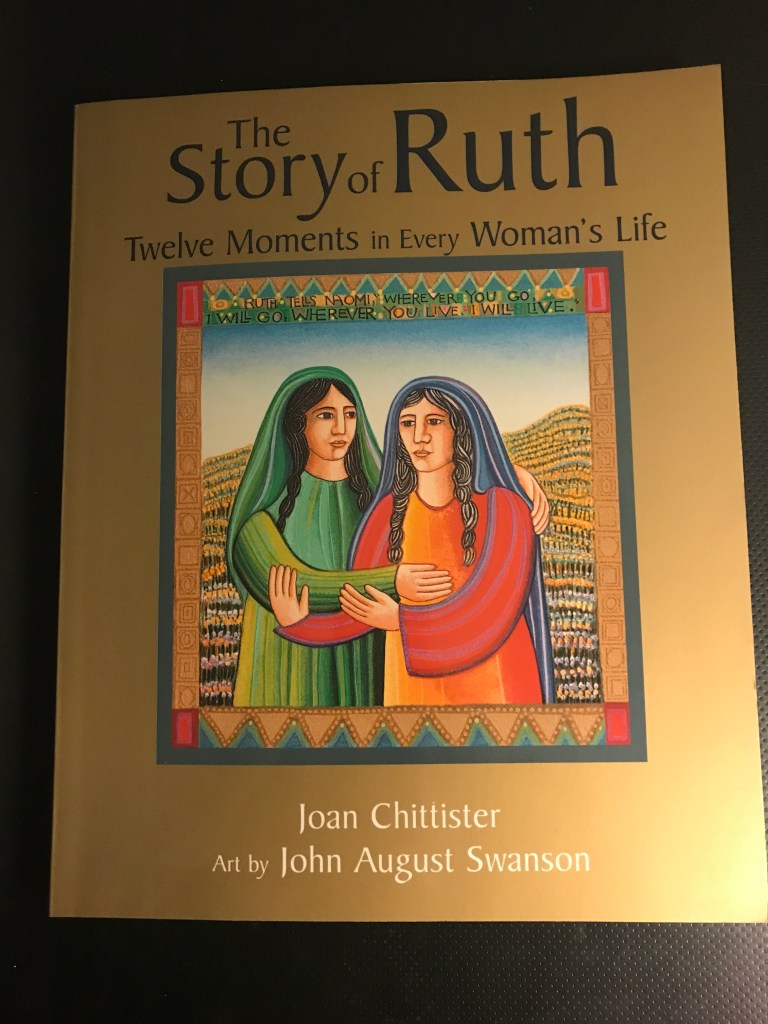
Book Report: The Story of Ruth by Joan Chittister

I’m always happy to spend time with Benedictine nun and theologian, Joan Chittister. I have heard her speak many times, often at the Chuautauqua Institution in New York, but other places as well, and, of course, I own and have read many of her books. I return to her The Gift of Years, Growing Older Gracefully (2008) frequently, but value many of her other titles, also, including Following the Path, The Search for a Life of Passion, Purpose, and Joy (2012); The Time is Now, A Call to Uncommon Courage (2019); The Art of Life, Monastic Wisdom for Every Day (2012); and Between the Dark and the Daylight, Embracing the Contradictions of Life (2015). Many years ago when I was preparing lectures for a weeklong retreat on spiritual friendship her book The Friendship of Women, A Spiritual Tradition (2000) was a guiding star.

The Story of Ruth, Twelve Moments in Every Woman’s Life is a gentle and wise, but compelling reflection of the Biblical story of Ruth and Naomi. Who isn’t familiar with the verses:

Where you go, I will go; where you lodge, I will lodge; your people will be my people, and your God my God. Where you die, I will die–there will I be buried. (Ruth 1: 16-17)

I’m not sure what drew me to this book at this stage of my life. I probably read some reference to it in someone’s blog, but what a welcome companion it has been recently. How good it is to be in the company of women as they meet the challenges, or as Chittister calls them, “moments” of their lives and how God calls us to become who we were created to be.

The book leads us through the Biblical story, highlighting the ways Naomi and Ruth, mother-in-law and daughter-in-law, meet the challenges following the deaths of their husbands. Chittister relates those challenges to the challenges all women face, especially as women continue to struggle with inequality and stereotypical limitations. Each chapter examines one of those challenges, including respect, recognition, invisibility, and empowerment.

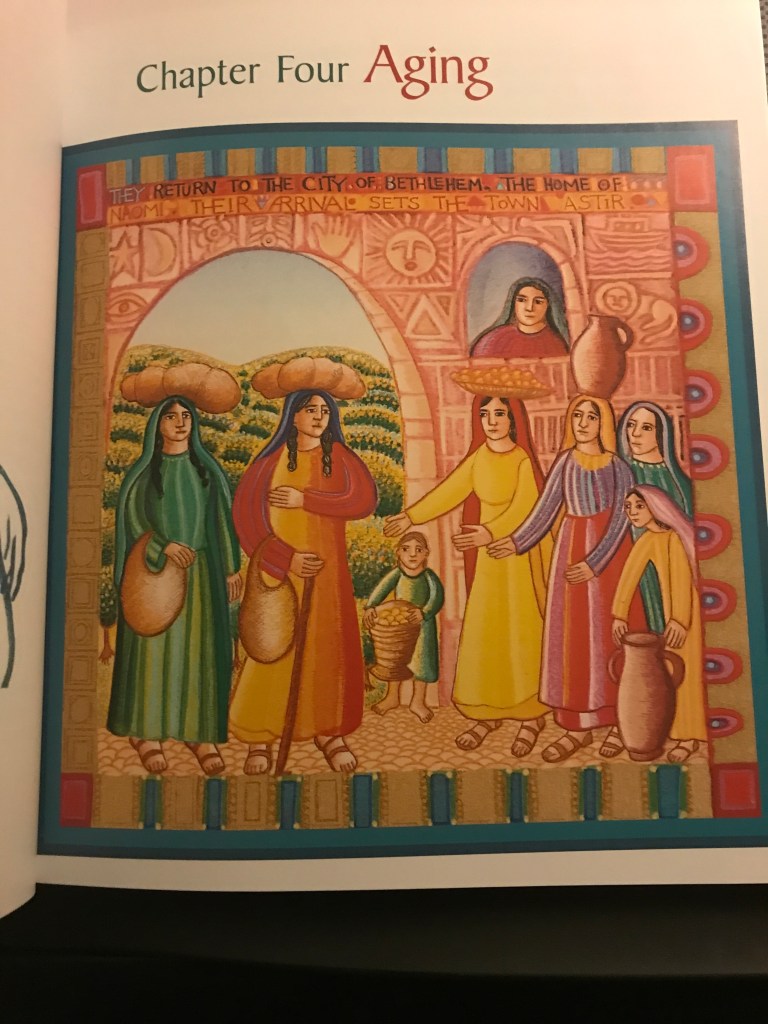
I suspect if I had read this book earlier in my life I would have been drawn to different chapters, but as a woman in her 70’s, I was most drawn to the chapters on loss, aging, and the last chapter, fulfillment. In the chapter on aging, Chittister writes:

There are lessons that come with age that come no other way. Age is a mirror of the knowledge of God. Age teaches that time is precious, that companionship is better than wealth, that sitting can be as much a spiritual discipline as running marathons, that thinking is superior doing, that learning is eternal, the things go to dust, that adult toys wear thin with time, that only what is within us–good music, fine reading, great art, thoughtful conversation, faith, and God–remains. When our mountain climbing days are over, the elderly know, these are the things that will chart the setting of our suns and walk us to our graves. All the doings will wash away; all the being will emerge. (p. 33)

And in the chapter on fulfillment:

What we do as women to bring ourselves to fullness makes the world around us a fuller place as well. (p. 87)

A wonderful bonus in the book is the art by John August Swanson.

An Invitation: What Biblical stories have new meaning for you as you age? I would love to know.

Books Added This Week to My TBR (To Be Read) List

  • The Heartbeat of Wounded Knee by David Treuer (2019). This actually is already on my list, but needs to move higher. Nonfiction
  • The Love Songs of W.E.B. DuBois by Honoree Fannone Jeffers (2021) Fiction
  • Cabin by the Lake Mystery Series by Linda Norlander: Death of an Editor; Death of a Starling; and Death of a Snow Ghost (May, 2022)

Bittersweet

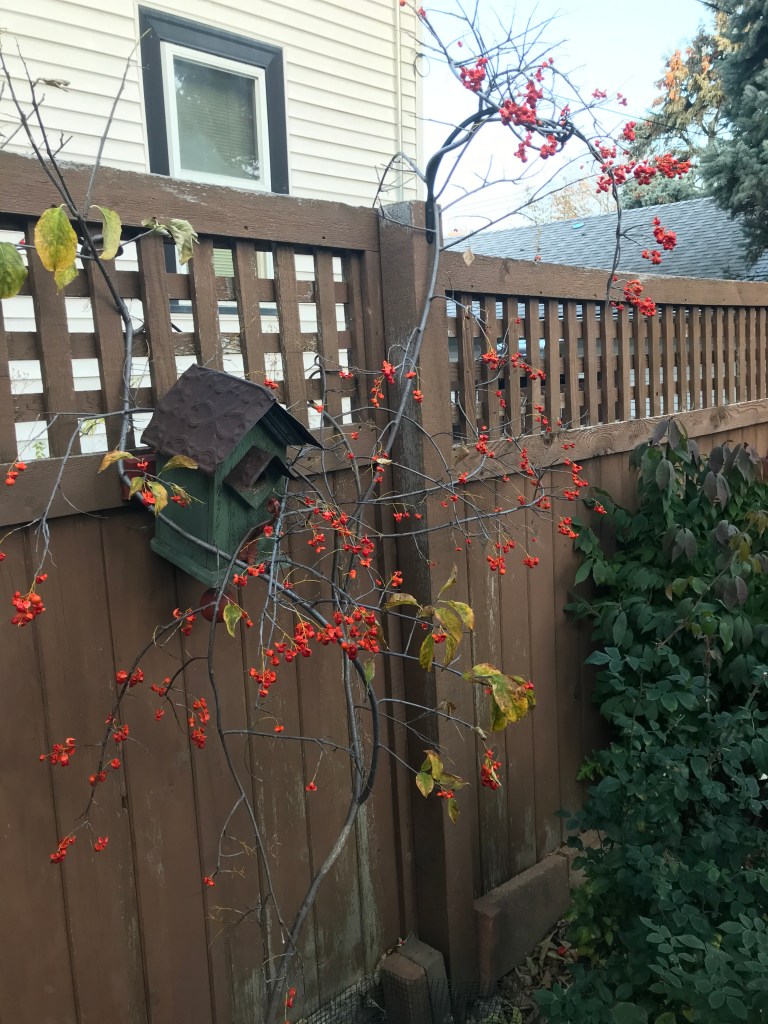
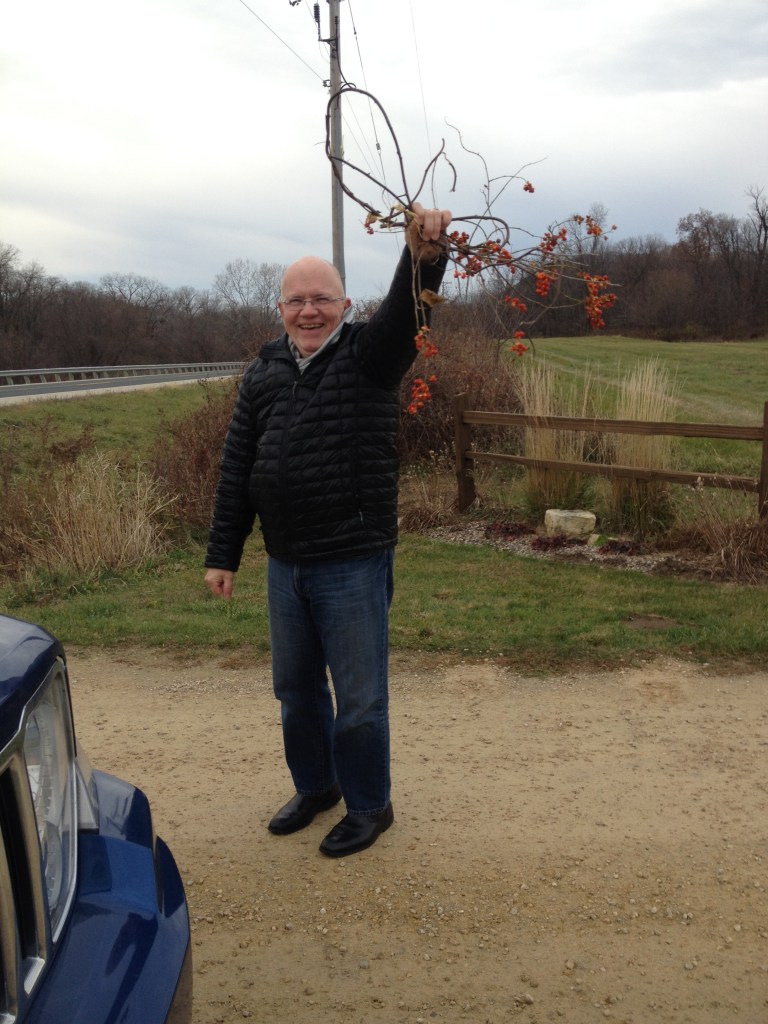
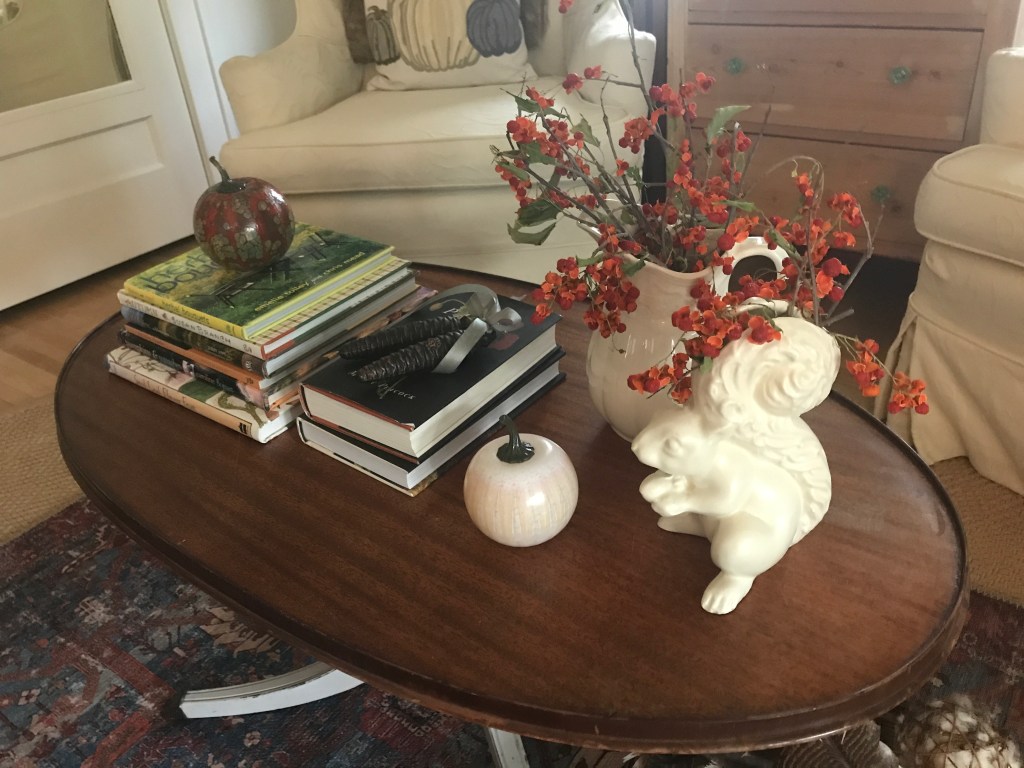
One of the treasures of the fall is the bittersweet plant with its clusters of bright orange pods. 
In the past when we roamed country roads at this time of the year, we have been on the look-out for bittersweet vines entwined around roadside vegetation. How triumphant we felt if we found some.

One year when we were still living at Sweetwater Farm a friend who lived at the base of a mountain in Pennsylvania sent me a large box full of bittersweet she had harvested on her property, and I swagged it along the white picket fence from the driveway to the backdoor. Such lavishness! Such luxury, especially since bittersweet is quite expensive to buy in nurseries or other stores.

Another year neighbors invited us to go with them to an area where bittersweet grew in abundance. The owner of the property had given permission to cut as much as we wanted. I suspect he thought we were all a bit crazy as we filled the back of the Jeep.

I no longer have to scrounge country roads hoping to find this fall treat, however, for a couple years ago my husband planted bittersweet in our backyard, and how delighted I was this year to cut the scraggly branches and fill containers with clusters of the orange berries.

I welcomed their beauty as one more signal of the transition from one season to another, but on the other hand how could I ignore the implication of the name itself? Bittersweet.

Bittersweet

Bitter Sweet

The mix of bitter and sweet.

Sometimes this stage of my life –elderhood– feels like a mix of bitter and sweet.

On the one hand I relish the freedom and flexibility of this age. For the most part I decide how to use my time and energy. But on the other hand I look back and see how time has passed so quickly. How is it possible that I am in my 70’s and our kids in their 40’s! And as for my energy–well, I still am able to do a lot in one day, but more and more I need to pay attention to how I use my energy.

I treasure all the gifts of my life, but at the same time I wonder how well I have lived those gifts–shared them, developed them, honored them. Some days I delight in the memories and stories of earlier years and other days I feel the gloom of regret. The echoes of what I should have done, could have done.

How grateful I am for the love woven throughout my life. So many cherished relationships, but now is also the time of loss. In this last year how many times have I tucked a vintage handkerchief into a sympathy card and written words I hope bring some comfort and connection?

Bitter. Sweet.

Joan Chittister refers to the bitter and the sweet of this stage of life as blessings and burdens. Both are present. Both are real. Both need to be acknowledged. Here’s what she has to say about the blessings and burdens of regret, for example, in her book The Gift of Years, Growing Older Gracefully.

The burden of regret is that, unless we come to understand the value of the choices we made in the past, we may fail to see the gifts they have brought us.

The blessing of regret is clear–it brings us, if we are willing to face it head on, to the point of being present to this new time of life in an entirely new way. It urges us on to continue becoming. (p. 5)

Bitter. Sweet.

Shadow and Light.

Or as our thirteen year old grandson Peter said when I asked him after his sister left for freshman year of college what it was like to be the only kid in the house, “The good news is I am the only kid. The bad news is I am the only kid.”

Bitter. Sweet.

Shadow and Light.

Blessing and Burden.

Yes.

An Invitation: How do you experience the presence of the bitter and the sweet in your life? I would love to know.