Home Away From Home: Door County, WI

April 18, 2023

We spent this past weekend in Door County, WI, a place that over the years has become a home away from home, even though we rarely stay at the same place. At breakfast one morning at our favorite place, The White Gull Inn in Fish Creek, we tried to remember all the times Door County has been our vacation, get-away destination. We listed at least 20 times, and I’m sure we missed a few.

For those of you who don’t know, Door County is a peninsula with Green Bay on one side and Lake Michigan on the other. Many have referred to it as the Cape Cod of the Midwest. That’s fine, but I don’t think it needs to be compared to anything–it is its own kind of time-out haven.

My husband planned the trip this time to celebrate my 75th birthday, which seems like a logical time in itself to reminisce and honor the past without neglecting the present or denying the realities of the future. We roamed favorite routes, as we always do, staying alert for sandhill cranes and turkeys, glimpses of spectacular water views, and the pink haze on the cherry trees, moving steadily towards blossom time. We noted what stores and restaurants were still alive and hopefully well, and kept saying, “Remember when…”

A kind of life review of our adult years.

Neither of us could remember how we learned about Door County or when we had first visited, but we obviously fell in love with it and kept returning–sometimes just the two of us, but also family times when our children were little. And later when our children were grown. The summer of 2010, when we lived in Madison, we rented a house for a month. Bruce came for the weekends, and our daughter and family came for a few days, too.
I spent my alone time reading and writing. (No surprise!)

When I was growing up and my family moved frequently, we always went to the same resort in northern Minnesota for a week or two before moving to our new home. That time served as transition time, easing us from one place to another. Whether my parents realized they were doing that or not, that week offered a touchstone, making what was changing and what was ahead and what was left behind not quite so daunting.

Door County has become a similar touchstone–a place where I mark the changes in our lives, not just as memories, precious though they are, but as a timeline of growth and development. I recall many leisurely dinners, lingering over what we came to think of as “daiquiri talk,” dreaming and imagining what our future might hold, could hold. In fact, Door County was where we realized that we wanted to retire back to St Paul and put a plan to do just that into motion.

This past weekend was quiet, for the spring/summer season has not yet begun, and I realized how much less I need “to do,” “to see,” “to visit,” in this stage of my life. How content we were to spend more time reading in our pretty room or on the balcony.

Note the cherry wallpaper! Cherries are a definite theme in Door County.

We have celebrated birthdays and anniversaries in Door County and have been there each season. We have each had alone time there plus been there with friends and family. I don’t need everything to be the same with each visit there, although I would be crushed if the White Gull Inn closed, but instead enjoy seeing the mix of old and new. We’ve been young there, and now we are old there. I feel the span of time there, and it is a good feeling.

Perhaps if we were still living in the home where we raised our family, a home where we lived for decades, I might prefer to vacation always in new places, to cultivate new places, new experiences, but instead, Door County has become the place of returning. The place where time is measured. It is the place where each time we leave, I think about when we might return to our home away from home.

One More Thing:

As we often do, when we are out roaming, we visit a library. I think if I were living in Door County, I would spend a good chunk of time in Egg Harbor’s library–with its water view and comfortable places to sit and read.
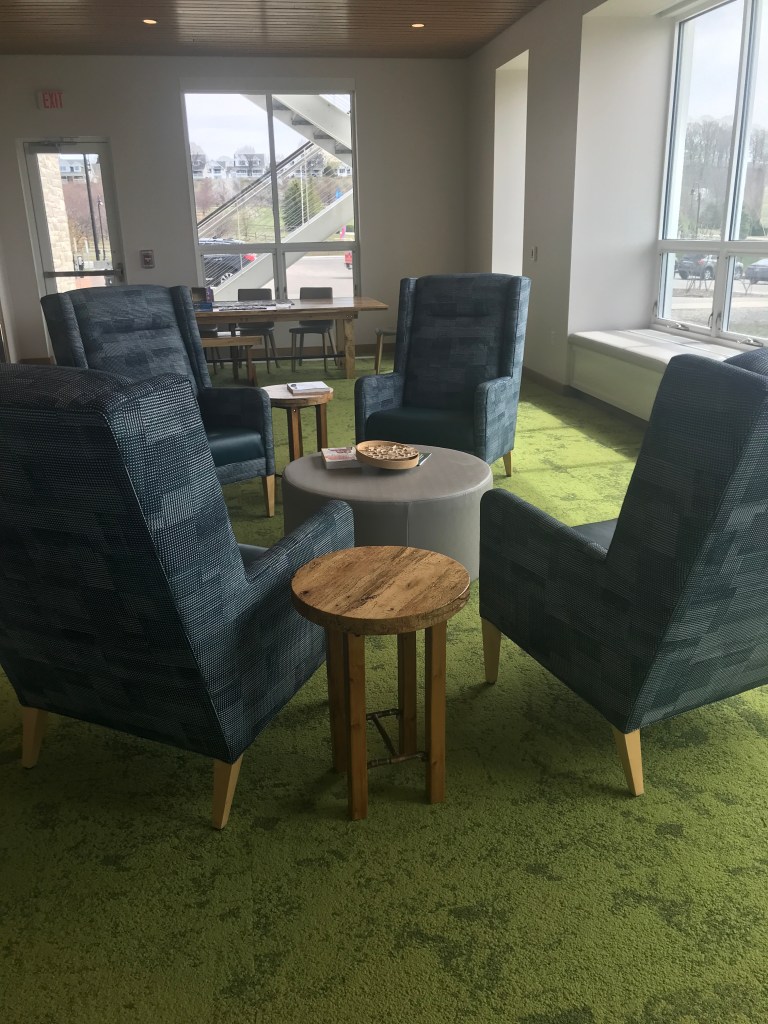
Not only were there books, but a charming seed library too.

An Invitation

Do you have a home away from home? A place that is an emotional tug? I would love to know.

Finding Purpose as We Age

April 4, 2023

“I have time now to try new things, but also the need to use this time well.”

” I feel called to do something, to create community.”

“How important it is to be intentional.”

“This time keeps evolving and one thing seems to lead to another.”

“How can I best use my energy?”

“I sometimes say to myself, ‘I get to do this,’ and that brings me joy.”

Last week I facilitated a Third Chapter conversation called “What Now? An Informal Conversation about Purpose and Meaning in the Elder Years.” Third Chapter activities and opportunities are designed for those 55+ and focus on ways to grow spiritually and to explore both the gifts and the challenges of these years. In recent months many have gathered to share insights and thoughts, as well as questions and concerns about a variety of topics, including downsizing and decluttering, choosing the next place to live, making plans about funerals and memorials, and nurturing intergenerational relationships. In preparation for this conversation, I realized I needed to create a purpose statement for myself; some guiding words as a way to sort and focus how I choose to use my energy and time and gifts. First, I browsed a number of books in my personal library about aging to see what resonated with me:

  • Pay attention to your inner compass.
  • What is asking for more attention?
  • This is a time to come home to the self, the person I was created to be.
  • Know yourself. Know your boundaries. Know your gifts. And then be generous.
  • Aging is the gift of continuing on.
  • Cultivate your power to inspire. Be a muse and a guiding spirit.

My next step was to think about what I love to do, what I am currently doing, and what I feel I do well. And I thought about how those things relate to my spirituality, my relationship to the Divine, and to my ongoing quest to understand who I am created to be. And then I thought about what is possible, given my age, my energy, my relationships and my community.

David Steindl-Rast’s words, “When you can’t go far, go deep,” have become a guiding mantra for me in recent years. In my case, what I choose is to go deep. And, to help others go deep as well. Ah, I could feel myself growing closer to defining my purpose, or if you prefer, “call,” or even “vocation,” although that word sounds more applicable to an earlier time of life.

No surprise, I then sat with my journal and tried on some words and phrases to see how they fit. I realized, as the words came together quickly and easily, that thoughts about this stage of my life have been percolating and evolving and emerging.

My purpose is to deepen awareness of the movement and presence of God in my own life and the lives of others.

I took a deep breath after writing those words, letting them flow through me, inviting them to float around me. Do they sound pompous? Pious? “Holier-that-Thou?” I thought about questions I ask my spiritual direction clients frequently. How are you noticing the movement of God in your life now? When have you experienced the presence of God? I ask myself these questions, too, all the time, whispering to myself, “May I feel the presence and be the presence.”

Yes, this is my purpose statement, I told myself, but how is it I intend to live this statement right now, right here.

  • By writing.
  • By facilitating groups.
  • By listening and asking questions.
  • By living a contemplative life.

Over time these specific ways to live my purpose may change, may evolve, and I imagine if I live many more years, my focus will be on the gifts of a contemplative life, but my overriding purpose statement feels as if it can live within me for the rest of my days.

I wrote my purpose statement and intentions on a small card that sits in front of me on my desk, and I practice saying it aloud, sharing it with others. My hope is to fully integrate the words into both actions and contemplation.

How grateful I am for the wisdom and insights shared during our Third Chapter conversations, and for the opportunity those times offer to learn from and to support one another during this time of our lives, for as Joan Chittister says, “The gift of these years is not merely being alive–it is the gift of becoming more fully alive than ever.”

An Invitation

What is the purpose and meaning of your life at this stage of life? Have you written a purpose statement? I would love to know.

NOTE:

An essay I wrote, “Actually, Your Children May Want (Some of) Your Stuff” recently appeared in Next Avenue, a digital publication produced by Twin Cities PBS(TPT), which is dedicated to covering issues that matter most as we age. Here’s the link: https://www.nextavenue.org/your-children-may-want-your-stuff/ I hope you will read and share with others.

The In-Between Time: Moving Towards Spring

March 28, 2023

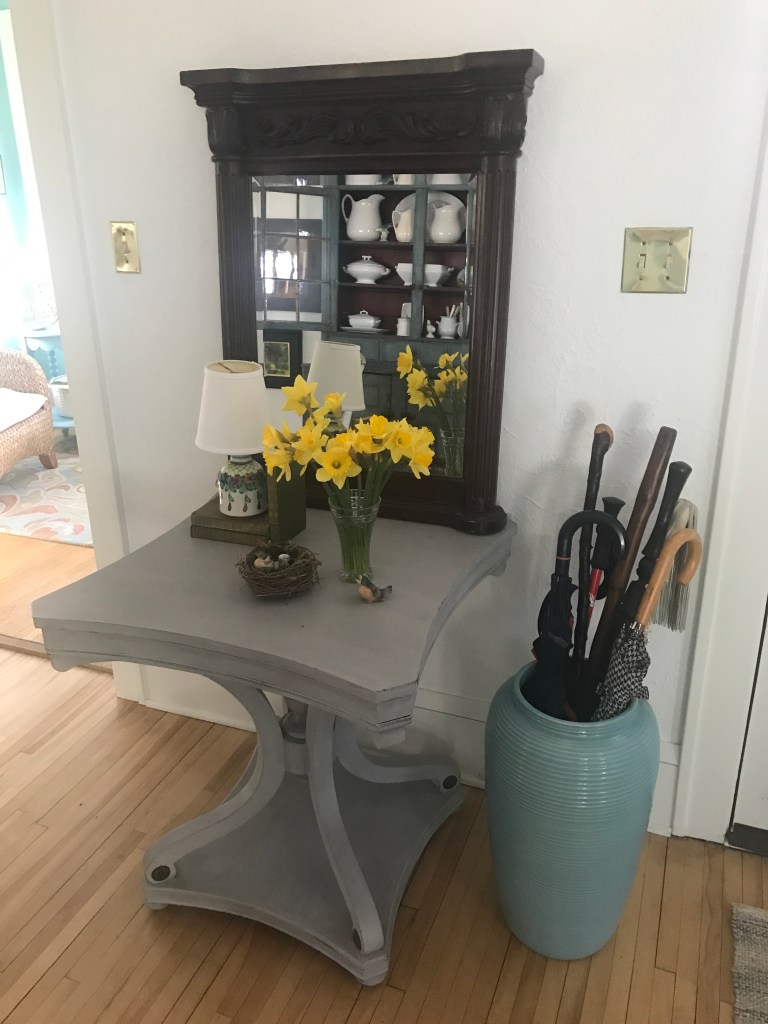
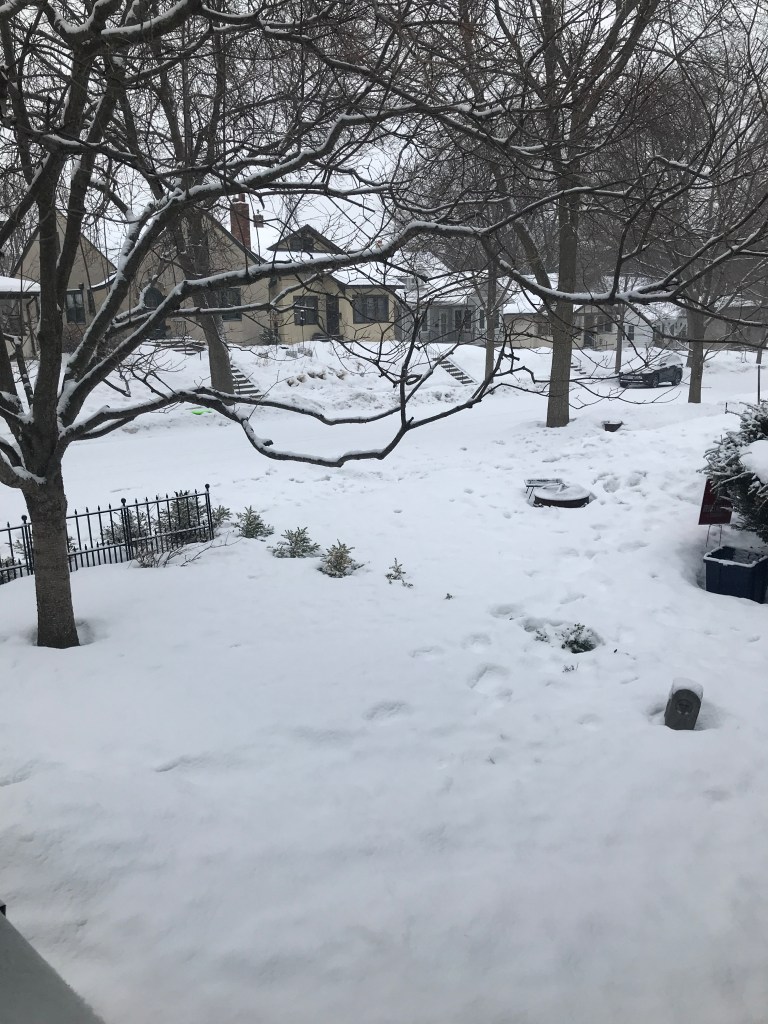
Just because it is officially spring doesn’t mean it is actually spring. Not with snow still much in evidence, but still the air feels different, lighter, fresher, brighter. There is no sign of green yet, but I bought the first bunches of daffodils. And I rearranged furniture.

This is transition time, and I often feel a bit itchy, restless in the in-between times. Often I channel that need for some kind of change by changing what I see, by doing more than the usual weekly hometending.

The snug transformed from this arrangement. (The pictures were taken in the fall — the pumpkins have long been packed away!)

To this:

One thing leads to another. Because I moved the desk into the snug from where it had been located next to the front door since we moved into this house, that meant changing the entry area, too. I moved the center table (top picture) to the desk wall and that left all sorts of space for this:

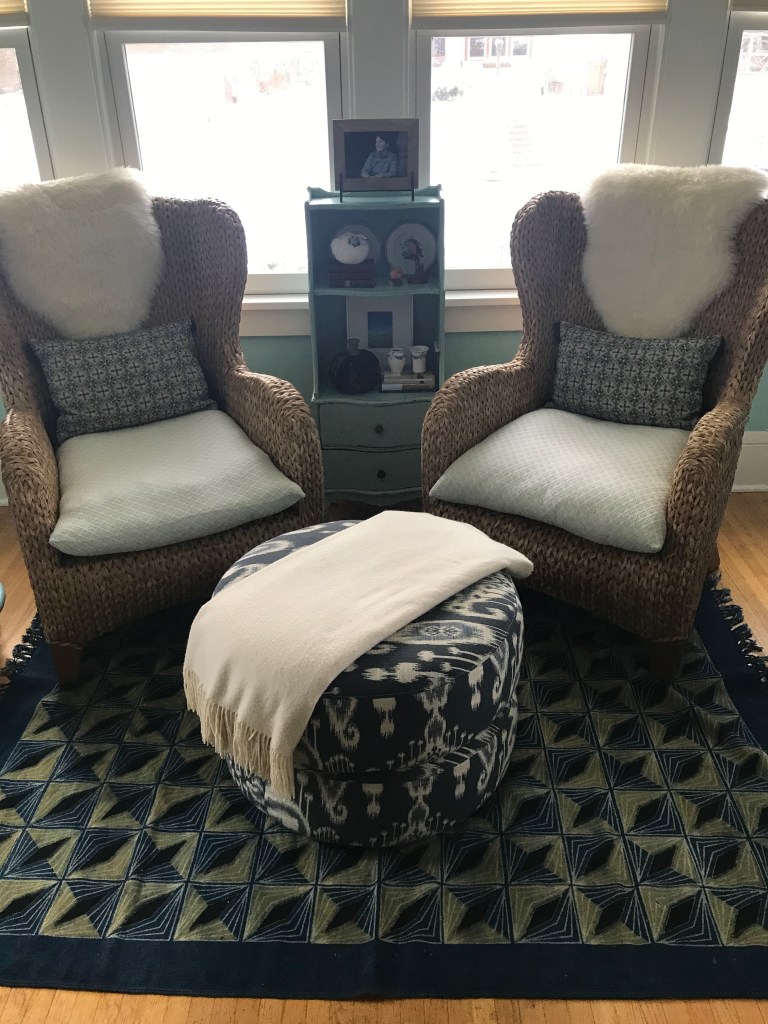
Voila! Another reading area and a place for one of the tables from the snug! The chair had been in the bedroom, by the way, which was changed from a heavier to a lighter look, too.

Of course, along the way, I washed floors and rearranged tabletops, shopping the house. Now instead of feeling winter cozy, the house has more breathing space and seems fresher, lighter, brighter, just like these days.

Winter Reflections

As I’ve written before in this blog, hometending is one of my spiritual practices and is a form of creativity for me. Doing this kind of re-envisoning space and our surroundings, however, is not just about changing what is visible, but for me it is also a bridge, a way to transition. As I shuffled piles of books and tweaked pillows and pictures, I thought about what changes I have noticed or deliberately made in the previous season. And what that might mean for the season just ahead. These domestic surges give me a chance to evaluate, to consider directions in my own life.

This particular winter season has been a challenging one, weather-wise, but I have noticed in myself more ability and willingness to adjust, to let go and to be with whatever is happening outside. How grateful I have been for our cozy, pleasant home, for the safety and comfort, which I realize my privilege allows me. At the same time I feel more ready for spring than I do most years. I am eager to walk without fear of slipping on the ice.

This winter has been a time to adjust to the death of a dear friend. More and more I am aware of how this time of my life, as I approach my 75th birthday, includes losses. An ongoing challenge is to accept the loss and at the same time open to the gifts of each day.

This winter has been a time when I have been more aware of how I choose to use my time. I cleared space in my week to create Writing Wednesdays, and that has become precious to me. I am working on an essay about walking the labyrinth and have submitted a couple shorter essays to online publications. In the coming months I hope at least part of Writing Wednesdays will be spent writing in our “Paris” garden.

This winter has been blessed with activities I love; for example, facilitating the church writing group as well as monthly Third Chapter Conversations, meeting with my spiritual directees, and writing my twice a week posts on this blog. As I move into spring, I know I want to continue in these endeavors, but I pray I will know when it is time to let go of any of them and that I do that with grace.

This winter has included some strife in our congregation, but what I see is that the community is stronger than one person and that we will continue to grow in ways we can’t even imagine yet.

This winter has included good health for Bruce and myself. A couple colds, true, but no trips to the doctor. No broken bones or concerns about mental or physical well-being. How grateful I am.

This winter has included my usual morning meditation routine, beginning with a short devotion in Henri Nourwen’s You Are the Beloved. My word of the year “beloved” resonates throughout the day.

Spring–Almost

Sunday my husband and I drove along the Wisconsin side of the Mississippi River, one of our favorite routes. How good to see so much open water and bare ground. Along with seeing eight eagles and two hawks, we think we saw a flock of tundra swans. Although there was not yet any sign of greening, the earth seemed ready for change, for movement. Should we call these days “Sprinter” or perhaps “Wing”? These are the in-between days when we can begin to envision what is to come, but at the same time recognize what we bring with us into the new season.

An Invitation

How are you living these in-between days? I would love to know.

Community as a Spiritual Practice

March 14, 2023

Most of Sunday was spent in community, my faith community.

There have been years in my life when I have existed without community. Oh, there were bits and pieces of community along the way–groups I have participated in, volunteer work I’ve done–but those all felt temporary and dependent upon specific people or an interest in a particular cause. They were valuable and important communities, but at a certain point I moved on, and there was a natural ending.

Around eight years ago, after moving back to Minnesota, my husband and I joined Gloria Dei Lutheran Church. As genetic Lutherans, it was not a hard decision. Plus, our daughter and family were already members there. Being in the same congregation with them is a real bonus, but our life within this community is so much more. It is a place of belonging, but it is also a place of growing and caring a nd showing up. Of grounding and stretching.

Sunday was such a good day of “encountering others” which is how Barbara Brown Taylor refers to the spiritual practice of community, and such good encounters the day offered — lots of hugs and one-on-one conversations–but even more than that, the reinforcement of intentions to encounte others through the various aspects of our proclaimed mission.

First, we gathered for adult forum, a weekly time of education for adults. This week poets, who are members or who are connected to our congregation in some way, read poems they had written or poems that had meaning for them. One woman read a poem she had written following the death of her beloved father. Another read her own poems, but also shared her experience of reading poetry to people in a memory care unit. One woman remarked how wonderful it is to be part of a congregation that values poetry. What a privilege it was to be in the presence of such creativity and depth.

Next, we attended worship. Each week we sing together, pray together, confess together. We open our hearts and our ears to words that encourage us to grow in our understandings. We receive the bread and the wine. We are reminded of the gifts we received at our baptism. We greet one another and we welcome new members. We lift up and hold one another. We restore and prepare for the challenges in our lives and the life of our community.

Then we ate together. Our Fellowship Hall filled with hungry members, and we enjoyed a potluck–for the first time since the pandemic. It was quite the feast! (I brought lemon pound cake, an Ina Garten recipe.) Was there enough food? Of course, there was, as fulfilled in the scriptures!

Eating and conversation was followed by our annual meeting. The meeting opened first with prayer and then a reading of our Land Acknowledgment Statement.

Gloria Dei Lutheran Church recognizes that its building stands on traditional Dakota land near Bdote Mini Sota, the confluence of the Minnesota and Mississippi rivers, the center of creation for Dakota people and also sacred to Ojibwa. The congregation acknowledges that this land was taken from Indigenous people by exploitation and violence. Given the deep significance of this sacred ground, as well as its painful history, the congregation recognizes its responsibility to use this land, its building and mission for the work of reconciliation and healing with Native people. The congregation repents of this injustice that continues to harm Native communities and pledges to work for justice, peace and the wellbeing of all creation.

The main purpose, of course, was to pass the budget for the year, which includes reparations to Native people. It passed unanimously. Even though our congregation is in the midst of an unexpected challenge, the feeling in the room was one of gratitude and a willingness to grow towards greater strength. We are open to the invitation, even if we can’t quite define what that invitation is yet.

I realize, of course, that there are others ways to experience and participate in community, and I also realize a commitment to community is not always easy and sometimes belonging to a community is synonymous with exclusion. Choose your community wisely, and keep it healthy through your active participation, in order for it to live beyond and after you.

I like what Debra K. Farmington says:

When we live with community we give ourselves the opportunity to learn about the faces of God that we would not ordinarily see. It is in the community that our image of God is tested and refined, where we are held accountable for what we believe and how we act, and ultimately where we meet God in the fullest possible way.

It is also within community that we find love and encouragement and support on the spiritual path. We find others who pray with us and for us, who celebrate our lives and ask us to celebrate theirs. In community we find laughter as well as tears; we find people to play with, as well as ones who can mourn with us when times are rough. It may even be that we have gifts and skills that would not manifest themselves outside of community. By failing to use them or by hoarding them for ourselves, we miss what God has so graciously given us.

Living Faith Day By Day, p. 154.

Like Barbara Brown Taylor, I am an introvert, and I know I need to balance community time with alone time. Monday was a day when I practiced solitude, but also a day when I tenderly held the awareness of the gifts of community. Sunday had not only been a full day, but a day of fullness.

An Invitation

Where have you experienced the gifts and the challenges of community? I would love to know.

Some Days Need More Than One Spiritual Practice

March 7, 2023

Some days feel like this.

And perhaps like this:

Even the Buddha can have an off day.

What I first need to remember is that it is March in Minnesota, and even those of us who love winter become weary of yet another forecast of more snow.

The next thing I need to remember is what helps when I feel a bit blue or antsy and itchy or bored (that happens rarely for me) or worried or disappointed or overwhelmed or….

I admit my first response often is chocolate. Or a grilled cheese sandwich is good, too.

Or if I have been working at my desk, especially if the writing is not going well or if I feel overwhelmed by the TO DO List, which seems to have too many DO NOW items than can physically be done NOW, I try to remember to close the laptop, walk down the garret stairs, and move into the snug to read my current library book. If I could, I would go for a walk, but oh yeah, there’s the snow and ice and a memory of falling and breaking an ankle. The snug will have to do.

Eventually, I remember what helps –even more than chocolate.

I take a deep cleansing breath. More than one. I close my eyes lightly, not tightly. That may seem like an unnecessary reminder, but notice how you feel when you close your eyes tightly. Your whole face squinches up, ogre-like, and instead of breathing, you hold your breath. So close your eyes lightly, not tightly. And then breathe in and out gently, finding your own rhythm.

Often that is enough. I breathe my way to relaxing into the next step or the loving outlook. Or feeling beloved myself.

But sometimes that isn’t enough, and I need to move to the next step in my spiritual practice repertoire: Sitting in silence.

For me that means moving to my Girlfriend Chair in the garret and allowing myself to be enfolded in silence. The majority of my garret time is quiet. I don’t work with music playing, and especially in the winter with the windows closed and the kids next door off to school, all is calm, all is still. I sit with my feet firmly planted on the floor, and I feel the silence enfold me. Sometimes it is so quiet, I can hear my inner voice, the voice I hope echoes the Divine. I listen. I really listen.

Often it is surprising what I hear.

“I love you. Now and forever.”

“Send your love to someone else.”

“Enough. You have enough. You are enough. Enough”

“Trust yourself. You are doing good work. Just stay on the path.”

“Really? You are willing to spend your precious time whining.”

Or if I’m really lucky, “Have another piece of chocolate.”

Sometimes I write in my journal during that silent time or read some sacred words. And prayer of one kind or another is sure to follow.

Whatever has caused my restlessness or anxiety hasn’t disappeared because I have turned to one (or two or three) of my spiritual practices, but I am more centered. I am more present.


We realize that we are in the center, and that from there all that is and all that takes place can be seen and understood as part of the mystery of God’s life with us…’All these other things,’ which so occupied and preoccupied us, now come as gifts or challenges that strengthen and deepen the new life that we have discovered.

Henri Nouwen

I am my silence. I am not the busyness of my thoughts or the daily rhythm of my actions. I am not the stuff that constitutes my world. I am not my talk. I am not my actions. I am my silence. I am the consciousness that perceives all these things. When I go to my consciousness, to that great pool of silence that observes the intricacies of my life, I am aware that I am me. I take a little time each day to sit in silence so that I can move outward in balance into the great clamour of living.

Richard Wagamese, Embers, One Ojibway’s Meditations

An Invitation

What spiritual practices help you return to the center? I would love to know.

Settling Into Lent

February 27, 2023

Ash Wednesday was almost a week ago and yet, I still don’t feel settled into Lent.

I haven’t chosen a specific book of devotions for my morning meditation time, although I have been re-reading the Lenten section in my favorite Circle of Grace, A Book of Blessings by Jan Richardson.

If you would enter
into the wilderness,
do not begin
without a blessing.

Do not leave
without hearing
who you are:
Beloved,
named by the One
who has traveled this path
before you.


I have not decided on a specific Lenten practice. Earlier this year I decided I would plan my future memorial service during this time, and I will do that, but that doesn’t feel like enough. (What is enough?, you ask. Good question.)

In years past I have listened for a word of the day, filling in a daily chart. https://wordpress.com/post/livingonlifeslabyrinth.com/681 Other years I have written and sent one letter or note every day. And then there were the years when I focused on my extensive collection of spirituality and theology books, choosing at least one to discard each day. Each year my collection deceased by at least 100 books. That practice has made me more aware and disciplined about the books I decide to keep and to acquire.

But what about this year? Richardson’s words guide me:

Let us say
this blessing started
to shed all
it did not need,...

What do I no longer need?

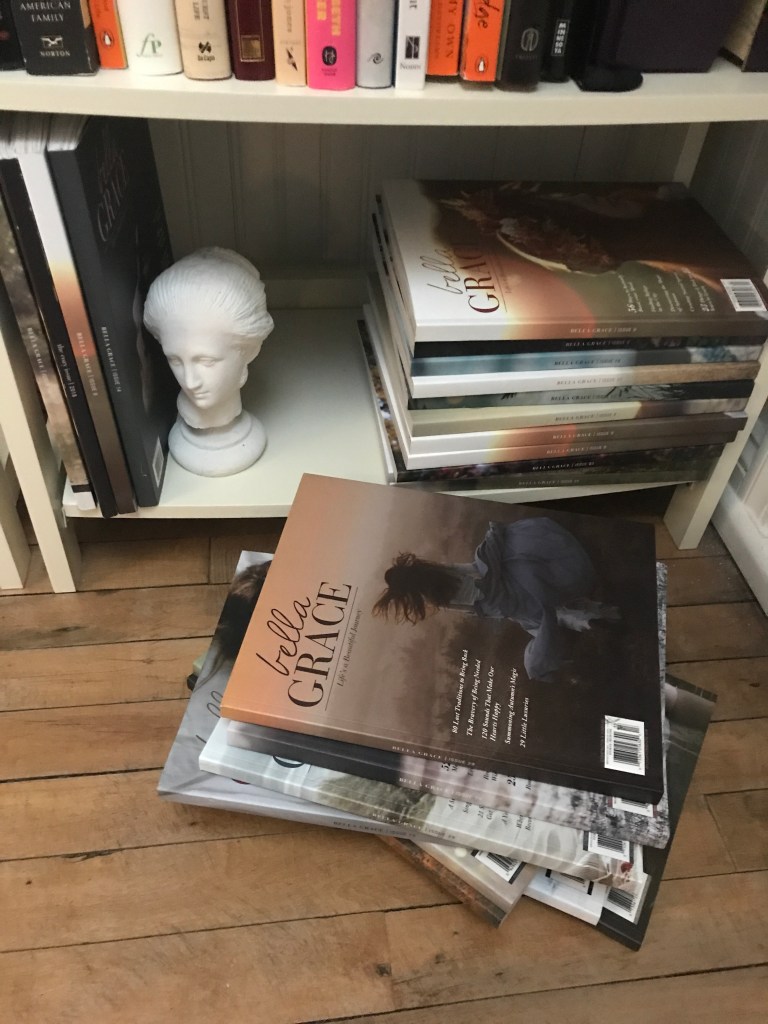
A new issue of the quarterly publication, Bella Grace arrived in the mail, and I added it to the stack of previous issues I have barely glanced at. When I first started subscribing to it, I set aside time to immerse myself in the lush photography, the inspirational essays, and the suggestions for appreciating the beauty of everyday life. I even submitted my own essays to the publication and was thrilled when several were published. One, “The Comfort of Shawls” was even reprinted in one of their other publications, The Cozy Issue, and another, “The Magic of Reading in Bed” was published in the Bella Grace blog.

Although I hav continued to submit essays, such as “Porch Envy” or “Window Wishes,” none have been accepted the last couple years. Disappointing, of course, but I have come to realize and accept that as a near 75 year old woman, I am no longer their audience. The magazine is geared to much younger women. Women during the child-raising years. Women managing careers and family life. Women discovering who they are.

I’m still discovering who I am, but now in a much later decade. Not only is Bella Grace no longer a good fit for my writing, but Bella Grace is not a good fit for me, and yet, I have stacks of past issues on my bookshelves. Ok, Lenten Lady, it is time to clear the space. But first, I decide to page through each one, saving some photos and quotations I may want to use as writing prompts for the church writing group I facilitate.

Good. I like the idea of having one more almost empty book shelf, although I am keeping the issues in which my essays were included, but this activity, this decision is not only about letting go, but also about acceptance and awareness. Accepting who I am now and awareness of who I want and need to be now. A Lenten practice.

It's true that
you may need
to do some crumbling,
yes.
That some things
you have protected
may want to be
laid bare,
yes. 
That you will be asked
to let go
and let go,
yes.

But listen.
This is what
a desert is for.

The true spiritual practice for me this year, perhaps every year I am blessed to have, is to pay more attention to how I am to love and live right now. Right now, right here. What does each day call me to do, to be? What bookshelves in my inner life need to be emptied and in what ways am I holding that sacred space? How do I carry this sacred season of Lent with me? And how do I notice the movement of God?

How does being an elder become my spiritual practice?

I am my silence. I am not the busyness of my thoughts or the daily rhythm of my actions. I am not the stuff that constitutes my world. I am not my talk. I am not my actions. I am my silence. I am the consciousness that perceives all these things. When I go to my consciousness, to that great pool of silence that observes the intricacies of my life, I am aware that I am me. I take a little time each day to sit in silences so that I can move outward in balance into the great clamour of living.

Embers, One Ojibway’s Meditations by Richard Wagamese

As Jan Richardson would say, “this is where the breath begins,” and perhaps, this is where my Lenten practice emerges.

An Invitation

What spiritual practices are emerging in your life right now? I would love to know.

Snow Days and Found Time

February 21, 2023

The prediction is that this part of the world will get 20-30 inches of snow this week. Fresh snow everyday beginning Monday and continue snowing through Thursday. I chuckled Monday morning when I looked at the hourly forecast and read “Snow stopping in 39 minutes, starting again in 7 minutes.” I thought about setting the timer on my phone.

When I was decades younger, this kind of weather meant rearranging schedules and planned activities and figuring out how to do what must be done. Would school be cancelled? What would be the easiest, safest way to get to work? Do we have enough milk? Or in more recent years, I called my Dad to make sure he was ok and wouldn’t be venturing out.

During the years of raising children and working full-time, the pre-retirement years, predictions of debilitating weather certainly raised my anxiety levels.

Now, however, as a privileged woman in her mid70’s, my immediate concerns are far less. Yes, I have a couple dates with friends this week, but we will put a new date on the calendar. And appointments with clients can either be reset or we can meet on zoom. If my church writing group can’t meet this week, I will email them some snow day writing prompts.

I so hope we can get to one of the Ash Wednesday services, but if that isn’t possible I will create my own contemplative time, minus the ashes, and will enter the new season in that way. It won’t be the same, but it will be whatever it is.

In the past I have written about the concept of “found time,” the space that is created when something is cancelled or changed. Instead of feeling frustrated by the necessary and sometimes inconvenient changes, I decided years ago to breathe into that space. Oh, surprise, I have a bit more time to read or write or bake cookies or do nothing at all. And that is how snow days can feel. (Easy for me to say–my husband is the one who does all the shoveling.)

Lately, I have also realized that I can create more “found time” in my life not just on snow days, but on any day, if I am willing to let go of worries and concerns, of a need to control, and to the way I think things should be or the roles I have had in the past.

Christine Valters Paintner is offering a Lent retreat called “A Different Kind of Fast” https://abbeyofthearts.com/calendar/a-different-kind-of-fast-lent-retreat-2023/ in which she suggests fasting from what gets in the way of living fully.

  • Multitasking and inattention
  • Anxiety
  • Speed and rushing
  • Strength and holding it all together
  • Planning and deadlines
  • Certainty

If you fasted from any of the items on this list, what would your day look like? How would you feel? In what ways might you become more aware of the movement of God in your life?

Instead of clinging to what feels necessary and familiar, dwelling in the lost, can you rejoice in the found?

How about envisioning this found time as a kind of Sabbath?

God is not found in the soul by adding anything but by subtracting.

Meister Eckhart

More God is the only thing on my list…When you live in God, your day begins when you lose yourself long enough for God to find you, and when God finds you, to lose yourself again in praise.

Barbara Brown Taylor

An Invitation

What does “found time” look like for you? I would love to know.

It’s Your Body and Your Funeral

January 30, 2023

Looking for something to do on a cold January day?

How about planning your funeral/memorial service?

Does that sound like fun? Well, maybe not, but let’s face it, we are each going to die, and we will each leave loved ones who will be faced with many decisions during an emotional time. Wouldn’t it be a helpful, even a gift, if we provided some guidance ahead of time?

Recently, the pastors at my church offered a session about funerals/memorial services–their purpose and how they fit into our faith tradition. So informative and uplifting. Then the following week, as part of our church’s programming for those of us in the Third Chapter of life (ages 55+), I hosted an informal conversation about funeral planning. This was an opportunity to explore and open to ideas about this key event in our lives. I invited the group to not only listen to others, but also to pay attention to what they were feeling, for this topic forces us to face our own mortality.

The conversation was lively and inspiring and helpful, and like an earlier Third Chapter conversation about downsizing, planning my memorial service is a process. I may be sure of some things, like the fact that I want my service to be at my church, but other aspects, like which pieces of scripture I want read may still be in flux.

After some time of silence and an opening meditation, I invited everyone to share a hymn they would like sung at their service. I shared my two choices: “Beautiful Savior” because my parents loved that hymn (I can still hear my father singing the tenor line.) and also because it is almost the “national anthem” of the college I attended, St Olaf College. It touches a very deep place inside me. The other hymn is “Mourning Has Broken” made famous by Cat Stevens. You don’t suppose he would come sing it at my service, do you?”

Morning has broken like the first morning;
blackbird has spoken, like the first bird.
Praise for the singing! Praise for the morning! 
Praise for them springing fresh from the Word.

Sweet the rain's new fall, sunlit from heaven,
like the first dew-fall on the first grass.
Praise for the sweetness of the wet garden,
sprung in completeness where God's feet pass.

Mine is the sunlight! Mine is the morning,
born of the one light Eden saw play!
Praise with elation, praise every morning,
God's recreation of the new day!


So many wonderful possibilities were offered by others in the group, however. Hymns I have loved and love to sing. Choices!

What was more important than picking out hymns to sing during the service, however, was sharing thoughts about other key questions:

  • What is the purpose of planning your funeral now?
  • How does it feel to do this?
  • What are you learning about what you hold to be true, about your faith, your fears, your hopes as you undertake this process?
  • What experiences have you had planning a funeral or attending funerals and how does that inform the kind of service you would like to have?
  • What’s important to you? What “not so much”?
  • Have you had conversations with your loved ones about your desires? How has that gone?
  • What’s the balance between your desires and the needs of your loved ones?
  • How is the service a gift for those who attend?

I’m sorry you weren’t there to hear all that was shared, but you can have this same conversation with your peers, your family, your faith community, and I encourage you to do so.

Funeral Planning as a Spiritual Practice

I encouraged those who attended to approach this process not just as something to cross off your list (“Good, Now I’ve planned my funeral.), but instead to think of this as a spiritual practice. In what ways do you experience the movement of God in the planning and considering, and also in what ways do you express the movement of God in your life through the service you plan?

My husband and I have done some planning. For example, we have decided on green cremation and have paid the funeral home in advance. Even though I have thought about other aspects of the service, such as meaningful scripture and that I want time in the service for silence using the Psalm line, “Be still and know that I am God,” I have not yet written it all down and then handed the completed form over to the church office where it will be kept until it is time to use it.

I have decided doing that will be my Lenten spiritual practice. Stay tuned.

One More Thought

I used to think I didn’t care about my funeral. When the subject came up, I generally laughed and reminded people, “I won’t be there. The rest of you can organize whatever helps you –sitting in a mournful circle or telling edited stories about me or partying, if you like.” But I am realizing that the occasion will bring together people who might not otherwise come into conversation and that it may be a ministry to them in their grieving. My service can be a message of love and God willing, an occasion of grace.

A Faithful Farewell, Living Your Last Chapter With Love by Marilyn Chandler McIntyre

An Invitation

What are your thoughts about planning your funeral/memorial service? I would love to know.

The Presence

January 24, 2023

The Presence by A.E. Borthwick

Recently, I moved this print from underneath the guest bed to the garret where I can see it from my desk. In previous homes it hung above a fireplace, but I never found the right spot for it in this house. I’ve missed it, however, and finally, with minor rearranging, “The Presence” is now a presence once again.

This print by Scottish artist, A.E. Borthwick, has been a presence in my family since I was four or five years old.

My father, who had a lovely singing voice, was the liturgist in our church in Albert Lea, Minnesota, and when we moved away, the church gave him this framed print. At one time there was a letter for my father taped to the back of the print and oh, how I wish I still had that. However, I am grateful the print has survived the many moves.

My parents were master of resettlement and within a couple days of each move to a new location, boxes were unpacked and our home was organized and comfortable. That included hanging pictures, and “The Presence” always had a prominent location, usually in the living room.

Many years later when I was grown and had children, my parents asked my sister, brother, and me which of their possessions we would want someday, and I said the only thing I really wanted was that print. It symbolized home for me. Soon after that conversation, my parents gave me the print, instead of waiting until they downsized.

History of “The Presence”

A. E. Borthwick (1871-1955) was a painter, stained glass artist, and printmaker born in Scarborough, Yorkshire. He studied at the Edinborough College of Art and also in Antwerp and Paris.

He painted “The Presence,” which is set in St Mary’s Scottish Episcopal Cathedral in Edinburgh, in 1910. Before WWI began he sent the painting to Munich where prints were going to be made. When war broke out the painting was sold to an American company and “lost.” It was rediscovered when it emerged to illustrate a newspaper article answering the question, “Is Religion Dead?” The answer given was “No, because of Christ’s abiding presence in his Church.”

At the end of the war an Act of Congress was passed that meant the painting would be returned to Scotland and during WWII it was preserved in the vaults of the Royal Scottish Academy. It had been presented to St Mary’s Cathedral in 1944, and there it remains.

https://www.youtube.com/watch?v=rm5G351clFk

The Changing Meaning of the Painting in My Life

The painting depicts a scene in the cathedral. Communion is being administered at the High Altar, and at the back of the cathedral Christ extends his hand toward a kneeling penitent. Christ is shown in radiant light. The light is so bright in the shadows of the cathedral that one needs to look closely to see the figure.

For most of my life I didn’t think much about the meaning of the painting, and I certainly didn’t relate to the setting. The churches my family attended were far more simple and humble than this massive cathedral. Nor did I think about what would make a person hide in a corner in grief or pain or in need of acceptance or forgiveness.

No, the presence of the painting in our homes meant we were home once more.

When I was training as a spiritual director, however, the word “presence” became more significant for me. During that two-year training, I was exposed to a variety of spiritual practices, including centering prayer. Part of that practice is to use a centering word that in the words of Thomas Keating, “expresses your intention of opening and surrendering to God…Gently place it in your awareness each time you recognize you are thinking about some other thought.” (Open Mind, Open Heart, The Contemplative Dimension of the Gospel by Thomas Keating, p. 36). I tested a number of words, such as “light,” “open,” “heart,” and finally, much like receiving a word for the year, I received “presence.” I knew without a doubt that was the word.

Over time the word itself transformed in my mind into the painting itself. I felt the image, the meaning of the painting itself.

My Mantra as a Spiritual Practice

Eventually, the one word, “presence,” expanded into a mantra: “May I feel the Presence and may I be the Presence.”

I whisper these words to myself, for example,

  • When I begin or end my morning meditation time,
  • Before I meet with spiritual direction client,
  • As I begin to write a post for this blog or work on another piece of writing,
  • When I plan a new session for the church writing group I facilitate.

I find myself saying these words to myself as I move through my day, for I never know when I will need the guidance and comfort of the Presence nor do I know when I will have the opportunity to be the Presence for someone else. That can happen as easily at the grocery store or library as it does in one on one conversations at church.

The mantra is a form of prayer.

And now once again I have the physical presence of “The Presence” to support and remind me that I am beloved and I am to reflect that belovedness in the world.

An Invitation

Is there a word or phrase, an image or object that reminds you of the presence of God in your life? I would love to know.

Book Report: Books by Brian D. McLaren

January 19, 2023

I begin most days sitting in my Girlfriend Chair in the garret, meditating, praying, writing in my journal, and reading a book that will stretch me into deeper spiritual growth.

Currently, I am reading Faith After Doubt, Why Your Beliefs Stopped Working and What To Do About It by Brian D. McLaren. Each time I read one of his books or listen to his podcast, (Learning How to See with Brian McLaren, https://cac.org/podcast/learning-how-to-see/) I can almost feel my limbs being pulled, my brain enlarging, and my heart expanding. Easy reads? Not exactly, although McLaren is such a good writer, making the experience of confronting tough issues and below the surface thoughts, a pleasure. Not only does McLaren become a real person with his own challenges, but he invites the reader into the conversation. In fact, each chapter includes questions for reflection and action.

McLaren was a conservative evangelical pastor who struggled with issues of belief versus faith for many years. Eventually, he left his formal role as a congregational pastor to write (over 15 books so far) and to live his faith as an activist and public theologian. He is on the faculty of the Living School at the Center of Action and Contemplation founded by Richard Rohr.

The first book I read by McLaren was The Great Spiritual Migration, How the World’s Largest Religion is Seeking a Better Way to be Christian (2016). I don’t know how I became aware of him–perhaps through Diana Butler Bass whose work is also important in my spiritual development. Once I had read The Great Spiritual Migration, I knew I needed to read some of his earlier books.

I read A New Kind of Christianity, Ten Questions That Are Transforming the Faith (2010). Those ten questions continue to be relevant.

  • What is the overarching story line of the Bible?
  • How should the Bible be understood?
  • Is God violent?
  • Who is Jesus and why is he important?
  • What is the Gospel?
  • What do we do about the church?
  • Can we find a way to address human sexuality without fighting about it?
  • Can we find a better way of viewing the future?
  • How should followers of Jesus relate to people of other religions?
  • How can we translate our questions into answers?

You may think you know the answers to those questions (and maybe you do), but I invite you to read McLaren’s explorations. You will learn something new and maybe feel something new.

Next I read We Make the Road by Walking, A Year-Long Quest for Spiritual Formation, Reorientation, and Activation (2014). Books with “spiritual formation” in the title are always a reason for me to look beyond the cover. Even though the book follows the liturgical year, I didn’t wait to read season-designated sections. I started and just kept reading, but with Lent starting soon, I may re-read those chapters under the heading “Alive in a Global Uprising.” As I look at the table of contents I note several chapters I have marked with a star: “Women on the Edge,” “Your Secret Life,”, “Moving with the Spirit,” “Spirit of Love: Loving God,” and “Spirit of Love: Loving Self.” Perhaps I need to re-read those chapters and see what so appealed to me.

I still have two unread books on my shelf by McLaren. The first is Why Did Jesus, Moses, the Buddha, and Mohammed Cross the Road, Christian Identity in a Multi-Faith World ((2012). I’ll get to it, I promise, for I agree with McLaren’s premise that we need a new faith alternative built on “benevolence and solidarity rather than rivalry and hostility.”

Before reading that book, however, and as soon as I finish Faith After Doubt, I will read his latest book, Do I Stay Christian, A Guide for the Doubters, the Disappointed, and the Disillusioned (2022). Several people I know have read this book and have encouraged me to read it, but once buying it, I realized I first needed to read Faith After Doubt, and I am almost done reading that book in which McLaren proposes a model of faith development.

  • Stage One: Simplicity
  • Stage Two: Complexity
  • Stage Three: Perplexity
  • Stage Four: Harmony

Along with defining and describing each of these stages, especially their limitations and consequences, he goes further to highlight the potential gifts of moving through the stages. He encourages faith communities to become four-stage communities because they “produce spiritual activists, harmony activists, whose faith expresses itself in socially transforming love, politically liberating love and ecologically restoring love.” (p. 184)

The operative word in Stage Four, by the way, is LOVE.

When you read a McLaren book, don’t overlook his footnotes, and have your highlighter in your hand, for you will need it.

Now back to reading the last chapter in Faith After Doubt.

An Invitation

What spiritually stretching books have you read?