I am always more inclined to read fiction, rather than nonfiction, but oh my, there are memorable books on this list of favorites. I am aware that most of the books I list have not shown up on various media “Best of 2023” lists, and, in fact, many, if not most, of the books were not published in 2023, but this list reflects my personal taste plus the direction of my heart and my interests. I imagine your list is as individual as mine.
I have listed books in the order in which I read them–within the created categories. Browse at your leisure!
Spirituality
Part of my meditation time each morning is to read a book classified as spirituality or theology. All of these books, by the way, are housed in my garret where I write and meet with spiritual directees.
Liturgy of the Ordinary, Sacred Practices in Everyday Life by Tish Harrison Warren
Faith After Doubt, Why Your Beliefs Stopped Working and What To Do About It by Brian D. McLaren
Do I Stay Christian, A Guide for the Doubters, the Disappointed, and the Disillusioned by Brian D. McLaren
A Prayer in the Night, For Those Who Work or Watch or Weep by Tish Harrison Warren
Embers, One Ojibway’s Meditations by Richard Wagamese
Alive Until You’re Dead, Notes on the Home Stretch by Susan Moon
Enchantment, Awakening Wonder in an Anxious Age by Katherine May
Sacred Nature, Restoring our Ancient Bond with the Natural World by Karen Armstrong
Lost and Found, Reflections on Grief, Gratitude and Happiness by Kathryn Schulz
Why Did Jesus , Moses, The Buddha and Mohammed Cross the Road? Christian Identity in a Multi-Faith World by Brian D. McLaren
Things Seen and Unseen, A Year Lived in Faith by Nora Gallagher (Re-read)
Practicing Resurrection, A Memoir of Work, Doubt, Discernment, and Moments of Grace by Nora Gallagher. (Re-read)
Winter Grace, Spirituality and Aging by Kathleen Fischer (Re-read)
The Summer of the Great-Grandmother by Madeleine L’Engle (Re-read)
Wintering, The Power of Rest and Retreat in Difficult Times by Katherine May (Re-read)
Writing
Memoir as Medicine, The Healing Power of Writing Your Messy, Imperfect, Unruly (but Gorgeously Yours) Life Story by Nancy Slonin Aronie
Writing Begins with the Breath, Embodying Your Authentic Voice by Laraine Herring
Other
The Hawk’s Way, Encounters with Fierce Beauty by Sy Montgomery (nature)
A Friend Sails in on a Poem by Molly Peacock
Bomb Shelter, Love, Time, and Other Explosives by Mary Laura Philpott (essays)
Leaving the Pink House by Ladette Randolph (memoir)
The Heartbeat of Wounded Knee, Native America From 1890 to the Present By David Treuer
South to America, A Journey Below the Mason-Dixon to Understand the Soul of a Nation by Imani Perry
One Hundred Saturdays, Stella Levi and the Search for a Lost World by Michael Frank
Catching the Light by Joy Harjo (memoir, poetry)
Fox and I, An Uncommon Friendship by Catherine Raven (memoir, nature)
You Could Make This Place Beautiful, A Memoir by Maggie Smith
An Invitation
What nonfiction books read in 2023 do you recommend? I would love to know.
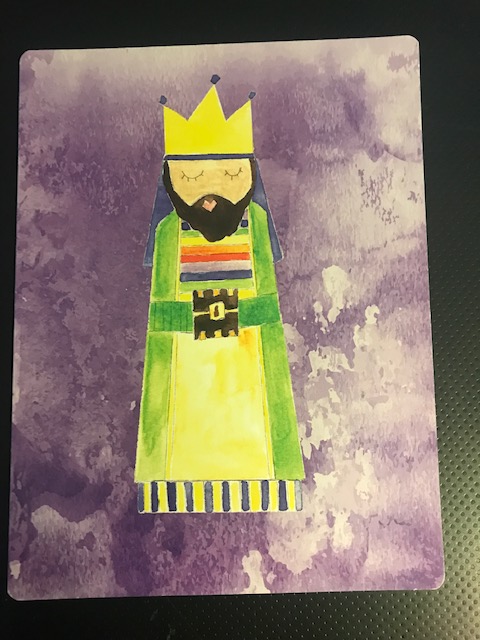
My Advent companion this year is one of the Wise Men. Each of the other two companions have been my companions in recent years, thanks to the deck of cards, “Advent Perspectives, Companions for the Journey.” (See my December 5 post,https://livingonlifeslabyrinth.com/2023/12/05/advent-1-one-lit-candle/
This particular Wise Man (Woman, please) is having a hard time getting ready for the journey.
I keep thinking about the conversation these three wise people must be having.
Wise Person #1: “There’s this star, and I think we must follow it.”
Wise Person #2: “I’ve seen it, too, and it is so much brighter than all the other stars. That must be a sign.’
Wise Person #3 remains quiet.
#1: “I think we need to leave right away. Tomorrow, in fact.”
#2 “Sounds good to me. Let’s do it.”
#3 remains quiet, but as #1 and #2 get up from the breakfast table, #3 says, “I don’t think I can be ready that quickly. There’s a lot to do before we leave on a trip. And besides, where are we going and how long will we be gone and what about all the meetings and appointments we have–I have–in the coming weeks? Where will we be staying and what do we need to take with us? Are the camels ready for a long journey”
Both #1 and #2 assure #3 that all will be well and somehow everything gets done.
#3 under her breath says, “That’s because I do what needs to be done.” #1 and #2 pretend not to hear her, as they leave the room, and #3 begins creating a master TO DO List.
Cancel mail delivery.
Get out passports.
Hire neighbor to shovel snow.
Do laundry.
Empty refrigerator.
Cancel upcoming appointments.
Pay bills
#3 continues the ongoing dialogue in her head. “Why can’t I be as spontaneous and as trusting as my colleagues? I’ve seen the star, too, and I’ve had the same dreams about the need to follow that star, but I get so bogged down in my routines and wrapped up in my lists. How exhausting that is sometimes!”
#3 takes a deep breath, reminding herself to breathe in the love of God and breathe out her anxieties and fears. Her need to be organized and in control. She closes her eyes, lightly, not tightly, and breathes in and out gently, finding her own rhythm. This is what she must do now, even before getting out the suitcases or making a list of what to take with her on this journey.
Breathe.
Be still.
Open to the Presence.
Trust. Surrender.
See the beauty of that star.
#3 could feel an eagerness arise within her. A yearning to follow, to discover where the star takes us.
And when she opened her eyes, she saw #1 and #2 standing beside her.
#1 said, “We are on this journey together.
#2 said, “Let’s help one another prepare.”
And #3 said, “May it be so.”
I look as far as I can into future days, weeks, months, Desiring to see what is ahead and waiting for me. But my vision is limited and clouded with desire. I return to seeing only what is in this present moment. I do not need to know that which is far beyond. I have only to trust you to direct me, All-Seeing One.... fromFragments of Your Ancient Name, 365 Glimpses of the Divine for Daily Meditation Joyce Rupp
An Invitation
What is getting in the way of your seeing and following the star? I would love to know.
NOTE:
I will publish my list of favorite nonfiction books read in 2023 on my Thursday, December 14 post.
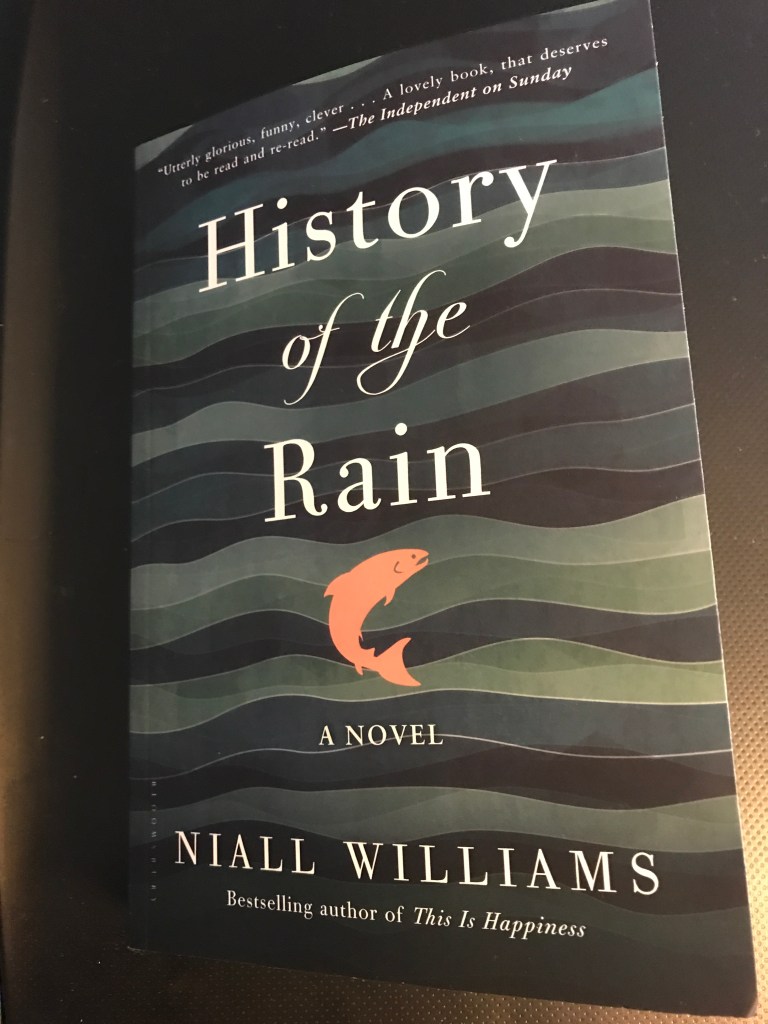
First, One more Book From November: History of Rain by Niall Williams
I was thrilled to find this earlier book (published in 2014) by Niall Williams at Northwind Books in Spooner, WI. I loved his most recent book, This Is Happiness (2019), and also an earlier book (1997) Four Letters of Love. And, no surprise, I loved this book, too.
As in his other books, The History of Rain is set in rural Ireland. I have never been there, unfortunately, but this book transported me there without a passport. Nineteen-year-old Ruth Swain relates her strange family history, even as her own story of being confined to bed with an unidentified and debilitating blood disorder is strange as well. What is not strange is the writing–always lyrical and poetic, sometimes comedic –I laughed outloud at times–but always warm, even as it teases. I shed a few tears along the way, too.
Ruth’s father was a poet, and she inherited all 3,958 of his books crammed into her bedroom where she sleeps in a bed shaped like a boat. I loved the bookishness of the narration, noting when a book is mentioned its specifics in the collection. “The Brothers Karamazov (Book 1,777, Penguin Classics, London)” or “The Prime of Miss Jean Brodie (Book 1,980, Penguin Classics, London). Books by Dickens are mentioned so often that I have decided to re-read this month one of my all-time favorites, Great Expectations.
A review in The Guardian says the book is “pure eccentric entertainment,” and that feels right. Some may get irritated by the wanderings, but I loved the quirkiness of it all. Yes, it is about life in County Clare and about her family. (Her mother doesn’t fall in love when she first meets the man she will marry, but she “falls in Curiosity, which is less deep but more common.” p. 176.) But it is also about fishing for salmon and about the rain that falls without end. And about stories.
We tell stories. We tell stories to pass the time, to leave the world for a while, or go more deeply into it. We tell stories to heal the pain of living.
p. 176
I underlined so many passages in this book. Don’t get me started. Instead, read the book and decide for yourself what to underline.
Second: December’s Plan
My plan this month is to re-read some favorites. The only exceptions will be if a book I have requested from the library becomes available. After all, let’s not be rigid when it comes to our reading!
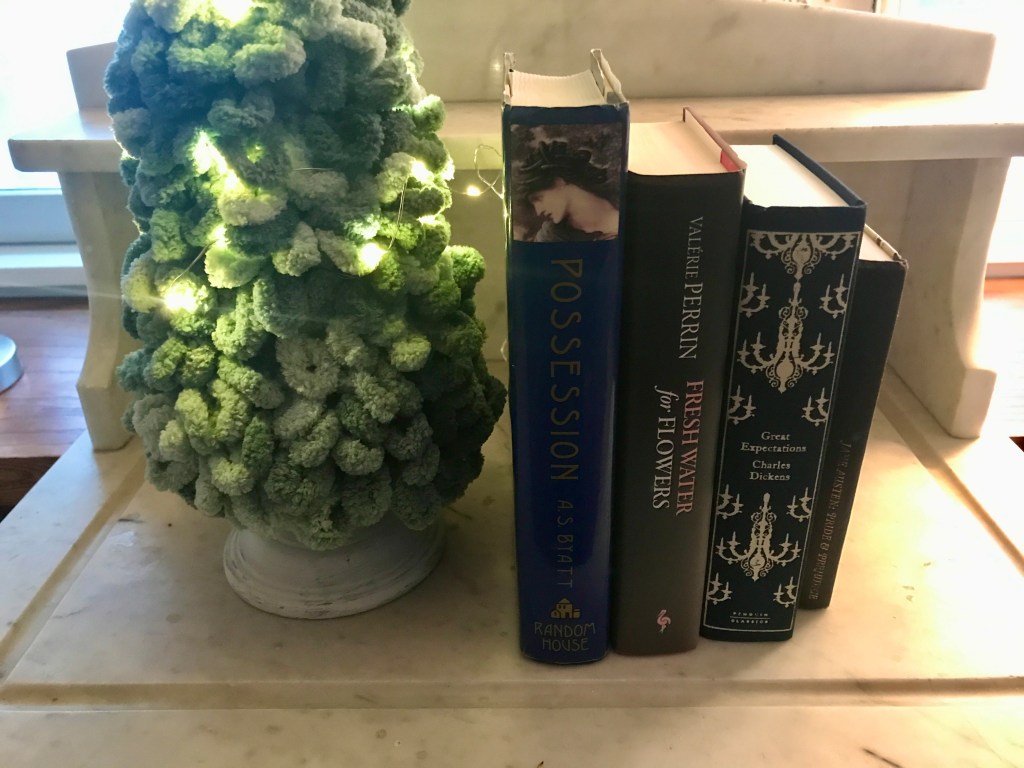
I started the month re-reading Jane Austen’s Pride and Prejudice for the ____ time. I have lost count, but never lose interest or delight. Now I want to re-watch the various film versions of this classic. Re-reading P&P may become my new Advent tradition.
Now I am re-reading Fresh Water for Flowers by French novelist Valerie Perrin. How could a book set in a cemetery be so charming? Well, take my word for it, it is! And it is moving and revealing about the many ways we love.
I intend to re-read Great Expectations by Charles Dickens and also Possession by A.S. Byatt this month, but who knows what book distractions I will encounter as the month progresses.
Third: Favorite Novels of 2023
I read a lot of fiction. Out of the 99 novels I read in 2023, here are my top 25. However, if I sat down and listed my top favorites on another day, the list might look different, for I read very few books I didn’t like. I think I have mentioned this before, but I quickly discard a book if it doesn’t hold my attention in the first few pages or if I don’t think it is written well–or if I am not in the mood. Therefore, what I read I generally like.
For descriptions/summaries/evaluations of my favorites, I’m afraid you, dear reader, will need to do some of your own work. I have listed my favorites in the order in which I read them and I have written about them in my Thursday Book Report posts.
Now for the list. May I have a drumroll, please?
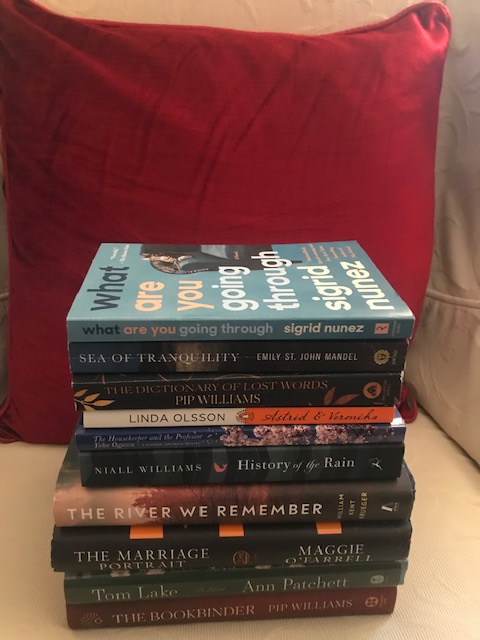
The Marriage Portrait by Maggie O’Farrell
Our Missing Hearts by Celeste NG
Gone Like Yesterday by Janelle Williams
The Woman in the Library by Susan Gentill
The Island of Missing Trees by Elif Shafak
What Are You Going Through by Sigrid Nunez
The White Lady by Jacqueline Winspear
Still True by Maggie Ginsberg
I Have Some Questions for You by Rebecca Makai
Hello Beautiful by Ann Napolitano
Astrid and Veronica by Linda Olsson
My Antonia by Willa Cather (for the 3rd time)
The Whalebone Theatre by Joanna Quinn
Homecoming by Kate Morton
Horse by Geraldine Brooks
The Postcard by Anne Berest
The Half-Moon by Mary Beth Keane
The Housekeeper and the Professorbby Yoko Ogawa
Sea of Tranquility by Emily St John Mandel
The Dictionary of Lost Words by Pip WIlliams
The Bookbinder by Pip Williams
Tom Lake by Ann Patchett (Perhaps my TOP FAVORITE)
The River We Remember by William Kent Krueger
So Late in the Day by Claire Keegan
History of the Rain by Niall Williams
What’s missing? Well, there aren’t many books by men. Also The Covenant of Water by Abraham Verghese, even though it is a major favorite of many, is a book I liked, but didn’t love. Lessons in Chemistry is not on the list because I haven’t read it yet, but at some point, I will. There is no new Louise Penny listed because there was not a new LP in 2023! Boo! And I am embarrassed to say there aren’t many books written by people of color on the list–I read more than the list indicates, but, alas, they aren’t among my very favorites.
So that’s it!
An Invitation
What were your favorite books of 2023? I would love to know.
NOTE:
I will list my favorite 2023 nonfiction books in my Book Report post on Thursday, December 14.
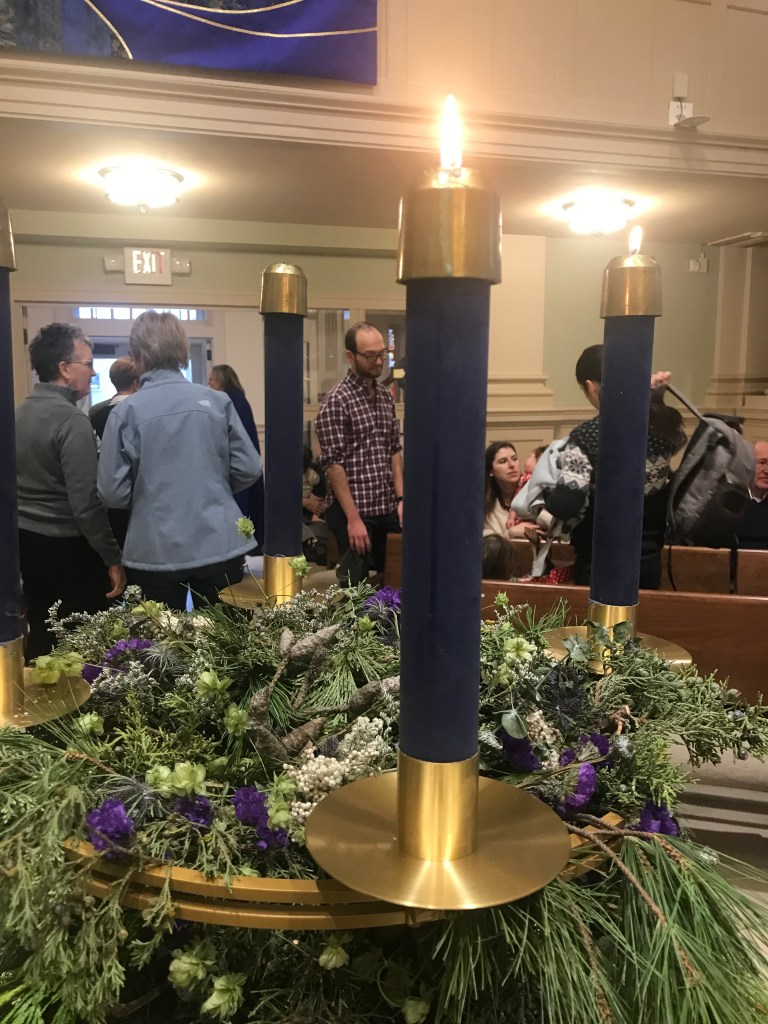
“Rouse us from sleep, that we may be ready to greet the Coming One.”
After these words were spoken, the first candle on the Advent wreath was lit.
Advent has begun.
Not only is our church sanctuary bedecked with stunning new blue paraments…
BUT our home also is awake to this blessed season of the church year.
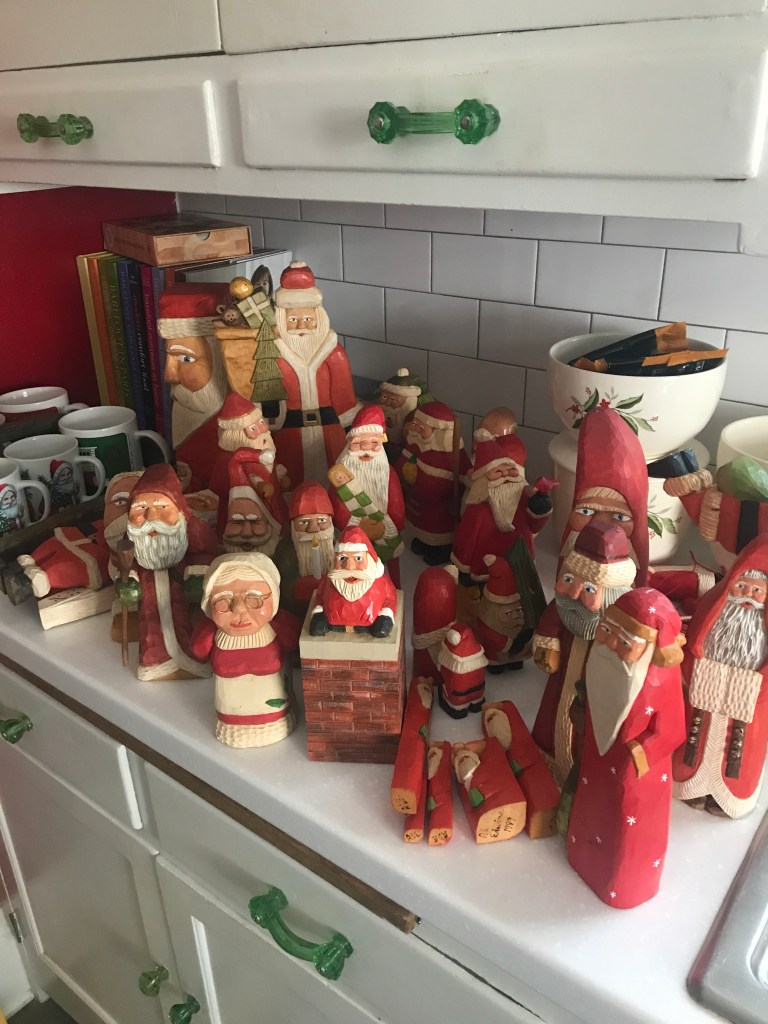
I always begin the decorating in the kitchen, welcoming the Santas carved by a talented friend. I love the kitchen’s red walls throughout the year, but especially at this time of the year. Yes, I know this is a lot of stuff in a tiny space, but oh, how happy these treasures make me. Somehow I still find room to cook and bake.
Santa watches my every move in the kitchen!
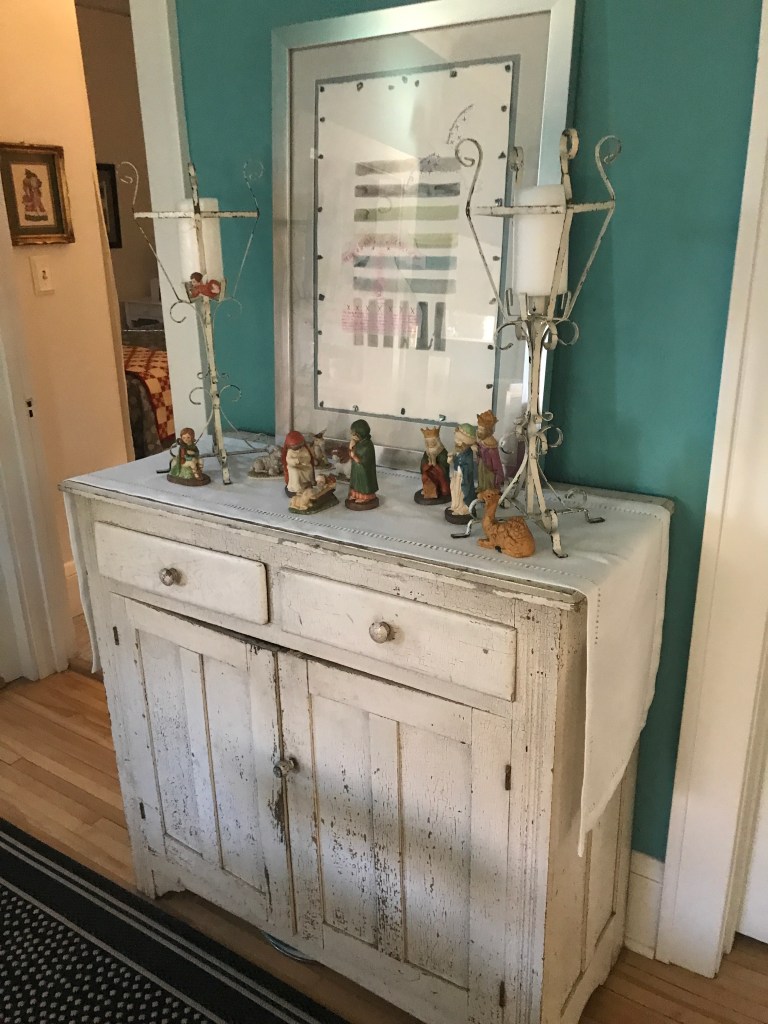
In the dining room the Christmas dishes are on the buffet and the Nativity Scene in its usual place, and this year for the first time the Snow Village is in the bedroom.
The living room is ready for cozy evenings reading or gatherings with family and friends.
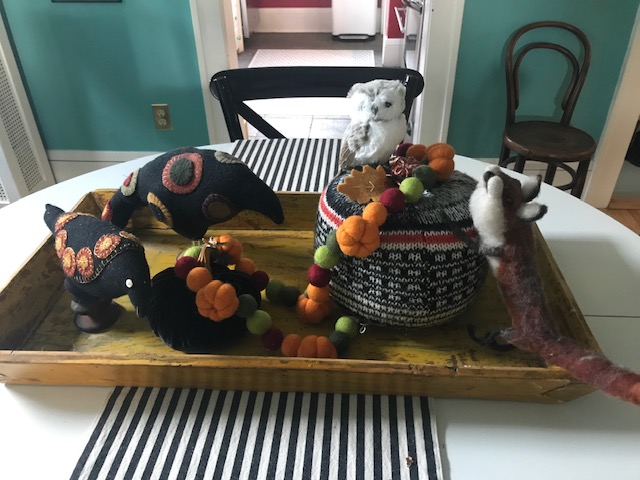
But here’s my favorite–a new collection of felt critters and trees. They make me smile every time I pass through the dining room. They may stay in place all winter.
Beginning the Inner Journey
I have always loved creating a setting for an event or holiday. For hospitality, as well as for the daily routines of my life. Unpacking the Christmas bins and arranging our treasures is a form of creativity for me, but it also leads me to the deeper invitations of the season.
After two days of turning mess into pleasant order and a kind of beauty–at least to my eyes, I needed to pause. To rest. To begin the unfolding into what this specific Advent holds for me.
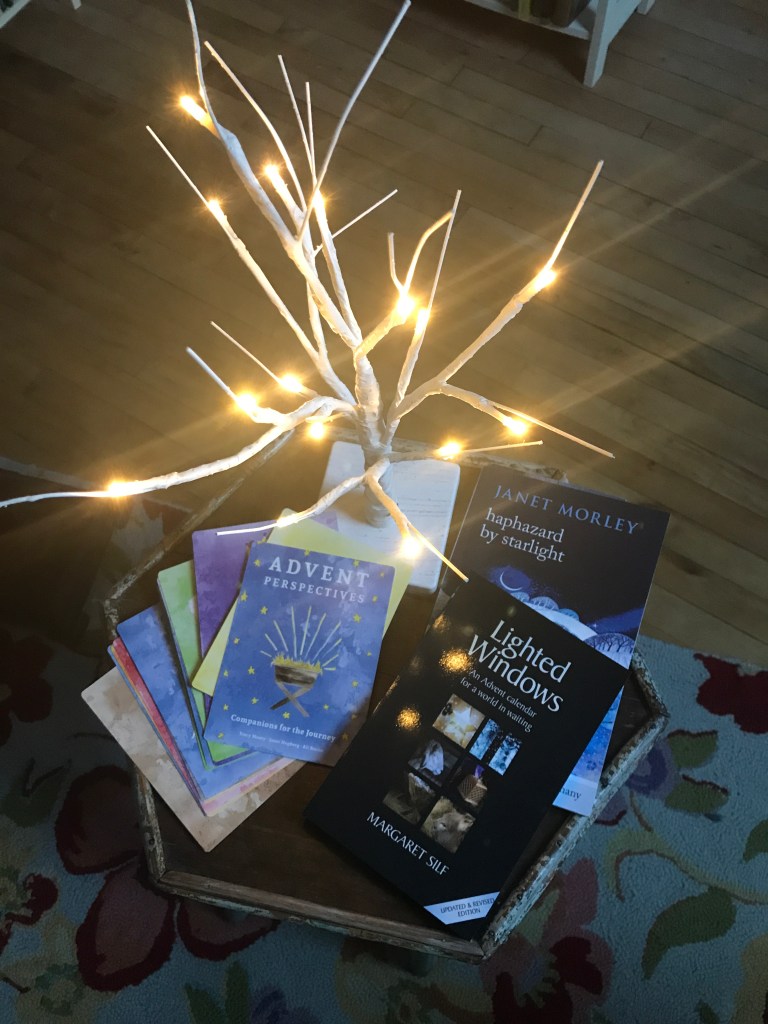
I settled into the snug with my chosen Advent books at hand: Lighted Windows, An Advent Calendar for a World in Waiting by Margaret Silf and Haphazard by Starlight, A Poem a Day from Advent to Epiphany by Janet Morley.
I began the journey by discovering who would be my companion this Advent. I fanned the the deck of cards, “Advent Perspectives, Companions for the Journey,” in my hand and with my eyes closed, my right hand moved slowly over the cards, somehow knowing when to stop. I opened my eyes to meet my companion–one of the Wise Men.
This is not my first year a Wise Man (Woman) has been my companion. In 2020 and 2021 the other two Wise Men led me on the Advent to Epiphany journey. (I must be a slow learner.)
The questions for reflections are the same as for those previous years:
How would you describe the journey you’ve been on this year? What course corrections might be needed now to better lead you in the direction of your Bethlehem?
What precious gifts are you most eager to offer God in this Advent season?
Where in your life might you need to travel a different route in order to avoid danger or harm?
What do you do to follow Jesus?
The reflective questions may be the same for each of the Wise Men, and perhaps some of the answers may be the same or at least similar as in other years, but this is the first time I have taken this journey as a 75 year old woman. I bring this specific self into the journey. I have never lived through 2023 before, and I bring this year’s gifts and losses and joys and learnings into this Advent.
Yesterday morning I read these words in the Margaret Silf book:
So though we are urged to travel light, we must carry our dream with us, wherever the labyrinth of life may lead us. The dream is our energy for the road. It is our memory of those moments when God has unmistakably touched our lives.
p. 30
The journey begins.
An Invitation
What are you experiencing during these early December days? I would love to know.
One can read more when not fixing Thanksgiving dinner. (My husband and I enjoyed our Thanksgiving dinner at a favorite restaurant while our St Paul family was traveling. We even had some leftovers to bring home.) I must be honest, however, about the number of books I read this last month.
Several books I read this month were less than 200 pages. I didn’t set out to read short books, but several rose to the top of the pile.
Short Books
Andy Catlett, Early Travels by Wendell Berry (fiction) 141 pages. See my review in my November 16th post.
Diary of a Tuscan Bookshop by Alba Donati (nonfiction) 193 pages. Also in my November 16 post.
The English Understand Wool by Helen DeWitt (fiction) 69 pages. Ann Patchett is wildly enthusiastic about this book, so how could I resist, and I did love it–and even read it twice. This book is part of New Directions publishers’ Storybook ND series, which publishes books that offer “the pleasure of reading a great book from cover to cover in an afternoon.” Love that! The book (story?) is described as a “modern morality drama” about a seventeen year old girl raised in Marrakech by a French mother and English father. The predominant theme in her life, as emphasized by the woman she knows as her mother, is to avoid mauvais ton or “bad taste.” The truth of her life is revealed, and she is confronted by the “publishing sharks of New York city.” Read it!
So Late in the Day by Claire Keegan (fiction) 118 pages. I love each book I have read by Irish writer Keegan (Foster and Small Things Like These). She writes with such clarity that one is almost fooled, thinking each story is simple. But oh there is so much going on below the surface, in the internal lives of her characters. So Late in the Day is the title story in this book of three short stories. The other two are The Long and Painful Death and Antartica. The book is small and would fit easily in a favorite reader’s Christmas stocking.
What Else Did I Read?
Fiction
The English Teacher by Lily King. I wasn’t sure how I would feel about this book by the end or what I wanted the ending to be. The English teacher is Vida Avery, who is a stellar teacher–until she isn’t. She teaches at a private school and has a quiet, private life with her teenage son, Peter. Unexpectedly, she marries, a recent widower with three children, and this new status opens her to an earlier trauma in her life.
Two books in the Lane Winslow mystery series by Iona Whishaw. #3, An Old, Cold Grave and #4, It Begins in Betrayal. Set in Canada, post WWII, Winslow is happy to be away from her life as a British spy, but at the same time she becomes involved as an unofficial detective when murder occurs in her small village. The 4th in the series takes place mainly in London, however, when her romantic interest, Canadian Inspector Darling, is accused of a war crime. I will definitely continue reading this series.
The Door-to-Door Bookshop by Carsten Henn. See my review in my November 23 post.
Day by Michael Cunningham. I loved Cunningham’s earlier book, The Hours–loved the movie, too–but I must say I liked this book, but didn’t love it. I did like the structure of the book. One family, the same day of the year in three different years –2019, 2020, 2021–and how their lives change during the pandemic. There is no question that Cunningham writes beautifully, and I often stopped to re-read a sentence or paragraph, simply to enjoy the flow of the words, but I tired of the characters: Isabel, married to Dan, who is an old wannabe rock star hoping for a comeback, and Isabel’s gay brother Robbie, who lives with them, until they need the room for the two growing children in the family.
A Likely Story by Leigh McMillan Abramson. A good read. Ward Manning is a famous novelist, but seems to be losing his touch. Claire his wife dies suddenly and their daughter Isabelle discovers a novel written by her mother. Isabelle edits and finishes the novel, presenting it as her own, and the novel Underpainting, becomes a bestseller. Dysfunctional family!
Ward Manning has given his daughter the legacy of being his. Having him as a father was a biographical sparkler bright enough to light up the rest of her life. Even if she did nothing.
p. 76.
The Wind Knows My Name by Isabel Allende. In many ways this reads like a nonfiction book–about immigration into this country, but Allende’s narration kept me going. There were two main threads in this book that eventually were woven together. Samuel, an Austrian Jew, is separated from his family in 1938 and sent to England where he lived in a series of homes. He becomes a famous violinist who settles in California. The other strain involves a child, Anita, who is separated from her El Salvadoran mother. Serena, a social worker, and Frank, a lawyer take on her case –and you will have to read it to discover how it all comes together.
I just noticed the theme of Isabel (Isabelle) in this month’s reading!
Nonfiction
Except for The Diary of a Tuscan Bookseller, the other three nonfiction books I read this month are all books I have read before.
The Summer of the Great-Grandmother by Madeleine L’Engle. This book is #2 in L’Engle’s Crosswicks Journal series, which includes #1, A Circle of Quiet and #3, The Irrational Season. I read #2 again because it deals with dementia, which at the point of history in which this book was written is referred to as senility, a term we no longer use. A number of people in our lives are suffering from forms of dementia, and I knew L’Engle would write honestly and compassionately about this disease. She refers to the Greek word, ousia, which means the “essence of being” — a helpful reminder as dementia is a disease of so much loss. After the death of the great-grandmother dies, L’Engle writes,
My memory of my mother, which is the fullest memory of anybody living, is only fragmentary. I would like to believe that the creator I call God still remembers all of my mother, knows and cares for the ousia of her, and is still teaching her and helping her to grow into the self he created her to be, her integrated, whole, redeemed self.
Wintering, The Power of Rest and Retreat in Difficult Times by Kathering May. I underlined more than the first time i read it, but that is often the case when re-reading a book. A couple quotes reveal what is true for me and my wintering times.
Everybody winters at one time or another; some winter over and over again.
p. 10
We may never choose to winter, but we can choose how. Some winters are big, some small.”
p. 13
Wayfaring, A Gospel Journey into Life by Margaret Silf. I read this book slowly throughout the whole month, usually only half a chapter during each of my morning meditation times. Silf invites the reader to use the imagination to meet the truths in the Gospel, but from the world of one’s daily life; to join Jesus in the Gospel stories and become part of those stories. She calls this “imaginative prayer.” One of the Gospel stories I continue to explore is the story of Martha and Mary when they invite Jesus to their home for a meal. I have seen myself as both Martha and Mary at different times, but this time as I read this story I was led to explore Jesus’s need for a “bolt hole,” from the world’s demands on him. Enlightening –and opened me to yet more dimensions. I expect I will use much of this material in the coming months in the contemplative writing group I facilitate.
December’s Plan
My intention in the coming month is to re-read old favorites, but that can change depending on which of the library books I have requested become available. Another issue is deciding which of my favorites I choose to read. Stay tuned.
An Invitation
What books did you give thanks for in the last month? I would love to know.
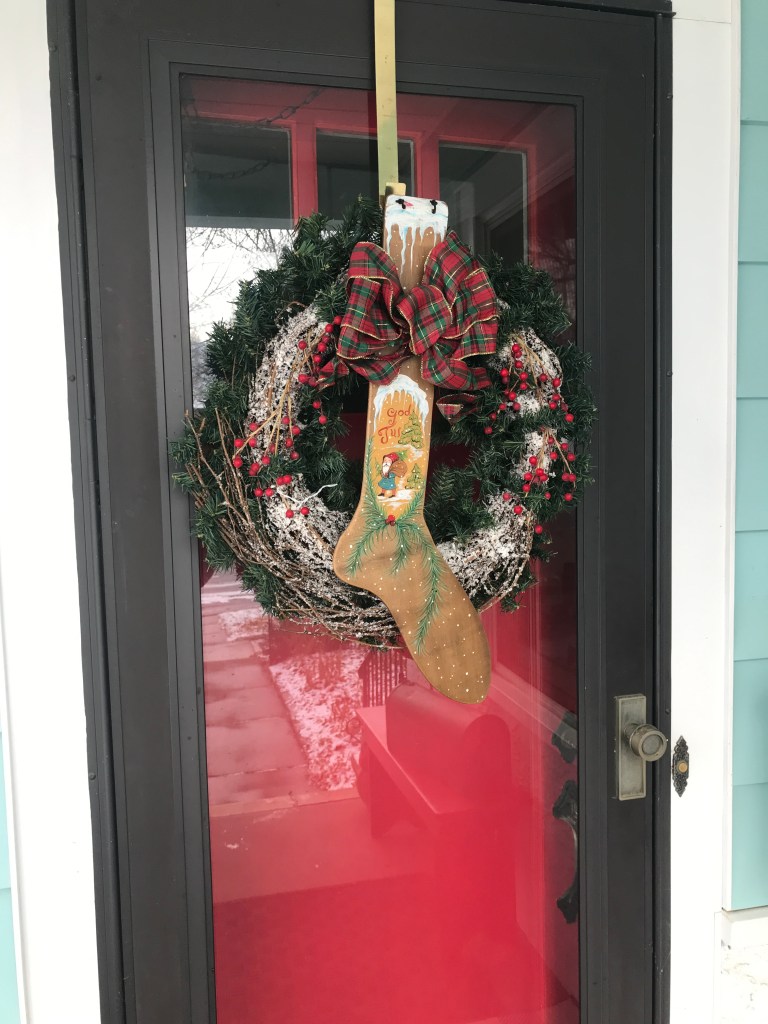
I’m ready! That doesn’t mean I’m ready for Christmas to arrive. The wreath may be on the door, but that is a false illusion of readiness.
Nope, I’m ready for the time of preparation. I’m ready for the arrival of Advent.
I’m ready to get ready.
Advent Meditations
Over the years I’ve acquired many Advent devotional books and sometimes I have subscribed to online Advent retreats and daily devotions. Deciding which books and offerings will be my focus is a kind of meditation in itself. This year the winners are:
Haphazard by Starlight, A Poem a Day from Advent to Epiphany by Janet Morley. A friend gave me this book last year writing “Words to accompany you through the dark days into the light.” Many days during last year’s Advent were too dark for me to focus on this book. After a dear friend died on December 1, I spent much of my morning meditation time sitting quietly in the darkness, allowing myself to feel the fullness of that loss. At the same time I had a crummy cold most of Advent, which limited what I did. This year this book welcomes me. In her introduction Morley writes:
Poetry yields its multi-layered meanings only when the reader pays attention, and spends time reflecting on what may be a very few words. Intuition and a certain humility are needed along with a willingness to notice properly the detailed world the poem illuminates, and perhaps to be personally transformed by the resulting insights. As readers we have to bring some deep parts of ourselves into the process of interpretation; we have to surrender to the poem. At the same time, a poem doesn’t browbeat the reader: it intrigues, challenges and delights.
p. xii
Lighted Windows, An Advent Calendar for a World In Waiting by Margaret Silf. This month I’ve been slowly re-reading one of Silf’s other books, Wayfaring, A Gospel Journey into Life, and once again I have loved how Silf encourages an imaginative reading of Gospel stories. Who am I in the text? What does the text offer me in my life? Today. Now. Through her guidance, I always discover something new. I know this book will bring me new light:
The seasons of Advent and Christmas remind us that now is the time and ours is the place in which God is labouring to come to birth.
May your own Advent journey, and your life’s journey, be guided by unexpected lights along the roads that refuse to be extinguished. May it be accompanied by melodies celebrating that which has not yet arrived. And may we ourselves become bearer of a Spirit-kindled light in a world that longs, like never before, for hope and trust and a reason to believe in the best that humanity can become.
p. 7
Once again, as I have done for several years, I will shuffle the deck of cards created by Tracy Mooty, Janet Hagberg and Ali Boone, “Advent Perspectives, Companions for the Journey.” I will close my eyes as one hand hovers over the cards finally landing on the character from the Nativity story who is to be my companion for the season. Mary was my companion last year and also in 2018. Who will it be this year? Stay tuned. I will let you know.
I am ready for my morning Advent meditation time.
Advent Remembrance
The day after Carolyn died I wrote in my journal:
Her friendship at this stage of my life was one of those unexpected surprises–like sometimes you open the front door to get the mail or sweep the steps, and there is an Amazon box there. You hadn’t ordered anything, but there it is. A friend had sent you a book, perhaps. One she knew you would love. Well, in her infinite generosity, God sent me Carolyn.
Bruce said yesterday that he feels empty. I don’t feel that. Actually, I feel quite full–not in the sense of being overwhelmed, but more in the sense of feeling gratitude for her presence in my life. One more example of enduring love and friendship and what it means to live fully, passionately, openly. But oh, I will miss her.
December 2, 2022
I am ready to sit quietly and ponder in my heart the ongoing gifts of Carolyn’s friendship in my life.
Advent Transformations
Our home is my easel, and each season is a source and setting for creativity.
At the end of the week I will remove all evidence of fall.
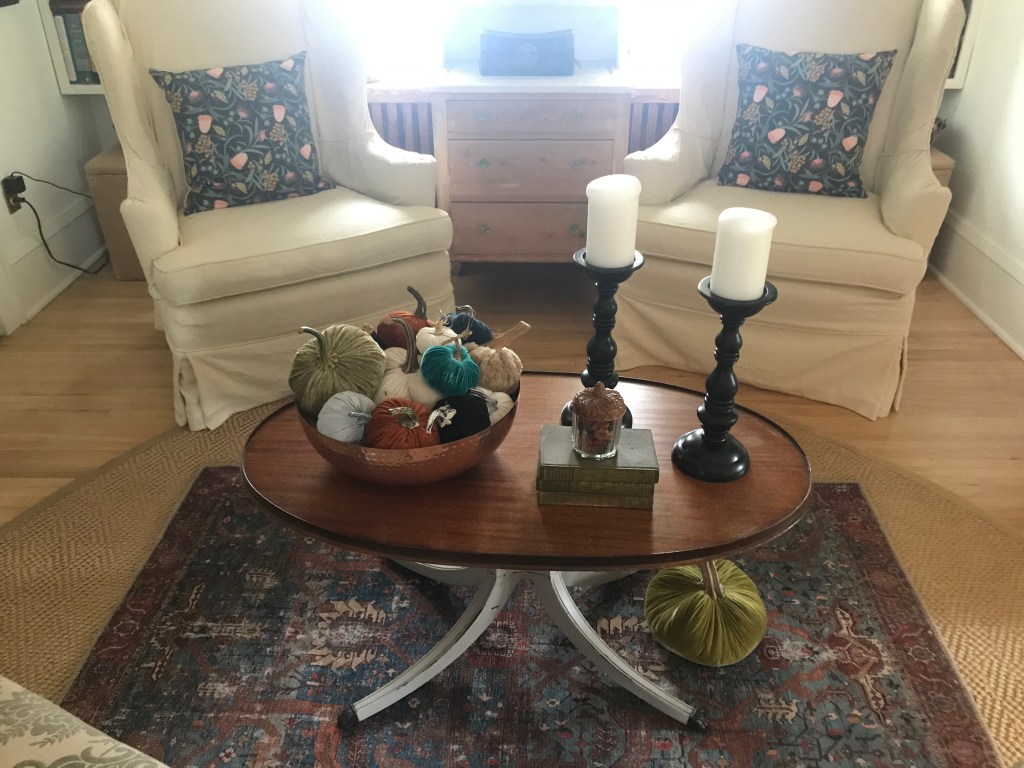
This Advent and Christmas some things will stay the same as they have in past years.
(2022)
But who knows where others will land.
(2022)
I am ready for the Christmas bins to come out of the storage room and to create this year’s setting for these precious days of Advent and Christmas. I’ll let you know what happens.
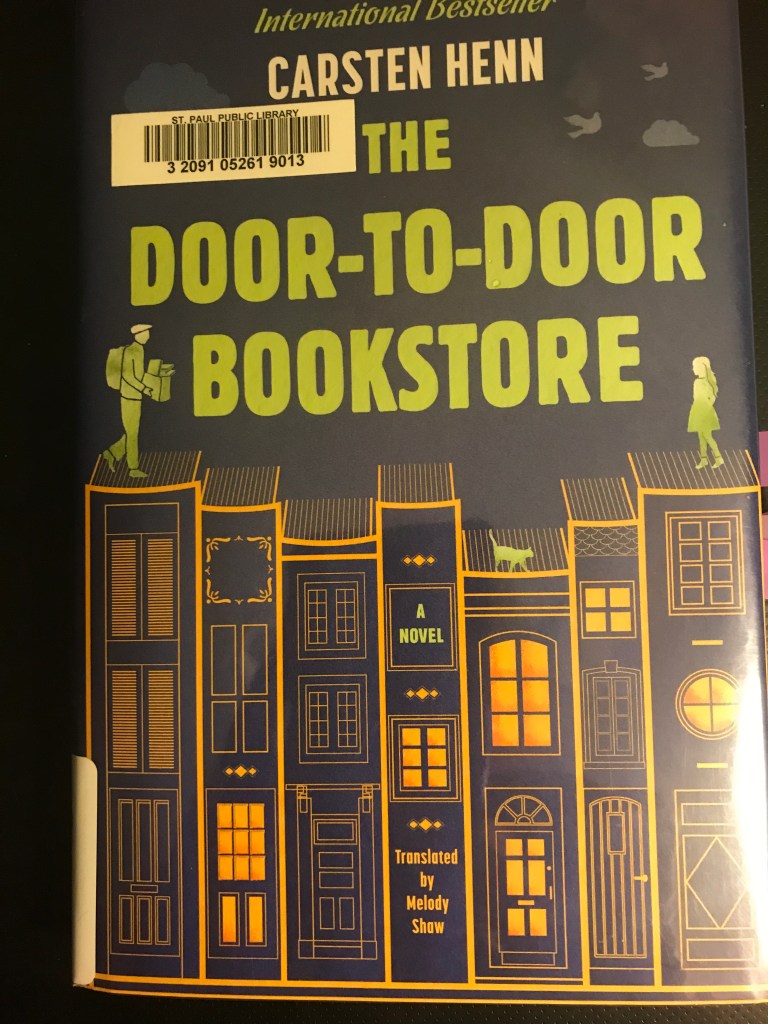
While everyone else is watching football or snoozing after eating too much turkey and all the sides, treat yourself to this gentle and charming book, The Door-to-Door Bookshop by Carsten Henn, translated from the German by Melody Shaw. However, since independent bookstores are not open today, stop at your favorite bookstore during the wild Friday shopping to buy this book as a Christmas treat for yourself.
Carl’s favorite task at the bookshop where he works is to pick out just the right books and deliver them to housebound readers. A young girl, Schaschas, begins to join him on his rounds, calling him a BookWalker. She is wise beyond her years and has opinions about the kinds of books his customers need, in order to make their lives better. Of course, there are villains along the way, especially the bookshop’s daughter who inherits the store and does not think delivering books is necessary. Clearly, she is not a book person.
Instead of describing some of the customers, here are few representative quotes about books.
Books with green covers were not to be trusted.
p. 16
Even when an extraordinary book ends at precisely the right point, with precisely the right words, and anything further would only destroy that perfection, it still leaves us wanting more pages. That is the paradox of reading.
p. 135
Then he read his favorite novel, The Uncommon Reader, a slim volume by a renowned author; he allowed himself to read it only once a year, looking forward to it each time like a connoisseur anticipating the first asparagus of the season.
p. 71
At various points in the book Henn compares readers to certain animals: hares who race through a book, fish who allow a book to carry them along their current, lapwings who jumped ahead to the ending, and tortoises who fall asleep often after a single page and take months to finish a book.
I think I’m a combination hare and fish.
Gentle and charming.
An Invitation
What books would you describe as gentle and charming? I would love to know.
Note: A Thanksgiving Prayer and Note
Before sending today’s post I moved into the snug for my morning meditation time. This morning I re-read a section about the Thanksgiving holiday from Diana Butler Bass’s book, Grateful, The Transformative Power of Giving Thanks. She quotes from this prayer by Adam Lee:
May this sharing of food foster peace and understanding among us, may it bring us to the recognition that we depend on each other for all the good we can ever hope to receive, and that all the good we can hope to accomplish rests in helping others in turn.
May it remind us that as we reach out to others to brighten their lives, so are our lives brightened in turn.
p. 131
May today, however you choose to be in it, be a day of awareness of the blessings that abound in your life, but also a day of intention to increase the blessings for those who experience scarcity or fear or pain.
Thanksgiving weekend, 2013, we moved back to St Paul, the same neighborhood where we bought our first house in 1974, when Bruce graduated from medical school and started his family practice residency, and I was pregnant with our daughter Kate. Now we have two grandchildren, Peter, almost 16 and Maren, 21.
The decision to return to where our family life had begun was not difficult. We yearned to be with our grandchildren more, as well as my aging father. Our life in Madison, WI, was good, very good, but it was time to return home.
Meeting This House
“I can’t do this,” I thought as I stood in the dull and dingy-looking and oh, so small kitchen. “Where’s the refrigerator?” I asked our realtor. Between the two of us we took up all the floor space in this teeny, tiny mini-kitchen. With a big smile she pointed out two refrigerator drawers underneath a counter.
“Isn’t this a clever idea?” She beamed, obviously hoping for a positive reaction from me. “Not having a full-sized refrigerator gives you more counter space,” she added.
I was not enamored.
The cabinets were painted a sickroom white, not the shiny white of nurses’s uniforms of the past, and the countertops were mottled grey and tan, like age spots on ancient hands.
Bruce pointed out the pluses. Excellent condition, good storage, and the price was right, to say nothing of the perfect location–five blocks from where our daughter and her family live, and three blocks from the kids’ elementary school. Yes, location, location, location.
I pointed out what it didn’t have: a fireplace or front porch or central air. All things on our wish list. And that garage, a cramped one-car garage, so small I wondered if I could master the necessary parking maneuvers for my Jeep.
Lectio Divina for a House
Our offer on the house was accepted, and my head agreed with the decision, but my heart was not in agreement. I knew I needed some time with the house. Without my husband. That opportunity came during the house inspection.
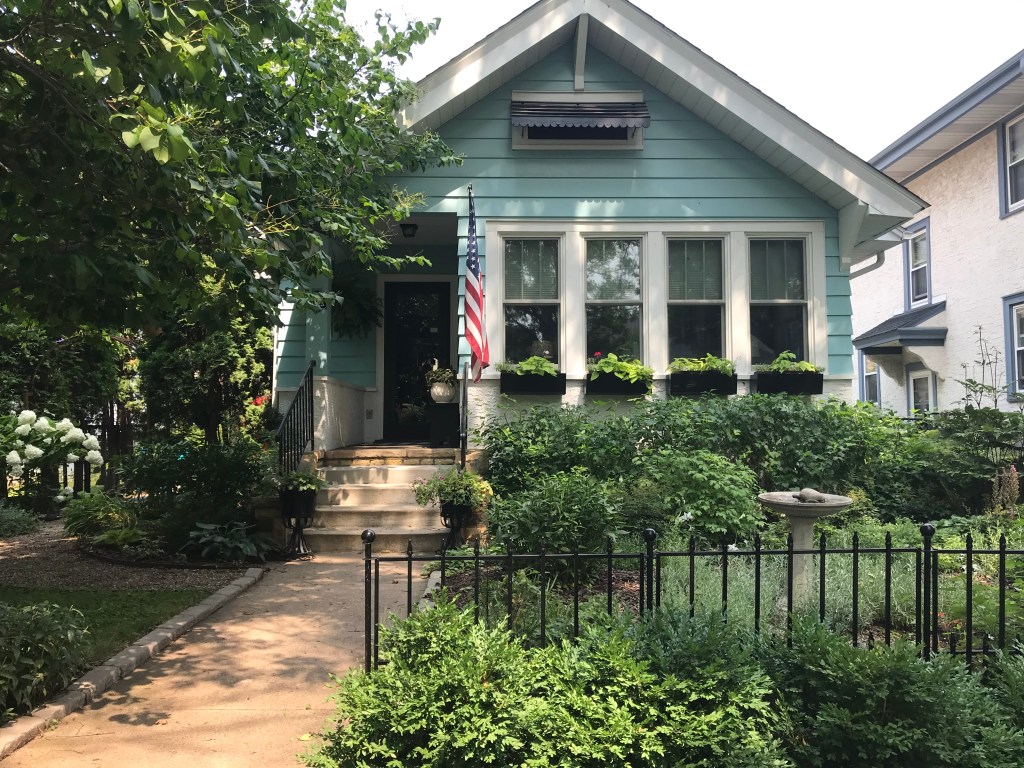
Sitting in my car before entering the house, I scanned the block of well-tended homes sheltered by mature trees. My eyes rested on our future home. Not too small, not too big. A pleasant-looking house. I liked the window boxes on the four front windows of the sunroom and the mums on the steps with one small pumpkin obviously placed there by little kid hands. I did not care for the yellow-gold exterior and wondered what color would bring it more to life.
Once inside, I wandered room by room, “reading” the house, gazing with soft eyes, as if encountering a piece of scripture for the first time. Lectio or “reading” is the first step in lectio divina, a spiritual practice that opens the reader to a more intimate relationship with the Word and often leads to clarification, even transformation.
I stood in the narrow, window-lined front room only big enough for a couple comfortable chairs and thought how lovely it would be to sit there and read. I noted the two windows in the kitchen, a gift in such a small space. I paused on the landing going up to the second floor, a refinished attic space and looked out the windows to the backyard. “I could have my office up here and call it ‘the garret.'”
I returned to the front door and took a deep breath, moving into deeper meditation, meditatio, the second step of lectio divina. Could I begin to let go of my space requirements, my vision of what I thought I needed? Could I imagine myself in this space?
There was no room for our large formal couch in the loving room, but how about forming a circle with four comfortable chairs? I began to picture certain loved pieces of furniture in this space. What about placing my lady’s writing desk next to the front door? What a pleasant place to sit and write a letter. My heart softened.
A fountain of ideas began to flow, overflow about ways to modify the house to our taste and lifestyle. A new palette. White wood work and white living room walls. Light beach aqua in the front room, which eventually I called “the snug,” and turquoise in the dining room. Clearly I had engaged with lectio divina’s third step, oratio, or “being active, but it was in the kitchen where I fully embraced that step.
Kitchen Transformation
During our first years of marriage, I cooked and baked and prepared dinner parties in a tiny windowless kitchen where initially I had waged combat with cockroaches. That’s where my Christmas tradition of baking loaf after loaf of cherry walnut bread began. Our kitchen at Sweetwater Farm was small, too, with almost no counter space, but oh, the Thanksgiving feasts created there.
Instead of seeing the space as limited, I reframed it in my mind as efficient. What it needs, I told myself, was crisp marshmallow white cupboards, a white subway tile backsplash and white solid surface countertop. And how about red walls? Santa Claus suit red.
The Fourth Stage: Contemplatio (Resting)
No, I wouldn’t have everything I wanted. A friend suggested we build a front porch. Of course, with enough money and patience and vision, one can do almost anything, but just because we once had something doesn’t means we must have it again. Instead, I rested in contemplation, assured I would discover a new gift.
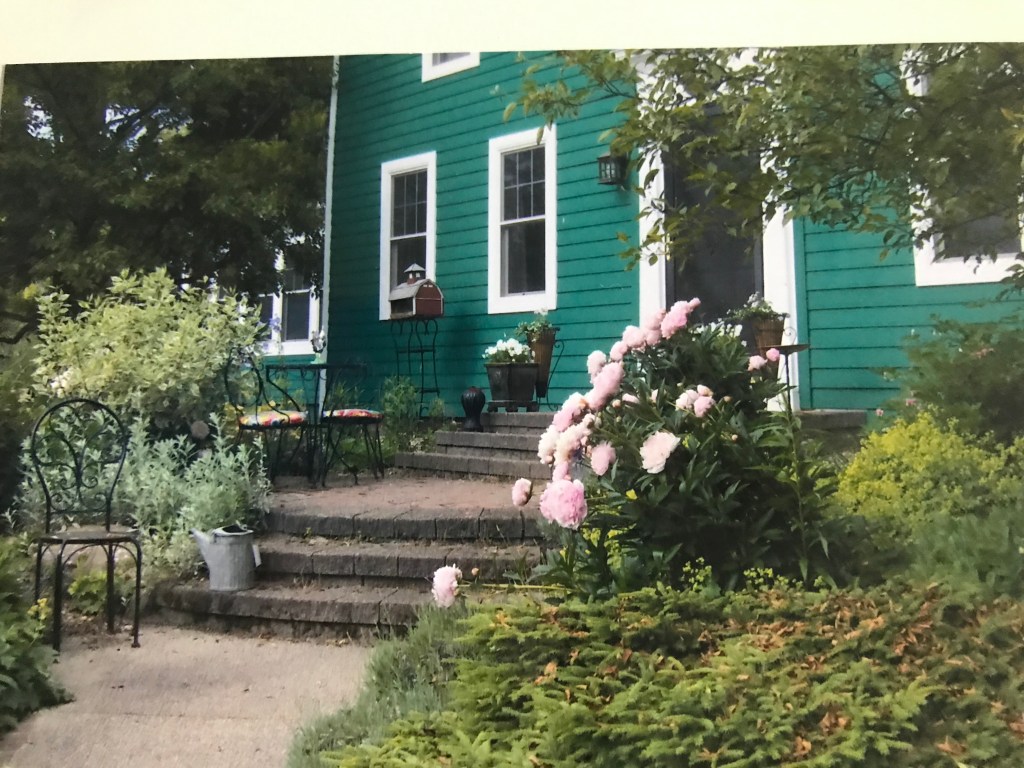
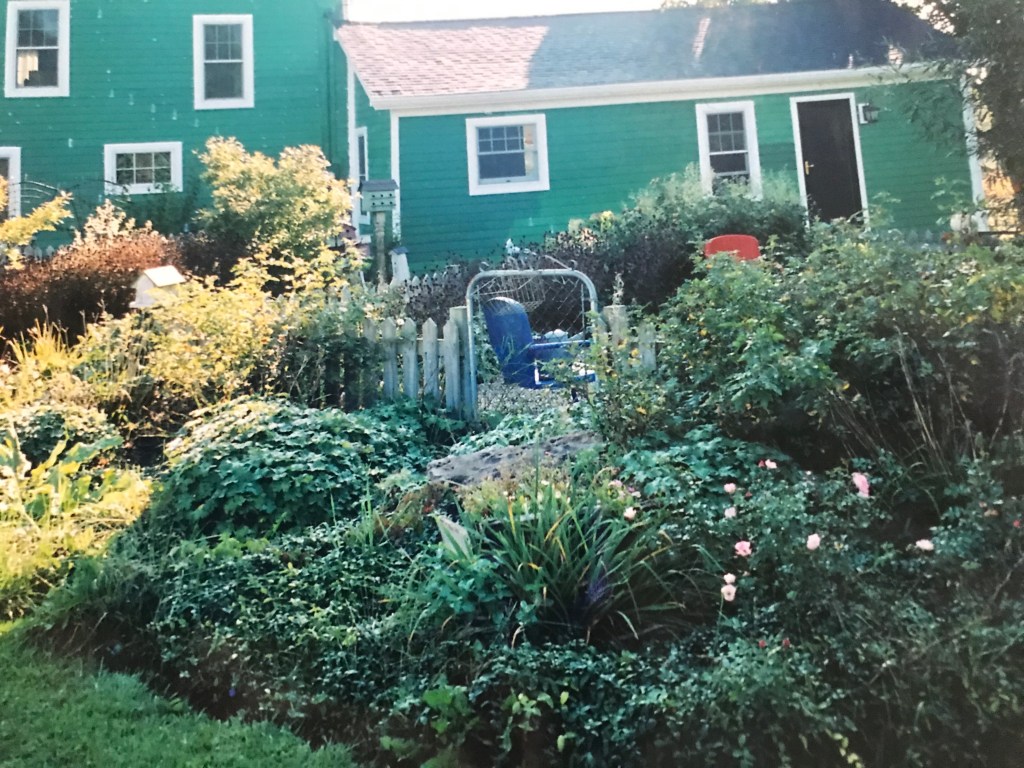
One day on my morning walk soon after moving in, I noticed a neighbor’s inviting side courtyard, and then I saw other gardens and patios located in narrow side yards, creating private space. Could we do that? We had skinny space on one side of the house leading to the gate into the back yard. Tall arborvitaes lined the boundary between our house and the neighbor’s, leaving space just big enough for a couple chairs and a small table. My husband the gardener enthusiastically approved the plan.
As I settled into our new home, I continued practicing, although unconsciously, lectio divina, opening to its invitation for transformation. Our new secret garden space, which I call “Paris,” symbolized my willingness to let go and discover something new, vibrant, and pleasing; to be transformed.
The Next Decade
We were 65 when we moved into this house, and now we are 75. Our hope and intention is to spend the next decade here as well, but, who knows. Bruce has said he would like to stay in the house on his own, if I died first, but If I were a widow, I would move into an apartment, not wanting to take care of the gardens. In the meantime we live fully, happily, gratefully in this space.
An Invitation
Is there some aspect of your life in which the spiritual practice of lectio divina could be helpful? Something calling for transformation or reframing? I would love to know.
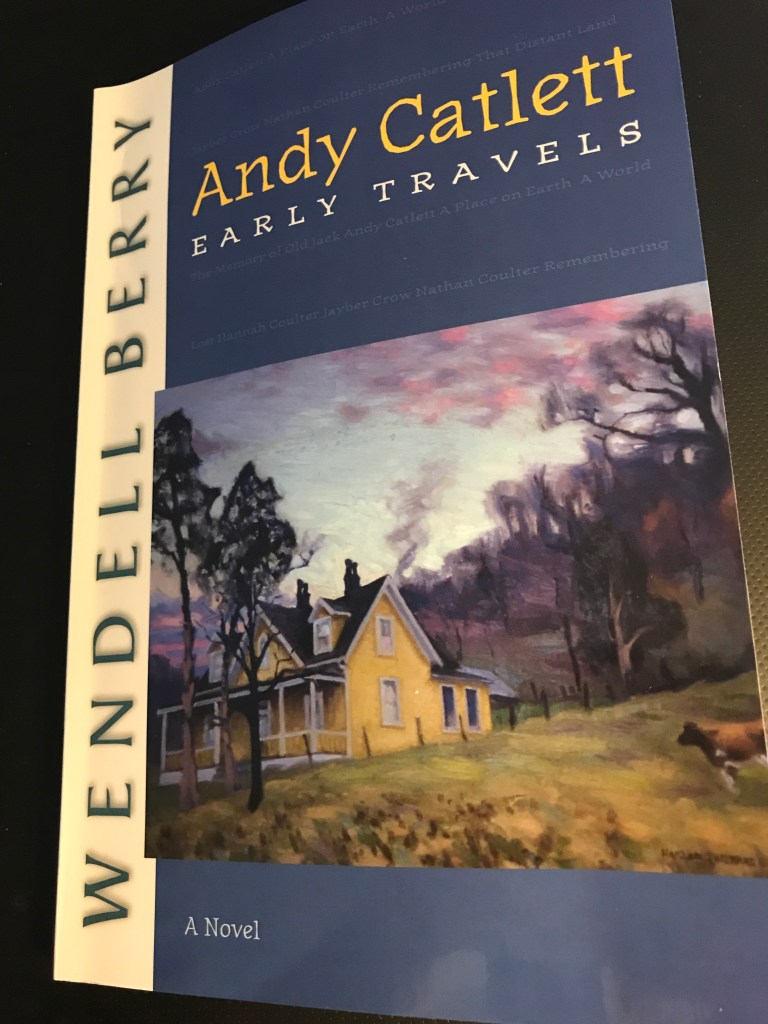
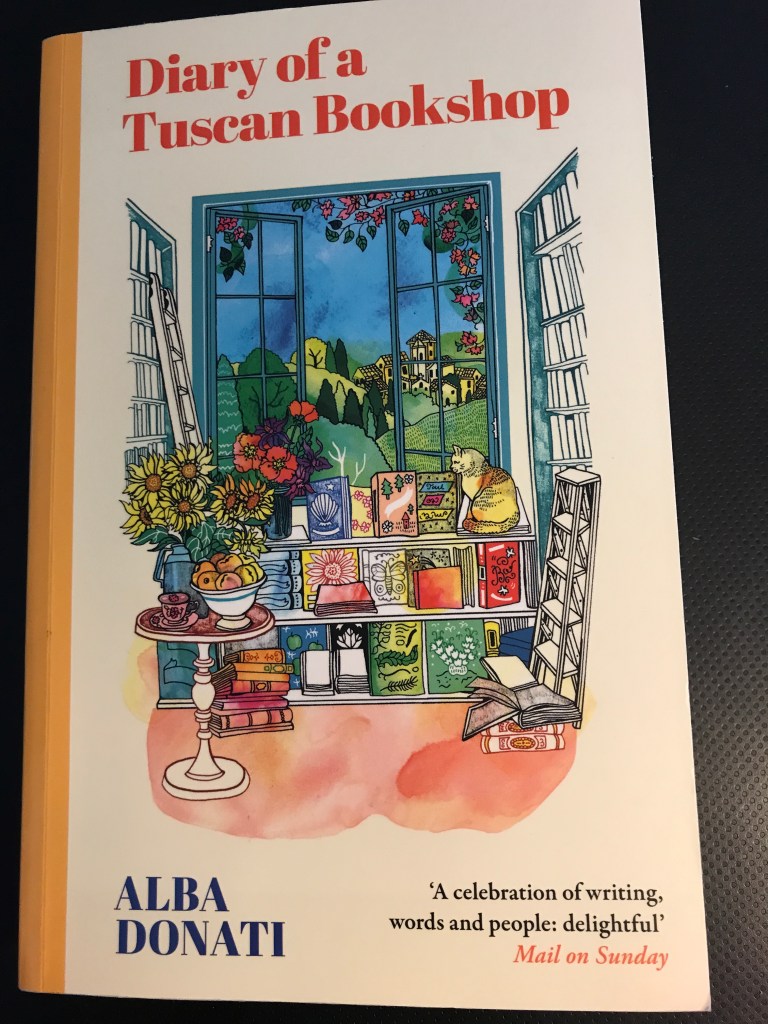
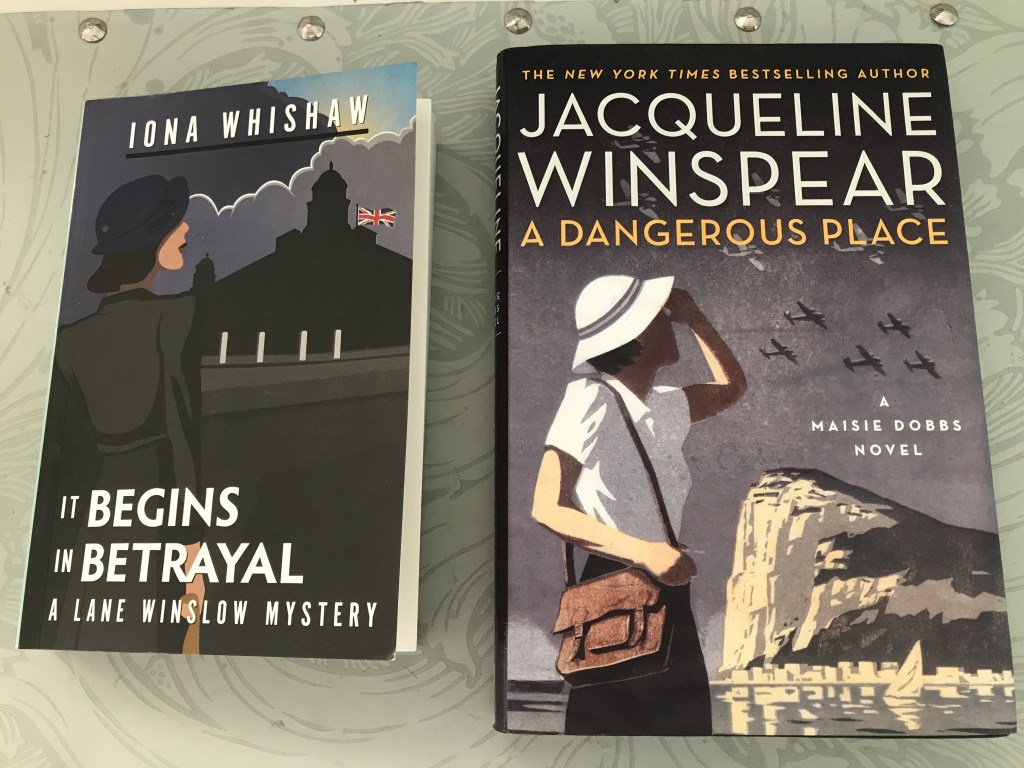
Of course, what is inside the book is most important, but unless I am looking for a specific title or author, the book cover is what first engages me. These two are winners.
Andy Catlett, Early Travels by Wendell Berry. I bought this book at Ann Patchett’s book store, Parnassus Books. It wasn’t on my TBR list, but I have read and loved other books by Kentucky author Berry, including Hannah Coulter and Jayber Crow. This cover reminded me, as does some of the descriptions in the book, of our Sweetwater Farm in Ohio.
The book, which is part of Berry’s Port William series, is set in 1943 and young Andy Catlett takes the bus by himself to visit both sets of grandparents. Although much of the book has a nostalgic feel Berry also reflects on the role of racism in the community and among the people he loves. “Dick,” a Black man was a “hired hand,” and Andy reflects,” Whereas my grandfather’s life had been shaped by the effort to keep what he had, Dick’s had been shaped by the effort implied in not having.” pp. 24-25.
Also.
It was a circumstance that was mostly taken for granted. It was inexcusable, and yet we had the formidable excuse of being used to it. It was an injustice both accommodated and varyingly obscured not only by daily custom, but also the exigencies and preoccupations of daily life. We left the issue alone, not exactly by ignoring it, but by observing an elaborate etiquette that permitted us to ignore it…What is hardest to get used to maybe, once you are aware, is the range of things humans are able to get used to. I was more used to this once than I am now.
pp. 75-76
Much of what Berry describes reminds me of my Grandma and Grandpa Hansen’s farm in southern Minnesota and life in the early 50’s when I was growing up. Like a button box.
No worn out garment then was simply thrown away. When it was worn past wearing and patching, all its buttons were snipped off and put into the button box. And then when something old needed a new button, the button box provided. Grandma’s was an old shoe box better than half full of buttons of all sorts. it was a pleasure just to run your fingers through like running your fingers through a bucket of shelled corn.
p. 62
The book is short–only 140 pages–but so rich with descriptions of time and place and people. As I read it, I paused often to re-read passages–wanting to fully absorb the beauty of the writing. This is a book where plot is not the focus, but I didn’t miss it. Not at all.
Diary of a Tuscan Bookshop by Alba Donati. A friend gave me this nonfiction book, which she bought on a trip to the UK. What could be lovelier than to be remembered by a friend when she is traveling. If I had seen this book in a bookstore, no doubt, I would have bought it, for the cover is so pleasing. I want to spend time in that setting. Donati is a poet, and she opens a small bookstore in a small Italian town, Lucignana, which would have been enough of a challenge, but she opens it during the pandemic. The book is written in a series of diary entries, and I think it would have been better, if written in more of a narrative style. In a diary one tends to reference lots of information relevant only to the writer. I did love, however, the list of the day’s book orders at the end of each entry. Both Italian and English. An example:
Drive Your Plow Over the Bones of the Dead by Olga Tokarczuk, L’istante largo by Sara Bruner, White Fang by Jack London, The Handmaid’s Tale by Margaret Atwood, Loving Frank by Nancy Horan, Learning to Talk to Plants by Marta Orriols.
p. 69
I would love to know about the readers of those books. Why then? And how did they learn about them?
Right now I am reading #4 in the Lane Winslow mystery series by Iona Whishaw, and the covers in these editions remind me so much of the Maisie Dobbs series by Jacqueline Winspear.
An Invitation
Have you been influenced to read or buy a book based on its cover? I would love to know.
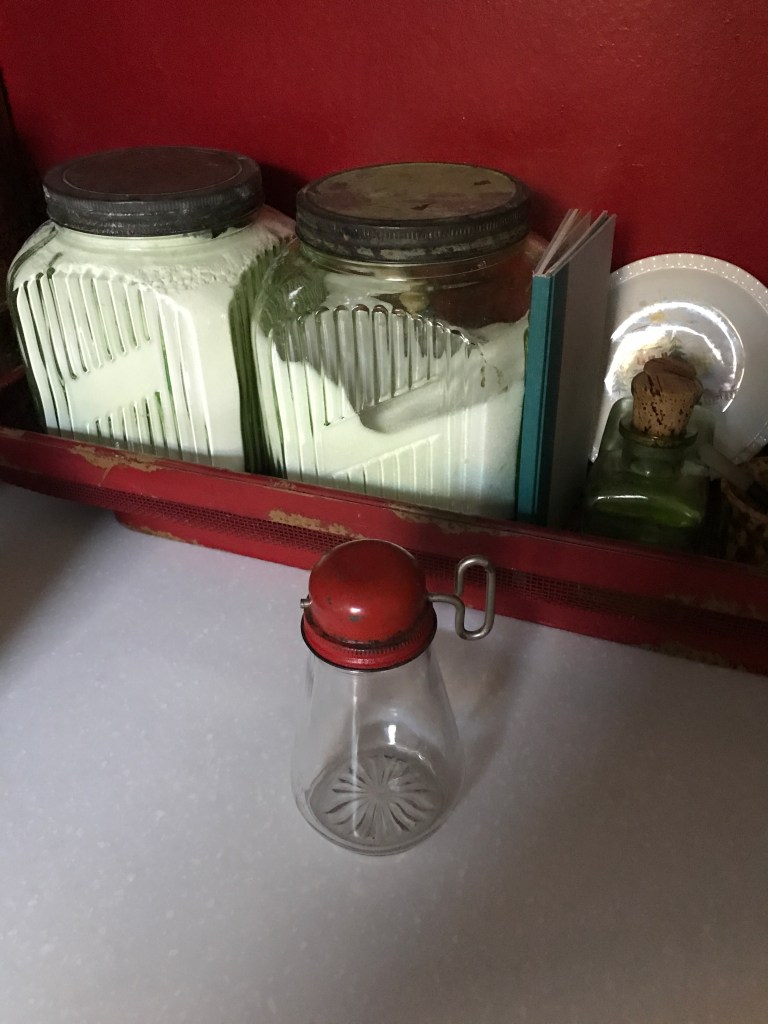
This past weekend my sister and I went to a vintage Christmas market, and I bought this little treasure from years gone by. It’s a nut chopper.
Of course, I don’t need a nut chopper, for I have a food processor and also a smaller electric one that works beautifully for herbs and nuts, and most often I buy walnuts and pecans already chopped anyway. However, when I picked it up I remembered baking cookies when I was a child. I had instant replay images of kitchens in homes where we lived when I was growing up. Now I hasten to add that my mother was not the kind of Mom who enjoyed cooking with her children. I learned to cook and bake by trial and error. Still, this little glass container with its cheery red top, which just happens to match my current kitchen’s decor, inspired homey, happy thoughts.
Memories were clearly on my mind, especially since last week’s theme for the writing group I facilitate was memory. Before reading the writing prompts to the group, I shared some guiding words, quotations about the topic. For example,
There is no explaining this simple truth about life: you will forget much of it. The painful things you were certain you’d never be able to let go? Now you’re not entirely sure when they happened, while the thrilling parts, the heart-stopping joys splintered and scattered and became something else. Memories are then replaced by different joys and sorrows, and unbelivably, those things get knocked aside as well, until one morning you’re picking cherries with your three grown daughters and your husband goes by on the Gator and you are positive that this is all you’ve ever wanted in the world.
Tom Lake by Ann Patchett, p. 116
Remembering events and people from our past lets us claim and share ourselves…We do not merely have these memories; we are these memories…memory is a way of describing the cumulative nature of time, the presence of the past with us. Time not only unravels; it also knits up…memories reveal God’s presence in our life. Memories retrace a sacred journey.
Winter Grace, Spirituality and Aging by Kathleen Fischer, p. 45
The prompts included choosing a decade of your life and writing down as many memories of that decade as you can, or writing about an experience when your memory is contradicted by someone’s version of the same experience or event, or encouraged by Kathleen Fischer’s words, “open the album of your life,” and simply begin writing.
My own response during the 20 minutes of writing time was inspired by what John O’ Donohue says in Eternal Echoes, Exploring Our Yearning to Belong, “Memory is the place where our vanished days secretly gather. Memory rescues experience from total disappearance.”
Lost Memories
A few months before he died, I asked my father what memories he had about Christmas when I was a little girl. My father had an excellent memory, which he nurtured and worked to maintain. For example, when he was in his 90’s he wrote down the names of everyone in his first grade class. Eventually, he remembered each name. He also made a list of everyone who reported to him during his long and successful career.
Here’s the rub: He had no memories of Christmas when I was a little girl. Over the years he had shared his own early Christmas memories, like getting an orange in his stocking and going ice skating on Fountain Lake on Christmas Day, but he was not able to unveil memories about me at Christmastime.
It was clear he was disturbed by this lack of memories, and he quickly said something like “Your mother handled Christmas,” and I’m sure that was true, but really? Nothing about my first Christmas morning or presents I loved or how I reacted to the Christmas tree? Frankly, I was hurt. I changed the subject, wishing I had never brought it up. Later I wondered if bringing some family pictures or sharing my own early memories would have induced a different outcome.
I hasten to add, and I want you to hear this clearly, I have no doubts about how much my father loved me. I have never questioned that, and I treasure my relationship with him, but I am aware that some of the details of my life, stories I would like to know, have disappeared.
When I asked my father to share memories about me as a little girl, I unintentionally opened a place of sadness in him, an emptiness he didn’t know he had. I’m not sure that was a good thing, unless I can use it to learn something about myself and my own memories. What do I most need to remember and even more, what memories about my loved ones do they need and want to know?
Joan Chittister in The Gift of Years, Growing Older Gracefully refers to memories as both burdens and blessings. What I choose to remember and share can be either a burden or a blessing for my loved ones. My hope is that this incident with my beloved father can be remembered as a sacred moment, for as Chittister says, memories, can “tell us what is left to be done. They become a blueprint for tomorrow that show us out of our own experience how to live, how to forget, how to go on again.” And I add, how and what to remember.
Now about that nut chopper. I won’t use it for its intended purpose, but instead I will fill it with red and green Christmas M and M’s, as a glimpse into sweet memories.
An Invitation
When have memories been a burden and when have they been a blessing in your life? I would love to know.









 Living on Life's Labyrinth