Daily Encounters: Soul Work in the World

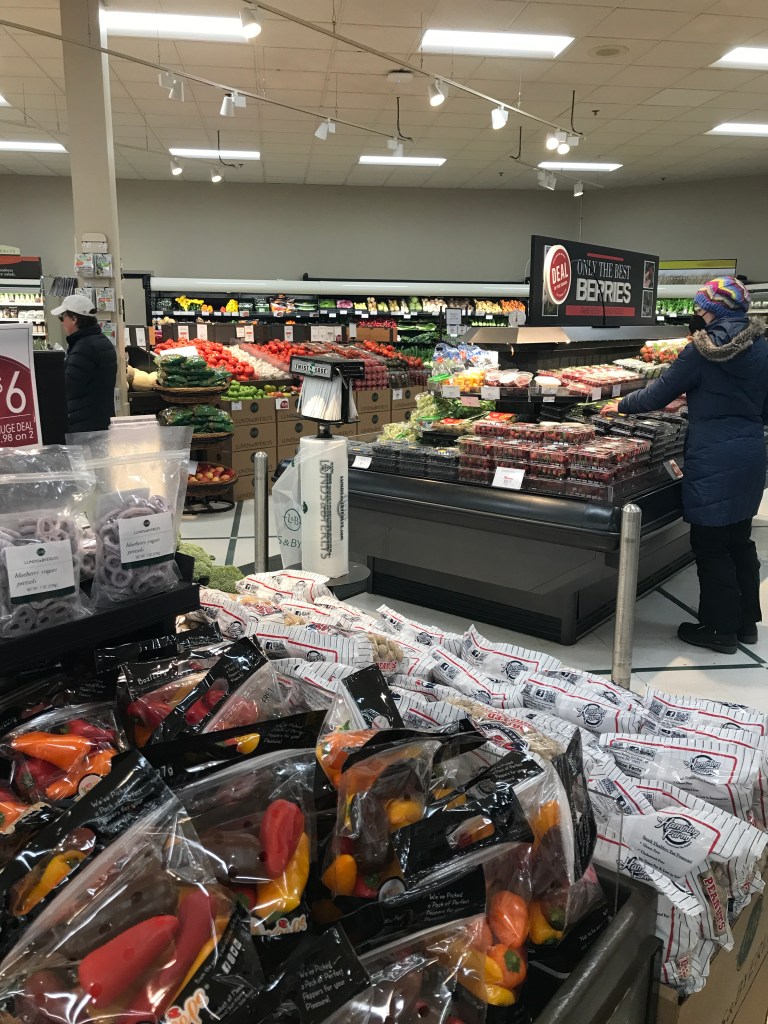
Who knew that a trip to the grocery store would restore my soul?

Most Thursday mornings I do the week’s grocery shopping. I shop early when there are few people, and I can move through the aisles quickly and easily and not experience long lines at the check-out counter. That has worked well for me during this long COVID interim.

The cashier always asks if I have found everything on my list, and most days I can say “yes.” Occasionally, however, I have replied that I needed to substitute for a favorite brand or had to adjust my planned menu, but I always added, “No problem. I have no reason to complain about anything.” The cashier always seems grateful for my positive response.

What I could add most weeks is that I found more than what was on my list.

Sometimes in the aisles I find connection and a sense of community. I find warmth and pleasant openness.

An example. One of the carry-out workers, who has worked in the store for years and who happens to be mentally challenged, eagerly told a man working in the produce section about his favorite team in the state high school basketball tournament. He knew what he was talking about, and the produce worker responded with both respect and enthusiasm. After the conversation ended, I commented to the produce worker about the positive interaction and the meaningful atmosphere that creates. He brushed off my thanks and replied, “We are all responsible for one another.”

He restoreth my soul.

And then I realized a woman was standing behind me. It was clear she was waiting to add produce to her cart.

“I am so sorry,” I said, “for blocking your way.”

Instead of showing irritation or ignoring me, she said, “No need to apologize. I have all the time in the world.” We smiled at one another each time we encountered one another in other aisles.

She restoreth my soul.

I finished shopping and another carry-out person came to pack my groceries and he said, “I saw you come in and I wondered if I would pack for you.” We chatted all the way to the car or should I say, he chatted all the way to the car, and we both wished each other a good rest of the day. We both meant it.

He restoreth my soul.

I have to believe such encounters restore the world’s soul. And we need that.

An Invitation

When have you experienced soul restoring moments? I would love to know.
I Have No Ideas!

Most Monday mornings I write my post for Tuesday. I may even write the Thursday post and prepare for the writing group I facilitate on Thursday mornings. That leaves room during the rest of the week to meet with my spiritual direction clients and any other zoom or in-person events.

A good plan, but what happens when I have no idea what to write!

Usually, during the previous week, I jot notes to myself that could develop into a blog post. This past week? Nothing! Or going to church will spark a thought. Sunday, even though the sermon and service and the adult forum were each inspiring and thought-provoking, nothing percolated for my weekly writing. Surely, I told myself, when I went to bed Sunday night, I will wake-up Monday morning with an ah-ha moment. Nothing!!!

What to do?

Well, do what you always do, Nancy. Begin the day with morning meditation. I read the Lenten reading for the day, I Samuel 3. God calls to Samuel, not once, but three times, and Samuel doesn’t recognize the Lord’s voice. Hmmmm. How many times, I wonder, have I failed to hear?

What is it I need to hear right now?

My husband calls a “good morning” up to the garret and leaves to meet a friend for breakfast. I take my shower and dress and make a quick grocery list. Friends are returning home today after being in a warmer climate for almost two months. I plan to fix them an easy supper and drop it off when I hear they have returned. I send a quick prayer for “traveling mercies,” and think about how good it will be to see them again.

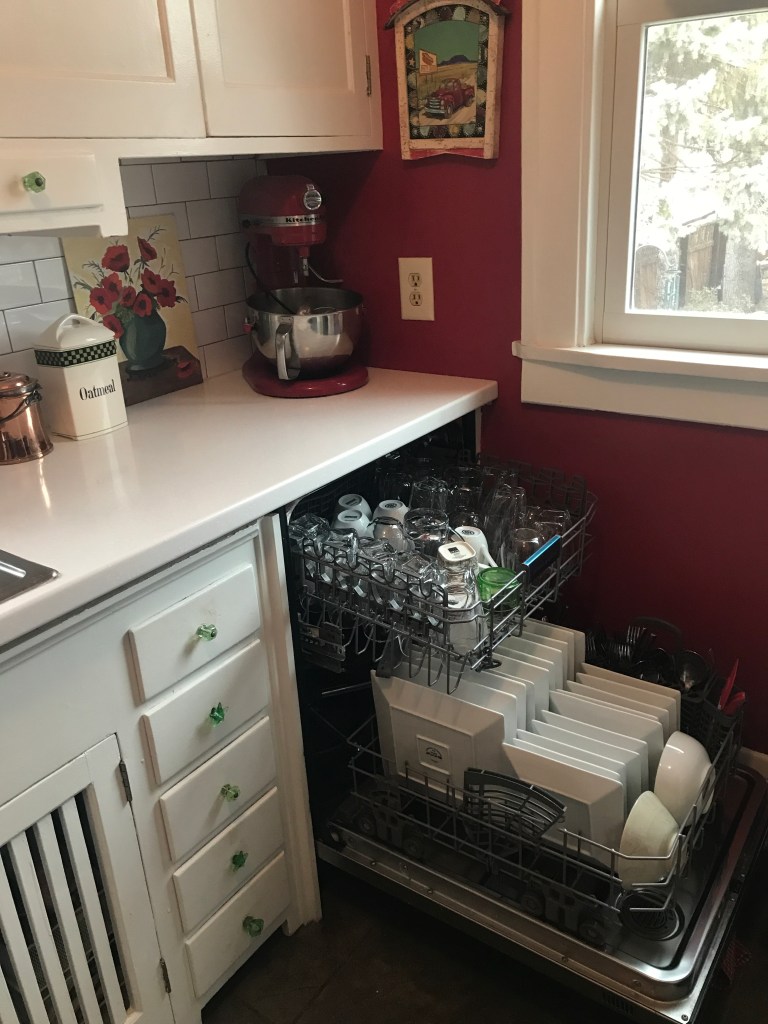
I decide to empty the dishwasher. Normally, my husband does that, but I am happy to do it today–a delaying tactic before I face the empty screen. Sunday evening a group of friends gathered here for potluck supper, and the dishwasher was packed. As I empty it, I think how wonderful it was to be together after a long COVID interim. We laughed and told stories, some we have told before and will probably tell again. We asked for prayers for loved ones and shared moments of grace. I confess that earlier in the day as I set the table, I wondered if we would be able to ease into one another’s company once again. No worries, for we reveled in our friendship and connection.

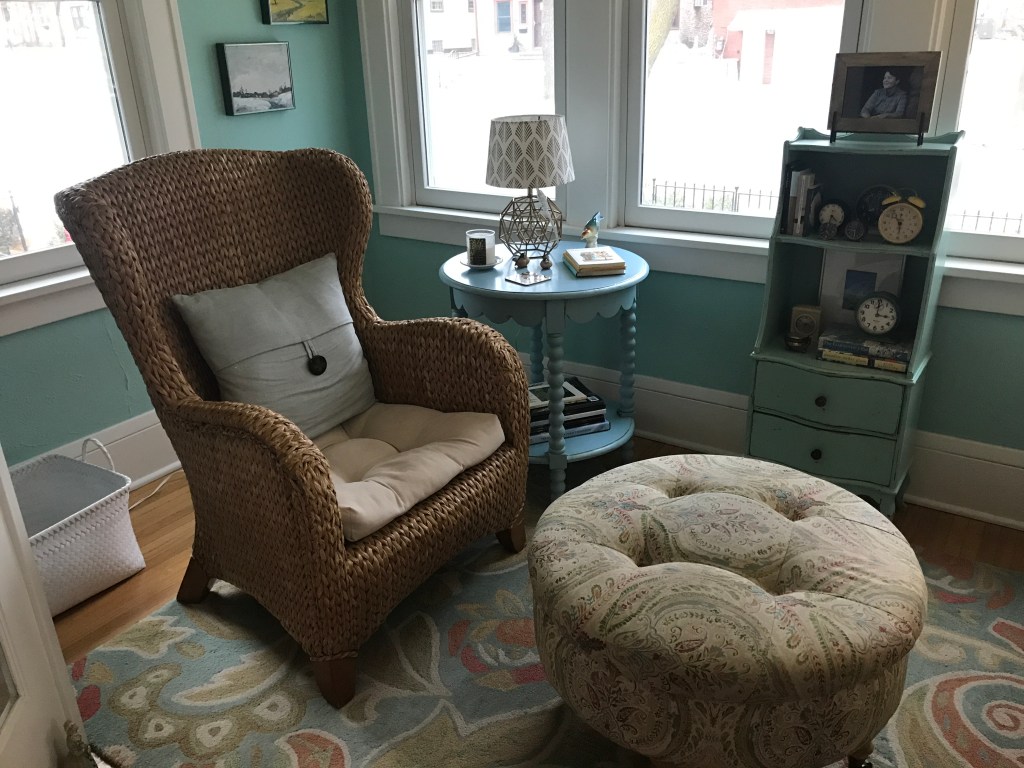
Still delaying going to my desk, I walk into the snug where the two chairs we found last week at an antique shop look as if they have always been there. I need to find the right cushions, but no rush, and that will be a fun search.

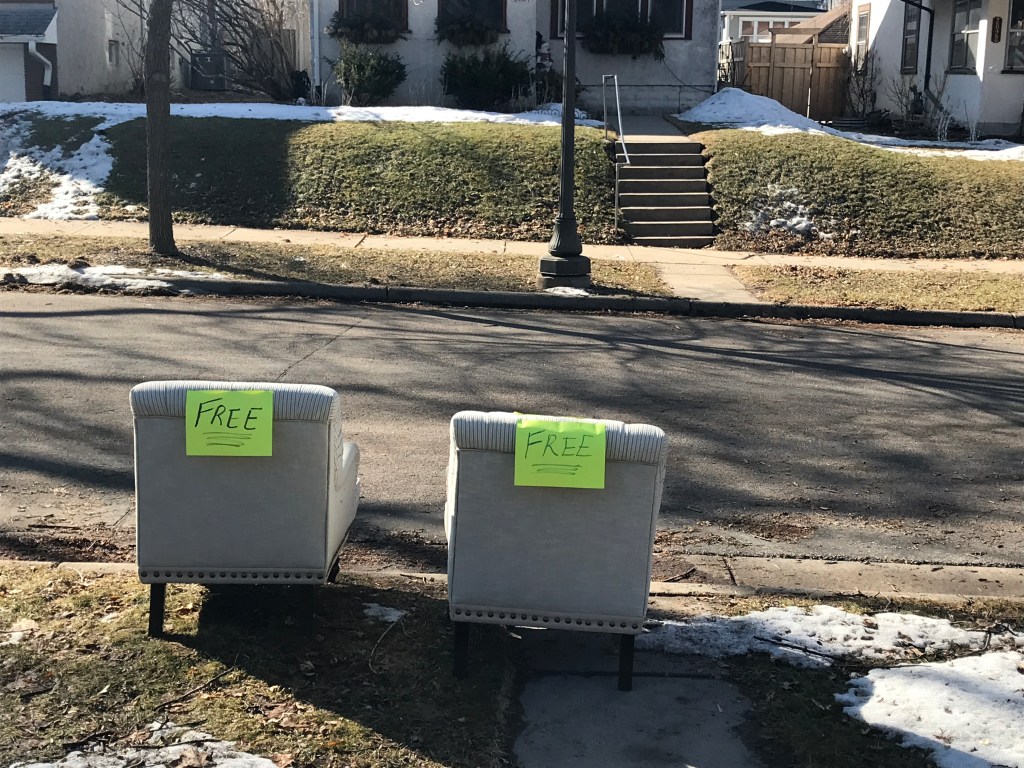
Bruce put the old chairs out on the curb with free signs and almost immediately the young boys next door dashed out asking it they could have them. Bruce said yes, IF it was ok with their parents. Apparently, that answer was “No,” but in less than an hour I saw four young people loading them into a SUV, and they were gone. I imagined the new owners coming to a screeching halt in front of our house when they spotted the chairs. “Yea, these are just what we need! I thought about all the books read in those chairs and prayed the new owners will find comfort and ease in them, too.

Finally, I sat at my desk. No more delays. I whispered a quick prayer, “What should I write, Lord?”

I begin to write.

An Invitation

When have you not known what it is you are to do next or say or even write? How have you responded? I would love to know.

Prayers Around the Cross

On Wednesday evenings during Lent our congregation extends an invitation to gather at the cross, to pray and light candles. Solemn, quiet moments. Moments when I not only hear my own heartbeat, but the yearning heartbeats of all those around me.

Each of us brings our own cares and concerns. Each of us brings hopes for safety and peace and life and love. We light a candle and lift the distress we feel.

And then we go home. Some of us may feel lighter. Some of us may experience clarity. Some of us may continue to feel the burdens we brought with us, but are at least grateful for the silence and beauty of those moments.

Feeling the warmth of the gathering, some of us feel even more grateful for the warmth of the homes to which we return.

A writer friend recently wrote these words in a new poem, “Doing Something,” about the war in Ukraine:

              I lit a candle
              I scrubbed the kitchen floor
              I scoured the bathtub
              I carried out the garbage
              I wiped out the refrigerator.
                                                                   
              Not because I loved the doing.
              I still have my home.
              I can do the ordinary. 
                                   Linda Schaeffer


"I can do the ordinary."

As I age, I am learning not only to appreciate the ability to do the ordinary stuff of life, but I am learning to do those tasks, those day-to-day routines, with prayerful intention. As I carry bags of groceries from the car to the house, I can carry prayers for all those who wonder where they will get their next meal. As I place clean clothes in my dresser drawers, I can pray that all those who have left all their belongings behind will be offered what they most need. As I retrieve the daily mail, I can send into the world prayers for protection and well-being. 

I know "ordinary" isn't enough, but I also know that extraordinary responses and efforts and solutions and changes are built on the ordinary. My prayerful ordinary moments along with your prayerful ordinary moments create room for the extraordinary to grow and thrive and make a difference. 

I believe that with all my heart. 

Wednesday evening I will return to the cross. Once again I will lift the yearnings of my heart and light a candle, but in the meantime, I will move through my ordinary days, praying for the extraordinary. 

An Invitation:

What are your prayers as you move through the ordinary moments of your days? I would love to know.

Note:

You may find this link interesting–the poet Matthew Guite reflects on what C.S. Lewis has to say about living in the midst of war. https://www.youtube.com/watch?v=ngGozM0ZMG8

Book Report: Library Holds

March 10, 2022

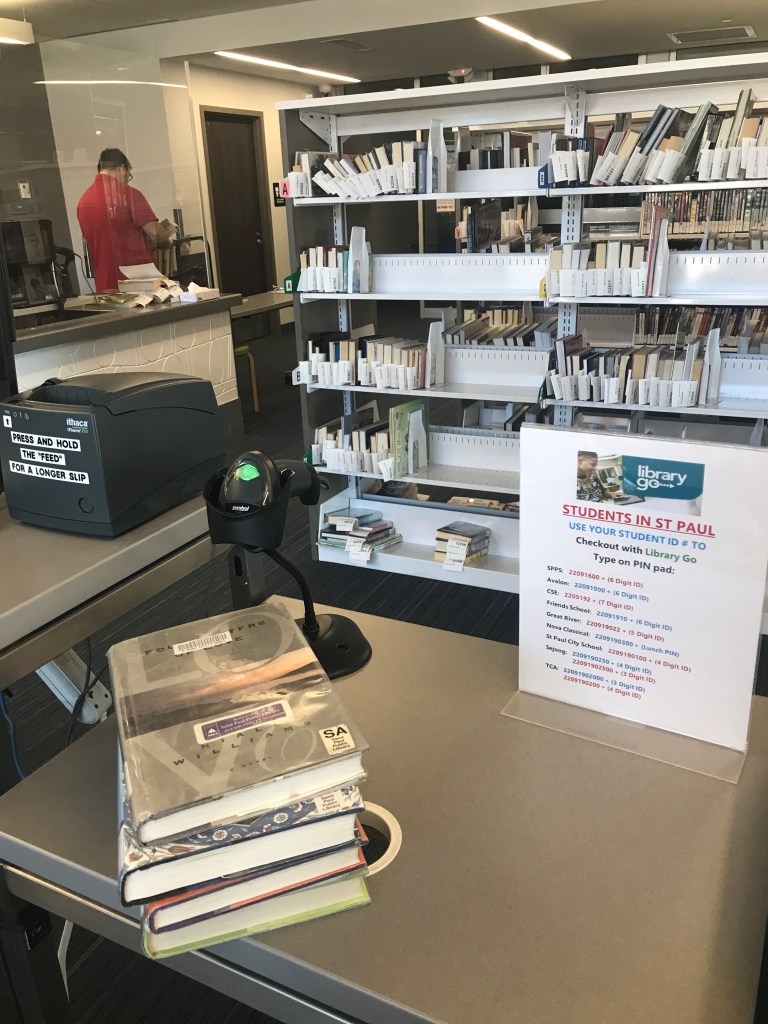
Nothing makes me much happier than an email from my library informing me that books I have requested are waiting for me, especially since I am about to finish a a big novel.

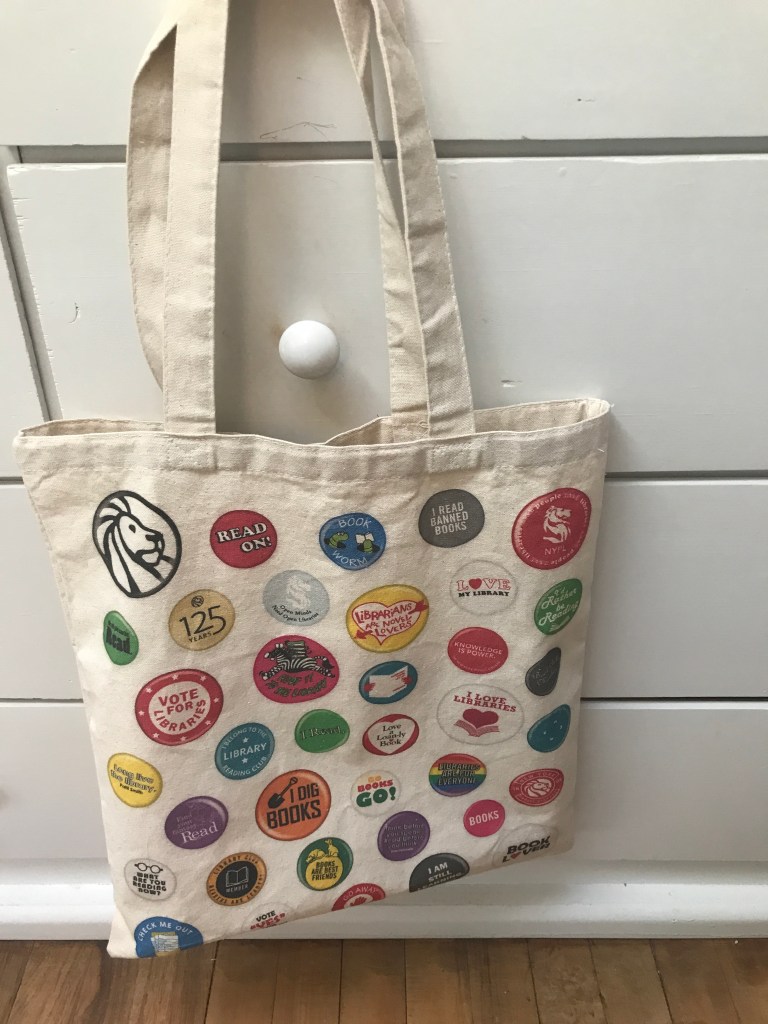
Off I go with my canvas book bag from the New York Public Library, a recent gift from my sister.

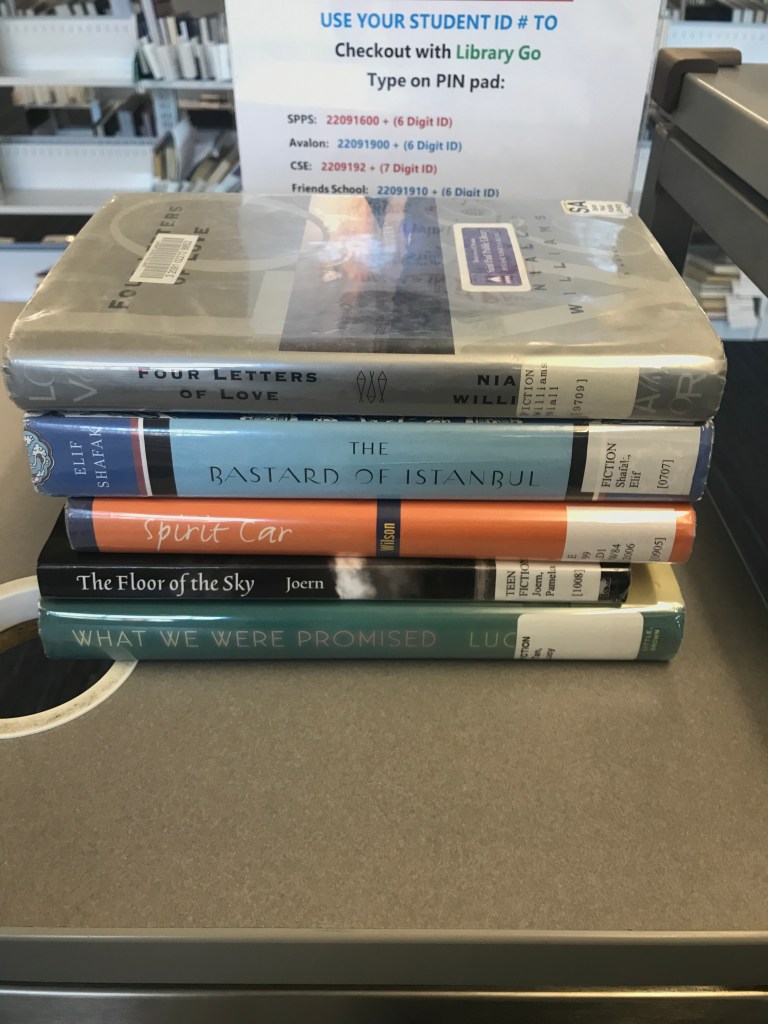
Here’s my loot:

  1. Four Letters of Love by Niall Williams. (1997) His more recent book This is Happiness was one of my 2021 top favorites, and I am eager to read more by him. This is also set in Ireland, and the book jacket describes it as a “novel about destiny, acceptance, the tragedies and miracles of everyday, and about how all our stories meet in the end.”
  2. The Bastard of istanbul by Elif Shafak (2007). This book was recommended by one of my readers and is the story of two families–one Turkish and one Armenian American.
  3. The Floor of the Sky by Pamela Carter Joern (2006). I am embarrassed I have not read this book or her other books, for she is a Minnesota writer and writes about the Midwest. A friend nudged me to order this book, which is set in the Nebraska Sandhills.
  4. What We Were Promised by Lucy Tan (2018). When I first heard about this book, I thought it was by AMY Tan, and I realized I have not read her more recent books, including a memoir. More for the TBR list. In the meantime I look forward to this debut novel by LUCY Tan about a family who moves back to China.
  5. Spirit Car, Journey to a Dakota Past by Diane Wilson (2006). You may have read Wilson’s celebrated novel, The Seed Keepers, and if not, I recommend it. Wilson explores her family’s history as Dakota people in South Dakota and Nebraska.

Which book beckons me first? I am eager to sit in my Mama Bear Chair and browse each book. First, of course, I will finish the novel I am currently reading, Marjorie Morningstar by Herman Wouk (1955). I found this book in a Little Free Library and am quite sure I have never read it before. I thought it might be dated –and parts are–but the story and characters are engrossing and don’t always feel as if the book is set in the mid to late 1930s.

An Invitation:

Do you use the library? Do you have a “hold” list? I would love to know.

Age and My Relationship to Time

Tuesday, March 8, 2022

My relationship with time is changing.

For most of my life I’ve plotted how much I can accomplish in a day. I’ve been determined not to waste time, but instead, making lists for each day, I have carefully planned my time. I have been ever conscious of how to use my time efficiently and thereby, gain more time or so I thought. Often I have treated time like an enemy. “I don’t have enough time.” “Where has the time gone?” I will ________ when I have enough time.

I’ve been a time vigilante. Watching time. Timing my time. Seeking ways to improve my use of time. Congratulating myself when I use my time well–according to my self-imposed standards, of course.

How is my relationship with time changing?

The watch I wore for years died. The watch was a gift from my husband–dressy, but simple. A good watch, and I loved it and wore it every day, all day. After having it repaired once, twice, it was clear the life of the watch was over, and my husband offered to get me a new watch. I picked one out, brought it home, but didn’t wear it and finally returned it. I no longer felt a need for time to be wrapped around my wrist.

True, my iPhone is a constant companion, and the current time is visible on my laptop, but somehow that feels different to me. I like seeing my naked wrist, free from the constant reminder of time.

Not only do I not wear a watch, but I also don’t set an alarm when I go to bed. I wake up when the sun’s brightness alerts me to the day or the rumbling of the garbage truck in the alley can’t be ignored. I wake up when I wake up. This winter I have slept later in the morning than I used to and in the past I would have chastised myself for the “loss” of a half hour when I could have been writing in my journal or going on a walk. Now I am more open to saying to myself, “Well, you must have needed the extra rest.”

I still make a list for the day, but my lists are shorter. I am more gentle with myself, more realistic, perhaps, about what I can accomplish in a day. Even what I want to accomplish in a day. And I am more open to disregarding the agenda I’ve created for myself, in favor of whatever appears or opens. Instead of restricting myself to an hour of meditation/devotion time in the morning, I sit in the Girlfriend Chair as long as my heart tells me that’s where I need to be.

I pay more attention to my energy. I know I need some time between working at my desk and fixing our evening meal. I know I need more open and unscheduled time, more time for refreshment. In the recent past the ratio of work days to play days was 6:1 and then it became 5:2, but more and more the rhythm seems to be 4:3. Not that long ago I spent part of Sunday writing my Tuesday posts and also preparing the material for the Thursday writing group I facilitate. Even before going to 8:15 a.m. Sunday church I looked ahead to the coming week, noting my appointments and making my To Do lists. Lately, however, I delay the planning till later in the day. I may answer some emails, as well, but leave everything else till Monday.

Some of the change, no doubt, is due to the pandemic and the necessity to be home, but much of the change is because of my age. Joan Chittister in The Gift of Years, Growing Older Gracefully points out both the blessings and the burdens of time in this stage of life. “Time ages things…Time deepens things…Time ripens things…Time is a wondrous thing.” (120-121)

I realize more and more what a privilege it is to have this time of my life; to have the kinds of choices I have; to still feel a sense of purpose. I am in ongoing discernment about how to live with purpose and do that in a way that “opens to the divine timing which best serves my soul,” as Julia Cameron says. (Blessings, Prayers and Declarations for a Heartfelt Life, 59) And when I am aware of how to best serve my soul, I am more aware of how to serve.

An affirmation:

It is my choice to use time festively and expansively. I have plenty of time, more than enough time. I fill my time with love, expansion, enthusiasm, exuberance, and commitment. I both act and rest at perfect intervals. Proper use of time comes easily to me. I set the rhythm of my days and years, alert to inner and outer cues which keep me in gentle harmony. Time is my friend and my partner. I let it work for me. I breathe out anxiety and breathe in renewal. I neither fight time nor surrender to time. We are allies as I move through life.

Heart Steps, Prayers and Declarations for a Creative LIfe by Julia Cameron, pp. 70-71

I love the steady, strong sound of the clock in the garret. Like a steady, strong heartbeat, a reminder to live my time.

An Invitation:

What is your relationship to time? I would love to know.

Book Report: February Round-Up

I tend to read more fiction than nonfiction, but month seven of the twelve I read were nonfiction. I read more than one book at a time–generally one that is nonfiction and the other, fiction. This month I read a long, 900+ page novel, and by the time I finished that I had several nonfiction books finished or underway.

Nonfiction

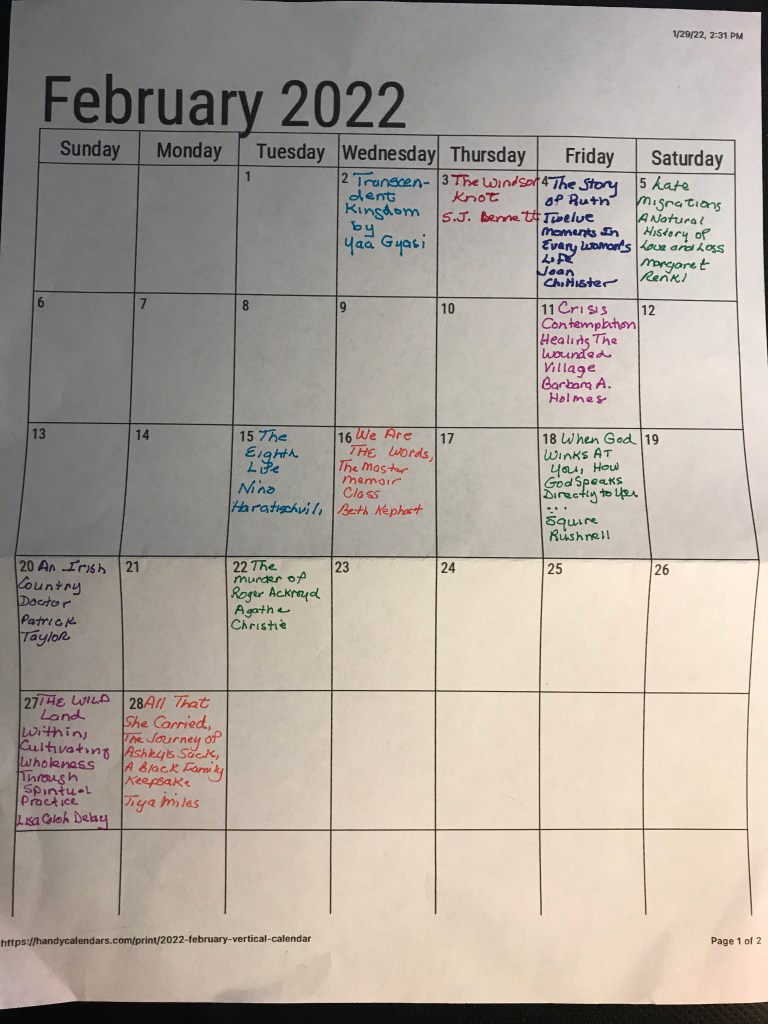
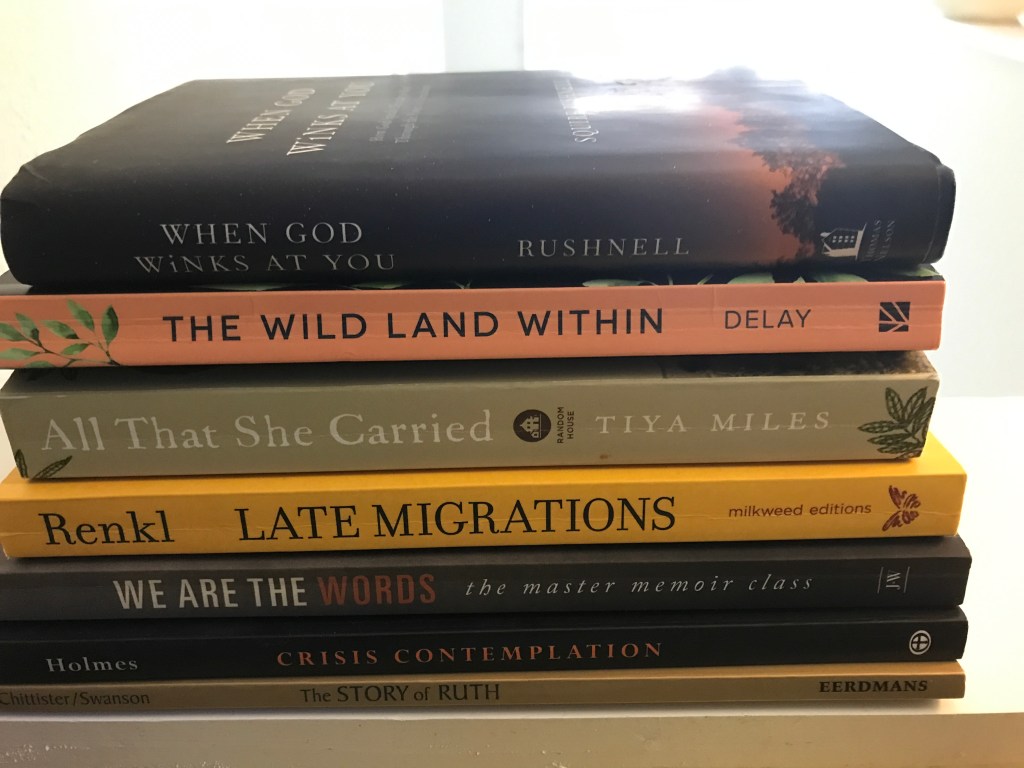
In earlier Thursday Book Report posts this month, I have written about three of the books I read this month: The Wild Land Within, Cultivating Wholeness Through Spiritual Practice by Lisa Colon Delay (2021), Crisis Contemplation, Healing the Wounded Village by Barbara Holmes (2021), and The Story of Ruth, Twelve Moments in Every Woman’s Life by Joan Chittister (2000). I benefited from reading each one.

Here are two more to add to your own TBR (To Be Read) list.

  1. Late Migrations, A Natural History of Love and Loss by Margaret Renkl (2019). This collection of brief essays goes back and forth between reflections on the nature and portraits of her parents and her own personal history. The two threads enhance each other. At times I felt I was peeking into her own journal, although the writing was far more accomplished than what is normally found in a journal. One example might be a list, “Things I Didn’t Know When I Was Six,” which may have grown from one or more journal entries.

The God you believe in acts nothing like the God other people believe in…

No black people live in your neighborhood even though black people work in every house in your neighborhood…

Your mother wants to work too, but there are rules that don’t let mothers work…

Your mother’s tears are not your fault.

pp.36-37

I have so many favorite lines–too many to note here–but I can’t resist one more:”Everyday the world is teaching me what I need to be in the world.” p, 126.

The book moves chronologically in time, beginning with her mother’s birth to her mother’s death and also the author’s life from childhood to adulthood with the loves and losses along the way. A bonus in this book is the gorgeous artwork by the author’s brother Billy.

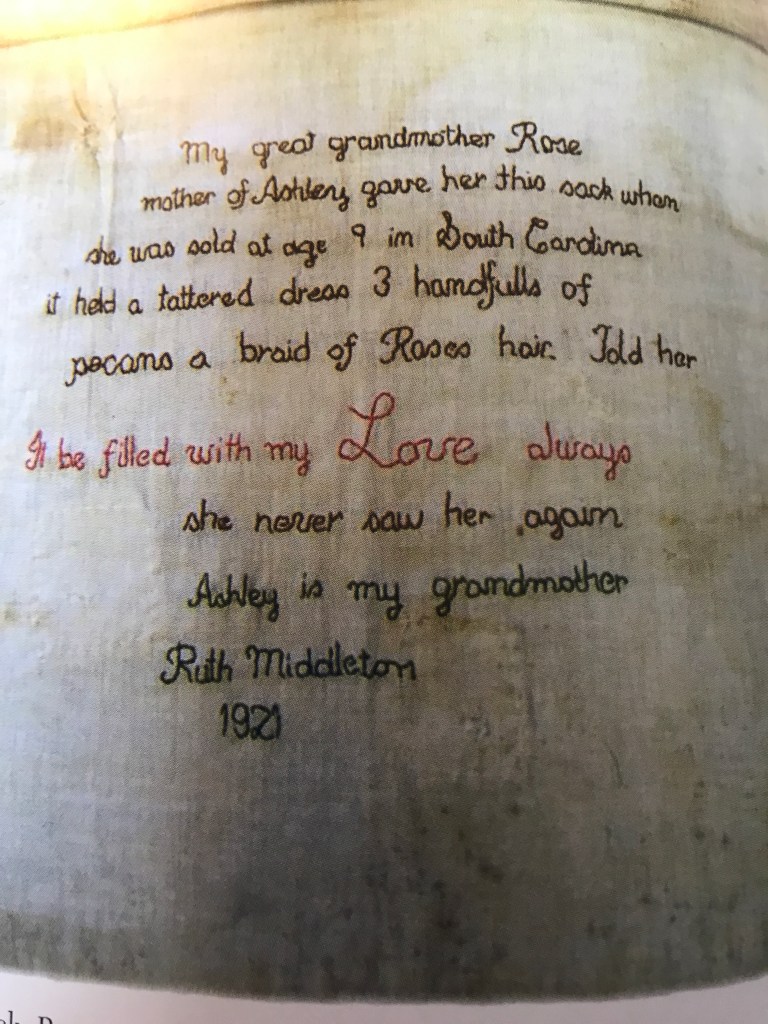
2. All That She Carried, The Journey of Ashley’s Sack, A Black Family Keepsake by Tiya Miles (2021). Rose was a slave in 1850s South Carolina and when her daughter Ashley was going to be sold, she packed a cotton bag for her with a few items, a tattered dress, three handfuls of pecans, a braid of her own hair. The sack was also filled with love. Decades later, Ashley’s grandmother Ruth in 1921 embroidered the contents and the briefest of family history on the sack itself. Sounds simple and charming, doesn’t it?

But first, consider how Ruth even came to have the sack in her possession.

When I first heard about this book, I was reminded of one of my favorite books of all time, Tim O’Brien’s The Things They Carried (1990), a novel, about the possessions soldiers carried during the Vietnam War and about what is important to hold and cherish.

But remember, slaves weren’t allowed to have many possessions nor did they have the ability to maintain family ties.

Yes, this is a book of remarkable scholarship and a book of enlightened history (Did you know that many slaves were required to wear a badge made of copper or tin that said “Servant” or “House Servant” to indicate which slaves had permission from their owners to do errands in town, for example? p. 82, or did you know that South Carolina was the only state in the union that didn’t have a two-party system or popular elections for the presidency, the governor, or other state and local positions, p. 174?), but it is also a book of heart-wrenching emotion.

Consider how the battle continues for how history is presented and learned in this country.

Fiction

I’ll just mention two.

  1. Transcendent Kingdom by Yea Gyasi (2020). The main character Gifty is a Phd candidate in neuroscience at Stanford. She has been drawn to the field because her brother who was a star athlete died of a drug overdose, and she wants to understand how that happens. Her mother, who immigrated from Ghana, is suicidal and moves in with Gifty. Her father returned to Ghana. The story moves back and forth between past and current storylines and includes many reflections about science vs religion and the role of the church in the lives of these characters. Excellent book.
  2. The Eighth Life (for Brilka)by Nino Haratischvili (2019) This book at 900+ pages took commitment, but I am glad I read it. As often is the case in a book this size, it is a family saga. Beginning with the Russian Revolution the story extends across a century. One Georgian family is highlighted–a family who owes its success to a delicious chocolate recipe passed down through the generations. Love, loss, war, ghosts, joy, massacres, tragedy, hopes, dreams. It is all here, and I can’t quite believe I read this as once again we are witnessing Russian imperial ambitions.

An Invitation:

What did you read in February? I would love to know.
Snowball Discernment

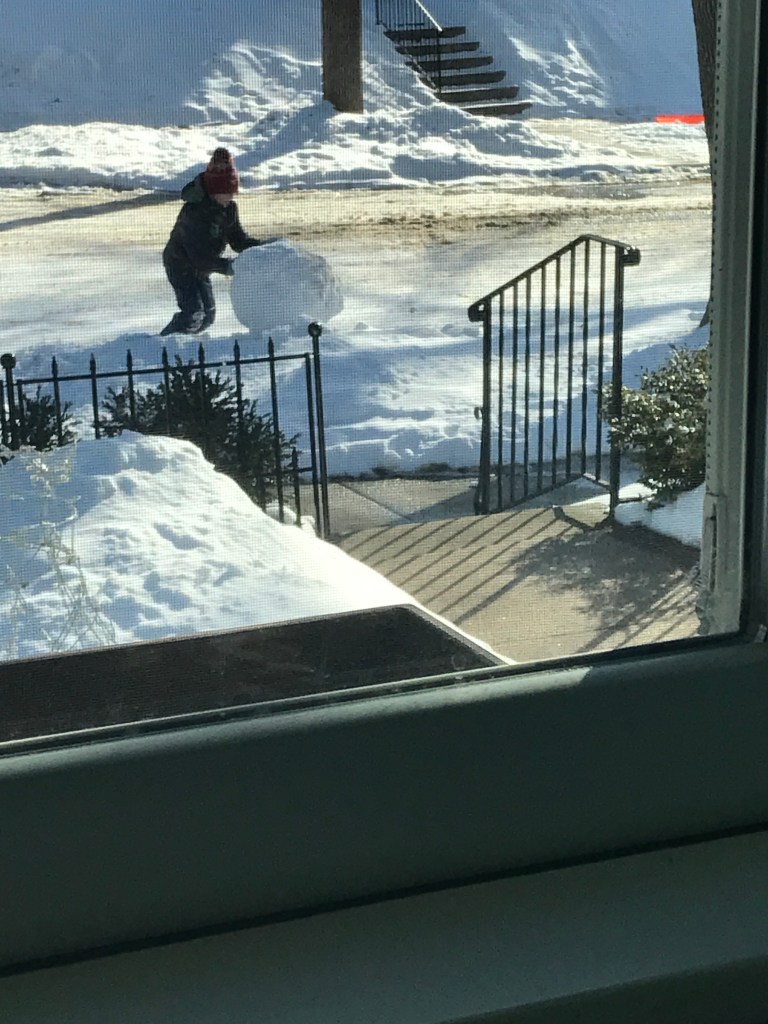
I glanced out the window of the snug and saw a struggle: boy vs snow. I noticed a path that must have started at the boy’s house a few doors away from us, and now the snowball had grown to heavy and unwieldy proportions. I have no idea what the boy’s goal or intention was, but now he faced a problem-how to roll the ball to wherever it was he wanted it to be.

He patted the snow around the big ball. He paused and looked around, hoping, I imagine, to find some of his buddies who might help. He rested, sometimes on the ball itself, but then he was right at it again, determined, it seemed, to accomplish his goal, whatever that was.

Soon he had some success and got the ball rolling, but then he was done, just plain done. At least for the moment.

Had he met his goal? Was the snowball where he wanted it to be? Did he decide to take a time-out and perhaps return the next day when he felt fresher and had a different perspective on the project? Had he changed his mind and decided whatever he had accomplished was enough? How did he feel about his efforts? Had he learned anything in the process?

Will he someday in the future remember the Sunday afternoon in February when he had a plan to roll a snowball from one end of the block to the other or to build a snowman in his friend’s front yard. Or maybe he didn’t have a plan at all. He just started rolling the ball one inch at a time. What story will he tell himself about that effort?

This simple drama outside our house seems like a window into discernment. Sometimes we start something with only a vague plan or maybe we know the outcomes we want, but we have no idea how hard getting to the finish line will be. Or maybe the goal changes as we go along, or maybe we discover we have gained valuable lessons or awareness along the way and it is time to move onto something else. Maybe the situation has changed, and it is time to evaluate the initial goal.

My thoughts return to the boy.

Maybe the boy’s inner voice whispered, “Enough, boy. I have other plans for you.”

Maybe the boy’s energy needs to be directed in other ways.

Currently, I have a big, heavy snowball in my front yard, a major project, and I don’t know what steps to take next. This is discernment time, and I am doing my best to find the balance between pushing and resting. Between looking at options and stepping away to gain perspective. Between consulting with others and listening deeply to myself and the voice of Spirit.

Tomorrow, March 2, is Ash Wednesday. The 40 days of Lent are a time to open to the yearnings God has for me, as well as the ways I yearn for God. I may or may not discern an answer to my current question by the time we sing “Alleluia!” on Easter Sunday, but I know the willingness, the attentiveness I give to the movement of God in my life will somehow grow me closer to the person I was created to be.

An Invitation: Is there something in your life now that calls you into discernment? I would love to know.

NOTE: Decision Making and Spiritual Discernment, The Sacred Art of Finding Your Way by Nancy L. Bieber (2010) is an excellent resource for the discernment process.

Book Report: Morning Meditation Basket

As promised in my recent post (Tuesday, February 21, 2022, “Morning Meditation”), today’s Book Report shares my current morning meditation and devotion materials.

My collection of materials change as I finish reading a specific book, but also as the seasons in the church year change and as my personal needs change. However, two books always remain: the Bible and a journal. I only have a few pages left in my current journal and need to choose a replacement soon. That is on this week’s list.

Here are the other books in the basket:

  • Celtic Treasure, Daily Scriptures and Prayer by J. Philip Newell. (2005). This may be the third time I have returned to daily use of this book. Right now I am focusing on chapter five, “Songs of the Soul,” but other chapters include “Stories of Creation,” “Power and Justice,” and “Letters of Love.” Each day in the seven week cycle, begins with the same words, “We light a light in the name of the God who creates life, in the name of the Saviour who loves life, and in the name of the Spirit who is the fire of life.” After encouragement to “Be still and aware of God’s presence within and all around,” Newell retells a piece of scripture and offers a prayer. The brief and simple, but oh, so lovely daily meditation always ends in the same way.

The blessings of heaven,

the blessings of earth,

the blessings of sea and of sky.

On those we love this day

and on every human family

the gifts of heaven,

the gifts of earth,

the gifts of sea and of sky.

The illustrations from the Book of Kells plus children’s drawings are lovely, too.

This book provides a framework for my meditation practice right now. I begin with the opening prayer and readings and end with the closing words.

  • The Wild Land Within, Cultivating Wholeness through Spiritual Practice by Lisa Colon Delay (2021). I first learned about this book on Christine Valters Paintner’s website, Abbey of the Arts. https://abbeyofthearts.com The author describes the book as

an invitation to explore your own flyover country. This book serves as a companion to search the inner and unseen but very real territory of yourself. As we attend to this land within, our journey will involve some issues you may know little or nothing about. There are places of rough and even terrifying terrain. We will learn what makes spiritual growth unnecessarily difficult or extra confusing. To explore this land within means encountering climate and storms, negotiating treacherous topography, and finding creatures both wounded and wild. p. 2

Delay, who is a writer, teacher, and spiritual director and originally from Puerto Rico, broadens my white cultural context with references to Native American, Black, Latinx, and others and asks me to define what have been my main influences and how those influences have affected my spiritual growth.

In an early section Delay spends time reflecting on the four soils parable recorded in Matthew 13:1-23, Mark 4:1-20, and Luke 8:4-15. I have been re-reading those pieces of scripture now myself, and using the practice of lectio divina, I ask what meaning they have for me after walking on the earth for almost 74 years. Ongoing exploration.

I am moving slowly, deliberately through this book. My plan is to read a chapter every day, but I keep returning to what I read previous days, finding more openings for learning and reflection. Chapter Five, by the way, is called “Weather Fronts,” and that seems perfect for the winter storm watch we experienced as I wrote this.

One more thing: Delay has a podcast, Spark My Muse. I have not yet listened to it, but I will.

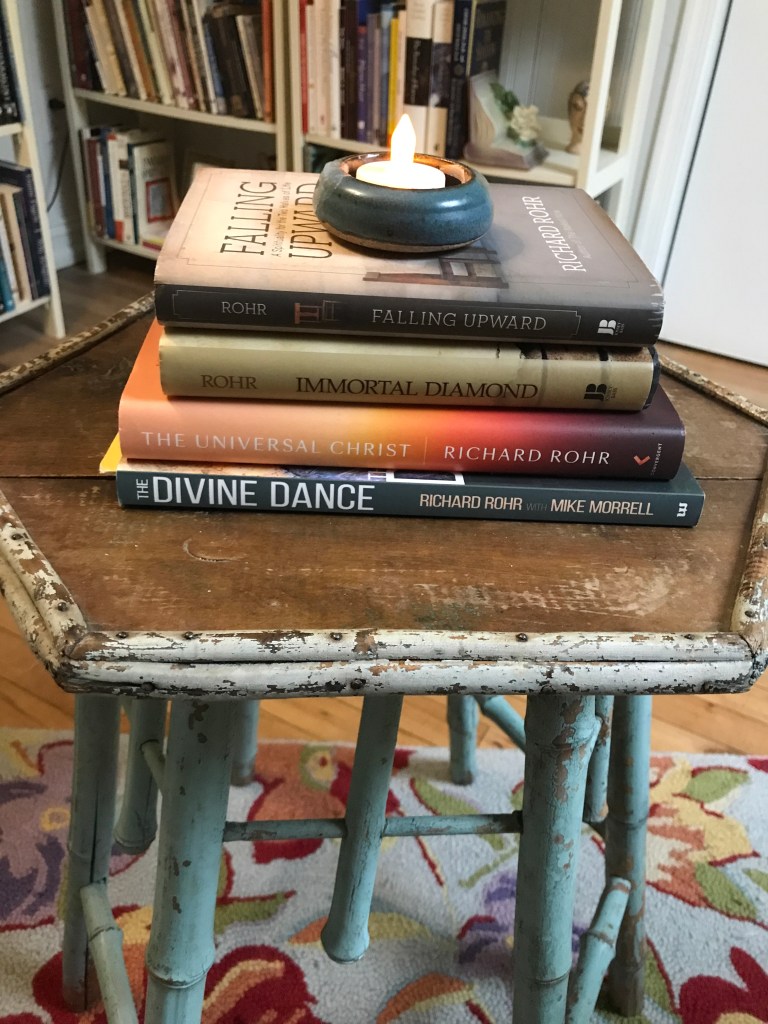
  • The Divine Dance, The Trinity and Your Transformation by Richard Rohr with Mike Morrell (2016) It seems I always have a Richard Rohr book in my meditation basket. If I think I am reading Delay’s book slowly, I am reading this one at an slower pace. I dip into this book, reading two or three pages, when I am willing to set aside the next task.

I was first attracted to this particular book because of the cover art, the famous icon of The Trinity created by Russian iconographer Andrei Rublev in the fifteenth century. I love that icon and the mystery it draws me towards. I was also attracted to the title of the book itself.

Whatever is going on in God is a flow, a radical relatedness, a perfect communion between Three–a circle dance of love.

And God is not just a dancer; God is the dance itself. p. 27

This book will be in my basket for a long time. Oh, I also have a publication from Richard Rohr’s Center for Action and Contemplation: Oneing, An Alternative Orthodoxy. Volume 9, No. 2 focuses on The Cosmic Egg.

  • Soul Therapy, The Art and Craft of Caring Conversations by Thomas Moore (2021) This is another book I dip into when the spirit moves me. Moore’s books, especially Care of the Soul, have been important landmarks in my spiritual growth. Directed towards “helpers,” including psychologists, social workers, ministers, spiritual directors and others, the book reminds me to continue my own soul work as I sit with others doing their own soul work.
  • The Making of an Old Soul, Aging as the Fulfillment of Life’s Promise by Carol Orsborn, Ph. D (2021) I have not yet cracked open the cover of this book, but I enjoy Orsborn’s blog https://carolorsborn.com and I really liked her earlier book The Spirituality of Age. More than likely, I will report on this book later.

My basket runneth over!!

An Invitation: What books or other materials do you turn to for reflection and soul work? I would love to know.

Morning Meditation

Dear Lord, So far today, God, I’ve done all right. I haven’t gossiped, haven’t lost my temper, haven’t been greedy, grumpy, nasty, selfish or over-indulgent. But in a few minutes, God, I’m going to get out of bed. And from then on I’m probably going to need a lot more help. Amen

Author Unknown

When I found a copy of this little prayer in a book a friend gave me, I laughed out loud. True, so true, and it reminded me why I spend part of my morning in meditation and devotion time. I need all the help I can get.

First thing in the morning, before I get dressed, but after making the bed, I walk up the stairs to the garret. I turn on the twinkle lights around the window and my desk lamp, but I don’t turn on the laptop. I confess I have already checked my phone, just to make sure I’ve not missed any vital messages, but then I leave it on my desk, out of easy reach, and turn to my meditation corner.

Unlike a Buddhist sitting on the floor, legs crossed, back straight, I rest easy in an overstuffed, slightly shabby chair I call my Girlfriend Chair. In our home prior to this one, this chair, slipcovered with vintage tablecloths, lived in one of our guest rooms, quite feminine in decor, called The Girlfriend Room.

I begin my meditation time with my eyes closed, lightly, not tightly, and I take a couple deep cleansing breaths, finding my own rhythm. In fact, finding the rhythm is the reason for this time, although I have not always named it in that way.

What is today’s rhythm?

In what ways am I out of rhythm?

To what rhythm does God call me? Today? Beyond?

What follows in my meditation time differs from day-to-day, but most often it includes a brief reading and prayer for the day, using a specific book, such as Joyce Rupp’s Fragments of Your Holy Name, followed by writing in my journal and studying a book on spirituality. The study time often leads me to reading a passage in the Bible, which may take me back to additional journal writing time. Interspersed throughout the hour or more, is intentional prayer time, lifting up names and concerns on my heart. If I have an appointment that day with a spiritual direction client, I imagine being with that person and pray that we will know the Presence in each other’s company.

Before I end this sacred time, I once again close my eyes, lightly, not tightly. I take a couple deep cleansing breaths to find my own rhythm and I rest in the silence.

When I notice a thought, often a worry, but sometimes a writing idea or an approach to a task on my To Do list, I gently breathe it away, for I know If it is important, it will be there when I need it. Sometimes I feel total openness, but the second I am aware of that feeling, it is gone. Sometimes the silence, the stillness, brings tears to me eyes. Sometimes I feel my heart lift. Sometimes I feel a surge of energy, a freshness.

I may hear the bells from the chapel on the campus of St Thomas University chime, as they do every quarter hour, or I may hear our backyard windchimes, sharing their own rhythm, or a cardinal singing a winter song, or the children next door heading to school. Or I may hear a whisper of my own inner voice, “Nancy, it is time to move forward into the day.”

Often my morning meditation time may be reinforced later in the day by a something I read online, such as Richard Rohr’s daily meditation, or by walking in the neighborhood, or by an interaction with a loved one, but my morning time provides me with the pulse I need. If I miss more than a couple of morning meditation times, my rhythm becomes raggedy and unbalanced. This precious time, this holy time, is what I need to be aware of the movement of God in my life and how I can be present to the way God desires me to move and be in the world.

Before leaving the Girlfriend Chair where I always feel held and known, I lift up one more prayer, “Thank you.”

An Invitation: How do you find your rhythm in the day? I would love to know.

NOTE: In my Thursday, February 24 “Book Report” post I will share what books currently are in my morning meditation basket.

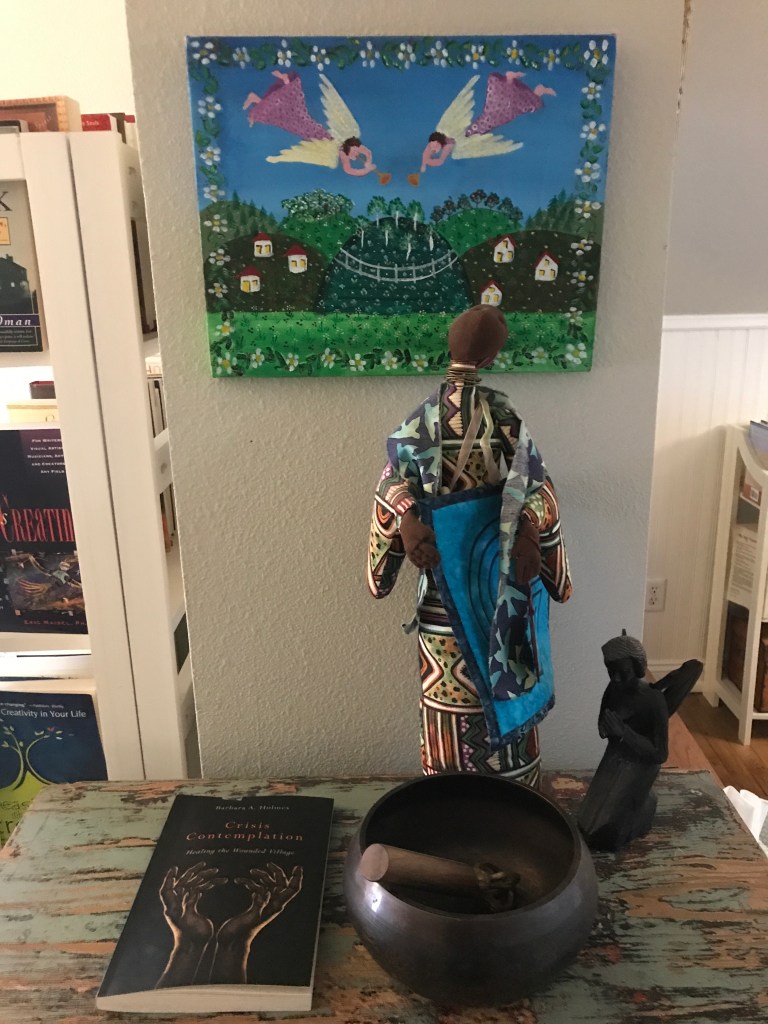
Book Report: Crisis Contemplation, Healing the Wounded Village by Barbara A. Holmes (2021)

We can identify three common elements in every crisis: The event is usually unexpected, the person or community is unprepared, and there is nothing anyone could do to stop it from happening…Bereft of words, all of us hold the same question: How could this be happening? Crisis Contemplation, p. 21

We don’t need to think very hard or very deep to identify crises in the last couple years. You may have experienced a personal crisis, alongside the communal ones our society has been enduring.

I don’t imagine many of us respond by moving into contemplation when a crisis strikes. Our more immediate response is action. This book does not negate that response, but at the same time Holmes encourages us to “allow for the possibility of contemplative refuge, respite, and renewal. To slow down and be still is to allow both the source of our troubles and options for recovery to emerge.” (42)

This is hard work and as Holmes points out this work does not mean retreating to our meditation pillows. She points out that “Contemplative porch practices are no longer required of me; they are part of me.” (42). Yes! I often urge my spiritual direction clients and my readers to develop spiritual practices now, before the unexpected, which will come, for sure. Ground yourself in your contemplative practice and they will be with you.

As I read this book, I felt as if I was sitting in the back of a room where Holmes was exploring and reflecting with BIPOC peoples. I had the privilege and pain of listening, opening my heart (I hope) to the trauma, the wounds across the generations and so present now. I attempted to read this book as a contemplative practice.

Rev. Dr. Barbara Holmes, author and scholar of African-American spirituality and mysticism, is on the faculty of Center for Action and Contemplation (CAC) under the leadership of Fr. Richard Rohr, https://cac.org and it was in one of CAC’s daily meditations where I was introduced to her wisdom. I know I will eventually read one of her earlier books, Joy Unspeakable: Contemplative Practices of the Black Church (2017). And I am drawn back to books by Richard Rohr.

The Universal Christ, How a Forgotten Reality Can Change Everything We See, Hope For, and Believe (2019) has become a touchstone book for me.

As I was writing this post, I remembered another book on my shelf, one I have recommended when personal crisis hits, The Ten Things to Do When Your Life Falls Apart, An Emotional and Spiritual Handbook by Daphne Rose Kingma (2010). This book focuses more on individual issues, but still, there is much to contemplate here. The ten things, by the way are:

  • Cry your heart out
  • Face your defaults
  • Do something different
  • Let go
  • Remember who you’ve always been
  • Persist
  • integrate your loss
  • Live simply
  • Go where the love is
  • Live in the light of the Spirit.

As always, one book leads to another and another.

An Invitation: When you have been in the midst of a crisis, has there been a book that has been helpful or meaningful? I would love to know.