The Value of Solitude

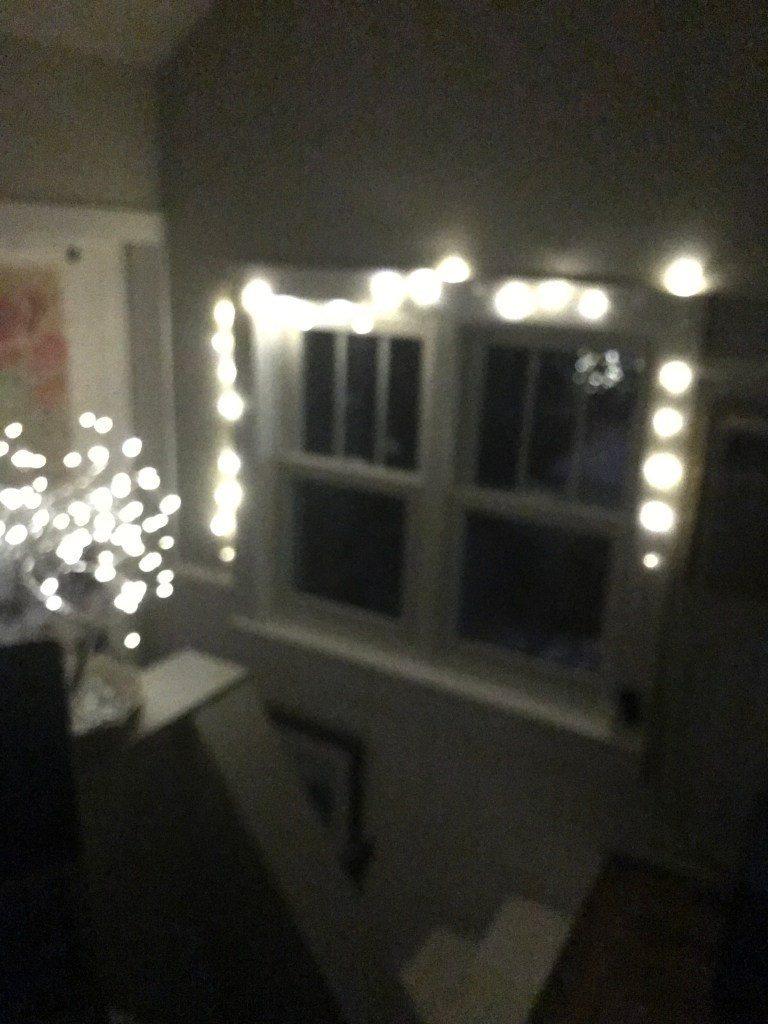
Most mornings I begin the day in my version of a monastery; the room I call the garret. I climb the one flight of stairs, as if to a bell tower. I turn on the twinkle lights around the window and the wiry tree of lights that sits on the ledge before settling into a comfortable chair for prayer time, meditation time, study, and journaling time.

Solitude.

Once a month or so a group of friends gather for a meal and conversation. The hosts suggest a question or topic to consider; something that will deepen our awareness of ourselves and each other. At the most recent gathering we considered our core values. Our host had sent a long list of possible values –over 60, actually–and directed each of us to sort them into categories: Those That Matter Most to Me; Those That Matter Some to Me; and Those That Matter Least to Me.

A daunting task, but I decided to sort through them quickly and try not to second-guess myself.

The next step was to divide the “matter most” pile into the top ten and then the top five. Here’s my selection:

  1. Spirituality
  2. Family
  3. Love
  4. Solitude
  5. Purpose
  6. Self-awareness
  7. Wisdom
  8. Gratitude
  9. Mindfulness
  10. Forgiveness.

During our dinner conversation, we were each invited to focus on one of the values from our top five choices. I chose “solitude,” which is number four on the list, but as I reflected, I wondered if it is actually number two or even number one.

I learned how to be alone as a child, mainly because we moved often and there were always the summer months before starting school and making new friends. Perhaps those circumstances contributed to my introverted nature, but I think the desire for, the need for solitude goes beyond my designation as an introvert on the Myers-Briggs Personality Inventory.

A regular practice of solitude brings me closer to my essence, to the person I was created to be. Solitude opens me more fully to the movement of God in my life and the life around me.

It is true that sometimes I enter solitude weary and the alone time helps me renew my energy, but creating time and space for solitude means much more than substituting quiet for noise or stillness for busyness. Solitude is a time to listen to my inner voice, the soul voice, the voice of Spirit reaching out to me, into me.

Once I knew and accepted this about myself and was truly able to own that value, life became much easier for me. And as I look at this list of my values, I see how solitude is integral to each of the other values. Solitude, as my companion on my spiritual journey, helps me clarify my purpose, and opens me to self-awareness. Solitude leads me to gratitude and mindfulness and forgiveness and supports my love of family and friends. In solitude, wisdom has room to grow.

I thank Glenn Mitchell of Oasis Ministries,( https://www.oasismin.org/prayernotes )which is where I trained as a spiritual director, for this reflection about prayer, which feels so applicable to my feelings about solitude:

I think my formal prayer grounds me well in my life.I think it help keep me porous and resilient. I think it keeps my spirit receptive and responsive. I think over time it has blessed me with a greater sense of peace and calm. In many ways it prepares the soil of my life for the new day.

My word for the year, as discussed in an earlier post, is rhythm, and more and more I realize how solitude helps me recognize and cross the threshold into the life-giving rhythms of my life.

An Invitation: What are your key values? I would love to know.

NOTE: To sort through your values, check out The Live Your Values Deck https://lisacongdon.com/products/values-deck
Book Report: Book Conversations

Some of the best conversations include talk about books.

Recently, my husband and I had dinner with our granddaughter Maren and along with talk about her first semester at college, the reunion she had during winter break with the women from her wilderness canoe trip in Alaska this summer, and her plans for the 2022 summer, we talked books. Maren is not only a voracious reader, like everyone else in the family, but she is a careful and insightful reader. I trust her recommendations and value her appraisals and judgment. She is also an excellent writer herself–perhaps someday I will be able to recommend a book written by her.

Over pasta, we shared titles. She had recently read The River by Peter Heller, and I had just finished and really enjoyed his earlier book Celine. I have added The River to my own TBR list now. She had read Celeste Ng’s Everything I Never Told You, and I urged her to read Little Fires Everywhere. She and her Dad are watching Station Eleven, and I mentioned how excellent the book by Emily St James Mandel is and later gave her my copy of the book.

When she was a baby, we sent her at least one book every month, building her library from babyhood through the toddler and childhood years and on into middle school. The regularity of the book-giving routine eased as she got older, but there were still occasional book-buying sprees with her and always the gift of a book or two is part of birthdays and Christmas. For Christmas this year we gave her two books related to her own wilderness experiences, The Twenty-Ninth Day, Surviving a Grizzly Attack in the Canadian Tundra by Alex Messenger and Hudson Bay Bound: Two Women, One Dog, Two Thousand Miles to the Arctic by Natalie Warren. As she shared her impressions of these books, we learned more about her own 30-day plus canoeing and hiking trip above the Arctic Circle this past summer with five other women.

Earlier this year I gave her a stack of books about writing as part of her high school graduation present. Some were new copies of books I have loved and valued, but others were ones I plucked from my own shelves and passed on to her, including Natalie Goldberg’s Writing Down the Bones, Freeing the Writer Within. A true classic for all writers. My copy included a note written to me by Natalie after I helped publicize a writing workshop decades ago. How gratified I was to hear Maren say how reading that book has given her a new and renewed outlook on writing practice.

Talking books, sharing titles with other readers is always a delight, a way to connect and enrich our understandings of each other–and what a treat to do that with our granddaughter.

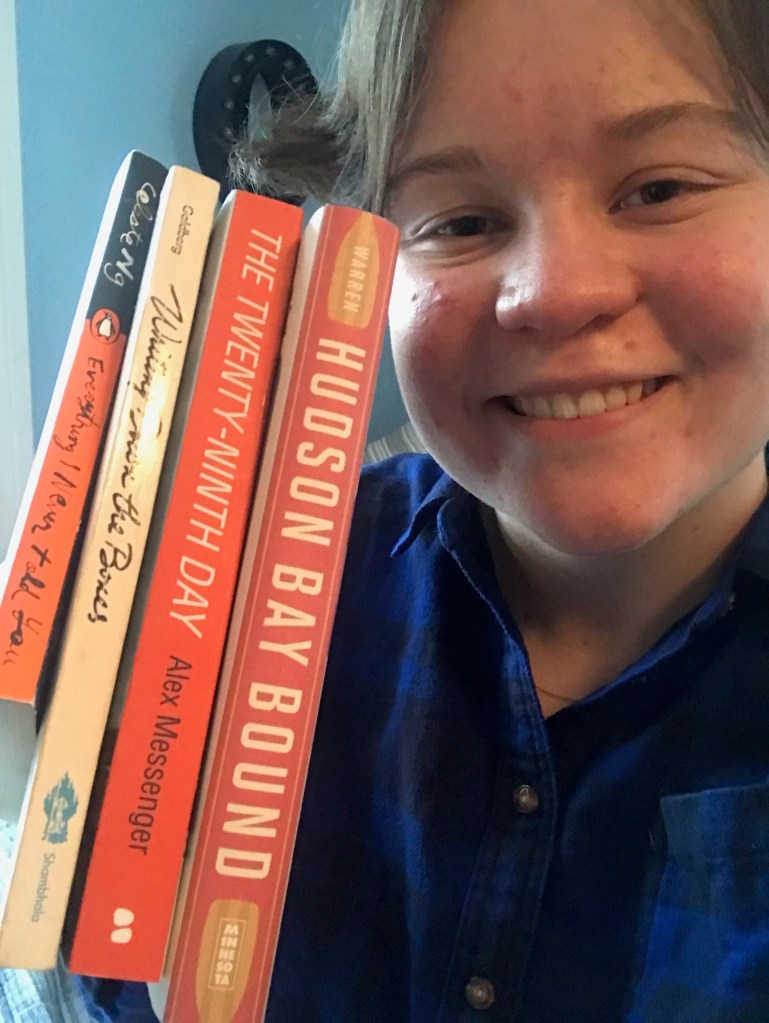
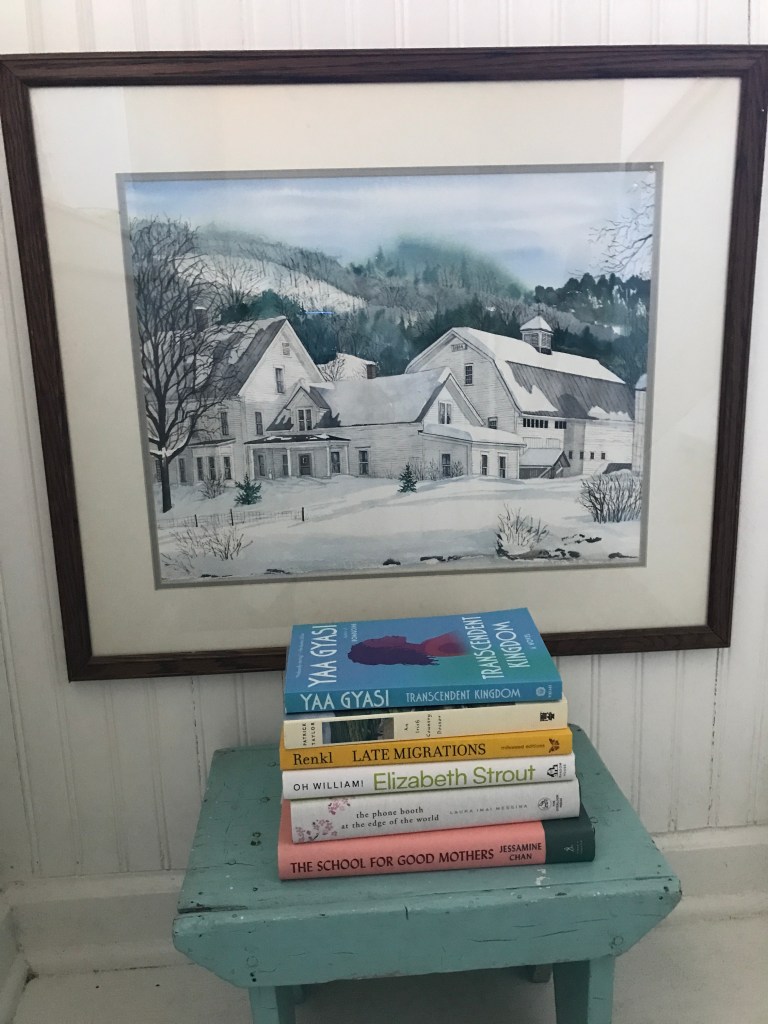
On another note, my book piles continue to grow. Over the weekend my husband and conducted a Book Raid at one our favorite bookstore, Content Bookstore in Northfield, MN. https://www.contentbookstore.com Here’s my stack–stay tuned for more book reports!

An Invitation: Have any recent conversations included book talk? I would love to know.

Epiphany Season and The Rhythm of My Camel

Crossing the threshold into the new year has been challenging for me this year. Normally, I tackle my list, completing or adjusting tasks from the previous year and eagerly moving forward on a list of intentions for the new year. This year I have done this and that, now and then, but without much energy or focus.

This is not my normal rhythm, and since “rhythm” is my word of the year, I am paying attention to this change in my pace.

I’m not the only one whose pace seems slower.

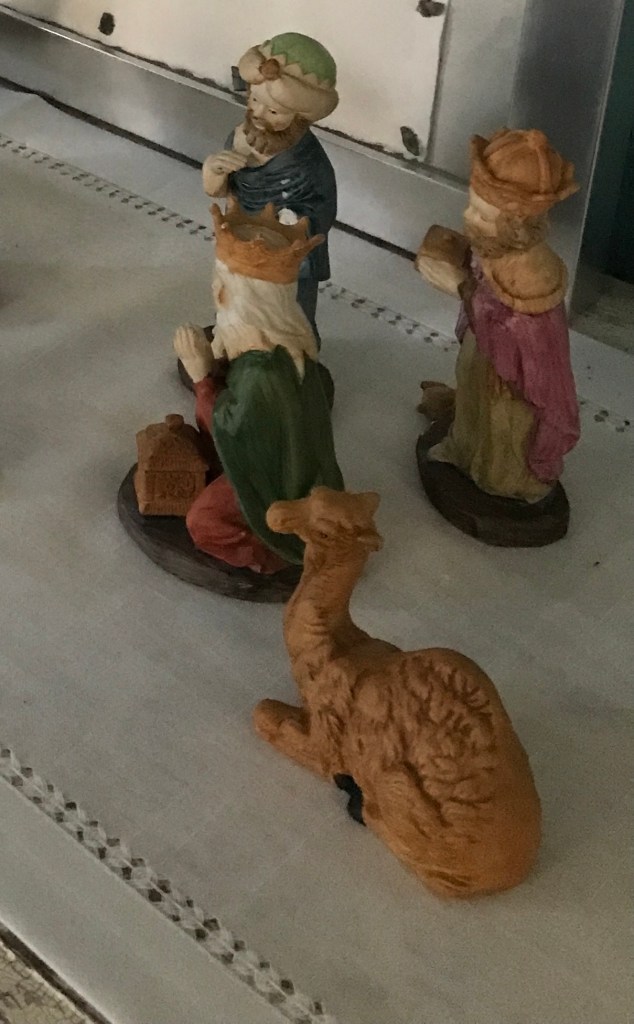
My camel, the one I rode to the manger in Bethlehem and who now is returning me home, is moving slowly. Very slowly. Why isn’t my camel moving faster, especially since we Wise Ones dropped off our gifts to the Holy Family and the load is lighter? I do realize that we are taking a different route home, in order to avoid Herod. The way is new to me and to my camel.

My camel has been a faithful servant and the days on the journey have been long and uncertain, and perhaps it is tired. I am tired, too. I am weary of living with the uncertainty of these days and the plans unmet and the need to be ever-vigilant and flexible and resilient. Perhaps you are feeling this way, too.

Thanks to one of Diana Butler Bass’s recent blogs, https://dianabutlerbass.substack.com/p/epiphany-now I remembered that Epiphany is not just the day the Wise Ones arrive at the manger, but rather Epiphany is a whole season that lasts until Ash Wednesday, which, this year is later than usual, March 2.

Therefore, I whisper to my camel as I pat its long neck, “No need to rush. Take your time. I trust we will get there when we get there, and who knows what amazing sights we will see along the way. Didn’t we see the brightest of stars at the beginning of our journey, and oh, how miraculous that was?

And who knows what dreams we will have when we stretch out under the expanse of the night sky and what thoughts will occur, as I rest in the slow and steady rhythm of your movement, dear camel companion.

This journey into the new year may be a new direction, but one that requires a kind of spaciousness and time to unfold. Perhaps this year ahead is one in which deeper clarity and understanding will emerge, bringing unexpected gifts. My task is to pay attention, to stay awake, but also to rest when overwhelmed or weary. I trust your ability to guide me and get me where I need to be. In your good time, dear camel companion.

An Invitation: What is your rhythm as you move into the new year? I would love to know.

Book Report: A Book For My Age

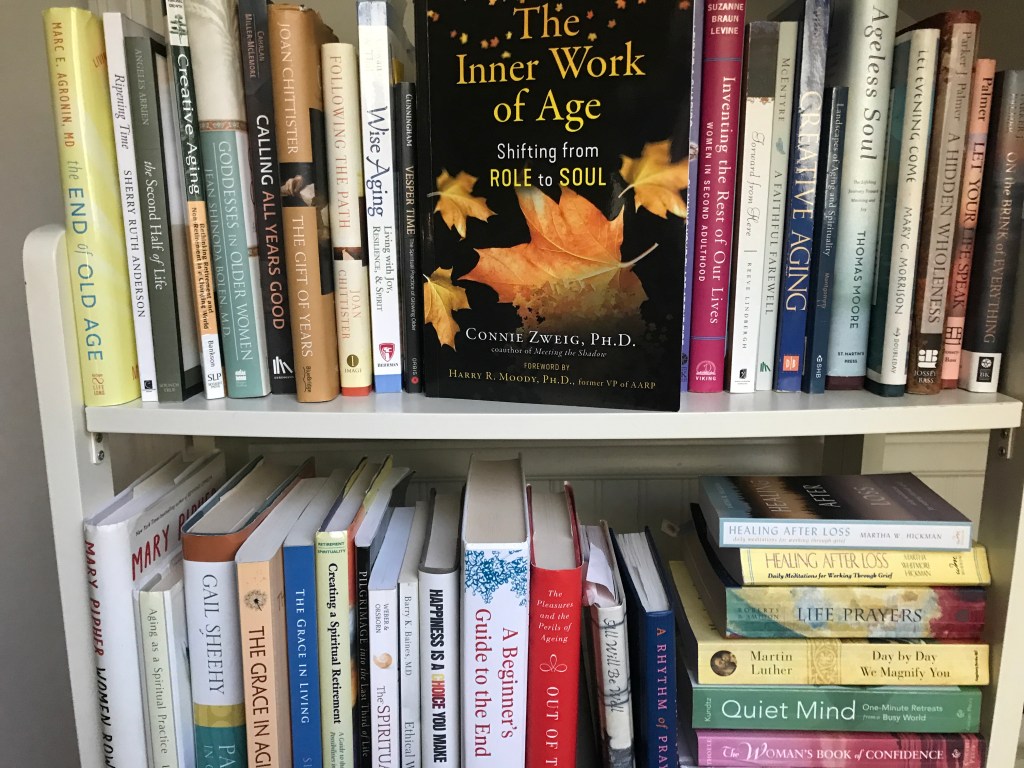
A growing area of my garret bookshelves is books about aging, about living as an elder.

The book I return to over and over is Joan Chittister’s The Gift of Years, Growing Older Gracefully, and another ongoing favorite is The Grace in Aging, Awaken As You Grow Older by Kathleen Dowling Singh. Both are rich and, in fact, offer even more riches as I grow further into elderhood, but lately I have been immersed in a 2021 book, The Inner Work of Age, Shifting from Role to Soul by Connie Zweig.

Here’s what is written on the back cover:

With extended longevity comes the opportunity for extended personal growth and spiritual development. You now have the chance to become an Elder, to leave behind past roles, shift from work in the outer world to inner work with the soul, ad become authentically who you are. This book is a guide to help get past the inner obstacles and embrace the hidden spiritual gifts of age.

The author, Connie Zweig, PH.D, is a retired psychotherapist who is known as the “Shadow Expert.” Many years ago I read her now classic work, Romancing the Shadow, Illuminating the Dark Side of the Soul (1997).

I am reading this new book slowly, taking time to respond to questions she offers for reflection, along with the guided meditations and other spiritual practices presented at the end of each chapter. The chapter that has resonated with me the most so far is “Retirement as a Divine Messenger,” but this morning I finished reading “Life-Changing Illness as a Divine Messenger,” a rich preparation for when illness enters my own life.

I am hesitant to say much more about this book, except that it feels momentous to me. The right book at the right time–both opening me to new thoughts and information, too, as well as reinforcing what seems to be unfolding in my own aging process. I am certain this will not be the last time you will find references to this book in my posts. Stay tuned.

An Invitation: If you are an elder or approaching that time of your life, what books do you recommend to support and enhance this Third Chapter state. I would love to know.

Word for the Year: Rhythm

Images by Steve Sorman

One of my spiritual practices at the beginning of each new year is to ASK FOR A WORD; a word that will nourish, challenge, lead, and even wrestle me into new growth.

Perhaps you have heard about the Desert Monastics, monks and nuns, ammas and abbas, who retreated into the Egyptian deserts in the third to sixth centuries. Their goal was to live as close to the basics of life as possible. They devoted themselves to fasting and asceticism, in order to concentrate only on God.

In response, others flocked to these Desert Monastics, hoping to receive a WORD to guide them in their daily lives. The word might be a parable, a saying or a lesson, a few words or even one word–guides for pursuing a meaningful life.

We can do the same thing–without making a pilgrimage to the desert.

Here are some ways to open to your word, to discover that guiding word, much like the star guided the Wise Ones to the Christ Child:

  • Practice lectio divina as a way to reflect on the past year. Sift through some key experiences of the past year. Big and small. Spend time with one or two of these experiences, remembering them in detail, including the senses. Look back at them as the person you are now. Is there a word or phrase that emerges? Sit with that word. Rest with that word.
  • Go for a contemplative walk. The object is not to get somewhere, but to be in the movement, the creation around you. Listen and smell and watch and perhaps even touch. Ask yourself why you decided to turn left, rather than right. If the walk is a familiar one, what feels new? Take a picture of what appeals to you. Be selective. Receive an image. Does a word or phrase emerge? Sit with that word. Rest with that word.
  • Listen to your dreams. Keep paper and pen at your bedside, and when you awaken, note what presents itself to you. Before you go to sleep, ask for a word to come to you. Is there a word or phrase that emerges? Sit with that word. Rest with that word.
  • Invite your spiritual director or wise elder or loving friend to offer you a word. Have they heard you use a word frequently during the year? Share with them your reflections of the past year and your intentions for the coming year. What do they hear you say? Is there a word or phrase that emerges? Sit with that word. Rest with that word.
  • Pay attention to what you read or hear. Are there any themes that keep appearing or specific words? What resonates with you? Does your body react in some way? What emerges? Sit with that. Rest with that.
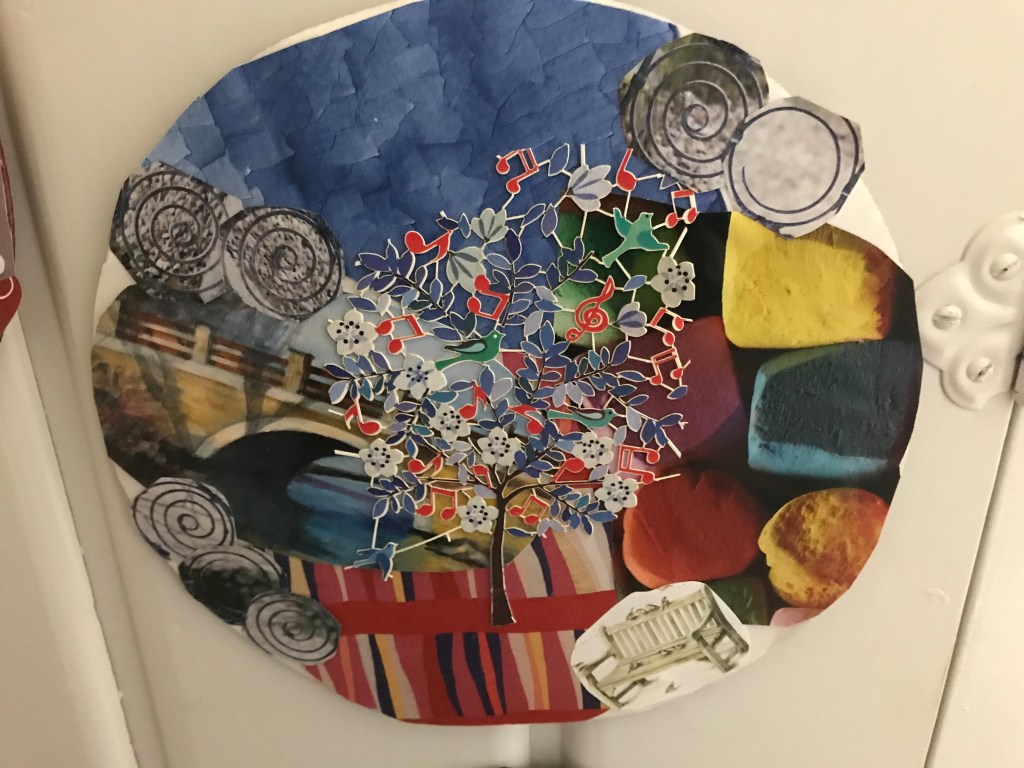
  • Make a collage. Use random pictures from magazines or other sources. Use what appeals to you, resonates with you. When you have completed the collage, notice what emerges. Sit with it. Rest with it. Here is my 2020 collage, which led me to my word for that year, FULLNESS.

Be patient, for here’s the thing. You can’t decide or think your way into the word. You might like the idea of your word being “hope” or “love” or a word that might motivate you to keep a new year’s intention, but as a spiritual practice, it doesn’t work like that.

Your word chooses you.

The word comes as gift.

Receiving This Year’s Word

I read these words:

It is not the words themselves as much as the rhythmical repetition that localizes one in the heart.

Richard Rohr

When I read the word “rhythmical” something inside twitched. I felt a glimmer of something. And then the word “rhythm” or words alluding to rhythm kept appearing.

A rhythm that carries us into wholeness.

Jan Richardson

Let your heart enjoy a different rhythm.

John O’Donohue.

As you listen closely for your deepest call, what are the greater rhythms to which you most accommodate yourself?

Christine Valters Paintner

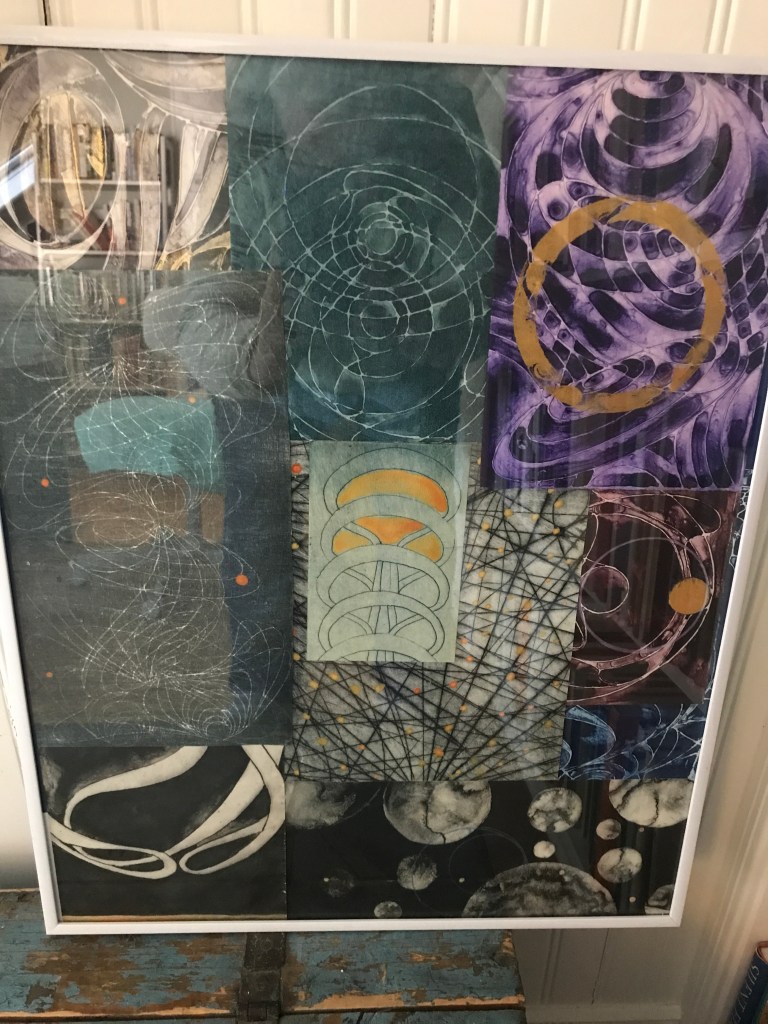
And there were others, as well. I decided to create a collage, and in the box of assorted pictures I keep for that purpose, I found the pieces artist Steve Sorman includes in his Christmas cards every year. I have always intended to do something with them, for they are too gorgeous not to be seen. All of a sudden what I noticed about them was the movement, the flow in each one. Expressions of rhythm.

I arranged them in a large frame I can see both during morning meditation and while working at my desk.

I had received the word for the year: Rhythm.

Allowing the Word to Ripen

I have some idea about the meaning of the word “rhythm” for my life and how it differs from the word “balance,” which has always seemed impossible to achieve, but I know I need to live with the word, stay awake and present to the word, and allow it to

Nourish me,

Challenge me, and

Lead and even wrestle me into new growth.

One more thing, a gentle reminder: You don’t need to do anything major or creative or what might be considered HOLY to receive a word. All that is required is an open heart. Ask for a word–and it isn’t too late to do so–and be present and awake.

An Invitation: Do you have a Word for the Year? I would love to know.

NOTE: Thanks to all, especially Abbey of the Arts, but also many others along the way, who have offered guidance and encouragement in the use of spiritual practices to discover and receive a word for the year.

Book Report: The Sentence by Louise Erdrich

How happy I am that the first book I read in the new year was so good. So very good. A book the calibre of The Sentence by Louise Erdrich sets a tone of excellence for the rest of the year.

The basic story, -as if it were possible to confine the plot to the word “basic”- is that a bookstore employee who had been in prison, convicted for stealing a body, is haunted by the ghost of a former customer. The bookstore is modeled after Birchbark Books (one of my favorite independent bookstores) owned by the author, and the setting for the book is mainly Minneapolis from 2019-2020, which means the murder of George Floyd and the pandemic are part of the book’s context and action.

The sentence refers to the prison sentence of the main character, Tookie, a Native American woman, but also sentences in books and beyond that, one’s life sentence. The book’s epigraph gives a hint of the complexity to follow: “From the time of birth to the time of death, every word you utter is part of one long sentence.” Sun Young Shin, Unbearable Splendor. I kept returning to that quotation as I moved further into the book.

I apologize to anyone who reads my copy of the book, for I underlined so much and many little post-it notes are flapping on the book’s edges.

…this dimming season sharpens one. The trees are bare. Spirits stir in the stripped branches. November supposedly renders thin the veil. p. 41

Think how white people believe their houses or yards or scenic overlooks are haunted by Indians, when it’s really the opposite. We’re haunted by settlers and their descendants. We’re haunted by the Army Medical Museum and countless natural history museums and small town museums who still have unclaimed bones in their collections…p. 81

When everything big is out of control, you start taking charge of small things. p. 202

I keep thinking about this perspective about forgiveness–forgiving one’s self and forgiving others.

You can’t get over things you do to other people as easily as you get over things they do to you. p.358

I could go on, but I prefer that you buy your own copy and mark your own favorite lines and passages. One more thing: I hope I never again use the phrase “the calvary’s coming,” for one of the characters says that phrase is really a reference to genocide. Think about it.

And yet one more thing: I know I am an old lady who has not kept up with all the abbreviations used in texts, but I was not familiar with DWW–Disturbed While Writing. Now that is one I will remember and probably use!

I promise this is the last thing. Several reviews have described this book as “wickedly funny,” and it is, but it is also deeply disquieting and seriously absorbing.

An Invitation: What is your first book of 2022? I would love to know.

Crossing the Threshold into the New Year

Welcome to the new year! As with any year, all years, we have no idea what will happen in this new year. We never know. It is always unknown. We certainly had no idea on January 1, 2021 what we would face in the coming months, but one thing we know for sure is that the old year has turned.

Here we are on the threshold of the new year.

What a good time to pull up your chair to silence.

I invite you to close your eyes lightly, not tightly and take a deep cleansing breath. Breathe in and out gently, finding your own rhythm.

Stay in the silent space as long as you wish, and when you are ready open your eyes, glance around you, as if seeing your space for the first time, and read these words:

Divine Gate-Keeper, ever present to my soul,

I approach the threshold of the new year

Aware of my vulnerability and mortality,

Recognizing my dependence on your vigilance.

Your wisdom will direct my inner footsteps

As I face the future’s unmarked terrain.

Your rapt attentiveness assures me

That you will guide my comings and goings.

This day I join my heart with all living beings

As we walk together toward what lies ahead.

Joyce Rupp

Before opening the gate and crossing the threshold fully into the new year, I invite you to pause on the threshold and reflect on the lessons and gifts of the past year. We have an opportunity before we become used to living in 2022, to reflect on the ways 2021 was sacred text for us.

Let your heart speak.

When I think about the new year, I….

As I let go of 2021, I feel…

As I move into 2022, I…

This is a good place to start, but perhaps you want or need to go deeper.

Imagine that you are preparing to walk a labyrinth. You stand on the threshold and see a long winding path in front of you. What do you imagine as you begin the journey. I think about the Wise Men–and I choose to believe there were Wise Women, too, who are still on the journey to the Christ Child. They are bringing gifts, but they will receive gifts, too. They just don’t know what they will be.

Here are some threshold crossing questions to consider as you reflect on the past year?

What do I treasure about 2021?

What have I hidden away?

What griefs and losses, regrets and changes do I need to process?

What have I made visible?

How have I become more of the person God created me to be?

And now as you envision 2022, here are other questions to consider:

What are your yearnings for the new year?

What can I do for God in the coming year?

What can God do for me?

How might the new year offer you space in which to dream, create, act, be?

What is the heart of your new year’s prayer?

Allow the questions to live within you. Sit with one that seems to resonate or one you wish I had not asked. The journey is more than one step, but begins with one step.

You’ll notice I did not mention “resolutions.” I prefer the word “intention,” for intention implies to me a gradual and ongoing unfolding. And that unfolding grows out of reflection and contemplation.

May this be a time of loving presence.

An Invitation: What are you feeling, experiencing, learning as you cross the threshold? I would love to know.

NOTE: You may want to read my new year’s post on my previous blog, Clearing the Space http://clearingthespace.blogspot.com/2020/12/crossing-threshold-into-new-year.html

NOTE: In my Tuesday, January 11 post, I will share my WORD OF THE YEAR and offer strategies for how you can discover your own word of the year.

Book Report: My 2022 Book Journal

One of my favorite end of the year projects is to organize my book journal for the new year. My previous journal documents two years of my reading life, but doesn’t haven’t enough pages for a third year, so off I went to my favorite store for notebooks, pens, and other good stuff (Wet Paint on Grand Avenue, St Paul, https://wetpaintart.com) where I found the same notebook in blue, rather than red. Change is good!

I added a fun notecard made by an Etsy artist to the front cover and started numbering the pages.

On the first page is my Index or Table Of Contents where I will add headings as the year progresses. Here’s what on that page right now:

Thoughts About My Reading Life and 2022 Intentions –page 3

Remaining Books From 2021 TBR Lists –pages 4,5

Books Unread From Books Acquired in 2021 –page 6

Library Hold List –page 7

I also included pages for new TBR (To Be Read) Lists divided into alphabetical divisions, according to the author’s last name, such as a page for ABC and another for DEF etc.

As the year progresses, I will add other headings and pages, such as Books Acquired in 2022 or specific categories of books, such as Books to Re-Read.

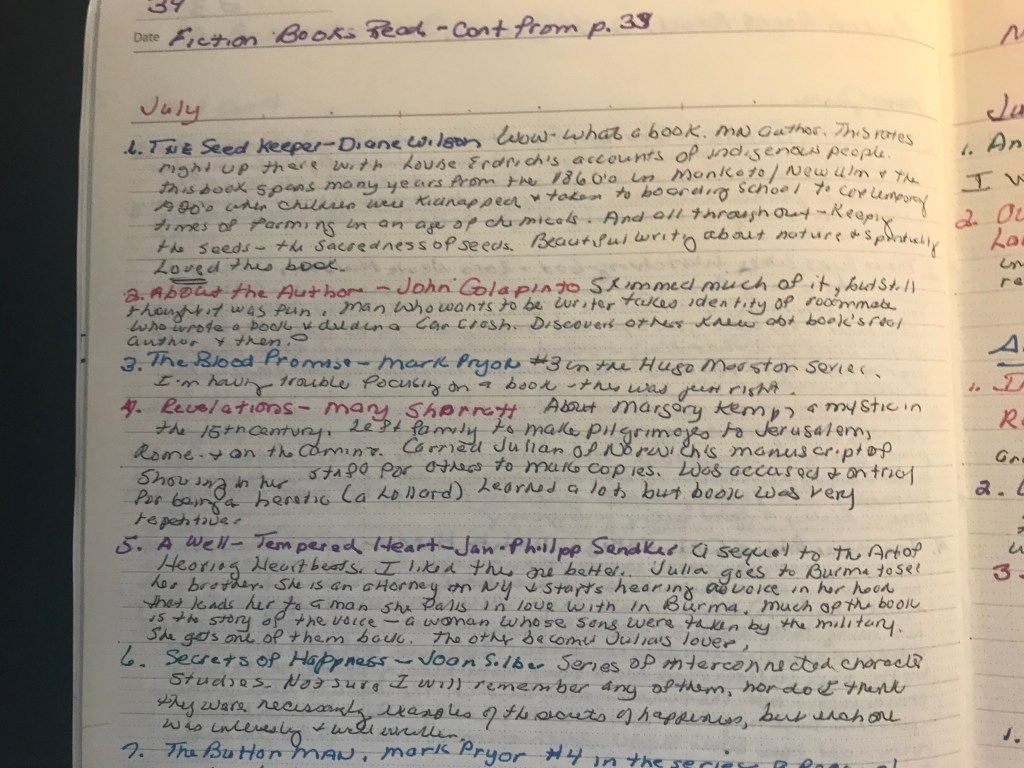
Of course, the main purpose of the journal will be to note what I have read. I like keeping separate lists for fiction and nonfiction, and I also divide the lists into the months of the year. Each entry includes a brief summary of the book, along with my reflection/evaluation of the book and perhaps any quotes I want to remember.

Rather than setting aside a certain number of pages for these lists, I simply note in the index an additional page number for the new part of a list. This is the Bullet Journal style. For example:

Fiction Books Read –pages 15, 20, 27, 31, 33, 34, 37, 39, 41, 42, 45,

Last year I read 120 books–76 fiction and 44 nonfiction. In 2020 I read 137 books with about the same ratio of fiction to nonfiction. I don’t set a goal for how many books I hope to read in a year, but this year I have set an intention to read more carefully. I read quickly and don’t always savor what I read, as much as I want to.

I acquired 72 books last year. Some books were gifts and some I found in Little Free Libraries, but, of course, I purchased many of them. Books have always been necessities, rather than luxuries in our household. Out of the 72 books added to our shelves, I have read 59 of them so far. Not all of the 59 remain on our shelves. Some have been passed on to Free Libraries in the neighborhood or to friends or family.

My reading intentions for the new year are to continue making good use of the library and to shop independent books stores MUCH more than Amazon. I will also continue with the ongoing process of letting go of books. The last two years one of my spiritual practices during Lent has been to remove at least one book each day from my garret bookshelves.

I also intend to shop my own shelves. What haven’t I read yet or what do I want to re-read? Last year I re-read all the Louise Penny books and enjoyed them just as much, maybe more, as I did the first time. I also re-read other favorites, such as Ann Patchett’s The Dutch House and Barbara Brown Taylor’s An Altar in the World. This year I think I may re-read all of the novels by Minnesota writer, Jon Hassler, along with other favorites by Ann Patchett. Mrs Dalloway and To The Lighthouse by Virginia Woolf are calling my name once more, and in an article I read about all-time favorite books, novels by Carol Shields were mentioned, and I think I would enjoy re-reading those too. But no promises–I will read what appeals and read where my heart –and my attention–is drawn.

And, of course, I am like a crow attracted to the bright, shiny, and new. My husband gave me Louise Erdrich’s latest, The Sentence, and I think that will be my first read of the new year. He just finished reading Amor Towle’s The Lincoln Highway, and I am eager to read that as well. I suspect early into the new year a couple of the books I requested from the library will be on hold, and those will take precedence. The piles never diminish, but merely shift in shape and content.

Another intention is to note who recommended a book when I add it to a TBR list. My favorite sources include BookWomen (http://www.bookwomen.net) and Modern Mrs Darcy (https://modernmrsdarcy.com –both her blog and her podcast), but I read the NYTimes Book Review, the Washington Post and a variety of other blogs that mention books, too.

I also intend to note the number of pages for each book and to take more care with my summaries and include more favorite quotes or passages.

Keeping a book journal is not a necessity, but for me, doing so adds to the pleasure of my reading life.

All this writing about books and my book journal makes me want to read. Who says I need to wait till January 1 to start reading Louise Erdrich’s new book? Today is a perfect day to turn more pages.

An Invitation: Do you have any reading plans for the new year? I would love to know.

Christmas Planned and Christmas Actual

Our plan for Christmas Day was in place. Our Cleveland kids arrived Christmas Eve, and our St Paul kids would join us for Christmas Day at our house. After sharing snacks and other treats and opening presents, we would have a late afternoon dinner. The table was set, and we were eager for togetherness, our Agneberg Love Fest.

You know the saying, “The best laid plans…” About an hour before our beloved were to join us our daughter called, and I could hear in her voice that something was not right. In a flash a number of scary or at least upsetting possibilities occurred to me.

“Mom, Peter tested positive for COVID and he is sick.”

Peter is 13 and has had the first two vaccinations, but does not yet qualify for the booster and for that reason he is the most vulnerable in the family.

Poor Peter. Poor all of us.

We needed to absorb the news, and Kate needed to make necessary phone calls to other people they had been with in the previous days. Eventually, however, a new plan emerged: Backyard Christmas.

We loaded up the presents, plates of cookies, cherry walnut bread, lefse, and other good stuff, along with a pile of wool blankets and headed to their house where the fire pit was ablaze. Peter stood on the back porch away from the rest of us, but close enough to participate in conversation and to give his Aunt Cricket the play by play account of the Cleveland Browns/Green Bay Packers football game, and we had Christmas.

One of the questions I have asked myself during all these drawn-out COVID months is “What is possible?” We figured out what was possible, and we managed. We adjusted. We cried, but we also laughed, and we did the best we could.

We still had Christmas.

On December 26th we finally got around to eating the planned Christmas Day dinner. Half of it was delivered to our daughter’s house, and the other half was eaten at our dining room table re-set for four, instead of eight.

We managed. We adjusted. We did the best we could.

We still had Christmas.

Thanks to Steve Garnass-Holmes for these words:

You come to share our disappointment with us

so that we might share your hope.

You come into our uncertainties

and show us how to be ourselves.

Welcome, Beloved, welcome.

My Christmas prayer for each of you is that whatever adjustments you may have needed to make this past week still left room for joy and love. May you remember that God’s steadfast love endures forever.

An Invitation: How well did your plans for the holiday match the reality? I would love to know.

Book Report: Two Books and a Story

December is a good time to discover your reading rhythm. When during the day are you compelled to stop whatever you are doing, no matter how long the list might be, and read? I invite you to pay attention to that inner voice, that voice calling you to reading time. Some days it may be necessary to ignore the voice as life intervenes, but don’t let that happen too often. That voice encourages you to take care of yourself, to find balance in your day, and to open your heart to imagination or new knowledge and awareness.

This past week I read two books and both should be added to my 2021 Favorite Book Lists (see https://livingonlifeslabyrinth.com/2021/12/02/book-report-my-favorite-books-of-2021-part-two-nonfiction/ and https://livingonlifeslabyrinth.com/2021/11/25/book-report-my-favorite-books-of-2021-part-one-fiction/

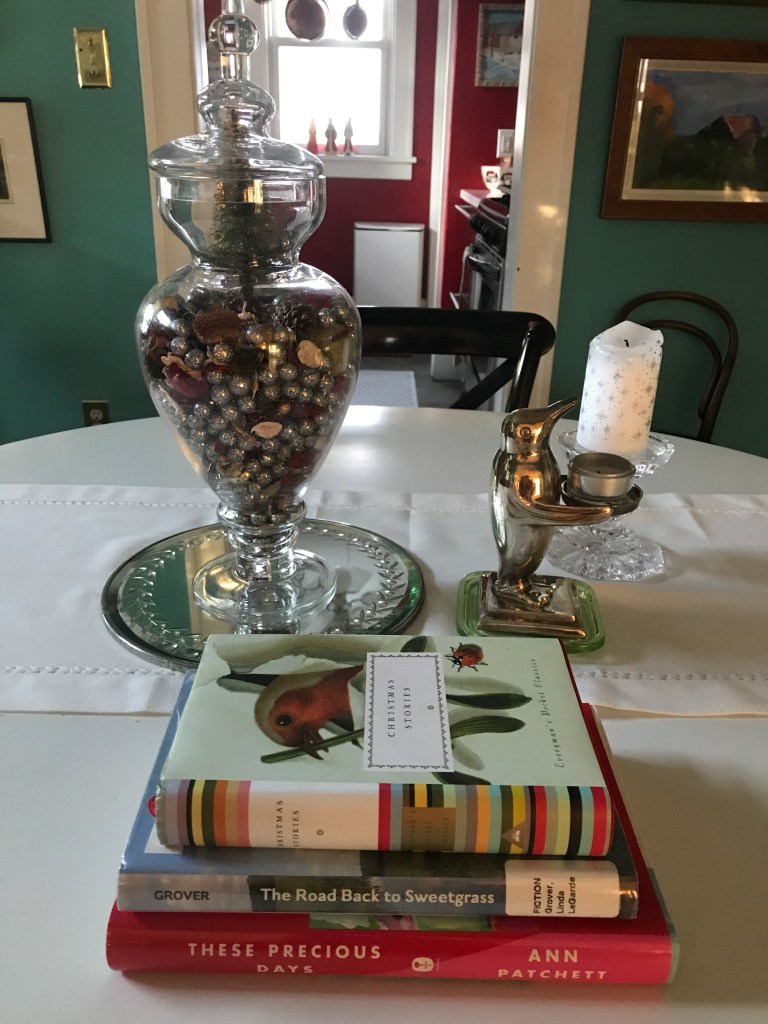
  1. The Road Back to Sweetgrass, A Novel by Linda LeGarde Grover. Published in 2014. If you love books by Louise Erdrich, you will also love this book. The author is a member of the Bois Forte band of Ojibwe and an associate professor of American Indian Studies at the University of Minnesota. The story focuses on three women and their lives from the 1970’s to the present and how they navigate changes in their lives and their connection to the fictional Mozhay Point reservation. Each of them are drawn back to the Sweetgrass Allotment, which is the result of federal Indian policies. The final chapter tells the story of the first days of the allotment when the Muskrat family became transformed into the Washingtons by the pen of a federal land agent. I loved the use of the Ojibwe language–sometimes I could figure out the meaning of a word because of its context, but even when I couldn’t, I imagined how the word sounds, and I reflected on how important it is to make sure that language lives and is honored and respected.
  2. These Precious Days, Essays by Ann Patchett. Published in 2021. I ordered my book from Parnassus Books where Patchett is a co-owner. The Nashville bookstore is on my “someday” list, but in the meantime I now have a signed copy of her most recent book. I have no doubt Patchett is a wonderful person and not just because she cares enough about books to own a bookstore. She is the kind of person who opens her home to someone she barely knows when that person is enrolled in a cancer clinical trial (the subject of the title essay) and because she looks for saints in her life (the essay, “The Worthless Servant”).

“The trouble with good fortune is that we tend to equate it with personal goodness, so if things argue well for us and less well for others, it’s assumed they must have done something to have brought that misfortune on themselves while we must have worked harder to avoid it. We speak of ourselves as being blessed, but what can that mean except that others are not blessed, and that God has picked out a few of us to love more? It is our responsibility to care for one another, to create fairness in the face of unfairness and find equality where none may have existed in the past.” p. 52

Are you listening Joe Manchin?

My favorite essay, however, is “To The Doghouse,” which is about Snoopy in Charles Schulz’s Peanuts comics. Snoopy the writer, the novelist of “It was a dark and snowy night.” fame. I needed the lightheartedness in this essay and the reminder that inspiration comes in unexpected places.

I found something to love in each of these essays –especially the writer herself. And now I want to re-read her earlier book of essays, This Is the Story of a Happy Marriage.

I also re-read the wonderful story by Truman Capote, “A Christmas Memory” after a friend sent me a note about her favorite Christmas reading. On her list is the Capote story because she “likes a little melancholy” in her Christmas reading. This is the story of making Christmas fruitcakes –and as it happens I was making my annual cherry walnut bread on the day I read this story again. I was right in the kitchen with Capote’s Buddy who is seven and his friend, a distant cousin who is sixty-something, but “still a child.” Enjoy the language, the tenderness, and yes, the melancholy. Thanks, Mona, for the reminder to read this story yet again.

What’s next? Small Things Like These by Claire Keegan, which is only 115 pages and should be read in one sitting. I will listen to when my inner reading voice tells me to sit in the snug and read without allowing interruptions. The other book I am drawn to is the novel Painting Time by the French writer, Maylis de Kerangal about a young artist enrolled in an art school in Brussels. Stay tuned.

An Invitation: What is your inner voice telling you to read? I would love to know.