Senior Moments

January 30, 2024

People my age often use the words “senior moments” to describe a lapse of memory or moment of confusion. Who hasn’t walked into a room and then wondered about the intention? Sometimes the most familiar of names escape me. More and more my husband and I supply missing pieces for one another. I know the first name of someone in our history, and he remembers the last name. He can describe a movie or a book, but I know the title. Senior Moments! We laugh and are grateful once again for each other’s presence.

It’s important to acknowledge and be aware of those moments, for sometimes these moments are a sign of something more serious. Knowing the difference is not always easy, and we need to stay alert. When I make a mistake, substituting an incorrect name or word or phrase, it seems important to say, “Whoops, I should have said…,” or at the very least “Where did that come from?” or “I’ll call you at 2 in the morning when the word comes to me.” Some people have a hard time, however, saying, “I’m sorry.” Period. Some people have not practiced that skill or nicety over the years, but that is a whole other topic. And some people are not even aware that they have used words incorrectly or aren’t making sense. I digress. Another senior moment?

Allow me to suggest other kinds of senior moments. The gift of senior moments.

  • Pausing to notice another new blossom on the mini-daffodil plant on the dining room table.
  • Focusing on doing one thing at a time, instead of trying to multi-task.
  • Letting go of past hurts and past expectations.
  • Honoring my being as much as and maybe even more than my doing.
  • Giving thanks for the many gifts in my life. And oh, there are so many!
  • Asking myself “What is possible now?” and “How do I want and need to use my energy and time right now?
  • Choosing to read another chapter in the mystery I’m currently reading, instead of cleaning the bathroom. (I hasten to add I did clean the bathroom later that morning.)
  • Allowing a memory to nurture my day. I just had this flash of seeing our grandkids walking down the block towards our house at the end of the school day when they were in elementary school. Pete is now a sophomore in high school and Maren is a junior in college. How glad I am we moved here when we did!
  • Diverting myself from my “plan for the day” and responding to a pleasing invitation.
  • Opening my heart to the losses I feel, instead of denying them.
  • Nurturing my contemplative side, spending more time in reflection and prayer.
  • Appreciating this time of my life for the growth it offers me.

How sad I am when I hear someone say, “I hate getting old.” First of all, I try to be very careful about using the word “hate.” and don’t use it nonchalantly. I realize that so far my aging has been easy, compared to many others in my life. I have a privileged life. I repeat, I have a privileged life.

I know there will be harder days ahead, but hating old age negates all the gifts of the previous days and years. Isn’t there a difference between accepting and hating? Between honoring what has led me to this time and hating? Between holding tenderly these present days and the days to come and hating? Between feeling and saying something is hard and hating it?

I appreciate what Maggie Smith says in her book, Keep Moving: Notes on Loss, Creativity and Change.

I thought that what I was living was the whole story, but it was only a chapter.

p. 2

I’m in my senior moment chapter, and I intend to live it in the best way possible. May it be so.

What “senior moments” are you noticing? I would love to know.

On Sunday, January 24, an essay I wrote, “Living with a Sacred Object, The Humble Harvest Table,” was published in Christine Valters Paintner’s Abbey of the Arts. I hope you will read it and let me know what you think. Here’s the link: https://abbeyofthearts.com/blog/2024/01/24/monk-in-the-world-guest-post-nancy-l-agneberg-4/

My Saturday Sabbath

January 23, 2024

I begin most days in the area of the house I call the snug. An enclosed front porch is how it would be described in a real estate listing, I suppose. Not very big, but spacious enough for two comfortable reading chairs and two sets of bookshelves against the inside wall. A few months ago I rearranged the space to make room for a small desk.

Cozy. Full of light on sunny days. A welcoming space for beginning the day.

Before making the bed and getting dressed, I settle into the snug for my morning meditation and devotion time. Most days I am there an hour or so before moving forward into the rest of the day.

That was not the case this past Saturday.

My time in the snug began in its usual way by reading the day’s reflections in the two books I have selected to accompany me through the year. Joyce Rupp’s Fragments of Your Ancient Name, 365 Glimpses of the Divine for Daily Meditation and Margaret Silf’s Daily Readings with Margaret Silf. I have used the Rupp book before, and It is interesting to me to see what I underlined before and what resonates with me now. The Silf book is new to me, but I have loved other books by her and in 2023 I re-read one of her other books, Wayfaring, A Gospel Journey into Life.

Each reflection in the Rupp book is a “name” for God, a way to describe God, and on January 20 the name of God is “Joyful Journeyer.”

...
When love accepts both ease and struggle,
When prayer includes a heart of acceptance,
...
When silence serves as a source of listening,
When dying no longer frightens or dismays,
...
Then we know how it is to engage with you
As the Joyful Journeyer on our road of life.

Each line moved me deeper into stillness, pondering those hopes within me, but also how I yearn for the hope to become truthful reality in my life.

Silf quoted Mark 3:20-21. “Jesus went home, and such a crowd collected that they could not even have a meal. When his relatives heard of this they set out to take charge of him, convinced he was out of his mind.” Silf reflected on how “the ordinary cannot tolerate for long the presence of the extraordinary,” but that isn’t what struck me about these verses. Not this time.

Instead, I focused on “Jesus went home.” First of all, how glad I was that Jesus had a home and could return there. I thought about him being welcomed. I imagined him finding comfort; the kind of comfort that comes from knowing where everything is and not having to introduce yourself or even be on your best behavior, because you know you are loved.

I thought about all the times I returned home –my parents’ home and my own homes. When we lived in our country home in Ohio, I often drove or flew home to be with my parents or our daughter and her family. How fortunate I felt to be able to do that and to know they waited for me and wanted, even needed my presence. At the same time, oh, how my heart lifted as I approached once again the driveway to our beloved Sweetwater Farm. Home.

(I arrived home, but in my case the crowd that collected were all our animals always eager to be fed!)

I opened my Bible to see if I had ever underlined these verses, and I had not, but I noticed a difference in the word choice and translation. In the version Silf quotes, the word “relatives” is used, but in the New Revised Standard Version, which I read, the word is “family.” That feels so different to me. A change in intimacy and even acceptance. A difference perhaps in the way we know and see one another. I will think about that more.

I spent some time musing on these thoughts in my journal, and by that time the streetlight was off and dawn had become day. The young mom across the street had headed off to her exercise class–at least that is my guess–and several dog walkers had strolled past our house. Most days I would blow out the candle, my first companion of the day, and move into the rest of the day.

Instead, feeling chilled, I wrapped my shawl around me and read the last chapter of another book in my meditation basket, Thin Places, A Natural History of Healing and Home by Kerri ni´Dochartaigh, a memoir by an Irish woman born in Derry, on the border of North and South of Ireland at the height of the Troubles. One parent was Catholic and the other Protestant, and terror reigned around her. Not only did I learn about how it was to live during those harrowing (a word she uses frequently) times, but I thought how what she experienced is an aspect of what I imagine those in Gaza are experiencing now.

Much of the book, however, is about place and time — all places and all times.

There is a time for everything–for sowing, planting, harvesting. A time for holding on, and a time to let go. A time for sorrow, and a time for healing. More so, there is, simply, time. There is time for it all. We still have time to step in or out –of places, of relationships, of thought processes, or our own selves. Sometimes the snow will still be here on St Brigid’s Day, and sometimes we will have a year without it coming at all. There will be years when the autumn trees seem more vibrant, more sublime, than we ever remember them being before. There will be years when we have suffered so much that we can’t pick out one season from the other, never mind one day. Days when we cannot imagine ever feeling okay again, thinking that we have taken enough of it all, enough already, enough. Then, a change in the wind, the first bluebell, the smell of snow in the sky, the moment courses on, and everything has shape-shifted–everything is okay again, more than okay, maybe, even.

p. 247

Today was my time to move slowly, deliberately. Today was my time to soak myself in stillness.

My only goal was to make the bed and get dressed by noon.

I just barely accomplished that.

What does your Sabbath time look like? I would love to know.

New Year’s Reflections

January 2, 2024

At the beginning of each new year, I read my journals from the year just past. What were the highlights? The gifts? How well were intentions met or were they discarded? What themes evolved during the year? And what losses were encountered along the way?

At the beginning of 2023, I was trying to shed a lingering cold, not COVID, but a cold that zapped energy and enthusiasm. I was also feeling deeply the loss of a dear friend who had died at the beginning of December. On that first day in January, 2023, I remembered how we entered 2020 totally oblivious to the pandemic about to strike our lives, and I wrote, “What losses will this year bring, for there will be some. How close to my heart will they be? How major will they be in the way I live my life? Or will I be the loss?”

Typically, I’ve entered the new year with energy for new beginnings, new projects, and eagerness to meet new or continued goals, but in recent years I’ve learned to hold expectations more lightly. Perhaps I am learning how to hold life more lightly, too. And more gratefully.

What does this have to do with the photograph of the tree on our boulevard? Well, one morning right after Christmas, I settled into the snug for morning devotions and when daylight appeared I was stunned to see the trunk of this tree and 13 others on our block wrapped in bright green rings. Soon these diseased trees will be removed. The grief has begun.

I think I am grateful, or at least I am trying to be, that we will lose these trees during the bareness of winter. Perhaps the absence of these trees during the non-leafy, non-green months will help us accept the starkness, the lack of branches arching over the street and the sidewalk. I don’t know when the tree removal people will set to work on our block, but I’m trying to use this time to prepare my heart and soul for this loss–as well as other losses, known and unknown, to come.

How do I prepare?

My day begins in stillness, in silence. These winter days it begins in the dark, as I watch the light begin to make its appearance. I whisper my first prayers of the day. “Thank you for the rest of the night. Thank you for the promise of a new day. Thank you for your presence. May I be aware of your presence in all I do and all I am. May my loved ones be aware of your presence. May all who know the losses that life brings know your presence.”

I read the day’s selection from books I have chosen to accompany the year’s pilgrimage. This year I have chosen Daily Readings with Margaret Silf, along with a book I have read before, Fragments of Your Ancient Name, 365 Glimpses of the Divine for Daily Meditation by Joyce Rupp.

A new year and another mile of the journey. Three hundred and sixty-five new chances to watch the sun rise on God’s surprises along the way. Three hundred and sixty-five windows of opportunity through which to glimpse the face of God in the rock face of everyday life.

Margaret Silf, p. 3

Your intimate presence startles my soul…

I ask for the simplest of gifts from you…

The blessing of communicating with you.

Joyce Rupp, January 1

Even as I grieve losses of the past, as well as losses tender and new, and feel the flicker of losses yet to be, the amaryllis in the snug reminds me we are each living and dying at the same time. And we are each beloved.

May this new year bring you many blessings. Happy New Year!

What are you bringing into the new year? I would love to know.

Book Report: December Reading? Not So Much

December 21, 2023

Last December I read at my usual rate of 10+ books. In fact, I read 13 books, including Demon Copperhead by Barbara Kingsolver and Lucy By The Sea by Elizabeth Strout, and a memoir by Frances Mayes, A Place in the World, The Meaning of Home.

This year I have read 3 books. THREE BOOKS! Granted those three, which are each books I have read and loved before, are hefty tomes, but THREE!!!! I intended to re-read another favorite, but after 100 pages I put it back on the shelf.

Before I reflect on possible reasons for this change in my reading, here are the three I did read –re-read.

  • Pride and Prejudice by Jane Austen. I am not sure how many times I have read this book, but what I do know is that I will read it again and again. Maybe it will be my new Advent tradition and treat for myself.
  • Fresh Water for Flowers by Valerie Perrin. This is one of my favorite books, too. The main character, Violette, is a cemetery keeper in France. Love and death. Misguided love. Misunderstood love. Beautifully written.
  • Great Expectations by Charles Dickens. I remember reading this in 8th grade, and I think it influenced me to become an English teacher. I have not read this book since that time and now realize what I read must have been an abridgment, for at almost 500 pages this book was at times quite the slog. (Saying that feels so sacrilegious.) At other times I reveled in the language and the descriptions. I cheered Pip, the main character, but also pointed my finger at him in frustration. Dickens didn’t miss a human emotion in this book! One of the movies I have re-watched this month–while wrapping presents–was The Man Who Invented Christmas about Dickens writing A Christmas Carol. Delightful.

I started, but did not finish re-reading Possession by A. S. Byatt. I will at some point, but it felt too dense, too slow, and it demands more focus that I am able to give it at the moment. Instead, I am reading one of the mysteries by Anthony Horowitz, The Sentence Is Death, and that seems to be just what I need.

So what’s the deal with my reading this month? The usual Christmas activities and tasks have taken up the space of my usual reading time this year, I think. As I age I have less energy and in December I needed that energy in ways not normally necessary. When I haven’t been engaged with my Christmas list, I have been more inclined to watch a movie or stream a series than read a book.

Also, instead of devoting or immersing myself to a book, I am grazing.

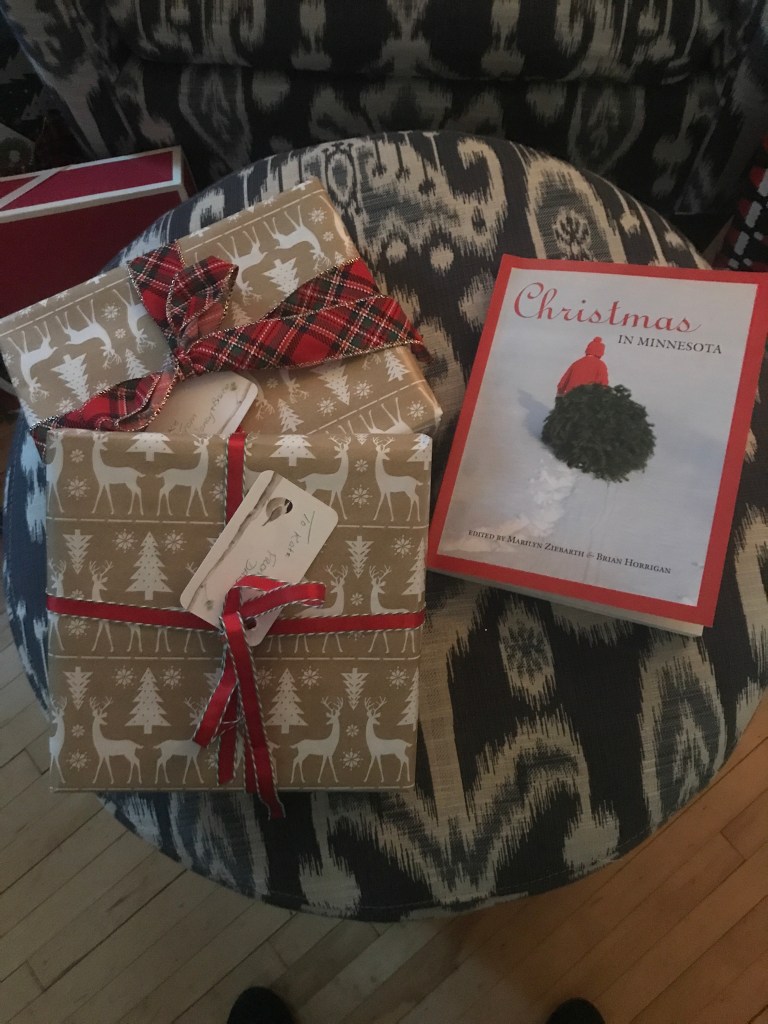
A friend sent me a wonderful anthology, Christmas In Minnesota, edited by Marilyn Ziebarth and Brian Horrigan, and it is a seasonal treasure. Stories and essays and memoir, along with nostalgic drawings and photographs. I can dip into Christmas moments, as shared by Minnesota writers–Garrison Keillor, Susan Allen Toth, F. Scott Fitzgerald, Sinclair Lewis, Jon Hassler, Faith Sullivan and so many more. Sometimes I read an offering from beginning to end, but other times I just open the book and read a paragraph or two wherever I land. I have no intention of reading this book from cover to cover, at least not this year, but instead this book is like an unexpected encounter with a friend in the grocery store or receiving a Christmas card from someone who has not been present in my life for quite some time.

Am I concerned that the number of books read this month has plummeted from my usual number? No, not at all. I can already feel myself looking forward to wintry days devoted just to reading. But I can also feel myself loosening my grip on the number of books I read and how much time I devote to reading. At this stage of my life, I have more freedom to make those decisions in the moment.

Have you taken time to read this month? Is there a book you are eager to read in the new year? I would love to know.

I am going to take a brief holiday break, but will begin posting again on January 2.

A Decade In This Place

November 21, 2023

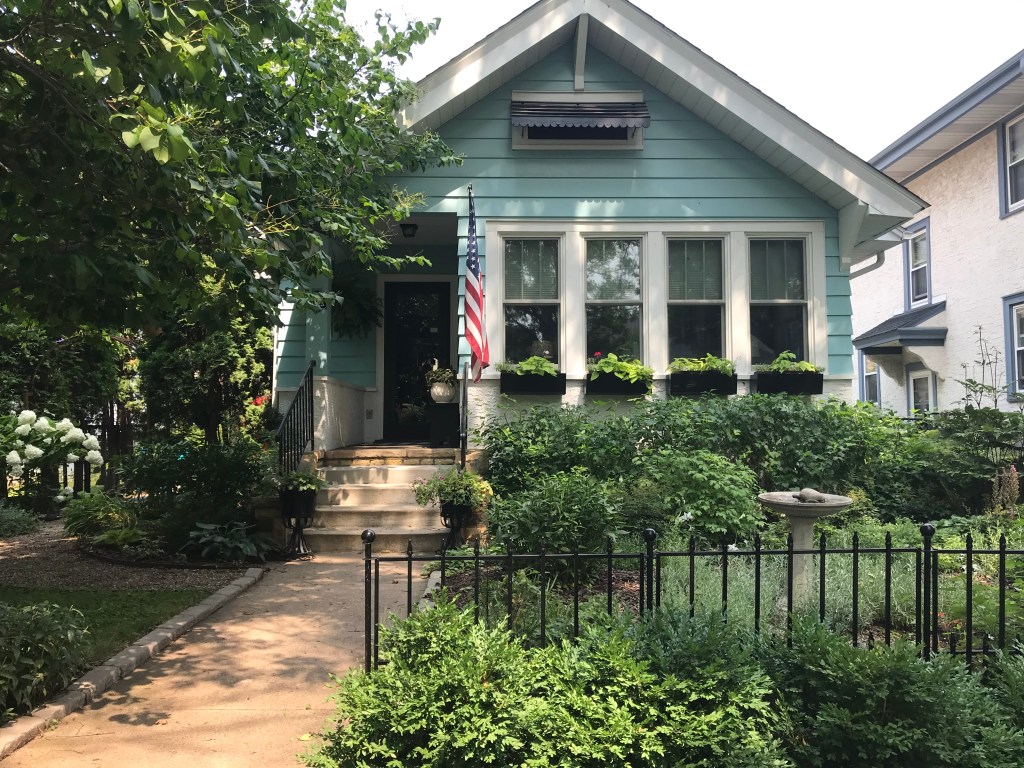
Thanksgiving weekend, 2013, we moved back to St Paul, the same neighborhood where we bought our first house in 1974, when Bruce graduated from medical school and started his family practice residency, and I was pregnant with our daughter Kate. Now we have two grandchildren, Peter, almost 16 and Maren, 21.

The decision to return to where our family life had begun was not difficult. We yearned to be with our grandchildren more, as well as my aging father. Our life in Madison, WI, was good, very good, but it was time to return home.

“I can’t do this,” I thought as I stood in the dull and dingy-looking and oh, so small kitchen. “Where’s the refrigerator?” I asked our realtor. Between the two of us we took up all the floor space in this teeny, tiny mini-kitchen. With a big smile she pointed out two refrigerator drawers underneath a counter.

“Isn’t this a clever idea?” She beamed, obviously hoping for a positive reaction from me. “Not having a full-sized refrigerator gives you more counter space,” she added.

I was not enamored.

The cabinets were painted a sickroom white, not the shiny white of nurses’s uniforms of the past, and the countertops were mottled grey and tan, like age spots on ancient hands.

Bruce pointed out the pluses. Excellent condition, good storage, and the price was right, to say nothing of the perfect location–five blocks from where our daughter and her family live, and three blocks from the kids’ elementary school. Yes, location, location, location.

I pointed out what it didn’t have: a fireplace or front porch or central air. All things on our wish list. And that garage, a cramped one-car garage, so small I wondered if I could master the necessary parking maneuvers for my Jeep.

Our offer on the house was accepted, and my head agreed with the decision, but my heart was not in agreement. I knew I needed some time with the house. Without my husband. That opportunity came during the house inspection.

Sitting in my car before entering the house, I scanned the block of well-tended homes sheltered by mature trees. My eyes rested on our future home. Not too small, not too big. A pleasant-looking house. I liked the window boxes on the four front windows of the sunroom and the mums on the steps with one small pumpkin obviously placed there by little kid hands. I did not care for the yellow-gold exterior and wondered what color would bring it more to life.

Once inside, I wandered room by room, “reading” the house, gazing with soft eyes, as if encountering a piece of scripture for the first time. Lectio or “reading” is the first step in lectio divina, a spiritual practice that opens the reader to a more intimate relationship with the Word and often leads to clarification, even transformation.

I stood in the narrow, window-lined front room only big enough for a couple comfortable chairs and thought how lovely it would be to sit there and read. I noted the two windows in the kitchen, a gift in such a small space. I paused on the landing going up to the second floor, a refinished attic space and looked out the windows to the backyard. “I could have my office up here and call it ‘the garret.'”

I returned to the front door and took a deep breath, moving into deeper meditation, meditatio, the second step of lectio divina. Could I begin to let go of my space requirements, my vision of what I thought I needed? Could I imagine myself in this space?

There was no room for our large formal couch in the loving room, but how about forming a circle with four comfortable chairs? I began to picture certain loved pieces of furniture in this space. What about placing my lady’s writing desk next to the front door? What a pleasant place to sit and write a letter. My heart softened.

A fountain of ideas began to flow, overflow about ways to modify the house to our taste and lifestyle. A new palette. White wood work and white living room walls. Light beach aqua in the front room, which eventually I called “the snug,” and turquoise in the dining room. Clearly I had engaged with lectio divina’s third step, oratio, or “being active, but it was in the kitchen where I fully embraced that step.

During our first years of marriage, I cooked and baked and prepared dinner parties in a tiny windowless kitchen where initially I had waged combat with cockroaches. That’s where my Christmas tradition of baking loaf after loaf of cherry walnut bread began. Our kitchen at Sweetwater Farm was small, too, with almost no counter space, but oh, the Thanksgiving feasts created there.

Instead of seeing the space as limited, I reframed it in my mind as efficient. What it needs, I told myself, was crisp marshmallow white cupboards, a white subway tile backsplash and white solid surface countertop. And how about red walls? Santa Claus suit red.

No, I wouldn’t have everything I wanted. A friend suggested we build a front porch. Of course, with enough money and patience and vision, one can do almost anything, but just because we once had something doesn’t means we must have it again. Instead, I rested in contemplation, assured I would discover a new gift.

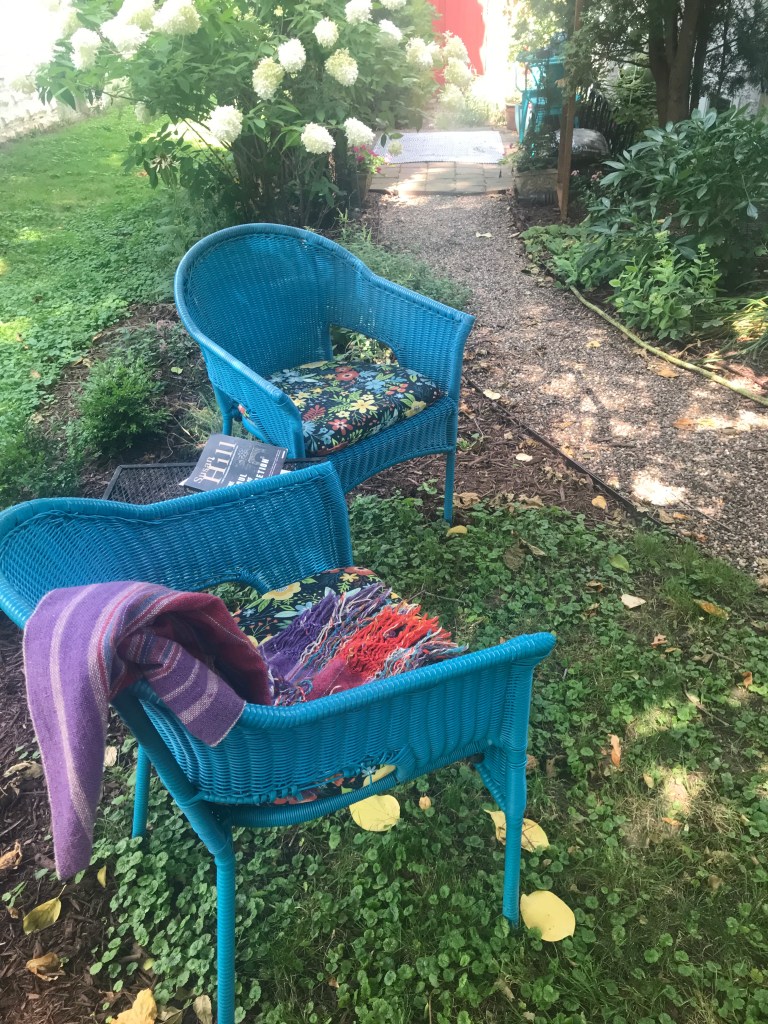
One day on my morning walk soon after moving in, I noticed a neighbor’s inviting side courtyard, and then I saw other gardens and patios located in narrow side yards, creating private space. Could we do that? We had skinny space on one side of the house leading to the gate into the back yard. Tall arborvitaes lined the boundary between our house and the neighbor’s, leaving space just big enough for a couple chairs and a small table. My husband the gardener enthusiastically approved the plan.

As I settled into our new home, I continued practicing, although unconsciously, lectio divina, opening to its invitation for transformation. Our new secret garden space, which I call “Paris,” symbolized my willingness to let go and discover something new, vibrant, and pleasing; to be transformed.

We were 65 when we moved into this house, and now we are 75. Our hope and intention is to spend the next decade here as well, but, who knows. Bruce has said he would like to stay in the house on his own, if I died first, but If I were a widow, I would move into an apartment, not wanting to take care of the gardens. In the meantime we live fully, happily, gratefully in this space.

Is there some aspect of your life in which the spiritual practice of lectio divina could be helpful? Something calling for transformation or reframing? I would love to know.

Memory Prompts

November 14, 2023

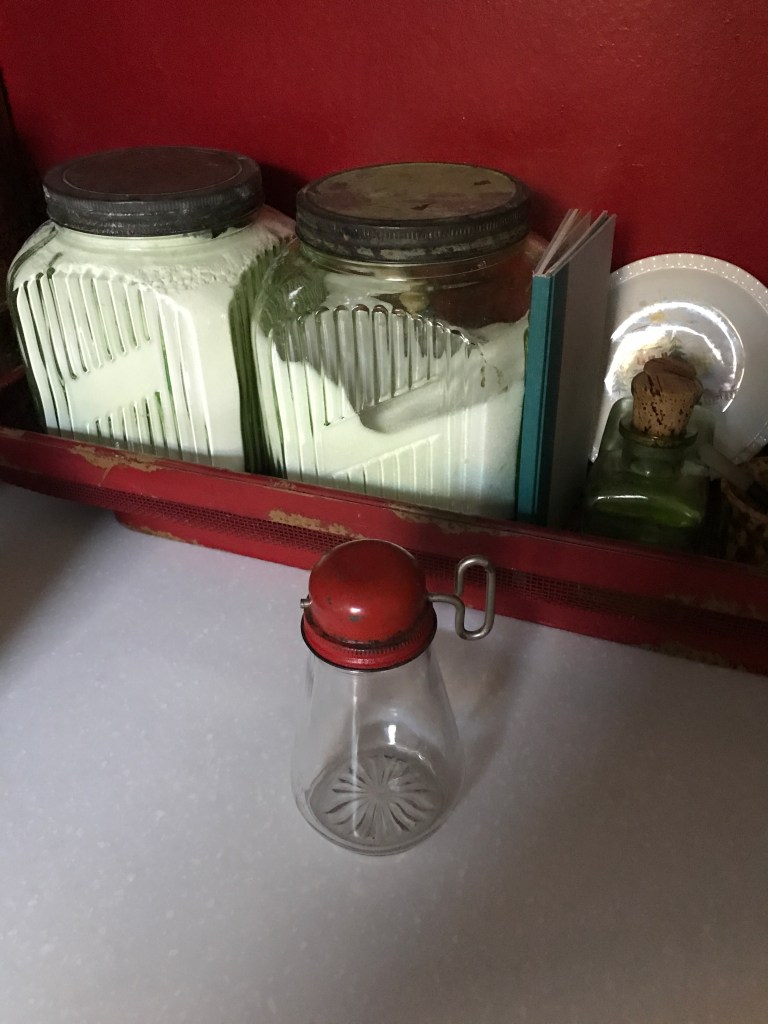
This past weekend my sister and I went to a vintage Christmas market, and I bought this little treasure from years gone by. It’s a nut chopper.

Of course, I don’t need a nut chopper, for I have a food processor and also a smaller electric one that works beautifully for herbs and nuts, and most often I buy walnuts and pecans already chopped anyway. However, when I picked it up I remembered baking cookies when I was a child. I had instant replay images of kitchens in homes where we lived when I was growing up. Now I hasten to add that my mother was not the kind of Mom who enjoyed cooking with her children. I learned to cook and bake by trial and error. Still, this little glass container with its cheery red top, which just happens to match my current kitchen’s decor, inspired homey, happy thoughts.

Memories were clearly on my mind, especially since last week’s theme for the writing group I facilitate was memory. Before reading the writing prompts to the group, I shared some guiding words, quotations about the topic. For example,

There is no explaining this simple truth about life: you will forget much of it. The painful things you were certain you’d never be able to let go? Now you’re not entirely sure when they happened, while the thrilling parts, the heart-stopping joys splintered and scattered and became something else. Memories are then replaced by different joys and sorrows, and unbelivably, those things get knocked aside as well, until one morning you’re picking cherries with your three grown daughters and your husband goes by on the Gator and you are positive that this is all you’ve ever wanted in the world.

Tom Lake by Ann Patchett, p. 116

Remembering events and people from our past lets us claim and share ourselves…We do not merely have these memories; we are these memories…memory is a way of describing the cumulative nature of time, the presence of the past with us. Time not only unravels; it also knits up…memories reveal God’s presence in our life. Memories retrace a sacred journey.

Winter Grace, Spirituality and Aging by Kathleen Fischer, p. 45

The prompts included choosing a decade of your life and writing down as many memories of that decade as you can, or writing about an experience when your memory is contradicted by someone’s version of the same experience or event, or encouraged by Kathleen Fischer’s words, “open the album of your life,” and simply begin writing.

My own response during the 20 minutes of writing time was inspired by what John O’ Donohue says in Eternal Echoes, Exploring Our Yearning to Belong, “Memory is the place where our vanished days secretly gather. Memory rescues experience from total disappearance.”

A few months before he died, I asked my father what memories he had about Christmas when I was a little girl. My father had an excellent memory, which he nurtured and worked to maintain. For example, when he was in his 90’s he wrote down the names of everyone in his first grade class. Eventually, he remembered each name. He also made a list of everyone who reported to him during his long and successful career.

Here’s the rub: He had no memories of Christmas when I was a little girl. Over the years he had shared his own early Christmas memories, like getting an orange in his stocking and going ice skating on Fountain Lake on Christmas Day, but he was not able to unveil memories about me at Christmastime.

It was clear he was disturbed by this lack of memories, and he quickly said something like “Your mother handled Christmas,” and I’m sure that was true, but really? Nothing about my first Christmas morning or presents I loved or how I reacted to the Christmas tree? Frankly, I was hurt. I changed the subject, wishing I had never brought it up. Later I wondered if bringing some family pictures or sharing my own early memories would have induced a different outcome.

I hasten to add, and I want you to hear this clearly, I have no doubts about how much my father loved me. I have never questioned that, and I treasure my relationship with him, but I am aware that some of the details of my life, stories I would like to know, have disappeared.

When I asked my father to share memories about me as a little girl, I unintentionally opened a place of sadness in him, an emptiness he didn’t know he had. I’m not sure that was a good thing, unless I can use it to learn something about myself and my own memories. What do I most need to remember and even more, what memories about my loved ones do they need and want to know?

Joan Chittister in The Gift of Years, Growing Older Gracefully refers to memories as both burdens and blessings. What I choose to remember and share can be either a burden or a blessing for my loved ones. My hope is that this incident with my beloved father can be remembered as a sacred moment, for as Chittister says, memories, can “tell us what is left to be done. They become a blueprint for tomorrow that show us out of our own experience how to live, how to forget, how to go on again.” And I add, how and what to remember.

Now about that nut chopper. I won’t use it for its intended purpose, but instead I will fill it with red and green Christmas M and M’s, as a glimpse into sweet memories.

When have memories been a burden and when have they been a blessing in your life? I would love to know.

Learning to Pace Myself

September 12, 2023

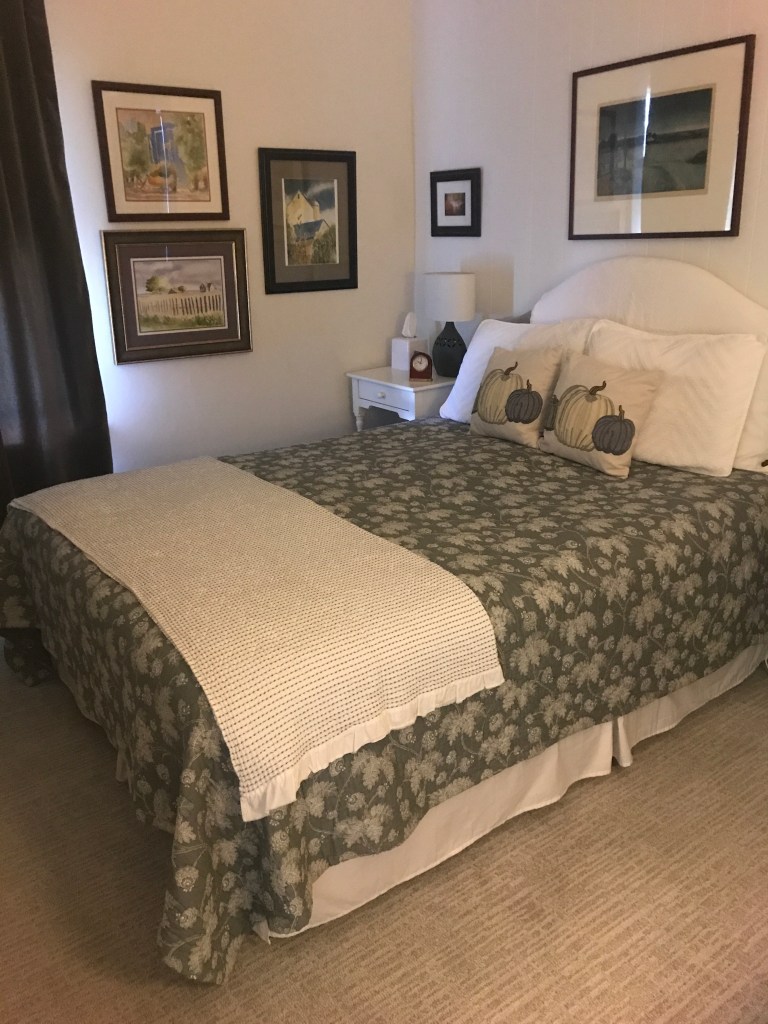
By 9:00 am Monday morning I felt as if I had put in a full day. I had completed the transition from summer to fall decor, changing the quilt and the drapes in our bedroom, along with adding a pumpkin here, a pumpkin there. I vacuumed the bedroom, cleaned the first floor bathroom, and re-organized the tumble of pillows, rugs and table runners in the narrow pillow closet (Yes, I have a pillow closet.)

I started the fall decorating Saturday afternoon after Bruce lugged up the bins full of pumpkins and other fall accessories from the storage area in the lower level. The last few years I have slimmed my collection of fall stuff, but I don’t think anyone would notice!

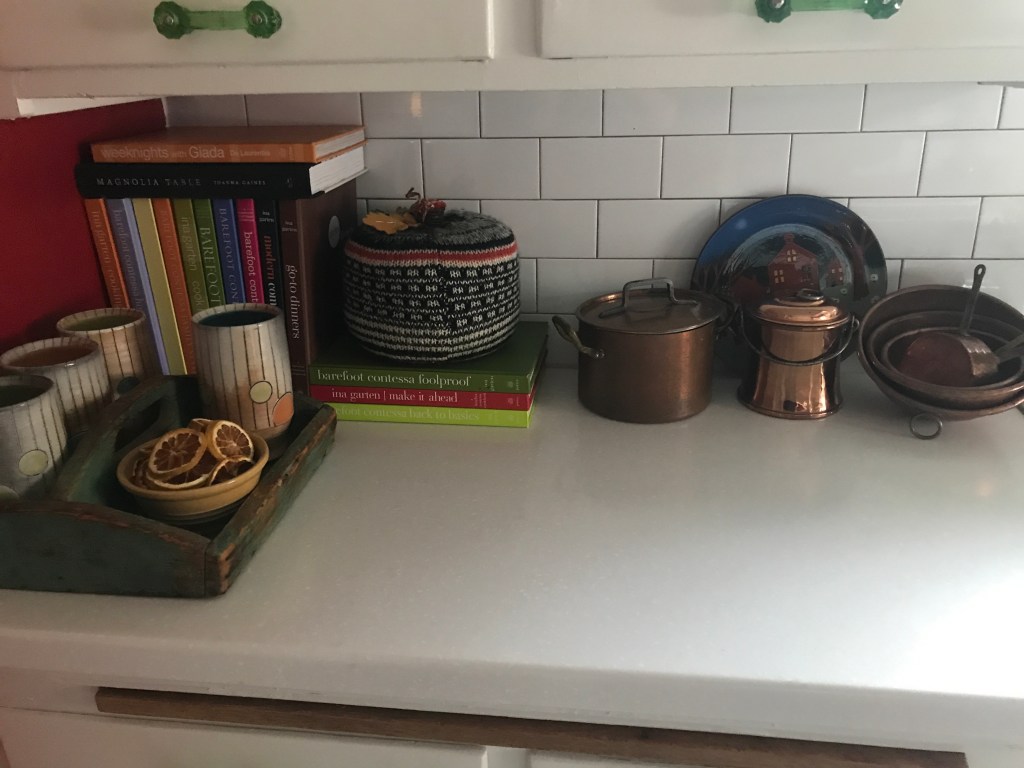
Beginning in the kitchen, I emptied many of the green Depression glass storage containers and replaced them with vintage copper canisters, bowls, and covered pots for a warmer glow.

I made good progress, but by late afternoon I was worn out and needed to stop. How grateful I was supper was easy–a yummy leftover soup–another sign of fall. (Artichoke, spinach, chicken and brie soup) Following Sunday morning church and potluck lunch, I continued the process, hoping to pronounce a satisfied “Done.” before it was time to fix dinner.

That didn’t quite happen.

What used to take me a day and involved more changes now apparently takes me three. Well, not quite three full days–but effort spread over three days.

In my younger years I could and did press on, cleaning as I re-decorated, until I accomplished the desired look for the new season.

Now I need to pace myself. I need to take breaks–sit down and read the paper or a couple chapters in the current book. I need to plot my movements more and think more strategically about how many times to go up and down the steps. I need to stop earlier.

Instead of encouraging myself to do one more thing, I have to reassure myself that it is ok to go to bed with bins still stacked in the dining room and pillows piled on the garret floor. Tomorrow is another day.

My pace as a 75 year old is different from my pace as a 65 year old–even a 70 year old.

I have a strong family history of working until IT is done–whatever IT is.

My family moved many times when I was a growing up, and the mode of operation was to unpack every box, hang every picture, fill every bookshelf, and stock every cupboard until it was done. DONE. My parents created home for our family quickly and efficiently, and then life in our new community began.

I adopted that habit, that way of being, and by and large it has served me well, except when it doesn’t.

At times that need to check something off the list, no matter how complicated or time-consuming, sets up an unrealistic expectation. That expectation does not take into account the reality of who I am now.

When I meet with spiritual direction clients, I sometimes ask them to consider “What is possible now?” That question requires pausing and taking a breath. Or in my case these last few days, a break.

Perhaps the day will come when I no longer choose to create seasonal looks in the house. Perhaps the day will come when the pillow closet is empty and I only have a few favorite items to mark a holiday. Perhaps the day will come when hometending is no longer a spiritual practice for me, a way to honor the ordinary, to experience the movement of God as the seasons of the year follow their usual cycle.

Right now, however, I still love this process, but I just need to pace myself.

Have you noticed any changes in yourself that require a different pace? I would love to know.

What Are You Doing These Days? And Other Difficult Questions

August 29, 2023

“What are you doing these days?”

“How’s your summer been?”

“Doing anything exciting? Traveling anywhere?”

At recent gatherings my husband and I have been asked these or similar questions. Twice I answered,
“We’re just boring old people.” That may be true, but we are not without interests and activities, and it is rare that I feel bored.

Why then is it so hard to answer the question? It is easier for me to share Bruce’s gardening at home and at church and his painting and then selling discarded furniture with proceeds going to Lutheran Social Services programs for homeless youth. And it is easier to share the activities of our grands–Maren’s semester in Greece this fall after working at Northern Lights Family Camp all summer and Peter’s recent hiking trip in the Rockies and now starting his sophomore year of high school and playing football.

Why is it so hard for me to share what I am doing? After all, I love what I am privileged to do.

Most of my days feel rich and full, so why am I uncomfortable sharing the ways I experience this time of my life?

I don’t have an easy answer, but I wonder if at least part of the answer is that what I do, I do most days. I read. I pray. I hometend. I pay bills. I go to Target. I watch yet another series on BritBox. I answer emails and go for walks. I spend time with friends and family and roam backroads with my husband. I go to church.

The stuff of life. The normal stuff of life. The movement from day to day.

I also meet with my spiritual direction clients and plan sessions for the weekly contemplative writing group at church and organize occasional events for Third Chapter, Spirituality As We Age, also at church. I write two posts every week for this blog and am always working on an essay to submit to various publications.

These activities are also the stuff of my life. The normal stuff of my life. The movement from day to day.

In that ongoing movement I try to pay attention and notice the movement of God.

That’s what I do with my days.

Perhaps I need to practice answering the question. I need to have an answer I can pull out of my back pocket–an answer that is simple and accurate, but in some way expresses the constellation of my life.

“Thanks for asking. Life is rich and full. How privileged I feel being able to do what matters to me. Yesterday, for example, I ….”

I love the familiar Annie Dillard quote, “How we spend our days is, of course, how we spend our lives. What we do with this hour, and that one, is what we are doing.”

Exciting days? Not so much. Big travel plans. Not really, except for our weekend rambles and our road trip to see our Cleveland kids in the fall. No, we are not going to Greece to visit Maren. This is her time, her adventure, and we will rejoice in what she shares.

Instead, we are living fully and deeply and joyfully in the stuff of each day.

How do you answer the “what are you doing?” questions? I would love to know.

One of the women in my personal writing group has just had an important article about the perils of wetlands published. I encourage you to read it. https://minnesotareformer.com/2023/08/25/u-s-supreme-court-has-put-precious-wetlands-in-peril/

Looking Back and Looking Ahead

August 22, 2023

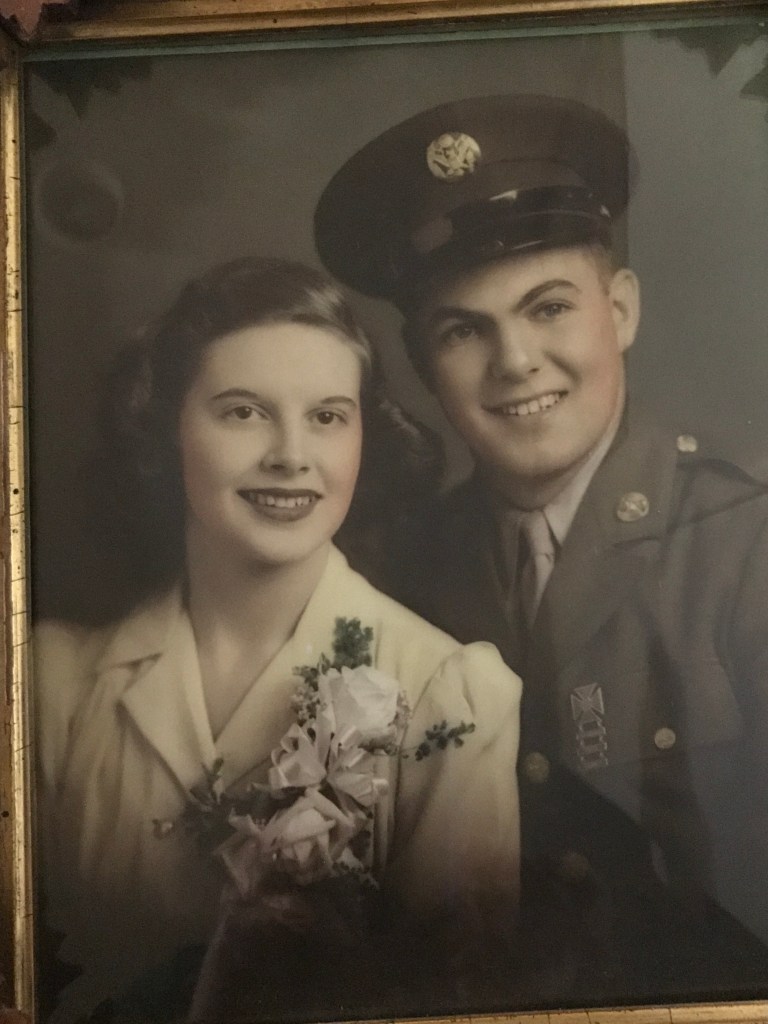
If my parents were still alive they would have celebrated their 80th wedding anniversary this past June and their 100th birthdays this month. They were born days apart in 1923, but died years apart — my mother in 2003 and my father more recently in 2020.

When my mother died of colon cancer after three years of remission, my father’s pain was tangible, but also his amazement. His wife dying first was not the plan. Men were supposed to die first, and much of their financial planning was with that thought in mind. He wanted to make sure Mom would be well-taken care of financially. Never did he think about what being a widower might mean for him.

Although he was lonely and missed her deeply, he did well. He continued his work as a consultant for several years and remained in their home until some health problems led to his decision to move into an independent living facility, where he lived for about ten years.

I suspect if Dad had died first Mom would have moved out of the house earlier and would have developed a social life with her new neighbors. Her needs for help from her family would have been different from my Dad’s, but I think she, too, would have done well in her years as a widow.

What’s important to remember is that there wasn’t a choice about who was going to die first.

What is true, however, is one of them would die before the other.

How obvious that seems, but I wonder how often we operate under mistaken assumptions. Like my father’s assumption that he would die before my mother.

In my August 1 post I mentioned that my husband and I recently had a conversation about future plans. Would I stay in the house if he died first? “No,” I said, but he said he would stay in the house, if I died first. Our conversation, brief as it was, focused on our individual needs and decisions. What strikes me now, however, is that unless we die in a car accident or some other catastrophic way, ONE OF US WILL DIE FIRST. And one of us will continue to live for an unknown period of time.

There are obviously all sorts of implications with that awareness, including financial ones but also thoughts about who I am as an individual. What am I doing now to maintain my own personhood, to continue to develop my own interests, to grow, and to connect to others in meaningful ways? What would be my challenges as a person newly uncoupled? My challenges might be different than my husband’s. Are there ways we can help each other now prepare for a life on our own after so many years of being a pair?

Obviously, we have no idea when either of us will die, and neither of us dwells on that question. Instead, we attempt to live fully and gratefully for these years that feel like such a bonus. At the same time we live aware of more days behind us than ahead of us, and it is good to continue the conversations.

In the meantime my sibs and our spouses will gather in the next few days to lift a glass or two to the memory of our parents and the years they were privileged to live.

What assumptions do you have as you live in your elder years? I would love to know.

Late Summer Thoughts

August 15, 2023

Have you noticed that gardens are looking frowsy –overgrown and perhaps even a bit weary of their own lushness? Many trees in our part of the world look tired. The greens are no longer fresh and new. The fading has begun. Some trees seem eager even to shed their greenness and lighten their load.

Even the rose bush on the path can no longer hold up its head. I’ve had enough perkiness for one season, it seems to say.

Well, it is late summer, after all.

As a child at this point in the summer I remember feeling, “Oh good, the summer is almost over and soon school will begin.” I was always eager for the first day of school. And the second and third and…

Now, while I love fall much more than summer and spring and perhaps not quite as much as I love winter, I am learning in my 70’s to not wish this time away. No matter the season. For who knows what next summer will bring or if I will have a next summer. What losses and changes will the months leading to next summer bring?

I’m learning, slowly and not always so steadily, to be here now. Now.

Now in spite of the heat and the mosquitos, the increased laundry and ironing, the dust on the tables when the windows are open, the bulging traffic heading to the lake on Friday afternoons, the empty pews on Sunday mornings as people vacation, the complaints about rainy weekends, and even the expectations we better have fun or make good use of this time because “soon it will be winter.” (Good, I think, but only smile and nod.)

I am aware, however, that my reasons for fall and winter yearning have become less. After all once warm weather ends I will no longer be able to sit in the Paris garden. Going places, even the grocery store, will take more thought and effort. How many layers do I need to wear? Is it going to snow today? Maybe I should wait till tomorrow. During those months, there is always the concern that a snowstorm may derail plans.

And recently, I heard reports on NPR about the upcoming flu season and what shots and COVID vaccinations will be recommended.

No, none of the strong preferences or affiliations with a season make any real sense.

Just be here now.

Whether sweating or shivering.

Whether hanging out or hunkering in.

Whether adding ice to a tall drink or chopping ice off the sidewalks.

Joy Harjo in her book about why she writes, Catching the Light, says to “Start anywhere to catch the light.”

No matter the season, I say, may I catch the light of a long summer’s evening or the passing of a firefly or even the glimmer of a new idea or clarifying thought.

May I catch the light as it glistens and glides over wildflowers on the side of the road or flowers picked from our backyard garden and now arranged in a small white pitcher on my desk or the light that wraps and warms families playing, resting or reuniting.

Mainly what I’m paying attention to these days, as I attempt to Be Here Now, is the light within. That happens more and more as I lighten the load of regrets and desires unmet and the “shoulds” expressed in the expectations of others or, let’s face it, my expectations of myself.

I’m paying attention to the light that comes from the spaciousness of God’s love and of Jesus’s way, encouraging each of us to lighten up and to enlighten one another with love.

That’s the kind of light that knows no season, knows no time.

What thoughts are you having during these late summer days? I would love to know.