November 16, 2023
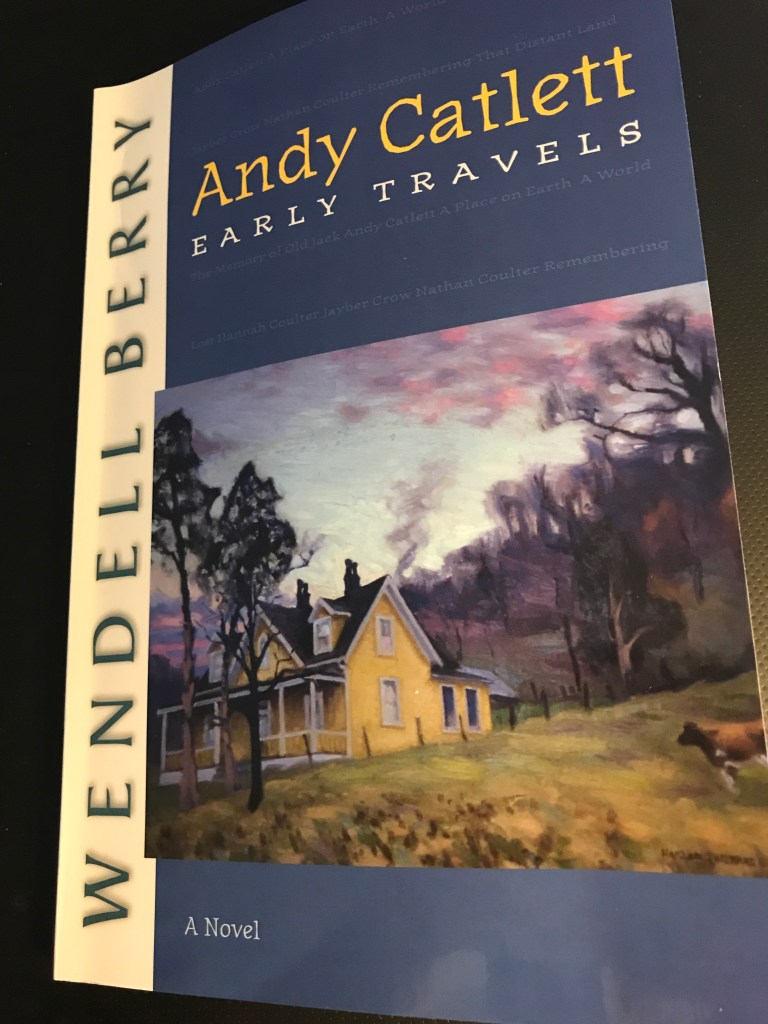
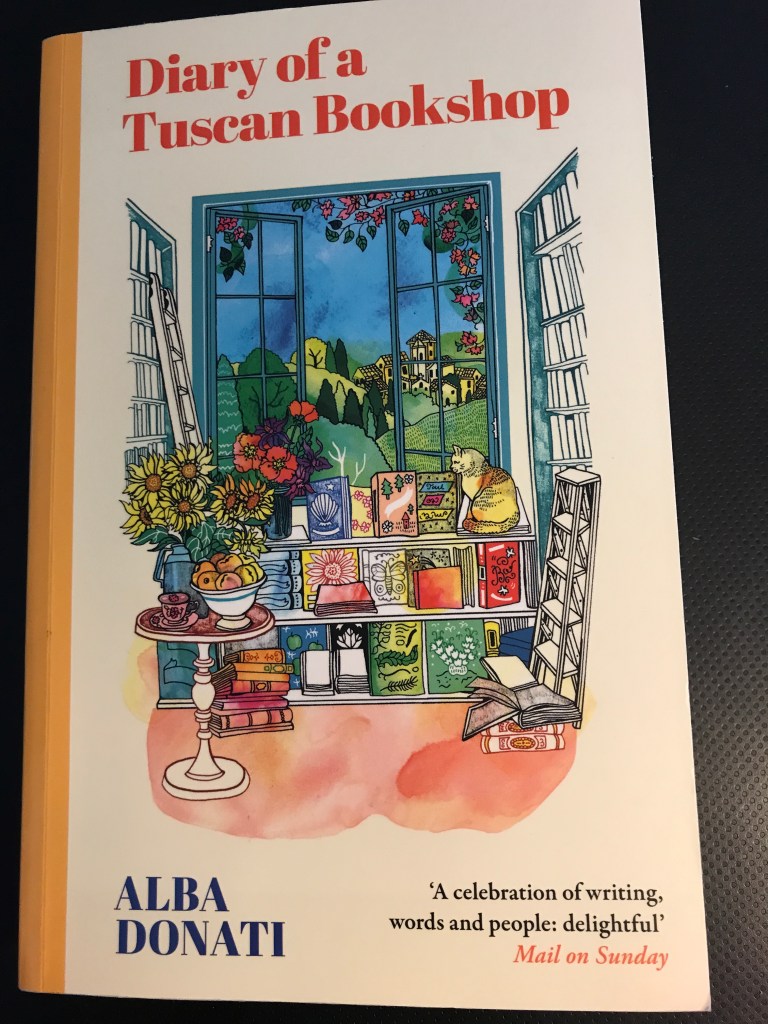
Of course, what is inside the book is most important, but unless I am looking for a specific title or author, the book cover is what first engages me. These two are winners.
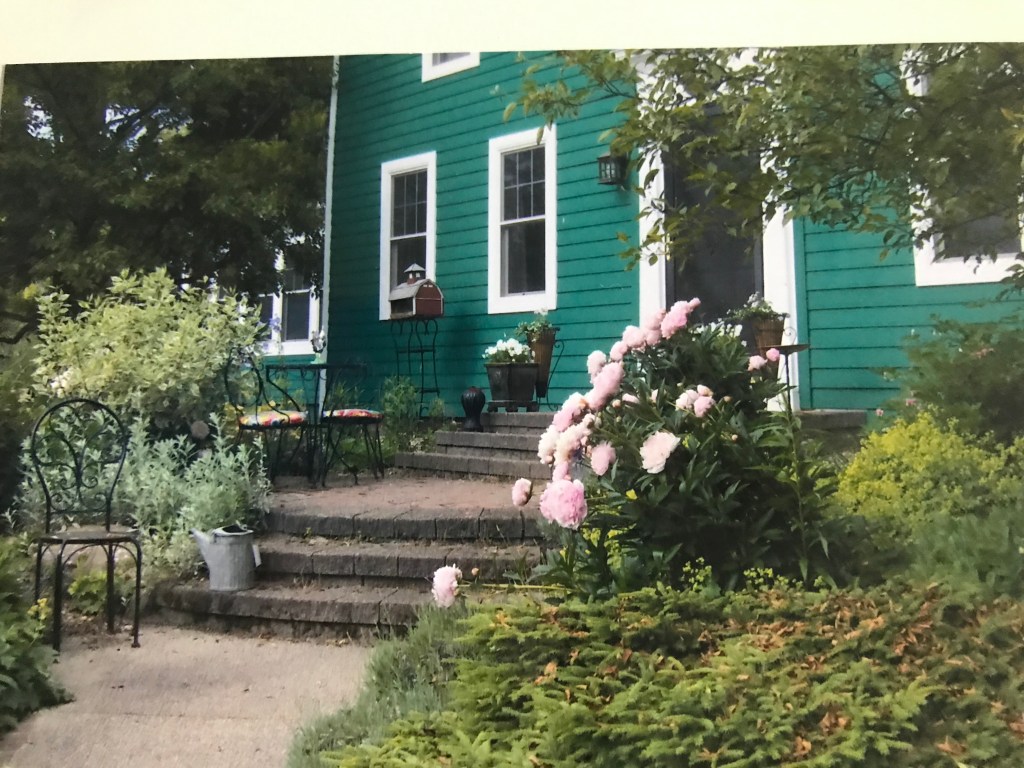
- Andy Catlett, Early Travels by Wendell Berry. I bought this book at Ann Patchett’s book store, Parnassus Books. It wasn’t on my TBR list, but I have read and loved other books by Kentucky author Berry, including Hannah Coulter and Jayber Crow. This cover reminded me, as does some of the descriptions in the book, of our Sweetwater Farm in Ohio.
The book, which is part of Berry’s Port William series, is set in 1943 and young Andy Catlett takes the bus by himself to visit both sets of grandparents. Although much of the book has a nostalgic feel Berry also reflects on the role of racism in the community and among the people he loves. “Dick,” a Black man was a “hired hand,” and Andy reflects,” Whereas my grandfather’s life had been shaped by the effort to keep what he had, Dick’s had been shaped by the effort implied in not having.” pp. 24-25.
Also.
It was a circumstance that was mostly taken for granted. It was inexcusable, and yet we had the formidable excuse of being used to it. It was an injustice both accommodated and varyingly obscured not only by daily custom, but also the exigencies and preoccupations of daily life. We left the issue alone, not exactly by ignoring it, but by observing an elaborate etiquette that permitted us to ignore it…What is hardest to get used to maybe, once you are aware, is the range of things humans are able to get used to. I was more used to this once than I am now.
pp. 75-76
Much of what Berry describes reminds me of my Grandma and Grandpa Hansen’s farm in southern Minnesota and life in the early 50’s when I was growing up. Like a button box.
No worn out garment then was simply thrown away. When it was worn past wearing and patching, all its buttons were snipped off and put into the button box. And then when something old needed a new button, the button box provided. Grandma’s was an old shoe box better than half full of buttons of all sorts. it was a pleasure just to run your fingers through like running your fingers through a bucket of shelled corn.
p. 62
The book is short–only 140 pages–but so rich with descriptions of time and place and people. As I read it, I paused often to re-read passages–wanting to fully absorb the beauty of the writing. This is a book where plot is not the focus, but I didn’t miss it. Not at all.
- Diary of a Tuscan Bookshop by Alba Donati. A friend gave me this nonfiction book, which she bought on a trip to the UK. What could be lovelier than to be remembered by a friend when she is traveling. If I had seen this book in a bookstore, no doubt, I would have bought it, for the cover is so pleasing. I want to spend time in that setting. Donati is a poet, and she opens a small bookstore in a small Italian town, Lucignana, which would have been enough of a challenge, but she opens it during the pandemic. The book is written in a series of diary entries, and I think it would have been better, if written in more of a narrative style. In a diary one tends to reference lots of information relevant only to the writer. I did love, however, the list of the day’s book orders at the end of each entry. Both Italian and English. An example:
Drive Your Plow Over the Bones of the Dead by Olga Tokarczuk, L’istante largo by Sara Bruner, White Fang by Jack London, The Handmaid’s Tale by Margaret Atwood, Loving Frank by Nancy Horan, Learning to Talk to Plants by Marta Orriols.
p. 69
I would love to know about the readers of those books. Why then? And how did they learn about them?
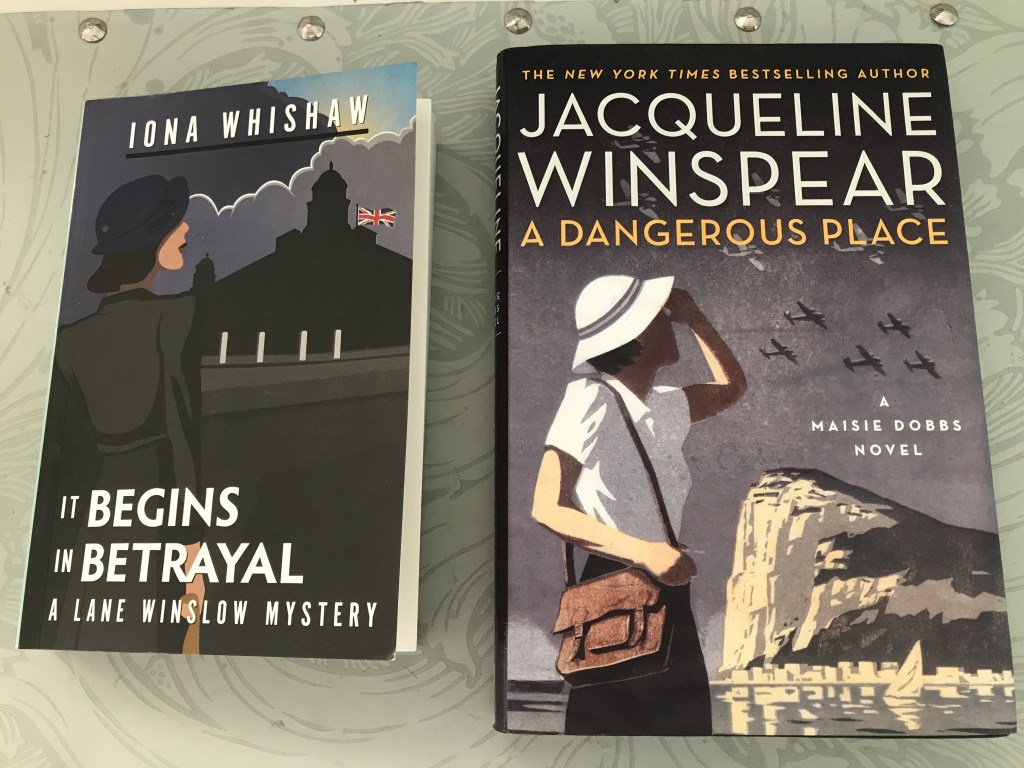
Right now I am reading #4 in the Lane Winslow mystery series by Iona Whishaw, and the covers in these editions remind me so much of the Maisie Dobbs series by Jacqueline Winspear.
An Invitation
Have you been influenced to read or buy a book based on its cover? I would love to know.









 Living on Life's Labyrinth