Book Report: Float Up, Sing Down by Laird Hunt

April 11, 2024

This is not the book I intended to review today.

A visit to the library earlier this month yielded two surprise books on the Lucky Day shelf–both on my hold list and both with a large number ahead of me on that list. Needless to say, I grabbed both books, hoping there was nobody standing behind me ready to intimidate me into sharing at least one of them.

The two books were A Council of Dolls by Mona Susan Power and Wandering Stars by Tommy Orange. Both books are by contemporary indigenous authors. After reading (and loving) A Council of Dolls, I started reading Wandering Stars and realized I needed to read another book between those two books. In part, so I wouldn’t mix up the content–one in the other–but more to let each of those books breathe fully and for me to receive their breath. I promise you I will write more about each of these books in my April 18th post.

Sometimes after finishing a book that has fed me so completely, I need a palate cleanser kind of book–a cozy mystery, often. A book with a lighter touch. I wasn’t sure if Float Up, Sing Down, a book of linked short stories by Laird Hunt would fulfill that need, but I loved the cover, and it was in my pile of library books.

I don’t often read collections of short stories, but linked short stories are more appealing to me. Besides I so enjoyed Zorrie, Hunt’s 2021 novel, set in the same farming community in Indiana. Well….such good choice.

As I’ve written before, “quiet” novels, character-driven novels are my favorite kind of books, and that is true of Float Up, Sing Down. Each of the 14 chapters focuses on a single day in the life of each of the town’s residents. I can’t do better than the inside cover’s summary:

Candy Wilson has forgotten to buy the paprika. Turner Davis needs to get his zinnias in. Della told her mother she was going to the Galaxy Swirl, but that’s not where she’s really headed on her new Schwinn five-speed.

The residents of this rural town have their routines, their preferences, their joys, grudges, and regrets. Gossip is paramount. Lives are entwined. Retired sheriffs climb corn bins and muse on lost love. French teachers throw firecrackers out of barn windows, and teenagers borrow motorcycles to ride black roads..

Zorrie makes an occasional appearance, too.

Meet Horace, who “liked to know what the day had in store.” (p. 49) Horace had fought on D-Day, not that he liked to think about that time in his life, except for his encounter in Crete with Rose-Alice, whose Scottish archaeologist father had overseen excavations in Crete before the war. Now even in land-locked Indiana he can smell the sea. On this day, however, he needed to mow the lawn.

There had been quite a few in the community over the years who had been soft on him. Horace had always gone easy on the eyes, and old as he was getting, this was still true. Time wasn’t in any great hurry with him was the way Myrtle had put it. He wasn’t especially tall, but he was naturally lean, didn’t sweat too much, and looked good in a pressed cotton shirt. Like Gary Cooper but shorter, Alma Dunn had once said. He had taken her on three dates. She had gotten pretty worked up about things. He hadn’t married her or anyone else though. For a while there had been whispers of the nasty variety, but they hadn’t stuck. There hadn’t been anything for them to stick to.

p. 50

My favorite line is in the Myrtle chapter: “She was a good egg. It wasn’t just any old chicken that had laid her.” p. 158

Think Willa Cather, Wendell Berry, Elizabeth Strout. Think Our Town.

Do you need to read a “palate cleanser” after reading a particularly engrossing or “important” book? I would love to know.

Action VS Indifference

April 9, 2024

We do not have the luxury of indifference.

Robert Hubbell

Since the beginning of this year I have participated in several postcard campaigns to encourage people to register to vote and to actually vote in a primary. I have sent postcards to support specific candidates, including Ohio’s Sherrod Brown, Ruben Gallego in Arizona, and Tom Suozzi in New York. My total postcards: 300. So far.

I say this not to elicit praise or to pat myself on the back. Instead, I urge you to do what you can to save democracy. Fundraisers often say, “No gift is too small,” and I hasten to add “No action is too small.”

I am a terrible phone person. I don’t enjoy talking on the phone. I even dislike making phone calls and am so grateful for the ability to do much of what I need to do via email or text. I am grateful for all the people who participate in phone-calling events in support of candidates and campaigns, but that is not something I will be doing in the next seven months. (EEEK–only seven months before election day in November.)

I also won’t be walking door to door, passing out leaflets, engaging people in conversations. I did that decades ago, but that method no longer fits who I am now and what I am able to do.

What I can do, however, is participate in postcard campaigns. I can order postcards with a voting theme from Etsy. I can buy rolls of postcard stamps. In fact, the last time I did so, the mail clerk subtly asked me why I needed so many postcard stamps. Our conversation was brief and careful, but I could tell he was intrigued and you never know…

I can watch a movie on Netflix as I address and handprint the message provided by the sponsoring organization or I can sit at the dining room table and work on a few more postcards while dinner is baking in the oven. Soon I will be able sit at the bistro table in my secret “Paris” garden or on the patio and write postcards while I enjoy fresh air and birdsong and the glories of my husband’s gardening efforts.

I can drop the postcards in the mailbox a couple blocks away when I go on an afternoon walk.

I must do something because this is not a time for indifference.

I receive several daily or weekly newsletters that keep me informed and motivated and help me focus. If I feel myself holding my breath as I read them, I know it is time to sign-up for another postcard campaign.

#1 From Robert Hubbell’s Today’s Edition Newsletter, April 2, 2024 https://roberthubbell.substack.com/p/we-dont-have-the-luxury-of-indifference

We live in a world where the only US president ever to attempt a coup has a too-close-for-comfort chance of being re-elected on a platform of overt fascism. That changes everything. We do not have the luxury of indifference.

We do not have the luxury of being “just” journalists, lawyers, elected officials, educators, students, co-workers, entertainers, parents, family members, or citizens. At this moment, we must be defenders of democracy in everything we do. If not, we betray and abandon the Constitution. There is no in-between. The question has been called.

Indifference is a choice. Cynicism is a choice. “Just doing my job” is a choice.

Democracy is a choice.

Defending democracy is a duty that appears unbidden when Americans least expect it. Every generation before ours has discharged that duty honorably. Ours cannot be the one to falter.

#2 From Diana Butler’s Newsletter, The Cottage, April 3, 2024. https://dianabutlerbass.substack.com/p/donald-trumps-political-idolatry

The media is not misrepresenting evangelical views. It comes from evangelicals themselves — they embrace the theology of Trump the Savior, a new political Jesus. They believe it. They believe that Trump is being sacrificed for them.

The most telling part in this video is the opening interview with two evangelical voters. They clearly understand the Bible and evangelical views of salvation — you could hear these verses quoted and this theology expressed on any given Sunday (or Wednesday night Bible study) in any evangelical church in the United States. They don’t get the theology wrong. 

And then they apply it to Trump:

Man: “THE BIBLE SAYS HE WAS WOUNDED FOR OUR TRANSGRESSIONS. HE DID IT FOR US. WHEN TRUMP IS FACING ALL THESE THINGS IS HE DOING IT FOR US IN OUR PLACE.”

Woman: “JESUS DIED FOR MY SINS. JESUS DIED FOR ME AND SO I — IT CONNECTS IN MY BRAIN THAT WAY. LIKE, HE IS DOING THIS FOR US AS A COUNTRY TO MAKE THE CHANGES WE NEED TO MAKE AND HE IS THE TARGET WHERE WE DON’T HAVE TO BE.”

I choose the amount of time I spend listening to, watching, or reading about current events and the resulting commentary. I choose to spend part of my morning devotion time praying for the existence and renewal of democracy in this country and all those who are attempting to save it. However, I still feel overwhelmed and discouraged at times.

Yup, that’s when it’s time to sign-up for another postcard campaign.

Karen Hering in her remarkable book, Trusting Change, Finding Our Way Through Personal and Global Transformation advises:

Describe a practice you use to calm or settle yourself when experiencing strong reflexive responses of fear or anger. What do you experience when you do this?

p. 155

Writing in my journal always calms me and clarifies what I am feeling and often reveals a next step. I’ve discovered writing postcards also calms me and is a step I can take.

Name one global threshold you are concerned about, whether or not you have been actively engaged in addressing it. Share some of your skills or knowledge that might be helpful in that issue…

p. 155

I have the time. I print legibly. I can afford to buy postcards and stamps.

Simple.

The human heart is the first home of democracy. It is where we embrace our questions. Can we be equitable? Can we be generous? Can we listen with our whole beings, not just our minds, and offer our attention rather than our opinions? And do we have enough resolve in our hearts to act courageously, relentlessly, without giving up–ever–trusting our fellow citizens to join with us in our determined pursuit of a living democracy?

One of the voices of wisdom who sits on my shelf is Parker J. Palmer. Right now I think I need to re-read his 2011 book, Healing the Heart of Democracy, The Courage to Create a Politics Worthy of the Human Spirit.

What is it you can do to resist indifference? I would love to know.

Americans of Conscience https://americansofconscience.com

Activate America https://www.activateamerica.vote

Postcards to Voters https://postcardstovoters.org

Chop Woods, Carry Water https://chopwoodcarrywaterdailyactions.substack.com

I buy postcards from various artists on Etsy. https://www.etsy.com

Book Report: March Summary

April 4, 2024

Some of the books I read this month were surprises, meaning I was surprised by how much I liked and appreciated them. Other books didn’t surprise me at all, for I was quite certain they would not disappoint, and I would love them.

I’ve already reviewed some of my “No Surprise” books:

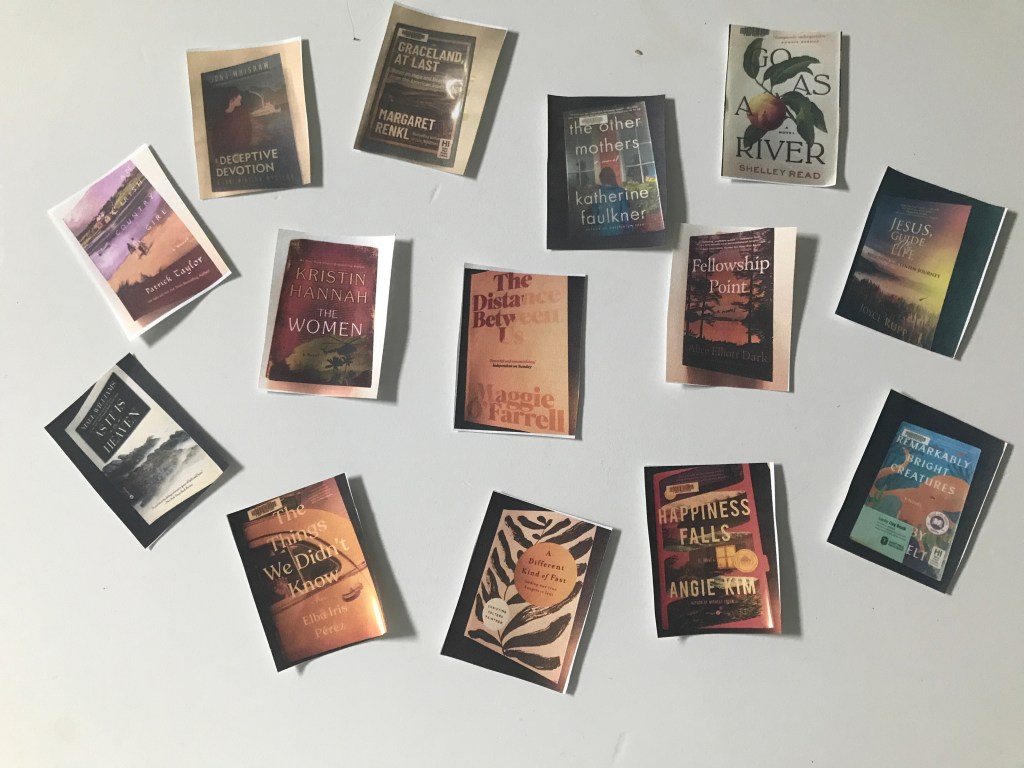
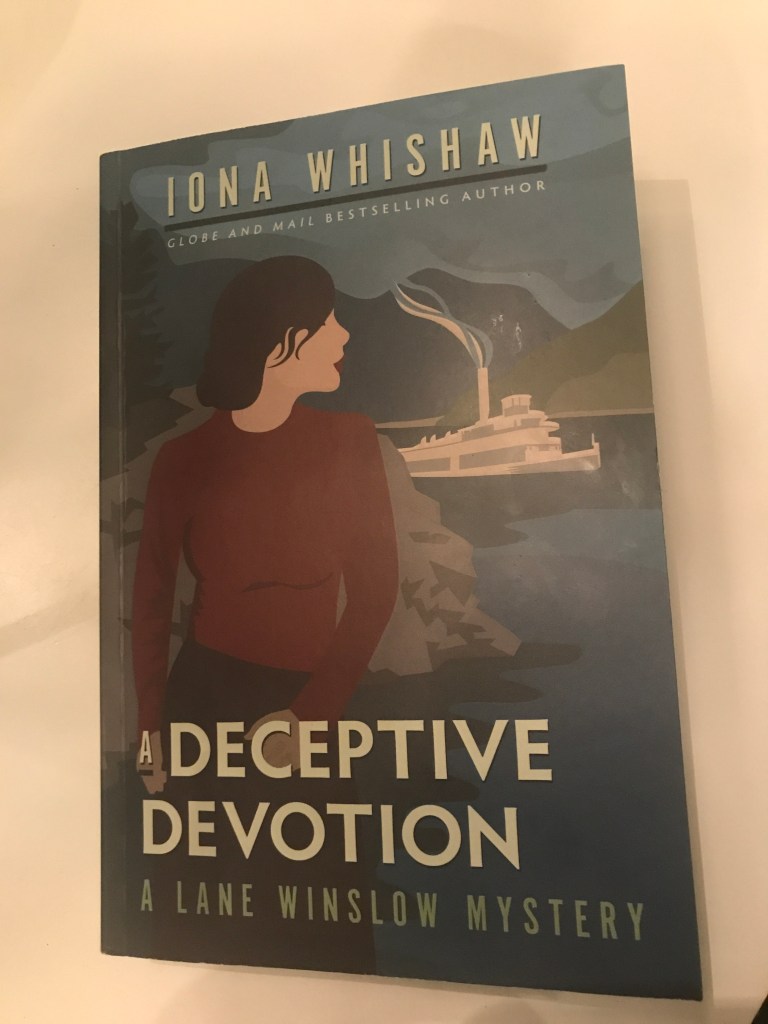
  • A Deceptive Devotion, #6 in the Lane Winslow Mystery Series by Iona Whishaw (See March 14 post.)
  • As It Is In Heaven by Niall Williams (See March 14 post.)
  • Graceland, At Last. Notes on Hope and Heartache From the American South by Margaret Renkl (See March 7 post)

Two other novels I read in March were also “No Surprise” books:

  • The Distance Between Us by Maggie O’Farrell. I have now read all of O’Farrell’s books and can easily say she is one of my favorite contemporary novelists. This title, one of her early books, is not my favorite of hers. However, how two seemingly separate stories, the story of Jake who grew up in Hong Kong and the story of Stella and her sister Nina who grew up in the UK, eventually entwine kept me reading. Now I can re-read my favorite O’Farrell books, including Hamnet and The Marriage Portrait, but also earlier ones, such as The Hand That First Held Mine and After You’d Gone.
  • An Irish Country Girl by Patrick Taylor. I have read two previous books in this series, An Irish Country Doctor and An Irish Country Village. I own An Irish Country Courtship and intend to read that soon. These books, set in Northern Ireland, are fresh air, a palate cleanser, a gathering of old and dear friends, stories shared around a cozy fire, and a touch of nostalgia of a time you may yearn for.

The two books I read as part of my Lenten devotion time were also no surprise, for over the years I have come to trust both of these writers for their wisdom and insight.

  • A Different Kind of Fast, Feeding Our True Hungers in Lent by Christine Valters Paintner. Each week of Lent is further subdivided into a practice for each day: lectio divina, breath prayer, visio divina, meditation with the desert elders, contemplative walk, imaginative prayer, and a ritual for the senses. As always, Paintner is so adept at engaging the readers in spiritual practices.
  • Jesus, Guide of My Life, Reflections for the Lenten Journey by Joyce Rupp. Such a good Lenten companion this book was. I admire how in two pages for each day, Rupp is able to impart an insight that leads to deeper reflection.

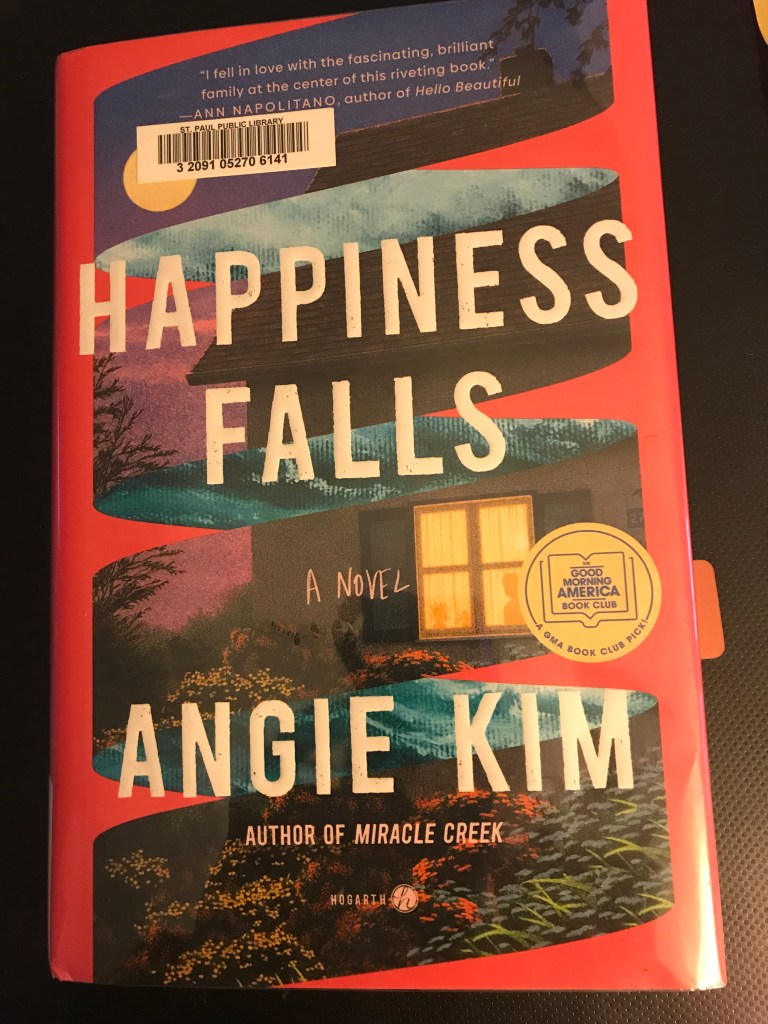
Three of the “surprise” novels I reviewed in one of my Thursday posts already: Go As A River by Shelley Read, Happiness Falls by Angie Kim (both on March 21), and The Women by Kristin Hannah (March 28). Today’s Book Report Summary, however, allows me to recommend all three of these books again.

Three others were pleasant surprises, too.

  • The Things We Didn’t Know by Elba Iris Perez. A fast read. A good read about a Puerto Rican family in the 1950s-1970s. Parts of the book are set in Puerto Rico and parts in Woronoco, Massachusetts, an enclave for Puerto Ricans who move to the mainland. Much of the book focuses on the conflict between remaining true to Puerto Rican values and assimilating into and adopting “white” values and culture.
  • Fellowship Point by Alice Elliot Dark. I loved this book. I repeat, I loved this book, even though I had a hard time keeping straight in my head the title–too close to Happiness Falls, which I also read in March. The stories are in no way similar to each other, however. First of all, I loved the setting in Maine, but I loved the characters even more. Agnes Lee is a children’s book author, but also has written anonymously a series for adults. Her closest friend is Polly, whose husband,a retired philosophy professor, never gives her much credit for anything. Both women are in their 80s and have summer homes in Maine and want to make sure the area is saved as a land trust and not developed. Polly’s sons have other ideas–that’s just one of the subplots. Mainly, however, this book is rich in character development. And such good writing

Writing is waiting. That’s the whole of it. If you sit in your chair not doing anything else for long enough, the answer will come. You do have to be in your chair, though, ready to write it down.

p. 570

But there was a last time. An unforeseen and uncomforted last time. I don’t remember it. That more than anything describes aging to me–the letting go of one activity after the next, with no fanfare. Just realizing later that the last time has come and gone.

p. 117
  • Remarkably Bright Creatures by Shelby Van Pelt. I resisted this book for quite some time. A talking octopus did not appeal to me, but many whose taste I trust recommended it to me, and I was surprised by its charm. I liked the main character, Tova, an older woman who cleans the local aquarium facility every night. That’s how Marcellus the octopus becomes her friend. Her life becomes entwined with Cameron, a young man who is a lost soul, abandoned by his mother and his father, unknown. Let go of your need for plausibility, and just enjoy this tale of friendship and connection.

The main character in The Other Mothers by Katherine Faulkner is convinced a nanny’s death was a murder, not accidental death. I was with the unfolding of the mystery till almost the end, but the last 25 pages or so felt both rushed and meandering. Kind of a mess. And the ending was both disappointing and frustrating and even immoral. Sorry, but I can’t recommend this one.

That’s it for March: 14 books. 11 fiction. 3 nonfiction.

Now it’s on to April.

What books read in March can you recommend? I would love to know.

Signs of Resurrection

April 2, 2024

Easter Sunday, 2016, Granddaughter Maren, age 14, participating in procession

I am not a theologian. I have no degrees in religion. I am not ordained. I have no revolutionary insights into what happened on what we Christians now think of as Easter Sunday. I hold few, if any certainties in my personal creed. Some days, maybe most days, I move from one task to another without giving much thought to the great “truths” of life and death. In fact, more and more I consider the implications of “multiple truths,” a term Rabbi Adam Spilker of Mt Zion Temple used during a recent adult forum at my church.

Ok, given all I say I’m not, who do I say I am?

Well, on this day, two days after Easter Sunday, 2024, I say I am someone who believes in resurrection. As Joan Chittister says in her book, In Search of Belief, I am not specifically referring to the “revivification of an old life…It’s about experiencing a new kind of life entirely.”

I must admit I get hung-up on the word “entirely,” for I seem to experience resurrection in moments, in hints, in glimpses, in efforts, in unexpected gifts, in trial and error, in suggestions, in shimmers and glimmers.

In forgiveness. Or at least the desire to forgive. The movement toward forgiveness.

In grace, even when I don’t recognize it or acknowledge its presence.

Yes, I see resurrection in the loan daffodil that is almost ready to blossom in our backyard and in the song of a bird we can’t identify. And yes, I see resurrection in the pounds of rice and the cash collected for the local food shelf. I see resurrection in the overflowing crowds at all three of our Easter Sunday services –that pull towards hope and light. I hear it in the hymns and the inspiring sermon, and I receive it in the sharing of peace and the taste of the bread and wine.

I see it in the ways many are working for justice and peace and health and safety throughout the world. All the ways we are given to open our eyes and to respond to untruths and injustice and trauma and loss. All the ways we are invited to care.

I often think and write about discovering the person God created me to be. The movement towards wholeness. The unfolding and enfolding of my own essence. Lately, another word has entered my reflection time: alignment. When is what I do, how I live my life, what I choose, and how I respond most in alignment with God? Those moments of alignment, however brief or intangible, nearly invisible, are moments of resurrection.

Most often I don’t perceive those moments as they are occurring. Rather, I perceive them as a kind of retrospective resurrection moment, but I am seeking to be more and more aware of Presence in the moment. Right now as I write these words to you.

My moments of resurrection are different from yours, but they share certain characteristics, I think. They lift.

They open.

They touch.

They grow.

They lead.

They transform.

Over the years I have developed a purpose or, if you prefer, a mission statement for myself.

My purpose is to deepen awareness of the movement and presence of God in my own life and the lives of others:

By writing.

By facilitating groups.

By listening and asking questions.

By living a contemplative life.

More and more I realize that my purpose/mission statement is a reminder to myself to practice resurrection, to notice resurrection, and to seek resurrection for myself and for others.

What we believe by resurrection is that life has a purpose and a quality that does not end at the grave. We believe that the God who created us does not create us to abandon us but brings us finally, somehow, home to the fullness of life. Resurrection is simply another part of the process of growing into God. “Life” as we know it, “time” as we chart it, are simply temporary points to an eternal journey in a universe of unlimited mystery, endless possibility.

In Search of Belief by Joan Chittister, p. 195.

We have now entered the season of Easter. May these days open you, no matter your belief system, to moments of resurrection.

Where and when have you noticed resurrection? I would love to know.

Book Report: The Women by Kristin Hannah

March 28, 2024

Author of historical fiction, Beatriz Williams in her New York Times review said The Women by Kristin Hannah “gathers women into the experience with moving conviction.” The experience is the Vietnam War –as it was experienced by military nurses both in Vietnam itself, but also when they return to the United States. This is a novel that needed to be written, and Hannah has done it well, indeed.

Frances “Frankie” McGrath is inspired when a friend of her older brother about to leave for duty in Vietnam says to her, “Women can be heroes.” In spite of the lack of support from her family Frankie enlists and becomes an army nurse-fresh out of nursing school and totally unprepared for what she will face in Vietnam. But she learns fast and overcomes her fears. She saves lives. She honors those whose lives she cannot save. She plays hard, loves deeply, and creates a new perspective on who she is and is capable of being.

Once her tour of duty ends and she is back home she faces not only the protests against the war, but the disbelief of others, including vets, who insist there were no women in Vietnam. She struggles with how to live her life without her identity as an Army nurse, often making bad choices. She is sustained, however, by the friendships of other women with whom she served.

Hannah is a master both of research and an ability to translate that research into clear and evocative scenes. A friend who has read the book says it is a “flashback to our era, music, and clothing.” As a woman who was in her 20’s during those years, I recognize the name of every song and remember the bellbottoms once in my closet. I graduated from college in 1970 and so remember going on marches to protest the war and, of course, the references to Kent State, and Walter Cronkite and other people and events of the times.

I was overwhelmed and amazed by the graphic scenes of events in the evacuation hospital where Frankie worked. How could Hannah not have been an Army nurse herself! And all those powerful scenes were balanced equally effectively by down time in the O Club and other brief interludes when the wounded were not incoming. We see and feel all this through the eyes of a woman, just as we saw and felt the experiences of the soldiers in Tim O’Brien’s classic, The Things They Carried–one of my most memorable books of all time.

Now first let me say that I don’t demand perfection. To love and recommend a book doesn’t mean I have to love everything about a book.

I have not read all of Hannah’s books (and she has written many), but when I read The Great Alone (2017) I seem to remember feeling there were a few scenes too many of things going wrong or the character making bad decisions. I don’t recall that feeling when I read The Nightingale (2015), which I loved, and I have not read The Four Winds (2021), which is the book prior to The Women.

I didn’t feel there were too many illustrations of the ugliness of war and the heroics that took place over and over again, but I did feel once Frankie returns home that her struggles, which are all valid, could have been treated more concisely and still delivered the same point.

Oh, and the men in her life and how she responds to them….well, you read it and let me know what you think. And the ending… well, again, let me know what you think.

Yes. This novel is a well-written and vivid book of those Vietnam years. Even though I lived in those years, I confess I never thought about the powerful presence of nurses during the war, and for those who were not alive then, this book brings those years to life, a part of our history we must not forget. In recent years so many novels have been written about WWII, including The Nightingale, but Vietnam has been shoved into silence. The Women gives voice to those years, especially the women’s roles. Bravo.

What novels about a time in history have given you a new perspective or exposed you to something you did not know? I would love to know.

I just listened to episode 422 of the podcast What Should I Read Next? with Anne Bogel, and if you are someone who loves “quiet” books, I recommend listening to this episode. https://podcasts.apple.com/us/podcast/what-should-i-read-next/id1073499086?i=1000650473926

Leaning into Holy Week

March 26, 2024

Entombment (1603) by Caravaggio

Late in the afternoon, since it was the Day of Preparation (that is, Sabbath eve,) Joseph of Arimathea, a highly respected member of the Jewish Council, came. He was one who lived expectantly, on the lookout for the kingdom of God. Working up his courage, he went to Pilate and asked for Jesus’ body. Pilate questioned whether he could be dead that soon and called for the captain to verify that he was really dead. Assured by the captain, he gave Joseph the corpse.

Having already purchased a linen shroud, Joseph took him down, wrapped him in the shroud, placed him in a tomb that had been cut into the rock, and rolled a large stone across the opening. Mary Magdalene and Mary, mother of Joses, watched the burial.

Mark 15: 42-47 (paraphrased by Eugene Peterson in The Message: The Bible in Contemporary Language)

Many years ago the Cleveland Museum of Art hosted a traveling show of treasures from the Vatican. Entombment, a large painting by Caravaggio, was one of those treasures. We were living in Cleveland at the time and were among the crowds of people who attended this exhibit. Our son Geof, who is a graduate of the Milwaukee Institute of Art and Design, became our unofficial guide as we moved through the galleries. In his quiet voice, he pointed out aspects of the paintings I would surely have missed otherwise. Many people listened to an audio tour prepared by the museum, but even so I noticed a number of people paying attention to what Geof was saying and watching where he was pointing.

How true that was when we entered a room where the only painting was Entombment.

After spending time gazing at the painting, trying to take in the lifeless body of Jesus, the grief of those in attendance, and the strength and struggle of the men as they placed the body in the tomb, Geof suggested we move to the left side of the painting and kneel–not as an act of adoration and devotion, although I remember feeling that, but in order to experience the painting from a different perspective.

Joseph of Arimathea seemed to be looking right at me, asking for my help. I was in that tomb, too, positioned to receive and to ease the body onto that hard slab of rock. When we eventually left that room, that tomb, I noticed others taking the same posture as Geof had shown me.

During our Sunday morning worship service, Palm Sunday, the Passion Story according to the Gospel of Mark was read. How many times have I read the story in the quiet of my own space, heard the story, seen the story performed, even read aloud for others the story? I know this story, and yet, I am always stunned by the story. Sometimes I imagine myself as Peter, denying three times his relationship with Jesus. Or might I have been one of the Chief Priest’s servant girls who questioned Peter, “You were with the Nazarene, Jesus.” Sometimes I am the woman pouring the expensive perfume over Jesus’ head. Sometimes I am one of the disciples in the room preparing the Passover meal. Sometimes I wonder what it would have been like to carry the cross as Simon of Cyrene, did.

This story has room for each part of me. Each aspect of ourselves.

This time as Joseph of Arimathea’s actions were described, I remembered that Caravaggio painting and how my son had invited me to be in that scene, that moment.

I wondered about my openness, my willingness to receive.

When have I held someone else’s loss? How have I held my own losses?

How have I prepared the tomb for my own death?

Christine Valters Paintner in her new book, A Different Kind of Fast, Feeding Our True Hungers in Lent, invites us to enter the scene. “Help carry the weight of his body.” I see Joseph and his companion strain to hold that deadweight. How am I asked to lighten that load? To share that burden?

I don’t recall thinking much about the others depicted in the painting, but Paintner suggests:

Stand by the tomb as the mourners lay Jesus’s body to rest. Rest in the silence with them for a while. When the time feels right, consider engaging in conversation with one or more people there. Ask them what they have seen, how they feel, what they are going to do now. Have a dialogue with the garden, the plantlife, the tomb itself, Jesus’s body.

Sit inside the tomb for a period of time. Rest into the waiting. Recognize those places in your own life where you await new life.

p. 214.

This is what these Holy Week days are about–to see and to know ourselves in the story. To discover a new perspective and to lean into the new life awaiting us.

May these coming days deepen your awareness of the movement of God in your life.

When have you heard or experienced something familiar in a new way and gained a new perspective? I would love to know.

Two Notable Novels: Go As A River by Shelley Read and Happiness Falls by Angie Kim

March 21, 2024

Set on a Colorado peach farm, this book far exceeded my expectations. I enjoy family sagas, but often I don’t remember them beyond the last page. This one will stay with me–both for the excellent descriptive writing, but also because of the characters and their resilience and strength.

Victoria’s mother died in a car crash, and at age 17 she is left to run the household, which includes her hardworking and unsympathetic father, wild and mean and alcoholic brother, and a paralyzed war veteran uncle. She falls in love, almost at first sight, with Wilson Moon, a Native American, and this is not acceptable in racist 1948.

I am tempted to tell you more, but, instead, I hope you will read this debut novel.

There he stood and eyed me so long I thought I’d melt like chocolate in the last rays of sun reaching lost across the porch. He said nothing, but I felt as if he knew impossible things about me. He moved closer. I took my first deep smell of him, musky and sharp and strangely inviting, and stared for an instant into his bottomless dark eyes.

p. 15.

But it is often the small fateful twist that alters our lives most profoundly–the beckoning cry of a coal train whistle, a question from a stranger at an intersection, a brown bottle lying in the dirt. Try as we might to convince ourselves otherwise, the moments of our becoming cannot be carefully plucked like the ripest and most satisfying peach from the bough. In the endless stumble toward ourselves, we harvest the crop we are given.

p. 18.

I had chosen to meet on these shores because my rising wisdom understood that I must carry my whole past alongside the new space I had created in myself for hope.

p. 300.

I zoomed through this book. The basic story is unremarkable, a plot line that has been used many times: a father has gone missing. That’s where the similarities to other missing person stories ends. First, this is a biracial Korean American family. The father has become a stay at home Dad, which means his brilliant wife can pursue her career in linguistics. They have three children, 20 year old twins, John and Mia, and also Eugene, age 14, who is autistic and has a rare genetic condition, Angelman syndrome, and cannot speak.

Eugene returns to the house when only Mia is there. He is wild, out-of control, and bloody. The father does not return from their outing. As the investigation begins, the family wonders if the father has a secret life, and the police seem to think Eugene has harmed his father. LOTS of twists and turns, and the book begins to develop a true crime feel. In part that is because Mia, who is the story’s narrator, includes footnotes in the text, along with an occasional chart, as well as analyzing her father’s research into “happiness.”

The only thing that irritated me a bit about the book was frequent statements like, “If only I had known…” or “We would soon realize we should have…” or “it didn’t occur to me until later that…”

Even as the plot kept me intrigued, I was fascinated by the philosophical reference to the importance of language. For example, this footnote:

19 It’s a common mistake, saying verbal to refer to oral speech. It’s a pet peeve of mine when people say ‘verbal, not written,’ because written is verbal. So why do we call non speakers ‘nonverbal,” use the label ‘nonverbal autism’? It leads to the unwarranted assumption that those people are wholly without words. I’ve brought this matter up to people, and they dismiss it as ‘just semantics.’ But sometimes semantics matter. Words matter. They influence our thinking.

p. 229.

Kim has written another novel Miracle Creek, by the way, which received critical acclaim and a handful of awards. TBR anyone?

Is plot or character more important to you? I would love to know.

Lenten Practice: Organizing A Lifetime of Photos

March 19, 2023

Open the album of your life.

Kathleen Fischer

In my February 19, 2024 post, “Lenten Overload,” (https://wordpress.com/post/livingonlifeslabyrinth.com/3153), I noted my Lenten practices of recent years, when I focused on “letting go” and “decluttering.” I thinned out my shelves of spirituality and theology books–even though it doesn’t look that way–and incorporated that practice into my life as an ongoing project. I tossed multiple copies of published essays I have written and notebooks with writing ideas, plans, and the beginnings of other essays. How good that has felt and how necessary that is, especially at this stage of my life.

In that post I shared my decision to finally (FINALLY) deal with the bins of unorganized photos. A lifetime of photos. I had intended to also begin re-reading my journals, and I did read the first two (1977-1978), but quickly realized I could not adequately address both projects at the same time. I decided to focus on the photos and to enter into it with contemplation and reflection.

With my heart and soul. To pay attention to the movement of God in my life, as reflected in my inner voice. To approach these projects as more than physical decluttering and clearing of space. Instead, I hope to let go of what clutters my heart and mind.

No surprise, I am learning as I am doing.

I had vague ideas about how to approach the magnitude of organizing all our photos. Chronological seemed the most logical idea, but then I thought about certain themes. Maybe instead of organizing photos in albums, I should create some photo books a’ la Shutterfly. Our homes have been so important to us, and I have taken many photos to show the changes we made inside and outside over the years. Maybe I should select the best of those and do other photo books and should I integrate photos of family and friends into the settings? And what about trip photos? Do we really need the many photos of buildings and lakes and other scenery? And what about all the photos family and friends sent to us in Christmas cards? We have loved receiving them, but should I keep them all now?

I dug in–sorting into various categories. The grandkids. Our kids. Friends and other family. Homes. Trips. I subdivided big categories into smaller ones. I cursed myself for never writing helpful information on the back of each photo. Sometimes a date was stamped on the back and that helped, as did clothing and backgrounds, but what a mess.

I consider myself an organized person, so how did I let it get this way? And why do we have all these duplicates? How will I ever make sense of this all? Well, like Anne Lamott’s famous quote about writing, “Bird by Bird.” Photo by photo. One photo at a time.

  • Focus on one category or subject at a time. I decided to begin with all the photos of our first grandchild, Maren, who is now 21. Group all the pictures of her and of my husband and me with her. A sizable pile, to be sure, but it is a start, and it’s almost like getting to know her all over again.
  • Eliminate too similar or duplicate photos. Edit, edit, edit.
  • Set aside pictures to give to others. For instance, I now have a fun pile of photos to send to Maren.
  • Work in short spurts and work only as long as it is pleasurable and productive.
  • Print photos on my phone I intend to keep. Delete others.
  • Don’t even consider filling photo albums or other storage options until all photos have been sorted and categorized and organized.
  • Be flexible. Maybe I will decide to do things differently as I go along. Maybe other ideas or methods will present themselves.
  • Be patient. Remember to stretch, to breathe. Always a good thing.

How easy it is to think about this process as a project–as something that needs to be done because of all the space these bins are taking or because I can never find a picture I want or because I don’t want to leave this mess for my kids to handle. Or because this is the time of life to intentionally declutter and deal with the stuff of our lives. If not now, when?

Those are worthwhile reasons, but I have committed to this as a Lenten practice. What does that mean?

Once again Joan Chittister comes to the rescue:

The wonder of being able to see life as whole, at any time and all times, is the great gift of memory. It makes all of life a piece in progress. With one part of the soul in the past and another in the present, we are able to go on stitching together a life that has integrity and wholeness. Because of memory life is not simply one isolated act after another. It all fits into the image of the self and the goals of the heart. It makes them real. It makes them whole.

The Gift of Years, Growing Older Gracefully, p. 155.

This practice is about gratitude for the many gifts in my life.

This practice is about remembering how the years have formed me and my loved ones.

This practice is about finding the whole in the parts.

This practice is about noticing the gaps and what they mean.

This practice is about sharing stories.

This practice is about making connections.

This practice is about being present as I recall the past.

This practice is about transforming burden into gift.

This practice is about being more aware of God’s presence in my life. My whole life.

Today is day 24 in the 40 days of Lent, (Sundays are not counted in the 40 days.) and I am no where close to completing this project, but since it is a spiritual practice, that is ok. More than ok. This spiritual practice will companion me in the Easter season and into ordinary time and more than likely right up to and through Advent. And because I keep taking more photographs this project/practice will continue teaching and guiding me.

If you decided on a specific spiritual practice for this season of Lent, how is it going? I would love to know.

Book Report: Two Favorite Authors–Iona Whishaw and Niall Williams

March 14, 2024

Reading the next book in a series and another book by a favorite author feels like coming home. The refrigerator is stocked with my favorite foods and beverages, and the light is glowing by my favorite reading chair. This feels especially true if a recent read was less than satisfying, and I need “a sure thing.”

I can count on Iona Whishaw’s Lane Winslow Mystery series when I need a pleasing, not too heavy, but also not too predictable book. Set in post WWII Canada, former English spy Lane Winslow somehow becomes involved in intrigue and murders in picturesque Kings Cove. And Inspector Darling often needs her help, even when he doesn’t know it.

A Deceptive Devotion, the sixth book in the series, involves a mysterious older Russian woman looking for her missing brother. Lane, who speaks Russian becomes her host and her translator. Is this woman who she says she is? Complications build when a lone hunter is found murdered near by. Is there a connection between these two plot threads?

One of the things that is important to me when I read a series is that the characters continue to develop, and that is true in these books. Lane and Inspector Darling have evolved, grown since their first appearance in book #1. Plus, I love getting to know the other characters in the book, including Constable Ames, who often provides some comic relief, and Lane’s neighbors –the postmistress Eleanor and the Hughes ladies who are master gardeners, and a variety of others, who all care for Lane. And then there is the ongoing relationship between Lane and Darling.

This is not deep reading, but is perfect when I feel the need for distraction. While I wait for the next Louise Penny and the next Maisie Dobbs by Jacqueline Winspear how grateful I am to have four more in the Lane Winslow series available.

The first novel I read by Irish author Niall Williams was This Is Happiness published in 2019, and that led me to his first novel Four Letters of Love (1997), which I also loved. This past year I read History of Rain (2014). Again, another big love. Finally, I realized this writer never disappoints, and I need to read the rest of his back list.

I just finished As It Is In Heaven (1999). Yes, I loved it. Sorry to be so repetitive. The book grabbed me with its opening lines:

There are only three great puzzles in the world, the puzzle of love, the puzzle of death, and between each of these and part of both of them, the puzzle of God. God is the greatest puzzle of all”

p. 3

Stephen Griffin is a lackluster teacher who falls in love with an Italian violinist, Gabriella, the first time he hears her play. His father, Phillip, who continues to grieve the death of his wife and daughter in a car accident, realizes his son is in love as they play chess.

The magic begins. The miracles begin. And the writing takes my breath away over and over again.

I don’t want to say more, because I want you to discover this on your own.

How happy I am that I still have three more novels left to read: The Fall of Light (2001), Only Say the Word (2005), and John (2008). Plus, he has written several nonfiction books about his beloved Ireland.

Happy reading!

What book has inspired you to read all the books written by that author? What series of books do you love? I would love to know.

In Person: Heather Cox Richardson

March 12, 2024

My morning meditation time includes not only reflecting on a selection from a spiritual text, writing in my journal, and lifting the prayers of my heart, but I also read Heather Cox Richardson’s daily newsletter, Letters from an American, which has over 1.4m subscribers. https://heathercoxrichardson.substack.com Richardson is a Professor of History at Boston College and an expert on American political and economic history, and each day she manages to bring clarity to the chaos of the day’s news, adding the perspective of history into what swirls around us.

Heather Cox Richardson is a valuable and insightful and hopeful voice, and Sunday she spoke to an overflow crowd at House of Hope Presbyterian Church in St Paul, MN. Such a privilege to see and hear her.

I urge you, if you have not already done so, to subscribe to her newsletter. She also has a new book, New York Times bestseller Democracy Awakening: Notes on the State of America. Nope, I haven’t read it yet, but I own it, and I will read it, for sure.

Sitting in her presence with all the others who made the decision to spend their Sunday afternoon in this way, I thought about the gifts of physically sharing space with others and how different that is from sitting in the snug reading a book or at my desk reading newsletters on my phone or laptop. How different sharing the same space with a speaker is from listening to a podcast or radio interview while I fix dinner. Now don’t get me wrong–I am so grateful for all those ways I can access news, ideas, and events, but being there strengthens commitment, builds energy, and reinforces beliefs and intentions.

Even though I know, as I listen to, watch, or read something meaningful or interesting in the comfort of my home, I am expanding my awareness, sharing that experience with others is a different, more personal, more dynamic experience. How good it is to be with others who are eager to hear more, learn more, and who may support a certain perspective.

An example: I am a big Barbara Brown Taylor fan. I own and have read most of her books, and whenever a new one is published by her I rush to buy it. That is true about Anne Lamott and Elizabeth Gilbert, for example, as well. But after attending in person events in which these women were the speakers, even though I was one of hundreds in attendance, I have a kind of relationship with each of them. I saw them pause and smile and take a sip of water and adjust their glasses or the hair that fell into their eyes and shift the papers of their prepared talk. I sensed them listen, really listen, as an audience member asked a question. They are now no longer only words on a page or a voice in a studio. They are individuals. They are women who decided what to wear that morning and have long “to do” lists, which may include grocery shopping or taking the car in for an oil change. And yes, they are brilliant and wise and often funny and charming, but they are also real. Real.

I realize that as I age I am not as likely to make the effort to attend these kinds of events. I think more about the logistics and the energy such attendance takes. Instead of going to a book signing or talk by someone who interests me at a local independent bookstore, I am more apt to decide in favor of staying home and reading. I am not going to beat myself up here, for sometimes that is the right choice. But sometimes I am drawn to be present.

I also think about other ways and time we can be present and the benefits of doing that. I choose to attend Sunday worship. I choose to sit at tables with others during our adult forums between services. I choose to lead a weekly writing group, which includes time to meditate and write together, even though I write and meditate by myself at home.

Something different happens when we are sharing each other’s energy. Something different is felt when we share a space. Something different is created when we intentionally gather.

Now I realize that the day may come, more than likely will come, that my ability to physically be present will be limited, but that time is not yet.

For now I benefit from the coming together, and my sense is that each of us present benefit from the collective presence.

When have you experienced recently the value of being present? I would love to know.