Book Report: January Round-Up

January has been a cold month here in Minnesota, but I have been content to stay inside and read.

Such good books. My intention was to select one or two favorite fiction titles and one or two nonfiction titles, but I could not decide which books not to mention.

Fiction

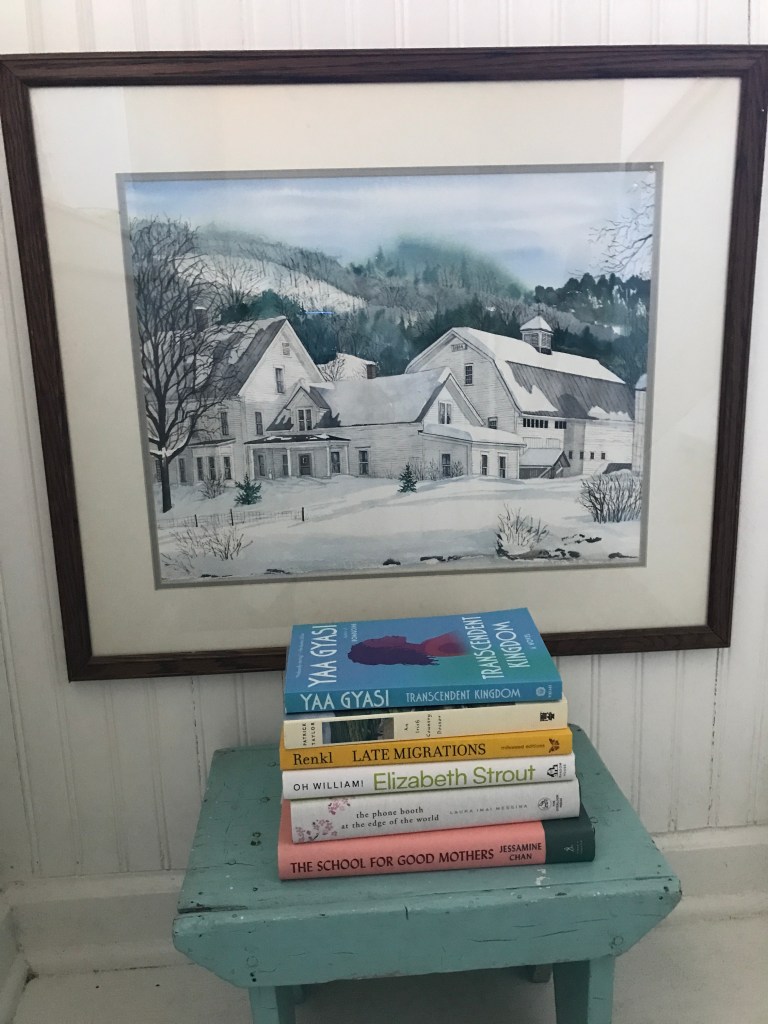
  • The Sentence by Louise Erdrich. I love books set in a bookstore, and any book written by Erdrich calls to me, so this was a winning combination. Erdrich’s actual bookstore in Minneapolis, Birchbark Books, is one of my favorites and the fictional representation of the store is just as appealing. The basic plot is that one of the employees is haunted by a customer who has died, but that is far too simplistic a description. The book is set during the pandemic and also refers to the murder of George Floyd and the days following that. I am so grateful for Erdrich’s ongoing elucidation of indigenous history, culture, and current realities.
  • Celine by Peter Heller. I read his more recent book The River and liked it, but didn’t love it. However, a favorite bookseller recommended this book to me, and the main character, a 68 year-old woman who is a private investigator, is intriguing. At first I was confused by lots of names and places and wasn’t sure where the focus was going to be, but Celine, who comes from an “old” family, wears Armani scarves when she tracks her prey, uses guns comfortably, and is married to Peter, a “Mainer” who doesn’t drive, kept me turning the pages. I hope Heller writes another book about these two. The story itself–searching for a young woman’s father who supposedly was killed by a bear in Yellowstone–is well done, too.
  • Songbirds by Christy Lefteri. Set in current times in Cyprus, where a maid, originally from Sri Lanka disappears. She has fallen in love with a man who poaches song birds and sells them to restaurants as forbidden and exotic treats. That’s disturbing enough, as it is, but even more so is the indentured servant conditions of the maids and that the main character, Nisha, is not the only one.
  • Oh William! by Elizabeth Strout. I loved this book. William and Lucy Barton were once married and had two daughters, now grown. Lucy’s second husband has died and William’s current wife leaves him. William asks Lucy to help him confront a missing piece of his life story. Lucy, by the way, is a successful writer, but feels invisible and inadequate. Ah, the mysteries of marriage and relationships and as Strout (Lucy) says, “how we lived our lives on top of this.” After reading this book, I re-read the earlier one My Name is Lucy Barton and discovered I liked it much more the second time around.
  • The School for Good Mothers by Jessamine Chan. Think The Handmaid’s Tale by Margaret Atwood. Not as chilling, perhaps, at least not on the surface, but…. Frida, a divorced mom with a young child, has a “bad day” and makes a mistake for which she is sentenced to a training school for mothers. There is a right way and a wrong way. One way. In the school she is assigned to a robotic doll to practice the right way. Ripe for a movie, I am guessing.
  • The Thursday Murder Club by Richard Osman. Set in a retirement community in the UK, a “gang” of residents meet to solve unsolved murders and, of course, get involved in a real murder (or more than one). Interesting characters with interesting backgrounds (Elizabeth was former secret service), and I am eager to read the next book in the series. I assume there will be more after #2.
  • The Phone Booth at the Edge of the World by Laura Imai Messina. This is my “wild card” of the month–a book I just happened upon. I knew nothing about it, but the summary sounded intriguing, and it was one of those books that just felt right. The plot is based on the true story of a tsunami in Japan in 2011. People who have lost loved ones come to talk to them in a disconnected phone booth at the site of the tsunami. Two of those are Yui, whose daughter and mother died, and Takeshi whose wife died. Such a beautiful story of the rhythms of grief and re-entry into life and love.
  • Mrs March by Virginian Feito. This is the least favorite novel I read this month, but I finished it. (I discarded a few others along the way.) Mrs March is married to a successful novelist, and she has many emotional problems. I got tired of the grinding perspective of her paranoia, but still there was some nice writing.

Nonfiction

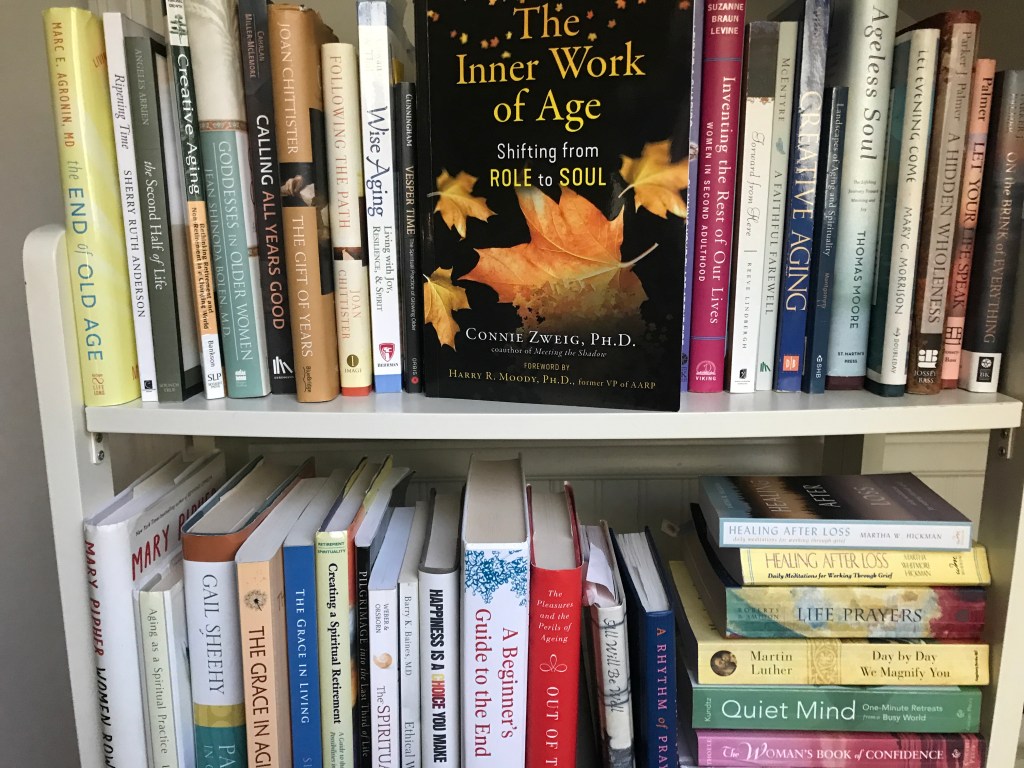
  • The Inner Work of Age, Shifting from Role to Soul by Connie Zweig. I read this book slowly during my morning meditation time. Zweig’s main message is to become an Elder, which means doing the necessary inner soul work, becoming who we were created to be and embracing the hidden spiritual gifts of age. She doesn’t ignore the challenges; for example, life-changing illness, but instead urges each of us to become aware of our own shadow–the obstacle(s) that prevent our own authenticity. So much here. I added many quotes in my journal and used many of the reflection questions at the end of each chapter. This is a book to move us beyond being elderly and instead, to live our elderhood with awareness.
  • Wife/Daughter/Self, A Memoir in Essays by Beth Kephart. I have loved Kephart’s books on writing and this book gave me insight into who she is as writer and teacher, but much more beyond that. Each section was divided into snatches, short pieces, but the book didn’t feel disconnected. I did think, however, that the section on “wife” was the strongest. The book made me think about how roles change or even end, but the self remains.
  • In the Country of Women by Susan Straight. Straight is a white woman who was married to a black man from the neighborhood where she grew up. They had three daughters and even after they divorced they remained connected in healthy ways. Plus, she was very connected to his large and complicated family. I couldn’t always keep every one straight and how they were related to one another, but the weaving of the stories, the texture of the connections, like the braiding of hair, which she mentioned often, were memorable. This was an unexpected gift.
  • 16 Ways to Create Devotional Writing to Renew the Spirit and Refresh the Soul by David J. Sluka. A book to keep on my shelf for the day, if that comes, when I decide to write devotions for women elders.

It is already February 3, and I have read….sorry, you have to wait till my February Round-Up.

An Invitation: What were your favorite January reads? I would love to know.

Morning Gratitude, Morning Presence

As I make the bed first thing every morning, I pause and look out the window towards the backyard and the garage. This time of the year I know what I will see: mounds of unmelted snow, tracks from the squirrel gang that frequents the base of the bird feeder, and the bare branch remnants of my husband’s glorious garden. Maybe there will be a cardinal at the feeder, but probably not till a bit later.

I don’t stand at the window hoping to see something different. No, I stand at the window to welcome a new day, to give thanks for the light of a new day, and to remind myself to be present to this day, the new and holy day.

Soon after making the bed, but still in my robe and pajamas, I climb the stairs to the garret and settle in for meditation time. Lately, my quiet time has included listening to Cat Stevens sing one of my favorite hymns, “Morning Has Broken.” You can listen here: https://www.youtube.com/watch?v=e0TInLOJuUM

Morning has broken like the first morning;

black-bird has spoken like the first bird.

Praise for the singing!

Praise for the morning!

Praise for them, springing fresh from the Word!

Text: Eleanor Farjeon and Music: Gaelic Tune

What more could I ask for than to remember that each morning is like the first morning. Oh, if I could only live present to that gift, that morning gift, the whole day, every day.

That prayer would be enough. That prayer holds all those I love and all those unknown to me, but in need of a new day.

The words in verse three lift me even higher.

Mine is the sunlight!

Mine is the morning,

born of the one light Eden saw play!

Praise with elation, praise every morning,

God’s re-creation of the new day!

Each day is a chance to re-create the sun in my own heart, my own being. This is enough. More than enough.

I invite you to sing with me. I will stand at the window and listen for your voice.

An Invitation: What is your first view of the day? How does it help you move into the day?I would love to know.

Book Report: Browsing A Bookshelf

Join me in my garret, where I keep my books on spirituality and theology. Pick a shelf, any shelf. How about the one that begins with books by Elizabeth A. Johnson and ends with a little book about contemplation by Martin Laird, Into the Silent Land?

And in-between are treasures of learning and wisdom and journeys into spiritual practice and reflection.

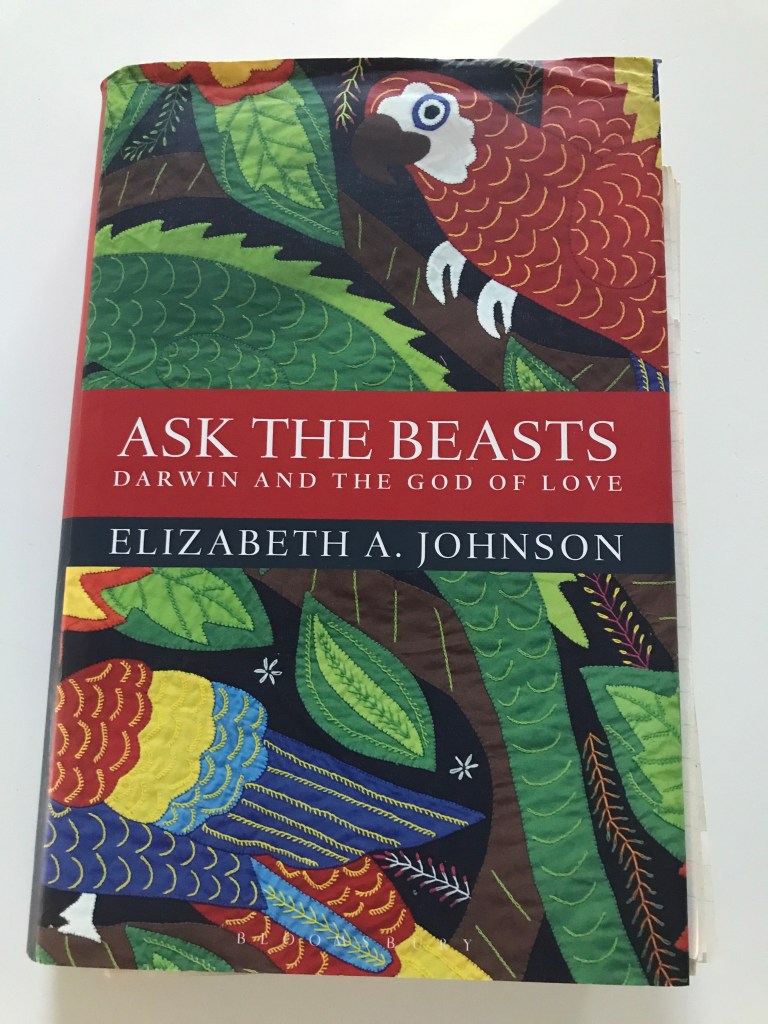
The Prettiest Cover: Ask the Beasts, Darwin and the God of Love by Elizabeth A. Johnson. (2014) Inside are several pages of notes I wrote when this book was the focus of a class I took at Wisdom Ways in 2014. https://www.wisdomwayscenter.org Johnson asks the question “What is the theological meaning of the natural world of life?” and “Why hasn’t theology taken the natural world seriously?” This is a dense book and as a non theologian, I was grateful to be studying this book with a group of wise and educated women. Johnson, by the way, was being “investigated” by the Catholic Church as she was writing this book.

Right next to this book is another Elizabeth Johnson book, Friends of Gods and Prophets, A Feminist Theological Reading of the Communion of Saints (1998); a book I have yet to read. Some day.

Moving Along: A commentary on the Gospel of Mark by Donald Juel, who was a professor at Luther Seminary when I was associate director of public relations there, and I always enjoyed the brief conversations with him when he stopped in my office or during lunch. Next to Juel’s book is Julian of Norwich’s Showings. I wonder what Mark and Julian of Norwich would have to say to each other.

Other Saints–Among My Personal Saints: Thomas Keating and Sue Monk Kidd. Father Keating was the founder of the Centering Prayer Movement and two of his books have been important in my spiritual development–Open Mind, Open Heart, The Contemplative Dimension of the Gospel (1986) and The Better Part, Stages of Contemplative Living (2000). Centering prayer is a practice of turning within and resting in God’s presence. Not far away from the Fr. Keating books are two books by Sue Monk Kidd, When the Heart Waits, Spiritual Direction for LIfe’s Sacred Questions (1990) and The Dance of the Dissident Daughter (1996). You may recognize this author for her more recent fiction, including The Secret Life of Bees (2002) and The Book of Longings (2020), but it is “Dissident Daughter” that holds the most meaning for me. Kidd unfolds her awakening to feminine spirituality, and I went on that journey with her. I read this book more than once and underlined more each time and added my own questions and reflections and commentaries.

Next to Kidd on the shelf is Ursula King’s The Search for Spirituality, Our Global Quest for a Spiritual Life, (2008) and I see I have marked Chapter Five, ‘Spirituality Within Life’s Dance” as my favorite in the book and within that chapter, the section on “Spirituality and Aging.” I need to reread that section.

Buddhist Wisdom: Two books by Jack Kornfield. First, perhaps his most famous work A Path With Heart, A Guide Through the Perils and Promises of Spiritual Life (1993) and a collection of sayings, The Art of Forgiveness, Lovingkindness, and Peace (2002), which was given to me by a dear friend who died many years ago. She lives in my heart and on my bookshelf. In A Path With Heart Kornfield includes a number of meditations, such as “Who am I?” and “Transforming Sorrow into Compassion.” The techniques may be different. The definitions may be different, but I think these mindfulness meditations are compatible with the practice of centering prayer, and I think Jon Kabat Zinn, whose book Wherever You Go There You Are, Mindulness Meditation in Everyday Life (1994) is also on this shelf, would agree.

Jewish Wisdom–Books by Three Rabbis: Yearnings, Embracing the Sacred Messiness of Life (2006) by Rabbi Irwin Kula, The Lord Is My Shepherd, Healing Wisdom of the Twenty-Third Psalm (2003) by Rabbi Harold S Kushner of When Bad Things Happen to Good People fame, and Jewish Spirituality, A Brief Introduction for Christians (2001) by Rabbi Lawrence Kushner. A post-it note dangling from the edge of Yearnings directed me to this sentence, “The more we allow ourselves to unfold, the less likely we are to unravel.” p. 37

Interfaith Wisdom: The Jews, Christians and Buddhists all meet in Beside Still Waters, Jews, Christians and the Way of the Buddha (2003) edited by Harold Kasimow, John P. Keenan, and Linda Klepinger Keenan. Another book unread. So far.

Life’s Journey: 1. A Woman’s Guide to Spiritual Renewal (1994) by Nelly Kaufer and Carol Osmer Newhouse. 2. The Ten Things To Do When Your Life Falls Apart, An Emotional and Spiritual Handbook (2010) by Daphne Rose King. (#1 on the To Do list is to “cry your heart out.) 3. Grieving Mindfully, A Compassionate and Spiritual Guide to Coping with Loss (2005) by Sameet M. Kumar. At one time or another I have consulted all of these books, both for myself and for my spiritual directees.

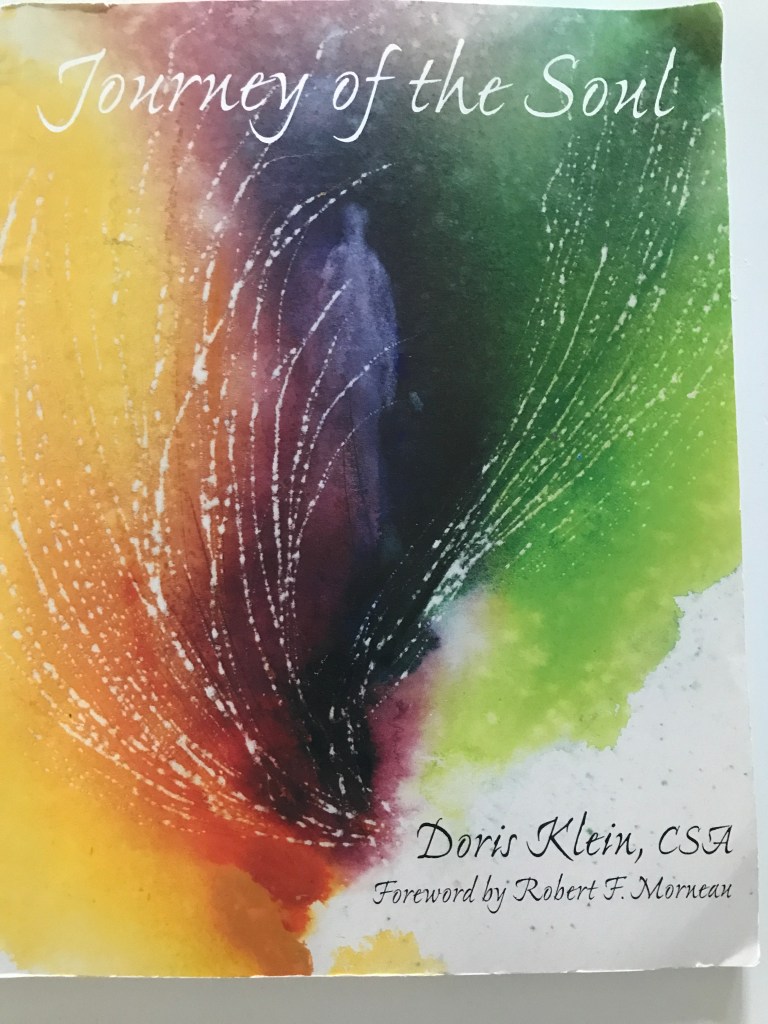
And More: a book on the sacred art of pilgrimages, one on dreams, a classic of spiritual literature (The Imitation of Christ) and still more. I close with a book that is a feast for the eyes, as well as the mind and the heart, Journey of the Soul (2000) by Doris Klein, CSA. It has been a long time since I sat with the words and the images in this book–perhaps now is the time to return to this book.

The soul journey is the process of spiraling into the Heart of the Holy where in reality we always are. We simply learn to see more clearly. p.3

I know I’ve just flung a lot of titles your way, but what strikes me is how one single bookshelf can open the door to new reflection and at the same time rewind a path of memory. By the way, I removed four titles from this shelf and added them to the Little Free Library pile. May they be exactly what someone else needs.

Thanks for shopping my Johnson to Laird bookshelf with me.

The Value of Solitude

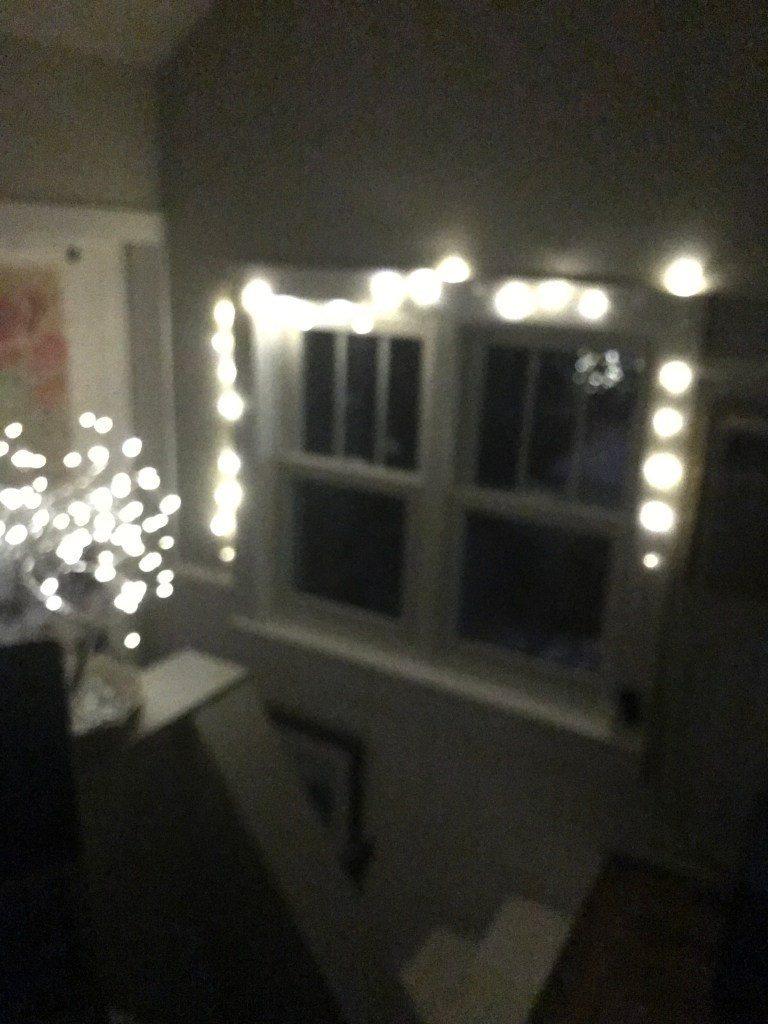
Most mornings I begin the day in my version of a monastery; the room I call the garret. I climb the one flight of stairs, as if to a bell tower. I turn on the twinkle lights around the window and the wiry tree of lights that sits on the ledge before settling into a comfortable chair for prayer time, meditation time, study, and journaling time.

Solitude.

Once a month or so a group of friends gather for a meal and conversation. The hosts suggest a question or topic to consider; something that will deepen our awareness of ourselves and each other. At the most recent gathering we considered our core values. Our host had sent a long list of possible values –over 60, actually–and directed each of us to sort them into categories: Those That Matter Most to Me; Those That Matter Some to Me; and Those That Matter Least to Me.

A daunting task, but I decided to sort through them quickly and try not to second-guess myself.

The next step was to divide the “matter most” pile into the top ten and then the top five. Here’s my selection:

  1. Spirituality
  2. Family
  3. Love
  4. Solitude
  5. Purpose
  6. Self-awareness
  7. Wisdom
  8. Gratitude
  9. Mindfulness
  10. Forgiveness.

During our dinner conversation, we were each invited to focus on one of the values from our top five choices. I chose “solitude,” which is number four on the list, but as I reflected, I wondered if it is actually number two or even number one.

I learned how to be alone as a child, mainly because we moved often and there were always the summer months before starting school and making new friends. Perhaps those circumstances contributed to my introverted nature, but I think the desire for, the need for solitude goes beyond my designation as an introvert on the Myers-Briggs Personality Inventory.

A regular practice of solitude brings me closer to my essence, to the person I was created to be. Solitude opens me more fully to the movement of God in my life and the life around me.

It is true that sometimes I enter solitude weary and the alone time helps me renew my energy, but creating time and space for solitude means much more than substituting quiet for noise or stillness for busyness. Solitude is a time to listen to my inner voice, the soul voice, the voice of Spirit reaching out to me, into me.

Once I knew and accepted this about myself and was truly able to own that value, life became much easier for me. And as I look at this list of my values, I see how solitude is integral to each of the other values. Solitude, as my companion on my spiritual journey, helps me clarify my purpose, and opens me to self-awareness. Solitude leads me to gratitude and mindfulness and forgiveness and supports my love of family and friends. In solitude, wisdom has room to grow.

I thank Glenn Mitchell of Oasis Ministries,( https://www.oasismin.org/prayernotes )which is where I trained as a spiritual director, for this reflection about prayer, which feels so applicable to my feelings about solitude:

I think my formal prayer grounds me well in my life.I think it help keep me porous and resilient. I think it keeps my spirit receptive and responsive. I think over time it has blessed me with a greater sense of peace and calm. In many ways it prepares the soil of my life for the new day.

My word for the year, as discussed in an earlier post, is rhythm, and more and more I realize how solitude helps me recognize and cross the threshold into the life-giving rhythms of my life.

An Invitation: What are your key values? I would love to know.
NOTE: To sort through your values, check out The Live Your Values Deck https://lisacongdon.com/products/values-deck


Book Report: Book Conversations

Some of the best conversations include talk about books.

Recently, my husband and I had dinner with our granddaughter Maren and along with talk about her first semester at college, the reunion she had during winter break with the women from her wilderness canoe trip in Alaska this summer, and her plans for the 2022 summer, we talked books. Maren is not only a voracious reader, like everyone else in the family, but she is a careful and insightful reader. I trust her recommendations and value her appraisals and judgment. She is also an excellent writer herself–perhaps someday I will be able to recommend a book written by her.

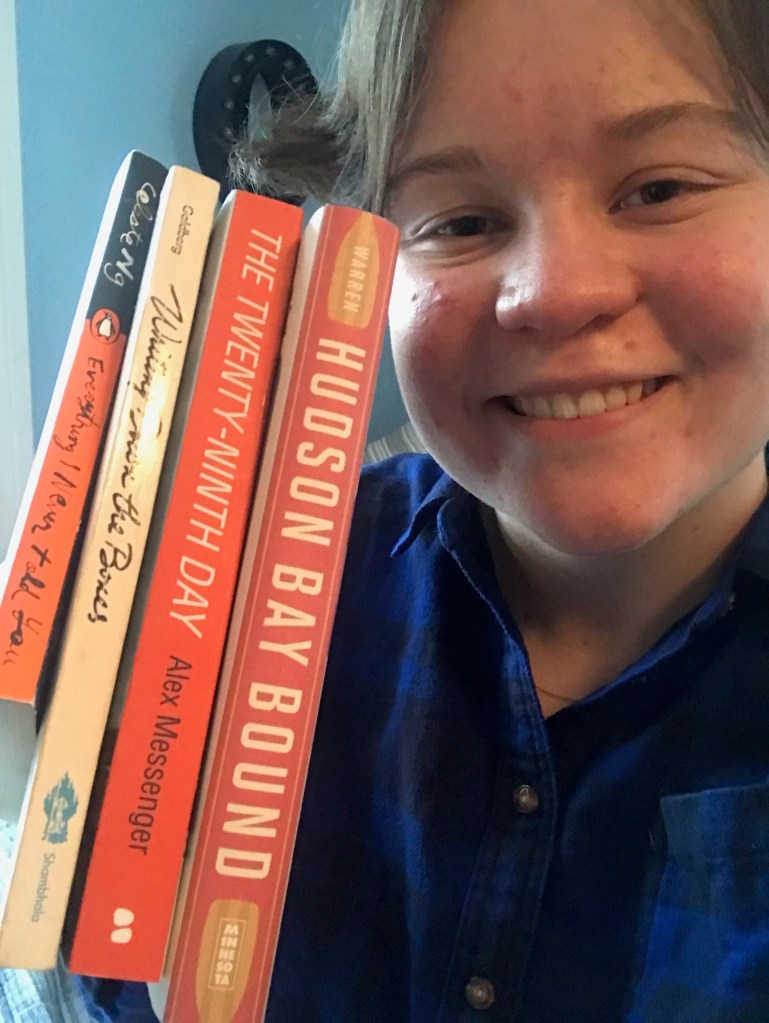
Over pasta, we shared titles. She had recently read The River by Peter Heller, and I had just finished and really enjoyed his earlier book Celine. I have added The River to my own TBR list now. She had read Celeste Ng’s Everything I Never Told You, and I urged her to read Little Fires Everywhere. She and her Dad are watching Station Eleven, and I mentioned how excellent the book by Emily St James Mandel is and later gave her my copy of the book.

When she was a baby, we sent her at least one book every month, building her library from babyhood through the toddler and childhood years and on into middle school. The regularity of the book-giving routine eased as she got older, but there were still occasional book-buying sprees with her and always the gift of a book or two is part of birthdays and Christmas. For Christmas this year we gave her two books related to her own wilderness experiences, The Twenty-Ninth Day, Surviving a Grizzly Attack in the Canadian Tundra by Alex Messenger and Hudson Bay Bound: Two Women, One Dog, Two Thousand Miles to the Arctic by Natalie Warren. As she shared her impressions of these books, we learned more about her own 30-day plus canoeing and hiking trip above the Arctic Circle this past summer with five other women.

Earlier this year I gave her a stack of books about writing as part of her high school graduation present. Some were new copies of books I have loved and valued, but others were ones I plucked from my own shelves and passed on to her, including Natalie Goldberg’s Writing Down the Bones, Freeing the Writer Within. A true classic for all writers. My copy included a note written to me by Natalie after I helped publicize a writing workshop decades ago. How gratified I was to hear Maren say how reading that book has given her a new and renewed outlook on writing practice.

Talking books, sharing titles with other readers is always a delight, a way to connect and enrich our understandings of each other–and what a treat to do that with our granddaughter.

On another note, my book piles continue to grow. Over the weekend my husband and conducted a Book Raid at one our favorite bookstore, Content Bookstore in Northfield, MN. https://www.contentbookstore.com Here’s my stack–stay tuned for more book reports!

An Invitation: Have any recent conversations included book talk? I would love to know.

Epiphany Season and The Rhythm of My Camel

Crossing the threshold into the new year has been challenging for me this year. Normally, I tackle my list, completing or adjusting tasks from the previous year and eagerly moving forward on a list of intentions for the new year. This year I have done this and that, now and then, but without much energy or focus.

This is not my normal rhythm, and since “rhythm” is my word of the year, I am paying attention to this change in my pace.

I’m not the only one whose pace seems slower.

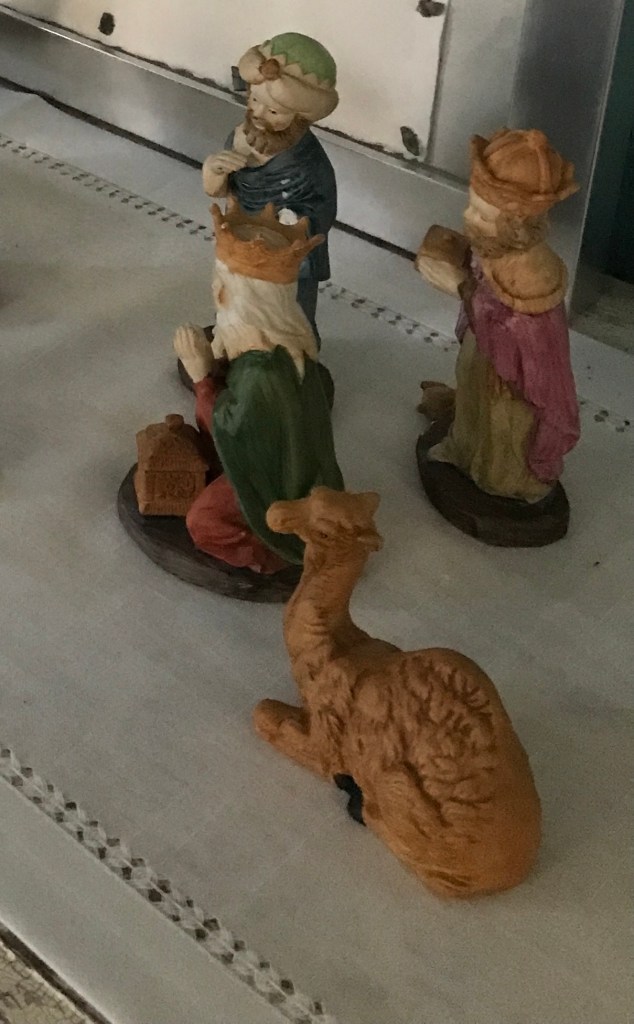
My camel, the one I rode to the manger in Bethlehem and who now is returning me home, is moving slowly. Very slowly. Why isn’t my camel moving faster, especially since we Wise Ones dropped off our gifts to the Holy Family and the load is lighter? I do realize that we are taking a different route home, in order to avoid Herod. The way is new to me and to my camel.

My camel has been a faithful servant and the days on the journey have been long and uncertain, and perhaps it is tired. I am tired, too. I am weary of living with the uncertainty of these days and the plans unmet and the need to be ever-vigilant and flexible and resilient. Perhaps you are feeling this way, too.

Thanks to one of Diana Butler Bass’s recent blogs, https://dianabutlerbass.substack.com/p/epiphany-now I remembered that Epiphany is not just the day the Wise Ones arrive at the manger, but rather Epiphany is a whole season that lasts until Ash Wednesday, which, this year is later than usual, March 2.

Therefore, I whisper to my camel as I pat its long neck, “No need to rush. Take your time. I trust we will get there when we get there, and who knows what amazing sights we will see along the way. Didn’t we see the brightest of stars at the beginning of our journey, and oh, how miraculous that was?

And who knows what dreams we will have when we stretch out under the expanse of the night sky and what thoughts will occur, as I rest in the slow and steady rhythm of your movement, dear camel companion.

This journey into the new year may be a new direction, but one that requires a kind of spaciousness and time to unfold. Perhaps this year ahead is one in which deeper clarity and understanding will emerge, bringing unexpected gifts. My task is to pay attention, to stay awake, but also to rest when overwhelmed or weary. I trust your ability to guide me and get me where I need to be. In your good time, dear camel companion.

An Invitation: What is your rhythm as you move into the new year? I would love to know.

Book Report: A Book For My Age

A growing area of my garret bookshelves is books about aging, about living as an elder.

The book I return to over and over is Joan Chittister’s The Gift of Years, Growing Older Gracefully, and another ongoing favorite is The Grace in Aging, Awaken As You Grow Older by Kathleen Dowling Singh. Both are rich and, in fact, offer even more riches as I grow further into elderhood, but lately I have been immersed in a 2021 book, The Inner Work of Age, Shifting from Role to Soul by Connie Zweig.

Here’s what is written on the back cover:

With extended longevity comes the opportunity for extended personal growth and spiritual development. You now have the chance to become an Elder, to leave behind past roles, shift from work in the outer world to inner work with the soul, ad become authentically who you are. This book is a guide to help get past the inner obstacles and embrace the hidden spiritual gifts of age.

The author, Connie Zweig, PH.D, is a retired psychotherapist who is known as the “Shadow Expert.” Many years ago I read her now classic work, Romancing the Shadow, Illuminating the Dark Side of the Soul (1997).

I am reading this new book slowly, taking time to respond to questions she offers for reflection, along with the guided meditations and other spiritual practices presented at the end of each chapter. The chapter that has resonated with me the most so far is “Retirement as a Divine Messenger,” but this morning I finished reading “Life-Changing Illness as a Divine Messenger,” a rich preparation for when illness enters my own life.

I am hesitant to say much more about this book, except that it feels momentous to me. The right book at the right time–both opening me to new thoughts and information, too, as well as reinforcing what seems to be unfolding in my own aging process. I am certain this will not be the last time you will find references to this book in my posts. Stay tuned.

An Invitation: If you are an elder or approaching that time of your life, what books do you recommend to support and enhance this Third Chapter state. I would love to know.

Word for the Year: Rhythm

Images by Steve Sorman

One of my spiritual practices at the beginning of each new year is to ASK FOR A WORD; a word that will nourish, challenge, lead, and even wrestle me into new growth.

Perhaps you have heard about the Desert Monastics, monks and nuns, ammas and abbas, who retreated into the Egyptian deserts in the third to sixth centuries. Their goal was to live as close to the basics of life as possible. They devoted themselves to fasting and asceticism, in order to concentrate only on God.

In response, others flocked to these Desert Monastics, hoping to receive a WORD to guide them in their daily lives. The word might be a parable, a saying or a lesson, a few words or even one word–guides for pursuing a meaningful life.

We can do the same thing–without making a pilgrimage to the desert.

Here are some ways to open to your word, to discover that guiding word, much like the star guided the Wise Ones to the Christ Child:

  • Practice lectio divina as a way to reflect on the past year. Sift through some key experiences of the past year. Big and small. Spend time with one or two of these experiences, remembering them in detail, including the senses. Look back at them as the person you are now. Is there a word or phrase that emerges? Sit with that word. Rest with that word.
  • Go for a contemplative walk. The object is not to get somewhere, but to be in the movement, the creation around you. Listen and smell and watch and perhaps even touch. Ask yourself why you decided to turn left, rather than right. If the walk is a familiar one, what feels new? Take a picture of what appeals to you. Be selective. Receive an image. Does a word or phrase emerge? Sit with that word. Rest with that word.
  • Listen to your dreams. Keep paper and pen at your bedside, and when you awaken, note what presents itself to you. Before you go to sleep, ask for a word to come to you. Is there a word or phrase that emerges? Sit with that word. Rest with that word.
  • Invite your spiritual director or wise elder or loving friend to offer you a word. Have they heard you use a word frequently during the year? Share with them your reflections of the past year and your intentions for the coming year. What do they hear you say? Is there a word or phrase that emerges? Sit with that word. Rest with that word.
  • Pay attention to what you read or hear. Are there any themes that keep appearing or specific words? What resonates with you? Does your body react in some way? What emerges? Sit with that. Rest with that.
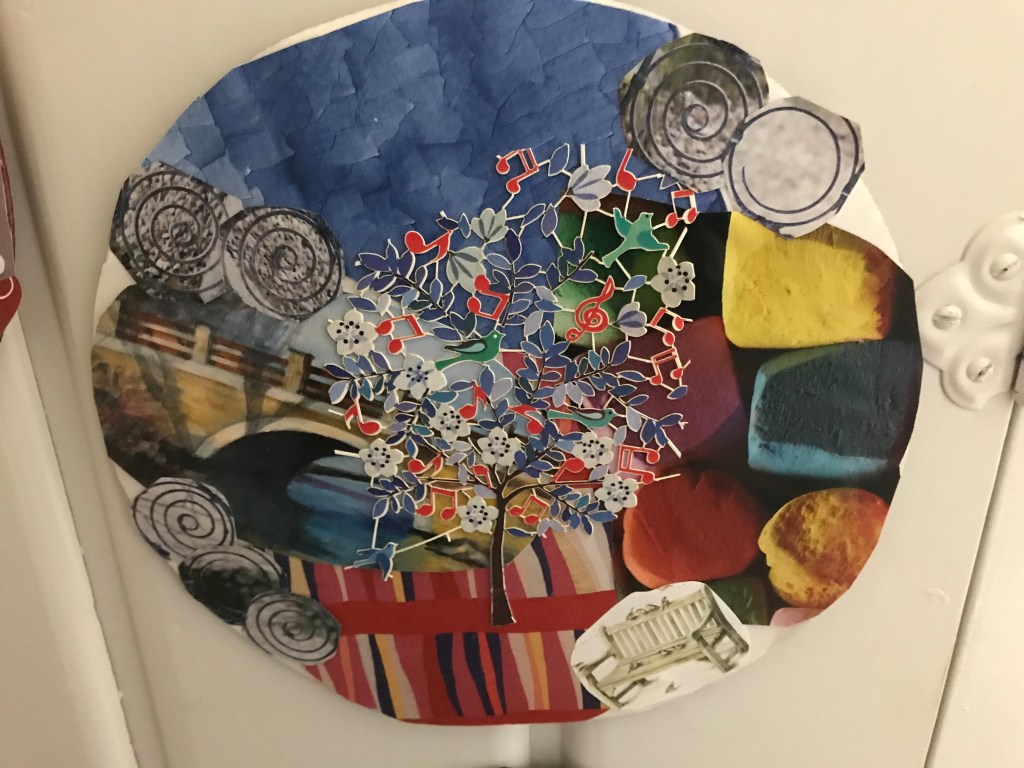
  • Make a collage. Use random pictures from magazines or other sources. Use what appeals to you, resonates with you. When you have completed the collage, notice what emerges. Sit with it. Rest with it. Here is my 2020 collage, which led me to my word for that year, FULLNESS.

Be patient, for here’s the thing. You can’t decide or think your way into the word. You might like the idea of your word being “hope” or “love” or a word that might motivate you to keep a new year’s intention, but as a spiritual practice, it doesn’t work like that.

Your word chooses you.

The word comes as gift.

Receiving This Year’s Word

I read these words:

It is not the words themselves as much as the rhythmical repetition that localizes one in the heart.

Richard Rohr

When I read the word “rhythmical” something inside twitched. I felt a glimmer of something. And then the word “rhythm” or words alluding to rhythm kept appearing.

A rhythm that carries us into wholeness.

Jan Richardson

Let your heart enjoy a different rhythm.

John O’Donohue.

As you listen closely for your deepest call, what are the greater rhythms to which you most accommodate yourself?

Christine Valters Paintner

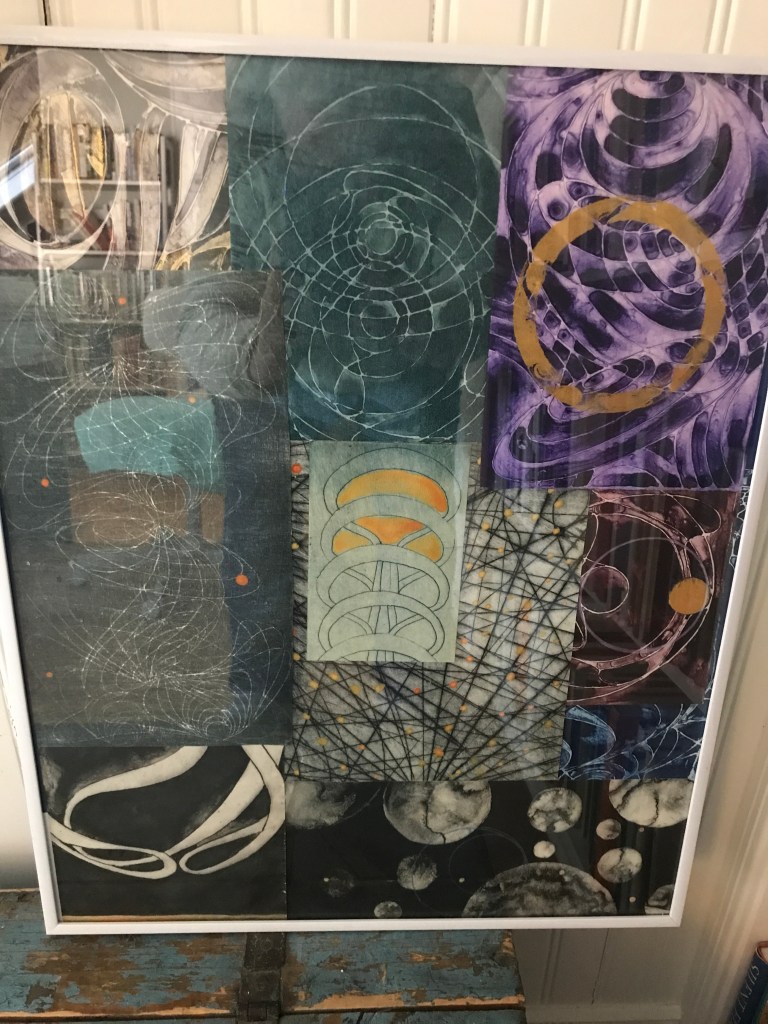
And there were others, as well. I decided to create a collage, and in the box of assorted pictures I keep for that purpose, I found the pieces artist Steve Sorman includes in his Christmas cards every year. I have always intended to do something with them, for they are too gorgeous not to be seen. All of a sudden what I noticed about them was the movement, the flow in each one. Expressions of rhythm.

I arranged them in a large frame I can see both during morning meditation and while working at my desk.

I had received the word for the year: Rhythm.

Allowing the Word to Ripen

I have some idea about the meaning of the word “rhythm” for my life and how it differs from the word “balance,” which has always seemed impossible to achieve, but I know I need to live with the word, stay awake and present to the word, and allow it to

Nourish me,

Challenge me, and

Lead and even wrestle me into new growth.

One more thing, a gentle reminder: You don’t need to do anything major or creative or what might be considered HOLY to receive a word. All that is required is an open heart. Ask for a word–and it isn’t too late to do so–and be present and awake.

An Invitation: Do you have a Word for the Year? I would love to know.

NOTE: Thanks to all, especially Abbey of the Arts, but also many others along the way, who have offered guidance and encouragement in the use of spiritual practices to discover and receive a word for the year.

Book Report: The Sentence by Louise Erdrich

How happy I am that the first book I read in the new year was so good. So very good. A book the calibre of The Sentence by Louise Erdrich sets a tone of excellence for the rest of the year.

The basic story, -as if it were possible to confine the plot to the word “basic”- is that a bookstore employee who had been in prison, convicted for stealing a body, is haunted by the ghost of a former customer. The bookstore is modeled after Birchbark Books (one of my favorite independent bookstores) owned by the author, and the setting for the book is mainly Minneapolis from 2019-2020, which means the murder of George Floyd and the pandemic are part of the book’s context and action.

The sentence refers to the prison sentence of the main character, Tookie, a Native American woman, but also sentences in books and beyond that, one’s life sentence. The book’s epigraph gives a hint of the complexity to follow: “From the time of birth to the time of death, every word you utter is part of one long sentence.” Sun Young Shin, Unbearable Splendor. I kept returning to that quotation as I moved further into the book.

I apologize to anyone who reads my copy of the book, for I underlined so much and many little post-it notes are flapping on the book’s edges.

…this dimming season sharpens one. The trees are bare. Spirits stir in the stripped branches. November supposedly renders thin the veil. p. 41

Think how white people believe their houses or yards or scenic overlooks are haunted by Indians, when it’s really the opposite. We’re haunted by settlers and their descendants. We’re haunted by the Army Medical Museum and countless natural history museums and small town museums who still have unclaimed bones in their collections…p. 81

When everything big is out of control, you start taking charge of small things. p. 202

I keep thinking about this perspective about forgiveness–forgiving one’s self and forgiving others.

You can’t get over things you do to other people as easily as you get over things they do to you. p.358

I could go on, but I prefer that you buy your own copy and mark your own favorite lines and passages. One more thing: I hope I never again use the phrase “the calvary’s coming,” for one of the characters says that phrase is really a reference to genocide. Think about it.

And yet one more thing: I know I am an old lady who has not kept up with all the abbreviations used in texts, but I was not familiar with DWW–Disturbed While Writing. Now that is one I will remember and probably use!

I promise this is the last thing. Several reviews have described this book as “wickedly funny,” and it is, but it is also deeply disquieting and seriously absorbing.

An Invitation: What is your first book of 2022? I would love to know.

Crossing the Threshold into the New Year

Welcome to the new year! As with any year, all years, we have no idea what will happen in this new year. We never know. It is always unknown. We certainly had no idea on January 1, 2021 what we would face in the coming months, but one thing we know for sure is that the old year has turned.

Here we are on the threshold of the new year.

What a good time to pull up your chair to silence.

I invite you to close your eyes lightly, not tightly and take a deep cleansing breath. Breathe in and out gently, finding your own rhythm.

Stay in the silent space as long as you wish, and when you are ready open your eyes, glance around you, as if seeing your space for the first time, and read these words:

Divine Gate-Keeper, ever present to my soul,

I approach the threshold of the new year

Aware of my vulnerability and mortality,

Recognizing my dependence on your vigilance.

Your wisdom will direct my inner footsteps

As I face the future’s unmarked terrain.

Your rapt attentiveness assures me

That you will guide my comings and goings.

This day I join my heart with all living beings

As we walk together toward what lies ahead.

Joyce Rupp

Before opening the gate and crossing the threshold fully into the new year, I invite you to pause on the threshold and reflect on the lessons and gifts of the past year. We have an opportunity before we become used to living in 2022, to reflect on the ways 2021 was sacred text for us.

Let your heart speak.

When I think about the new year, I….

As I let go of 2021, I feel…

As I move into 2022, I…

This is a good place to start, but perhaps you want or need to go deeper.

Imagine that you are preparing to walk a labyrinth. You stand on the threshold and see a long winding path in front of you. What do you imagine as you begin the journey. I think about the Wise Men–and I choose to believe there were Wise Women, too, who are still on the journey to the Christ Child. They are bringing gifts, but they will receive gifts, too. They just don’t know what they will be.

Here are some threshold crossing questions to consider as you reflect on the past year?

What do I treasure about 2021?

What have I hidden away?

What griefs and losses, regrets and changes do I need to process?

What have I made visible?

How have I become more of the person God created me to be?

And now as you envision 2022, here are other questions to consider:

What are your yearnings for the new year?

What can I do for God in the coming year?

What can God do for me?

How might the new year offer you space in which to dream, create, act, be?

What is the heart of your new year’s prayer?

Allow the questions to live within you. Sit with one that seems to resonate or one you wish I had not asked. The journey is more than one step, but begins with one step.

You’ll notice I did not mention “resolutions.” I prefer the word “intention,” for intention implies to me a gradual and ongoing unfolding. And that unfolding grows out of reflection and contemplation.

May this be a time of loving presence.

An Invitation: What are you feeling, experiencing, learning as you cross the threshold? I would love to know.

NOTE: You may want to read my new year’s post on my previous blog, Clearing the Space http://clearingthespace.blogspot.com/2020/12/crossing-threshold-into-new-year.html

NOTE: In my Tuesday, January 11 post, I will share my WORD OF THE YEAR and offer strategies for how you can discover your own word of the year.