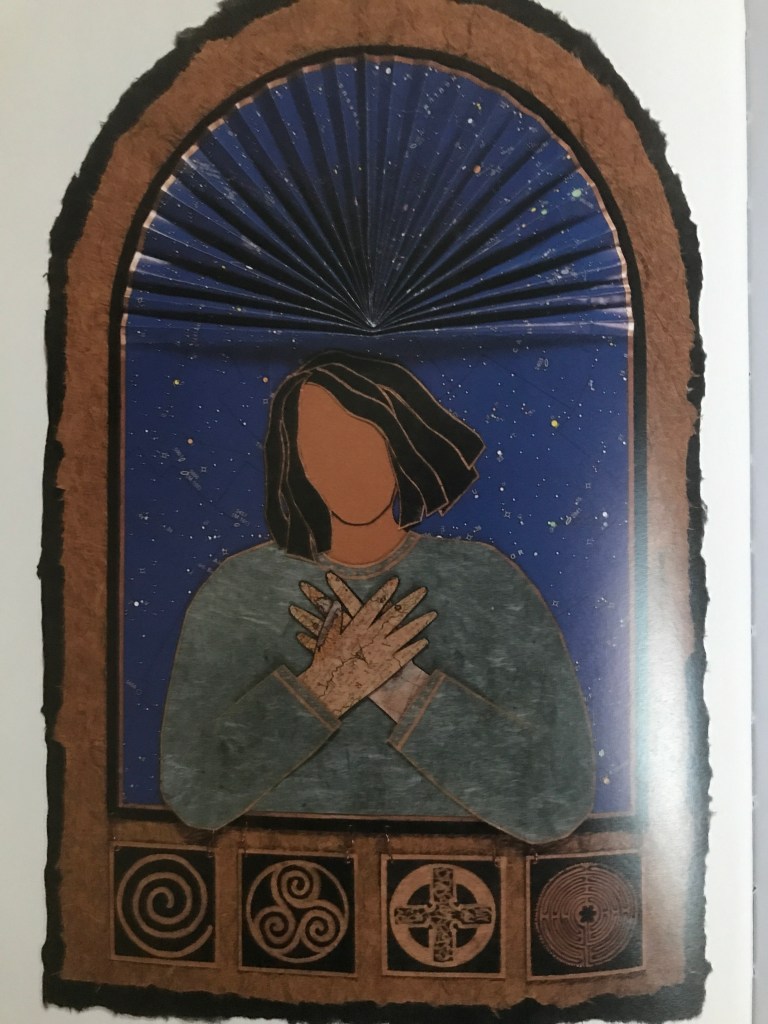
Book Report: Between Two Kingdoms, A Memoir of a Life Interrupted by Suleika Jaouad

At age 22 Suleika Jaouad learned she had leukemia and a 35 percent chance of survival.

Devastating. Obviously.

Much of the book details the four years of round after round of chemo, a clinical trial, and a bone marrow transplant, and near-death reckonings –written clearly and beautifully. This is all important, but what really moved me in this book was the honest revelations about herself, a young woman going through such crushing pain and uncertainty, and about her needs and desires, met and unmet.

I bent over the sink and splashed my face with cold water and looked in the mirror. I looked terrible–because I was horrible, I thought, with a nauseating swell of shame. Along with the chemo, an ugliness was coursing through my veins. Small violences. Swallowed resentment. Buried humiliations. Displaced fury. And a marrow-deep weariness at a situation that dragged on…

p. 162

When her medical team declares her cured, she learns the healing needs to begin. Jaouad quotes Susan Sontag in her book Illness as Metaphor, “Everyone who is born holds dual citizenship, in the kingdom of the well and in the kingdom of the sick.” In part healing means navigating from the kingdom of the sick to the kingdom of the well and to honor that she embarks on a pilgrimage, a 100 day road trip. In response to the column she wrote for the New York Times about being so young and having cancer, many people wrote to her about their own stories, and she decides to visit some of them, including a man on Death Row in Texas.

He understands what it feels like to feel stuck in purgatory, awaiting the news of your fate; the loneliness and claustrophobia of being confined to a small room for endless stretches of time; how it’s necessary to get inventive in order to keep yourself sane. These unexpected parallels are what initially compelled him to write to me, “You’ve fled death in your own personal prison just like I continue to face death in mine…At the end of the day death is death, doesn’t matter the form it takes.”

p. 338

Throughout those long years her family was there for her completely. As was her boyfriend–until he wasn’t. Caretaking is not easy, especially when you are just starting out in your own life. Jaouad shares all the ways he sacrificed for her and expressed his love, and she is deeply grateful, but ultimately, the reality of her needs was too much. A certain bitterness remains and more healing needs to occur beyond the last page of the book.

Healing is figuring out how to coexist with the pain that will always live inside of you, without pretending it isn’t there or allowing it to hijack your day. It is learning to confront ghosts and to carry what lingers.

p. 312

Fun Fact: Jaouad recently married the gifted musician, Jon Batiste.

My copy of the book is feathered with tabs, and I could have marked many more memorable passages. I am grateful for the wisdom and openness found on these pages, and offer a prayer that her cancer days are over forever and that healing continues in her life.

An Invitation:

What have you read recently that encouraged your own healing? I would love to know.

Holy Days

These are Holy Days.

This week leads Christians through the remaining days of Lent to Easter Sunday, but first there is Holy Thursday, Good Friday, and Easter Vigil on Saturday. Jews are preparing for Passover. The eight-day festival begins at sundown on April 15 and ends at sundown on April 23. And Muslims are marking Ramadan the entire month of April, ending with the Feast of Fast-Breaking on Sunday, May 1.

Yes, these are Holy Days, in which those of us who practice one of these faith traditions reflect on the stories central to our beliefs, gather with our faith communities, and observe the customs of these days. For example, a recent tradition at our house is to add the palms we waved on Palm Sunday to the basket of forsythia on our front door as a reminder of these Holy Days.

Along with attending each of the planned services this week, I will also attend a Solidarity Around the Cross prayer service at the Ukrainian American Center in Minneapolis, sponsored by my congregation as one way to respond to the world’s suffering. But I will also continue with morning prayer and reflection time, holding these days in my heart and reflecting on their meaning for how I live my life.

These Holy Days ask me to be aware of and live fully each holy day.

Some days I manage that better than others. This reluctant spring has added to the challenge here in my part of the world, but I am trying to love what is, to see and feel the holiness of each day.

I challenge myself to know, really know, the fullness of the words, “Every day is a gift.” Yes, regardless of the temperature, the precipitation, road conditions, or lingering brown landscape. I can continue to become more of the person I was created to be no matter the season, and I feel an eagerness to discover the holy days of this particular spring. In what ways will I be enticed to grow? How will I nurture others and myself? Where will I notice the movement of God?

Settle to be fully present to yourself, to whatever is, to God…dwell, and absorb and be–Give thanks.

from Christos Center meditation, 3/14/22

May these Holy Days be holy days in your life. May each day to come be a holy day.

An Invitation:

What might you do to be more aware of each day as a holy day? I would love to know.

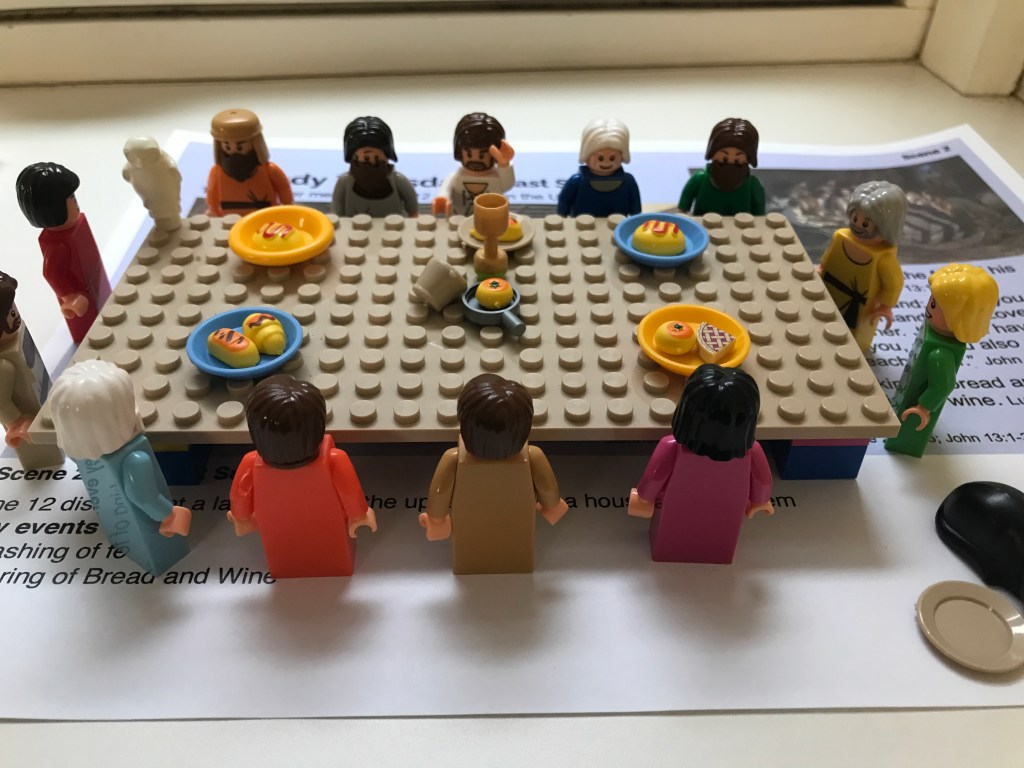
I spotted these Lego vignettes of Holy Week in the Sunday School classroom where the writing group I facilitate meets each week. Holy Play!

Book Report: March Round-Up

This was a 12 book month–maybe because March was more like a lion than a lamb. Reading was definitely the cozy thing to do on snowy and cold days.

Fiction: Seven Books

  • My favorite this month was A Town Called Solace (2021) by Mary Lawson. One of my favorite books of 2021 was her first book Crow Lake, and this month I have already read another in her backlist. In my book journal notes I wrote, “If I wrote fiction, I would like to write a book like this.” The characters in her books, which are set in northern Canada, are real, flawed, vulnerable, and likable, sometimes lovable. Clara is eight years old and worried about her older sister who has run away. She is also worried about her neighbor Mrs Orchard who is in the hospital. At least that is what she is told. Clara takes care of Moses, her neighbor’s cat, but how to do that when she realizes someone else is living in the house?
  • I also loved The Floor of the Sky (2006) by Pamela Carter Joern. Lila, age 16, is pregnant and comes to live on her grandmother Toby’s ranch in the Sandhills of Nebraska. Toby is in danger of losing the ranch to back taxes –her backstory is revealed slowly, gently, and lovingly. Like the characters in the Lawson book, these characters entered my heart.
  • Another one of my favorite books in 2021 was This Is Happiness by Niall Williams, and now I am exploring his backlist. This past month I read Four Letters of Love (1997). Also set in Ireland, this is a story of two families. The father in one wants to devote his life to painting and the father in the other writes poetry and as a prize in a writing contest is given a painting by the other man. This is the story, as many novels are, of love and loss and discernment, but also miracles. Here is an example of one beautifully written passage (p.209):

The priest shushed them, and waved them hopelessly back towards the gate. He was a quiet man who sought quietness, and was suddenly alarmed at what landed in his parish. Panic prickled in his lower stomach like a bag of needles. It was the kind of thing you wished on your worst enemy this: miracles. Let the bishop have them, give them to Galway, but not here. Why were they always happening in out-of-the-way rural places? God! His shaven jaw stung in the salt wind and he rued the new blades he had bought at O’Gormans.

  • Jacqueline Winspear’s newest in her Maisie Dobbs series was published in March, and I didn’t hesitate to get my copy of A Sunlit Weapon. Maisie Dobbs is a psychologist and private investigator in post WWI London. This latest book is set during WWII and we get fuller views of Maisie with her American husband and their adopted daughter. While I don’t anticipate re-reading these books as I have done with the Louise Penney books, each one is a good read. I recommend reading them in order. The first book in the series is Maisie Dobbs (2003).
  • I enjoyed both Marjorie Morningstar (1955) by Herman Wouk, which I found in a Little Free Library, and The Bastard of Istanbul (2007) by Elif Shafak. (I will probably read Shafak’s The Forty Rules of Love at some point.) I did not particularly enjoy The Camomile Lawn (1984) by Mary Wesley and am not sure why I didn’t set it aside without finishing. It is set in the early years of WWII in England and focuses on a decadent and sometimes abusive family. Some nice writing, but I won’t be reading more by this author.

Nonfiction: Five Books

  • I have already written a review of Spirit Car, Journey to a Dakota Past (2006) by Diane Wilson https://livingonlifeslabyrinth.com/2022/03/24/book-report-spirit-car-journey-to-a-dakota-past-by-diane-wilson-2006/ and highly recommend it.
  • If you are in a discernment process of any kind, I also highly recommend Decision Making and Spiritual Discernment, The Sacred Art of Finding Your Way (2010) by Nancy Bieber. I have used this book more than once and am so glad it is still on my shelf and once again, it was just the help I needed.
  • The Making of an Old Soul, Aging as the Fulfillment of Life’s Promise (2021) by Carol Orsborn is a slim book, but packed with wisdom. She maintains the “purpose of life may be to clarify our essence,” and the book illuminates how awakening to that essence is possible to our final page. Previously, I appreciated a book she co-authored with Robert L. Weber, The Spirituality of Age, A Seeker’s Guide to Growing Older (2015).
  • Not as high on my recommended list are two other books read in March. The Salt Path (2018) by Raynor Winn and Soul Therapy, The Art and Craft of Caring Conversation (2021) by Thomas Moore. The Salt Path is the true story of Winn and her husband Moth who undertake a 630 mile walk in the UK. They are homeless and broke, and this is a brave, but not always wise decision, especially since husband Moth has serious health issues. The story is important, but the writing was not always strong. I have loved earlier books by Moore, including The Re-Enchantment of Everyday Life and Care of the Soul, but this most recent book is not his strongest. I like the notion, however, that therapy is really care of the soul, and I like this quote:

…you are the servant and secretary, not the one who heals and saves. You are the priest and minister, but not the cause of success. Your job is to assist at the healing but not do the work first hand. Sometimes I think of my job as that of sacristan. I keep the temple clean and well-supplied.

An Invitation:

What did you read in March and what do you recommend? I would love to know.

What Is Life-Enhancing?

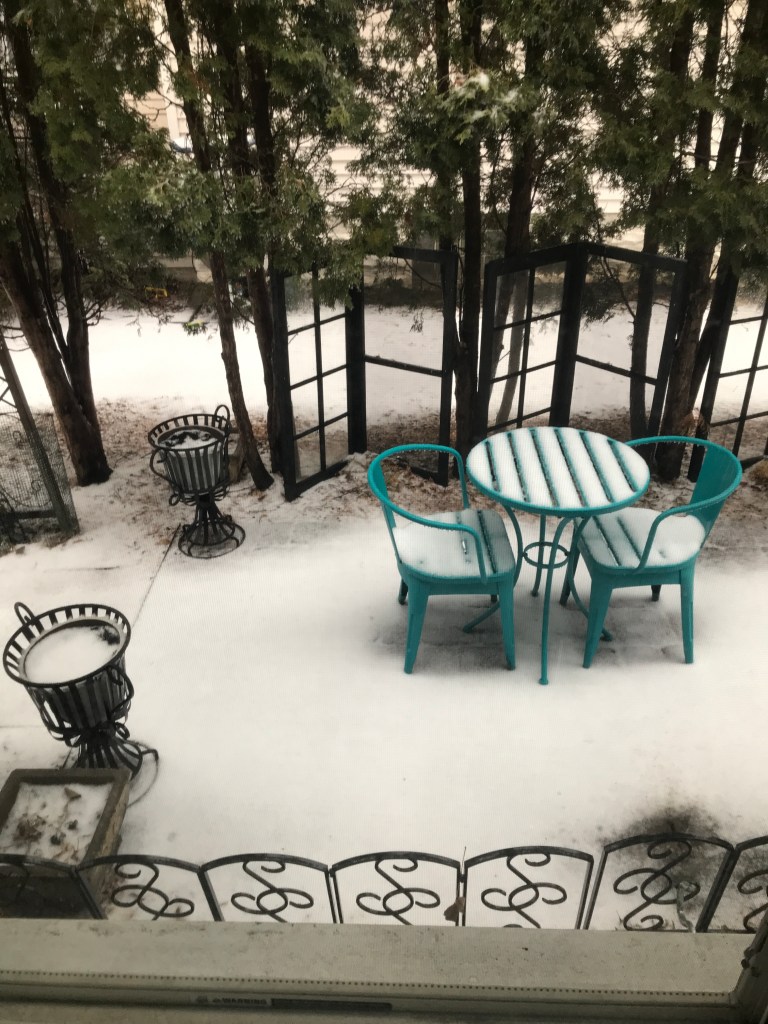
I’m not sure what is life-enhancing about this April view of our side garden, which we call “Paris,” except knowing that it is there. It is waiting for the days when I will sit there in the morning with my devotion materials or enjoy my lunch there while reading a good book.

In the meantime I am aware of so much in my life that is life-enhancing. In fact, that is an on-going conversation with myself, and I suspect God is eavesdropping and accepting my musings as prayer.

So here’s my top of the head list or should I say close to the surface of my heart list?.

  • Facilitating the weekly writing group at my church. Not only do I love being with the group, sitting in, silence and then writing, listening, and sharing together, but creating the writing prompt and selecting readings for the day adds to my life, my being.
  • Meeting with my spiritual direction clients. What a privilege to accompany each one of them on their own spiritual journeys. I sit in prayer both before and after our meeting times and hold them close.
  • Starting my day with meditation and devotion time. Some days it is hard to leave this quiet and enriching time and move into the rest of the day, and other times I feel almost propelled with purpose and deeper awareness of next steps.
  • Attending Sunday morning worship and adult forum. I am an introvert, a contemplative content in my solitude, but more and more I realize the importance of community and how that opens me to the movement of God.
  • Being in the presence of my personal library. During my devotion time this morning I read a reference in a Lenten devotion by Jan Richardson to a small book of prayers, All Desires Known by Janet Morely. Much to my delight, I realized I own that book and then spent some time browsing its pages. Spacious time for reading, of course, enhances my life in so many ways.
  • Tending our home. Yes, sometimes that is a chore, for who likes to clean the bathroom! Hometending most of the time, however, feeds my creativity, clears space for new thoughts, ideas, and plans, and opens my heart to hospitality.

Of course, this list must include both the planned and the spontaneous times with family and friends and the days my husband and I roam, driving country roads and exploring small towns. Writing posts for this blog is also on this list and receiving your comments. (Thank you, dear readers!)

One more thought: As I listed what enhances my life, I wondered how this list differs from a gratitude list. Perhaps they are the same, but here’s what occurs to me now. Being aware of what enhances my life opens me to the rhythm of each day and helps me discern my priorities and how to best use my energy. It’s sort of like a “to do” list, a Spiritual To Do List.

I will think about that a bit more, but in the meantime, I wait the day when time in “Paris” enhances my day once again.

An Invitation:

What enhances your life? I would love to know.

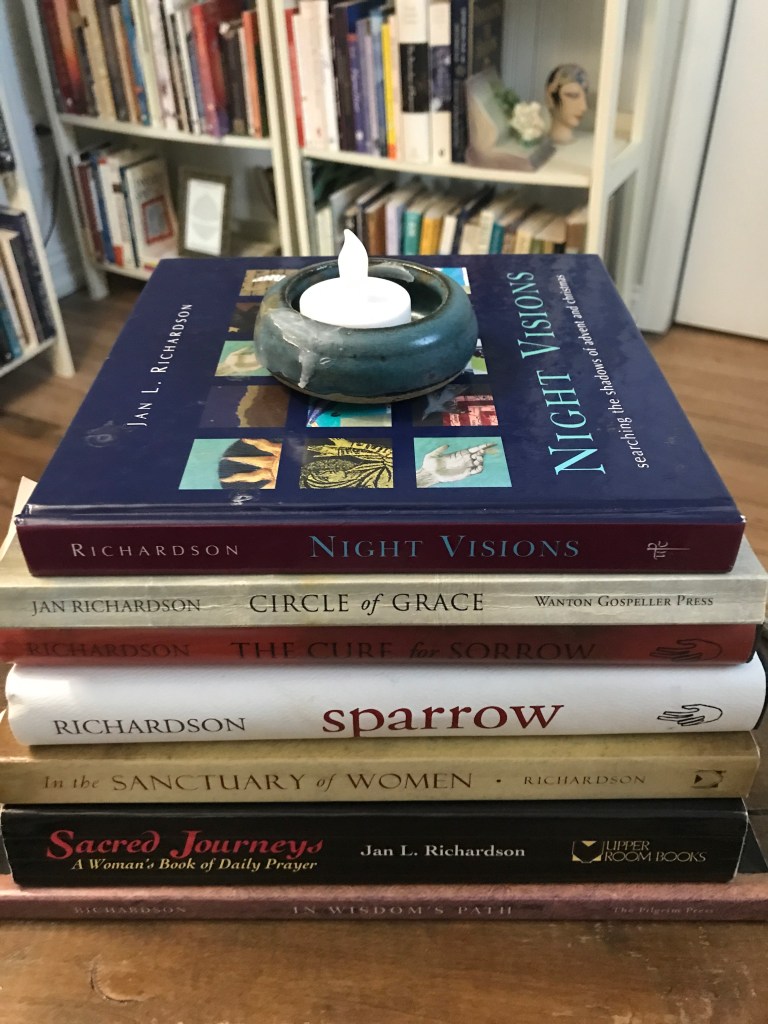
Book Report: Books by Jan Richardson

Jan Richardson is one of my “go-to” writers. Her books of prayers and blessings and reflections sustain and enrich me. Enlighten and open me.

On these Lenten mornings I read and re-read and sit with the blessings for the Lenten season in Circle of Grace, A Book of Blessings for the Season (2015), as I have for many previous Lenten times. This year the book falls open almost automatically to page 117:

Next you must trust
that this blessing knows 
where it is going,
that it understands
the ways of the dark
that it is wise
to seasons
and to times.

As I move through a period of discernment, these words reassure me and lift me and lead me towards whatever is next. Easter is coming--beyond what seems dark. 

Two other books accompany me during the seasons of the church year: In Wisdom's Path, Discovering the Sacred in Every Season (2000) and Night Visions, Searching the Shadows of Advent and Christmas (1998). 

Both of these books are beautifully illustrated by Richardson as well.

On the first page in the section on Lent in the book In Wisdom’s Path Richardson writes:

The season begins with ashes and invites us into a time of stripping away all that distracts us from recognizing the God who dwells at our core. Reminding us that we are ashes and dust, God beckons us during Lent to consider what is elemental and essential in our lives…we find the building blocks for creating anew.

p. 53.

Each year when I read those words it is as if for the first time, as if I have never considered those thoughts, and at the same time, they feel so familiar and touch what I have always knows. Richardson has that ability in both her writing and her art work. That is also true as she guides the reader through each week of Advent in Night Vision with themes of “Darkness,” “Desire,” “Preparing a Space,” “Hope,” and then on to themes of “Birthing,” “Welcoming,” and “Thresholds” for Christmas and Epiphany. I know that season seems far off as we continue the rounds of Lent, but I suggest you add this book to your devotion plans for later in the year.

Two other books highlight the spiritual journeys of women.

Sacred Journeys, A Woman’s Book of Daily Prayer (1996) also follows the liturgical year, and each week includes an invocation, biblical text, context of the scripture, daily readings, questions for reflection, a meditation, and a blessing. Along with her own words, Richards quotes women from across the ages, a rich diversity of voices. One Lent many years ago a friend and I each read the daily devotions in this book and then emailed our comments to one another–what a meaningful Lenten journey that was.

The other book specifically focuses on women, In the Sanctuary of Women, A Companion for Reflection and Prayer (2010. Each chapter highlights a wise woman of the past, including Eve, Brigid, the Desert Mothers, and Hildegard of Bingen. I knew something about each of those women, but not about Harriet Powers, the subject of a chapter called “The Mysteries of Making.”

Powers grew up in slavery and when she become emancipated, she and her husband purchased a farm in Georgia. She worked as a seamstress and created quilts. Two of her quilts, known as Bible quilts created using appliqué techniques, have survived and speak to her creative gifts and her love of God.

A dear friend gave me this treasured book and inscribed it to me:

May you always keep the vision to recognize the door that is yours, courage to walk through it, and when you’ve gathered the wisdom that is yours in that room, move on and find another door.

I think Richardson would applaud this sentiment.

Finally, two books are the result of deep grief in Richardson’s life: The Cure for Sorrow, A Book of Blessings for Times of Grief (2016) and Sparrow, A Book of Life and Death and Life (2020). Richardson’s husband and creative partner, the singer/songwriter Garrison Doles died unexpectedly after a routine surgery, and she did what she knew how to do: she wrote blessings; blessings not always easy to read, such as “Blessing for My First Day as a Widow.” But she also wrote blessings of solace and hope.

When I was asked to speak at a friend’s memoir gathering, I read the blessing, “Where Your Song Begins Again,” which includes these words:

Let it be
that you will make your home
in the chamber 
of our heart

where your story
does not cease,
where your words
take flesh anew, 
where your song
begins again.

Sparrow, which explores the first few years after Gary’s death, is written in more of a narrative style and includes journal entries. The title is based on the sparrow imagery in Psalm 84, “Even the sparrow finds a home…” This line inspired one of Gary’s songs, “I Will Be a Sparrow.” The book is the honest, compelling and often raw exploration of the key question in her life without her loved one, “Who am I, when the person who saw and knew me best in all the world is gone from this world?” I am grateful I have not lost that person, but I have had my own losses and with each one I am aware of the need to address anew, “Who am I now?”

How grateful I am for Richardson’s grace and wisdom and her companionship on my own journey.

Richardson’s website is https://www.janrichardson.com/books. You can buy her books and art prints, as well as access her blog and occasional retreats on this site.

An Invitation:

What books accompany you on your spiritual journey? I would love to know.

Daily Encounters: Soul Work in the World

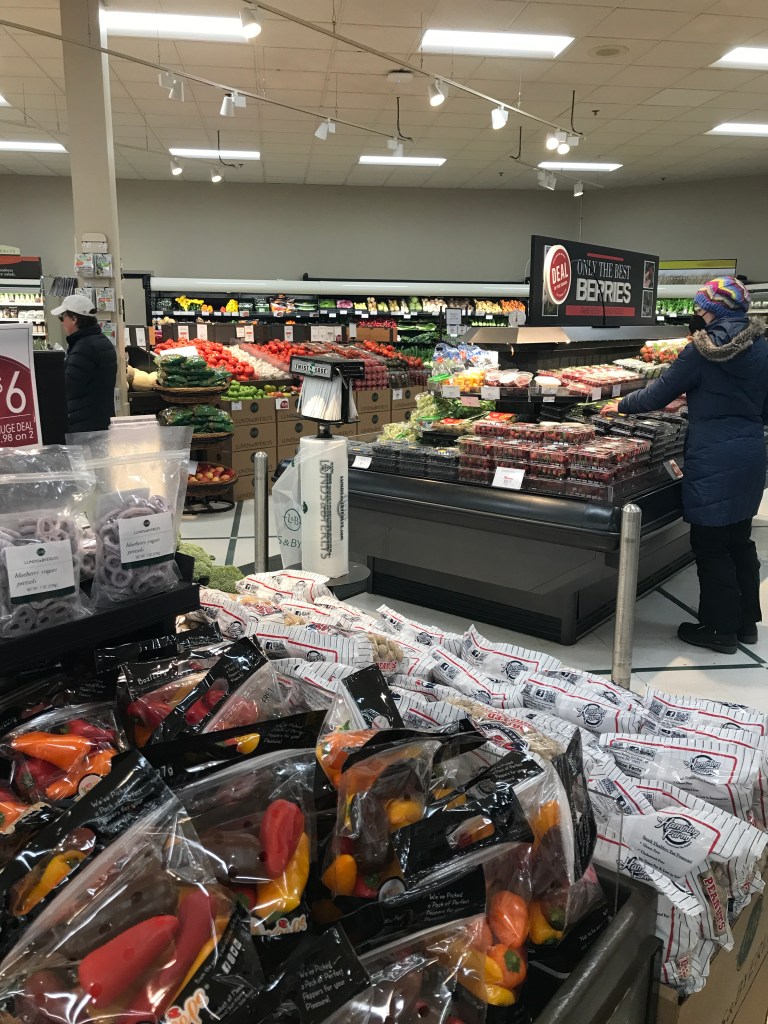
Who knew that a trip to the grocery store would restore my soul?

Most Thursday mornings I do the week’s grocery shopping. I shop early when there are few people, and I can move through the aisles quickly and easily and not experience long lines at the check-out counter. That has worked well for me during this long COVID interim.

The cashier always asks if I have found everything on my list, and most days I can say “yes.” Occasionally, however, I have replied that I needed to substitute for a favorite brand or had to adjust my planned menu, but I always added, “No problem. I have no reason to complain about anything.” The cashier always seems grateful for my positive response.

What I could add most weeks is that I found more than what was on my list.

Sometimes in the aisles I find connection and a sense of community. I find warmth and pleasant openness.

An example. One of the carry-out workers, who has worked in the store for years and who happens to be mentally challenged, eagerly told a man working in the produce section about his favorite team in the state high school basketball tournament. He knew what he was talking about, and the produce worker responded with both respect and enthusiasm. After the conversation ended, I commented to the produce worker about the positive interaction and the meaningful atmosphere that creates. He brushed off my thanks and replied, “We are all responsible for one another.”

He restoreth my soul.

And then I realized a woman was standing behind me. It was clear she was waiting to add produce to her cart.

“I am so sorry,” I said, “for blocking your way.”

Instead of showing irritation or ignoring me, she said, “No need to apologize. I have all the time in the world.” We smiled at one another each time we encountered one another in other aisles.

She restoreth my soul.

I finished shopping and another carry-out person came to pack my groceries and he said, “I saw you come in and I wondered if I would pack for you.” We chatted all the way to the car or should I say, he chatted all the way to the car, and we both wished each other a good rest of the day. We both meant it.

He restoreth my soul.

I have to believe such encounters restore the world’s soul. And we need that.

An Invitation

When have you experienced soul restoring moments? I would love to know.

Book Report: Spirit Car, Journey to a Dakota Past by Diane Wilson (2006)

On November 7, 1862, a four-mile train of mostly women and children was forced to march to the concentration camps at Fort Snelling. Many of our people died on this trip. The townspeople from Henderson, New Ulm, and Sleepy Eye threw bricks as they passed by, they threw stones, one woman even threw boiling water.

Some people ask why we need to remember this, why we can’t just let it go. The march has never been acknowledged for the tragic event that it was. It’s been covered up and forgotten. It’s time for the Dakota people to remember their ancestors, to grieve for their families who were part of this march. This used to be Dakota land. It was all taken away from us. When you allow these things to be covered up, that’s part of colonization.

p. 186, Wilson quoting Chris Mato Nunpa, professor of Indigenous Nations and Dakota Studies at Southwest Minnesota State University, Marshall, MN

Sometimes you don’t know what you don’t know.

We live just a few miles from Fort Snelling in St Paul, and I had no idea until a few years ago about this horrific forced march and how so many native peoples had been imprisoned there. Our congregation participated in a Sacred Sites tour and visited not only this area, but other nearby places sacred to the Dakota people. It was a sobering day, to say the least.

Spirit Car, Journey to a Dakota Past by Diane Wilson, who wrote one of my favorite novels of 2021, The Seed Keepers, is the record of Wilson’s journey to discover her own history and the story of her ancestors. It is a complicated story, although the writing is clear and beautiful. The story is complicated because so much has been hidden and distorted, and repressed. Wilson’s father was Swedish-American and her mother of Dakota heritage. Her mother and sisters had been sent to a boarding school on the Pine Ridge Reservation in South Dakota and were rarely able to return home. Imagine the trauma involved in that? Wilson’s great-great grandmother, Rosalie Marpiya Mase or Iron Cloud, was married to a French fur trader, and Wilson explores how mixed marriages were part of the strategy to take over native culture and lands.

In December, 1862, 38 Dakota men were hanged in Mankato, MN, in view of an estimated 4,000 spectators. Just imagine. Here’s where I am in the ongoing process of learning what I don’t know. When I was in the sixth grade, I lived in Mankato. At that time the social studies focus during the sixth grade was Minnesota history. Did we learn about the hanging? Did we learn about the forced march or why that happened? Did we learn anything about the land our school was built on? Nothing. Not one thing.

This book is part of my ongoing education, and I hope it will be part of yours.

Eventually, ambitious dairy farmers chopped down the forests, sold the timber to build houses for settlers, and paved the old trails. But was the past so very far away? Beneath the pavement, there remained the imprint of moccasins and the tracks of wagon wheels. They never really disappear, they simply became invisible to our eyes.

p. 203

An Invitation

Are you reading anything to fill in the blanks of your own education? I would love to know.

I Have No Ideas!

Most Monday mornings I write my post for Tuesday. I may even write the Thursday post and prepare for the writing group I facilitate on Thursday mornings. That leaves room during the rest of the week to meet with my spiritual direction clients and any other zoom or in-person events.

A good plan, but what happens when I have no idea what to write!

Usually, during the previous week, I jot notes to myself that could develop into a blog post. This past week? Nothing! Or going to church will spark a thought. Sunday, even though the sermon and service and the adult forum were each inspiring and thought-provoking, nothing percolated for my weekly writing. Surely, I told myself, when I went to bed Sunday night, I will wake-up Monday morning with an ah-ha moment. Nothing!!!

What to do?

Well, do what you always do, Nancy. Begin the day with morning meditation. I read the Lenten reading for the day, I Samuel 3. God calls to Samuel, not once, but three times, and Samuel doesn’t recognize the Lord’s voice. Hmmmm. How many times, I wonder, have I failed to hear?

What is it I need to hear right now?

My husband calls a “good morning” up to the garret and leaves to meet a friend for breakfast. I take my shower and dress and make a quick grocery list. Friends are returning home today after being in a warmer climate for almost two months. I plan to fix them an easy supper and drop it off when I hear they have returned. I send a quick prayer for “traveling mercies,” and think about how good it will be to see them again.

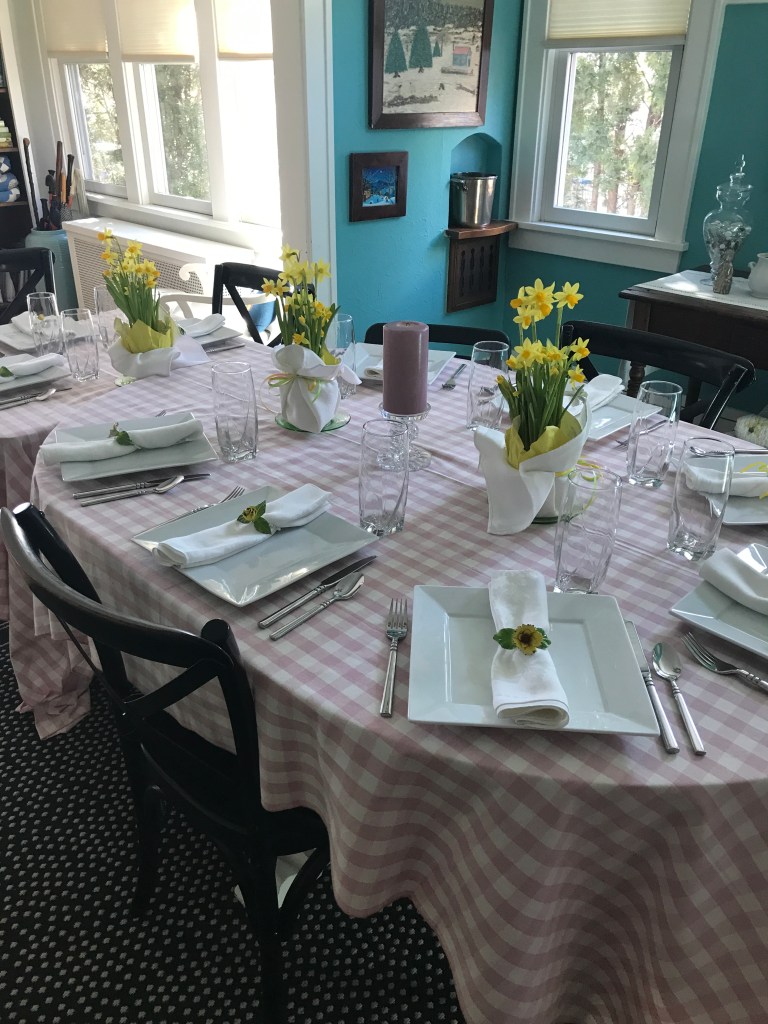
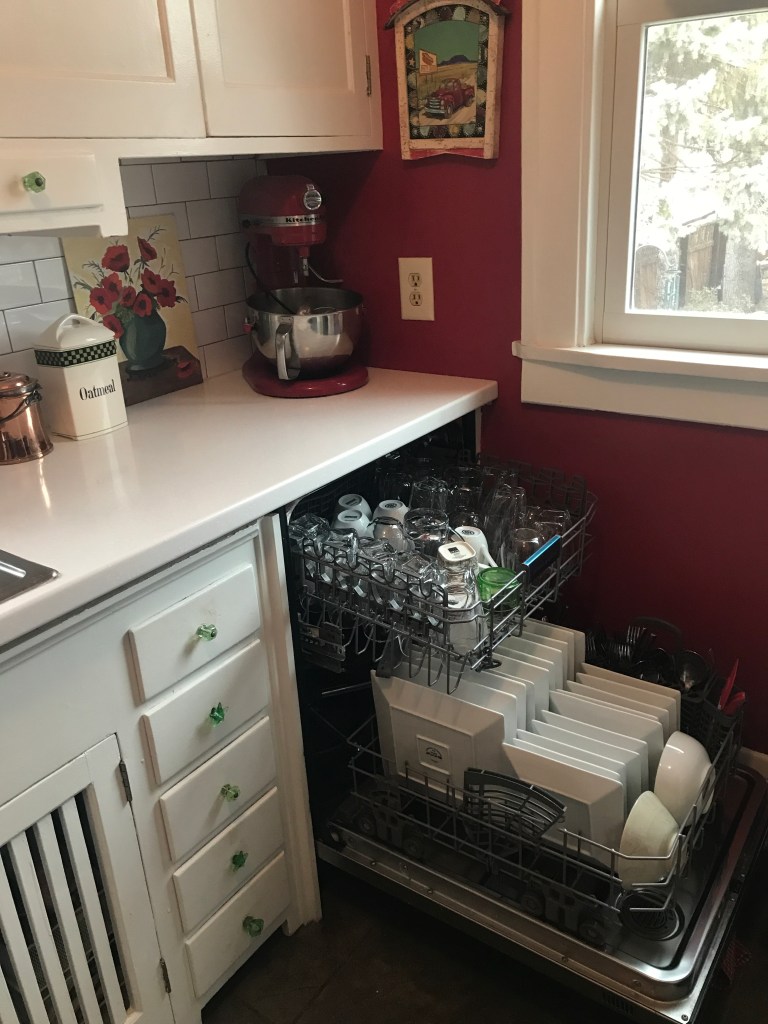
I decide to empty the dishwasher. Normally, my husband does that, but I am happy to do it today–a delaying tactic before I face the empty screen. Sunday evening a group of friends gathered here for potluck supper, and the dishwasher was packed. As I empty it, I think how wonderful it was to be together after a long COVID interim. We laughed and told stories, some we have told before and will probably tell again. We asked for prayers for loved ones and shared moments of grace. I confess that earlier in the day as I set the table, I wondered if we would be able to ease into one another’s company once again. No worries, for we reveled in our friendship and connection.

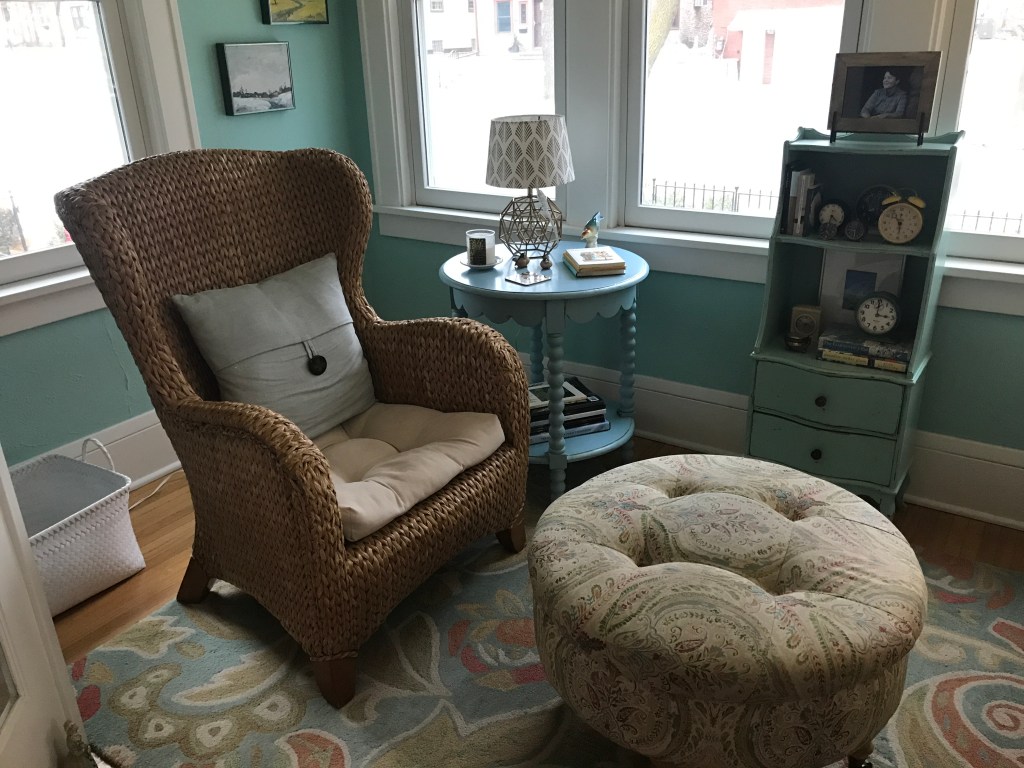
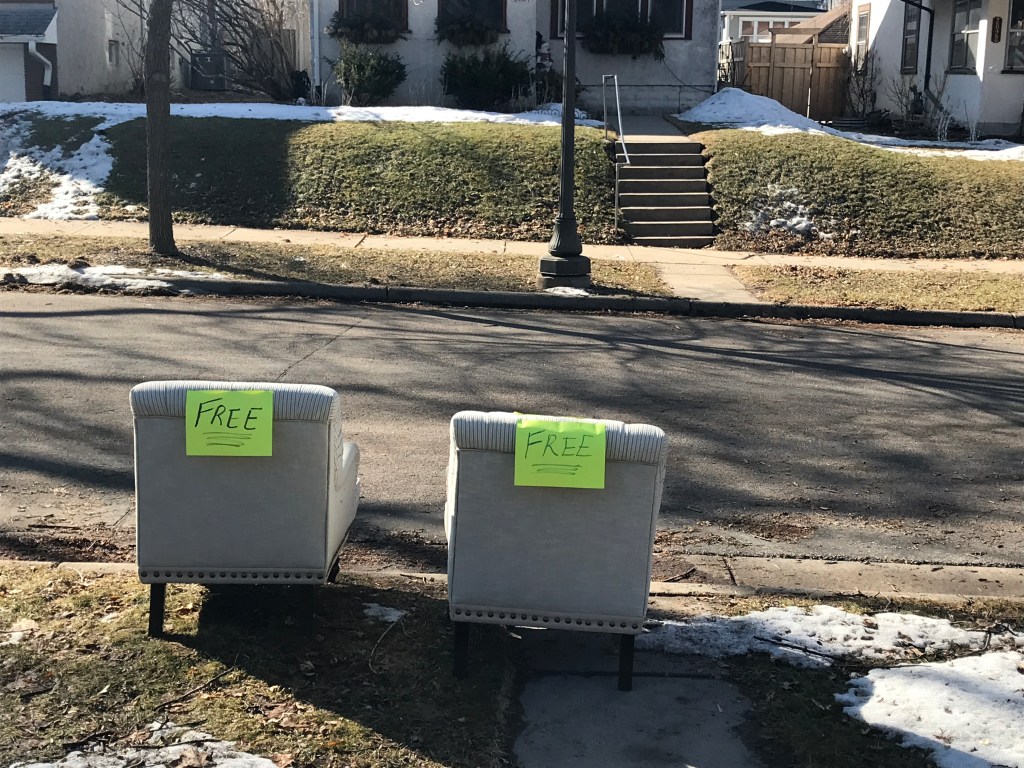
Still delaying going to my desk, I walk into the snug where the two chairs we found last week at an antique shop look as if they have always been there. I need to find the right cushions, but no rush, and that will be a fun search.

Bruce put the old chairs out on the curb with free signs and almost immediately the young boys next door dashed out asking it they could have them. Bruce said yes, IF it was ok with their parents. Apparently, that answer was “No,” but in less than an hour I saw four young people loading them into a SUV, and they were gone. I imagined the new owners coming to a screeching halt in front of our house when they spotted the chairs. “Yea, these are just what we need! I thought about all the books read in those chairs and prayed the new owners will find comfort and ease in them, too.

Finally, I sat at my desk. No more delays. I whispered a quick prayer, “What should I write, Lord?”

I begin to write.

An Invitation

When have you not known what it is you are to do next or say or even write? How have you responded? I would love to know.

Book Report: Browsing My Bookshelves

One book leads to another. And another.

One of my favorite projects each week is preparing for the writing group I facilitate at my church. Along with creating a writing prompt, I offer short quotations to support the subject of the prompt. Finding appropriate quotes becomes a rabbit hole of pleasure and memory. Sometimes, I confess, browsing my bookshelves becomes a diversion, a distraction from the task in front of me. Oh well.

An example: My morning meditation these days includes reading the prayers for Lent in Jan Richardson’s Circle of Grace, A Book of Blessings for the Seasons. (2015). One of those blessings led me to this week’s writing prompt –a prompt about telling our own stories. Great–I had both the content for the prompt and one illustrative quote.

Let the browsing begin.

I remembered a workshop on storytelling as a spiritual practice that I took from Diane Millis a couple years ago, so found her book, Re-Creating a Life, Learning How to Tell Our Most Life-Giving Story (2019) on one of my shelves. As I paged through the book, I remembered an exercise Millis led at the workshop and wrote a note to myself to consider adapting that for a future writing group. I also noticed a reference to one of my favorite books, Composing A Life (1990) by Mary Catherine Bateson.

Here’s where the rabbit hole gets deeper. I pulled that book, autographed by Bateson, off my shelf, and as I noted what I had underlined and where I had written comments, I remember the evening I heard Bateson speak at a private girls’ school in Cleveland. Her book, Peripheral Visions, Learning Along the Way (1994), had recently been published, and, of course, I bought that book, too, and had her sign it.

We had moved to Cleveland from Minnesota just months before, and I still felt quite lost and unsure of what my next steps in composing my own life would be. I remember having a lovely conversation with Bateson and being surprised by the time she took to share her wisdom and perspective with me. I don’t remember her words, but am sure I wrote about it in my journal. I resist digging out that journal, for I might never climb out of that rabbit hole! An aside: Many years later I learned that a woman who became a friend had also attended that lecture.

Also on my shelf is Composing A Further Life, The Age of Active Wisdom (2010), and I am so tempted to begin re-reading this book right this very minute. The chapter titles, “Thinking About Longevity,” “A Time for Wholeness,” and “Knowledge Old and New” beckon me and I suspect are even more relevant for me now, but I set it aside. For the moment. And then I remember another of her books that I found at a Little Free Library, Willing to Learn, Passages of Personal Discovery (2004), but have yet to read. It awaits on a different shelf, where I keep TBR nonfiction books.

I slap my hands, reshelve the Bateson books, and turn to the shelves with my writing books. There are lots of temptations on those shelves. I start with two books: The Story of Your Life, Writing a Spiritual Autobiography (1990) by Dan Wakefield and Your Life as Story, Writing the New Autobiography (1997) by Tristine Tainer. The Wakefield book introduced me to the term and the idea of “spiritual autobiography,” which is now more commonly thought of as “spiritual memoir,” and the Rainer book reminds me of her earlier book The New Diary, How to Use A Journal for Self-Guidance and Expanded Creativity (1978), which I used as a text when I taught a series of journal writing classes way back when! All three books are full of notes to myself.

I have found what I need for the writing group and force myself to re-shelve the pile of books on my desk, but that leads to another round of browsing.

The Diane Millis book is right next to a collection of Thomas Merton books and close by are Thomas Moore books. The Bateson books are near books by a current favorite, Diana Butler Bass, including her latest Freeing Jesus, Rediscovering Jesus as Friend, Teacher, Savior, Lord, Way, and Presence (2021). I notice I have starred the last two chapters, “Way” and “Presence,” and I am tempted to re-read those chapter right now. Plus, I notice a Dan Wakefield book I have not yet read, Releasing the Creative Spirit, Unleash the Creativity in Your Life (2001), and I am certain just what I need could be found on those pages.

Behave yourself, Nancy, and focus. Finish the task at hand.

An Invitation:

What books are waiting for you on your bookshelves? I would love to know.

Prayers Around the Cross

On Wednesday evenings during Lent our congregation extends an invitation to gather at the cross, to pray and light candles. Solemn, quiet moments. Moments when I not only hear my own heartbeat, but the yearning heartbeats of all those around me.

Each of us brings our own cares and concerns. Each of us brings hopes for safety and peace and life and love. We light a candle and lift the distress we feel.

And then we go home. Some of us may feel lighter. Some of us may experience clarity. Some of us may continue to feel the burdens we brought with us, but are at least grateful for the silence and beauty of those moments.

Feeling the warmth of the gathering, some of us feel even more grateful for the warmth of the homes to which we return.

A writer friend recently wrote these words in a new poem, “Doing Something,” about the war in Ukraine:

              I lit a candle
              I scrubbed the kitchen floor
              I scoured the bathtub
              I carried out the garbage
              I wiped out the refrigerator.
                                                                   
              Not because I loved the doing.
              I still have my home.
              I can do the ordinary. 
                                   Linda Schaeffer


"I can do the ordinary."

As I age, I am learning not only to appreciate the ability to do the ordinary stuff of life, but I am learning to do those tasks, those day-to-day routines, with prayerful intention. As I carry bags of groceries from the car to the house, I can carry prayers for all those who wonder where they will get their next meal. As I place clean clothes in my dresser drawers, I can pray that all those who have left all their belongings behind will be offered what they most need. As I retrieve the daily mail, I can send into the world prayers for protection and well-being. 

I know "ordinary" isn't enough, but I also know that extraordinary responses and efforts and solutions and changes are built on the ordinary. My prayerful ordinary moments along with your prayerful ordinary moments create room for the extraordinary to grow and thrive and make a difference. 

I believe that with all my heart. 

Wednesday evening I will return to the cross. Once again I will lift the yearnings of my heart and light a candle, but in the meantime, I will move through my ordinary days, praying for the extraordinary. 

An Invitation:

What are your prayers as you move through the ordinary moments of your days? I would love to know.

Note:

You may find this link interesting–the poet Matthew Guite reflects on what C.S. Lewis has to say about living in the midst of war. https://www.youtube.com/watch?v=ngGozM0ZMG8