Middle of the Night Musings

June 13, 2023

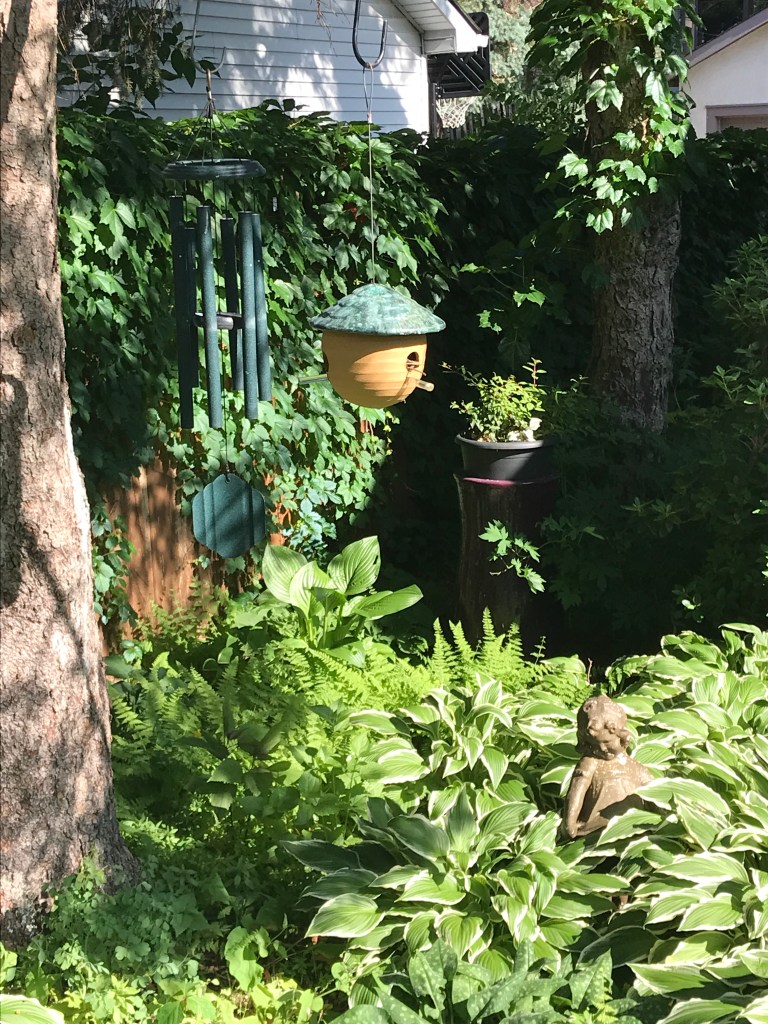
Late in the day the rains came, along with fresh breezes. How good it was to sleep snuggled under a quilt, windows open, the curtains gently fluttering, and the sound of the chimes playing a newly composed melody.

I woke several times during the night, not unusual for this elder, and each time I heard the light sprinkle of the chimes–less an intrusion and more of an invitation to hold lightly the thoughts of the day and the hopes for the ones to come.

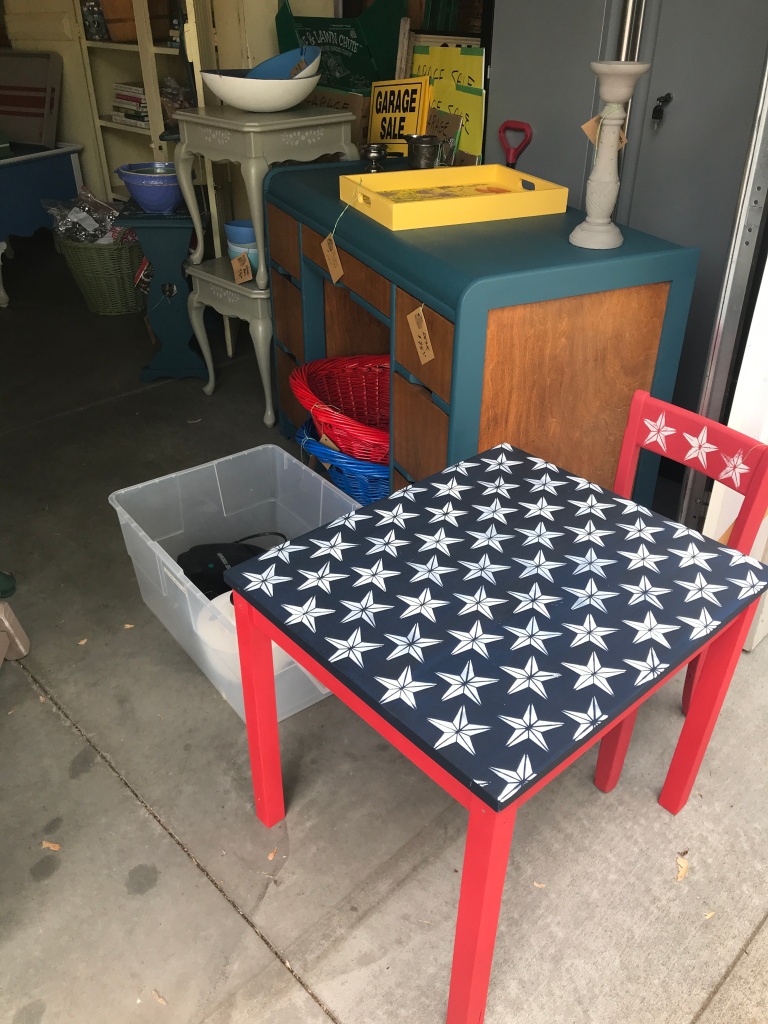
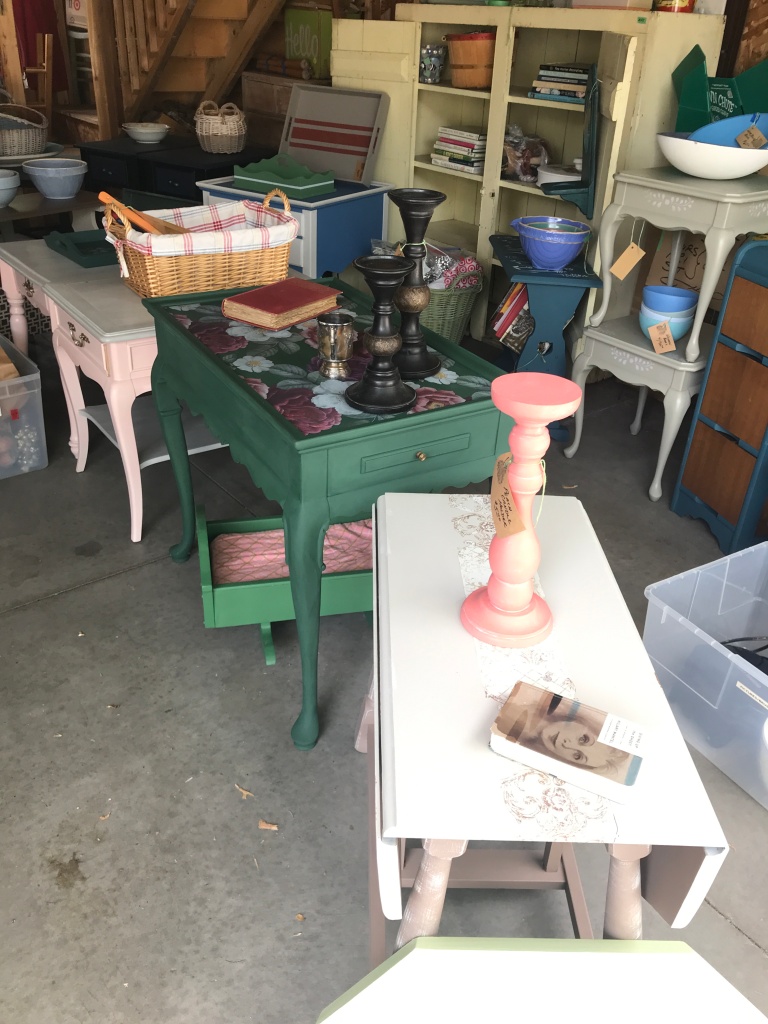
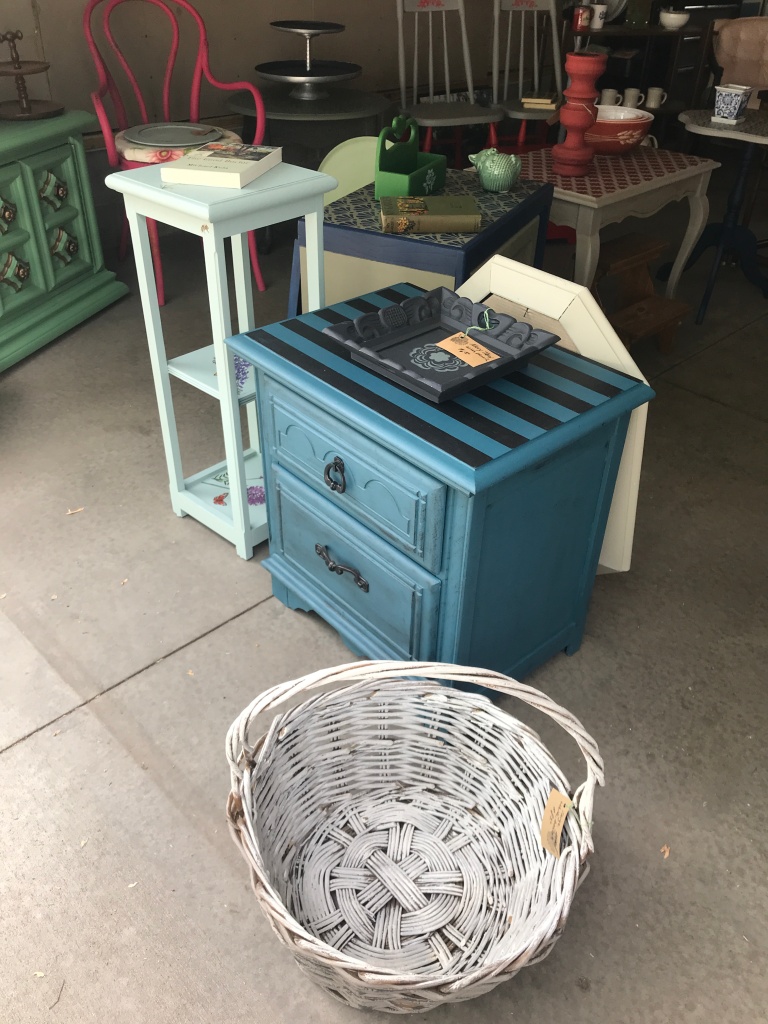
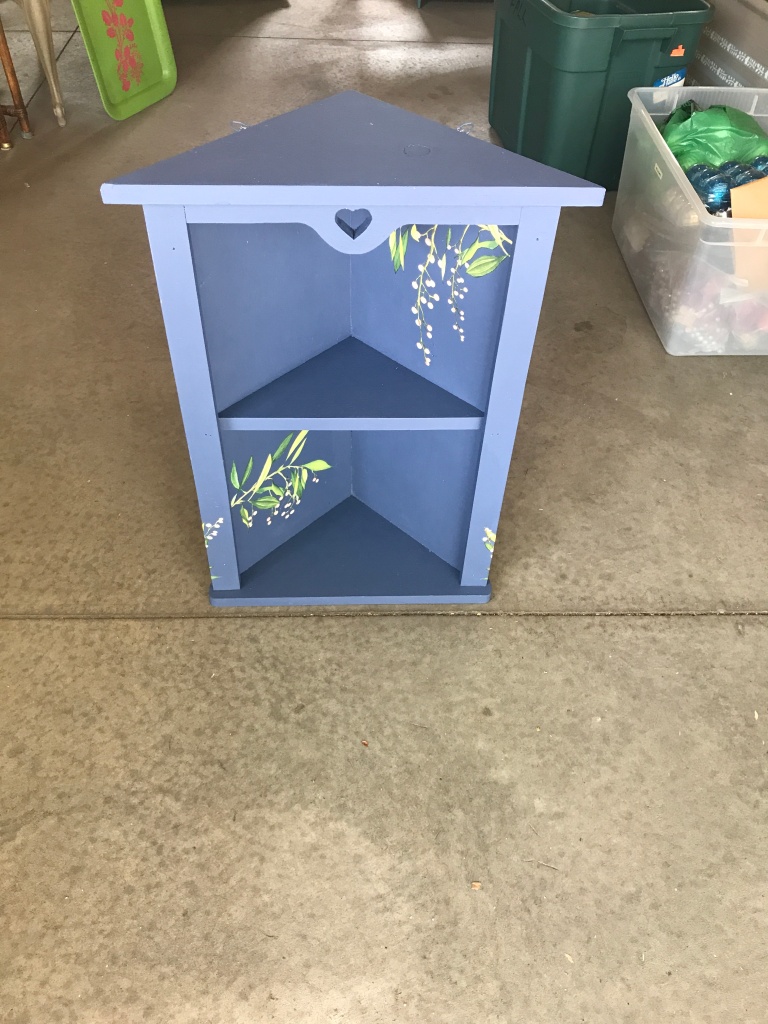
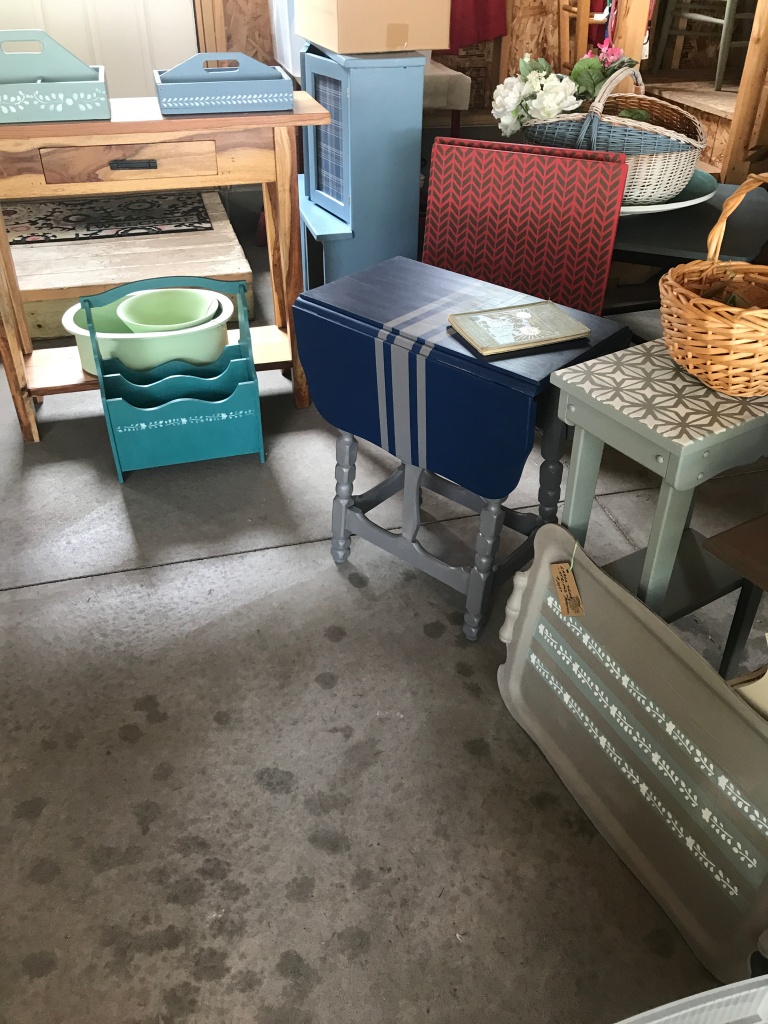
The previous days had been dominated by my husband’s garage sale of the discarded furniture he had transformed with paint, stencils, and transfers. As I have mentioned before in this blog, all the proceeds go to support Rezek House for youth experiencing homelessness. Not only did he receive high compliments for his creative skills, but many who stopped by were interested to learn about the work Lutheran Social Services does for youth. And, of course, the sale meant he is able to hand over a nice chunk of cash!

The garage sale is his thing, not mine, and I thought about how easy and outgoing he is with all those who stop by. He is always pleasant no matter how often he hears someone say, “I don’t need a thing.” My inclination would be to say, “Then why are you spending your time going to garage sales?” He reminds me that garage sales are social events, and he enjoys chatting and hearing people’s stories. I just want to leave the lunch I fixed for him and return to the garret.

Instead of being too hard on myself, which would have led to much tossing and turning, I reminded myself that I am an introvert. I know when and how to use the skills of extroversion, but I am always aware of the rhythm that works best for me. I am definitely not a hermit. I am grateful for the friendships in my life, for my beloved community, and all the other ways of connecting with others, but over the years I have learned when it is time for me to retreat.

As the chimes continued to sing in the branches, I recalled words in one of Glenn Mitchell’s daily “Prayer Notes.” He said writing has been “a way to extrovert my introversion.” Yes, that’s it. That’s what I do. Writing, as a spiritual practice, is a form of communion, not only with God, but with others. I took a deep breath and fell asleep.

The next time I woke, the breezes still lifting the chimes, I felt more awake and decided to move into the living room and read for awhile. I put on my robe, enjoying the coolness, and sat in the dark for a moment before turning on a reading light. Ah, the silence, the emptiness of the hour. I’ve learned I am unable to force myself to fall back asleep, and besides, the unplanned extra reading time is never a waste, especially when the book is so delightful. (Stay tuned–the Thursday Book Report will reveal the title and author.)

The next time I woke I heard a siren in the distance, along with the backyard chimes. I whispered, “May all be well,” and also sighed in gratitude for all those who respond to emergencies. I lifted each name on my prayer list–the chimes tolling for healing and hope and love and compassion for each one.

And finally, in the morning the chimes accompanied my waking and moving into the day. Even now I hear them. Companions as I open myself to the possibilities, the gifts of this day.

Perhaps tomorrow the air will be still, and the chimes will need to wait patiently for another time to be an active presence. In the meantime, I will do my best to stay awake to the other ways to know and feel the Presence.

The breezes at dawn have secrets to tell you. Don’t go back to sleep.

Jalaluddin Rumi

An Invitation

In what ways have you experienced Presence recently? I would love to know.

Book Report: The Postcard by Anne Berest

June 8, 2023

But not only people were killed, also all the books they had to write. All the paintings they had to paint. All the music they had to compose. I think that is why we, the children and grandchildren of the survivors, are obsessed with working and writing books.

Anne Berest

The Postcard, a 2021 French novel translated by Tina Cover and now available in the U.S., is a lightly fictionalized account of the author’s own family. The central narrative is true. In 2003 Anne’s mother receives a postcard. On the front is a photograph of the Opera Garnier in Paris and on the back are the names of Anne’s great-grandparents and her great-aunt and -uncle. Ephraim, Emma, Noemie and Jacques. All four died at Auschwitz. There is no signature and no return address.

Why was it sent and by whom?

Such a good premise for a novel, and the author Anne and character Anne along with her mother, eventually begin the quest to find those answers. This book is so much more, however, than the unraveling of a mystery.

This book is another reminder of the need to remember the Holocaust and its chilling effects. For example, 76,000 Jews were deported from France.

Have you ever had the experience when reading a book of wanting not to read more, but there was no way you could stop. That’s how this book felt to me, and I remember feeling the same way when as a pre-teen I read The Diary of Anne Frank for the first time. Or years ago when I read Suite Francaise by Irene Nemirovsky, which is referred to in The Postcard, and I think I need to read again. As much as I didn’t want to read the truths in either of these books, I knew I needed to know them, and I am grateful to the authors of these books for their abilities to portray truth.

So many scenes in The Postcard remain with me, but I mention just two.

Anne attends a Seder, her first actually, for even though she is Jewish by birth, she has not been a practicing Jew. She is unexpectedly moved by the ritual.

Everything seemed familiar: passing the matzos around, dipping the bitter herbs in salted water, letting a drop of wine fall from fingertip onto my plate, resting my elbow on the table…My ears already seemed to know the Hebrew chants. It was as if time had stopped…I could feel hands sliding into my own, inhabiting them.”

During the years we lived in Cleveland dear friends often invited us to Passover dinners, and I remembered not just feeling privileged to be there, but also a sense of universality and timelessness. I am not Jewish, and I certainly do not know Hebrew, but I connected to that heritage, to that ritual of honoring the past, to the awareness of the presence of God. Being there strengthened and broadened my own sense of what it means to be beloved by God. Such a gift.

The other scene is close to the end of the book. After the war ends and the concentration camps are liberated, French survivors are returned to Paris in the very same buses that earlier transported them to the camps that were the last stop before stock cars and trains took them further East.

They can see the eyes of the Parisians widen as they pass, the pedestrians and drivers pausing for a few seconds, wondering where these hairless beings in striped pajamas flooding into their city have come from. Like creatures from another world.

The survivors are taken to a hotel where they are questioned and received ID papers, a sum of money and vouchers for bus and trains tickets. Then they are allowed to rest there for a few days.

The deportees lie on the floor because they can’t sleep on the softness of mattresses anymore. Often, three or four of them need to lie together, pressed against one another, in order to fall asleep. They are ashamed of their shaved heads and the sores and abscesses covering their bodies. They know just how horrific the sight of them is.

Horrific, indeed. And we need to be reminded of the horror, for we are living in dangerous times.

In many ways this book doesn’t feel like a novel, but more like a nonfiction book. The writing is often almost matter of fact. This happened and then this happened and this person is related to this person etc. Don’t let that fool you, for the simplicity of the words, the factual tone, is perhaps the only way we can get through the reality of what seems too impossible to be true.

Anne Berest has said that writing the book is her “mitzvah,” which has come to mean a kind of good deed; something you do for your community. She has more than accomplished that.

An Invitation

What books have opened your eyes and your heart to something you wish you didn’t need to know? I would love to know.

BONUS POST: “Papa Paints”

June 7, 2023

My husband Bruce has been painting all winter long–transforming discarded furniture and home decor accessories into fresh, fun, and appealing new looks for your home.

And now it is time for them to find new homes.

“Papa Paints” Garage Sale

Thursday, Friday, Saturday, June 8, 9, 10

8:00 a.m-4:00 p.m.

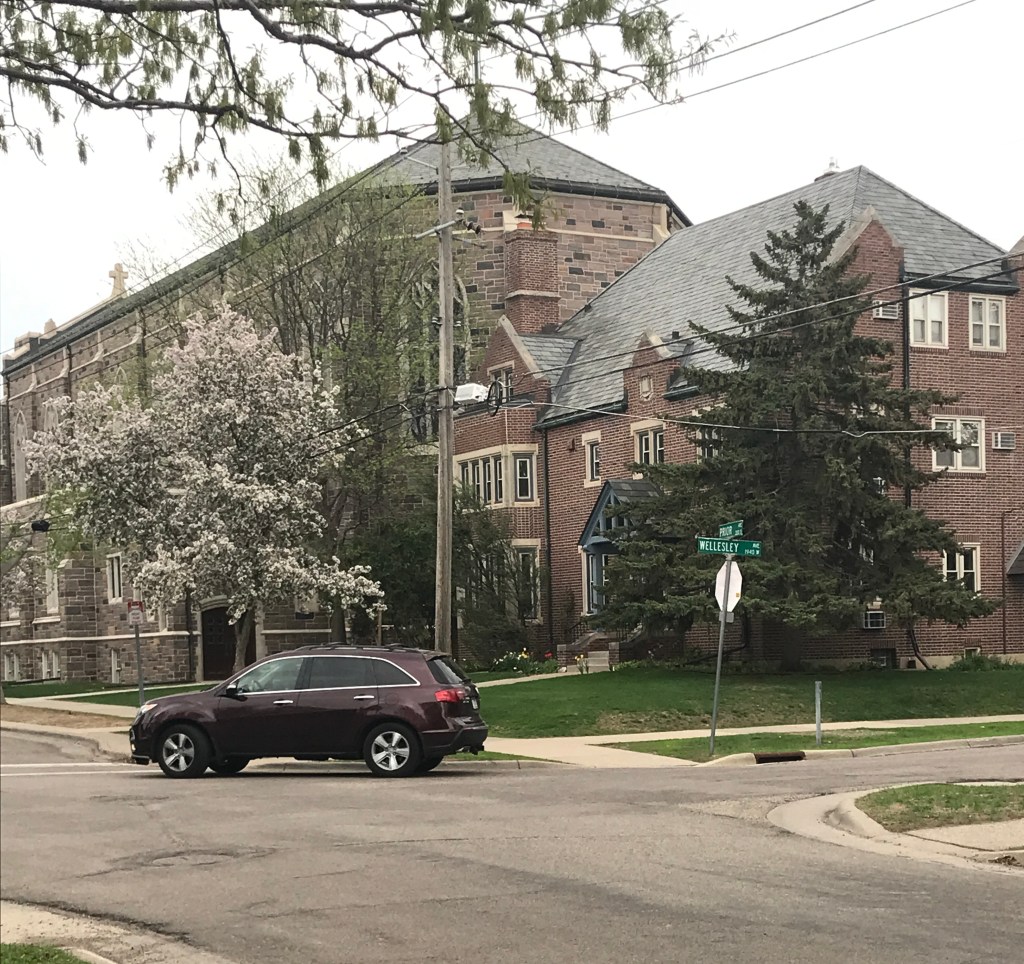
2025 Wellesley Avenue, St Paul, MN

Here’s what you need to know:

  • Proceeds to to support Reek House, a transitional housing program sponsored by Luther Social Services to support youth experiencing homelessness.
  • Only cash, please.
  • Enter through the alley only (Between Wellesley and Stanford)

Clearing a Space

June 6, 2023

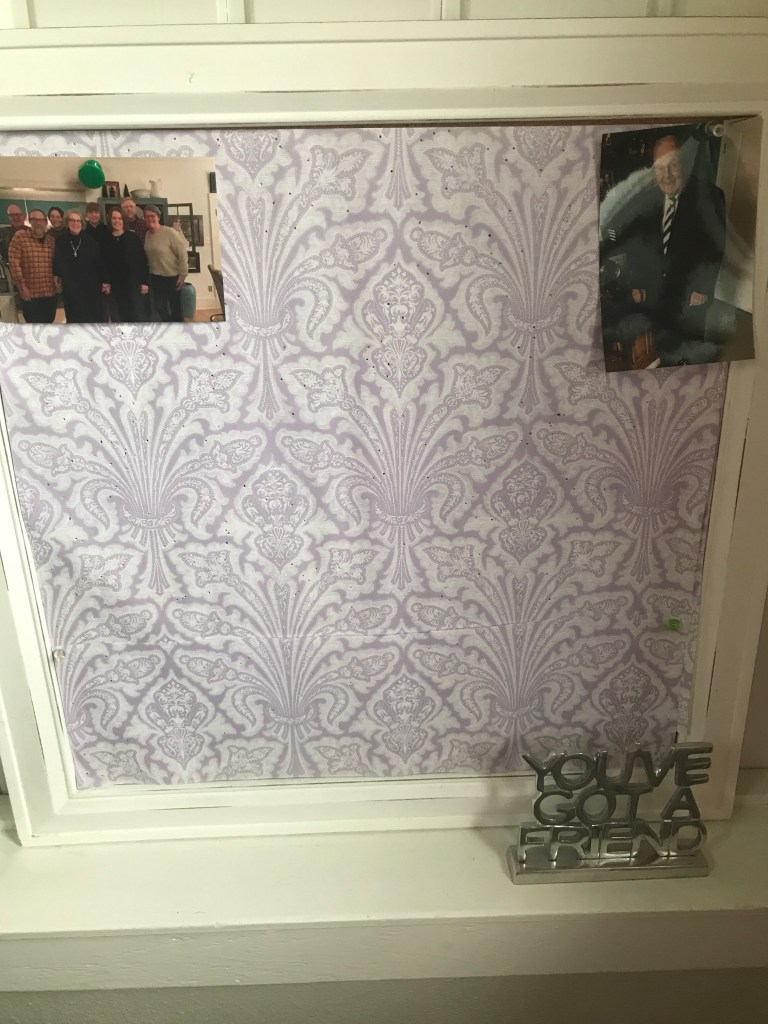
My bulletin board was overflowing, and it was time to clear the space.

I re-read each greeting card from the holidays between New Year’s and June. Valentine’s Day, Easter, Mother’s Day, along with birthday greetings. I felt the love and blessings all over again. In addition there were thank you notes, a get well card for earlier in the year when a miserable cold wiped me out, and a handmade sympathy card sent after a dear friend died. The handwritten message inside another card decorated with hearts said simply and perfectly, “You are loved.”

Along with images that I liked and wanted to keep (a woman standing in front of full book cases, a wintry scene, an abstract of water and sky)were pictures of our family, including one of the last photos taken of my father.

And in the middle was a verse from Romans 15: “May the God of hope fill you with all joy and peace in believing so that by the power of the Holy Spirit you may abound in hope.”

It was quite the pile of love.

Ah, a dilemma. Now what? Do I just toss them? Some cards I placed in my current journal, and I added a couple others to the box where I keep images for collages and to use as visual prompts for the writing group I facilitate, but yes, others I tossed. That is part of the deal when you clear the space.

I can see my bulletin board from my desk and over the months I have often lifted my eyes from the screen or the page and glanced at what I saved and treasured. Each time I head up or down the stairs I pass the bulletin board with its energy of hope, and good wishes, and memory, and I am reminded of the fullness, the richness of my days.

For now the bulletin board looks like this:

I need my father’s photo there. Just because. And that is true for the photo of our family taken at Christmas when we were all together. Maybe that will be replaced with a new picture when we all gather in July.

I have no doubt the many little pinprick holes will be filled eventually, and I smile thinking about the possibilities of the days and memories to come. I have made room for them on my bulletin board –and in my heart.

An Invitation

What do you do with cards and other mementos? I would love to know.

NOTE 1:

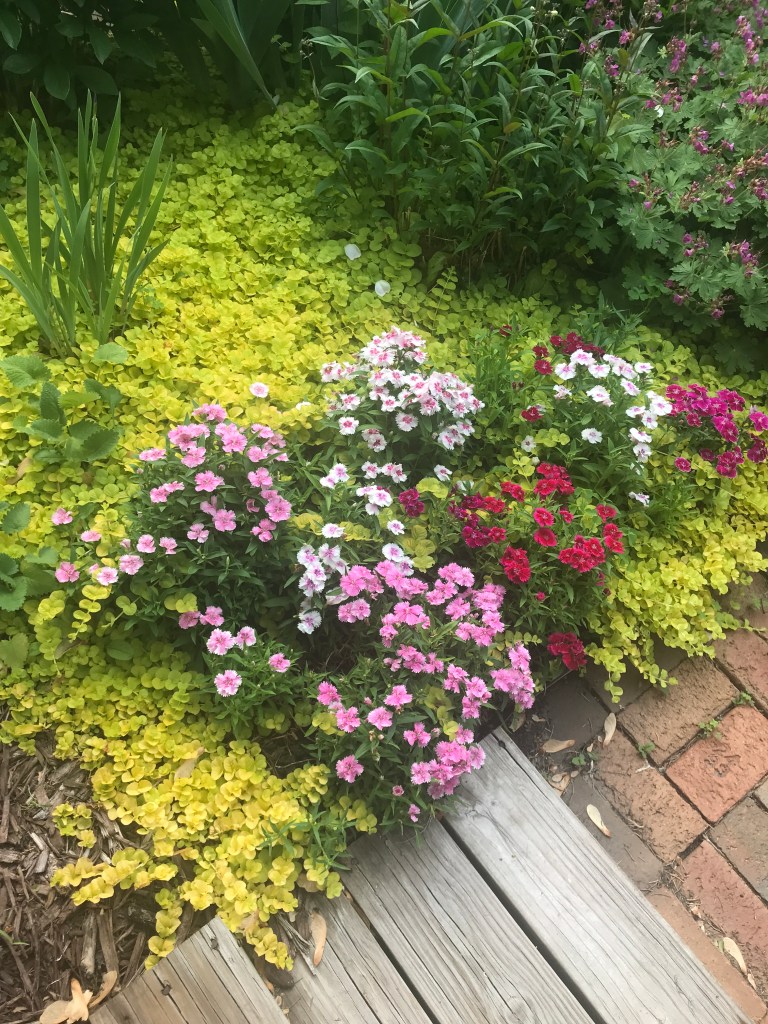
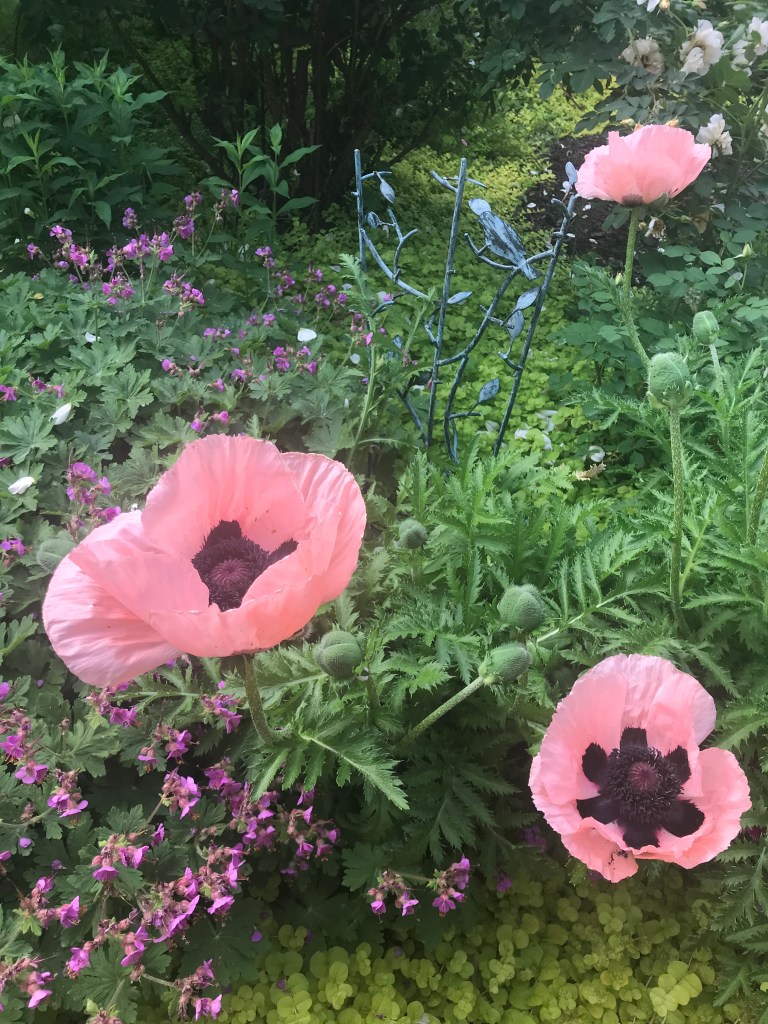
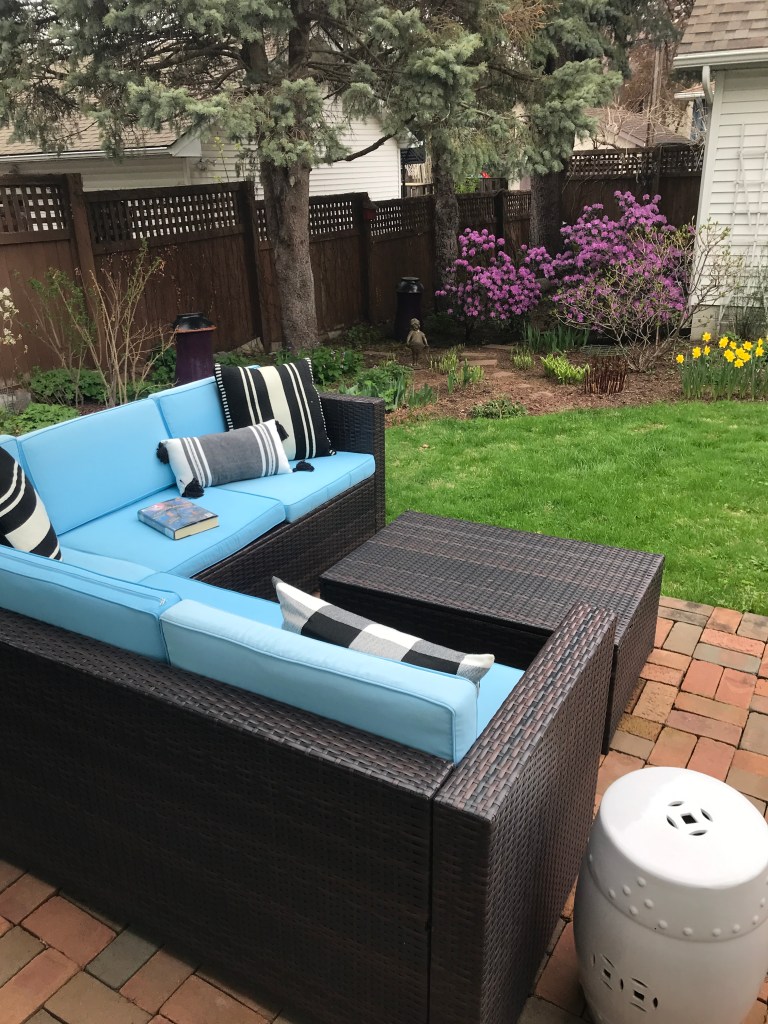
The bulletin board may be empty, but the backyard is lush and colorful, thanks to the ongoing gifts of my gardener husband.

NOTE 2:

This coming Thursday, Friday and Saturday, June 8-10 my husband Bruce will have his annual garage sale (alley behind our home, 2025 Wellesley Avenue, St Paul). He has been painting and transforming discarded furniture and other home decor accessories all winter. The proceeds from his sale support Rezek House, a transitional living program for youth experiencing homelessness. Rezek House is located in St Paul and is sponsored by Lutheran Social Services. I will post pictures of some of what is available later, but here are some images from last year–everything sold, by the way!

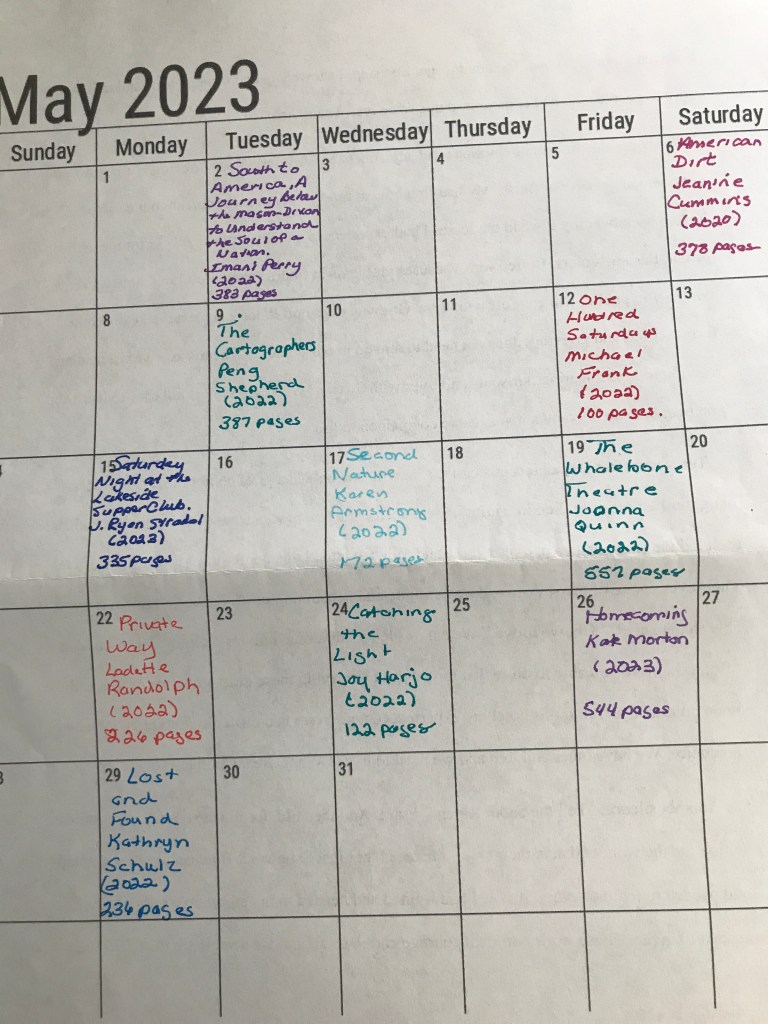
Book Report: May Round-Up

June 1, 2023

Five Nonfiction Books.

Six Novels.

No duds! Now that’s a good month. I should say, however, that I quickly discard a book, if it doesn’t engage me in the first few pages, so the chances of being disappointed by a book is less and less. I am sure I miss some books because of such fast judgment, but so many books, so little time is becoming more true with each birthday. Sometimes, however, I know a particular book just isn’t the right one at the moment, and I don’t discount returning to it at another time.

Thus, the reading adventure continues.

Fiction

Three of six novels read in May receive the “I couldn’t put it down.” rating

  • The Cartographers by Peng Shepherd. I initially thought of this book as a good “palate cleanser” book after reading American Dirt by Jeanine Cummins, the first book I read in May and highly recommend. (See May 11, 2023 post ). I needed something lighter, but the further I read the more engrossed I became in the story, which focuses around a group of mapmakers, map experts. Much of the story is set in the New York Public Library, but also in a town that doesn’t exist. Mystery, some fantasy. A good summer read–and just out in paperback.
  • The Whalebone Theatre by Joanna Quinn. I have not seen this on any other list and only heard about it through Minnesota Public Radio’s book newsletter, The Thread. I am so glad I was led to this book–even though there are so many books about WWI and WWII right now. The story is about three siblings (complicated–different fathers, different mothers) who grow up in rural England and are devoted to one another. One day a dead whale washes up on the shore and Christobel, the oldest, claims the skeleton and uses the bones to build an outdoor theater. She later becomes a spy in France. Well, the plot is involved, but I loved the characters and the writing was fresh and even at 50 pages kept moving.
  • Homecoming by Kate Morton. I don’t know why, but I didn’t expect this book to be as good as it was. I think I expected a fluffier, more lightweight book, but I was impressed with how the story kept unfolding, revealing new facts, new information, new aspects of the characters. Set in Australia in two times–1959 and 2018. A mother and three of her children ( a 4th, a baby, is missing) are found dead at a picnic site. The same day the visiting sister-in-law, who is pregnant, has her baby early. In 2018 that woman is dying and her granddaughter Jess, who was raised by her, returns to Australia from England to be with her–and the story begins to unfold. Lots of secrets. I like this quote from close to the end:

Being old, he had come to realize, was like being stuck inside an enormous museum with hundreds of rooms, each crammed full of artifacts from the past.. He understood now why the elderly could sit, seemingly still and alone, for hours on end. There was always something else to take out, to look at from a fresh angle and become reacquainted with.

p.531

As mentioned earlier, I started the month reading American Dirt. I also read Saturday Night at the Lakeside Supper Club by J. Ryan Stradal, a Minnesota author, and the book is set in Minnesota. The story is about a family, with emphasis on the women, who has owned a supper club for generations. A pleasant read. One other novel on the May list is Private Way by Ladette Randolph. Earlier this year I read and liked her memoir Leaving the Pink House. (March 30, 2023 post.) Set in Lincoln, Nebraska, I liked parts of Private Way very much, especially the references to reading Willa Cather’s books, but I thought the premise of the book–why the main character leaves her life in California and rents a home in Lincoln– a bit of a stretch. She learns much about herself along the way and develops key relationships, and I am not sorry I read it, but it was a bit uneven.

Nonfiction

The star on May’s nonfiction book is One Hundred Saturdays, Stella Levi and the Search for a Lost World by Michael Frank, which I wrote about in the May 18, 2023 post, but I can easily recommend four other titles.

  • South to America, A Journey Below the Mason-Dixon to Understand the Soul of a Nation by Imani Perry. A remarkable book. I didn’t always understand each of the references, especially related to music, but repeatedly I felt stunned by her insights and revelations. Perry examines specific states/cities in the South–a chapter on each– and in that way it reminded me of Clint Smith’s How The Word Is Passed (see December 1, 2022 post). No matter how much we know about the terror of slavery, more needs to be understood, along with the legacy of that time. This would be a good book to read in a group, one section at a time.
  • Sacred Nature, Restoring Our Ancient Bond with the Natural World by Karen Armstrong. In her brilliance and her exhaustive research, Armstrong’s books are never easy reads, but worth the effort. This book looks not only at the dire straights we are in because of how we have separated ourselves from nature, but also the views of a variety of religions about nature. In Christianity and Judaism, nature hasn’t played much of a role, but that is not true in other traditions.
  • Catching the Light by Joy Harjo. I am so attracted to her words, and this little book in the “Why I Write” series is no exception. I loved her memoir and also her book of 50 poems for 50 days. (See post on March 30, 2023.) Harjo writes to remember (“The old ones urge and remind us, remember. Remember to remember.” p. 42)–and we white privileged need to read about and understand the ways we colonizers have traumatized indigenous people.
  • Lost and Found, Reflections on Grief, Gratitude, and Happiness by Kathryn Schulz. This is another book now full of my underlining. At times, I admit, I found the book a bit tedious–for example, when she wrote about how the last letter of the alphabet was not “Z,” but “&”. Interesting, but what most engaged me was the focus on the dying and death of her father and the finding of love. And then the “and” of life; how life goes on. Beautifully written, which is no surprise because she is a writer for The New Yorker. One quote out of so many I could share:

This type of circular mourning, the grieving of grief itself, is perfectly normal and possibly inevitable yet also misguided and useless. There is no honor in feeling awful and no betrayal in feeling better, and no matter how dark and salted and bitter cold your grief may be, it will never preserve anything about the person you mourn. Despite how it sometimes feels, it has never kept anyone alive, not even in memory. If anything, it keeps them dead: eventually, it you cannot stop mourning, the person you love will come to be made only of grief.

p. 67.

So now that it is June, summer reading begins. I have started The Postcard by Anne Berest. You can check out my thoughts about summer reading in my May 25, 2023 post. Happy Reading.

An Invitation

Did you read anything this past month that deserves the “I couldn’t put it down rating”? I would love to know.
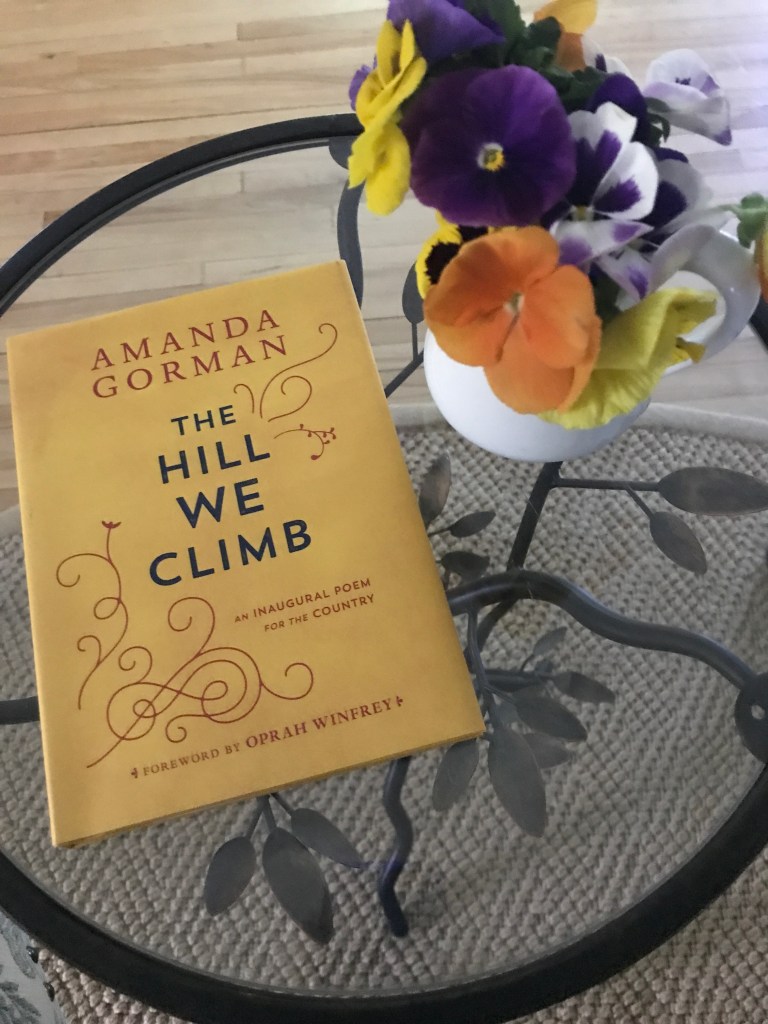
Re-reading Amanda Gorman’s “The Hill We Climb”

May 30, 2023

My mouth dropped open when I heard the reports about Amanda Gorman’s poem, “The Hill We Climb,” being removed from shelves in the elementary school section of the library in a K-8 Florida school. One parent said the poem included “hate messages” that served to “cause confusion and indoctrinate students.” The objection to the book did not include examples from the poem to support the parent’s argument.

I always wonder when I hear about yet another book being banned (or in this case, the school argues, it was not banned, but rather, “moved.”) if those who are so concerned about a specific book have actually read the book. In this case I also wondered if they had seen Amanda Gorman read her poem at President Biden’s inauguration–days after the January 6 attack on the Capitol.

When I heard the reports about the attack on her poem, I remembered how striking this young woman appeared in her tailored yellow coat, a column of gold, standing and speaking confidently as our country’s leaders sat behind her listening intently. I remember the beauty of her hands –motioning not in accusation, but beckoning all of us to climb the hill of justice, the people we have always said we want to be. I’m afraid I don’t remember what Biden said in his speech, although I remember thinking, “Good job. This is a good start.” But I do remember, however, Gorman’s play on words: “‘just is’ isn’t always justice.”

I don’t remember words of hate.

I don’t remember thinking “Oh dear, this could be really confusing for young children to read or hear.”

But then again I am an old woman and I forget where I put my phone and just this morning I misplaced a favorite pen, so perhaps I needed to read “The Hill We Climb” again. I had purchased a copy of the poem, with its Forward by Oprah Winfrey –the complainant said Winfrey was the author–as soon as the book was published.

I read the whole poem aloud. And then I read it again, pausing often, asking myself, “Is this phrase full of hate?”

Somehow, we've weathered and witnessed
A nation that isn't broken, but simply 
    unfinished
...
To compose a country committed
To all cultures, colors, characters,
And conditions of man.
And so we lift our gazes not
To what stands between us,
But what stands before us.
We close the divide,
Because we know to put
Our future first, we must first
Put our differences aside.
...
We seek harm to none, and harmony for all.
...
We will rebuild, reconcile, and recover,
In every known nook of our nation,
In every corner called our country,
Our people, diverse and dutiful.
We'll emerge, battered, but beautiful.
...

I found no hate. I found hope wound in an out of the hard work required of us all.

In a way I am glad this decision by a Florida school has come to our attention, for it highlights the gift of Gorman’s words. Jo Harjo, the twenty-third Poet Laureate of the United States, in her book Catching the Light refers to poets when she writes, “As scribes of our generation, we are called to remember what matters.” (p. 39) She also says every poem is a prayer, and Gorman led us in prayer.

I found no hate.

One more note. I believe children generally know what they can handle, what they are ready to read–and it is usually more than what we give them credit for. People who want material removed from libraries or classrooms often do that, they claim, in order to protect their children from things they aren’t old enough to understand, from what might be confusing or might influence them in an unhealthy way. I am more inclined to believe that those parents are protecting themselves from the need to explore hard questions with their children and from confronting their own contradictions and fears. I wonder if they aren’t afraid they might not really believe what they say they believe if they open themselves to a different vision.

The new dawn blooms as we free it,
For there is always light,
If only we're brave enough to see it,
If only we're brave enough to be it.

An Invitation

Can you recall a time when a book led to a serious or deep conversation with a child? I would love to know.
Amnda Gorman reciting her poem at Biden Inauguration: https://www.youtube.com/watch?v=LZ055ilIiN4

Book Report: Summer Reading

May 25, 2023

This is the time of year when lists of books for summer reading appear. Often summer reading is lighter. Beach reads. Vacation reading. Summer reading often appeals to people who don’t feel they have enough time to read during other months

Well, I am a voracious reader all year round and always have been, so what I read or if I read is not dictated by the time of the year. What changes for me is where I read. Not only do I continue to read in the snug or in bed, but during the summer I also read on the patio and in our side garden, “Paris.” However, I am still attracted to those summer reading lists, and one of my favorite summer reading lists is Anne Bogel’s guide. I listen to her podcast, “What Should I Read Next” and get her “Modern Mrs Darcy” newsletter/blog. https://modernmrsdarcy.com I have browsed the new guide and know I will spend more time with it, weighing which titles to add to my TBR lists.

In the meantime I have a number of books waiting for summer reading time on my shelves.

  • For Mother’s Day I received two books: The Postcard by French author Anne Berest is getting lots of attention, even though it is long and some have called it “weighty,” but compelling. The other book is The Lost Journals of Sacajewea by Indigenous author, Debra Magpie Earling. Both books are appealing, and my daughter was delighted she selected books I have not already read or purchased myself.
  • The Covenant of Water by Abraham Verghese. Through some great luck I was at the top of the library hold list. I loved Verghese’s earlier novel Cutting for Stone and based on the reviews I know I will love this new one. It is a long book–over 700 pages–which is not a problem for me, but I want to savor it and not worry about returning it on time. Plus, I am quite sure my husband will want to read it and perhaps others in the family, so I returned the library copy and bought my own.
  • At the same time I bought the Verghase book I bought The Midnight Library by Matthew Haig. This book has just been released in paperback after a long life on bestseller lists as a hardcover. Here’s an intriguing sentence from the back cover: “We all have regrets–choices we could have made differently, paths we didn’t take, other lives we might have led. But what if you were given a chance to fix your past? Enter The Midnight Library.”
  • At that same trip to a favorite bookstore, I bought two other books from my TBR lists: Lost and Found, Reflections on Grief, Gratitude, and Happiness by Kathryn Schulz; Indiana, Indiana by Laird Hunt (I loved his National Book Award finalist title Zorrie. The character Zorrie is introduced in this book.); and a title I had not heard about but it just appealed, and was my Wild Card purchase of the day, Our Woman in Moscow by Beatriz Williams. She has a long backlist, so this could be a great discovery!
  • Earlier this spring I bought one of the titles in the British Library Women Writers series, Father by Elizabeth von Arnim This is a case of being attracted to the look of a book. Pretty. The whole series appeals to me because of the focus–female authors who enjoyed broad appeal in their day. The fictional heroines in these books experienced life at a time when the role of women changed radically. Von Arnim (1866-1941) is perhaps best known for her book, The Enchanted April.

If I have a goal for my summer reading it is to finish the books on my 2022 TBR lists. I have only four more novels to read, and I am currently reading one of them, Private Way by Ladette Randolph and another is waiting for me at the library, Flight by Lynn Steger Strong. And I have three titles left on the nonfiction TBR. One of those is Lost and Found, mentioned earlier.

I have no doubt I will veer from this pile of proposed books for summer, but shouldn’t summer be all about fun and discovery and being open to what presents itself. Needless to say, I will keep you updated on my June, July, and August reading.

An Invitation

Do you have any reading plans for summer. I would love to know.

A Week in Review

May 23, 2023

Have you noticed how some weeks just glow? The days flow with a kind of ease. Perhaps there are more than your usual share of special moments or perhaps the ordinary becomes extraordinary. This past week was one of those weeks, beginning with Mother’s Day and rich family time and ending on Saturday with a top-down drive in my husband’s Miata to a favorite nursery and an outdoor lunch in small town on the St Croix River.

In between I enjoyed productive writing time–writing my posts for the week, as well as working on an essay to submit to a publication. Oh how good it was to write in “Paris.”

I met with my spiritual director and we explored the ways I am lightening my life as I age, including a shorter haircut –silly or trivial as that may sound. I met with spiritual direction clients and the writing group I facilitate. The moments of silence, of sitting with one another open my heart and clear the space for what most needs tending. Such a privilege those times are.

The grandkids delivered homemade cookies one evening (delicious) and another evening we had dinner at one of our favorite restaurants, Sea Salt overlooking Minnehaha Falls. I walked every morning and read on the patio. Finished a book and started another.

We attended a gala for Theater Latte Da, a local theater that specializes in musicals, often new and never before produced, and enjoyed time with friends but also the wonderful musical entertainment. Once I figured out what I was going to wear, all was well!

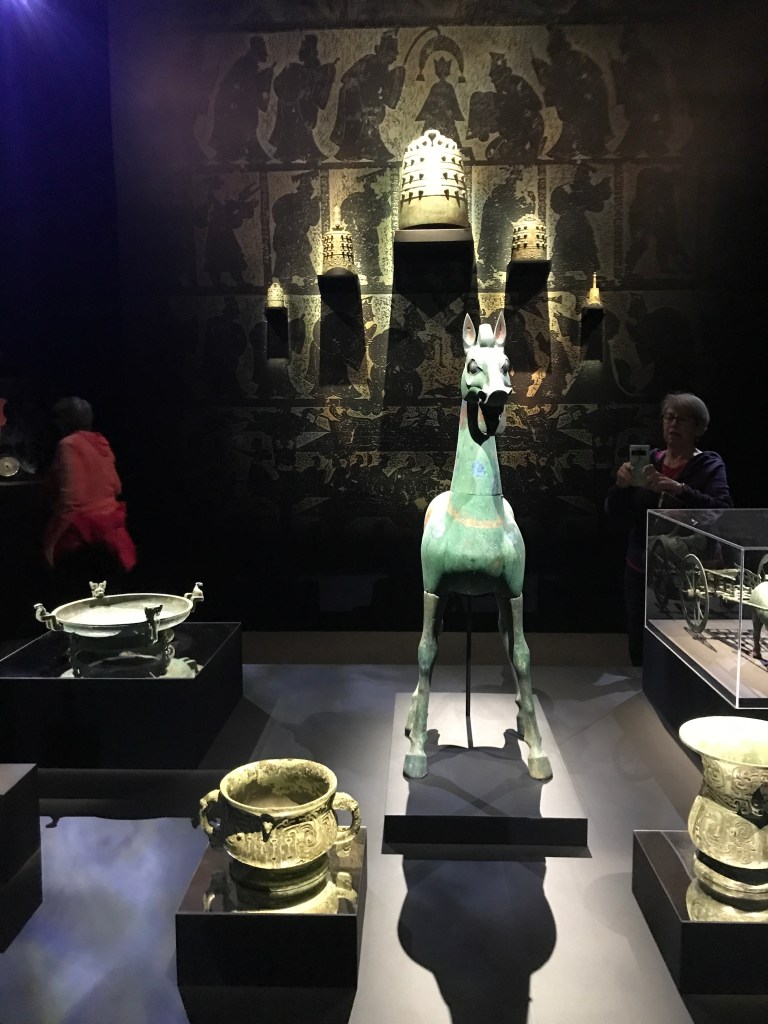
One morning I went to the Minneapolis Institute of Arts (MIA) to see an exhibit called “Eternal Offerings, Chinese Ritual Bronzes.” Yes, the objects created to honor ancestors or to communicate with the spiritual world were beautiful, but the atmosphere created —sound, murals on the walls, lighting— all added to the appreciation of the objects. I took my time moving through the rooms–allowed myself to relax into the beauty and the history, as well as the spiritual life of a culture not my own. I had not been to MIA for a long time and made a mental note to return soon.

The Foundation of Each Day

I began each day reading a meditation from You are the Beloved, Daily Meditations for Spiritual Living by Henri J. M. Nouwen, compiled and edited by Gabrielle Earnshaw. Perhaps this past week shimmered for me because each of those readings so resonated with me, beginning on Sunday, May 14 when Nouwen writes about prayer as a “careful attentiveness to the Presence of Love personified inviting us to an encounter.”

I felt as if I encountered God each day, wherever I was, whatever I was doing, and whomever I was with.

Contemplative prayer can be described as an imagining of God’s Son, Jesus, letting him enter fully into our consciousness so that he becomes the icon always present in the inner room of our heart.

May 15

…many words from the Scriptures can reshape the inner self. When I take the words that strike me during a service into the day and slowly repeat them while reading or working, more or less chewing on them, they create new life.

May 16

But when we believe that we are created in the image of God himself and come to realize that Christ came to let us reimagine this, then meditation and prayer can lead us to our true identity.

May 17

Listen to your heart…Praying is first and foremost listening to Jesus who dwells in the very depths of your heart.

May 18

Prayer allows us to lead into the center of our hearts not only those who love us but also those who hate us. This is possible only when we are willing to make our enemies part of ourselves and thus convert them first of all in our own hearts.

May 19

Just because prayer is the most precious expression of being human, it needs the constant support and protection of the community to grow and flower.

May 20

Here it is day three of the current week, and my days continue to flow, to glow, to shimmer, to open me to the movement and presence of God. Ah, how grateful I am.

An Invitation

What do you notice as you review your days? I would love to know.

Book Report: One Hundred Saturdays, Stella Levi and the Search for a Lost World by Michael Frank

May 18, 2023

I waited for this book for a long time. The library only had two copies and the people who checked it out must have renewed it more than once and then not returned it on its final due date. Finally, I received the notice that it was my turn. I must admit I wondered if the wait would be worth it. It was.

Stella Levi grew up in the Jewish area called Juderia on the Aegean Island, Rhodes. That Jewish community had existed there for half a millennium until the Germans seized control of the island in September, 1943. The following July all 1650 residents were deported to Auschwitz. It was a mystery why, when Germany was so close to being defeated and the end of the war so near, they went to all this expense and effort, but that is the nature of war, I guess.

Stella survived and eventually immigrated to the U.S. As an elder she met Michael Frank who was interested in her story, and this book is the result of 100 Saturday visits over a period of six years. Frank listened, asked respectful questions, and over time she trusted him, and they developed a rich friendship.

I’ve read many books about WWII and the Holocaust, but in each one I learn something new and come just a bit closer to imagining the horror of that time, but there are also moments of rejoicing when people somehow live beyond the terror and the evil. Stella is one of those people.

“You have to remember that the first time I ever left Rhodes was when they took us to Athens and from Athens through Europe by train. I looked out the window, I watched the stations flash by: here was the continent I’d dreamt about for so long. And afterward…afterward in the camps themselves, we met the French women and Madame Katz and Paula, who were from Belgium. They spoke about Paris, Lyon, Brussels. They had actually seen and experienced, or were connected to, the places I had longed to know and to visit. They’d lived there. They were from there, of there…”

Under the unlikeliest of circumstances, the wider world came closer.

p. 68

“Very early on, almost from the beginning, something curious happened. I detached myself from the Stella who was in Auschwitz. It was if everything that was happening to her was happening to a different Stella. not the Stella I was, not the Stella from Rhodes, the Stella I knew. I watched this person, this other Stella, as she walked through this desert, but I was not this person.”

After a moment she adds, “There was no other way.”

p. 140

About Stella’s relationship with Frank:

“And then you came along and were curious. And patient with me, even though I wasn’t always so…so easy. And in speaking to you I have learned a good deal about myself. As I tell you my stories, I learn. One thing I learn is that there is no single truth; there is a changing truth…and you understand a good deal from going back, returning, and more than once, to what you thought you knew, and felt, and believed.”

p. 208

A bonus in this book is that it is illustrated by Maira Kalman who is the author and illustrator of over 30 books for adults and children, and her work is exhibited in museums around the world.

This is her portrait of Stella.

One of my favorite books she illustrated is the classic The Elements of Style by William Strunk, Jr and E. B. White. Her illustrations make grammar palatable.

Here are Strunk and White:

And here is Maira Kalman.

An Invitation

What books have you waited for? Have they fulfilled your expectations or been a disappointment? I would love to know.
Notes about Spiritual Practices

May 16, 2023

Every morning our neighbors across the street walk the block and a half to the Catholic Church for mass.

Every morning.

Attending the service is certainly a spiritual practice that no doubt strengthens their faith, but the walk itself is a spiritual practice: a time to prepare for the ritual of worship and prayer; a time to open to the movement and presence of God, a reinforcement of the gifts of contemplation; and perhaps, incentive to be partners in God’s reconciling love for the world.

That’s a lot happening in a short round-trip walk, but when you make room for a spiritual practice in your daily life and commit to a regular practice, God will notice and you will notice God.

Is there anything I can do to make myself enlightened?
As little as you can do to make the sunrise in the morning.
Then what use are the spiritual exercises you prescribe?
To make sure you are not asleep when the sun begins to rise.
                              Anthony de Mello

I’ve written often in this blog and elsewhere about spiritual practices and the role they play in aiding the discovery of and living as the person God created me to be. That process is an ongoing pilgrimage, and I need spiritual practices to fortify and sustain me in my intentions:

  • To feel God’s presence and support,
  • To feel connected to the whole,
  • To integrate the model of Jesus into my life,
  • To give my life meaning, even as I age,
  • To move from fear to love.

I have core spiritual practices; practices that have been part of my life for a long time, including writing in my journal and starting the day with meditation and prayer time, but at various times in my life, and often with a change of the season, I add in other practices to spark and surprise me as I move through my days. Two examples:

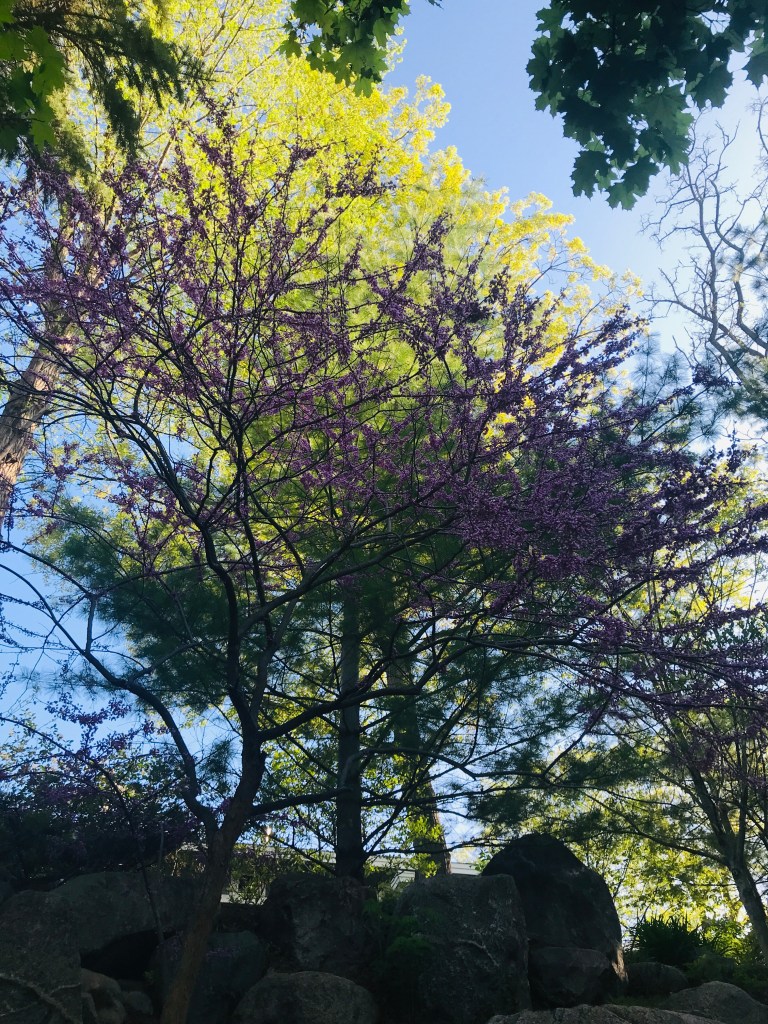
  • Take one photograph on my daily walk. Just one. Right now as spring is bursting how tempting it is to click, click, click on my walk, but confining myself to one photograph only seems to open my eyes even more. When I see something of beauty, of interest I stop and ask myself, “What do you notice? How is this a sign of God? What does this sight awaken in you? What of this moment will you carry with you?” Even when I decide not to take photograph at that moment, the pause, the taking a breath, the observing is a gift that becomes part of who I am and how God is present in my life. And somehow I seem to know when it is time for the one photograph of the day. No doubts. No hesitation. It is time. Do I ever regret not taking a picture of something I’ve seen. Not so far, but that could happen. Instead, that makes me aware of the abundance of wonders all around me, and understanding I can never capture them all. Why not let my one picture of the day symbolize the whole, the all.
  • Adopt a mantra and whisper it throughout the day. Lately, thanks to a meditation in You Are the Beloved, Daily Meditations for Spiritual Living by Henri Nouwen, I recite the words, “I am the glory of God.” I repeat the sentence as I walk up the stairs to the garret or make the bed in the morning or open the refrigerator when it is time to fix dinner. I change the mantra to “You are the glory of God,” as I see my husband working his magic in the garden or I insert the name of a spiritual direction client as I sit in silence before the beginning of a session. Here’s what Nowen writes,

Make that thought the center of your meditation so that it slowly becomes not only a thought but a living reality. You are the place where God chose to dwell, you are the topos tou theou (God’s place) and the spiritual life is nothing more or less than to allow that space to exist where God can dwell, to create the space where his glory can manifest itself. In your meditation you can ask yourself, “Where is the Glory of God? If the glory of God is not there where I am, where else can it be?”

May 10, p. 144
  • Planning the week. On Sunday I turn the page of the notebook I keep on the top of my desk and I write down the schedule for the week. The events, the appointments. Yes, those are on my laptop and phone calendars, but writing them on this clean page is an act of mindfulness, of blessing. I also create my To Do lists for three categories–Writing Tasks, Church Tasks, and Other Tasks. Again, doing this on the Sabbath is an act of mindfulness and blessing. I’ve been blessed with a fresh start, another week to live with intention, but even more than that, with gratitude for this life I am privileged to live.

During the Sunday service one of our members played a gorgeous piano solo. He is a busy physician, husband and father, and I imagine that playing the piano is relaxing for him, but as I listened to him, I had no doubt this was a form of spiritual practice for him, also. All of us listening received the fruits of that spiritual practice.

Practices are a way of embodying the spiritual journey rather than merely thinking about it. Practices help us to bring the reality of what we seek into the physicality and earthiness of our lives.

Christine Valters Paintner

An Invitation

What are your spiritual practices? What is currently part of your life that is actually a spiritual practice without your realizing it? I would love to know.